
Living plant profile
Perforated rhaphidophora
Rhaphidophora pertusa
Comprehensive botanical dossier for Perforated rhaphidophora (Rhaphidophora pertusa). Identification, lighting calibration, porous substrate formulation, and cultivation guide by Saigon Cay Canh.
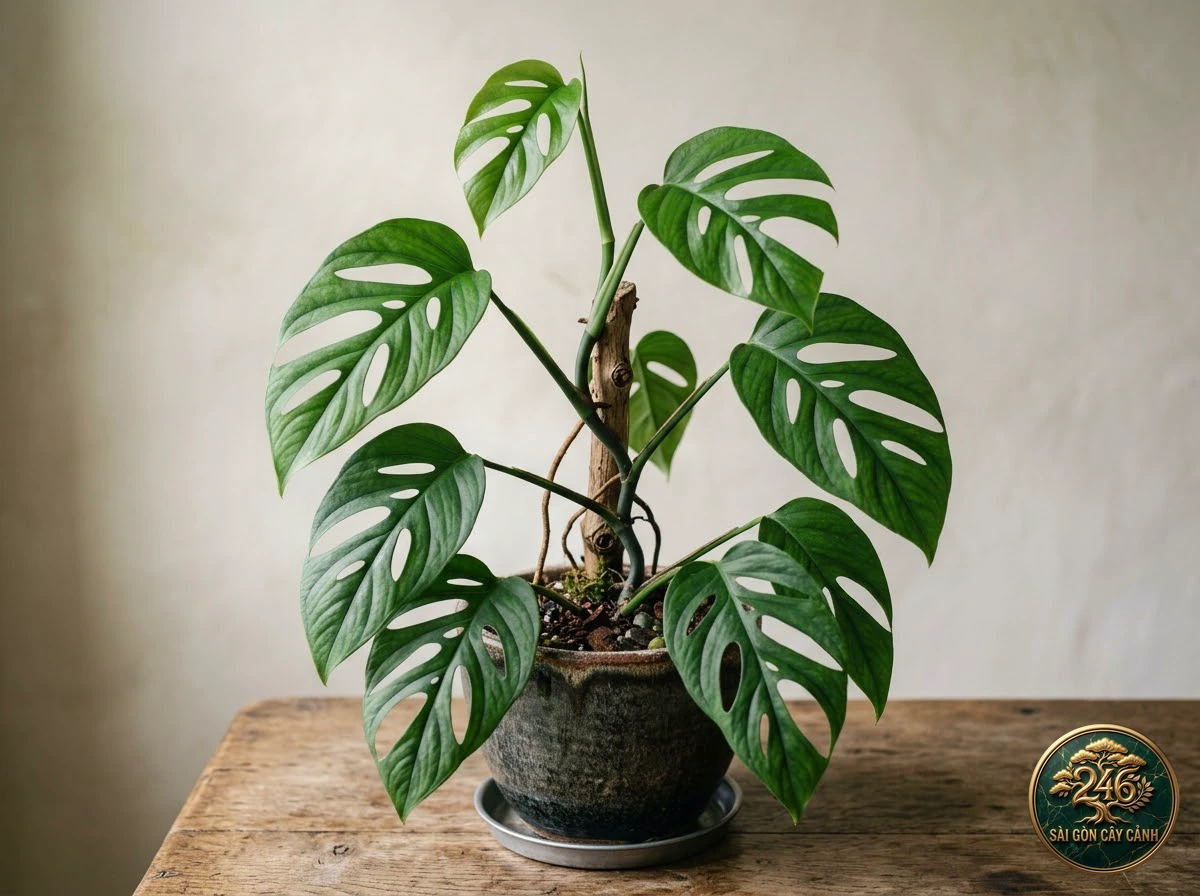
Perforated rhaphidophora (Rhaphidophora pertusa) is a magnificent tropical liana indigenous to the wet monsoonal canopies of the Western Ghats and Sri Lanka, renowned for expansive adult foliage adorned with natural oval perforations alongside deep pinnatifid clefts. Its architectural vigor and dramatic tropical presence transform modern interior atriums.
1. Core Botanical Taxonomy & Cultural Specifications
| Scientific Name | Rhaphidophora pertusa |
|---|---|
| Botanical Family | Araceae (Aroid Family) |
| Native Distribution | Monsoonal rainforests of the Western Ghats (India), Sri Lanka, and the Andaman Islands |
| Growth Demeanor | Vigorous climbing hemiepiphyte developing expansive pinnatifid perforated adult foliage |
| Lighting Threshold | Abundant diffused daylight (1,800 – 3,800 lux); tolerates mild early morning direct solar rays |
| Hydration Cadence | Thoroughly drench when upper 30% substrate dries; mist climbing totem to fuel aerial roots |
| Substrate Formulation | 35% coarse pumice, 30% chunky pine bark, 20% washed coco coir chips, and 15% perlite |
| Thermal Range | 22°C – 32°C (72°F – 90°F; thrives in warm tropical conditions, ceases growth below 15°C/59°F) |
| Relative Humidity | 65% – 85% (Elevated humidity prompts expansive leaf sizing and sharp fenestration emergence) |
| Cultivation Difficulty | Moderate (Requires sturdy vertical moss poles to trigger ontogenetic adult leaf transformation) |
| Pet Safety Profile | Toxic (Contains microscopic insoluble calcium oxalate raphides; keep out of pets’ reach) |
Cataloged in the taxonomic database of the Royal Botanic Gardens Kew (POWO), Rhaphidophora pertusa is recognized as a medium-to-large climbing hemiepiphyte within the Asian Araceae flora. In native habitats, seedlings germinate in forest humic soils, navigating across the forest floor toward host trees to ascend canopy light gaps.
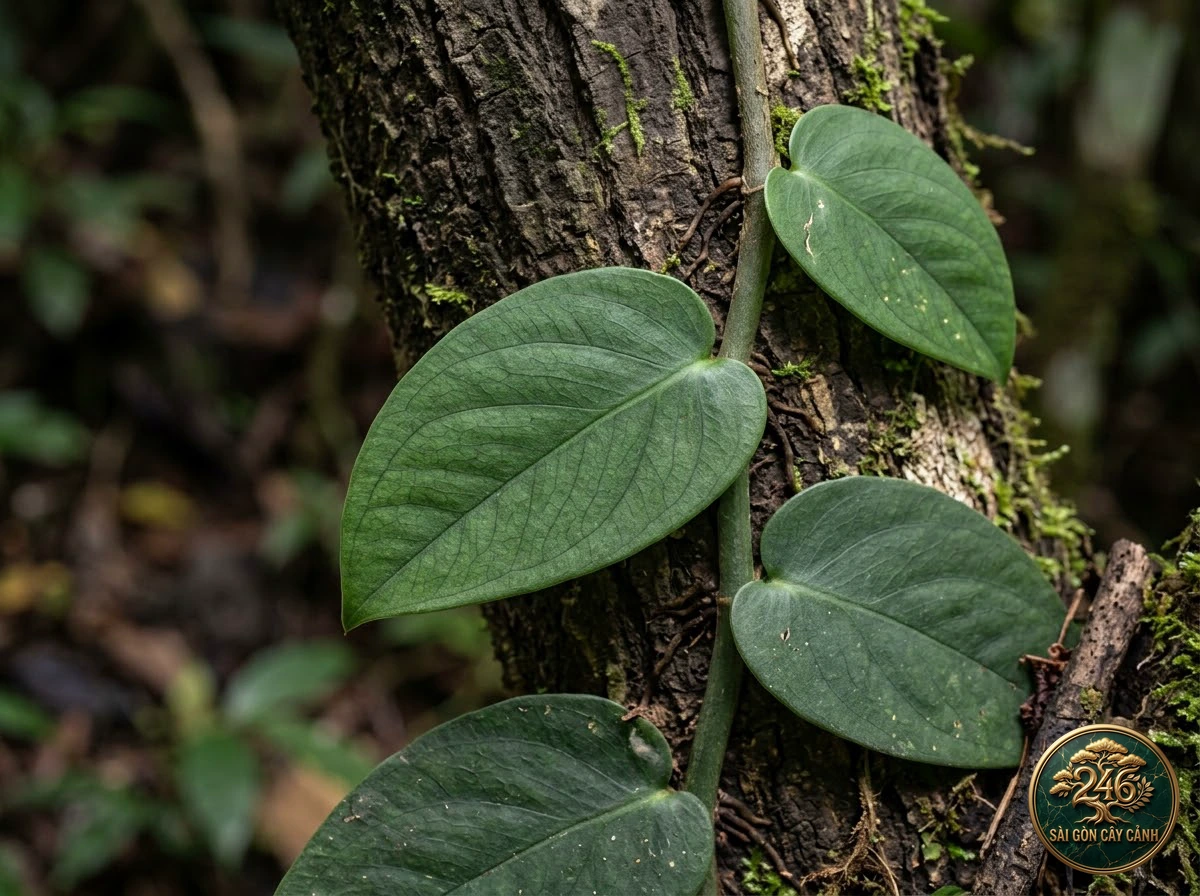
Ontogenetic heteroblasty is strikingly evident: juvenile blades remain entire and lanceolate; only when the climbing axis reaches vertical heights exceeding 1.2 meters supported by deeply rooted aerial anchors does the plant trigger developmental genes for fenestrations and pinnatifid incisions.
The robust climbing stem measures 1.5 to 3 cm in caliber, clad in olive-green to greyish bark marked by prominent crescent-shaped leaf scars. Each node generates two to four tough aerial roots several meters in length, penetrating bark fissures to scavenge moisture and nutrients.
2. Morphological Identification & Foliar Architecture
Mature leaf blades of Perforated rhaphidophora achieve lengths of 40 to 70 cm and widths of 25 to 40 cm. The lamina is irregularly pinnatifid with 4 to 8 lateral lobes per side, accentuated by oval to elliptic fenestrations aligned along the central costa.
The adaxial blade surface is thick, leathery, and lustrous dark emerald, shielded by a pronounced cuticular wax layer. Petioles extend 30 to 50 cm with deeply channeled basal sheaths, angling blades away from climbing supports to capture maximum diffuse light.
Ontogenetic studies reveal that Rhaphidophora pertusa undergoes dramatic heteroblastic metamorphosis from entire juvenile cordate blades into expansive pinnatifid adult leaves perforated with oval fenestrations along the primary axis. These perforations result from programmed cell death (PCD), an evolutionary adaptation that minimizes wind resistance during fierce Indian monsoons.
3. Photometric Calibration & Window Exposure Optimization
Rhaphidophora pertusa demands generous illumination between 1,800 and 3,800 lux to sustain expansive laminar development and stimulate successive fenestrations. Locating specimens near expansive east-facing windows receiving gentle morning sunlight provides ideal photoperiodic support.
Prolonged confinement in dim environments below 1,000 lux triggers morphological regression where leaves reduce in size, petioles stretch, and fenestrations fail to develop. Avoid harsh direct midday solar radiation that scorches tender leaf lobes.
As vines ascend vertical supports, photonic demands scale proportionally with foliar expansion. Mature specimens thrive under photon flux densities between 100 and 180 umol/m2/s. Supplemental broad-spectrum LED lighting promotes deep fenestration in emerging leaf flushes.
4. Structural Vining Architecture & Support Dynamics
Hydration protocols mandate scientific balance: saturate container media thoroughly until runoff freely discharges through drainage holes when the upper 30% feels dry. Never allow pots to sit in stagnant saucer pools, which suffocates core root structures.
The climbing totem demands steady capillary moisture. Misting the moss pole daily encourages aerial roots to penetrate deeply into the moss core, channeling auxiliary water and mineral ions directly to ascending apical shoots.
Thermal parameters between 22°C and 32°C (72°F – 90°F) provide optimal physiological comfort for Rhaphidophora pertusa. The species displays notable summer heat tolerance but experiences stasis when temperatures drop below 18°C (64°F).
Relative humidity should hover consistently between 65% and 85%. When cultivated in air-conditioned living spaces, grouping with companion tropical foliage or running an ultrasonic humidifier prevents marginal leaf and aerial root tip desiccation.
Optimal temperatures range between 23°C and 32°C (73°F – 90°F). The vine displays explosive vegetative surges during warm tropical rainy spells with ambient humidity exceeding 75%. In dry indoor air, frequent misting prevents unfurling leaves from tearing.
To support giant perforated foliage, robust sphagnum moss totems measuring at least 10 cm in diameter are essential. Maintaining continuous moisture along the totem core via top drip hydration allows thick aerial roots to anchor deeply, channeling water and minerals directly to ascending growth tips.
5. Porous Aggregate Substrate Engineering & Aeration Dynamics
The root system of this robust liana demands coarse-structured growing media for instantaneous drainage. A proven mix comprises 35% coarse pumice (8-12mm), 30% aged pine bark nuggets, 20% washed coconut husk chips, and 15% coarse perlite.
Coarse mineral aggregate architecture preserves over 35% air-filled porosity even immediately after heavy irrigation, preventing anaerobic pathogen blooms and fostering resilient fibrous root hair proliferation.
Potting substrate demands coarse pine bark nuggets (10-15mm), chunky pumice, and biochar to guarantee instant gravity drainage. The root system of this vigorous liana respires intensely; compacted soils quickly suppress apical cell division.
6. Organic Nutrition Schedules & Periodic Micronutrient Priming
During active vegetative flushes, apply balanced organic liquid fertilizer every three weeks to fuel expansive biomass production. Combine container root drenching with diluted applications onto the moist totem for direct aerial root uptake.
Taper nutrition during cool seasons when metabolic demand declines. Flush potting substrates with copious clean water quarterly to leach residual fertilizer salts from root zones.
Apply hydrolyzed fish protein fertilizer combined with organic potassium every 2 to 3 weeks during active vertical climbing flushes. Deliver nutrients both to container root balls and across damp totem moss for synergistic root absorption.
7. Clinical Diagnostic Matrix & Rapid Correction Protocols
| Clinical Symptom | Primary Etiology | Diagnostic Evaluation | Corrective Prescription |
|---|---|---|---|
| Emerging leaves smaller, lacking typical fenestrations | Insufficient photon energy or absence of moist vertical totem | Measure lux levels and inspect aerial root adhesion depth | Install moist moss pole and relocate specimen to bright filtered daylight |
| Crisp dark brown foliar tips expanding across lobes | Excessive air-conditioner aridity or intense direct sun scorch | Inspect ambient humidity using domestic hygrometer | Shield from direct solar rays and run ultrasonic humidifier >65% |
| Petioles collapse, basal stem yellowing with foul odor | Anaerobic root rot resulting from waterlogged container base | Examine root ball through bottom drainage holes | Excise decayed roots, repot in coarse mineral aggregate, elevate pot |
| Fine webbing and stippled silvery discoloration under leaves | Spider mite infestation during dry warm weather spells | Scout abaxial leaf surfaces under magnifying lens | Wipe foliage with mild soap solution and apply biological neem spray |
8. Cryptic Pest Prophylaxis & Foliar Surface Sanitation
Two-spotted spider mites and mealybugs can colonize broad abaxial leaf surfaces in dry indoor microclimates. Wiping both leaf surfaces with soft cloths dampened in diluted organic coconut soap eliminates pests safely.
Regularly rinse accumulated domestic dust with fine morning water sprays, keeping foliar stomata unobstructed to maximize gas exchange and photosynthetic efficiency.
Dust accumulations across expansive lobed blades should be wiped away bi-weekly with soft damp cloths. Routine cleaning combined with abaxial leaf inspections prevents thrips and mealybug colonies while keeping stomatal pores unobstructed.
9. Asexual Propagation Methodology & Root Strike Protocols
Propagation of Rhaphidophora pertusa is efficiently achieved via top stem cuttings or single-node sections bearing mature aerial roots. Select healthy semi-hardwood stems with at least one leaf and active aerial rootlets, cutting cleanly with a sterile blade.
Seal cut surfaces with botanical wound paste and dry in warm shade for 12 hours before potting into damp, airy moss. Kept in warm diffused daylight, vigorous new vegetative shoots emerge within four to five weeks.
Single-node stem propagation yields exceptional success rates. Select semi-hardened internodes bearing active aerial roots, settling them into moist sphagnum moss or perlite under 26°C (79°F) warmth to activate axillary eyes within three weeks.
10. Companion Animal Safety & Veterinary Toxicology Protocols
Because all plant tissues contain insoluble calcium oxalate raphides, train climbing stems high onto sturdy vertical poles beyond the reach of cats and dogs to prevent painful oral ingestion accidents.
11. Biophilic Curation & Contemporary Interior Design Styling
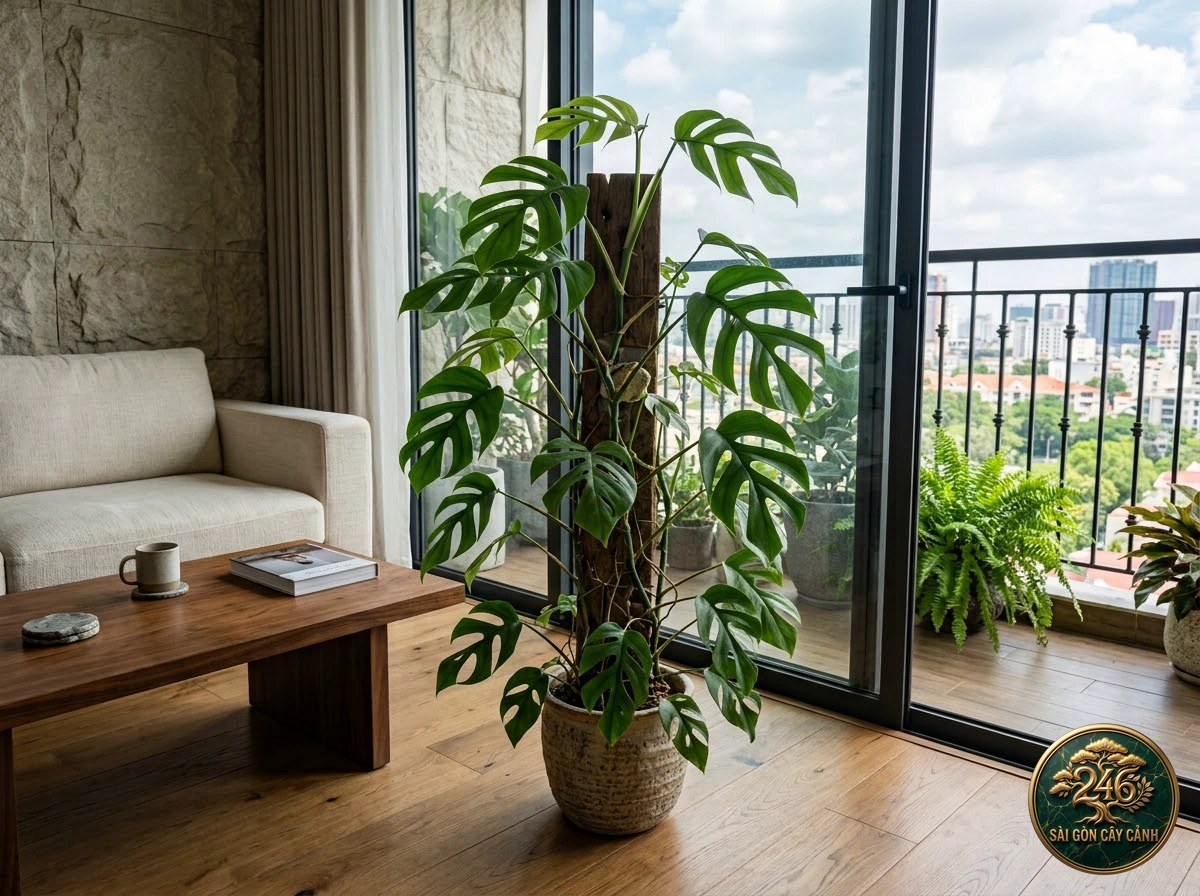
Within expansive Biophilic architecture, Perforated rhaphidophora serves as a monumental focal specimen for hotel atriums, double-height residential living rooms, and sunlit studios. Its sculptured, perforated canopy casts dramatic organic shadows across minimalist walls.
The commanding botanical presence of this rainforest liana infuses living quarters with primordial vitality, inspiring creative contemplation and restorative psychological wellbeing.
Boasting colossal proportions and perforated foliar architecture, Rhaphidophora pertusa creates an awe-inspiring focal statement in double-height living rooms, hospitality lobbies, and verdant skylit tropical atriums.
12. Master Principles for Sustainable Indoor Acclimatization
To accelerate leaf expansion and stimulate spectacular natural fenestrations in indoor Rhaphidophora pertusa specimens, cultivators must master three foundational tenets:
- Hydration axiom: Provide large-gauge moist moss poles, ensuring steady totem dampness so aerial roots anchor deeply and hydrate ascending nodes.
- Illumination axiom: Supply bright filtered light between 2,500 and 4,000 lux, fueling photonic energy required for deep laminar incisions.
- Maintenance axiom: Irrigate thoroughly upon top 30% substrate dry-down, leaching potting mix quarterly to expel fertilizer salts.
13. Frequently Asked Questions Regarding Perforated rhaphidophora (FAQs)
How does Rhaphidophora pertusa differ from Monstera deliciosa?
Rhaphidophora pertusa features persistent winged petiole sheaths, differing seed endosperm, and faster climbing habits. Its blades are more lanceolate with fenestrations clustered closely along the costa.
At what growth stage do natural fenestrations begin to appear?
When supported by a moist moss pole under bright indirect daylight (>2,000 lux), fenestrations and deep clefts reliably emerge once stems reach 1 to 1.5 meters in height.
Can Rhaphidophora pertusa be grown horizontally along trellises?
Horizontal growth is possible, but foliar sizing plateaus. Vertical upward ascent is biologically required to stimulate full mature leaf morphology.
Which climbing totem is most effective for this species?
Wire mesh totems filled with long-fiber sphagnum moss perform best, retaining moisture and allowing aerial roots to anchor deeply into the core.
Does pruning the terminal apical vine stunt plant growth?
No. Decapitating the terminal lead awakens lower lateral axillary buds, promoting vigorous bushy branching along lower stem nodes.
Why do my Rhaphidophora pertusa leaves remain small and solid without fenestrations?
Solid juvenile foliage results from photon deficiency or absence of a vertical moist climbing support. Once secured to a moist moss pole under bright indirect light (2,500+ lux), emerging leaves expand and fenestrate readily.