Living plant profile
Hong Kong rhaphidophora
Rhaphidophora hongkongensis
Comprehensive botanical dossier for Hong Kong rhaphidophora (Rhaphidophora hongkongensis). Identification, lighting calibration, porous substrate formulation, and cultivation guide by Saigon Cay Canh.
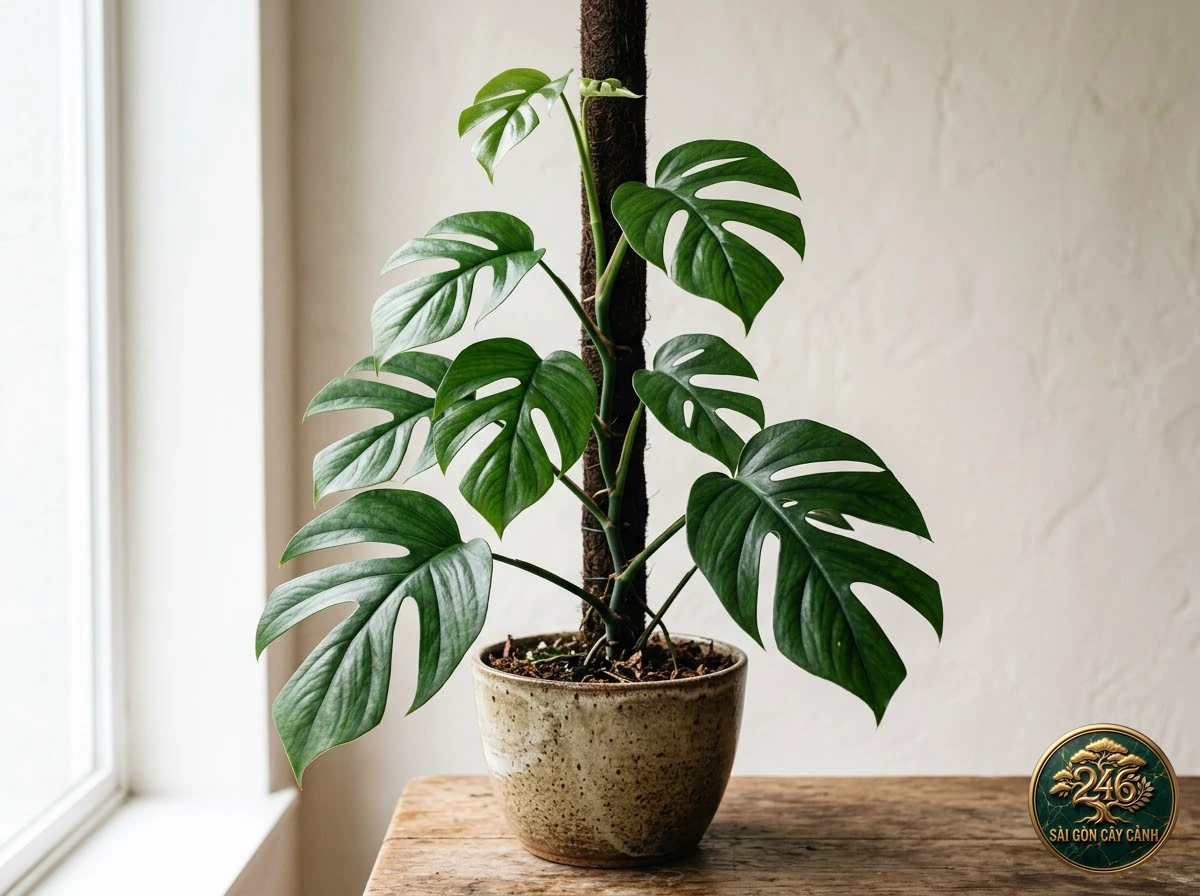
Hong Kong rhaphidophora (Rhaphidophora hongkongensis) is an exquisite native climbing aroid hailing from humid karst valleys of East Asia and Northern Vietnam, recognized for sleek, lanceolate foliage clad in rich enamel gloss ascending limestone cliffs. Its graceful habit, cool tolerance, and lustrous leaf texture introduce serene botanical refinement into modern interiors.
1. Core Botanical Taxonomy & Cultural Specifications
| Scientific Name | Rhaphidophora hongkongensis |
|---|---|
| Botanical Family | Araceae (Aroid Family) |
| Native Distribution | Humid karst limestone ravines of Guangdong, Hong Kong, Hainan, and Northern Vietnam |
| Growth Demeanor | Lithophytic climbing epiphyte with slender, flexible stems and glossy lanceolate leaves |
| Lighting Threshold | Gentle filtered daylight (1,200 – 2,600 lux); thrives in sheltered, bright indirect locations |
| Hydration Cadence | Hydrate when top 30% dries; roots favor aerated capillary moisture without stagnation |
| Substrate Formulation | 40% medium pumice, 25% composted fine bark, 20% perlite, and 15% washed coconut coir |
| Thermal Range | 18°C – 30°C (64°F – 86°F; exhibits superior cool tolerance compared to equatorial species) |
| Relative Humidity | 70% – 85% (High ambient humidity sustains lustrous turgor across elongated blades) |
| Cultivation Difficulty | Moderate (Resilient and adaptable when provided airy substrate and a moist climbing totem) |
| Pet Safety Profile | Toxic (Contains insoluble calcium oxalate raphides; position securely out of pets’ reach) |
Documented in the taxonomic database of the Royal Botanic Gardens Kew (POWO), Rhaphidophora hongkongensis represents a specialized lithophytic climber endemic to Asian subtropical karst valleys. It ranges from 200 to 1,100 meters elevation, thriving along mist-laden ravines and shaded stream banks.
Stems are slender yet exceptionally wiry and flexible, measuring 4 to 8 mm in diameter with an olive-green luster. Freely branching internodes generate adventitious rootlets that penetrate microscopic limestone fissures, absorbing calcium ions while securing the vine against monsoons.
Unlike massive fenestrated relatives, Rhaphidophora hongkongensis maintains entire foliar blades throughout its lifecycle. This morphological stability endows the plant with tidy, understated elegance ideally suited for contemporary urban living spaces.
2. Morphological Identification & Foliar Architecture
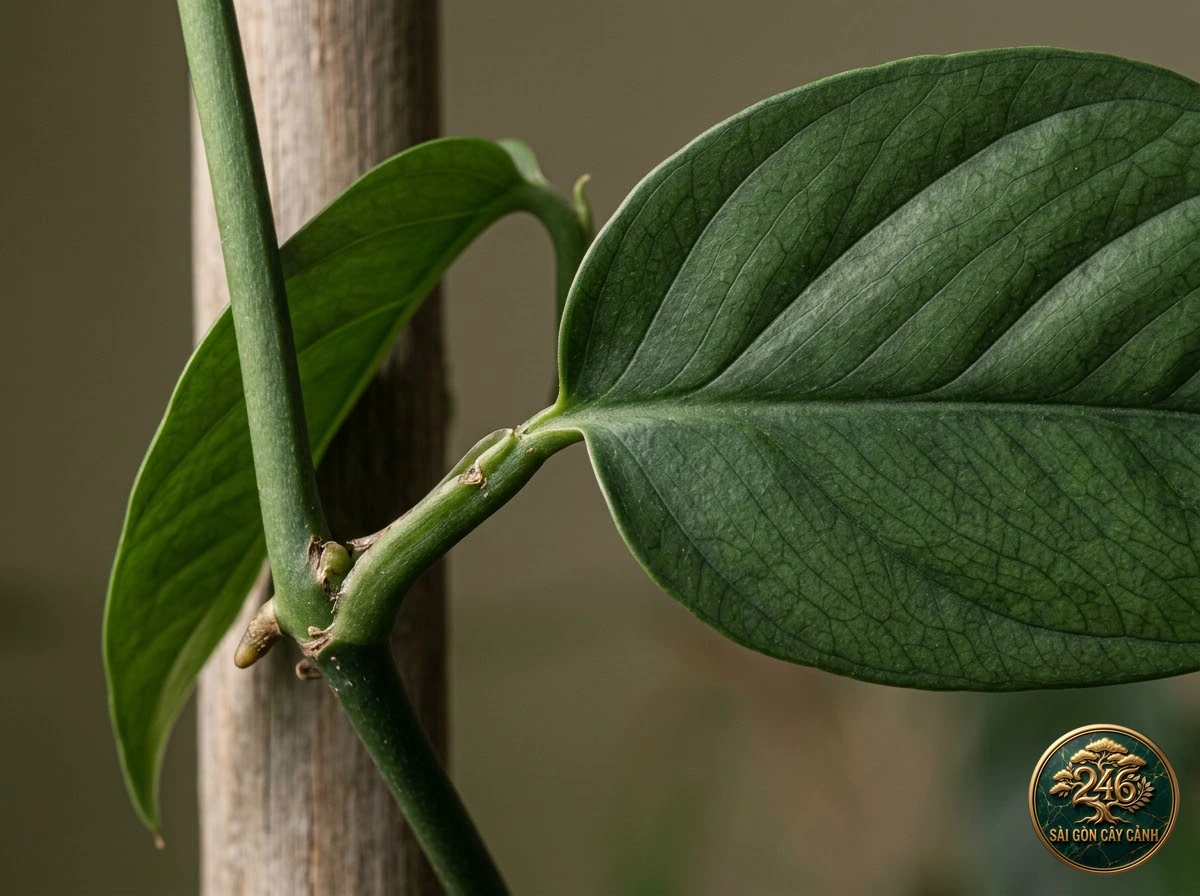
Leaves of Hong Kong rhaphidophora display an elongated elliptic to lanceolate contour, measuring 15 to 28 cm in length and 5 to 9 cm across. The blade base tapers cuneately into the petiole, terminating in an acuminate drip-tip that sheds excess moisture efficiently.
The upper surface shines with deep emerald lacquer, highlighted by a prominent raised costa and delicate parallel venation. Petioles measure 10 to 18 cm, equipped with a flexible apical pulvinus that enables the leaf blade to adjust its orientation toward ambient light.
Microscopic analysis of Rhaphidophora hongkongensis leaf cross-sections demonstrates densely packed palisade mesophyll packed with chlorophyll, sustaining steady carbon assimilation beneath dense subtropical forest canopies. Petioles feature deep basal sheaths and elastic apical genicula that orient blades phototropically across shaded limestone crags.
3. Photometric Calibration & Window Exposure Optimization
Illumination requirements range moderately between 1,200 and 2,600 lux. Cool daylight diffused through sheer drapery or positioning containers 1 to 1.5 meters from eastern exposures preserves intense green luster without chlorophyll photobleaching.
Direct intense solar radiation scorches the glossy cuticle within hours. Conversely, prolonged placement below 700 lux prompts etiolated stretching where internodes elongate, compromising the lush foliage density.
Photometric studies establish an optimal PPFD between 60 and 120 umol/m2/s for Hong Kong rhaphidophora. Demonstrating superior low-light tolerance compared to perforated relatives, it flourishes in moderately illuminated domestic zones (1,200 – 2,500 lux) without basal defoliation.
4. Structural Vining Architecture & Support Dynamics
Irrigation demands excellent aeration: hydrate thoroughly whenever the top 30% substrate dries. Accustomed to quick-draining limestone cliff faces, its roots despise stagnant sitting water, which rapidly causes root rot.
Mist the climbing totem and aerial stem nodes every 2 to 3 days to preserve moisture around adventitious roots, supporting vigorous climbing momentum throughout the year.
The optimal thermal range spans 18°C to 30°C (64°F – 86°F). Given its subtropical karst heritage, it displays superior resilience to cooler temperatures compared to equatorial aroids, comfortably enduring 15°C (59°F) in winter without defoliation.
Ambient humidity should hover between 70% and 85%. Grouping plants atop pebble humidity trays or operating humidifiers in air-conditioned rooms preserves foliar gloss.
Indigenous to Southern China and Northern Vietnam, this species exhibits remarkable cool tolerance among tropical Araceae, withstanding temperatures down to 12°C (54°F) without defoliation. Ideal thermal development spans 20°C to 30°C (68°F – 86°F) at 60% to 80% humidity.
Displaying dual climbing and cascading habits, this versatile aroid adapts smoothly to natural driftwood mounts or suspended hanging planters. When training vertically, secure slender stems to moist totems with plant ties to encourage adventitious root grip and elongate lanceolate blades.
5. Porous Aggregate Substrate Engineering & Aeration Dynamics
Substrate formulation mimics mineral-rich limestone scree: blend 40% medium pumice, 25% composted pine bark, 20% horticultural perlite, and 15% washed coconut coir, buffered to a near-neutral pH of 6.0 to 7.0.
This aggregate blend supplies natural mineral ions while establishing optimal macro-pore porosity, guaranteeing root access to dissolved oxygen after every watering.
Potting mix should emulate thin lithophytic humus over limestone crevices: 35% pumice, 30% fine pine bark (3-6mm), 20% washed coir, and 15% perlite. A neutral to mildly alkaline pH between 6.2 and 7.0 optimizes natural calcium bioavailability.
6. Organic Nutrition Schedules & Periodic Micronutrient Priming
Feed monthly with diluted organic liquid fertilizer during active warm months to furnish amino acids and micronutrients. A light semi-annual top-dressing of dolomitic limestone meal provides supplemental calcium and magnesium to fortify cell walls.
Suspend feeding during cool winter spells when metabolism slows. Flush potting mixes thoroughly with clean water quarterly to eliminate salt accumulations.
Apply diluted micronutrient organic fertilizer monthly during spring and autumn flushes. Supplemental bio-calcium and chelated magnesium reinforce lanceolate blade turgidity and preserve deep jade foliar gloss.
7. Clinical Diagnostic Matrix & Rapid Correction Protocols
| Clinical Symptom | Primary Etiology | Diagnostic Evaluation | Corrective Prescription |
|---|---|---|---|
| Foliage loses lustrous lacquer sheen, appearing dull or bleached | Excessive direct solar radiation or photobleaching | Measure ambient lux at current placement | Relocate container to gentler filtered indirect daylight |
| Elongated internodes, sparse leaf density along stems | Prolonged exposure to low light levels below photosynthetic threshold | Evaluate illuminance with photometric meter | Supplement with full-spectrum 4000K LED lighting for 8 to 10 hours daily |
| Synchronized yellowing of lower foliage with soft basal stems | Overwatering causing anaerobic root rot in compacted media | Inspect core substrate moisture using wooden dowel | Halt watering, elevate drainage apertures, and repot in airy aggregate |
| Crisp blackened drip-tips on elongated leaves | Low ambient humidity below 50% in air-conditioned rooms | Monitor ambient relative humidity at canopy level | Deploy pebble humidity tray or run ultrasonic room humidifier |
8. Cryptic Pest Prophylaxis & Foliar Surface Sanitation
The glossy foliage shows natural pest resistance, though mealybugs can occasionally shelter in sheltered petiole axils in stagnant air. Spot-clean with alcohol swabs upon discovery.
Dust foliage monthly using damp microfiber cloths to maintain pristine lacquer sheen and unhindered stomatal gas exchange.
Regularly wipe household dust from lanceolate foliage using damp microfiber towels to deter spider mites during dry seasons. Treat occasional mealybugs in petiole axils promptly with organic alcohol swabs to protect emerging buds.
9. Asexual Propagation Methodology & Root Strike Protocols
Propagation is straightforward via apical stem cuttings or sectioning multi-node vine fragments bearing 2 to 3 leaf nodes. Make clean cuts using sanitized shears through semi-mature stems.
Root cuttings in water or moist sphagnum moss inside warm, humid shade. Adventitious feeder roots emerge within 3 to 4 weeks, ready for potting into coarse substrate.
Easily propagated via stem cuttings 10 to 15 cm in length bearing 2 to 3 leaf nodes. Rooting cuttings in moist perlite or pure water triggers rapid adventitious root emergence within 14 to 20 days under warm filtered light.
10. Companion Animal Safety & Veterinary Toxicology Protocols
The plant contains insoluble calcium oxalate raphides causing acute oral burning if chewed; train vines upon elevated poles or wall shelves out of pets’ reach.
11. Biophilic Curation & Contemporary Interior Design Styling
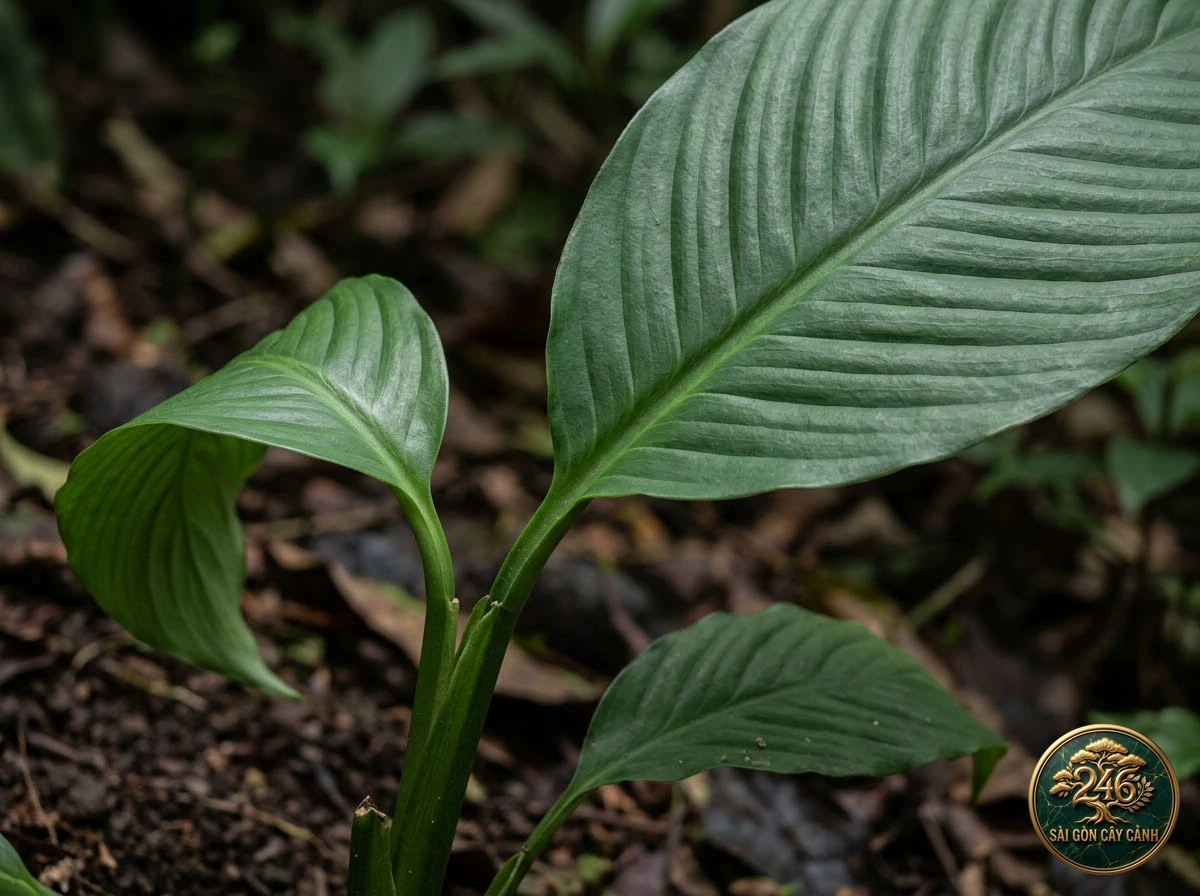
Within modern Biophilic interior aesthetics, Hong Kong rhaphidophora introduces serene East Asian botanical elegance. Its cascading glossy lanceolate vines trained on driftwood totems foster tranquil contemplation across tea rooms, libraries, and design studios.
Rich deep emerald foliage and resilient climbing vigor forge an uplifting connection with nature amid busy metropolitan lifestyles.
With slender emerald foliage cascading gracefully or creeping organically across rock mounts, Hong Kong rhaphidophora embodies serene Zen aesthetics, exceptionally suited for tea pavilions, contemplative workdesks, and shaded lightwells.
12. Master Principles for Sustainable Indoor Acclimatization
To preserve slender lustrous foliage and graceful weeping or climbing demeanor indoors, enthusiasts should observe three core guidelines:
- Hydration axiom: Irrigate when top 30% substrate dries, ensuring total base drainage to safeguard lithophytic rootlets.
- Illumination axiom: Position under gentle indirect light (1,200 – 2,500 lux), avoiding direct harsh rays that bleach rich emerald hues.
- Maintenance axiom: Prune wandering runners periodically to stimulate bushy axillary branching and maintain refined silhouette.
13. Frequently Asked Questions Regarding Hong Kong rhaphidophora (FAQs)
Can Hong Kong rhaphidophora be cultivated as a trailing basket plant?
Yes, trailing vines cascade gracefully, though foliage remains compact. To achieve maximum leaf sizing exceeding 25 cm, train stems vertically onto a moist moss pole.
Does this plant tolerate air-conditioned indoor rooms?
It adapts exceptionally well to air-conditioned interiors (20°C – 25°C), provided it is shielded from direct vent drafts and humidity stays above 65%.
How frequently should repotting be performed?
Repot every 18 to 24 months when root mass fills container capacity, upsizing by one pot diameter into fresh porous aggregate.
How can one encourage lush basal branching?
Prune terminal tips when stems reach desired length; this releases apical dominance, triggering lower dormant axillary buds to sprout.
Is municipal tap water safe for irrigation?
Allow tap water to stand in open containers for 24 to 48 hours to off-gas chlorine before watering, protecting sensitive root hairs.
Does Hong Kong rhaphidophora look attractive in suspended hanging pots?
Extremely elegant. Slender stems cascade with neatly staggered lanceolate blades, forming a cascading curtain of deep green that introduces delicate natural fluidity into residential interiors.