
Living plant profile
Woodland peace lily
Spathiphyllum silvicola
Comprehensive botanical dossier for Woodland peace lily (Spathiphyllum silvicola). Identification, lighting calibration, porous substrate formulation, and cultivation guide by Saigon Cay Canh.
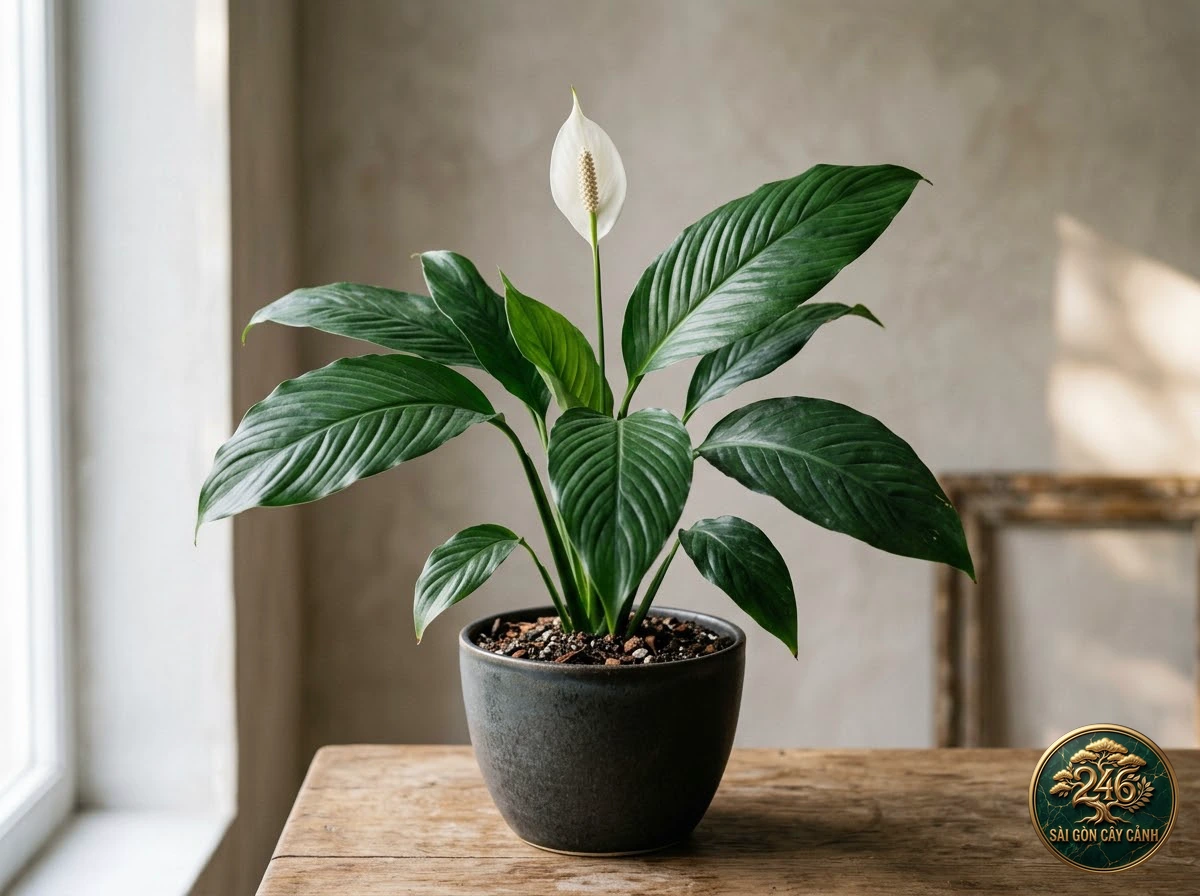
Woodland peace lily (Spathiphyllum silvicola) is an enchanting wild peace lily indigenous to the tropical understories of Central America, distinguished by lustrous elliptic foliage with undulating parallel venation and pristine white spathes ascending above emerald crowns. It channels the vital spirit, pristine purity, and untamed elegance of ancient rainforest sanctuaries.
1. Core Botanical Taxonomy & Cultural Specifications
| Scientific Name | Spathiphyllum silvicola |
|---|---|
| Botanical Family | Araceae (Aroid Family) |
| Native Distribution | Understory floor of wet lowland and submontane tropical rainforests in Costa Rica, Panama, and Colombia |
| Growth Demeanor | Lush clumping terrestrial herb with arching petioles supporting rich green foliage 45 to 80 cm in height |
| Lighting Threshold | Gentle diffused illumination (1,500 – 3,000 lux); prospers in bright dappled canopy shade |
| Hydration Cadence | Irrigate when top 30% substrate dries; favors consistent capillary coolness without bottom waterlogging |
| Substrate Formulation | 35% medium pumice, 30% composted bark chips, 20% washed coco coir, and 15% coarse perlite |
| Thermal Range | 21°C – 31°C (70°F – 88°F; thrives in warm indoor temperatures, dormancy triggered below 16°C/60°F) |
| Relative Humidity | 65% – 85% (High ambient humidity prevents edge desiccation and extends bloom longevity) |
| Cultivation Difficulty | Easy to Moderate (Resilient nature, dependable growth, adapts smoothly to indoor conditions) |
| Pet Safety Profile | Toxic (Contains insoluble calcium oxalate raphides; position beyond reach of companion animals) |
Spathiphyllum silvicola was formally described by botanist John Gilbert Baker and is cataloged in Kew’s Plants of the World Online (POWO). The specific epithet ‘silvicola’ combines Latin ‘silva’ (forest) and ‘cola’ (inhabitant), precisely capturing its natural lifestyle as a devoted denizen of the humic, moist understory beneath dense tropical rainforest canopies.
The plant forms a slowly branching subterranean rhizome producing glossy upright petioles that arch outward gracefully at maturity. Petioles measure 30 to 55 cm, fortified by basal clasping sheaths and capped by a flexible pulvinus below the blade, orienting the leaf surface toward shifting sun flecks.
A robust fibrous root network spreads laterally within nutrient-rich tropical forest litter. Roots emerge ivory white and mature into rich brown cords, featuring porous cortical layers that facilitate rapid capillary moisture intake while maintaining internal aeration during tropical deluges.
2. Morphological Identification & Foliar Architecture
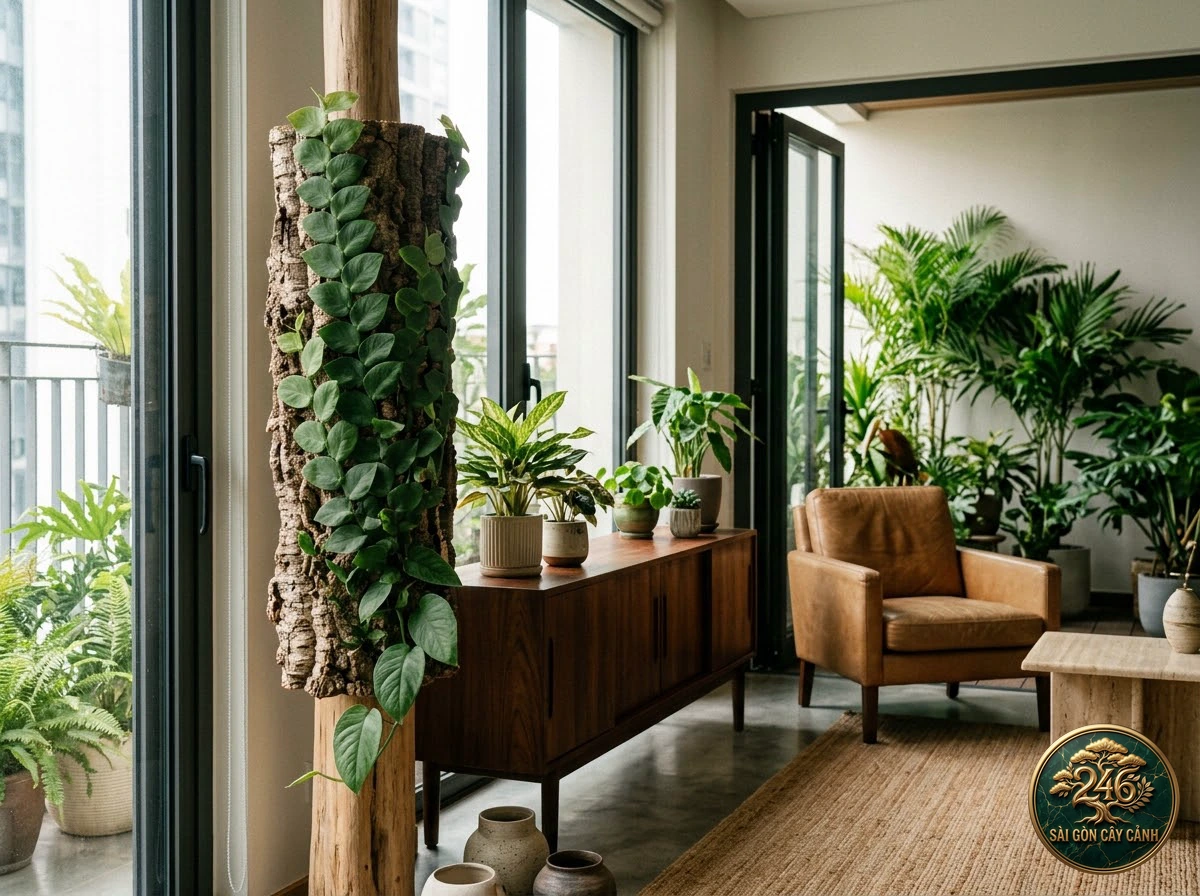
Foliar blades of the Woodland peace lily display an oblong-elliptic to elliptic-lanceolate outline measuring 25 to 45 cm in length and 10 to 18 cm in width. The leaf tip finishes in an acuminate drip-tip, framed by subtly undulated margins. The upper leaf surface gleams in deep jade green, contrasted by a paler underside with prominent ribbing.
Primary lateral veins run obliquely parallel from the prominent dorsal midrib to the foliar margin, etching sculptural ribbed channels across the blade. The inflorescence features an immaculate white lanceolate spathe 10 to 16 cm long cupping an erect pale-cream cylindrical spadix that diffuses a subtle, sweet woodland fragrance.
Epidermal cell architecture of Spathiphyllum silvicola reveals undulating cell boundaries paired with prominent undulating lateral veins, producing rhythmic light play across varying visual perspectives. The upper surface gleams in rich jade green, culminating in an acuminate drip-tip that sheds tropical rainfall efficiently in native understories.
3. Photometric Calibration & Window Exposure Optimization
Spathiphyllum silvicola prospers under steady diffused daylight ranging from 1,500 to 3,000 lux. It performs magnificently 1 to 2 meters back from sunlit windows or within skylit atriums fitted with sheer shading, receiving ample photons without thermal distress.
Extended deprivation below 800 lux arrests growth and prevents floral differentiation. Conversely, direct exposure to intense solar ultraviolet radiation breaks down chlorophyll pigments, resulting in crisp scorched patches across leaf surfaces.
Photometric trials define an optimal PPFD between 75 and 145 umol/m2/s for Woodland peace lily. Exploiting weak filtered photons beneath dense primary canopies, it thrives in residential interiors enjoying bright indirect illumination (1,500 – 3,000 lux), maintaining dense compact foliage without etiolation.
4. Rhizomatous Clump Architecture & Growth Management
Irrigation technique centers on preserving uniform capillary coolness throughout the potting root zone. Irrigate deeply once the top 30% substrate feels dry, allowing water to percolate through structural pore channels and discharge freely into the drip tray.
Always discard standing runoff water from the saucer within 15 minutes of watering to prevent bottom saturation and anaerobic root asphyxiation. Utilize clean, dechlorinated water to ensure immaculate green leaf tips.
The optimal thermal range for the Woodland peace lily spans 21°C to 31°C (70°F – 88°F). The plant thrives in comfortable domestic room temperatures, stalling below 16°C (60°F) and requiring shelter from cold air conditioner drafts.
Relative humidity should be maintained at 65% to 85%. Placing containers atop gravel-filled humidity saucers or deploying ultrasonic room misting keeps petioles turgid and ensures floral spathes remain pristine for weeks.
Optimal temperatures for vegetative growth span 21°C to 31°C (70°F – 88°F). The specimen flourishes under comfortable warm room temperatures; sustain ambient humidity between 65% and 85% via gravel trays or ultrasonic room misting to keep petioles turgid and spathes pristine for weeks.
The clump develops symmetrical proportions with petioles ascending vertically before arching gently outward, standing 45 to 80 cm tall. To preserve a full, balanced hemispherical silhouette, prune senescent outer leaves flush to the crown quarterly and rotate containers regularly for uniform foliar spread.
5. Porous Aggregate Substrate Engineering & Aeration Dynamics
The potting substrate should replicate the porous leaf litter of tropical woodland floors: 35% pumice (4-8mm), 30% aged pine bark nuggets, 20% thoroughly rinsed coco coir pith, and 15% coarse perlite, balanced to pH 5.6 to 6.5.
This mineral-rich porous matrix ensures constant moisture retention while guaranteeing total pore aeration for root respiration, shielding against soilborne pathogenic rots.
Potting substrates should replicate the porous, spongy leaf litter of indigenous tropical floors: 35% pumice (4-8mm), 30% aged pine bark nuggets, 20% thoroughly rinsed coco coir, and 15% coarse perlite. This blend sustains cool micro-moisture while guaranteeing continuous aeration throughout fibrous root zones.
6. Organic Nutrition Schedules & Periodic Micronutrient Priming
Provide supplemental nutrition every 3 to 4 weeks during active spring and summer periods using diluted liquid organic fertilizer enriched with potassium and trace minerals to strengthen roots and promote white spathes.
Avoid excessive synthetic nitrogen, which fuels foliage overgrowth while suppressing floral bud formation. Leach the container once quarterly with pure water to dissolve and wash out residual fertilizer salts.
Apply diluted liquid organic fertilizer enriched with potassium and micronutrients every 3 to 4 weeks during active growth. Steady, gentle nutrition strengthens root vitality and stimulates the production of immaculate, fragrant white spathes.
7. Clinical Diagnostic Matrix & Rapid Correction Protocols
| Clinical Symptom | Primary Etiology | Diagnostic Evaluation | Corrective Prescription |
|---|---|---|---|
| Crisp blackened foliar tips and dried margins | Chlorine accumulation from municipal water or excessively dry indoor air | Examine water source purity and monitor ambient relative humidity | Switch to dechlorinated filtered water and employ pebble humidity trays |
| Vigorous vegetative growth but total failure to bloom | Insufficient photon levels to stimulate floral primordia development | Measure lux or foot-candles at the plant canopy level | Relocate specimen to bright indirect illumination above 2,000 lux |
| Abrupt synchronous wilting of all upright petioles | Severe drought desiccation or anaerobic root rot from poor drainage | Probe core moisture depth and inspect container drainage holes | Bottom-soak immediately if desiccated; prune decayed roots and repot if soggy |
| Stippled yellow spots and fine webbing on leaf undersides | Spider mite infestations flourishing in dry ambient conditions | Inspect abaxial surfaces under magnification for active mite colonies | Rinse foliage under gentle shower and apply biological emulsified neem spray |
8. Cryptic Pest Prophylaxis & Foliar Surface Sanitation
Mealybugs and spider mites may colonize compressed petiole sheaths during dry spells. Regularly inspect leaf axils and wipe infested zones with organic alcohol swabs or diluted neem soap solutions upon first detection.
Clean foliar surfaces with damp microfiber towels bi-weekly to eliminate domestic dust, ensuring open stomatal pores and optimizing photosynthesis across the emerald canopy.
Lustrous foliar blades require bi-weekly dusting with damp microfiber towels to maintain unobstructed stomatal respiration. Routinely check basal petiole folds for early mealybugs or spider mites, cleaning affected areas with biological neem soap upon detection.
9. Asexual Propagation Methodology & Root Strike Protocols
Propagation is most reliably achieved by rhizomatous division during early spring repotting. Gently lift the clump, clear loose mix, and use a sterile sharp knife to section rhizome crowns retaining independent healthy roots.
Pot divisions into fresh aerated potting mix, irrigate thoroughly, and keep in warm humid shade for 2 to 3 weeks until adventitious roots anchor firmly into the new media.
Clonal propagation is most reliably accomplished by dividing rhizomatous offshoots during early spring container repotting. Excise crowns retaining healthy roots with a sterile knife, dusting wounds before potting into airy mix under warm humid shade for 2 to 3 weeks.
10. Companion Animal Safety & Veterinary Toxicology Protocols
The plant contains insoluble calcium oxalate raphides throughout its tissues that cause burning irritation if ingested by pets. Position pots on high pedestals safely out of reach of indoor dogs and cats.
11. Biophilic Curation & Contemporary Interior Design Styling
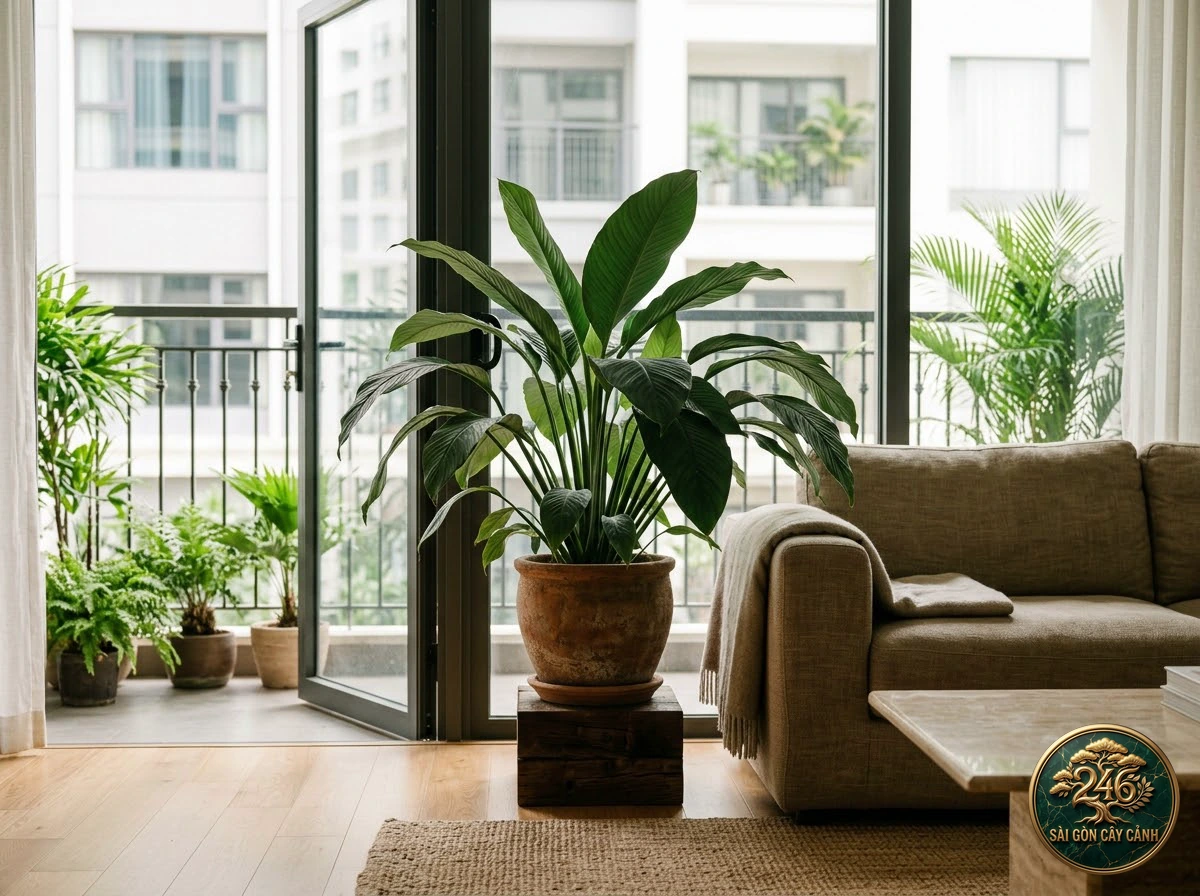
With its graceful demeanor, polished jade-green foliage, and pristine white spathes, the Woodland peace lily offers exquisite botanical charm for home studies, living rooms, and upscale executive lounges.
The soothing green tones and serene floral presence cultivate an aura of tranquility and mental replenishment, connecting modern indoor spaces with the restorative pulse of nature.
With graceful demeanor, polished jade foliage, and pristine white spathes, the Woodland peace lily provides sublime botanical charm for private studies, residential living areas, and upscale lounges, fostering serene tranquility and restorative mental energy.
12. Master Principles for Sustainable Indoor Acclimatization
To cultivate a luxuriant specimen of Spathiphyllum silvicola and stimulate recurring white blooms indoors, indoor horticulturists should observe three core technical principles:
- Hydration axiom: Irrigate when top 30% substrate dries, strictly utilizing dechlorinated water to ensure immaculate green leaf tips.
- Illumination axiom: Deliver steady indirect daylight (1,500 – 3,000 lux), shielding plants completely from harsh direct solar rays.
- Maintenance axiom: Maintain airy pumice potting mix and rotate containers periodically to encourage a full, symmetrical canopy.
13. Frequently Asked Questions Regarding Woodland peace lily (FAQs)
Is the Woodland peace lily difficult to maintain indoors?
It is remarkably easy and resilient indoors, requiring only soft diffused daylight and watering once the top layer feels dry.
How long do the pristine white spathes endure?
Each white inflorescence remains attractive for 4 to 6 weeks before gracefully turning pale green as it senesces.
Should leaves be shined with commercial oils or milk?
Never apply milk or oils as they clog microscopic stomata and impair respiration; use only a damp microfiber cloth with water.
How frequently should repotting and clump division occur?
Repot every 2 to 3 years when roots coil thickly throughout the container and multiple crowns emerge around the rim.
Is the plant safe around curious pets and young children?
Tissues contain insoluble calcium oxalate crystals that cause mouth discomfort; display safely on high shelves beyond reach.
Does the Woodland peace lily possess long-lasting blooms, and does it rebloom easily?
The pristine white spathes of Spathiphyllum silvicola persist in pristine condition for 4 to 6 weeks before transitioning to pale green. With ample indirect daylight and humidity above 65%, it reliably produces 2 to 3 blooming flushes annually.