
Living plant profile
Rose-painted calathea
Goeppertia roseopicta
Comprehensive botanical dossier for Rose-painted calathea (Goeppertia roseopicta). Identification, lighting calibration, porous substrate formulation, and cultivation guide by Saigon Cay Canh.
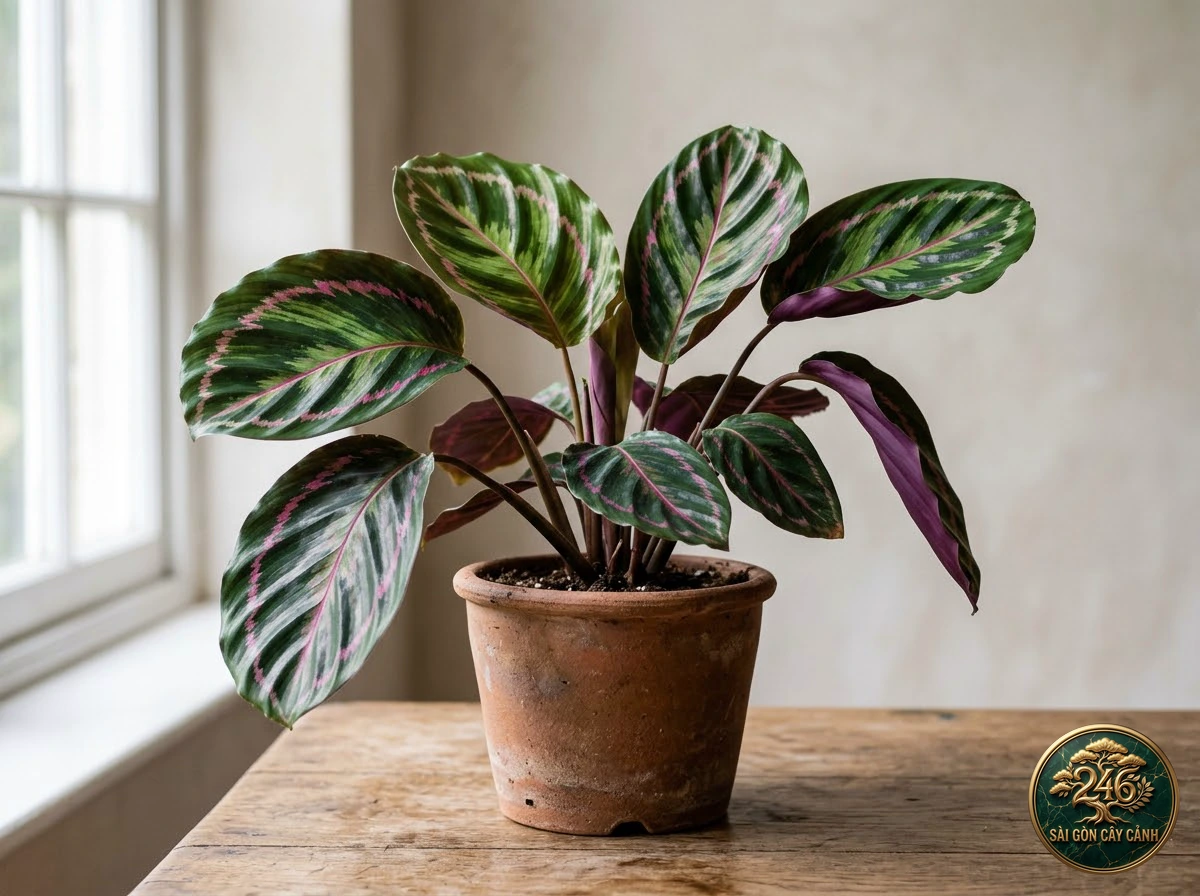
Rose-painted calathea (Goeppertia roseopicta) is an internationally celebrated crown jewel of Neotropical foliage, renowned for large orbicular midnight-green blades boldly etched with a glowing rose-pink feathered halo paralleling the leaf margin and pink midrib. The specific epithet ‘roseopicta’ means ‘rose-painted’, precisely capturing this living tapestry of ruby-pink and deep purple pigments.
Sài Gòn Cây Cảnh Care Compass
1. Core Botanical Taxonomy & Cultural Specifications
| Scientific Name | Goeppertia roseopicta |
|---|---|
| Botanical Family | Marantaceae (Prayer Plant Family) |
| Native Distribution | Humid Upper Amazon basin rainforest floor spanning Northwestern Brazil, Colombia, and Peru |
| Growth Demeanor | Rounded clump-forming evergreen perennial 40 to 65 cm tall with broad orbicular rose-patterned blades |
| Lighting Threshold | Consistent diffused daylight (1,500 – 3,200 lux); easily bleached by direct solar exposure |
| Hydration Cadence | Hydrate when top 25-30% substrate dries; prefers steady capillary coolness without saturation extremes |
| Substrate Formulation | 35% pumice, 30% shredded sphagnum and fine aged bark, 20% desalted coco coir, and 15% perlite |
| Thermal Range | 21°C – 30°C (70°F – 86°F; thrives in warm ambient rooms, growth stalls below 16°C/60°F) |
| Relative Humidity | 70% – 90% (Demands elevated relative humidity to preserve broad laminar turgor and vivid pink banding) |
| Cultivation Difficulty | Moderate (Demands consistent atmospheric moisture and pure water free of chlorine and fluoride) |
| Pet Safety Profile | Non-toxic (Completely safe for companion pets; certified non-toxic to dogs and cats by the ASPCA) |
Discovered by botanical explorer Jean Jules Linden and formally described by Charles Antoine Lemaire, Goeppertia roseopicta is recognized in Kew’s Plants of the World Online (POWO). It exemplifies the evolutionary apex of anthocyanin synthesis in Upper Amazonian understories, producing vivid pink foliar rings under low-intensity light.
The plant forms a lush, rounded clump anchored by compact subterranean rhizomes. Stout petioles 25 to 45 cm tall hold expansive orbicular blades aloft. A responsive apical pulvinus articulates smoothly, flexing these broad circular leaves through daily nyctinastic prayer cycles.
A shallow fibrous root network penetrates nutrient-rich Amazonian leaf litter. Roots require a cool, aerated, oxygen-rich environment and react adversely to soil compaction and waterlogging.
2. Morphological Identification & Foliar Architecture
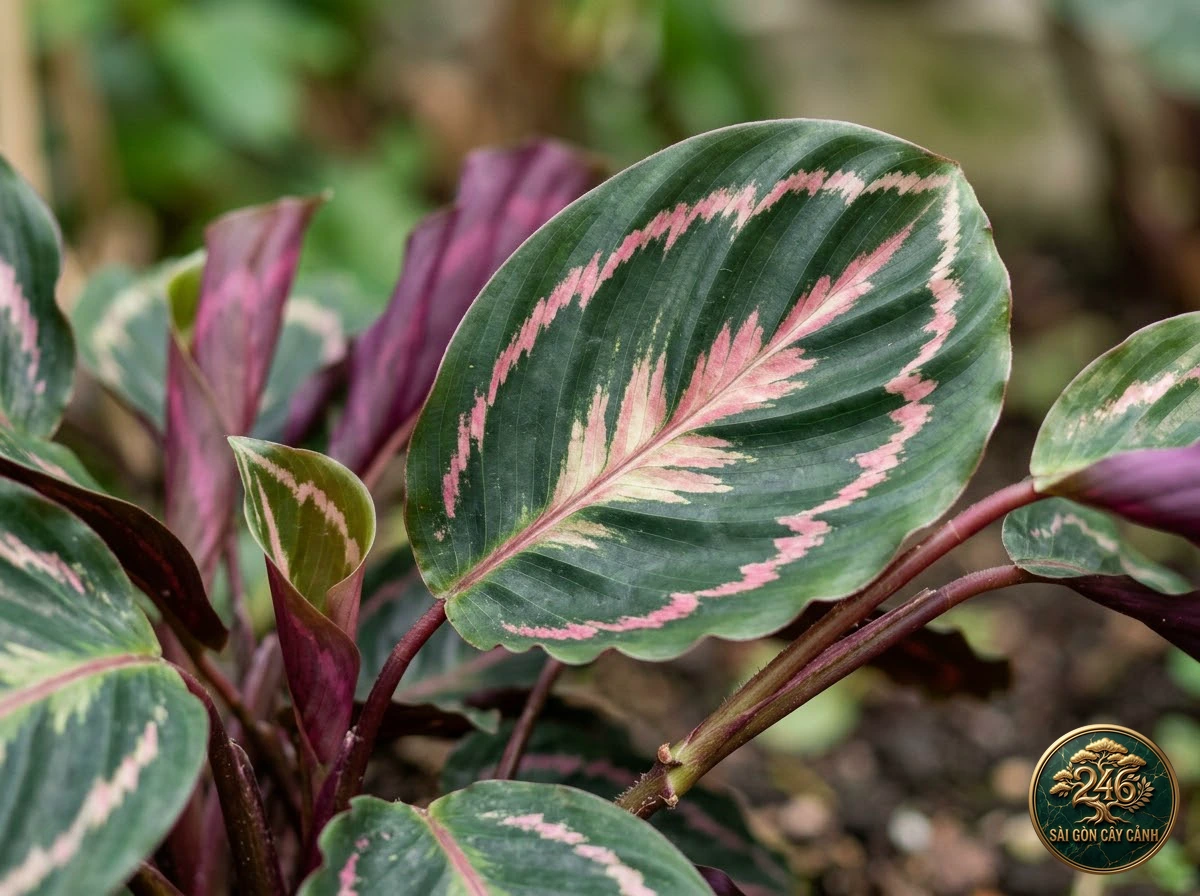
Foliar blades of the Rose-painted calathea exhibit a broadly elliptic to sub-orbicular outline measuring 20 to 30 cm in length and 15 to 22 cm in width. The glossy adaxial surface of deep midnight green is emblazoned with a feathered halo of glowing rose-pink echoing the margins alongside a matching pink midrib.
The abaxial leaf surface is bathed in deep beetroot-purple. At twilight, the entire circular canopy elevates into a stately vertical position, unveiling its rich purple reverse and protecting adaxial stomata throughout the night.
Micro-anatomical cross-sections of Goeppertia roseopicta blades demonstrate that the luminous rose-pink halo results from dense concentrations of pure anthocyanin vacuoles nestled directly beneath transparent upper epidermal cells. These lens-like epidermal cells magnify incident light into radiant ruby-pink wavelengths, creating dramatic contrast against adjacent dark chlorophyll zones.
3. Photometric Calibration & Window Exposure Optimization
The plant prospers under generous filtered daylight between 1,500 and 3,200 lux. Ample indirect light sustains vivid ruby-pink saturation and crisp contrast against dark green laminar backgrounds.
Irrigation water for Roseopicta must be comprehensively demineralized; even marginal chlorine or fluoride levels in tap water accumulate at rounded margins, creating necrotic gray-brown halos that mar the exquisite magenta paintbrush patterns.
Photometric assays establish an optimal PPFD between 70 and 135 umol/m2/s for Rose-painted calathea. Ample indirect light stimulates anthocyanin-synthesizing enzymes to maintain vivid pink rings, while direct insolation rapidly photodegrades organic pigment bonds.
4. Pulvinus Kinematics & Nyctinastic Diurnal Dynamics
The nyctinastic movement of Goeppertia roseopicta is dramatic: by day, broad orbicular blades fan horizontally like emerald saucers intercepting light. At dusk, pulvinar motor cells contract to raise blades into a tightly clustered prayer silhouette.
This rhythmic motion regulates plant hydration while creating a captivating living visual transformation within domestic interiors every day.
Thermal preferences center between 21°C and 29°C (70°F – 84°F). Continuous vigorous growth occurs under warm stability; temperatures below 16°C (60°F) induce wilting and suppress vivid pink anthocyanin production.
Relative humidity must be maintained at a high 70% to 90%. An ultrasonic humidifier or gravel moisture tray keeps broad circular blades turgid and margins pristine.
Optimal warmth from 21°C to 30°C (70°F – 86°F) paired with relative humidity above 70% is essential to keep circular blades uncurled and pink margins pristine. An ultrasonic room humidifier faithfully replicates the humid biospheres of Upper Amazonian understories.
The robust pulvinus houses spongy motor parenchyma. At nightfall, reversible turgor shifts swing expansive circular blades vertically into a tight lotus-bud formation, sheltering tender inner petiole sheaths against chilling nighttime drafts.
5. Porous Aggregate Substrate Engineering & Aeration Dynamics
Potting substrate demands maximum porosity: 35% pumice, 30% shredded sphagnum moss with mini composted bark, 20% desalted coco coir, and 15% coarse perlite, balanced to pH 5.8 to 6.5.
This aerated aggregate prevents compaction, shielding fleshy subterranean rhizomes from anaerobic fungal decay.
A porous potting aggregate blending fine pumice and composted mini pine bark ensures uniform moisture percolation without bottom ponding. Interstitial mineral pores provide generous oxygen to respiring root networks, preventing anaerobic fungal rots.
6. Organic Nutrition Schedules & Periodic Micronutrient Priming
Apply diluted liquid organic fertilizer monthly during spring and summer to nourish broad circular leaves and sustain vivid ruby-pink banding.
Avoid high-salinity synthetic fertilizers. Flush containers thoroughly with pure water bi-monthly to eliminate residual mineral salts from root zones.
Administer diluted organic liquid fertilizer (one-quarter rate) every 3 to 4 weeks during spring and summer. Feeds rich in natural potassium and magnesium nourish vivid ruby-pink rings and enhance adaxial foliar gloss.
7. Clinical Diagnostic Matrix & Rapid Correction Protocols
| Clinical Symptom | Primary Etiology | Diagnostic Evaluation | Corrective Prescription |
|---|---|---|---|
| Crisp brown edges and scorched pink halo margins | Ambient relative humidity dropped below 50% or chlorine toxicity | Monitor room hygrometer and evaluate irrigation water purity | Run ultrasonic humidifier above 70% and switch to pure dechlorinated water |
| Fading of glowing rose-pink halo contrast | Photon deficit below 900 lux threshold or excessive nitrogen | Measure ambient lux at foliage level with light meter | Relocate to bright filtered daylight (1,800+ lux) and apply chelated feed |
| Sudden drooping and collapse of orbicular petioles | Severe root zone dehydration or anaerobic root rot decay | Probe substrate core moisture and evaluate root health | Bottom-water if desiccated; prune decayed roots and repot if soggy |
| Minute yellow punctate spots and fine webbing on purple reverses | Tetranychid spider mites colonizing warm, arid environments | Inspect abaxial midrib surfaces with magnification loupe | Shower foliage gently with lukewarm water and treat with neem spray |
8. Cryptic Pest Prophylaxis & Foliar Surface Sanitation
The vivid rose-crimson brushstrokes of Roseopicta react sensitively to armored scale feeding punctures. Upon spotting suspicious blemishes, swab along the pink halo with 0.5% horticultural mineral oil and isolate the specimen for ten days.
Dust broad orbicular blades with damp microfiber towels bi-weekly to ensure open stomatal pores and optimize photosynthetic efficiency.
Dust broad orbicular blades with damp microfiber towels bi-weekly to ensure open stomatal pores and optimize photosynthetic efficiency, routinely checking basal petiole sheaths for early spider mites or mealybugs.
9. Asexual Propagation Methodology & Root Strike Protocols
Propagate via rhizome clump division during seasonal spring repotting. Separate crowns retaining at least 3 sturdy circular leaves and independent roots with a sterile blade.
Propagate reliably through root cluster division during springtime repotting. Gently tease apart rhizome groupings carrying two to three mature blades and fibrous roots, planting into moist aerated substrate under 85% humidity shelter for 15 days.
Propagate via rhizome clump division during spring container upgrades. Separate crowns retaining at least 3 sturdy circular leaves and independent roots with a sterile knife, dusting wounds before potting under shaded humidity for three weeks.
10. Companion Animal Safety Profile & ASPCA Non-Toxic Verification
Goeppertia roseopicta holds full non-toxic certification from the ASPCA regarding canine and feline companions. Devoid of hazardous secondary metabolites, it serves as an ideal ornamental centerpiece for pet-friendly interiors.
11. Biophilic Curation & Contemporary Interior Design Styling
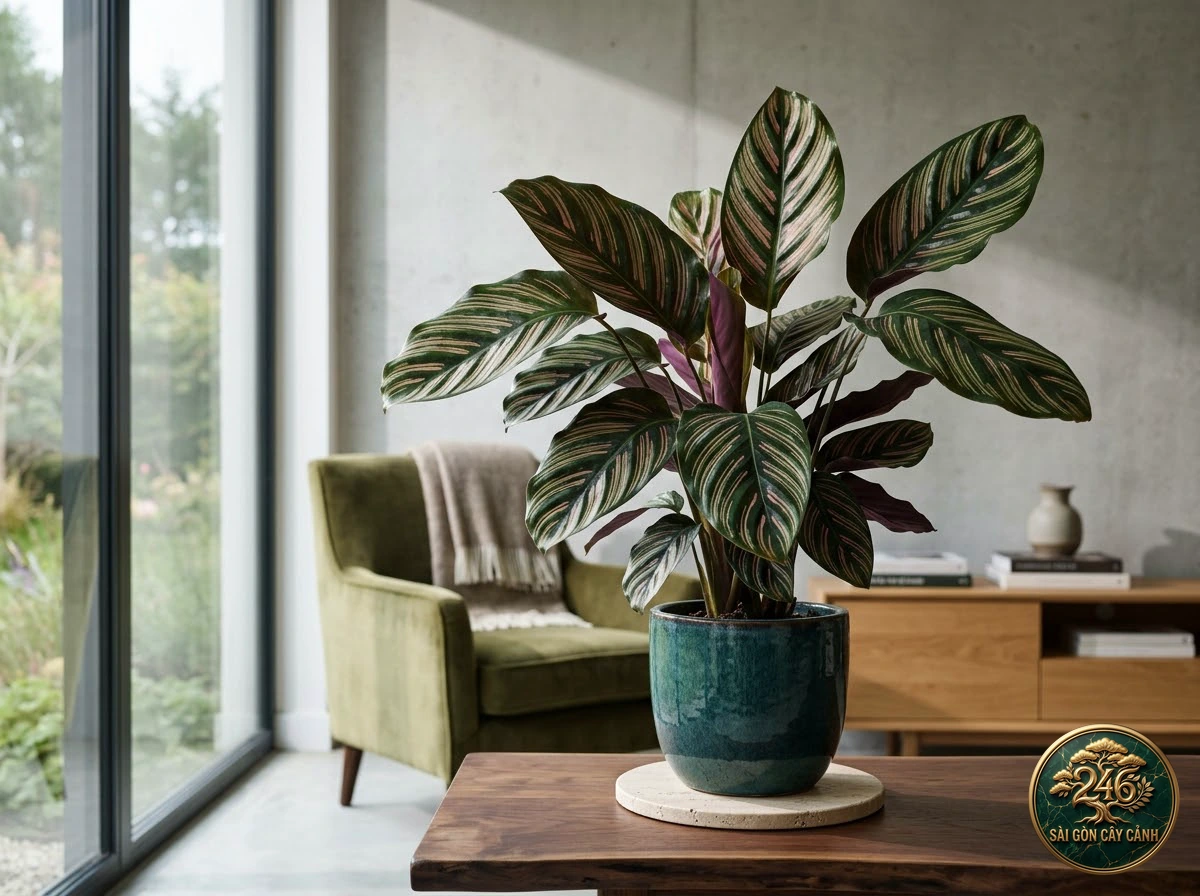
Featuring expansive orbicular foliage, luminous rose-pink rings, and royal beetroot reverses, the Rose-painted calathea is a magnificent living focal point for coffee tables, credenzas, and luxury biophilic spaces.
Its hypnotic beauty and kinetic prayer movement instill deep tranquility, replenishing mental energy and introducing natural opulence into contemporary homes.
Featuring expansive orbicular foliage, luminous rose-pink rings, and royal beetroot reverses, the Rose-painted calathea is a magnificent living focal point for coffee tables, credenzas, and luxury biophilic spaces.
12. Master Principles for Sustainable Indoor Acclimatization
To cultivate a flourishing specimen of Goeppertia roseopicta and preserve vivid pink halos indoors, horticulturists must observe three golden rules:
- Hydration axiom: Irrigate evenly with distilled or RO water once topsoil dries to 2 cm; prevent moisture from pooling inside unrolling emergent leaf funnels.
- Illumination axiom: Deliver medium diffused light around 1,500 lux; inadequate radiance fades rose pigmentation while direct sunlight creates scorched bleached lesions.
- Maintenance axiom: Maintain at least 65% atmospheric humidity to keep broad rounded blades perfectly planar without distorting outward margins.
Nursery Care Journal & Living Greenery Moments
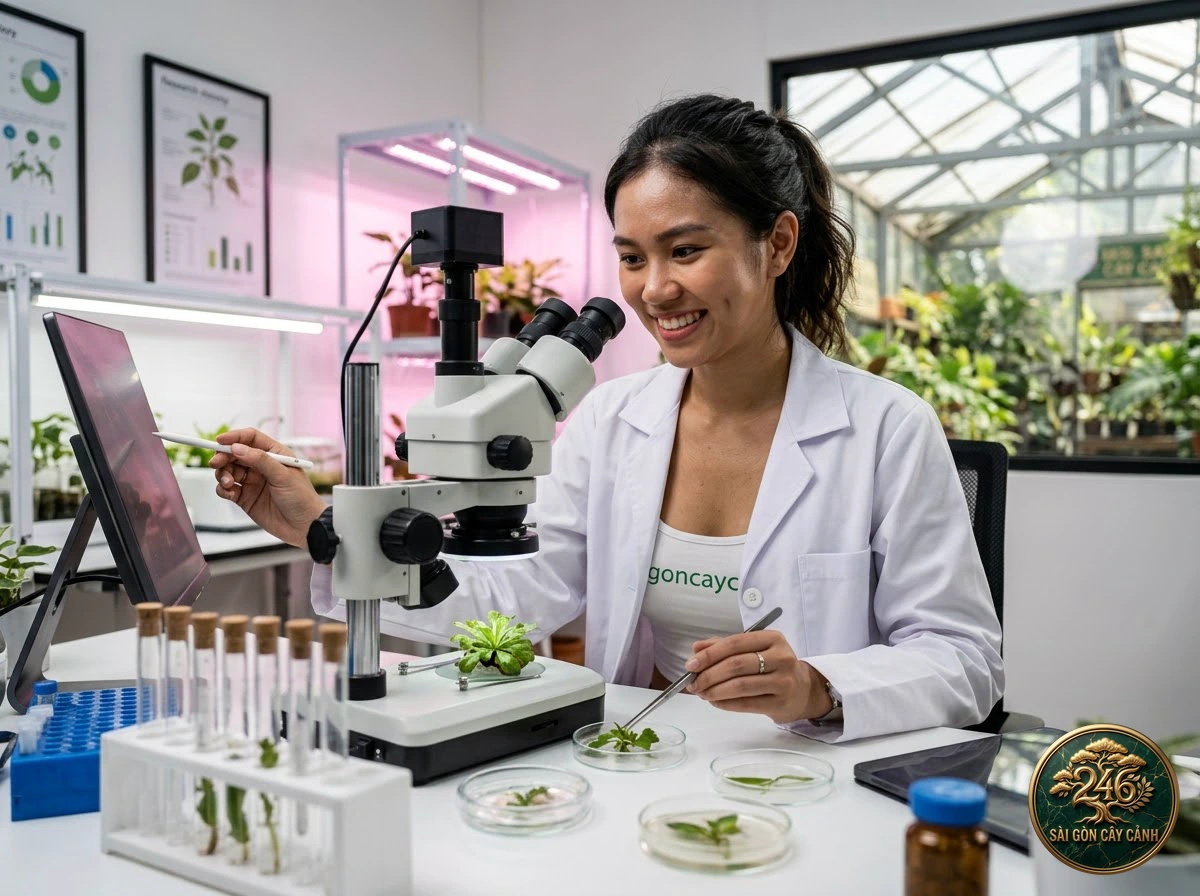
At Saigon Cay Canh greenhouse, each photograph captures genuine everyday care moments between plant lovers and living greenery, spreading a passion for nature and green-living inspiration.
13. Frequently Asked Questions Regarding Rose-painted calathea (FAQs)
How to protect the vibrant pink margins from irrigation burn?
Hydrate with AC condensate or reverse-osmosis filtered water with TDS below 25 ppm. Never apply municipal tap water directly because chlorine and fluoride compounds accumulate along leaf perimeters, necrotizing delicate rose-painted tissues.
Why do Roseopicta leaves lose their intense pink coloration?
Insufficient diffused illumination or cold room temperatures suppresses anthocyanin synthesis. Relocate the plant to a 1,500 lux indirect light area and maintain warmth above 20°C.
Is Goeppertia roseopicta safe for household pets?
Completely non-toxic. The ASPCA verifies that Roseopicta poses zero chemical threat to companion dogs and cats if chewed.
How often should Roseopicta be repotted?
Repot every 12 to 18 months during early spring when active root tips begin emerging through bottom drainage holes.
What symptoms indicate insufficient ambient humidity?
Crisping margins, backward leaf curling, and loss of foliar gloss signify that relative humidity has fallen below 55%.
Why does the pink halo on Rose-painted calathea display such intense color?
Dense accumulations of natural anthocyanin pigments along lateral veins produce luminous ruby-pink bands contrasting sharply against midnight-green backgrounds.