Living plant profile
King begonia
Begonia rex
Comprehensive botanical dossier for King begonia (Begonia rex). Identification, lighting calibration, porous substrate formulation, and cultivation guide by Saigon Cay Canh.
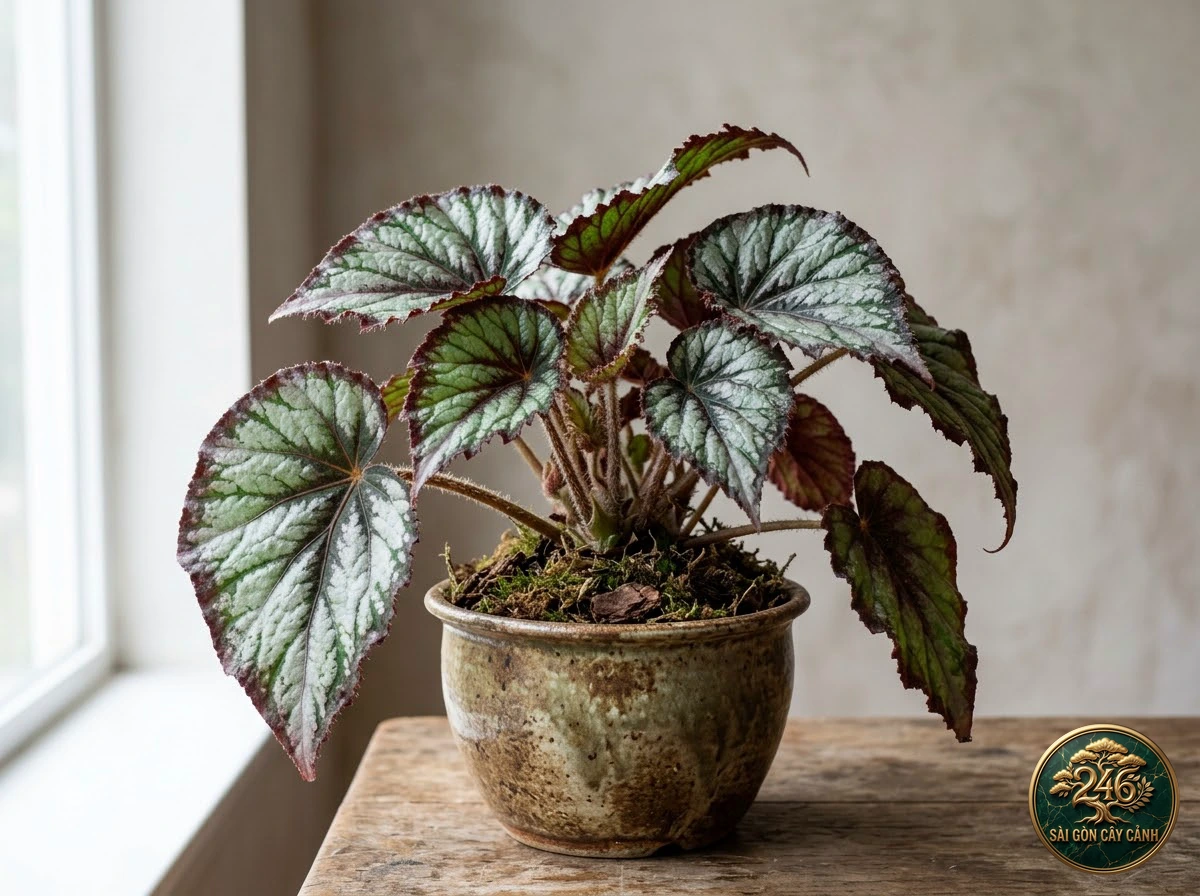
King begonia (Begonia rex) is universally venerated as the undisputed monarch of ornamental foliage, native to the mist-shrouded subtropical montane valleys of Assam in northeastern India and eastern Himalayan foothills. The taxon mesmerizes collectors through broad, obliquely cordate painted leaves woven in concentric zones of metallic silver, amethyst purple, ruby crimson, and deep forest green.
1. Core Botanical Taxonomy & Cultural Specifications
| Scientific Name | Begonia rex |
|---|---|
| Botanical Family | Begoniaceae (Begonia Family) |
| Native Distribution | Northeastern India (Assam and Eastern Himalayan subtropical forests) |
| Growth Demeanor | Rhizomatous clumping perennial forming expansive painted foliage rosettes |
| Lighting Threshold | Medium to bright indirect diffused illumination (1,200 – 2,000 lux) |
| Hydration Cadence | Irrigate once top 2-3cm dries; strictly avoid wetting foliar surfaces |
| Substrate Formulation | 35% pumice, 25% shredded moss, 20% mini pine bark, 20% perlite |
| Thermal Range | 18°C – 27°C (64°F – 80°F), leaf drop occurs beneath 14°C (57°F) |
| Relative Humidity | Optimal ambient relative humidity 60% – 80% |
| Cultivation Difficulty | Moderate (Demands porous drainage and excellent air movement) |
| Pet Safety Profile | Toxic to dogs and cats (ASPCA warning for oral mucosal irritation) |
Begonia rex was first discovered in 1856 in Assam, India, accidentally introduced inside an orchid shipment consigned to Europe, igniting an international botanical sensation. Swiss botanist Jean Jules Linden and taxonomist John Putzeys formally published the taxon with the epithet ‘rex’ (King), honoring the unmatched majesty and regal color zoning of its foliage.
In native subtropical montane ecology, Begonia rex prospers upon mossy limestone outcroppings and humus-rich forest floors flanking shaded river gorges. Specimens develop a thick subterranean or creeping surface rhizome that radiates long, hairy petioles, establishing spectacular foliage mounds 30 to 45 cm high with spreads spanning 50 to 60 cm.
Taxonomic records from the Royal Botanic Gardens Kew (POWO) recognize Begonia rex as the foundational cornerstone of the world-renowned Begonia Rex-cultorum hybrid group. Its genetic plasticity and remarkable phenotypic variation cement its status as an invaluable botanical treasure in horticultural history.
2. Morphological Identification & Foliar Architecture
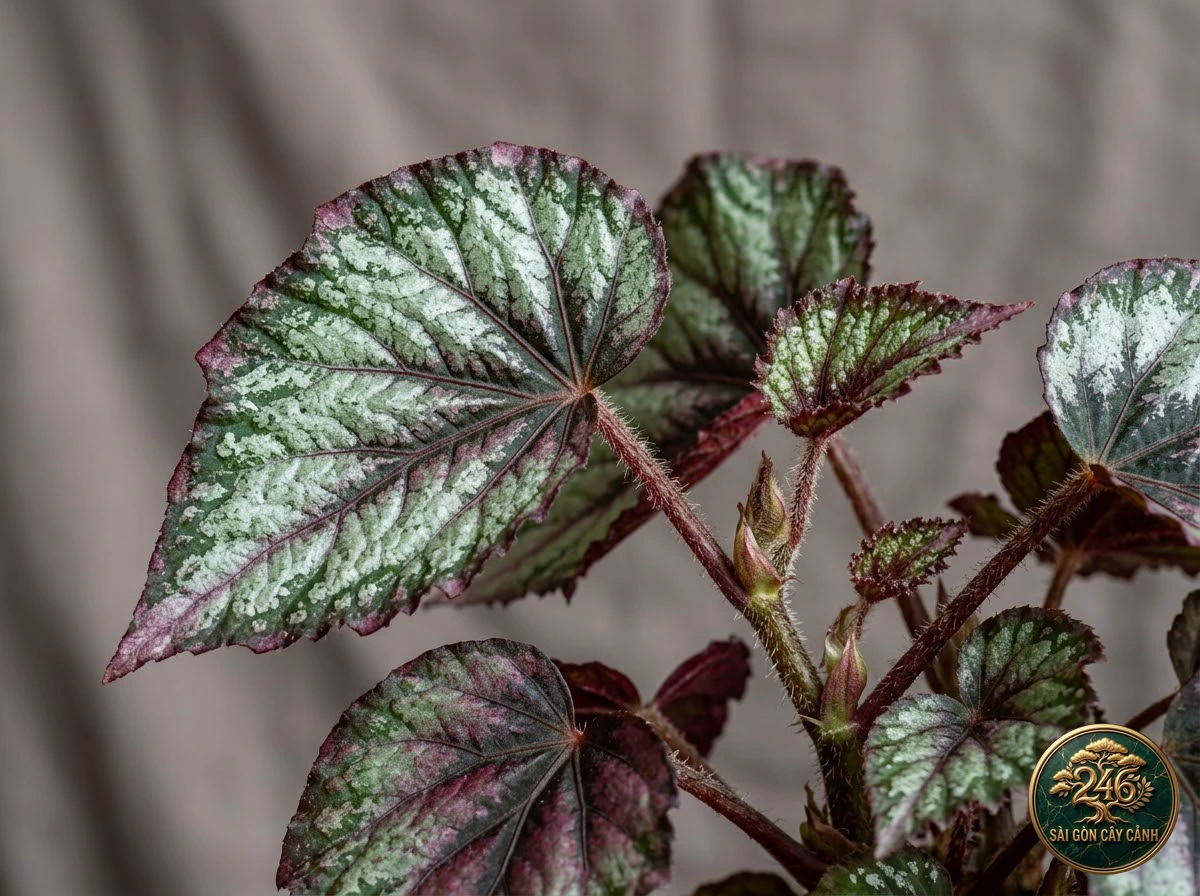
Diagnostic morphology centers on prominently asymmetric, obliquely cordate leaf blades—the classic trademark of the genus Begonia. Blades span 18 to 30 cm in length and 12 to 20 cm across, exhibiting undulate or irregularly dentate margins and a textured, rugose surface clothed in micro-trichomes that scatter incident light.
Adaxial patterning features concentric chromatic bands: a wide, shimmering metallic silver zone encircles an emerald-charcoal central core, framed by outer borders of amethyst or claret. The abaxial surface highlights raised palmate purplish veins, supported by thick fleshy petioles densely clad in reddish-pink trichomes.
Foliar histology of Begonia rex reveals specialized conical epidermal cells with light-refracting micro-facets. The dazzling metallic silver and iridescent wine-red tapestry results from an intricate layering of sub-epidermal micro air pockets over palisade mesophyll infused with anthocyanins and chlorophylls, producing an embroidered velvet texture unmatched across the botanical kingdom.
3. Photometric Calibration & Window Exposure Optimization
To maintain high chromatic definition across concentric rings, King begonia requires indirect diffused light between 1,200 and 2,000 lux. Filtered morning eastern daylight is optimal, promoting robust anthocyanin and carotenoid synthesis without scorching delicate velvet epidermal tissues.
The cardinal watering rule for Begonia rex demands bottom-soaking or careful perimeter irrigation, strictly prohibiting overhead watering onto foliar surfaces or central rhizome crowns. Lingering moisture on pubescent blades under stagnant air represents the primary catalyst for Botrytis gray mold and bacterial rot.
Optimal photonic calibration for Begonia rex requires a gentle diffuse PPFD between 40 and 75 µmol/m²/s. Direct sunbeams rapidly scorch the delicate unpigmented metallic zones, while excessive shade promotes weak etiolated petioles and diminishes the dense, compact tapestry architecture of the foliage.
4. Creeping Rhizomatous Anatomy & Tapestry Foliage Canopy Architecture
Diverging from nyctinastic prayer plants, Begonia rex relies on a prostrate, fleshy creeping rhizome extending horizontally along the substrate surface. This succulent caudex serves as a storage reserve for moisture and carbohydrates, affording superior short-term drought resilience.
From internodal meristems, petioles emerge alternately and arch outward to create a dome-like foliage canopy. Indoor cultivators should rotate planters 90 degrees weekly to ensure balanced photonic exposure across all quadrants, preventing asymmetric phototropic leaning.
Optimal thermal conditions span 18°C to 27°C (64°F – 80°F). The species adapts favorably to moderate indoor air-conditioned spaces, but defoliation and tissue decay ensue if ambient temperatures fall below 14°C (57°F) for extended durations.
Maintaining relative humidity between 60% and 80% ensures thick, velvety foliar texture. However, high humidity must always be paired with gentle convective air circulation to prevent powdery mildew spores from colonizing leaf surfaces.
Stabilizing vapor pressure deficit (VPD) between 0.6 and 0.85 kPa is critical to prevent crisp foliar margins while curbing gray mold (Botrytis cinerea). Never mist water directly over puberulent foliar surfaces; instead, rely on pebble trays or ultrasonic humidifiers that elevate ambient room moisture without wetting delicate leaf blades.
The creeping rhizomatous habit of Begonia rex expands horizontally across the substrate surface, sending out shallow adventitious roots to forage nutrient-rich forest litter. Selecting wide, shallow pots accommodates unrestricted lateral rhizome elongation, encouraging abundant new foliar spears from dormant nodal buds.
5. Porous Aggregate Substrate Engineering & Aeration Dynamics
The root architecture of Begonia rex is delicate and shallow, concentrated in the upper root zone and acutely susceptible to anaerobic hypoxia. The ideal substrate blends 35% pumice gravel, 25% chopped sterile sphagnum, 20% conditioned mini pine bark, and 20% horticultural perlite.
This granular aggregate exhibits superior pore oxygenation, allowing excess irrigation water to evacuate freely without suffocating the fleshy rhizome, fostering an optimal rhizosphere for fine fibrous root development.
The potting medium for King begonia demands exceptional porosity exceeding 30% air space to guard fleshy creeping rhizomes against fungal collar rot. Blending Indonesian pumice with mini-grade sanitized pine bark and crushed charcoal retains balanced moisture while permitting free gravitational drainage at an acidic pH of 5.8 to 6.5.
6. Organic Nutrition Schedules & Periodic Micronutrient Priming
Nutritional requirements for King begonia are moderate. Supply gentle liquid organic fertilizer (such as kelp extract or worm casting tea) diluted to quarter-strength every 3 to 4 weeks during active spring and summer growth phases.
Never apply concentrated synthetic fertilizer salts directly to rhizomes or foliage. Flush the potting aggregate thoroughly with distilled water quarterly to wash away residual fertilizer salts.
Fertilization protocols for Begonia rex should employ mild biological nutrients formulated at an EC below 0.6 mS/cm every 3 weeks during active vegetative flushes. Supplementing bio-chelated calcium and magnesium reinforces cell walls, preventing physical tearing and intensifying metallic silver iridescence.
7. Clinical Diagnostic Matrix & Rapid Correction Protocols
| Clinical Symptom | Primary Etiology | Diagnostic Evaluation | Corrective Prescription |
|---|---|---|---|
| Fine white powdery patches appearing across foliar surfaces | Powdery mildew (Oidium begoniae) fueled by high humidity paired with stagnant air | Inspect adaxial lamina under directional light for fungal mycelia | Increase ventilation, isolate plant, and spray biological sulfur or neem oil emulsion |
| Leaves fade, lose concentric color banding, and turn dull | Chronic light deficit beneath 800 lux or direct solar scorching | Measure ambient lux levels with digital photometer | Relocate planter to gentle diffused daylight spanning 1,200 to 1,800 lux |
| Rhizome turns soft and mushy with rapid foliar collapse | Substrate waterlogging causing anaerobic rhizome rot and decay | Unpot root ball to evaluate rhizome firmness and smell potting medium | Excise decayed rhizome sections, sanitize wounds, and repot in fresh aerated pumice aggregate |
| Leaf margins turn crisp brown, curl inward, and crack | Ambient humidity dropping beneath 50% or proximity to dry HVAC draft streams | Verify room humidity with digital hygrometer | Deploy ultrasonic misting to sustain humidity above 65% and relocate away from AC vents |
8. Cryptic Pest Prophylaxis & Foliar Surface Sanitation
The most prevalent health threats comprise powdery mildew (Oidium begoniae) and mealybugs. Upon detecting powdery white patches, immediately isolate the specimen, enhance air circulation, and apply bio-fungicides such as sulfur or dilute neem oil.
Cleanse foliage periodically using an ultra-soft camel-hair dusting brush to remove settled dust, strictly avoiding damp abrasive wiping that crushes delicate epidermal hairs and bruises tissues.
Powdery mildew (Oidium begoniae) poses the primary pathological threat to Begonia rex in stagnant indoor air. Counter this by ensuring continuous gentle air circulation and treating nascent white fungal spots with a 0.3% potassium bicarbonate solution, eradicating fungal mycelia without staining ornate foliage.
9. Asexual Propagation Methodology & Root Strike Protocols
Begonia rex is renowned in plant physiology for extraordinary foliar totipotency. The classic propagation technique involves severed-vein leaf cuttings pinned onto moist aggregate or triangular leaf wedges containing a primary vein.
Using a sterilized scalpel, make shallow transverse slits across primary abaxial veins, pinning the leaf flat onto moist perlite and sphagnum. Kept under warm, humid shade, adventitious plantlets emerge vigorously along incision sites over a 25 to 35 day period.
Propagating Begonia rex represents an exquisite botanical demonstration via leaf wedge or scored-vein cuttings. Pinning a leaf with nicked primary veins onto moist perlite-sphagnum within a high-humidity chamber triggers adventitious meristem formation along cuts, producing miniature plantlets over a 25 to 35 day developmental interval.
10. Companion Animal Toxicology Profile & ASPCA Safety Evaluation
Pet owners should display specimens upon high shelving units, hanging planters, or architectural pedestals to simultaneously showcase regal foliage while guaranteeing absolute safety for domestic pets.
11. Biophilic Curation & Contemporary Interior Design Styling
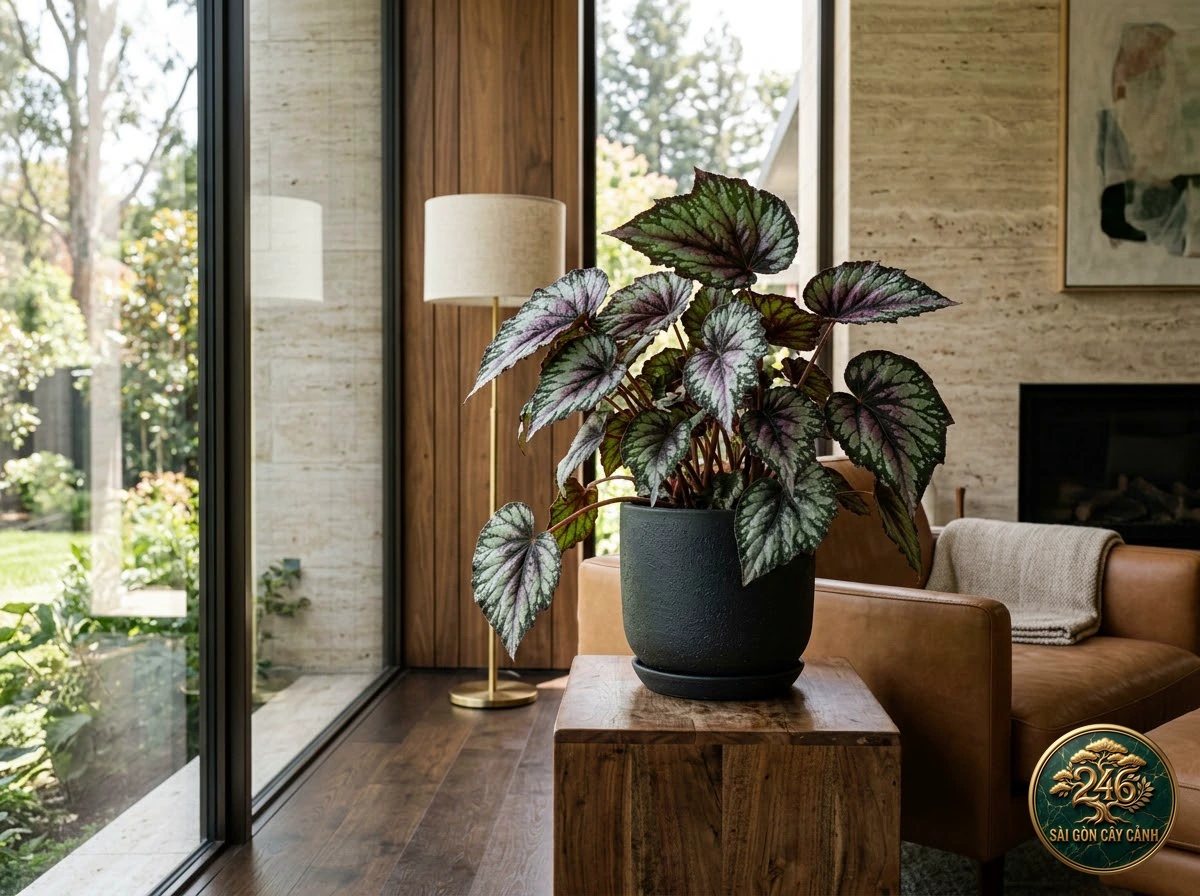
King begonia serves as a visual artistic focal point for indoor botanical collections, delivering opulent drama to executive desks, creative studios, and bespoke tropical vivarium installations.
The interplay between shimmering metallic silver zones and mysterious wine-purple hues stimulates creative energy, introducing unparalleled aesthetic depth and sophisticated luxury to contemporary living environments.
Within interior design, Begonia rex is celebrated as living abstract painting crafted by botanical evolution. The swirling spiral blades adorned with shimmering silver, deep crimson, and obsidian halos impart mystical luxury, transforming console tables and library shelves into captivating botanical showcases.
12. Master Principles for Sustainable Indoor Acclimatization
Three foundational axioms for cultivating immaculate Begonia rex specimens indoors:
- Hydration axiom: Sub-Irrigation Axiom: Strictly avoid wetting foliage or rhizome crowns; bottom-water with soft water once upper soil dries.
- Illumination axiom: Diffused Photonic Calibration: Supply 1,500 lux filtered light; shield from direct solar beams to prevent foliar scorching.
- Maintenance axiom: Microclimatic Aeration Standard: Maintain 65% relative humidity alongside gentle air movement to suppress powdery mildew spores.
13. Frequently Asked Questions Regarding King begonia (FAQs)
Can Begonia rex be misted directly with a spray bottle?
Strictly no. Water droplets trapped among velvet foliar hairs invite fungal leaf spots and rot. Bottom-water or irrigate around the container perimeter instead.
How do you successfully propagate King begonia from leaves?
Slit the primary veins on the underside of a healthy leaf, pin it flat onto moist perlite aggregate, and maintain high humidity; new plantlets develop in 25-35 days.
Is Begonia rex safe around dogs and cats?
No. The ASPCA warns that Begonias contain soluble organic salts causing oral irritation and vomiting. Display specimens safely on elevated shelves.
When should repotting occur?
Repot every 12 to 18 months in spring using wide, shallow containers matching the horizontal creeping habit of the rhizome.
How can you preserve the shimmering metallic silver leaf finish?
Deliver 1,500 lux diffused light, sustain ambient humidity above 65%, and gently dust blades with a soft camel-hair brush monthly.
Why is direct foliar misting strictly discouraged for Begonia rex?
The fine puberulent hairs of Begonia rex trap droplets for extended periods; standing water under stagnant indoor air creates an ideal breeding ground for powdery mildew and bacterial leaf blight, rapidly ruining intricate foliar patterns.