
Living plant profile
Metallic begonia
Begonia metallica
Comprehensive botanical dossier for Metallic begonia (Begonia metallica). Identification, lighting calibration, porous substrate formulation, and cultivation guide by Saigon Cay Canh.
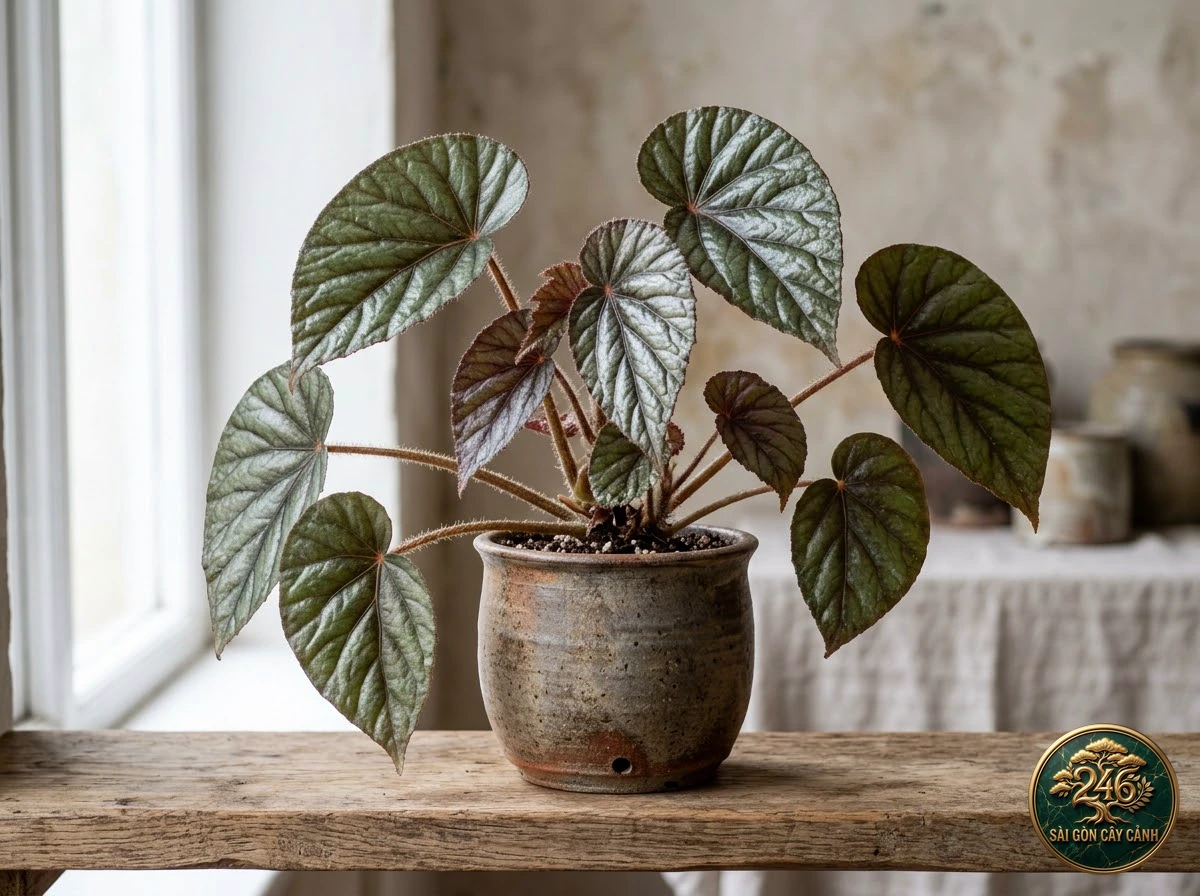
Metallic begonia (Begonia metallica) is one of the most classic and alluring shrub-like begonias native to the tropical Atlantic rainforests of eastern Brazil (Bahia and Espirito Santo). The species captivates plant enthusiasts through lobed, asymmetric cordate foliage finished in an iridescent metallic bronze-green sheen, highlighted by deeply sunken dark veins and soft white-pubescent stems.
Sài Gòn Cây Cảnh Care Compass
1. Core Botanical Taxonomy & Cultural Specifications
| Scientific Name | Begonia metallica |
|---|---|
| Botanical Family | Begoniaceae (Begonia Family) |
| Native Distribution | Eastern Brazil (Atlantic Rainforests of Bahia and Espirito Santo) |
| Growth Demeanor | Erect branching shrub-like perennial standing 60 to 90 cm tall |
| Lighting Threshold | Generous bright diffused indirect illumination (1,300 – 2,000 lux) |
| Hydration Cadence | Hydrate with soft water once upper third of container substrate turns dry |
| Substrate Formulation | 35% pumice, 25% fine bark nuggets, 20% sphagnum moss, 20% perlite |
| Thermal Range | 19°C – 28°C (66°F – 82°F), vegetative arrest below 15°C (59°F) |
| Relative Humidity | Optimal ambient relative humidity 60% – 75% |
| Cultivation Difficulty | Easy to Moderate (Notably hardier than delicate Rex cultivars) |
| Pet Safety Profile | Toxic to companion animals (ASPCA warning for oral mucosal irritation) |
Begonia metallica was scientifically documented in 1869 by British botanist William Graham. The specific name ‘metallica’ derives from Latin signifying ‘metallic’, celebrating the lustrous, reflective bronze-green iridescence characterizing the upper foliar epidermis through specialized cellular optics.
Within primary Atlantic rainforest ecosystems across eastern Brazil, the species forms dense semi-woody shrubby stands 60 to 90 cm tall along moist forested hillsides and semi-open light gaps. Extensive cauline branching gives mature specimens a sturdy, bushy architectural silhouette.
Botanical archives at Kew POWO validate Begonia metallica as an accepted species and a foundational parent in historical shrub-begonia breeding programs. Beyond metallic foliage, it produces pendulous clusters of delicate blush-pink florets clad in reddish-pink trichomes.
2. Morphological Identification & Foliar Architecture
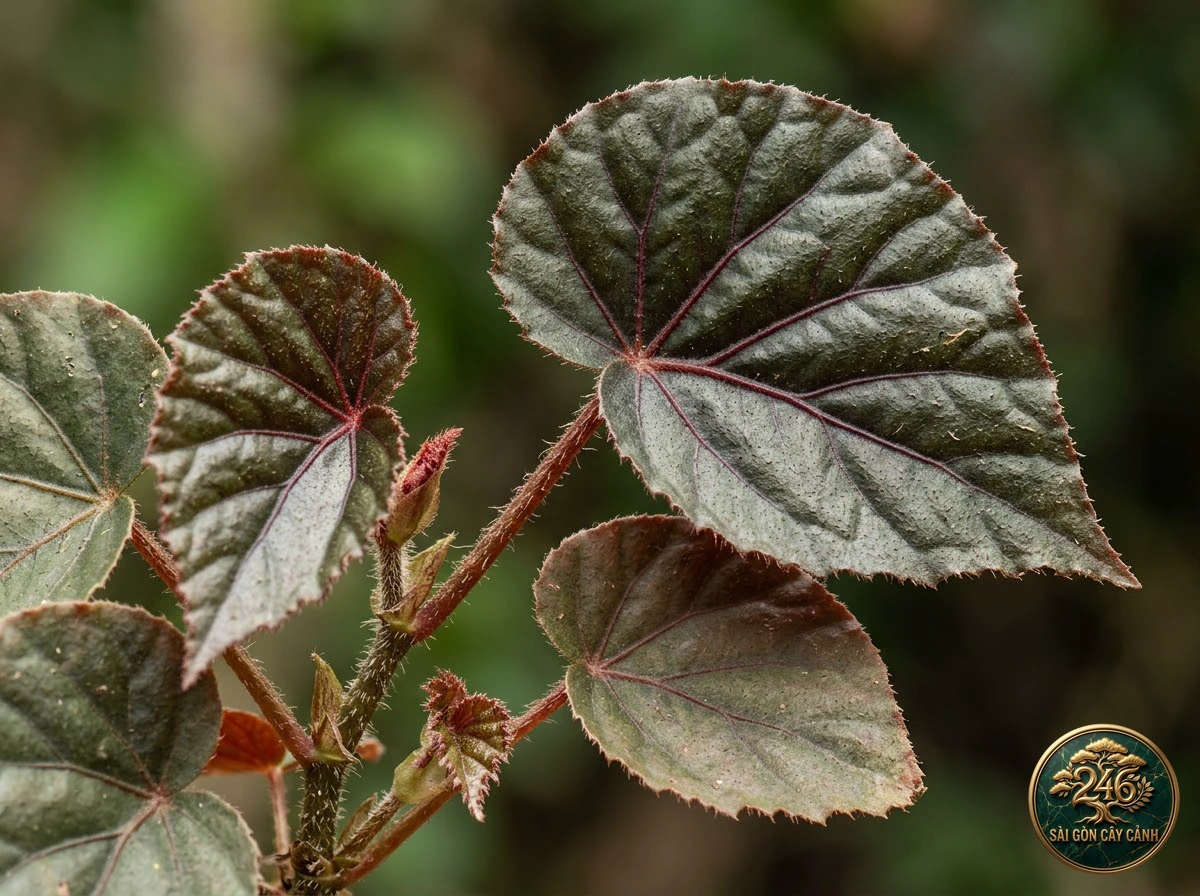
Definitive morphology features asymmetric, obliquely cordate shallowly lobed blades measuring 12 to 20 cm in length and 8 to 14 cm across. The adaxial surface displays an iridescent metallic bronze-green luster, accentuated by deeply impressed dark green veins that create dramatic topographical relief.
The abaxial surface is pale green with raised purplish veins clothed in fine white pubescence. Stems ascend vertically into branched shrubby canes coated in soft white trichomes, supported by reddish-bronze petioles spanning 8 to 15 cm.
Foliar laminas of Begonia metallica exhibit a distinctive metallic luster achieved through the combination of a glossy cuticular finish and layered epidermal cells that induce optical light interference. The upper surface gleams with an iridescent bronze-green metallic sheen delineated by deeply sunken dark veins, while the underside features pale wine-red tones clothed in soft pinkish trichomes.
3. Photometric Calibration & Window Exposure Optimization
Benefiting from durable foliar substance and protective trichomes, Begonia metallica relishes bright diffused light spanning 1,300 to 2,000 lux. Generous indirect illumination adjacent to sheer-curtained eastern or northern windows activates metallic iridescence and induces regular flowering.
Irrigation should allow substrate drying between applications. Permit the upper third of the container mix to dry before watering thoroughly with dechlorinated soft water. Avoid leaving standing water droplets on pubescent leaves overnight to prevent fungal leaf spot pathogens.
Biological light saturation for Begonia metallica occurs within a PPFD range of 55 to 95 µmol/m²/s. Generous filtered daylight reinforces cuticular wax deposition for pronounced metallic luster and stimulates the emergence of pendulous sprays of pink-haired white blossoms resembling delicate marine corals.
4. Shrubby Branching Architecture & Epidermal Metallic Optics
Diverging from prostrate creeping begonias, Begonia metallica exhibits an erect shrub-like habit branching freely from base to crown. This structural stance creates a tall, well-balanced foliar dome ideal for pedestals or living room tables.
The metallic epidermal iridescence results from specialized optical layering beneath transparent epidermal cells that scatters excess light while trapping diffuse photons. As the viewing angle shifts under interior illumination, the foliage shimmers with dynamic transitions between emerald and metallic bronze.
Ideal room temperature ranges from 19°C to 28°C (66°F – 82°F). The species displays superior heat tolerance compared to Rex cultivars, needing only protection when temperatures drop beneath 15°C (59°F).
Ambient relative humidity maintained between 60% and 75% sustains foliar iridescence and silky trichomes. The plant accommodates standard indoor humidity notably better than fragile Calathea relatives.
The target ambient vapor pressure deficit (VPD) is calibrated between 0.65 and 0.9 kPa. Despite its denser cuticular wax compared to rhizomatous begonias, Begonia metallica still requires 60% to 75% relative humidity to prevent crisp lobed margins and prevent premature lower foliage drop.
The erect shrub-like branching architecture of Begonia metallica attains heights of 80 to 120 cm with succulent stems cloaked in rusty-rufous puberulent hairs. Regularly pinching vigorous terminal shoots breaks apical dominance, encouraging lush lateral branching that fills out a dense, beautifully rounded indoor specimen.
5. Porous Aggregate Substrate Engineering & Aeration Dynamics
The root system of Begonia metallica expands vigorously but requires high macroporosity to prevent hypoxia. The optimal potting aggregate comprises 35% pumice gravel, 25% conditioned mini pine bark, 20% sterile sphagnum moss, and 20% horticultural perlite.
This aggregate evacuates excess irrigation water without ponding, providing uninterrupted oxygenation to root tissues and safeguarding the basal stem against decay during humid tropical seasons.
The substrate blend for Metallic-leaf begonia demands structural stability with over 40% mineral aggregates to nurture its extensive root system. Combining Indonesian pumice, mini pine bark, horticultural charcoal, and worm castings produces an aerated organic matrix that drains freely without puddling while holding pH steady at 6.0 to 6.8.
6. Organic Nutrition Schedules & Periodic Micronutrient Priming
Feed Begonia metallica with balanced liquid organic biological fertilizer diluted to half-strength every 4 weeks throughout warm active periods. Organic nitrogen and potassium build sturdy canes and stimulate recurrent blooming.
Suspend feeding during resting winter intervals or when soil is parched. Leach containers thoroughly with pure water quarterly to eliminate residual mineral salts.
Biological nourishment should supply chelated iron and zinc micronutrients within an organic liquid base every 3 weeks at an EC below 0.7 mS/cm. Soluble iron is indispensable for synthesizing the chlorophyll matrix that manifests the splendid bronze-green metallic sheen across the foliage.
7. Clinical Diagnostic Matrix & Rapid Correction Protocols
| Clinical Symptom | Primary Etiology | Diagnostic Evaluation | Corrective Prescription |
|---|---|---|---|
| Crisp brown tips and leaf curl on metallic foliage | Municipal water mineral excess or ambient humidity beneath 50% | Examine water source purity and monitor room hygrometer readings | Transition to pure RO or harvested rainwater and set container atop wet gravel trays |
| Leggy etiolated stems and faded metallic sheen | Chronic light starvation beneath 800 lux threshold | Measure ambient light levels at cane height with digital photometer | Relocate specimen to bright indirect daylight (1,300 – 1,900 lux) near windows |
| Basal stem softens with rapid foliar shedding | Substrate waterlogging causing anaerobic root and basal stem decay | Unpot root ball to inspect root integrity and evaluate tissue firmness | Repot into porous aggregate, excise damaged rootlets, and maintain room warmth above 19°C |
| Webbing and minute yellowish stippling in petiole axils | Mealybug or spider mite colonization during dry, warm intervals | Examine clasping petiole sheaths closely using magnification loupe | Wipe axils with botanical alcohol swab and spray cold-pressed neem emulsion |
8. Cryptic Pest Prophylaxis & Foliar Surface Sanitation
Because stems are pubescent, regularly inspect petiole axils for mealybugs. Swab nascent pest colonies with cotton tips dipped in dilute biological soap upon early detection.
Regularly brush accumulated dust from foliage using a soft dry brush to sustain metallic luster and ensure open stomatal pores for efficient gas exchange.
To deter mealybugs and thrips from colonizing pubescent young shoots, apply a preventative monthly misting of biological colloidal silver (10 ppm) blended with mild garlic terpene extract. This organic barrier repels piercing pests while eliminating airborne fungal spores.
9. Asexual Propagation Methodology & Root Strike Protocols
Propagation of Begonia metallica is highly efficient via stem tip cuttings bearing 2 to 3 nodes during spring or early rainy intervals.
Using a sterilized knife, sever a stem cutting just beneath a node, placing it into pure water or moist perlite and sphagnum under warm shade; robust root systems establish over a 25 to 35 day period.
Stem tip and nodal cane cuttings yield exceptional propagation success with Begonia metallica. Harvesting 10-12 cm terminal cuttings bearing 2-3 mature leaves, dusting cut stems with sterile charcoal powder, and inserting them into moist perlite produces vigorous root systems over a 25 to 35 day developmental interval.
10. Companion Animal Toxicology Profile & ASPCA Safety Evaluation
Displaying specimen containers on elevated wooden pedestals or shelving units showcases the elegant metallic shrub silhouette while ensuring a safe distance from household pets.
11. Biophilic Curation & Contemporary Interior Design Styling
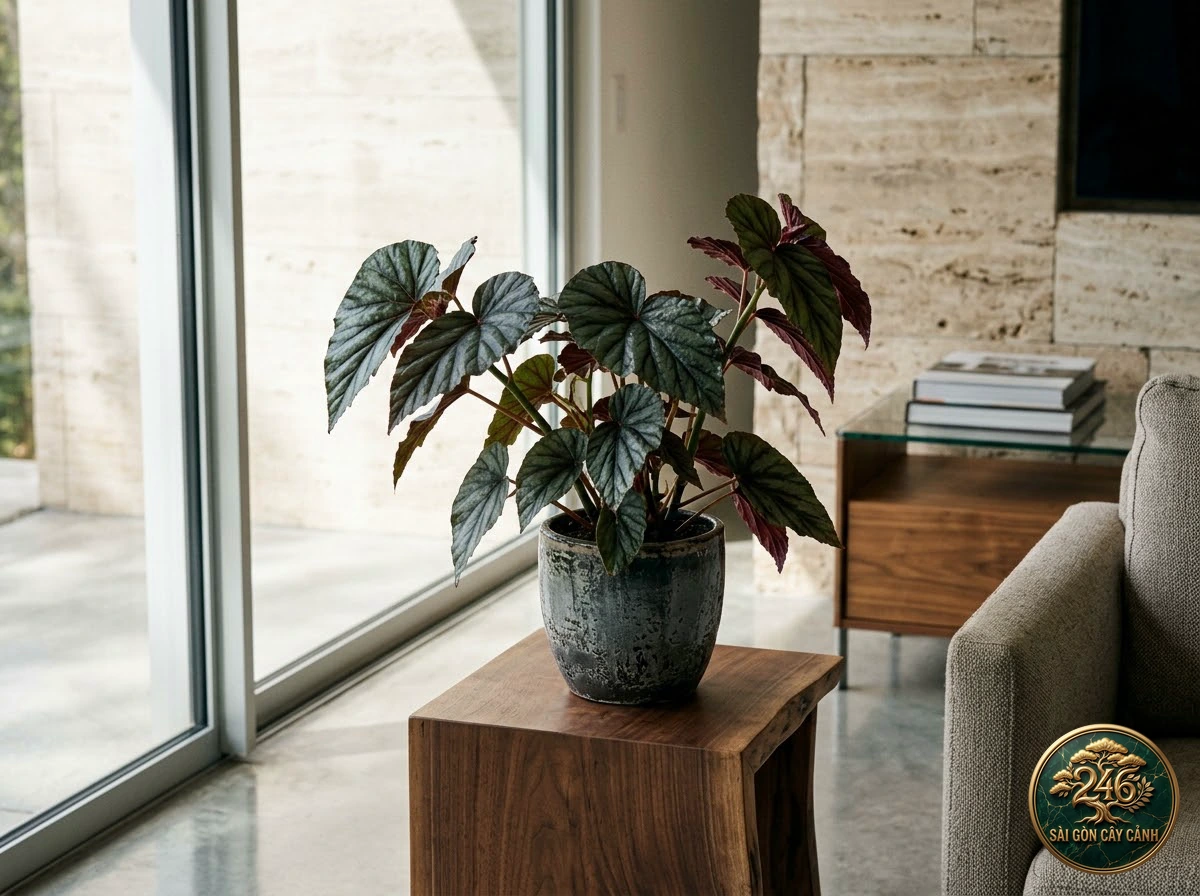
Featuring unique metallic bronze-green coloration and proud shrubby habit, Begonia metallica is an outstanding selection for Classic, Vintage, and contemporary Biophilic interiors.
Its shimmering metallic patina paired with pendulous blush florets instills feelings of nostalgic charm, understated luxury, and organic serenity in living spaces.
In luxurious interior architecture, Begonia metallica exudes aristocratic Victorian botanical charm. The interplay of bronze-green metallic luster and coral-pink pubescent floral sprays establishes a living heirloom centerpiece, elevating residential aesthetics with timeless grace.
12. Master Principles for Sustainable Indoor Acclimatization
Three cardinal rules for cultivating flourishing Begonia metallica specimens indoors:
- Hydration axiom: Generous Photonic Axiom: Supply strong 1,600 lux filtered daylight to sustain bronze metallic iridescence across foliar surfaces.
- Illumination axiom: Aerated Watering Standard: Hydrate with soft water once upper third of soil dries; avoid standing effluent in bottom saucers.
- Maintenance axiom: Canopy Pruning Protocol: Pinch apical tips in early spring to stimulate lateral branching, producing a dense, multi-stemmed shrub.
Nursery Care Journal & Living Greenery Moments
At Saigon Cay Canh greenhouse, each photograph captures genuine everyday care moments between plant lovers and living greenery, spreading a passion for nature and green-living inspiration.

13. Frequently Asked Questions Regarding Metallic begonia (FAQs)
Why does Begonia metallica possess a metallic bronze-green foliar finish?
The metallic sheen is produced by specialized optical layering in epidermal cells, scattering excess radiation while trapping diffuse photons.
Does Begonia metallica bloom indoors?
Yes. Mature specimens regularly produce pendulous clusters of blush-pink florets clad in reddish-pink trichomes from spring through summer under bright indirect light.
Is Metallic begonia safe around cats and dogs?
No. The ASPCA warns that Begonias contain soluble organic salts causing oral irritation and vomiting. Keep elevated.
How can you encourage bushier branching from the base?
Pinching apical cane tips in early spring breaks apical dominance, stimulating axillary buds to produce dense lateral branches.
What is the recommended repotting interval?
Repot every 1 to 2 years in spring as root systems expand and taller stems require larger weighted planters.
What causes the iridescent metallic sheen on Begonia metallica leaves?
The metallic bronze-green luster results from optical wave interference as incident light traverses the reflective glossy cuticle and uniquely stratified epidermal cells, scattering light waves into a shimmering metallic bronze glow.