Living plant profile
Imperial begonia
Begonia imperialis
Comprehensive botanical dossier for Imperial begonia (Begonia imperialis). Identification, lighting calibration, porous substrate formulation, and cultivation guide by Saigon Cay Canh.
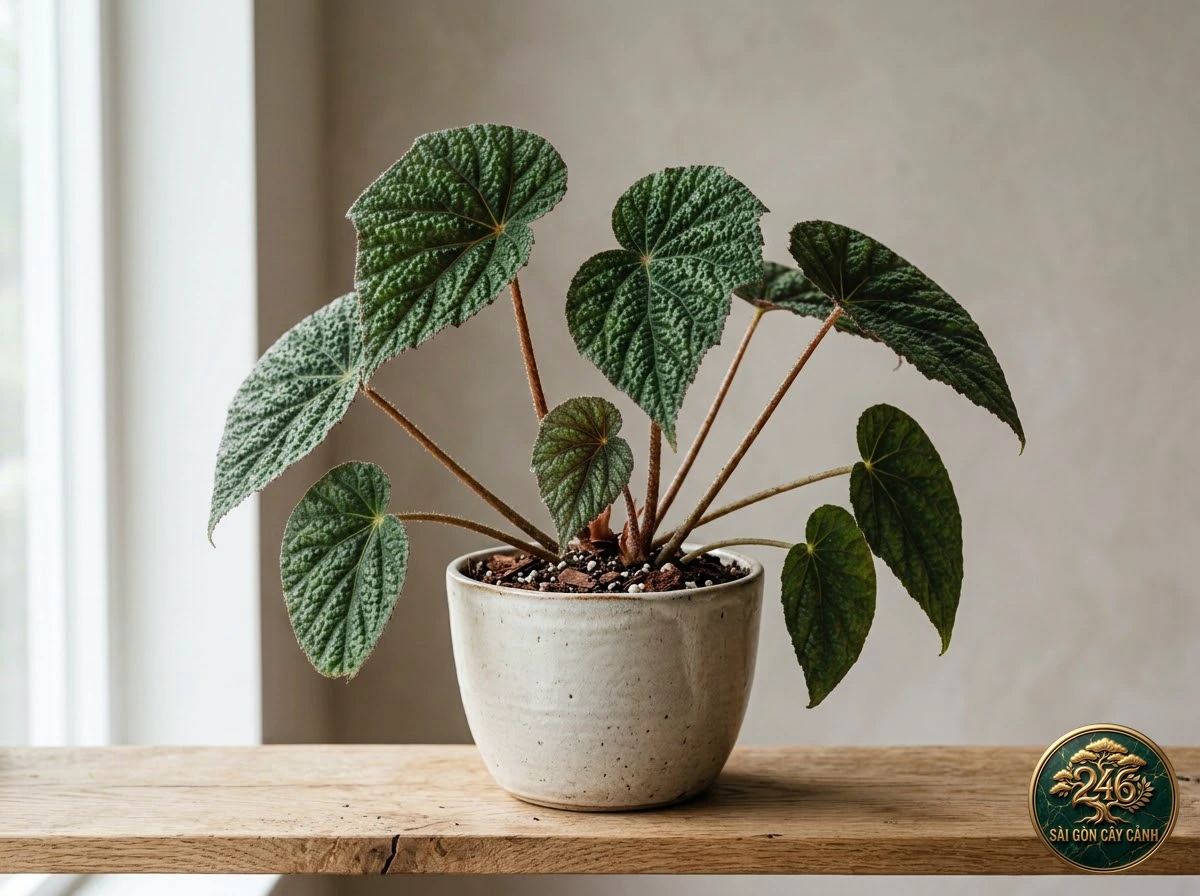
Imperial begonia (Begonia imperialis) is an aristocratic, rare velvet-textured rhizomatous begonia native to shaded limestone bluffs in Veracruz and Oaxaca, southern Mexico. The species captivates connoisseurs with deeply rugose, pustular velvet laminas in saturated emerald-moss tones, accentuated by chartreuse or silvery highlighted veins that shimmer mysteriously beneath dim understory lighting.
1. Core Botanical Taxonomy & Cultural Specifications
| Scientific Name | Begonia imperialis |
|---|---|
| Botanical Family | Begoniaceae (Begonia Family) |
| Native Distribution | Southern Mexico (Veracruz and Oaxaca limestone bluffs) |
| Growth Demeanor | Low creeping rhizomatous perennial forming lush velvet clusters 15-25 cm tall |
| Lighting Threshold | Low to medium filtered indirect irradiance (800 – 1,500 lux) |
| Hydration Cadence | Sub-irrigate when surface dries slightly, maintaining gentle moisture |
| Substrate Formulation | 40% pumice, 25% mini pine bark, 20% Chilean sphagnum, 15% worm castings |
| Thermal Range | 19°C – 26°C (66°F – 79°F), growth arrests beneath 14°C (57°F) |
| Relative Humidity | Optimal relative humidity 70% – 90% |
| Cultivation Difficulty | Moderate to advanced (Demands elevated humidity and brisk airflow) |
| Pet Safety Profile | Toxic to companion dogs and cats (Contains soluble organic salts) |
Formally published in 1860 by eminent Belgian botanist Charles Antoine Lemaire, Begonia imperialis was heralded as the ‘imperial sovereign’ of velvet-leaved begonias due to its unparalleled foliar texture. The specific epithet ‘imperialis’ denotes royal majesty, echoing the intense esteem it commanded across European aristocratic conservatories throughout the nineteenth century.
In its native habitat, this taxon represents an endemic lithophytic element inhabiting shaded karst limestone cliffs flanking river gorges. Delicate adventitious roots weave through moist lithophytic moss carpets where ambient air remains continuously saturated, yet gravitational water never stagnates across the creeping rhizome.
According to Kew’s Plants of the World Online (POWO), Begonia imperialis resides within section Gireoudia. Morphologically, its hallmark consists of dense micro-trichomes capping raised laminar pustules, scattering faint photons toward interior chloroplasts while repelling surface water droplets in hyper-humid understories.
2. Morphological Identification & Foliar Architecture
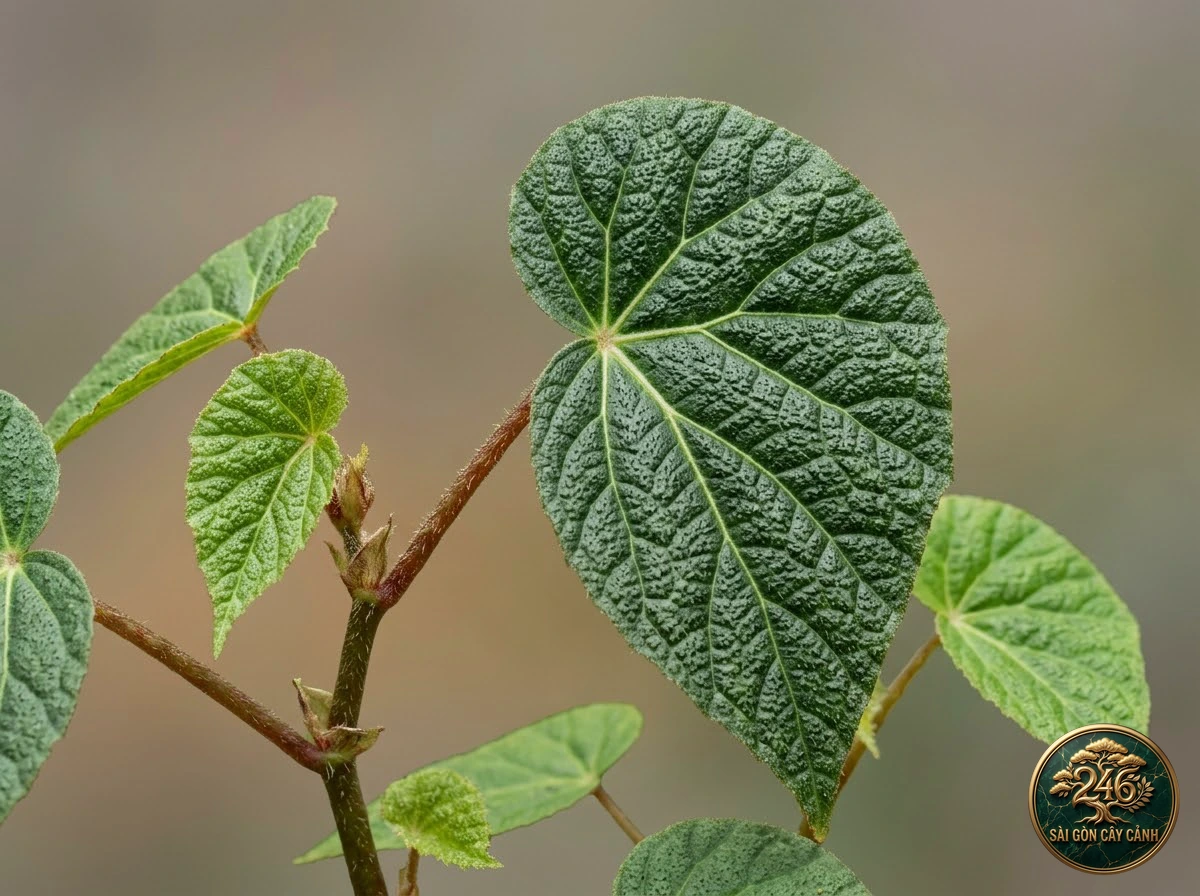
Laminas of Begonia imperialis feature an asymmetric cordate-ovate outline with short acute apexes, spanning 6 to 12 cm in length and 5 to 9 cm in breadth. The entire adaxial surface is densely carpeted with microscopic raised pustules, creating an exquisite tactile sensation akin to heavy antique velvet.
Foliar coloration presents a mesmerizing optical composition: deep moss-green to warm chocolate fields interweave with pale chartreuse, mint, or frosted-silver halos radiating along primary venation. Abaxial surfaces reveal pale claret tones supported by short, succulent petioles cloaked in fine puberulence.
Foliar epidermal histology of Begonia imperialis reveals specialized conical dome cells cloaked in dense multicellular micro-trichomes. The raised pustular surface topology arises from localized palisade cell proliferation, establishing an optical velvet carpet that scatters and absorbs diffuse photons with astonishing efficiency within shaded limestone understories.
3. Photometric Calibration & Window Exposure Optimization
Imperial begonia is an archetypal shade-adapted sciophyte, thriving under gentle photosynthetic photon flux densities (PPFD) between 35 and 65 µmol/m²/s. The plant achieves peak assimilation in shaded interior niches receiving diffuse daylight, positioned 1.5 to 2.5 meters away from sheer-curtained windows.
The velvety foliage is intensely susceptible to high irradiance. Direct sun exposure or light levels exceeding 2,000 lux bleaches the delicate pustular architecture, precipitating permanent chlorotic scorching and catastrophic foliar margin curl.
Photosynthetic light saturation for Begonia imperialis peaks across an exceptionally low PPFD range of 30 to 60 µmol/m²/s. As an obligate sciophyte, its cellular machinery is fine-tuned for deep forest gloom. Exposing foliage to irradiance exceeding 85 µmol/m²/s precipitates photochemical degradation, collapsing the pustular velvet architecture and inflicting irreversible foliar necrosis.
4. Pustular Velvet Surface Histology & Understory Mat Habit
The creeping rhizome of Begonia imperialis travels just above or beneath the substrate line, producing short succulent petioles that overlap to form a compact, hemispherical mound. This branching habit enables multiple growing points, establishing a continuous velvet canopy that carpets container surfaces.
The pustular micro-relief acts as a biological optical lens array, trapping and focusing diffuse photons within shaded understories. Concurrently, the rugose topography prevents standing water from coalescing into continuous sheets, significantly diminishing susceptibility to Botrytis fungal colonization.
Thermal optimization for Begonia imperialis settles within a temperate band between 19°C and 26°C (66°F – 79°F). The taxon dislikes oppressive heat above 30°C and suffers physiological leaf drop if indoor temperatures plunge below 14°C during winter cold snaps.
Atmospheric humidity remains paramount: cultivation spaces must deliver sustained relative humidity between 70% and 90%. This species represents a quintessential candidate for sealed terrariums or illuminated vitrines equipped with automated ultrasonic humidification.
The target vapor pressure deficit (VPD) for Begonia imperialis is tightly constrained between 0.55 and 0.8 kPa. The species is acutely vulnerable to arid air-conditioned atmospheres; should relative humidity dip beneath 60%, delicate pustular cells lose turgor rapidly, deflating the velvet texture and curling leaf margins within 48 hours.
The prostrate carpeting habit of Begonia imperialis permits imbricated leaves to shelter shallow root zones from mechanical erosion and localized desiccation. Its succulent rhizome harbors specialized parenchymal starch and water-storage vacuoles, stabilizing internal turgor pressure during diurnal atmospheric humidity fluctuations.
5. Porous Aggregate Substrate Engineering & Aeration Dynamics
Substrate architecture for Imperial begonia requires exceptional granular porosity coupled with gentle moisture buffering, maintaining air-filled porosity above 35%. An elite recipe combines 40% mini pumice, 25% sanitized mini pine bark, 20% shredded Chilean sphagnum, and 15% screened vermicompost.
Rhizosphere pH should be calibrated to a near-neutral 6.2 to 6.8 to replicate calcareous limestone forest detritus. Avoid heavy garden loams or unwashed coir dust; compacted media starves rootlets of oxygen and precipitates fatal rhizome liquefaction within days of accidental over-saturation.
Potting aggregate for Imperial begonia demands an air-filled porosity exceeding 30% at container saturation. Integrating 20% shredded Chilean sphagnum with mini pumice and pasteurized pine bark creates a stable organic buffer that retains delicate rootlet moisture while holding pH steady near circumneutral 6.5.
6. Organic Nutrition Schedules & Periodic Micronutrient Priming
Fertilization protocols must remain exceptionally restrained. Employ mild biological liquid nutrients fortified with chelated calcium and magnesium diluted to one-fifth strength, applied strictly at the root zone every 4 weeks during active growth flushes.
Avoid high-nitrogen synthetic fertilizers, as excessive nitrogen induces thin, watery leaf tissues and compromises distinct pustular substance. Leach pots periodically with pure distilled water every 2 months to dissolve localized mineral salt buildup.
Biological nutritional protocols should deploy diluted vermicompost extract at one-fifth strength with an EC strictly below 0.5 mS/cm monthly. Supplying bio-chelated iron and magnesium fortifies the photosynthetic apparatus within pustular cells without burning delicate root hairs.
7. Clinical Diagnostic Matrix & Rapid Correction Protocols
| Clinical Symptom | Primary Etiology | Diagnostic Evaluation | Corrective Prescription |
|---|---|---|---|
| Velvet surface deflating, loss of pustular texture | Excessively arid indoor air or temperature exceeding 30°C | Hygrometer indicates ambient humidity dipping beneath 55% | Transfer specimen into terrarium or plant vitrine maintaining 75% humidity |
| Spreading water-soaked grayish-brown rot patches | Standing water trapped on velvet surface inciting Botrytis mold | Microscopic inspection reveals gray fungal mycelia on lesions | Excise afflicted foliage, halt foliar misting, and ensure 24/7 convective airflow |
| Squishy rhizome collapse, rapid leaf chlorosis and drop | Substrate saturation inducing hypoxic root asphyxiation | Moisture probe registers waterlogged aggregate at container base | Excise rotten sections, repot in coarse pumice aggregate, and bottom-water |
| Deep emerald foliage bleached pale with crisp burn patches | Incident light intensity exceeding physiological tolerance threshold | Photometer measures irradiance surpassing 2,200 lux at canopy level | Relocate specimen deeper into interior space or draw an additional sheer curtain |
8. Cryptic Pest Prophylaxis & Foliar Surface Sanitation
The most perilous pathogen is gray mold (Botrytis cinerea) and bacterial leaf rot (Xanthomonas) precipitated by stagnant moisture. The paramount defense is never to spray water droplets directly over velvet laminas and to ensure continuous micro-convective airflow.
Regularly sweep foliar surfaces with an ultra-soft camel-hair brush to dislodge dust particles nestled within pustular grooves, operating gently to preserve delicate microscopic velvet trichomes.
Mitigate Botrytis gray mold by operating continuous 24/7 micro-convective fans within plant cabinets or terrarium enclosures. Never permit water droplets to linger overnight inside pustular crevices, and apply quarterly preventative misting with 10 ppm biological colloidal silver.
9. Asexual Propagation Methodology & Root Strike Protocols
Propagate Begonia imperialis via rhizome division or wedge leaf cuttings centered on primary veins. Using a sterile scalpel, excise 3-5 cm rhizome segments retaining at least one viable dormant node.
Anchor rhizome cuttings horizontally atop moist sphagnum-perlite media beneath a propagation cloche; maintained at 24°C and 85% humidity, miniature velvety shoots and adventitious roots proliferate over a 25 to 35 day developmental interval.
During rhizome segment propagation, dusting severed ends with sterile activated charcoal powder prevents opportunistic Pythium and bacterial infiltration. Housing divisions in warm 22°C – 24°C chambers at 85% relative humidity over 25 to 35 days guarantees 100% velvet shoot emergence.
10. Companion Animal Toxicology Profile & ASPCA Safety Evaluation
Owing to its elevated humidity demands, Begonia imperialis is ideally cultivated within sealed glass terrariums or dedicated plant cabinets, establishing an optimal microclimate while naturally isolating the specimen from domestic pets.
11. Biophilic Curation & Contemporary Interior Design Styling
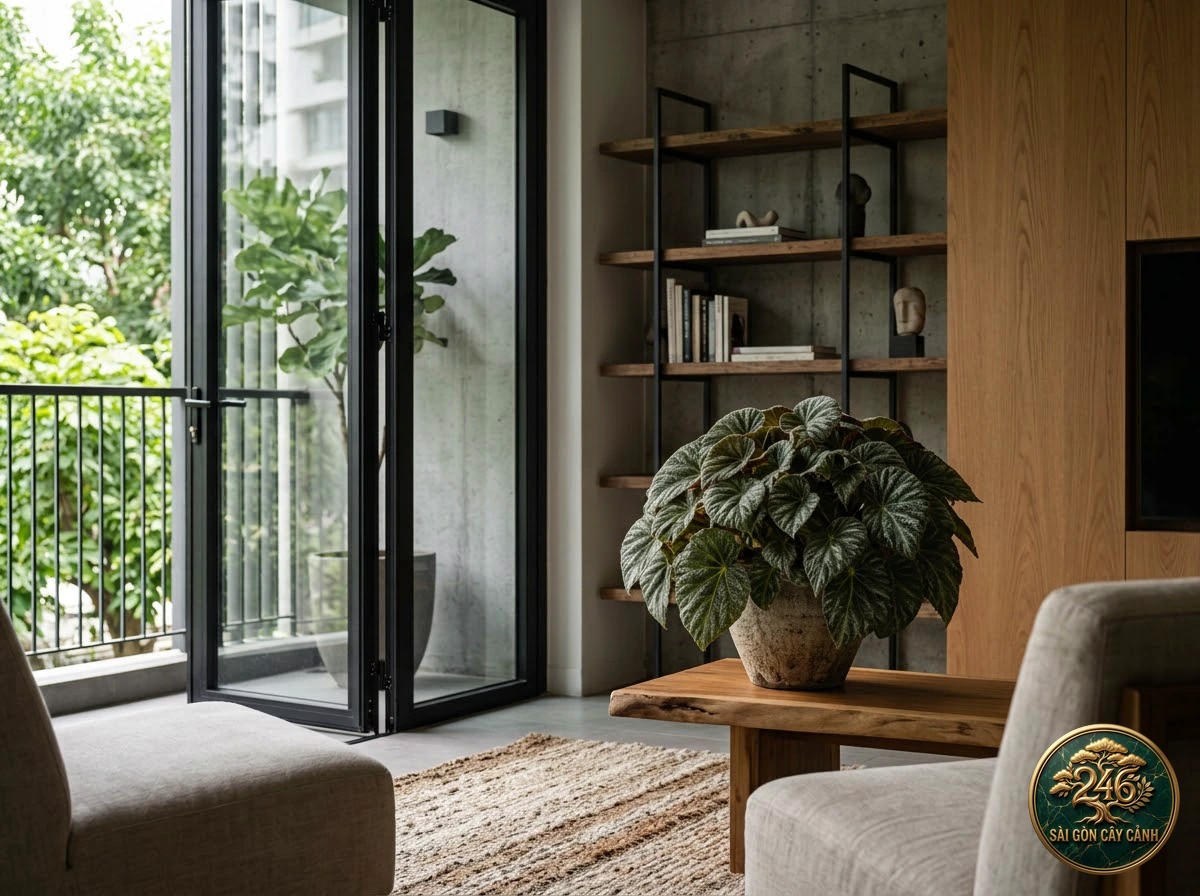
Begonia imperialis serves as an elite jewel in luxury botanical curation. The mysterious depth of its pustular velvet and luminous jade highlights transform containers into living museum artifacts across bespoke credenzas, private galleries, and upscale Biophilic vivariums.
The serene poise and antique elegance of this taxon instill profound contemplative calm, reconnecting urban dwellers with the primordial mystique of secluded rainforest understories.
In luxury Biophilic interior architecture, Begonia imperialis is revered as an exquisite living velvet sculpture. The visual depth of its moss-emerald rugose texture paired with glistening silver-highlighted veins instills profound tranquility, contemplative majesty, and timeless antique elegance.
12. Master Principles for Sustainable Indoor Acclimatization
Three foundational axioms for sustaining pristine Begonia imperialis specimens:
- Hydration axiom: Dry Laminar Axiom: Never permit standing water atop the velvet surface; deliver hydration strictly via bottom saucers or ambient humidity.
- Illumination axiom: Humid Microclimate Axiom: Preserve humidity above 70% and temperatures between 20°C – 25°C under continuous gentle air circulation.
- Maintenance axiom: Protective Sciophyte Axiom: Situate beneath mild 800 – 1,200 lux indirect light, strictly shielding foliage from direct sunbeams.
13. Frequently Asked Questions Regarding Imperial begonia (FAQs)
Can Begonia imperialis be cultivated in an open living room?
It proves difficult without a terrarium enclosure, as residential air conditioning yields only 40-50% humidity, whereas the plant demands at least 70% to prevent foliar crisping.
What creates the rugose tactile texture of Begonia imperialis leaves?
The raised pustules represent a specialized anatomical adaptation that focuses diffuse light in deep shade while repelling surface water pooling.
What is the safest irrigation method for Begonia imperialis?
Sub-irrigation (bottom watering) by immersing the pot base in water for 10-15 minutes before allowing complete drainage is the safest practice.
Does the plant bloom and what do the blossoms look like?
Specimens produce clusters of delicate milk-white florets on slender scapes during spring and summer; while charming, the foliar velvet remains the primary attraction.
Which water source is most beneficial for this begonia?
Utilizing distilled water, rainwater, or reverse osmosis (RO) effluent is paramount to prevent mineral salt crystallization around fine feeder rootlets.
What creates the extraordinary rugose velvet texture of Begonia imperialis?
The pustular velvet texture is engineered by millions of microscopic conical epidermal cells capped with fine trichomes; this adaptation focuses diffuse photons in deep limestone shade while repelling continuous water films that hinder gas exchange.