Living plant profile
Peacock begonia
Begonia pavonina
Comprehensive botanical dossier for Peacock begonia (Begonia pavonina). Identification, lighting calibration, porous substrate formulation, and cultivation guide by Saigon Cay Canh.
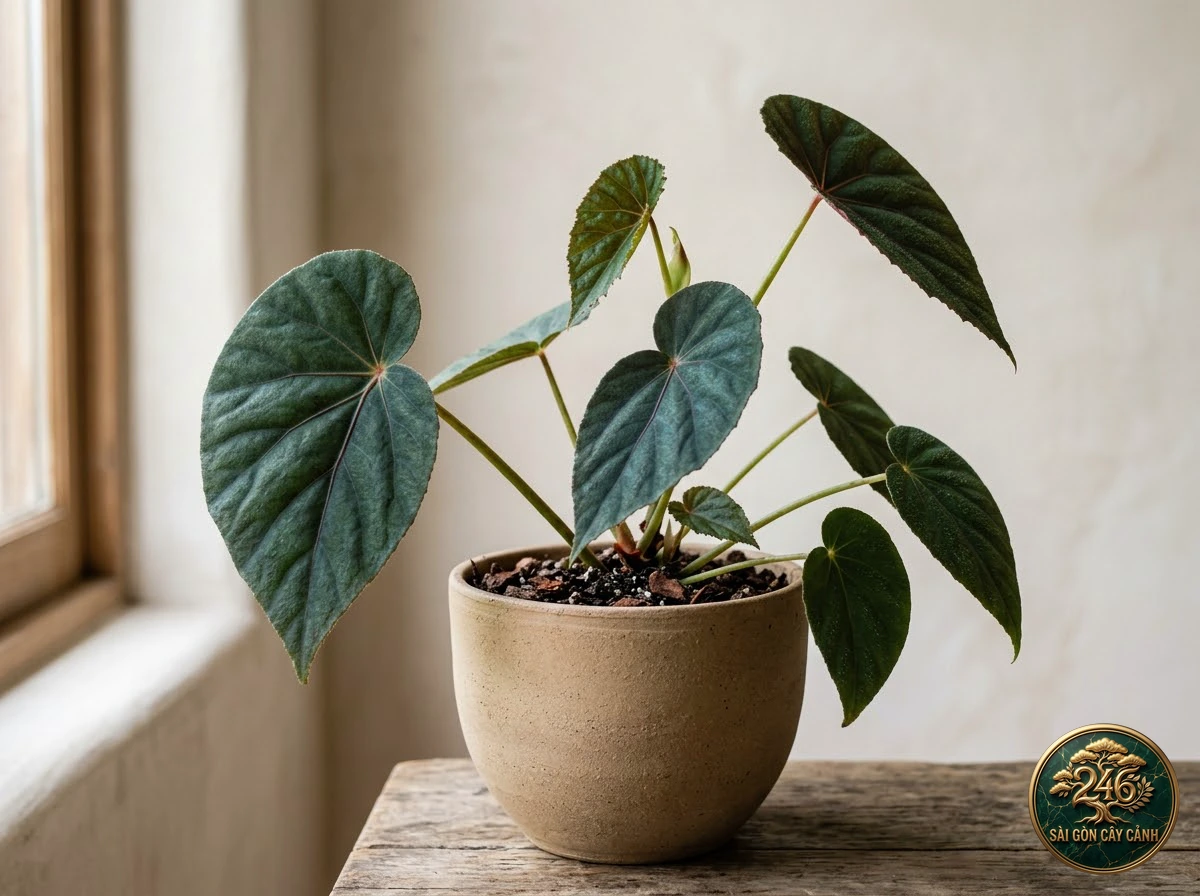
Peacock begonia (Begonia pavonina) is an extraordinary photobiological phenomenon of the plant kingdom, strictly endemic to montane cloud forests across the Cameron Highlands of Pahang, Peninsular Malaysia. The species is internationally renowned for displaying breathtaking, metallic peacock-blue structural iridescence when illuminated obliquely, transforming dark bronze-green laminas into glowing sapphire jewels beneath dim forest canopies.
Sài Gòn Cây Cảnh Care Compass
1. Core Botanical Taxonomy & Cultural Specifications
| Scientific Name | Begonia pavonina |
|---|---|
| Botanical Family | Begoniaceae (Begonia Family) |
| Native Distribution | Peninsular Malaysia (Cameron Highlands, Pahang montane forests) |
| Growth Demeanor | Low creeping rhizomatous perennial forming iridescent clusters 20-35 cm tall |
| Lighting Threshold | Low to medium filtered indirect lighting (600 – 1,200 lux) |
| Hydration Cadence | Sub-irrigate when surface dries slightly, maintaining cool gentle moisture |
| Substrate Formulation | 40% pumice, 25% mini bark, 20% Chilean sphagnum, 15% worm castings |
| Thermal Range | 16°C – 24°C (61°F – 75°F), cool montane affinity, stressed above 28°C (82°F) |
| Relative Humidity | Optimal relative humidity 75% – 95% |
| Cultivation Difficulty | Advanced (Demands cool montane temperatures and elevated humidity) |
| Pet Safety Profile | Toxic to companion animals (Contains soluble organic salts) |
Discovered and published in 1909 by celebrated British botanist Henry Nicholas Ridley, Director of the Singapore Botanic Gardens, Begonia pavonina has enthralled researchers for over a century. The specific epithet ‘pavonina’ stems from Latin ‘pavo’ (peacock), paying tribute to the mesmerizing structural blue iridescence that mirrors the radiant plumage of a peacock’s train.
Across its native highland habitat, the species dwells at elevations between 1,200 and 1,600 meters above sea level upon damp humic slopes in the Cameron Highlands. This montane environment remains cool year-round with temperatures seldom exceeding 25°C, shrouded in dense afternoon mountain mists beneath heavy forest shade.
According to Kew’s Plants of the World Online (POWO), Begonia pavonina is classified under section Platycentrum within family Begoniaceae. Its signature sapphire coloration is produced not by blue chemical pigments, but through specialized photonic nanostructures representing one of nature’s most sophisticated optical adaptations.
2. Morphological Identification & Foliar Architecture
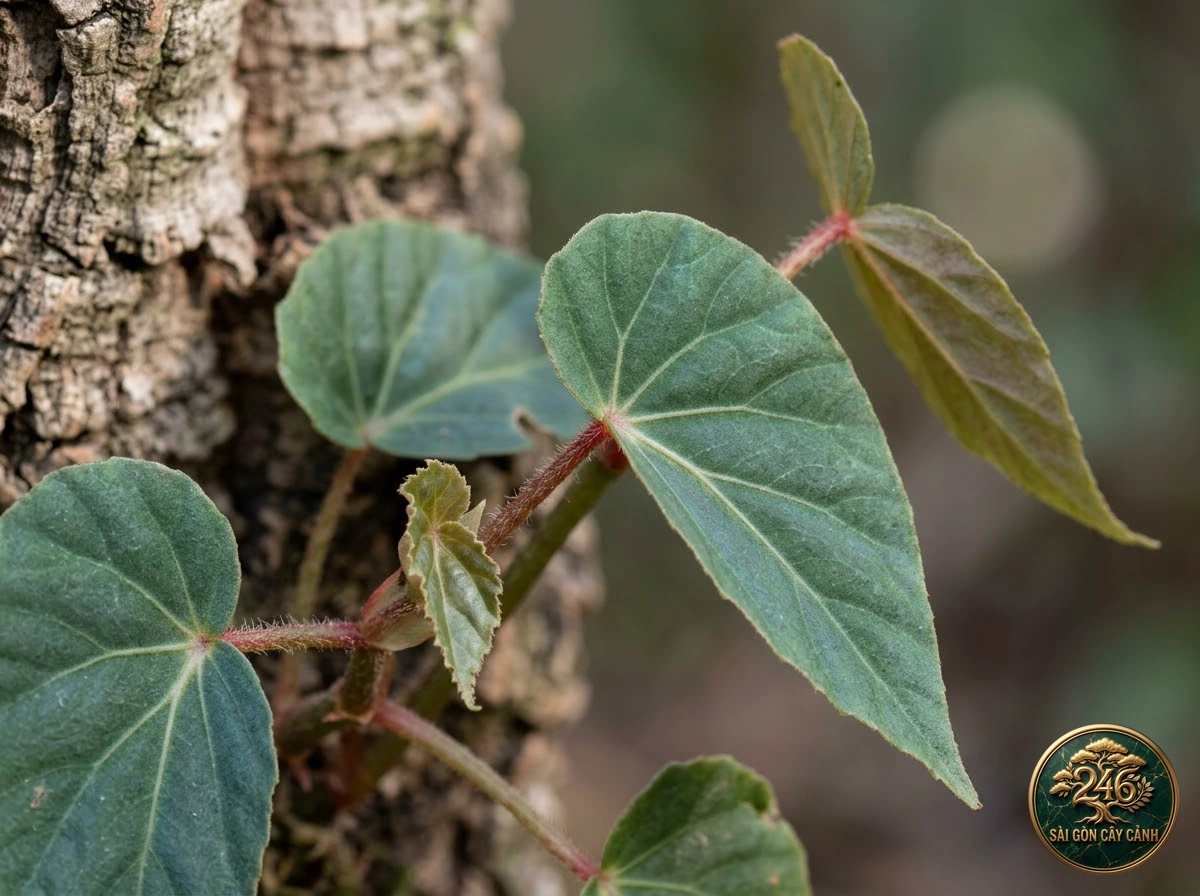
Laminas of Peacock begonia exhibit an asymmetrical cordate-ovate form, spanning 10 to 18 cm in length and 8 to 14 cm across. Under direct diffused illumination, the adaxial surface displays deep bronze-green, chestnut, or dark moss hues with a smooth satin-matte finish.
However, when light strikes the lamina at an oblique angle, the surface erupts into breathtaking metallic peacock-blue or radiant sapphire iridescence. The abaxial underside reveals rich port-wine burgundy tones, elevated by stout succulent petioles clothed in soft rufous trichomes.
The sub-cellular histology of photosynthetic iridoplasts inside adaxial epidermal layers of Begonia pavonina represents a masterpiece of photonic evolutionary adaptation. Distinct from conventional chloroplasts, internal thylakoid membranes within iridoplasts are arranged into periodic lamellar stacks acting as multilayer dielectric interference filters. When ambient diffuse light impinges at glancing angles, this physical architecture constructively reflects sapphire blue wavelengths (450-480 nm) while transmitting red and green photons deep into internal photosynthetic tissues to maximize quantum harvest.
3. Photometric Calibration & Window Exposure Optimization
Begonia pavonina is an obligate shade specialist, flourishing under dim photosynthetic photon flux densities (PPFD) between 30 and 60 µmol/m²/s. Low diffuse light stimulates specialized iridoplast chloroplasts to align precisely, maximizing structural blue luminescence.
Exposure to elevated irradiance exceeding 1,500 lux completely quenches the structural blue iridescence, reducing blades to dull greenish-brown and scorching margins. Positioning specimens in cool, dim shade preserves its ethereal sapphire iridescence indefinitely.
Empirical biophotometry confirms that Begonia pavonina attains its most resplendent sapphire iridescence beneath exceptionally low photon flux densities (PPFD) ranging between 25 and 50 µmol/m²/s. Within this micro-photonic threshold, constructive wave interference peaks. Sustained exposure to excessive light above 70 µmol/m²/s or direct sunlight collapses iridoplast photonic alignment, degrading light-harvesting efficiency and turning lustrous azure blades into dull bronze surfaces.
4. Iridoplast Photonic Nanostructures & Sapphire Blue Iridescence
The stout creeping rhizome of Begonia pavonina spreads across cool humic forest floors, sending up succulent petioles to form a lush rounded mound 20-35 cm in height. This rhizomatous structure stores substantial carbohydrate reserves that sustain broad foliar canopies in sun-starved montane mists.
The secret behind the blue iridescence lies in **iridoplasts**—specialized photonic chloroplasts residing exclusively within upper epidermal cells. Interior thylakoid membranes are stacked in periodic nanometer-thick layers functioning as photonic crystals: they selectively reflect blue wavelengths while transmitting red and green photons deeper into mesophyll layers, enhancing light-harvesting efficiency by up to 10% in deep forest gloom.
Temperature represents the critical limiting governor: Begonia pavonina demands cool montane climates between 16°C and 24°C (61°F – 75°F). It flourishes in cool air-conditioned environments year-round, but suffers severe heat stress, root rot, and defoliation if temperatures exceed 28°C (82°F) persistently.
Relative atmospheric humidity must remain steady between 75% and 95%. In tropical lowland climates like Ho Chi Minh City, housing specimens inside terrariums or plant cabinets equipped with thermoelectric (Peltier) cooling delivers the requisite cool, fog-laden microclimate.
Microclimatic prerequisites for this highland gem are rigorous, demanding a vapor pressure deficit (VPD) stabilized between 0.4 and 0.65 kPa. Peacock begonia must be cultivated within enclosed plant cabinets, vivaria, or automated terraria equipped with cool mist generators. Dropping nocturnal temperatures to 17°C – 20°C replicates montane cloud forest dynamics, promoting regular thylakoid structural regeneration.
The abaxial underside of Begonia pavonina foliage displays intense ruby-crimson pigmentation driven by dense anthocyanin vacuolar accumulation within lower epidermis cells. This crimson mantle operates as a biological back-reflector mirror: any red photons penetrating through mesophyll without initial absorption are reflected back upward through palisade cells, doubling photochemical capture opportunity within mist-shrouded Cameron Highlands cloud forests.
5. Porous Aggregate Substrate Engineering & Aeration Dynamics
The potting aggregate for Peacock begonia demands superior air porosity paired with consistent cool moisture buffering, exceeding 35% porosity. An optimal mix comprises 40% mini pumice, 25% sanitized mini pine bark, 20% premium Chilean sphagnum, and 15% rich organic vermicompost.
Substrate pH should settle within a moderately acidic range of 5.8 to 6.5 to mimic montane forest humus. Never permit the aggregate to desiccate completely, as fine rootlets wither rapidly; sub-irrigate gently with cool pure water when surface particles dry.
Substrate engineering for Peacock begonia requires superior air porosity merged with cool moisture retention. An optimal formulation incorporates 40% Indonesian pumice (3-5 mm), 30% shredded Chilean sphagnum, 20% coarse perlite, and 10% biochar. This matrix maintains cool rhizosphere temperatures between 18°C and 22°C while stabilizing medium pH between 5.8 and 6.4.
6. Organic Nutrition Schedules & Periodic Micronutrient Priming
Nutritional management must remain exceptionally gentle. Apply liquid organic biological fertilizers diluted to one-fifth strength every 4 weeks during active vegetative flushes, prioritizing bio-chelated magnesium and iron to nourish specialized iridoplast nanostructures.
Avoid concentrated synthetic fertilizers with elevated salt indexes, as montane rootlets burn easily. Flush the container media thoroughly every 6 weeks with cool distilled water or clean rainwater to prevent mineral salt toxicity.
Nutritional management for Begonia pavonina requires ultra-dilute organic micronutrient infusions with an EC strictly capped below 0.4 mS/cm applied every 4 to 6 weeks. Elevated rhizosphere salinity disrupts osmotic balance in iridoplast-bearing epidermal layers, permanently destroying the nanoscale optical matrices that generate blue flashes.
7. Clinical Diagnostic Matrix & Rapid Correction Protocols
| Clinical Symptom | Primary Etiology | Diagnostic Evaluation | Corrective Prescription |
|---|---|---|---|
| Loss of blue iridescence, foliage appearing dull green | Excessive illumination inactivating photonic iridoplast nanolayers | Photometer measures light intensity surpassing 1,500 lux | Relocate specimen into deeper cool shade or dim botanical LEDs by 50% |
| Rapid foliar chlorosis, limp collapse, and defoliation | Excessive heat surpassing 28°C inducing severe thermal shock | Thermometer reveals sustained high indoor temperatures over days | Transfer plant into cool air conditioning (20°C – 23°C) or equip thermoelectric cooling |
| Squishy blackened rhizomes with foul odor at container base | Waterlogged aggregate causing hypoxic root suffocation and decay | Moisture probe registers saturated anaerobic conditions at pot bottom | Excise rotten sections, repot in fresh aerated pumice mix, and adopt bottom watering |
| Laminar margins crisping dry and curling inward | Air-conditioned indoor humidity collapsing beneath 60% | Hygrometer confirms arid atmospheric conditions surrounding canopy | Place specimen inside a terrarium or plant cabinet with ultrasonic humidity at 80% |
8. Cryptic Pest Prophylaxis & Foliar Surface Sanitation
The foremost perils comprise high-temperature heat shock compounded by fungal soft rot from stagnant moisture. The paramount defense is maintaining cool temperatures below 25°C alongside continuous micro-convective airflow so foliar surfaces remain dry overnight.
Cleanse foliage periodically using an ultra-soft dusting brush to dislodge dust; never wipe aggressively with damp cloths to avoid disrupting the delicate photonic epidermal nanolayers.
The most acute pathology stems from bacterial soft rot (Erwinia) and water molds under warm stagnant conditions exceeding 26°C. Sustainable prevention relies on maintaining cool ambient temperatures, running 24/7 micro-fans within enclosed cabinets, and promptly pruning senescent foliage to halt fungal spore proliferation.
9. Asexual Propagation Methodology & Root Strike Protocols
Propagating Begonia pavonina is highly successful via rhizome division or wedge leaf cuttings under cool temperatures between 20°C and 22°C. Excise stout 4-6 cm rhizome segments retaining at least 2 viable nodes.
Rest rhizome sections atop moist sphagnum-perlite media inside a cool 90% humidity enclosure; over a 25 to 35 day developmental interval, fresh root systems anchor securely and tiny iridescent plantlets emerge.
Propagating Begonia pavonina succeeds through single leaf-petiole cuttings inserted into sterile damp sphagnum within sealed propagation containers. Maintained under gentle diffuse light at 30 µmol/m²/s in a cool 20°C – 22°C chamber over a 25 to 35 day developmental interval, cuttings develop robust capillary rootlets and initiate miniature iridescent shootlets.
10. Companion Animal Toxicology Profile & ASPCA Safety Evaluation
Owing to its prerequisite for a cool, humid enclosure, Begonia pavonina is almost exclusively showcased within dedicated glass vitrines, naturally establishing an impenetrable barrier that guarantees complete safety for domestic pets.
11. Biophilic Curation & Contemporary Interior Design Styling
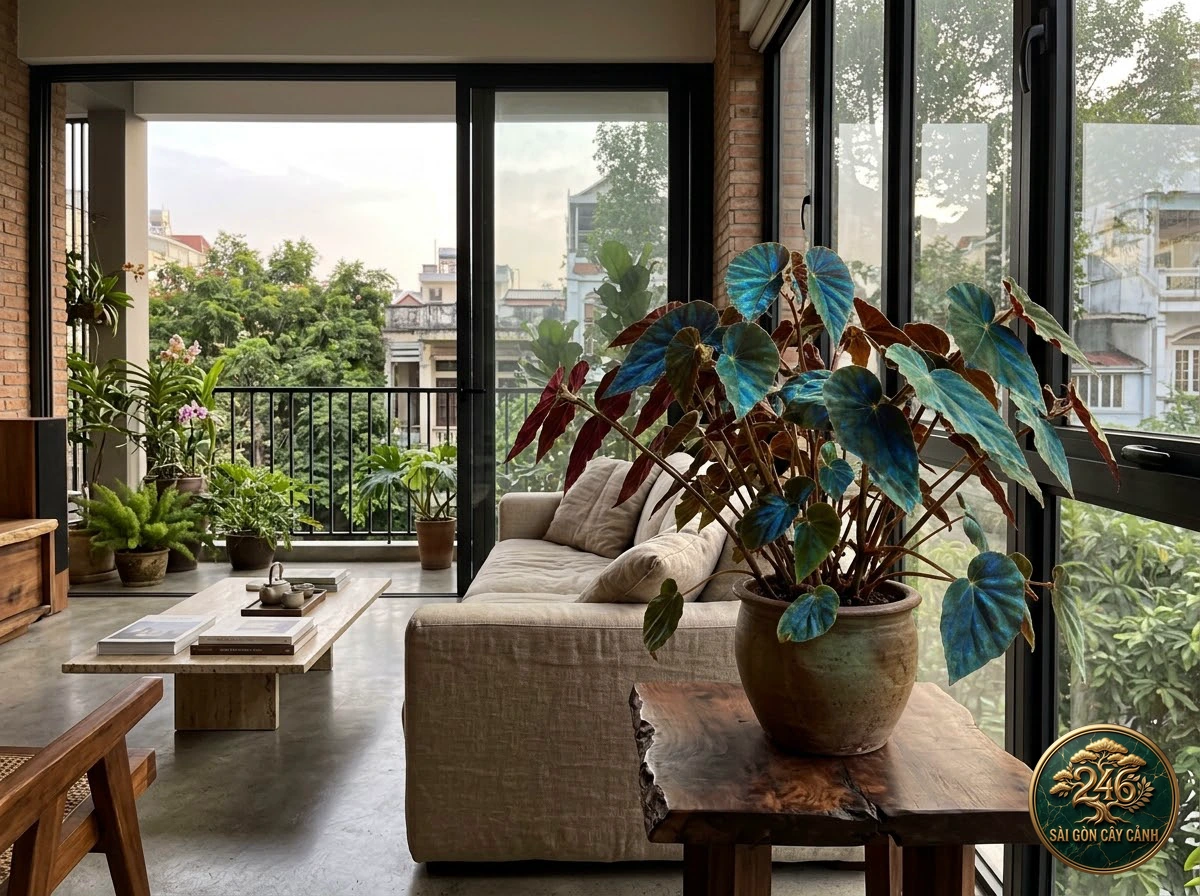
Begonia pavonina reigns as a pinnacle optical marvel within luxury botanical curation. Its dynamic structural sapphire iridescence transforms containers into glowing celestial jewels beneath gentle interior LED lighting, introducing futuristic wonder and unmatched elegance to refined spaces.
The presence of this elusive Cameron Highlands treasure embodies the harmonious intersection of botanical physics and living art, inspiring profound contemplative serenity across contemporary architectural interiors.
In bespoke biophilic interior installations, Begonia pavonina displayed inside illuminated vitrines with oblique 45-degree directional lighting delivers an enchanting visual spectacle. Its shifting sapphire iridescence not only showcases elite horticultural craftsmanship but also inspires profound appreciation for the optical wonders of botanical biodiversity.
12. Master Principles for Sustainable Indoor Acclimatization
Three foundational axioms for preserving Peacock begonia iridescence:
- Hydration axiom: Cool Climate Axiom: Sustain cool temperatures strictly between 18°C – 24°C, avoiding heat stress surpassing 28°C.
- Illumination axiom: Gentle Sciophyte Axiom: Situate beneath mild 600 – 1,000 lux indirect light to activate photonic iridoplast nanostructures fully.
- Maintenance axiom: Humid Microclimate Axiom: Preserve 75% – 90% relative humidity alongside gentle convective airflow, preventing foliar desiccation.
Nursery Care Journal & Living Greenery Moments
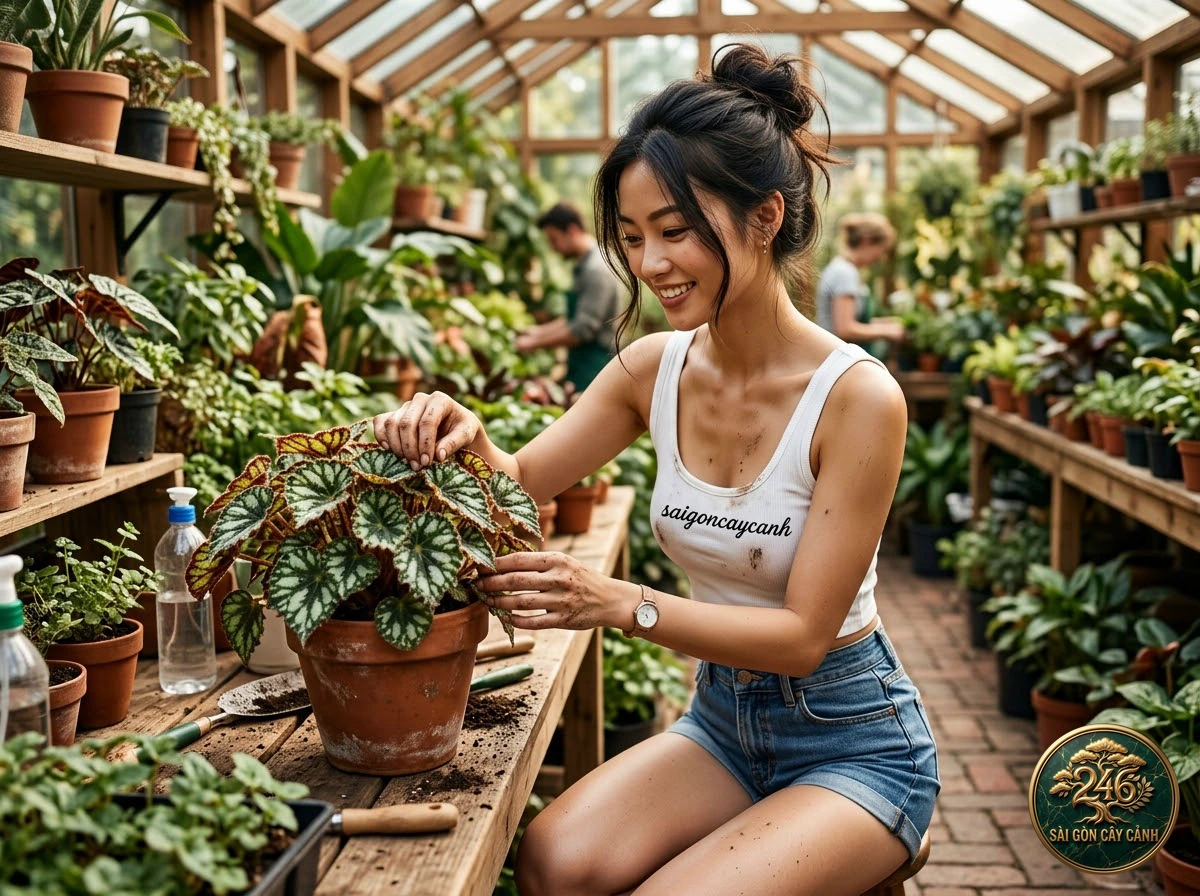
At Saigon Cay Canh greenhouse, each photograph captures genuine everyday care moments between plant lovers and living greenery, spreading a passion for nature and green-living inspiration.
13. Frequently Asked Questions Regarding Peacock begonia (FAQs)
What produces the structural blue luminescence on Begonia pavonina?
The blue hue represents structural color engineered by specialized iridoplast chloroplasts containing nanoscale periodic layers that selectively reflect blue photons.
How can the blue iridescence be observed at its most vibrant?
View the leaf obliquely at a 30 to 45 degree angle relative to a gentle light source; the radiant sapphire glow illuminates like a peacock’s plumage.
Can Begonia pavonina tolerate warm tropical heat?
No, originating from 1,500m montane cloud forests, it exhibits zero heat tolerance and suffers fatal decay if temperatures exceed 28°C persistently.
Can standard municipal tap water be utilized?
Discouraged; chlorinated tap water loaded with dissolved salts burns delicate rootlets; utilizing cool distilled or RO water is recommended.
Is propagating Peacock begonia challenging?
Straightforward provided cool temperatures (20°C – 22°C) are sustained; rooting rhizome segments in moist sphagnum yields plantlets within 25-35 days.
Why do my Peacock begonia leaves appear brownish instead of glowing metallic blue?
The absence of blue iridescence typically stems from excessive light intensity disrupting iridoplast alignment, or viewing the blade directly from above under flat overhead lighting; relocate the specimen to deeper shade and view the lamina at a 45-degree angle under directional sidelight to witness the sapphire reflection.