Living plant profile
String of turtles
Peperomia prostrata
Comprehensive botanical dossier for String of turtles (Peperomia prostrata). Identification, lighting calibration, porous substrate formulation, and cultivation guide by Saigon Cay Canh.
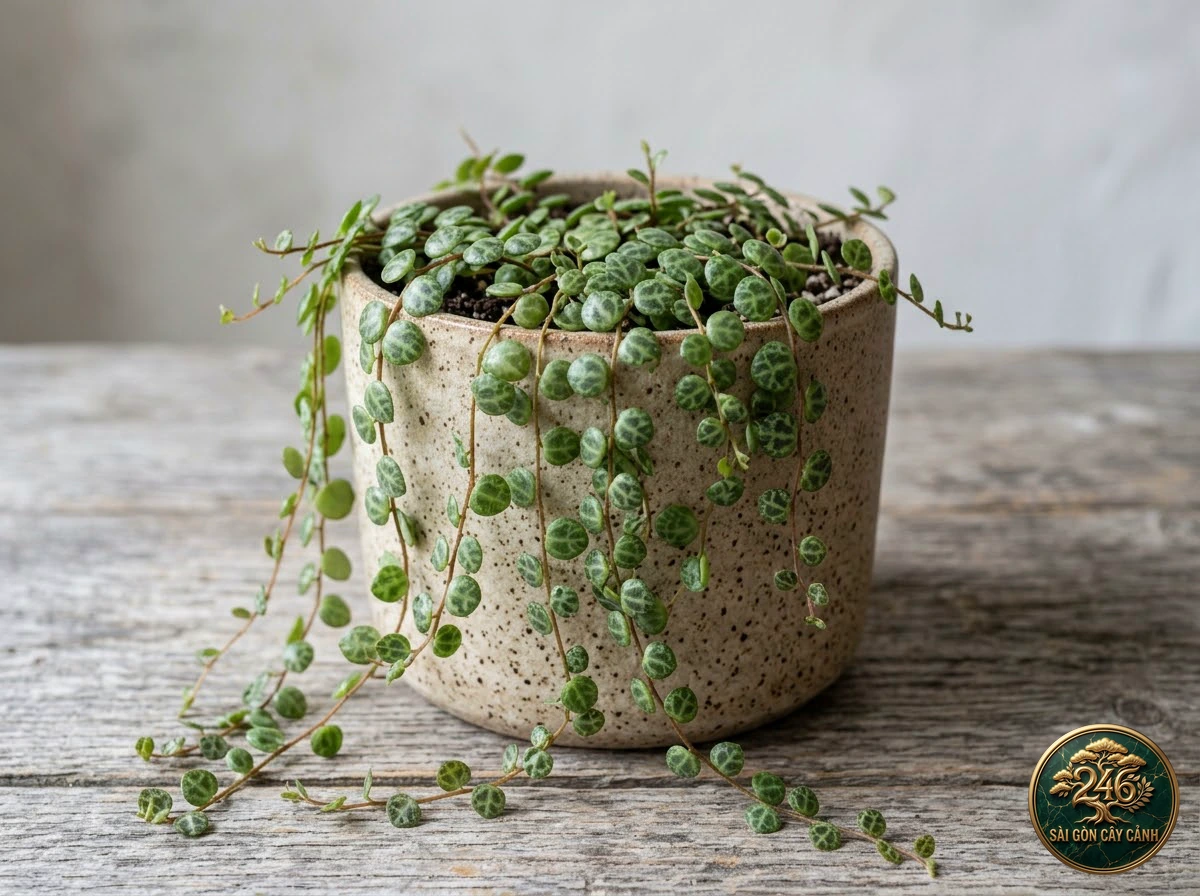
String of turtles (Peperomia prostrata) is an enchanting, world-renowned miniature trailing succulent vine indigenous to the humid montane rainforests of Ecuador and Peru. The species captivates plant lovers with diminutive button-like succulent leaves (just 0.5 – 1.5 cm across) displaying intricate silver, cream, or brownish-red geometric turtle-shell markings set against emerald tissue, cascading along delicate reddish-brown thread-like vines.
1. Core Botanical Taxonomy & Cultural Specifications
| Scientific Name | Peperomia prostrata |
|---|---|
| Botanical Family | Piperaceae (Pepper Family) |
| Native Distribution | South America (Ecuador and Peru tropical rainforests) |
| Growth Demeanor | Prostrate creeping to cascading semi-succulent vine, trailing 20-50 cm |
| Lighting Threshold | Gentle bright indirect to filtered illumination (1,000 – 1,800 lux) |
| Hydration Cadence | Hydrate lightly when surface dries, maintaining airy moisture, hates wet feet |
| Substrate Formulation | 40% pumice, 25% mini bark, 20% Chilean sphagnum, 15% worm castings |
| Thermal Range | 18°C – 26°C (64°F – 79°F), damaged by cold below 12°C (54°F) |
| Relative Humidity | Optimal relative humidity 65% – 85% |
| Cultivation Difficulty | Moderate (Demands gentle bottom irrigation and high humidity) |
| Pet Safety Profile | Certified 100% non-toxic to domestic pets (ASPCA verified) |
Scientifically published in 1879 by distinguished English botanist John Gilbert Baker, Peperomia prostrata quickly secured legendary status as a miniature botanical masterpiece. The specific epithet ‘prostrata’ derives from Latin denoting ‘prostrate’ or ‘creeping flat’, accurately capturing its trailing habit across mossy forest substrates or cascading gracefully from epiphytic tree forks.
In its native Andean rainforest habitat, the taxon dwells as a semi-epiphyte threading through moss carpets on tree trunks or creeping over humic rock shelves. This montane cloud forest provides abundant precipitation and perennial mist, while shallow rootlets remain aerated within living sphagnum and loose bark.
According to Kew’s Plants of the World Online (POWO), Peperomia prostrata is an accepted species of family Piperaceae. Definitive diagnostic features encompass tiny button-like succulent leaves arranged alternately along filiform reddish-brown stems, adorned with a reticulate geometric lattice mimicking a turtle’s carapace.
2. Morphological Identification & Foliar Architecture
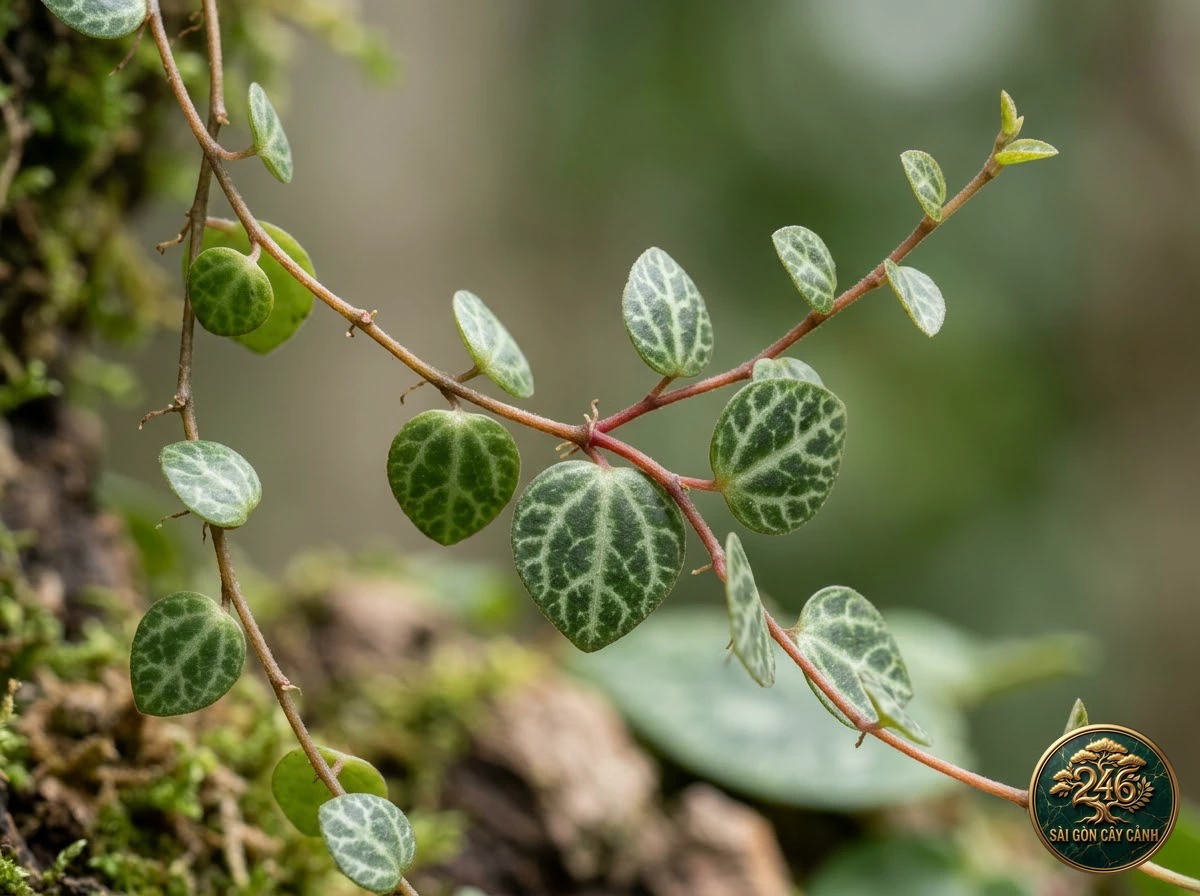
Laminas of String of turtles are button-shaped, succulent discs measuring merely 0.5 to 1.5 cm across. The adaxial surface is slightly convex and lustrous, distinguished by intricate reticulate venation in silver, cream, or maroon-red that contrasts against emerald fields, flawlessly resembling miniature turtle carapaces.
Thread-like reddish-brown to coral stems branch profusely, producing minute adventitious rootlets at every node to anchor into mossy bark. When cultivated in hanging planters, hundreds of turtle-shell strings cascade downward in an exquisite living beaded curtain 20 to 50 cm in length.
Foliar histology of Peperomia prostrata demonstrates extreme evolutionary miniaturization adapted for creeping epiphytic and lithophytic survival across mossy bark and damp rock faces. Each lenticular leaf measures a mere 5 to 10 mm in diameter, exhibiting succulent biconvex thickness. The adaxial surface displays intricate silver-white to pale jade venation networks across emerald backgrounds mimicking turtle carapaces. A prominent water-storing hypodermis occupies over half the foliar volume, equipping this miniature vine for survival in resource-sparse epiphytic niches.
3. Photometric Calibration & Window Exposure Optimization
Peperomia prostrata prospers under gentle filtered indirect irradiance, correlating with a PPFD threshold between 40 and 75 µmol/m²/s. Generous filtered daylight ensures thick, succulent leaf substance, compact internodes, and high-contrast turtle-shell geometric patterns.
Direct scorching midday sunlight rapidly incinerates the diminutive succulent disks, obliterating carapace patterns and turning foliage brittle and bleached. Conversely, severe light starvation induces leggy internodal stretching, sparse foliage, and indistinct washed-out patterns.
Photometric profiles indicate that String of turtles operates at a very low light compensation point, achieving peak photosynthetic rates under photon flux densities (PPFD) between 45 and 80 µmol/m²/s. Gentle diffuse light maintains high contrast within intricate carapace patterns. Subjecting vines to harsh direct sun induces thermal scald, bleaching succulent buttons and shedding them from thread-like cascading stems.
4. Prostrate Creeping Vine Habit & Succulent Turtle-Shell Foliar Histology
The prostrate creeping to cascading architecture of Peperomia prostrata exhibits dual adaptability: when traversing soil, nodes rapidly produce adventitious roots to form dense groundcover mats; when suspended from branches or container rims, filiform stems drape freely in cascading beaded strings.
The miniature button-like succulent leaf morphology represents an efficient water-retention strategy for epiphytic survival: a protective waxy cuticle seals moisture within while plump interior tissues sustain metabolic processes during rainless intervals high in forest canopies.
Optimal indoor temperatures for Peperomia prostrata range from 18°C to 26°C (64°F – 79°F). It performs splendidly in air-conditioned homes, yet is vulnerable to cold, suffering rapid defoliation if temperatures fall beneath 12°C (54°F).
Atmospheric humidity is vital: optimal levels span 65% to 85%. The species represents an ideal subject for enclosed terrariums or niches near ultrasonic humidifiers, ensuring succulent turtle-shell disks remain plump and glistening.
Microclimatic targets require stabilizing vapor pressure deficit (VPD) between 0.6 and 0.95 kPa with relative humidity maintained at 60% to 80%. Peperomia prostrata thrives exceptionally well inside closed or semi-closed terraria, where buoyant ambient humidity keeps succulent beads turgid and prevents stress-induced leaf drop.
The cauline morphology of Peperomia prostrata features delicate, thread-like reddish-purple prostrate stolons that either carpet substrate surfaces or cascade gracefully from hanging baskets. At each nodal junction, microscopic adventitious rootlets emerge upon contact with moist media, allowing creeping strands to rapidly weave a dense, living tapestry of miniature turtle shells.
5. Porous Aggregate Substrate Engineering & Aeration Dynamics
The potting medium for String of turtles necessitates an airy, rapid-draining yet moisture-retentive aggregate with mineral porosity exceeding 40%. An elite recipe combines 40% fine pumice (2-4mm), 25% shredded mini pine bark, 20% finely chopped Chilean sphagnum, and 15% aged vermicompost.
Containers should be shallow or hanging baskets equipped with free drainage apertures. Safe hydration relies on bottom-watering or gentle surface misting once top aggregate dries, strictly avoiding forceful overhead streams that crush delicate miniature vines.
Given its exceptionally shallow and moisture-sensitive root architecture, aggregate for Peperomia prostrata must offer superior aeration and instantaneous drainage. An optimal mix comprises 40% fine pumice (1-3 mm), 30% chopped Chilean sphagnum, 20% perlite, and 10% biochar. This fine yet porous matrix ensures rhizosphere oxygenation while preventing collar rot.
6. Organic Nutrition Schedules & Periodic Micronutrient Priming
Fertilization protocols must be restrained: apply liquid biological organic nutrients diluted to one-sixth strength monthly during spring and summer. Micronutrient supplementation sharpens carapace venation and strengthens reddish trailing stems.
Suspend feeding during winter dormancy. Avoid synthetic fertilizers with high salt indexes; delicate shallow rootlets suffer immediate chemical burn, causing entire trailing strings to drop.
Nutritional inputs for String of turtles should deploy ultra-dilute organic liquid feeds at one-eighth normal strength with an EC strictly beneath 0.4 mS/cm every 4 to 6 weeks. Mist feeds lightly onto media rather than drenching, preventing concentrated nutrient salts from damaging microscopic root hairs.
7. Clinical Diagnostic Matrix & Rapid Correction Protocols
| Clinical Symptom | Primary Etiology | Diagnostic Evaluation | Corrective Prescription |
|---|---|---|---|
| Trailing vines softening, massive leaf drop along strings | Waterlogged aggregate causing shallow root suffocation and stem rot | Inspection reveals saturated soggy media and blackened mushy nodes | Salvage healthy stem tips for re-rooting, repot into airy pumice media, and bottom-water |
| Sparse foliage spacing, long leggy gaps between leaves | Prolonged deficient photosynthetic illumination below 500 lux | Internodes measure unusually long with faded, pattern-less leaves | Relocate planter to bright indirect 1,400 lux exposure near filtered windows |
| Turtle disks deflating, wrinkled, losing succulent turgor | Excessively arid indoor air or prolonged substrate dehydration | Hygrometer reads beneath 45% and potting media is bone-dry | Sub-irrigate thoroughly and position near an ultrasonic humidifier maintaining 70% humidity |
| Crisp brown bleached burn marks across foliar disks | Direct scorching sunlight incinerating miniature succulent cells | Burn lesions correspond directly with direct sunbeam exposure angles | Draw sheer window diffusers or reposition hanging planter into gentle indirect light |
8. Cryptic Pest Prophylaxis & Foliar Surface Sanitation
The paramount hazard is overwatering-induced root rot and fungal mold in stagnant air. Maintaining an aerated substrate and gentle convective airflow serves as the golden key to sustaining pristine trailing vines.
Cleanse the canopy periodically by removing senescent basal leaves using precision tweezers; never pull strings forcefully to avoid snapping delicate trailing stems.
The primary pathology risk involves Rhizoctonia damping-off and crown rot caused by persistent over-saturation in dense media during cool weather. Prevent this by misting or bottom-watering only when topsoil dries slightly, maintaining gentle convective airflow to keep soil surfaces breathable.
9. Asexual Propagation Methodology & Root Strike Protocols
Propagating Peperomia prostrata is delightful and straightforward via vine cuttings or surface leaf rooting. Excise 5-10 cm trailing vine segments bearing multiple nodes and lay them horizontally atop moist sphagnum-perlite media.
Pin nodal joints lightly against the moist surface inside an 85% humidity propagation box; over a 25 to 35 day developmental interval, adventitious roots anchor and fresh trailing branches emerge vigorously.
Propagating String of turtles is remarkably swift by taking multi-node strand cuttings (4 to 6 nodes) and pinning them onto moist media using small hairpins or top-dressing nodes with shredded moss. Maintained in a warm 22°C – 25°C enclosed chamber, adventitious roots firmly establish and initiate fresh vegetative growth over a 25 to 35 day developmental interval.
10. Companion Animal Safety Profile & ASPCA Non-Toxic Verification
Thanks to this certified non-toxic profile and graceful trailing habit, cultivators can hang containers confidently near windows, atop bookshelves, or inside vivariums with complete peace of mind.
11. Biophilic Curation & Contemporary Interior Design Styling
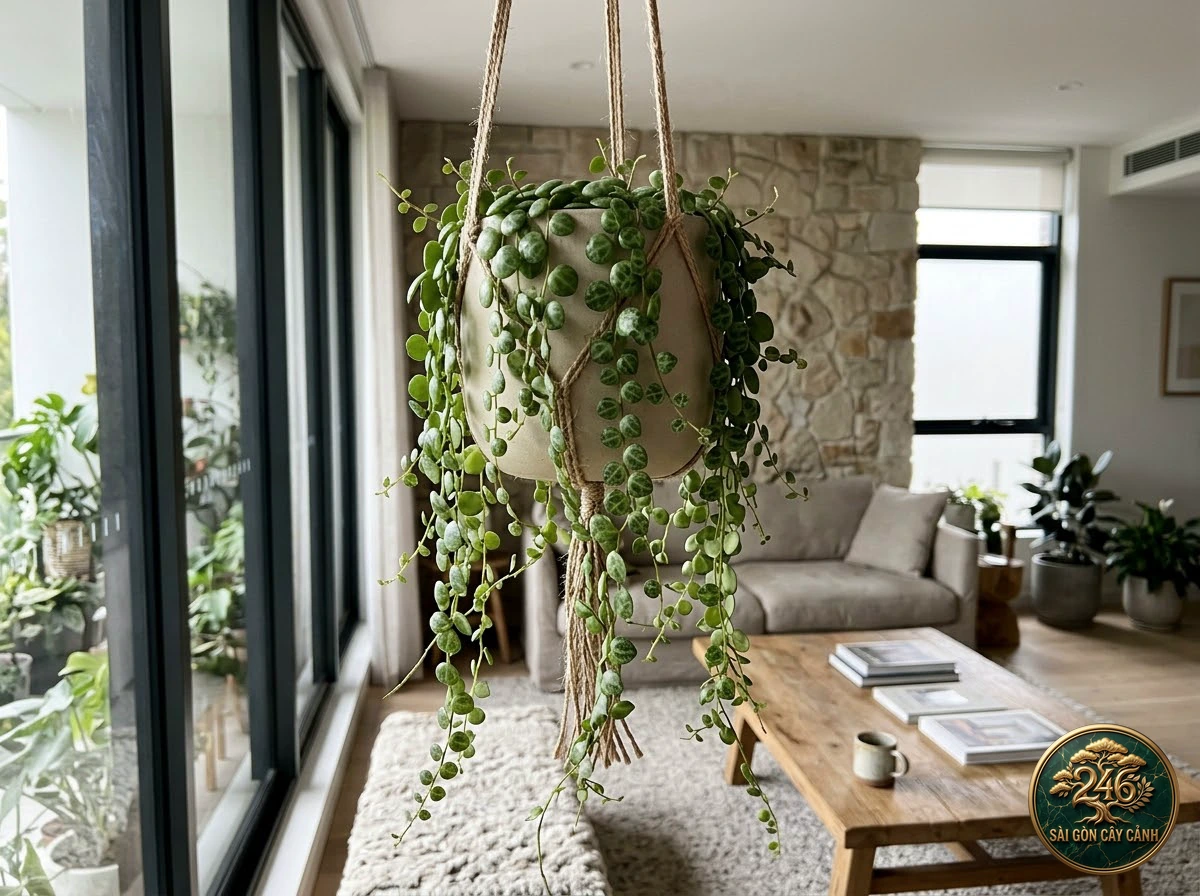
Peperomia prostrata reigns as an adored miniature trailing centerpiece within Bohemian and Urban Jungle interior styling. Cascading strings of tiny turtle carapaces introduce whimsical poetry, unique texture, and captivating charm to curated living spaces.
The species also shines as an indispensable star in closed terrariums and tropical vivariums, celebrated for its miniature scale, natural moss-carpeting habit, and the miraculous geometry of its foliage.
With cascading cascades of miniature patterned beads resembling nature’s hand-woven textile art, String of turtles symbolizes patience, resilience, and micro-botanical refinement. Placed on bookshelves, desktop perches, or inside artistic terrarium glassware, it brings boundless contemplative joy and serene tranquility.
12. Master Principles for Sustainable Indoor Acclimatization
Three foundational axioms for sustaining thriving Peperomia prostrata vines:
- Hydration axiom: Gentle Irrigation Axiom: Sub-irrigate lightly when surface dries, never leaving delicate thread-like vines submerged in soggy media.
- Illumination axiom: Soft Photonic Axiom: Situate in gentle 1,200 – 1,600 lux indirect light to maximize carapace pattern contrast and vine density.
- Maintenance axiom: Microclimatic Humidity Axiom: Sustain 65% – 85% relative humidity with buoyant airflow to keep succulent disks plump and healthy.
13. Frequently Asked Questions Regarding String of turtles (FAQs)
How can cultivators achieve a dense, full hanging curtain?
Coil trailing stems atop moist media surface; nodal joints anchor adventitious roots and shoot dozens of fresh cascading branches.
Is String of turtles suitable for closed terrarium cultivation?
Exquisitely suitable; it represents one of the premier groundcover and epiphyte subjects for terrariums, thriving in high humidity.
How often should String of turtles be watered?
Typically every 5 to 7 days depending on ambient conditions; irrigate when top media dries and foliage begins to show slight soft turgor loss.
Can fallen leaves self-propagate into new plantlets?
Yes; fallen succulent disks resting atop moist sphagnum readily strike roots and unfurl miniature plantlets within 3 to 4 weeks.
Is String of turtles safe around domestic pets?
Completely safe; the ASPCA certifies that this species is 100% non-toxic to dogs, cats, and birds.
How can I encourage my String of turtles to fill out the pot densely?
To achieve a lush, full pot quickly, loop longer trailing strands back across empty surface soil and pin the nodes down with clips; each node contacting moist substrate roots promptly and produces new lateral vine growth, transforming the pot into a thick carpet of turtle shells.