
Living plant profile
Creeping fig
Ficus pumila
Comprehensive botanical dossier for Creeping fig (Ficus pumila). Identification, lighting calibration, porous substrate formulation, and cultivation guide by Saigon Cay Canh.
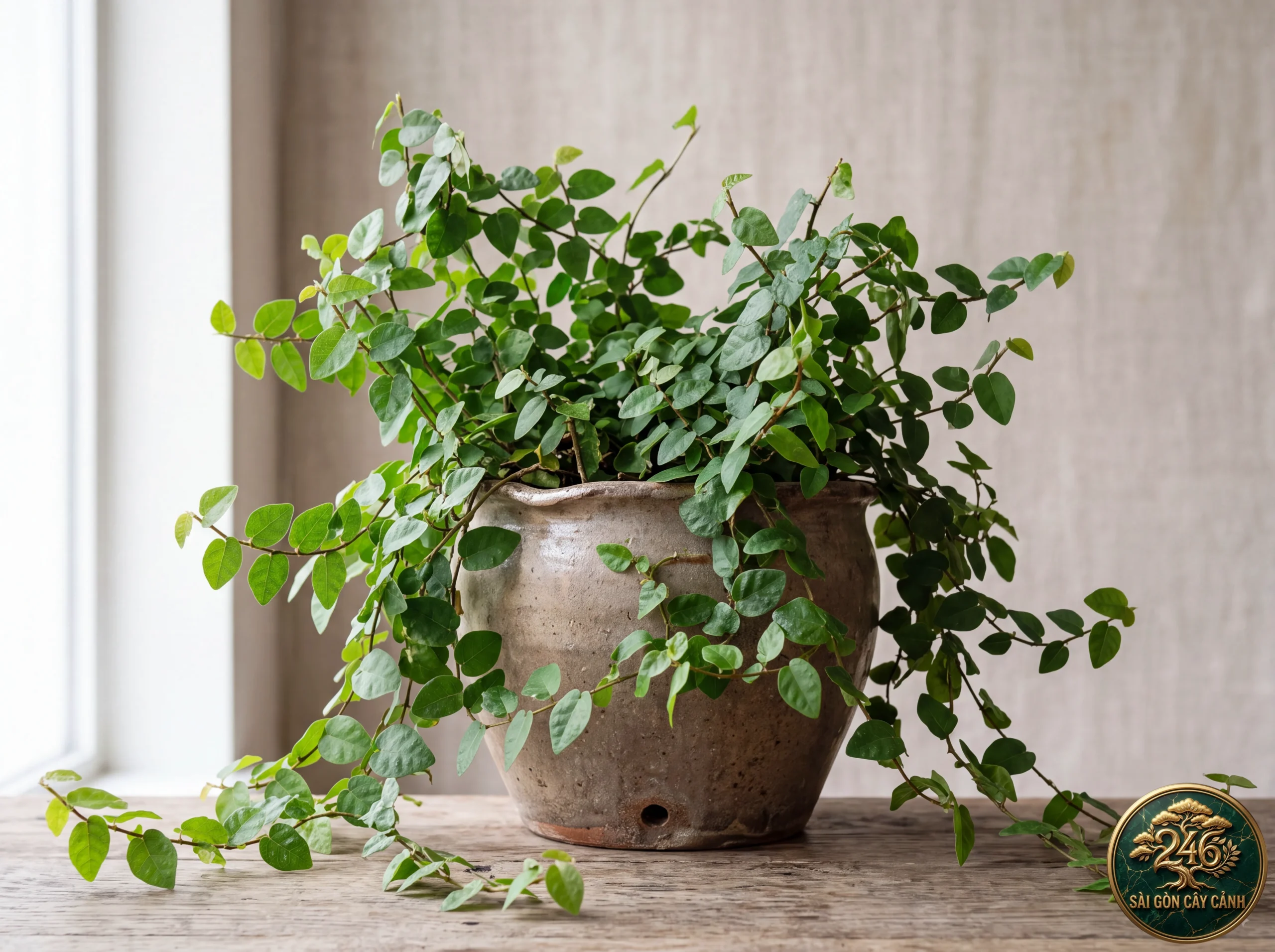
Creeping fig (Ficus pumila) is an extraordinary tropical climbing vine within the fig family (Moraceae), renowned for remarkable dimorphic heterophylly and biological adhesive roots that cling tenaciously to masonry surfaces, crafting enchanting living green walls.
1. Core Botanical Taxonomy & Cultural Specifications
| Scientific Name | Ficus pumila |
|---|---|
| Botanical Family | Moraceae (Mulberry Family) |
| Native Distribution | East Asia (China, Japan, Taiwan, Vietnam) |
| Growth Demeanor | Woody evergreen climbing or trailing vine clinging tightly to vertical substrates |
| Lighting Threshold | Broad adaptability from moderate indirect light to full sun (1,500 – 6,000 lux) |
| Hydration Cadence | Irrigate when surface dries slightly; maintain uniform moisture without drying out |
| Substrate Formulation | Alluvial loam, shredded coco coir, carbonized rice hulls, perlite |
| Thermal Range | 15°C – 35°C (wide thermal tolerance; more cold-hardy than tropical figs) |
| Relative Humidity | 60% – 85% (prefers elevated humidity to encourage adhesive root strike) |
| Cultivation Difficulty | Easy (exceptionally vigorous, fast-growing, aggressive self-clinging climber) |
| Pet Safety Profile | Pet caution (milky latex contains ficin enzymes causing mild oral irritation) |
Taxonomically and geographically, Ficus pumila is a woody climbing vine native to East Asia (southern China, Japan, Taiwan, and Vietnam). In habitat, it carpets moist limestone cliffs and forest trees, utilizing diminutive adventitious roots that secrete a biological adhesive to bond tenaciously to vertical surfaces, ascending 5 to 12 meters in dense green tapestries.
The definitive evolutionary hallmark of Ficus pumila is its pronounced dimorphic heterophylly: juvenile versus adult growth phases. In the juvenile climbing phase, slender wiry stems bear diminutive, heart-shaped leaves measuring merely 1 to 2.5 cm that lie perfectly flat against vertical masonry like overlapping fish scales.
When climbers reach the summit of masonry or run out of vertical support, they transition into the adult fruiting phase: rigid lignified horizontal branches project outward, bearing large leathery elliptic leaves 6 to 10 cm long and producing large, purplish pear-shaped syconia 5 to 7 cm in length.
2. Morphological Identification & Foliar Architecture
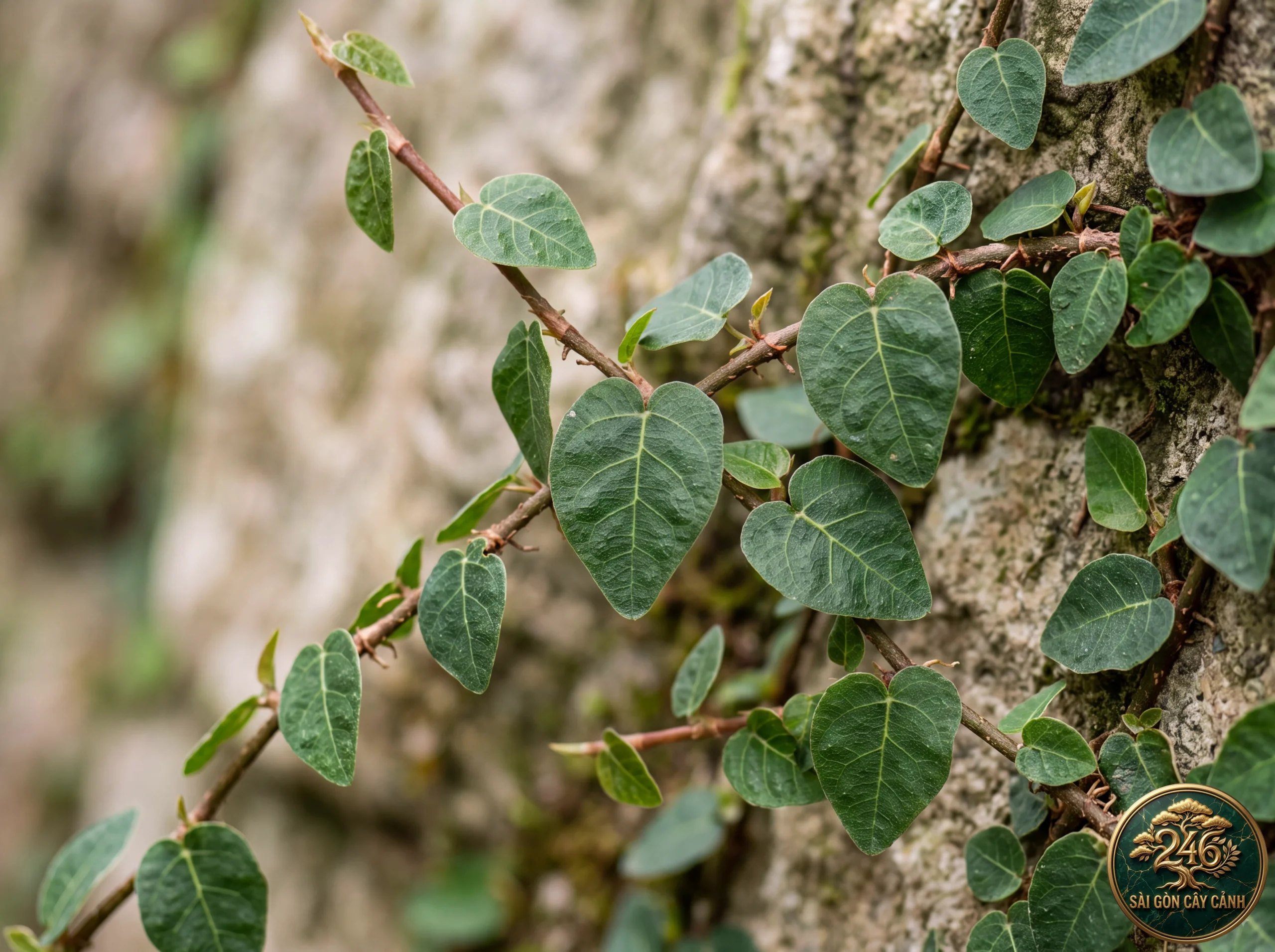
Diagnostic keys identifying Creeping fig in interior settings center on its miniature asymmetrical cordate juvenile leaves arranged alternately in two flattened, overlapping distichous ranks. Nodal adhesive rootlets secrete organic cementing polymers that anchor firmly to brick, stone, concrete, or bark without mechanical ties.
Severed stems exude opaque milky latex. In domestic container culture, the plant is typically maintained in its charming juvenile phase within hanging baskets or mounted on moist moss poles, creating exquisite vertical living art.
Laminar histology of Ficus pumila reveals striking heterophylly between juvenile climbing and adult reproductive growth phases. In the juvenile phase, miniature cordate leaves feature thin cuticles lying flush against vertical walls; upon reaching maturity on free-standing branches, leaves expand fivefold into large, leathery, heavily cutinized elliptical blades endowed with two-tiered palisade mesophyll and extensive laticifers circulating milky ficin latex.
3. Photometric Calibration & Window Exposure Optimization
Photometrically, Ficus pumila displays broad photonic adaptability, spanning from 1,500 lux diffuse indoor light up to 6,000 lux outdoor direct sunshine. In apartments, it prospers best under luminous indirect daylight adjacent to bright windows or airy lightwells.
Protracted darkness below 1,000 lux causes wiry stolons to stretch thinly with wide internodal gaps, thinning the dense foliar carpet. Relocating into bright indirect daylight promptly stimulates vigorous lateral branching and dense foliage.
Biophotometrically, Creeping fig demonstrates immense photosynthetic plasticity, thriving from shaded understories at 30 µmol/m²/s PPFD during its juvenile wall-creeping phase to full open sunshine exceeding 300 µmol/m²/s on sun-drenched rooftops. Dynamic adjustment of chlorophyll-carotenoid ratios sustains continuous carbon assimilation under shifting climatic extremes.
4. Dimorphic Heterophyllous Transition & Adhesive Adventitious Pad Anchoring
The anchoring mechanics of Ficus pumila represent a natural biomechanical masterpiece: juvenile nodal rootlets exude an organic cementing fluid that flows into microscopic surface fissures of masonry and hardens, creating immense shear adhesive strength resistant to torrential winds.
When cultivated along domestic walls, note that its cementing grip is extraordinarily tenacious; forcefully tearing mature vines from masonry after years of growth can dislodge aged stucco or paint layers.
Thermal adaptability spans 15°C to 35°C, exhibiting superior heat and cold resilience compared to most tropical figs. It flourishes year-round across the monsoon climates of Vietnam without missing a beat through seasonal transitions.
Relative humidity is crucial to stimulate aerial adhesive rootlet emergence, ideally 60% to 85%. Misting the wall surface or moss pole daily encourages rootlet pads to strike and anchor swiftly across vertical surfaces.
The optimal vapor pressure deficit (VPD) spans 0.7 to 1.15 kPa paired with relative humidity between 60% and 85%. High ambient moisture accelerates aerial adhesive pad development; under prolonged dry atmospheric stress, tender root tips desiccate and lose their spontaneous surface anchorage.
The adhesive adventitious anchoring mechanics of Ficus pumila represent an evolutionary masterpiece. At each juvenile climbing node, fine aerial rootlets secrete a specialized biological glue composed of mucilage and complex adhesive polysaccharides; this biochemical cement hardens rapidly inside microscopic crevices of stone, masonry, or tree trunks, anchoring the vine securely without mechanical supports.
5. Porous Aggregate Substrate Engineering & Aeration Dynamics
Substrate formulation for containerized Creeping fig requires gentle moisture retention combined with root aeration. A standard recipe combines 40% loamy topsoil, 30% washed shredded coco coir, 15% carbonized rice hulls, and 15% perlite, stabilizing pH between 6.0 and 7.0.
Hydration management requires steady, uniform moisture; never permit substrate to dry out bone-dry. Unlike massive woody figs, the fine adventitious rootlets of Ficus pumila desiccate rapidly; prolonged root ball dryness causes brittle foliar shriveling and shedding.
Potting medium for Creeping fig demands abundant capillary moisture retention balanced with adequate aeration. Combining 35% desalted coir peat, 25% fine pumice aggregate, and 20% shredded pine bark establishes a fertile organic matrix that supplies continuous moisture to the fibrous root network while maintaining pH steadily between 6.0 and 6.8.
6. Organic Nutrition Schedules & Periodic Micronutrient Priming
Nutritional management deploys dilute organic liquids such as vermicompost extract or hydrolyzed fish emulsion applied monthly during active growth. Maintain electrical conductivity (EC) between 0.6 and 1.0 mS/cm to drive vigorous running stolons without root damage.
During cool winter slowdowns, reduce fertilizer applications to zero. Always pre-moisten the potting medium with clean water before administering liquid feeds to ensure gentle, uniform nutrient distribution.
Biological nutritional management involves monthly applications of nitrogen-rich organic teas paired with vermicompost extract at an EC strictly below 0.6 mS/cm during active growth. Soluble bio-copper and zinc fortify the tensile strength of creeping stolons, maintaining a dense, lush emerald carpet across walls.
7. Clinical Diagnostic Matrix & Rapid Correction Protocols
| Clinical Symptom | Primary Etiology | Diagnostic Evaluation | Corrective Prescription |
|---|---|---|---|
| Juvenile leaves turning crispy, dry, and dropping in large quantities | Severe substrate desiccation desiccating shallow adventitious rootlets | Feel soil to discover bone-dry, powdery media and an ultra-light pot | Soak container base in tepid water for 10 minutes and mist canopy thoroughly |
| Stolons stretching thinly with excessive internodal spacing between leaves | Severe light starvation from prolonged placement in deeply shaded areas | Measure ambient light levels beneath 1,000 lux at the container site | Relocate specimen into bright indirect daylight near windows or skylights |
| Leaves turning translucent yellow, soft, and shedding near the base | Over-irrigation and poor drainage suffocating delicate feeder rootlets | Inspect bottom soil to find soggy mud sitting in stagnant saucer water | Halt watering immediately, empty saucer runoff, and place pot in ventilated breezy air |
| Stout horizontal woody branches with large coarse leaves emerging outward | Natural physiological transition into the adult fruiting phase | Observe leaves 3 to 4 times larger than juvenile leaves on rigid branches | Prune away coarse adult branches flush with the wall to keep the miniature flat juvenile habit |
8. Cryptic Pest Prophylaxis & Foliar Surface Sanitation
Biological pest management emphasizes preventative surveillance against spider mites and mealybugs sheltering in dense foliar mats. Routine targeted water sprays rinse away dust and small pests, paired with evening 0.5% botanical soap sprays if pests appear.
Regularly prune away aged shoots or adult horizontal branches with coarse foliage to maintain a tidy, flat green tapestry with optimal air circulation.
Plant health surveillance targets cryptic mealybugs and spider mites sheltering beneath the dense foliar carpet adhering to vertical walls. Periodic gentle pressure rinsing with fresh water in the morning and preventative dusk applications of 0.5% botanical castile soap keep the living green wall immaculate.
9. Asexual Propagation Methodology & Root Strike Protocols
Propagating Ficus pumila is exceptionally rapid via juvenile stem cuttings. Sever 10 to 15 cm running shoots bearing multiple leaves and nodal root primordia, inserting directly into moist media or rooting in water.
Kept in warm shade at 22°C – 26°C over a 25 to 35 day developmental interval, nodal rootlets anchor tenaciously and fresh creeping shoots emerge with a perfect 100% strike rate.
During nodal runner cutting propagation, pinning 10 to 15 cm juvenile rooted runners horizontally onto moist perlite-pumice under a ventilated humidity cover at 22°C – 26°C over a 25 to 35 day interval induces deep rooting and prolific branching with 100% success.
10. Companion Animal Safety Profile & ASPCA Latex Caution
Per ASPCA veterinary toxicological guidance, Creeping fig harbors milky latex containing ficin enzymes and furocoumarins. This sap can elicit mild dermal itching or transient salivation and vomiting if chewed by pets. Mounted vertically on high wall trellises or suspended in elevated hanging pots, it remains safely out of pet reach.
11. Biophilic Curation & Contemporary Interior Design Styling
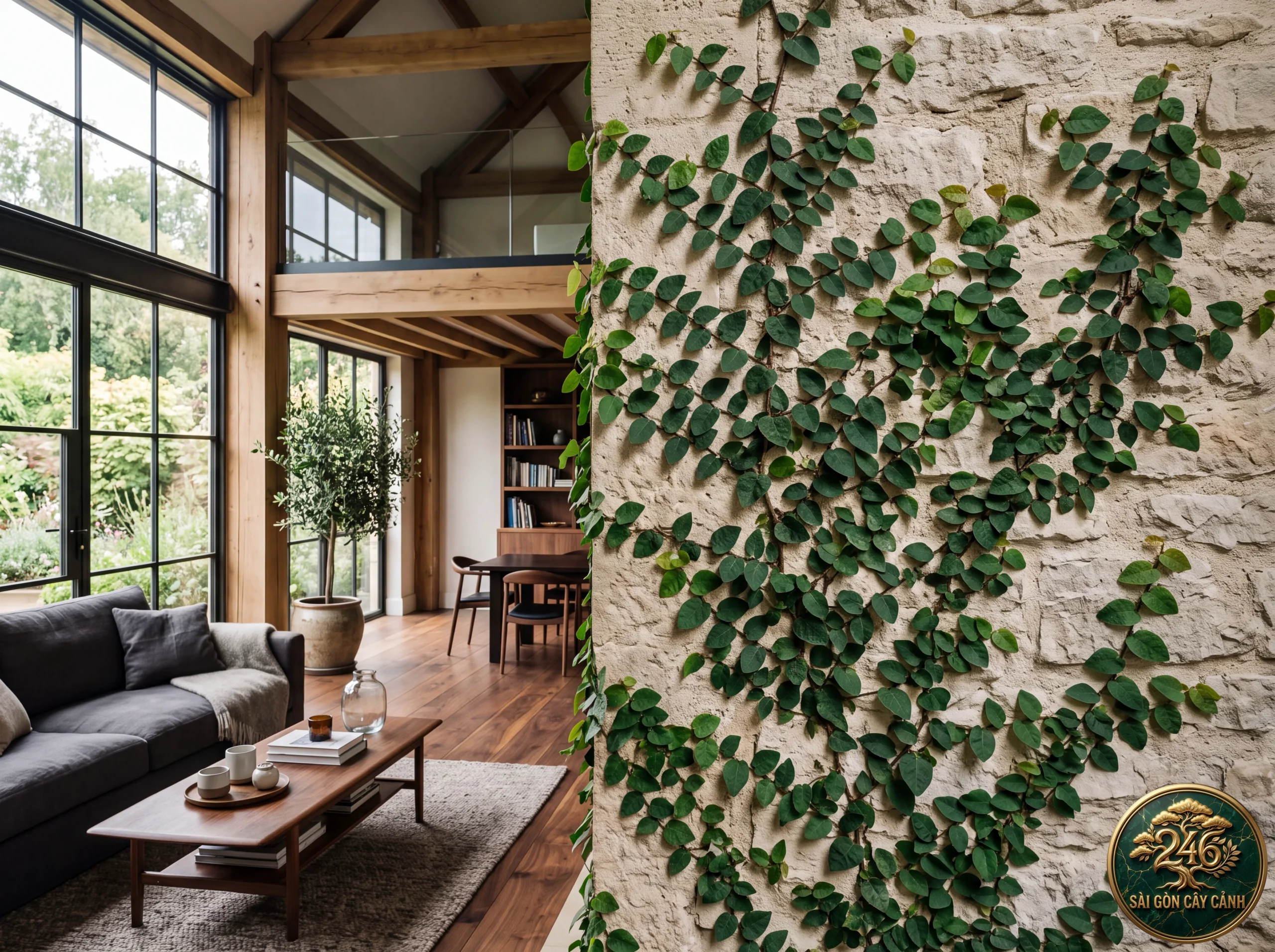
In urban Biophilic landscape architecture and vertical living wall design, Ficus pumila offers the quintessential solution for transforming harsh concrete masonry into lush green tapestries. Its tightly shingled juvenile leaves evoke the rustic romance of European historic castles.
Creeping fig carries symbolic associations of enduring unity, persistent vitality, and protective harmony for homes. Contemplating an expansive vertical green wall dispels urban confinement, instilling refreshing serenity and revitalizing mindfulness.
In Biophilic green architecture and living vertical wall design, Ficus pumila provides an exquisite living tapestry that transforms sterile concrete walls into lush biological monuments. Its self-climbing emerald mantle moderates ambient microclimates, dampens wall thermal radiation, and introduces restorative natural tranquility into urban architecture.
12. Master Principles for Sustainable Indoor Acclimatization
To cultivate thriving Creeping fig Ficus pumila with dense, tightly shingled green coverage indoors, adhere to these three core principles:
- Hydration axiom: Hydration axiom: Maintain consistent light moisture, never allowing complete drying while ensuring swift bottom drainage.
- Illumination axiom: Illumination axiom: Provide luminous indirect daylight or gentle morning sun of 1,500-6,000 lux for dense, compact foliar growth.
- Maintenance axiom: Humidity axiom: Mist vertical surfaces or moss supports regularly to encourage aerial root pads to anchor tenaciously.
13. Frequently Asked Questions Regarding Creeping fig (FAQs)
Does Creeping fig damage domestic masonry walls when clinging?
Its biological cementing polymer bonds firmly into microscopic mortar pores; tearing off established vines can peel paint, so training on trellises or moss poles protects walls.
Why do some branches suddenly produce leaves four times larger?
This marks the transition to the adult fruiting phase when climbers reach the top; simply prune off coarse adult shoots to maintain the tiny juvenile foliage.
Does Creeping fig produce flowers and fruit indoors?
In its adult phase it produces large pear-shaped purplish syconia figs; however, inside domestic pots it remains almost exclusively in its juvenile foliage stage.
How frequently should Creeping fig be watered?
Depending on indoor temperature and ventilation, gentle irrigation every 2 to 3 days when the surface media dries slightly is ideal.
Can Creeping fig be grown in hanging baskets as a trailing plant?
It makes a magnificent hanging basket plant; pliant stolons cascade gracefully like a delicate living green waterfall.
How can one manage Creeping fig on masonry walls without damaging mortar joints?
Ficus pumila anchors primarily via natural polysaccharide bio-cement rather than structural penetrating roots into sound masonry; however, on aged crumbling mortar, installing a dedicated trellis frame offset 5 cm from the wall or pruning adult shoots maintains a lightweight juvenile mantle safely.