
Living plant profile
Song of India
Dracaena reflexa
Comprehensive botanical dossier for Song of India (Dracaena reflexa). Identification, lighting calibration, porous substrate formulation, and cultivation guide by Saigon Cay Canh.
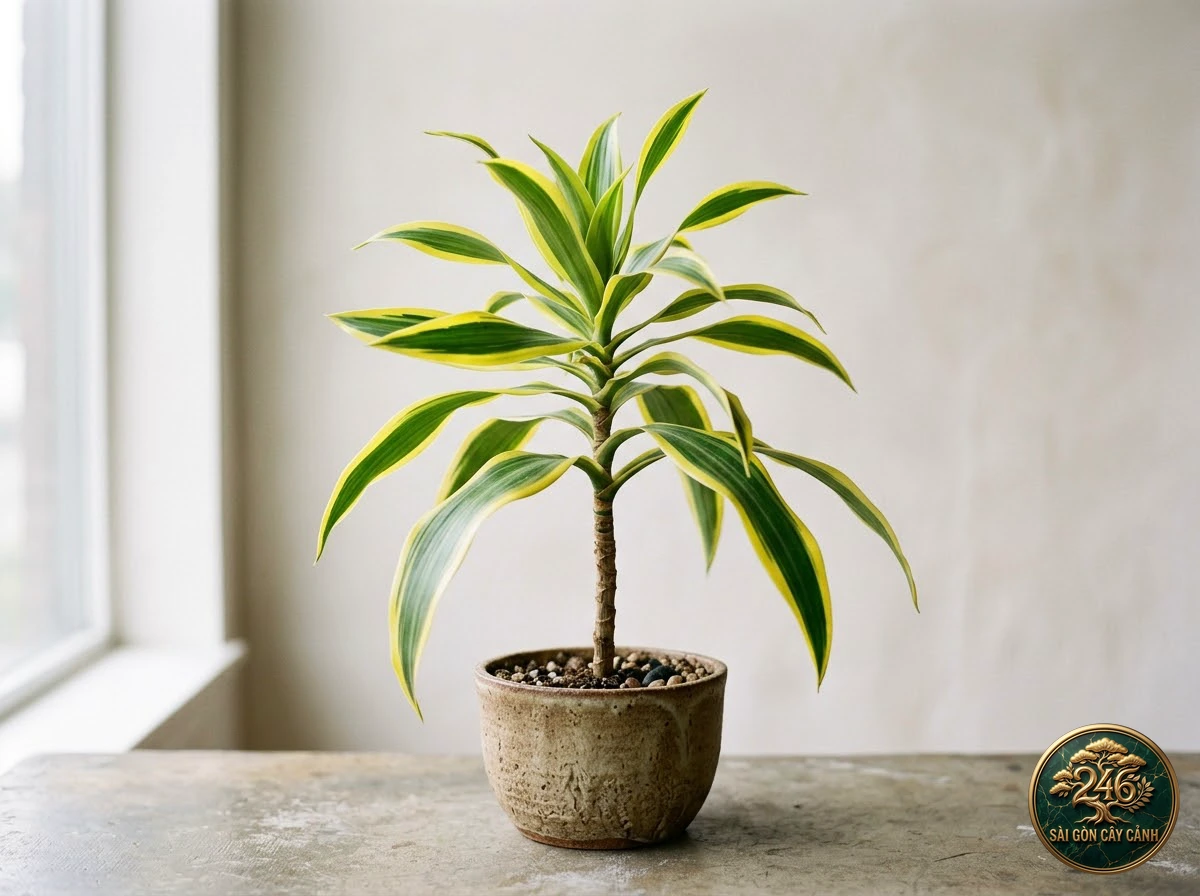
Song of India (botanical nomenclature: Dracaena reflexa) is an exquisite tropical specimen belonging to the Asparagus family (Asparagaceae). Revered for its architectural silhouette, remarkable physiological adaptability, and refined foliar aesthetics, it stands as a celebrated botanical centerpiece in contemporary interior landscape collections throughout Saigon and cosmopolitan living spaces worldwide.
1. Botanical Taxonomy & Core Horticultural Specifications
| Scientific Name | Dracaena reflexa |
|---|---|
| Botanical Family | Asparagus family (Asparagaceae) |
| Vietnamese Vernacular | Cây trúc bách hợp |
| International Common Name | Song of India |
| Growth Habit | Semi-succulent woody shrub or rhizomatous perennial featuring architectural upright rosettes with remarkable drought tolerance |
| Photometric Requirements | Highly adaptable from low ambient shade to bright diffused light (1,000 – 3,500 lux); superb low-light endurance |
| Hydration Protocol | Irrigate only when substrate is 50-70% dry; exceptionally drought-hardy, intolerant of waterlogging (7-12 day cycle) |
| Optimal Substrate Matrix | Well-draining gritty mix: 40% pumice/perlite grit, 30% coarse coco chips, 20% fertile loam, 10% worm castings (pH 6.2 – 7.0) |
| Thermal Comfort Range | 18°C – 35°C (64°F – 95°F; handles indoor heat and HVAC environments with outstanding endurance) |
| Relative Ambient Humidity | 40% – 65% (thrives in dry air-conditioned spaces without mandatory foliar misting) |
| Cultivation Difficulty | Very Easy (extremely low-maintenance, ideal for beginners and corporate work desks) |
| Companion Animal Toxicity | Mildly toxic to dogs and cats (contains steroidal saponins that induce salivation and digestive upset if chewed) |
From a phylogenetic and evolutionary perspective, Dracaena reflexa occupies an integral niche within the Asparagus family (Asparagaceae). Originating in diverse tropical understories and specialized ecological microclimates, this species has evolved sophisticated anatomical adaptations to flourish beneath competitive canopy filters and periodic hydrological cycles.
Under domestic indoor cultivation, it demonstrates extraordinary morphological plasticity. Its structural vascular bundles maintain upright architectural vigor without requiring intrusive artificial supports, while its robust xylem and phloem transport networks ensure efficient moisture and mineral translocation even within enclosed, climate-controlled apartment environments.
Deciphering the indigenous environmental cues of Dracaena reflexa provides interior horticulturists with the vital foundation needed to formulate a balanced indoor microclimate, effortlessly recreating its natural evolutionary rhythms within contemporary architecture.
2. Morphological Identification Keys & Foliar Architecture
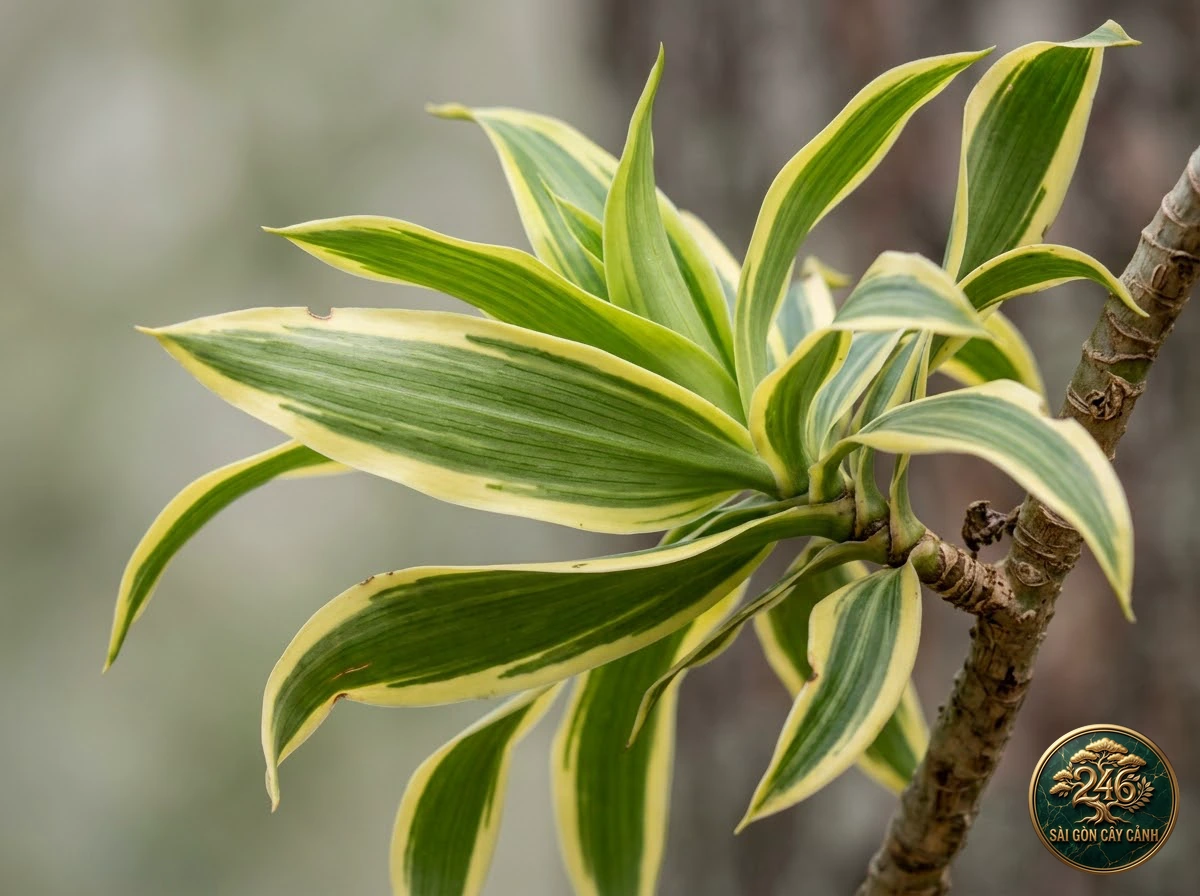
The distinctive morphological key of Song of India centers on its sophisticated foliar anatomy and specialized venation matrix. The adaxial cuticular surface is fortified with a delicate protective wax layer that mitigates excessive transpirational water loss during dry indoor spells while imparting a sublime satin luster under diffused illumination.
The structural petioles exhibit muscular mechanical collenchyma tissue, anchoring the leaf blades at optimal photosynthetic reception angles. Close examination of the nodal junctions reveals balanced internodal spacing that generates a harmonious, sculptural foliage canopy visible from every spatial viewpoint.
Microscopic inspection of the leaf cross-section displays a dense, multi-layered palisade mesophyll packed with high-efficiency chloroplasts, maximizing photosynthetic energy harvest even under sub-optimal ambient lux levels. The stomatal pores, predominantly distributed across the abaxial epidermis, operate with keen sensitivity to vapor pressure deficits (VPD) to conserve cellular turgidity.
3. Photometric Calibration & Indoor Placement Dynamics
The photosynthetic machinery of Dracaena reflexa demands consistent, non-scorching illumination. It achieves maximum vitality when positioned under generous bright indirect light, calibrated between 1,500 and 3,500 lux (translating to a photosynthetic photon flux density of 35 to 75 µmol/m²/s).
Within urban apartments and executive interior suites, ideal positioning is approximately 1 to 1.5 meters away from East- or South-facing windows draped with sheer linen diffusers. Direct midday solar radiation must be rigorously avoided, as intense ultraviolet and thermal peaks can bleach delicate foliar pigments and induce irreversible necrotic scorch patches.
Conversely, chronically placing the specimen in dim corners receiving less than 800 lux results in etiolated petiole stretching, compromised leaf development, and diminished systemic immune resistance. In darker interior layouts, supplementing with horticultural full-spectrum LED fixtures (4000K – 5000K) for 8 to 10 hours daily ensures robust metabolic activity.
4. Seasonal Growth Phenology & Root Morphology
The physiological life cycle of Song of India follows distinct tropical seasonal rhythms. During peak developmental windows from early spring through autumn, the plant accelerates vegetative expansion, producing tender new growth flushes supported by active root exploration.
The subterranean root network comprises fibrous primary anchors complemented by fine feeder root hairs that permeate open aeration pores within the potting matrix. In species with semi-epiphytic or trailing habits, adventitious aerial roots serve as dual-purpose structural claspers and ambient atmospheric moisture absorbers.
During cooler transitions or dry microclimatic periods, vegetative expansion naturally moderates as the plant consolidates cellular wall lignification. Synchronizing hydration and nutritional protocols to these natural seasonal pulses prevents common horticultural setbacks.
5. Porous Substrate Matrix Engineering & Root Aeration
Root health is the ultimate determinant of foliar grandeur in Dracaena reflexa. The plant is intolerant of dense, compacted, or moisture-stagnant garden clays, which rapidly suffocate delicate root hair respiration.
The premier potting formula engineered by Saigon Cay Canh incorporates: Well-draining gritty mix: 40% pumice/perlite grit, 30% coarse coco chips, 20% fertile loam, 10% worm castings (pH 6.2 – 7.0). The integration of chunky mineral components creates stable macro-pores that facilitate swift 3- to 5-second gravity drainage through base drainage openings.
Inert volcanic pumice and horticultural perlite maintain structural integrity without degrading over time, while buffered coco peat and aged pine bark provide gentle organic moisture retention around root zones, sustaining a stable rhizosphere pH between 6.0 and 6.8.
6. Hydration Schedules & Saigon Seasonal Calibration
The fundamental rule for irrigating Song of India is straightforward: “Soak thoroughly when the topsoil dries moderately; avoid continuous shallow surface sprinkling.” Always verify root zone moisture by probing the top 3 to 5 cm of substrate before adding water.
During the dry, high-evaporation months typical of Southern Vietnam (November through April), irrigation intervals typically range between 3 and 5 days. Deliver room-temperature water evenly around the perimeter until free runoff exits the bottom holes, emptying decorative saucer caches after 15 minutes.
Throughout the wet monsoon season (May through October) when ambient atmospheric humidity exceeds 80%, extend intervals to 6 to 9 days. Moisture evaporates significantly slower under saturated conditions; excessive watering during cloudy periods is the leading trigger for opportunistic fungal pathogens.
7. Mineral Nutrition & Dilute Fertilization Protocols
Nutritional supplementation for Dracaena reflexa must be conservative and balanced. Indoor foliage metabolizes minerals at steady, moderate rates, making weak, frequent applications far superior to concentrated chemical doses.
During active vegetative expansion, apply a balanced water-soluble formulation (such as 20-20-20 or 15-15-15 enriched with chelated trace elements including Fe, Mg, Zn, and Mn) diluted to half- or quarter-strength every two weeks. Nitrogen stimulates vigorous chlorophyll synthesis, Phosphorus fuels root expansion, and Potassium reinforces foliar cell wall resilience.
During dormant or cooler phases, suspend chemical fertilizers entirely to prevent osmotic root burn. A surface top-dressing of organic worm castings or controlled-release fertilizer (CRF) pellets provides gentle, long-term soil enrichment.
8. Sanitation Pruning, Cantering & Clonal Propagation
Periodic maintenance pruning preserves the architectural profile of Song of India while eliminating harborage areas for opportunistic pests. Always utilize sharp, bypass pruning shears sanitized with 70% isopropyl alcohol to excise senescent basal leaves or leggy stem sections.
Vegetative propagation allows enthusiasts to produce vigorous, genetically identical clonal specimens. Depending on species morphology, propagation is reliably achieved via stem node cuttings, division, or air layering during warm, humid spring conditions.
Stem cuttings should possess at least 2 to 3 healthy nodal junctions. Treat freshly cut bases with an organic rooting hormone, then insert into an airy propagation blend of damp sphagnum moss and horticultural perlite. Enclosed in a ventilated humidity dome under bright indirect light, new root systems emerge reliably within 3 to 4 weeks.
9. Diagnostic Pathology, Pest Mitigation & Integrated Management
An Integrated Pest Management (IPM) approach ensures pristine leaf health for Dracaena reflexa. The following diagnostic matrix details the primary physiological and pathological challenges encountered in indoor settings:
| Observed Symptom | Underlying Etiology | Remedial Corrective Action |
|---|---|---|
| Generalized basal leaf yellowing with soft stems | Substrate waterlogging and hypoxic root rot | Withhold water 7 days; ensure drainage; repot in fresh airy mix if severe |
| Crisp, brittle brown leaf margins and tips | Ambient relative humidity below 50% or HVAC drafts | Relocate away from direct AC airflows; introduce pebble humidity trays |
| Expanding circular brown spots with chlorotic halos | Fungal leaf spot pathogens (Cercospora / Colletotrichum) | Dry foliage surface; excise infected leaves; apply organic bio-fungicide |
| Fine silken webbing on leaf undersides with stippling | Spider mite (Tetranychidae) infestation in dry air | Wipe blades with dilute insecticidal soap; mist with cold-pressed neem oil |
| Cottony white clusters tucked within petiole crevices | Mealybug (Pseudococcidae) sap-feeding colony | Dab pests with alcohol-dipped cotton swabs; treat with horticultural oil |
Weekly underside foliar inspections ensure early detection of common pests before populations establish, maintaining pristine indoor vitality without reliance on harsh domestic synthetic pesticides.
10. Companion Animal Safety & Veterinary Toxicology
Regarding companion animal wellness and household safety, Song of India is classified as: Mildly toxic to dogs and cats (contains steroidal saponins that induce salivation and digestive upset if chewed).
In species containing bioactive sap or calcium oxalate crystals, these compounds serve as natural deterrents against herbivore browsing in the wild. If curious pets chew on stems or leaves, localized cellular irritation may produce temporary oral discomfort, salivation, or mild digestive upset.
Prudent practice involves placing potted specimens on elevated credenzas, plant pedestals, or hanging planters safely out of reach of inquisitive pets. Always wear protective gardening gloves when conducting extensive pruning to prevent sap contact with sensitive skin.
11. Biophilic Architecture & Interior Design Applications
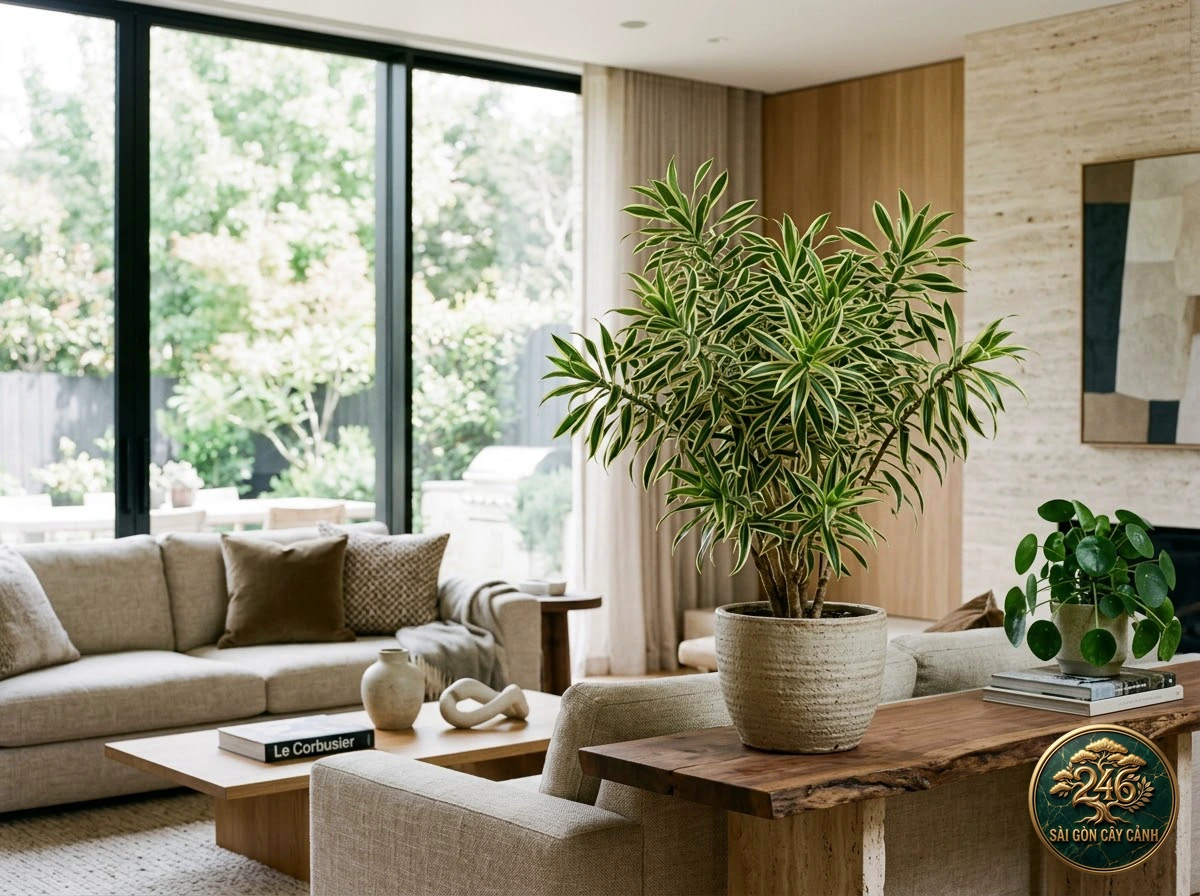
Within contemporary interior design and Biophilic architectural frameworks, Song of India functions as a dynamic living sculpture, softening hard minimalist planes of stone, glass, and steel.
Its elegant silhouette and refined foliage harmonize effortlessly with handcrafted artisanal ceramic planters, fluted concrete pots, or organic woven baskets in Japandi, Scandinavian, or Modernist spaces. Placed as a statement floor accent or credenza centerpiece, it instills calm, elevates spatial depth, and enlivens residential and executive environments.
Scientific research in environmental psychology consistently indicates that living interior botanicals foster mental clarity, reduce stress markers, and enhance ambient indoor humidity, creating a grounded sanctuary within urban high-rise living.
12. Common Indoor Pitfalls & Preventative Guidelines
To ensure long-term vitality across successive growing seasons, avoid these five common cultivation missteps:
- Calendar-Based Irrigation: Watering on a rigid schedule without assessing substrate moisture is the leading cause of fatal root suffocation.
- Direct Air Conditioning Placement: Positioning foliage in direct paths of chilled drafts shocks stomatal mechanisms and triggers rapid leaf drop.
- Undrained Planter Vessels: Planting directly into decorative containers lacking drainage holes creates an anaerobic swamp at the root base.
- Excessive Fertilizer Application: Feeding stressed plants or applying heavy synthetic doses causes severe osmotic root scorch.
- Constant Relocation: Frequently moving the specimen between rooms with differing light levels induces metabolic stress and compensatory leaf shed.
13. Curated Botanical Frequently Asked Questions (FAQ)
When is repotting into a larger container necessary?
Repotting is typically required every 12 to 18 months when root tips emerge from drainage openings or circle the root ball tightly. Select a new pot 3 to 5 cm larger in diameter and refresh 50% of the substrate with porous mix.
Should commercial leaf shine products or oils be used on foliage?
No. Commercial chemical shines and home remedies like milk or mayonnaise leave greasy residues that clog stomatal pores and attract airborne dust. Wipe leaves gently with a damp microfiber cloth moistened with plain tepid water.
What are the earliest indicators of light deficiency?
Low-light stress manifests as elongated, spindly petioles, noticeably smaller emerging leaf blades, loss of vibrant variegation, and stunted growth flushes. Move the plant closer to an unobstructed window with filtered light.
Is tap water safe for long-term irrigation?
Municipal tap water containing heavy chlorine or fluoride can cause cosmetic tip burn on sensitive foliage. Allow tap water to stand uncovered for 24 hours to dissipate volatile chlorine compounds before irrigating.
Does this species contribute to indoor air wellness?
Yes. By participating in natural transpirational cycles, indoor foliage elevates ambient humidity and absorbs trace volatile organic compounds, fostering a refreshing, restorative living atmosphere throughout your home.