
Living plant profile
Camouflage plant
Aglaonema pictum
Comprehensive botanical dossier for Camouflage plant (Aglaonema pictum). Identification, lighting calibration, porous substrate formulation, and cultivation guide by Saigon Cay Canh.
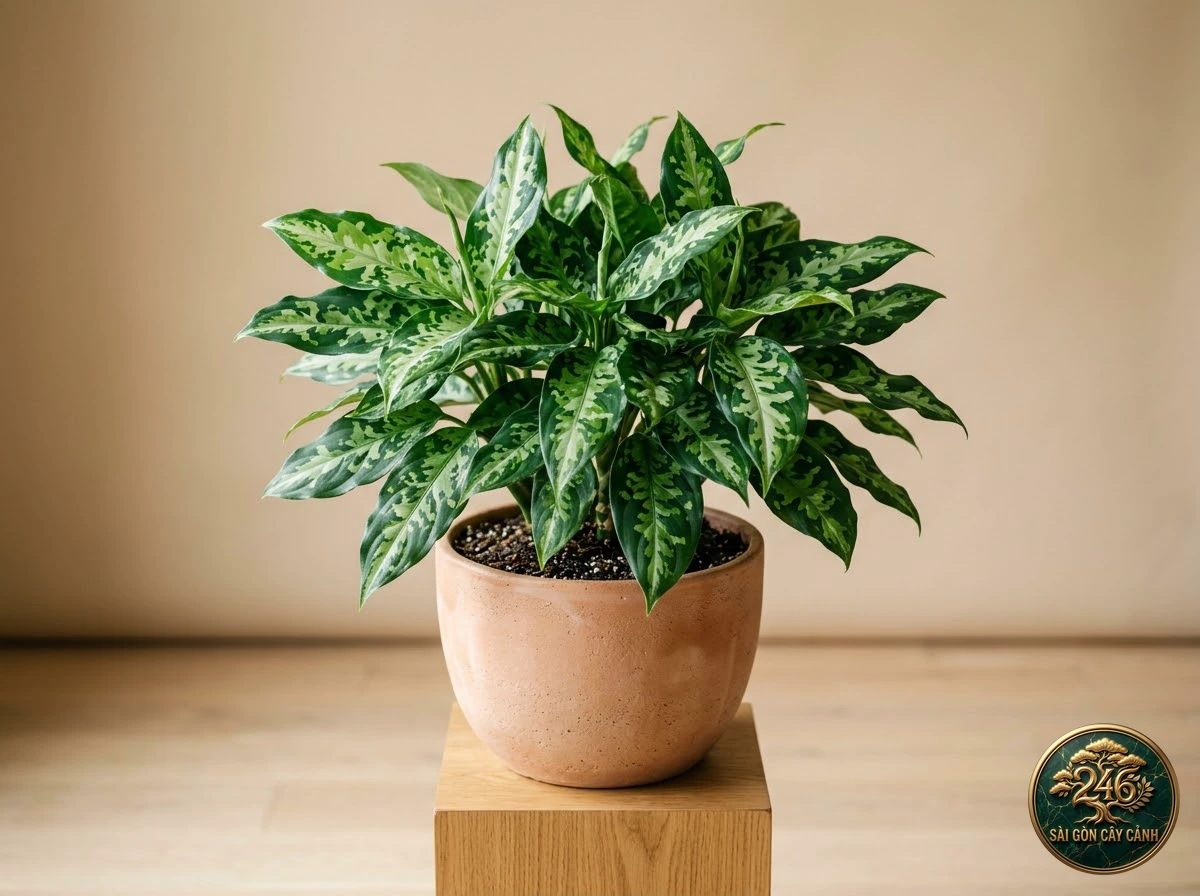
Camouflage plant (Aglaonema pictum) is an extraordinary tropical collector aroid celebrated globally for its distinctive tripartite camouflage variegation. Native to Sumatran rainforest understories, this prized botanical specimen commands admiration for its mesmerizing foliar mosaic and distinctive architectural presence.
1. Core Botanical Taxonomy & Cultural Specifications
| Scientific Name | Aglaonema pictum |
|---|---|
| Botanical Family | Araceae (Aroid Family) |
| Native Distribution | Tropical montane rainforest understories of Sumatra and Nias island in Indonesia |
| Growth Demeanor | Erect clumping terrestrial subshrub developing semi-woody canes with tightly spaced nodes |
| Lighting Threshold | Filtered indirect daylight (1,000 – 2,200 lux); sensitive to intense direct solar rays |
| Hydration Cadence | Moisten once upper 40% substrate feels dry; root system demands aerated moisture without standing water |
| Substrate Formulation | 40% volcanic pumice, 25% aged pine bark, 20% coarse perlite, and 15% washed coco coir chips |
| Thermal Range | 21°C – 30°C (70°F – 86°F; flourishes consistently in warm tropical indoor environments) |
| Relative Humidity | 70% – 85% (Elevated ambient humidity maintains foliar hydration and crisp silvery mottling) |
| Cultivation Difficulty | Moderate (Demands stable relative humidity and dependable substrate drainage porosity) |
| Pet Safety Profile | Toxic (Insoluble calcium oxalate crystals irritate animal oral tissues) |
Formally cataloged in taxonomic records of the Royal Botanic Gardens Kew (POWO), Aglaonema pictum occupies an intriguing ecological niche on the misty submontane slopes of Sumatra and neighboring Indonesian islands. Established amidst porous volcanic debris blanketed by fallen leaf litter, its delicate root network relies on high ambient humidity and subterranean aeration rather than stagnant dampness.
Centuries of evolutionary adaptation beneath dense rainforest crowns shaped the compact, semi-woody habit of Camouflage plant. Thickened subterranean rhizomes and closely spaced aerial nodes store vital carbohydrates, providing steady physiological momentum even through seasonal microclimatic variations.
Botanical expeditions across volcanic Sumatran ridges record this aroid occurring at elevations between 300 and 1,000 meters, where daily temperature fluctuations cycle between 20°C and 28°C. Decomposing organic detritus intermixed with volcanic pumice supports active mycorrhizal consortia, providing continuous organic nourishment that sustains the celebrated tri-color camouflage pigmentation.
2. Morphological Identification & Foliar Architecture
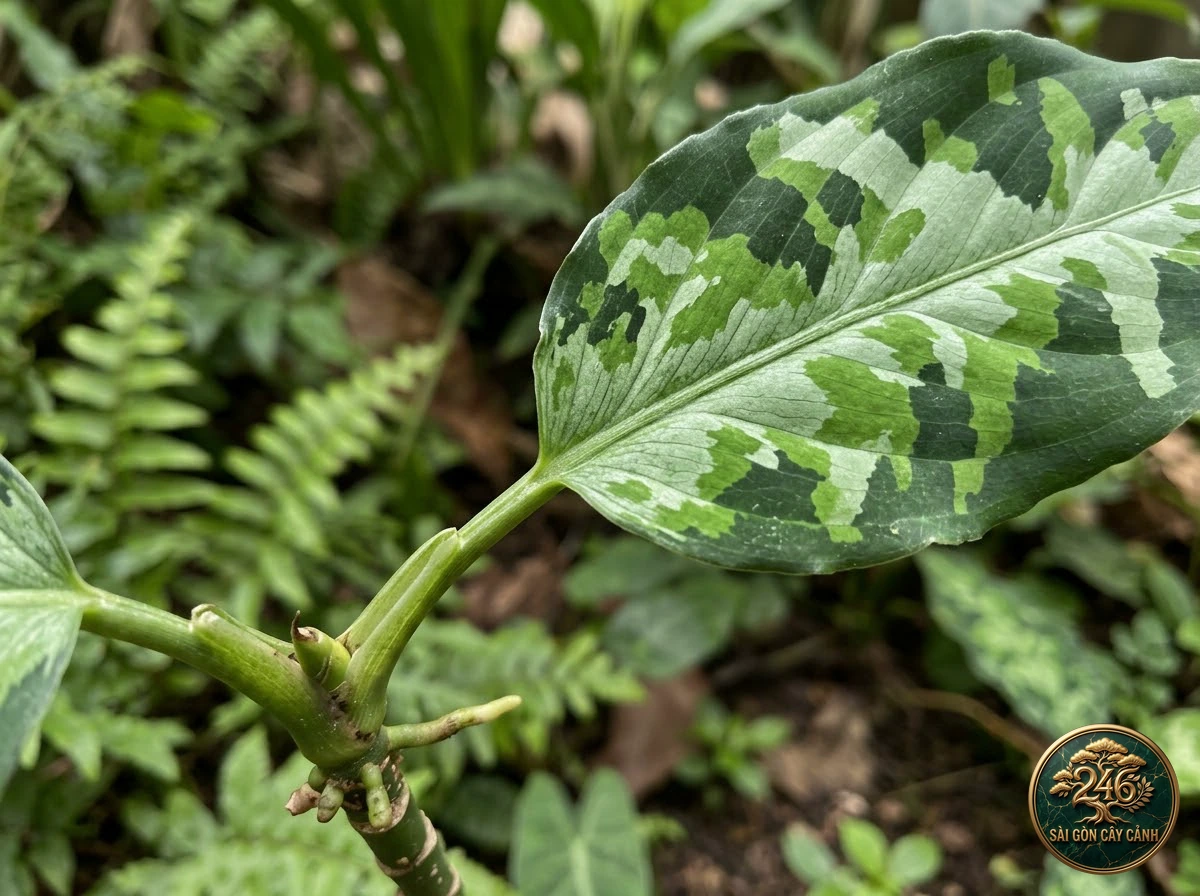
The foliar blade displays an arresting three-toned variegation that sets Camouflage plant apart from all other aroids. Oblong-lanceolate leaves measuring 12 to 20 cm present a velvety matte finish, composed of deep jungle green grounds overlaid with pale mint chartreuse patches and crisp silver-white blotches arranged in irregular camouflage patterns.
The abaxial surface is smooth pale green, revealing a prominent midrib supported by fine lateral veins that maintain blade rigidity. Substantial petiole sheaths clasp the main stem tightly, displaying minute stippling along outer margins and angling the foliage outward in a balanced crown.
3. Photometric Calibration & Window Exposure Optimization
Preserving the crisp tri-color chromatic delineation requires calibrated diffused lighting between 1,000 and 2,200 lux. Staging the planter approximately one meter back from an unobstructed East-facing domestic window delivers ideal photon density for natural pigment synthesis.
Direct intense solar radiation rapidly scorches fragile non-chlorophyllous white tissues within hours. If domestic quarters lack window apertures, supplementing with dedicated 4000K horticultural LED illumination for 8 to 10 hours daily ensures vigorous foliage vigor.
4. Structural Cane Dynamics & Form Optimization
Camouflage plant adopts an upright, self-supporting subshrub silhouette rather than a vining or climbing demeanor. Slow vertical growth with densely arranged nodes provides natural structural integrity, eliminating the need for climbing poles or mechanical supports.
Cultivators should opt for well-proportioned glazed ceramic or terracotta planters matching root volume rather than overly deep pots that harbor stagnant moisture. Rotating the vessel a quarter turn weekly ensures balanced light capture across all foliar axes, maintaining an upright central axis.
5. Engineered High-Porosity Substrate Formulation
Fibrous root systems of Aglaonema pictum exhibit profound sensitivity to hypoxic soil conditions. Conventional fine potting soils or compacted loams suffocate fine feeder rootlets, rapidly triggering anaerobic fungal rot following successive deep watering episodes.
A field-tested bespoke potting medium incorporates 40% volcanic pumice, 25% aged pine bark nuggets, 20% coarse perlite, and 15% desalted coco coir chips. This porous matrix ensures surplus irrigation drains freely downward while maintaining a cool, aerated moisture film around tender root hairs.
The physical architecture of volcanic mineral granules guarantees stable macropore spaces throughout the container matrix. Even under heavy saturation, coarse pumice and perlite resist compaction, maintaining dissolved oxygen levels above 20% to stimulate active feeder root respiration and micronutrient absorption.
6. Organic Bio-Fertilization & Mineral Management
Nutritional management demands a conservative, measured protocol. Applying concentrated chemical fertilizers shocks delicate feeder roots and turns fragile white margins dark brown. Organic cold-pressed marine kelp or humic drench diluted to one-quarter standard strength is strongly recommended.
Apply diluted organic nutrients every three to four weeks during active vegetative growth. Quarterly, thoroughly flush the potting container with copious rested water to leach away cumulative mineral salts, preserving balanced subterranean chemistry.
7. Clinical Diagnostic Matrix & Horticultural Resolutions
| Clinical Symptom | Root Pathology | Diagnostic Method | Targeted Resolution |
|---|---|---|---|
| Basal leaves turn yellow, cane softens | Substrate waterlogging causing root rot | Inspect deep pot moisture with a probe | Withhold irrigation, elevate pot, renew with porous mineral mix |
| Crisp brown foliar margins and tips | Ambient humidity dropped below 50% | Check local hygrometer reading | Group with humidifying pebble trays, isolate from air conditioning drafts |
| Tri-color camouflage pattern turns pale | Inadequate photosynthetic irradiance | Measure lux level at foliar canopy | Relocate nearer to bright indirect daylight or add horticultural LED |
| Circular brown necrotic spots with yellow halos | Foliar fungal infection from night wetness | Examine abaxial leaf surfaces | Blot leaves dry, improve air movement, apply botanical bio-fungicide |
| Leaf tips exude droplets leaving white crusts | Mineral guttation from excessive fertilizer salts | Examine container rim for salt crusts | Flush potting medium with pure water, suspend fertilizer for 4 weeks |
8. Pest Mitigation Protocols & Foliar Sanitation
Within stagnant, low-airflow domestic spaces, Aglaonema pictum can become susceptible to mealybugs and spider mites. Mealybugs typically congregate inside tightly folded petiole axils to siphon sap. Dab active clusters directly with cotton swabs moistened in 70% alcohol to eliminate pests without injuring tissue.
Monthly foliar hygiene constitutes an indispensable cultural step. Gently wiping both leaf surfaces with a soft microfiber cloth dampened in lukewarm water removes domestic dust layers, unblocking microscopic stomata and enhancing light interception efficiency.
9. Asexual Propagation Methodology
Propagation succeeds most reliably via basal offshoot division or apical stem cuttings equipped with emergent aerial root initials. Sever clean cuts using a razor disinfected with 70% alcohol, seal wound surfaces with horticultural wound compound, and allow 12 hours of air-drying prior to potting.
Establish rooted cuttings in dampened long-fiber sphagnum or a blend of coarse perlite and pumice over a 4 to 6 week period. Maintain ambient relative humidity above 75% under warm indirect light, strictly avoiding container movement while fragile adventitious roots anchor.
10. Veterinary Toxicology & Domestic Safety Safeguards
If accidental pet mastication occurs, promptly flush the oral cavity with cool water or provide small quantities of lactose-free milk to soothe physical irritation. Monitor the animal closely and contact a veterinary clinic immediately if swelling compromises respiratory passages.
11. Biophilic Interior Design & Architectural Styling
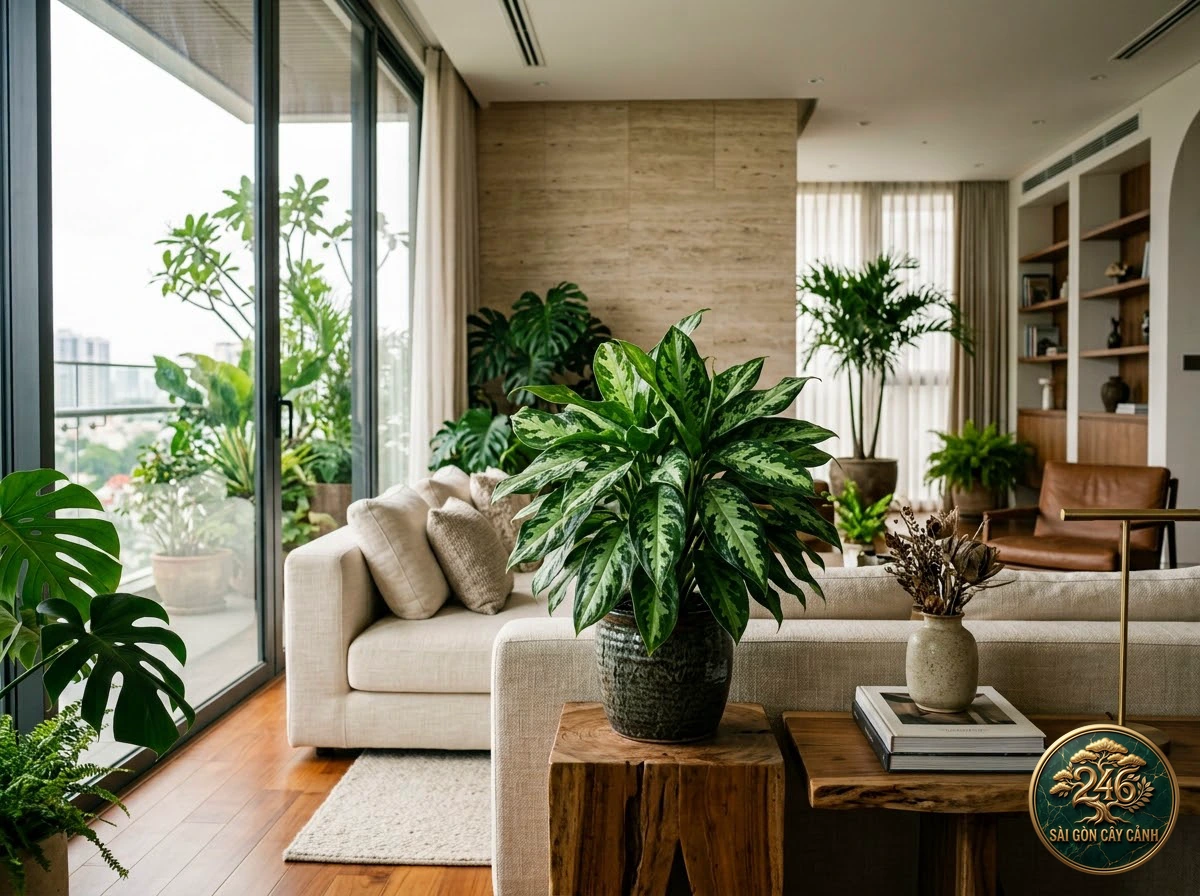
Displaying rare tri-color patterns, Camouflage plant operates as a striking living sculpture within modern residential interiors. It pairs exceptionally well with rich walnut cabinetry, exposed architectural concrete, or minimalist display shelving where its intricate foliage commands focused visual admiration.
Integrating this botanical gem introduces the rich, untamed texture of Southeast Asian rainforest understories into contemporary urban homes. Its balanced crown and dramatic color rhythm soften rigid architectural geometries, fostering mindful contemplation and organic connection.
When staged upon executive study desks or library credenzas, optical light-scattering across the velvety epidermis introduces mesmerizing visual depth under warm interior spotlighting. It stands as an elite botanical conversation piece, reflecting refined discernment and deep appreciation for tropical flora.
12. Master Cultivation Axioms
Cultivation expertise gathered at Saigon Cay Canh nurseries distills three cardinal rules to keep your specimen in pristine condition:
- Hydration Precision: Irrigate solely after the upper substrate volume has visibly dried down; verify actual moisture depth before pouring water.
- Solar Management: Provide steady filtered daylight between 1,000 and 2,200 lux; shelter delicate variegated tissues from direct midday ultraviolet rays.
- Foliar Care: Cleanse both blade surfaces with a damp microfiber cloth monthly to preserve stomatal conductance and deep foliar vibrancy.
13. Frequently Asked Botanical Questions (FAQs)
Why are the silver-white variegated patches shrinking over time?
This symptom occurs when ambient light is insufficient. The plant produces surplus green chlorophyll to maximize photosynthetic yield, overshadowing pale patches. Relocate closer to filtered bright daylight.
When should one repot Camouflage plant into a larger container?
Generally after 14 to 18 months, once roots encircle the root ball bottom or emerge above soil level, transition into a pot 3 to 4 cm wider with fresh coarse mineral substrate.
Can the plant endure continuously air-conditioned domestic spaces?
It tolerates climate-controlled spaces between 22°C and 27°C well, provided it is shielded from direct refrigerated drafts and supported by a pebble moisture tray to buffer dry ambient air.
What early indicator reveals subterranean root overwatering?
The earliest symptom is uniform yellowing across basal foliage accompanied by limp petiole turgor and potting mix that remains saturated for days without drying.
Should synthetic leaf polish sprays be applied to this variety?
Never apply mineral-oil leaf polishes as they clog microscopic stomata across the delicate velvety epidermis. Cleansing with plain water on a soft damp cloth is optimal.
Can this specimen be cultivated indefinitely in pure water hydroponics?
Water rooting is effective only as a temporary 3 to 4 week technique for initiating root initials. Long-term cultivation requires coarse mineral media, as delicate aquatic roots cannot sustain dense variegated crowns.