
Living plant profile
Clouded aglaonema
Aglaonema nebulosum
Comprehensive botanical dossier for Clouded aglaonema (Aglaonema nebulosum). Identification, lighting calibration, porous substrate formulation, and cultivation guide by Saigon Cay Canh.
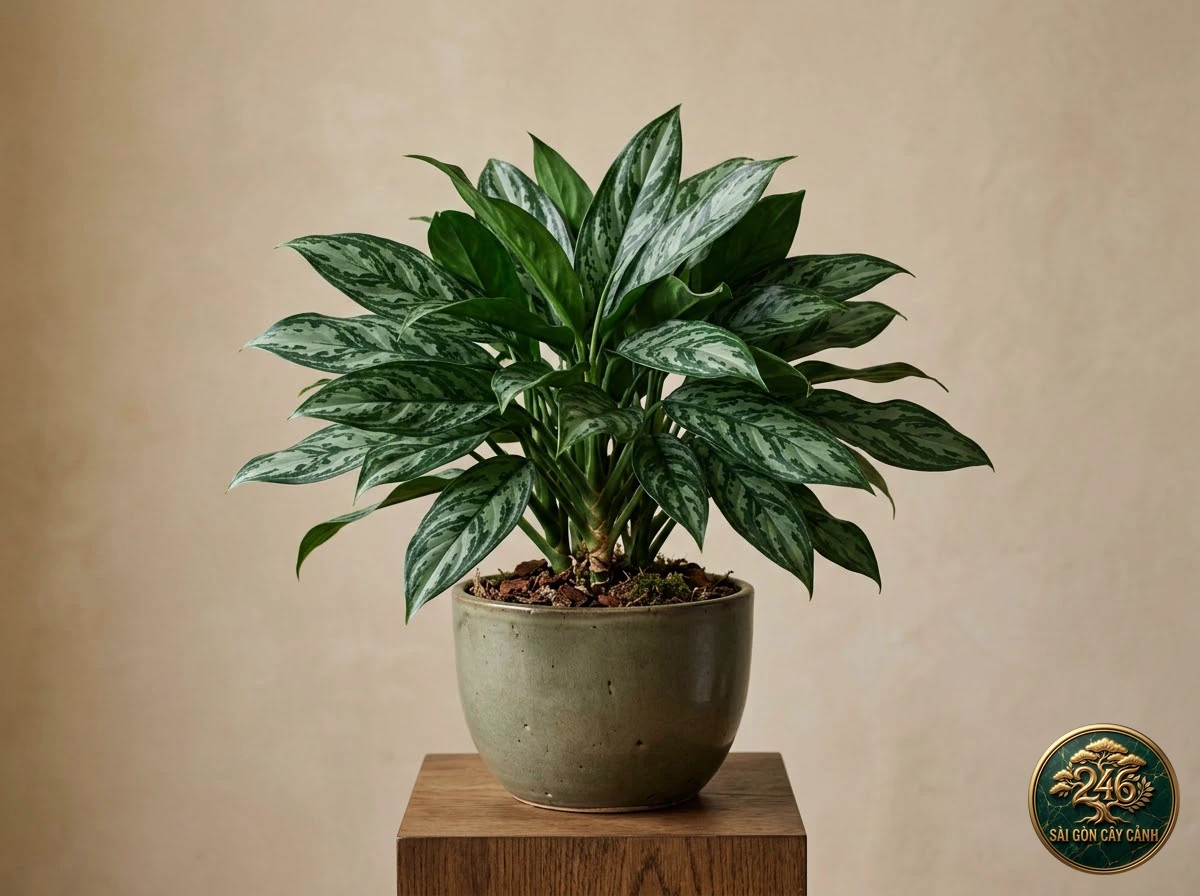
Clouded aglaonema (Aglaonema nebulosum) is an exquisite tropical foliage treasure distinguished by ethereal silver-grey clouds drifting across sea-green leaf blades. Originating in pristine Southeast Asian peat swamp rainforests, this botanical jewel exudes serene elegance and quiet fascination.
1. Core Botanical Taxonomy & Cultural Specifications
| Scientific Name | Aglaonema nebulosum |
|---|---|
| Botanical Family | Araceae (Aroid Family) |
| Native Distribution | Peat swamp and coastal rainforest floor niches of Peninsular Malaysia and humid Borneo |
| Growth Demeanor | Compact slow-growing herbaceous understory perennial with slender yet resilient canes |
| Lighting Threshold | Deep shade to low filtered daylight (700 – 1,800 lux); highly susceptible to solar scorch |
| Hydration Cadence | Preserve steady aerated moisture throughout medium; avoid severe dehydration of root ball |
| Substrate Formulation | 35% horticultural peat moss, 30% volcanic pumice, 20% perlite, and 15% fine pine bark |
| Thermal Range | 22°C – 31°C (72°F – 88°F; thrives in warm equatorial indoor temperatures) |
| Relative Humidity | 75% – 90% (Demands elevated atmospheric moisture to protect delicate foliar clouds) |
| Cultivation Difficulty | Moderate to Demanding (Requires stable humidity and careful watering water chemistry) |
| Pet Safety Profile | Toxic (Insoluble calcium oxalate crystals irritate animal oral tissues) |
Taxonomically confirmed by the Royal Botanic Gardens Kew (POWO), Aglaonema nebulosum occupies a specialized niche within the coastal peat swamps and rain-drenched lowland forests of Peninsular Malaysia and Borneo. Growing atop acidic spongy layers of decomposing mosses, it endures in perpetual understory gloom shielded from direct sunlight.
Peat swamp habitats shaped its delicate, fibrous root system designed to navigate soft organic soils. Its slender, slow-growing canes remain semi-succulent, exhibiting refined physiological adaptations to near-saturated ambient humidity levels.
Field botanists document this species co-occurring with aquatic mosses and ancient swamp ferns. Water seeping through humic-rich peat deposits generates a micro-environment characterized by remarkably low electrical conductivity (EC), explaining why the specimen reacts negatively to concentrated mineral fertilizer salts.
2. Morphological Identification & Foliar Architecture
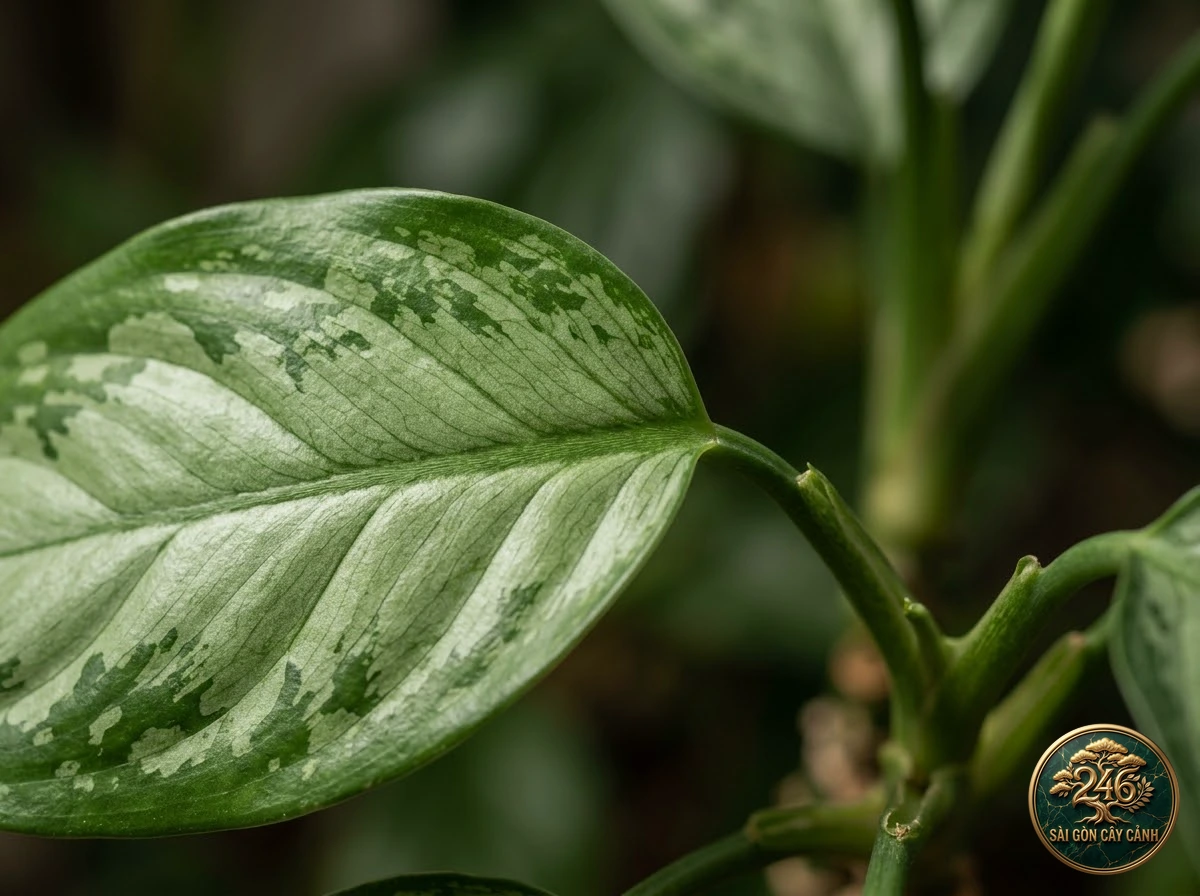
Leaves of Clouded aglaonema present narrow elliptic to oblanceolate outlines measuring 10 to 18 cm. The soothing sea-green lamina serves as canvas for irregular clouded blotches of silvery grey, reminiscent of morning mist drifting across tranquil waters. Chromatic transitions remain subtle and ethereal without harsh boundaries.
The abaxial surface is matte pale green, complemented by slender yet pliable petioles lightly clasping the main stem. Foliage arches gracefully outwards in horizontal layers, creating an airy, refined botanical silhouette compared to heavier broad-leaved congeners.
Microscopic examination of epidermal cross-sections reveals closely packed polygonal cells that create a natural light-diffusing optical filter. The silvery-grey cloudy patches result from microscopic sub-epidermal intercellular air pockets that refract incident daylight, producing structural coloration without pathological chlorophyll degradation.
3. Photometric Calibration & Window Exposure Optimization
Adapted to dim swamp understories, the plant operates efficiently under low diffused illumination between 700 and 1,800 lux. Positioning the container 2 to 3 meters back from domestic window exposures or beneath gentle ambient lamps preserves its cloud-like silvery marbling.
Any glimpse of unfiltered direct solar radiation quickly scorches the thin epidermis, causing translucent white patches to collapse into brown paper. Use sheer window drapery to soften domestic light exposure into gentle ambient luminosity.
4. Structural Cane Dynamics & Form Optimization
Clouded aglaonema maintains an understated petite stature, rarely exceeding 40 cm in domestic cultivation. Slender canes stand neatly erect on their own without requiring staking or structural stabilization.
Because single stems develop slowly, clustering several rooted specimens together within a shallow bowl planter produces a lush miniature grove effect. Rotate the container periodically to ensure balanced foliage symmetry.
5. Engineered High-Porosity Substrate Formulation
Unlike montane rock-dwelling congeners, Clouded aglaonema prefers a slightly acidic potting matrix (pH 5.5 – 6.2) with high moisture buffering capacity combined with dependable porosity. Compacted or alkaline substrates stunt growth and induce foliar chlorosis.
An ideal specialized blend incorporates 35% quality horticultural peat moss, 30% fine volcanic pumice, 20% coarse perlite, and 15% composted fine pine bark. This mixture mimics acidic swamp peat, keeping root zones coolly hydrated while allowing excess water to drain smoothly.
The natural acidic buffering capacity of sphagnum peat moss paired with porous volcanic pumice prevents calcium salt encrustation from domestic water supplies. The medium maintains micro-humidity equilibrium, allowing feeder roots to absorb hydration smoothly without osmotic shock.
6. Organic Bio-Fertilization & Mineral Management
Fertilization requires extreme discretion as tender rootlets possess high sensitivity to dissolved mineral salts. Administer dilute cold-pressed seaweed extract or fulvic acid solution once every four weeks during active shoot emergence.
Never irrigate with unchlorinated municipal tap water or hard well water high in calcium carbonate. Periodically flush the potting media with collected rainwater or filtered reverse-osmosis water to maintain subterranean purity.
7. Clinical Diagnostic Matrix & Horticultural Resolutions
| Clinical Symptom | Root Pathology | Diagnostic Method | Targeted Resolution |
|---|---|---|---|
| Leaf margins curl inward, silver clouds fade | Ambient atmospheric humidity below 60% | Check digital hygrometer reading | Operate an ultrasonic cool mist humidifier nearby |
| Stems collapse limp, roots blackened and decaying | Anaerobic water accumulation in bottom pot | Unpot specimen to examine root ball health | Excise rotting roots, pot into fresh airy peat mix, elevate pot base |
| Emerging leaves abnormally small and stunted | Micronutrient deficiency or root-bound pot | Inspect root network through drainage openings | Upgrade pot size and apply gentle organic trace mineral drench |
| Minute stippled yellow dots across lamina | Spider mite activity encouraged by arid air | Inspect abaxial leaf surface with magnifier | Wipe foliage with moist microfiber rag, elevate ambient moisture |
| Leaf margins develop necrotic blackened edges | Irrigation water contains chlorine or high TDS | Test total dissolved solids of water source | Switch exclusively to rainwater or reverse-osmosis supply |
8. Pest Mitigation Protocols & Foliar Sanitation
Spider mites represent the chief insect adversary for Clouded aglaonema within arid, climate-controlled interiors. They pierce leaf tissues from below, leaving bleached micro-stippling. Maintaining relative humidity above 75% serves as the most potent organic deterrent.
Cleanse both blade faces monthly using a soft cloth dampened with distilled water. This gentle care protocol cleans away atmospheric particulates while facilitating early detection of opportunistic insect pests.
The most effective prophylactic against fungal pathologies in swamp flora is sustaining continuous gentle air circulation via low-speed domestic fans. Never mist foliage late in the evening when ambient temperatures fall, as lingering moisture films across thin epidermal tissues provide ideal conditions for Colletotrichum fungal spores to germinate.
9. Asexual Propagation Methodology
Propagation proves most successful via terminal shoot cuttings bearing emergent aerial roots or basal sucker separation. Make precise incisions with a scalpel disinfected in 70% alcohol, treat cut wounds with pruning sealant, and air-dry for 12 hours.
Insert cuttings into moist long-fiber sphagnum moss inside an enclosed propagation cloche or terrarium. After 4 to 6 weeks under shaded ambient warmth, vigorous rootlets will develop, readying plants for independent potting.
10. Veterinary Toxicology & Domestic Safety Safeguards
Keep planters elevated within display vitrines or on tall decorative wall brackets away from cats and dogs. Should accidental ingestion occur, rinse the pet mouth with cool water immediately and monitor for persistent vomiting.
11. Biophilic Interior Design & Architectural Styling
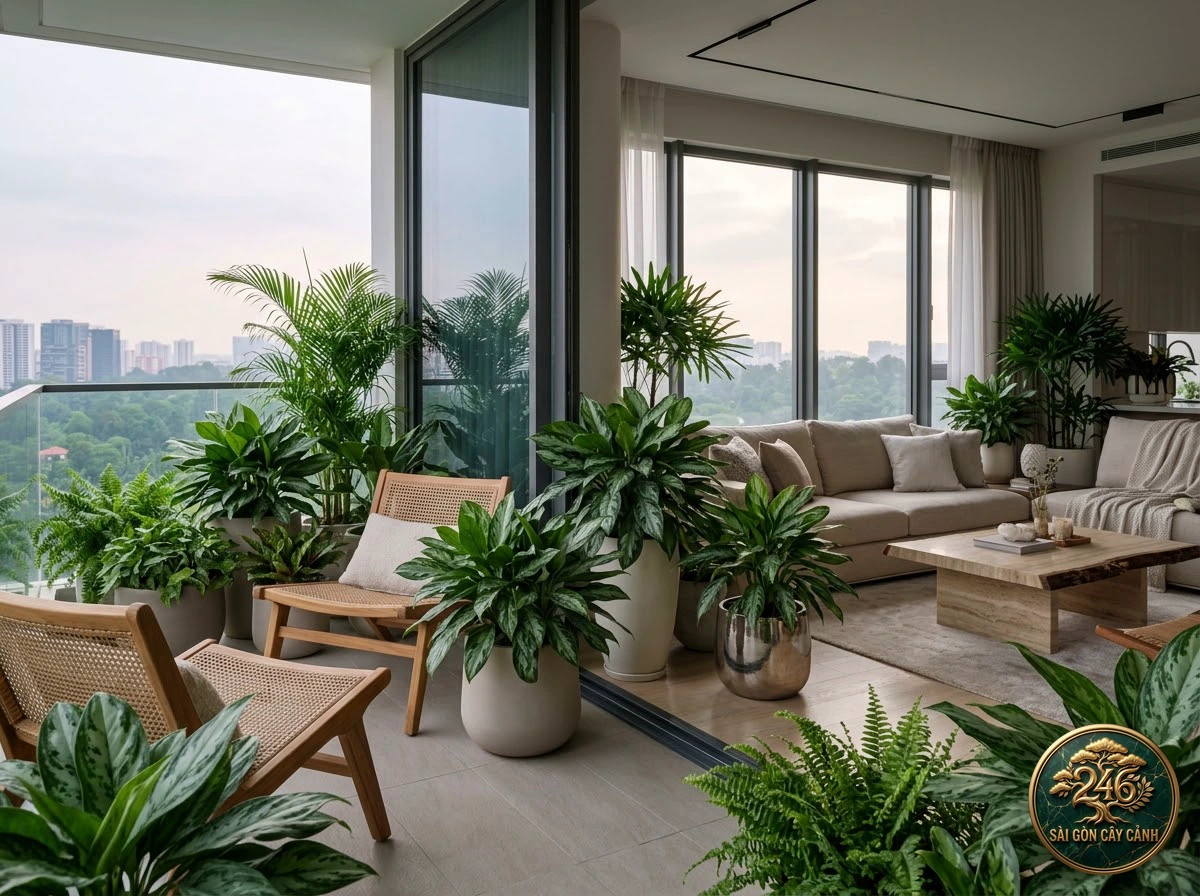
Featuring delicate cloudy silver patterns, this specimen lends itself gracefully to contemplative spaces, Japanese tea nooks, and peaceful reading studies. It contributes serene understated elegance without visual ostentation.
Pairing this variety with celadon ceramic vessels or natural slate planters accentuates the ethereal mist-like foliar qualities, introducing calm meditative balance into modern domestic atmospheres.
The quiet morning-mist aesthetics of this specimen soothes mental friction amidst rapid urban rhythms. Each horizontal leaf blade resembles floating clouds, offering a tranquil sanctuary that anchors human consciousness to the untouched purity of wilderness.
12. Master Cultivation Axioms
Drawn from specialized swamp plant nursery care at Saigon Cay Canh, observe these three essential practices:
- Hydration Precision: Maintain consistent aerated moisture throughout the potting mix; never allow root zones to desiccate completely.
- Solar Management: Position in cool shaded zones with gentle diffused daylight below 1,800 lux; protect foliage completely from direct solar rays.
- Foliar Care: Irrigate with rested rainwater or filtered water, avoiding municipal tap supplies bearing heavy chlorine and dissolved solids.
13. Frequently Asked Botanical Questions (FAQs)
Why does Clouded aglaonema grow more deliberately than standard Chinese evergreens?
This reflects inherent evolutionary adaptations to nutrient-sparse peat swamp understories. The plant invests heavily in resilient cell wall structures, typically unfurling one new leaf every 4 to 6 weeks.
Can this variety be accommodated inside domestic paludariums or terrariums?
It serves as an exemplary candidate for humid terrarium ledges and paludarium shores, where saturated atmospheric humidity and soft horticultural LEDs mimic its native swamp home.
What is the optimal water source for irrigating this sensitive aroid?
Rested ambient rainwater or reverse-osmosis filtered water is strongly recommended to avert dissolved mineral crusts along fragile leaf margins.
How does one determine the correct timing for moisture replenishment?
Evaluate container heft; once the pot feels noticeably lighter or the surface moss layer feels barely damp to touch, administer fresh water.
Does the plant shed leaves during cooler winter intervals?
Temperatures dipping below 18°C pause metabolic activity and cause slight petiole drooping. Maintain indoor warmth and scale back irrigation during colder seasonal weather.
How does one preserve the ethereal contrast of the silvery clouds?
Avoid excessive illumination that bleaches delicate pigments, while periodically supplementing with ultra-dilute chelated iron and magnesium to sustain the contrasting sea-green base.