
Living plant profile
Giant dumb cane
Dieffenbachia amoena
Comprehensive botanical dossier for Giant dumb cane (Dieffenbachia amoena). Identification, lighting calibration, porous substrate formulation, and cultivation guide by Saigon Cay Canh.
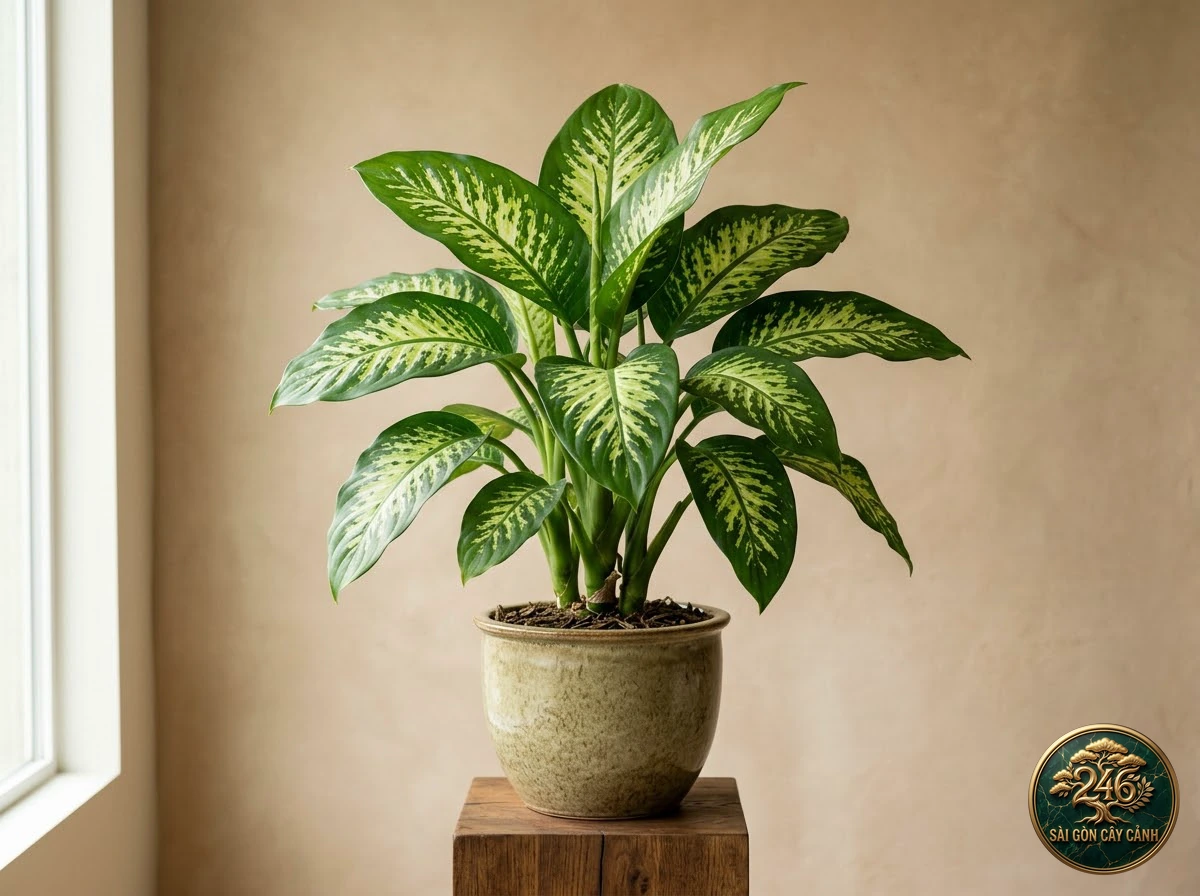
Giant dumb cane (Dieffenbachia amoena) is the majestic titan of the Neotropical foliage realm, renowned for monumental architecture reaching up to two meters in height and half-meter-long leaves adorned with dramatic feathery ivory variegation. It brings regal presence and tropical drama to interior spaces.
1. Core Botanical Taxonomy & Cultural Specifications
| Scientific Name | Dieffenbachia amoena |
|---|---|
| Botanical Family | Araceae (Aroid Family) |
| Native Distribution | Monsoonal tropical rainforests of Costa Rica, Colombia, and Central America |
| Growth Demeanor | Monumental columnar herbaceous perennial developing muscular canes reaching 2 meters in height |
| Lighting Threshold | Medium to bright filtered daylight (1,200 – 2,800 lux); preserves crisp feathery ivory stripes |
| Hydration Cadence | Irrigate once upper third of soil dries; expansive succulent canes buffer transient dry spells |
| Substrate Formulation | 40% aged pine bark, 25% volcanic pumice, 20% coarse perlite, and 15% mature vermicompost |
| Thermal Range | 18°C – 32°C (64°F – 90°F; thrives vigorously within warm monsoonal climates) |
| Relative Humidity | 60% – 80% (Readily accommodates standard domestic atmospheric humidity ranges) |
| Cultivation Difficulty | Easy (Vigorous vegetative constitution, robust rooting architecture, forgiving nature) |
| Pet Safety Profile | Highly Toxic (Insoluble calcium oxalate crystals pair with protease enzymes; strict pet exclusion) |
Taxonomically confirmed by Kew Gardens (POWO), Dieffenbachia amoena is indigenous to the monsoonal tropical rainforests of Costa Rica and Colombia. Thriving along damp valley slopes where deep forest humus is continuously replenished by decomposing organic debris and clear montane runoffs, it reaches monumental proportions.
Distinguished from delicate herbaceous relatives, Giant dumb cane establishes massive columnar cane trunks supported by dense vascular bundles. Canes regularly attain diameters of 5 to 8 cm, functioning as durable semi-woody structural columns within dense understory ecosystems.
Central American rainforest habitats characterized by heavy precipitation encouraged the development of robust adventitious anchoring roots penetrating deeply into weathered alluvial substrates. This mechanical tenacity empowers the plant to elevate expansive foliage crowns to capture diffuse light beneath towering canopy giants.
2. Morphological Identification & Foliar Architecture
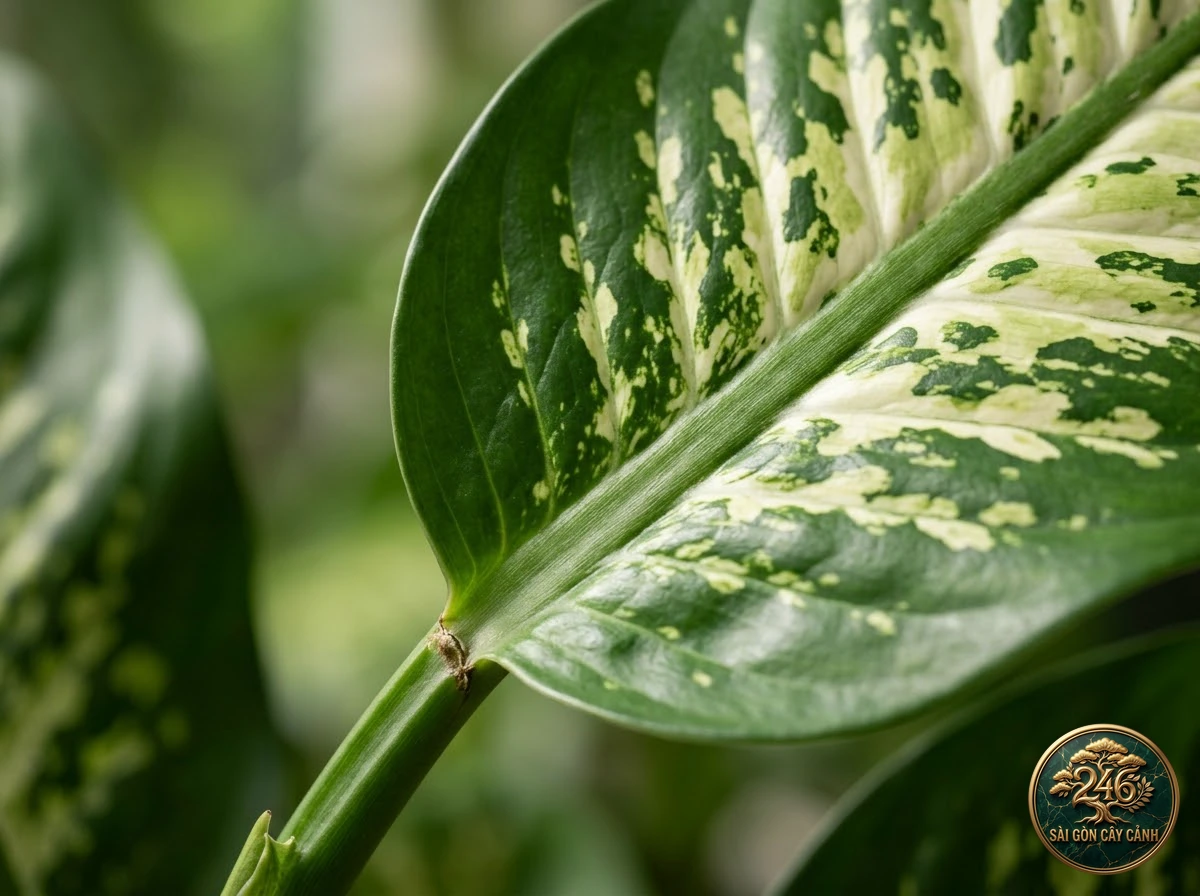
The foliar blade represents a marvel of botanical scale, stretching 45 to 65 cm in length and up to 30 cm in width. Across leathery, dark emerald grounds, creamy white and pale butter-yellow bands radiate outward from the central midrib along primary lateral veins in bold feathery herringbone plumes.
Broad, muscular petioles feature deep structural channels clasping the cane. Tightly imbricated petiole sheaths arrange foliage in an imposing symmetrical fan crown. The pale green abaxial surface reveals prominent raised lateral ribs engineered to support substantial blade mass.
Botanically, the massive foliage of Giant dumb cane is reinforced by an intricate network of secondary and tertiary lateral veins forming a structural grid that allows half-meter-long blades to project horizontally without mechanical lodging. The thick adaxial cuticle reflects excess thermal radiation, shielding inner photosynthetic tissues.
3. Photometric Calibration & Window Exposure Optimization
Sustaining massive foliar dimensions and crisp feathery white plumes demands consistent filtered illumination between 1,200 and 2,800 lux. Staging near expansive sheer-curtained windows, high-ceiling atriums, or bright living room corners provides ample daylight without thermal stress.
While enduring moderate partial shade, prolonged darkness causes feathery white markings to contract and stems to elongate weakly. Conversely, unshielded midday solar radiation must be avoided to prevent scorched brown burn patches across broad lamina tissues.
4. Structural Cane Dynamics & Form Optimization
Thanks to muscular cane trunks and rigid petiole sheaths, Giant dumb cane stands entirely self-supporting without vertical moss stakes. Its columnar vertical habit introduces majestic living architecture to interior quarters.
Owing to massive foliar weight, heavy wide-based ceramic planters or terrazzo vessels measuring 35 to 50 cm in diameter are required for structural ballast. Turning the pot ninety degrees weekly encourages uniform radial foliar architecture.
5. Engineered High-Porosity Substrate Formulation
Expansive subterranean root masses demand coarse, chunky potting media to ensure abundant oxygen circulation. Water-retentive, compacted soil mixes represent the leading cause of massive foliar yellowing and basal cane rot.
An ideal bespoke potting mixture incorporates 40% medium aged pine bark, 25% volcanic pumice, 20% coarse perlite, and 15% nutrient-rich vermicompost. This porous matrix retains cool subterranean humidity while allowing surplus irrigation to drain freely.
The 40% pine bark component not only provides exceptional air porosity but supplies slow-degrading natural lignin that stimulates vigorous adventitious root branching. Simultaneously, volcanic pumice ensures the bottom root ball never succumbs to compaction throughout repeated watering cycles.
6. Organic Bio-Fertilization & Mineral Management
Producing substantial biomass, Giant dumb cane consumes considerable nutrients during warm active periods. Drenching with diluted organic liquid fertilizer every three weeks, supplemented by bimonthly top-dressings of worm castings, ensures steady micronutrient availability.
During cooler winter intervals when shoot expansion slows, scale back feeding frequency by half. Quarterly, thoroughly flush the potting container with copious rested water to wash away residual fertilizer mineral deposits.
7. Clinical Diagnostic Matrix & Horticultural Resolutions
| Clinical Symptom | Root Pathology | Diagnostic Method | Targeted Resolution |
|---|---|---|---|
| Lower mature foliage turns yellow and sags | Natural vegetative senescence or saturated media | Inspect core soil moisture and apical shoot vigor | Prune spent basal leaf cleanly, recalibrate irrigation intervals |
| Crispy brown burn patches centered within white stripes | Direct solar rays penetrating window glass | Assess solar trajectory during midday peak | Draw sheer curtains or retreat container deeper into room |
| Columnar cane grows slender with widely spaced leaves | Protracted deficit of ambient daylight | Evaluate light intensity with a lux meter | Relocate planter toward brighter indirect daylight zones |
| White powdery deposits clustered inside petiole sheaths | Mealybug colonies sheltering in low-airflow crevices | Inspect basal petiole junctures closely | Wipe clean with a cloth dampened in 70% alcohol, apply organic neem |
| Monumental leaf tips split and desiccate | Sharp drop in ambient humidity below 50% | Check digital hygrometer reading | Surround base with pebble moisture trays, isolate from AC drafts |
8. Pest Mitigation Protocols & Foliar Sanitation
Protected by thick leathery cuticles, the specimen exhibits strong natural resistance to common pests. The chief concern is mealybugs sheltering in sheltered petiole sheaths. Cleansing leaf junctions with a soft cloth dipped in 70% alcohol reliably controls colonies.
Monthly foliar dusting using a damp microfiber cloth is essential for massive leaf blades. Dust-free foliage reflects light magnificently, unblocking stomata to sustain vigorous gas exchange and photosynthetic efficiency.
Given expansive laminar surface area, airborne household dust can reduce photosynthetically active radiation reaching chloroplasts by up to 30%. Monthly cleansing with warm water augmented with drops of organic cold-pressed neem oil deters pests while stimulating natural cuticular antimicrobial defenses.
9. Asexual Propagation Methodology
Propagation can be executed via cane sectioning or air-layering when specimens outgrow domestic ceilings. Cut cleanly through the trunk with a sterilized knife treated with 70% alcohol, apply wound sealant, and allow 24 hours of callousing.
Bed nodal cane cuttings into damp perlite and coco coir for 4 to 6 weeks in warm shade. Vigorous adventitious roots and thick green shoots will erupt from dormant nodes along the trunk.
10. Veterinary Toxicology & Domestic Safety Safeguards
Strictly exclude companion pets from rooms housing this plant. Gardeners must wear waterproof rubber gloves during pruning and wash hands thoroughly with soap to prevent sap contact with eyes or sensitive skin.
11. Biophilic Interior Design & Architectural Styling
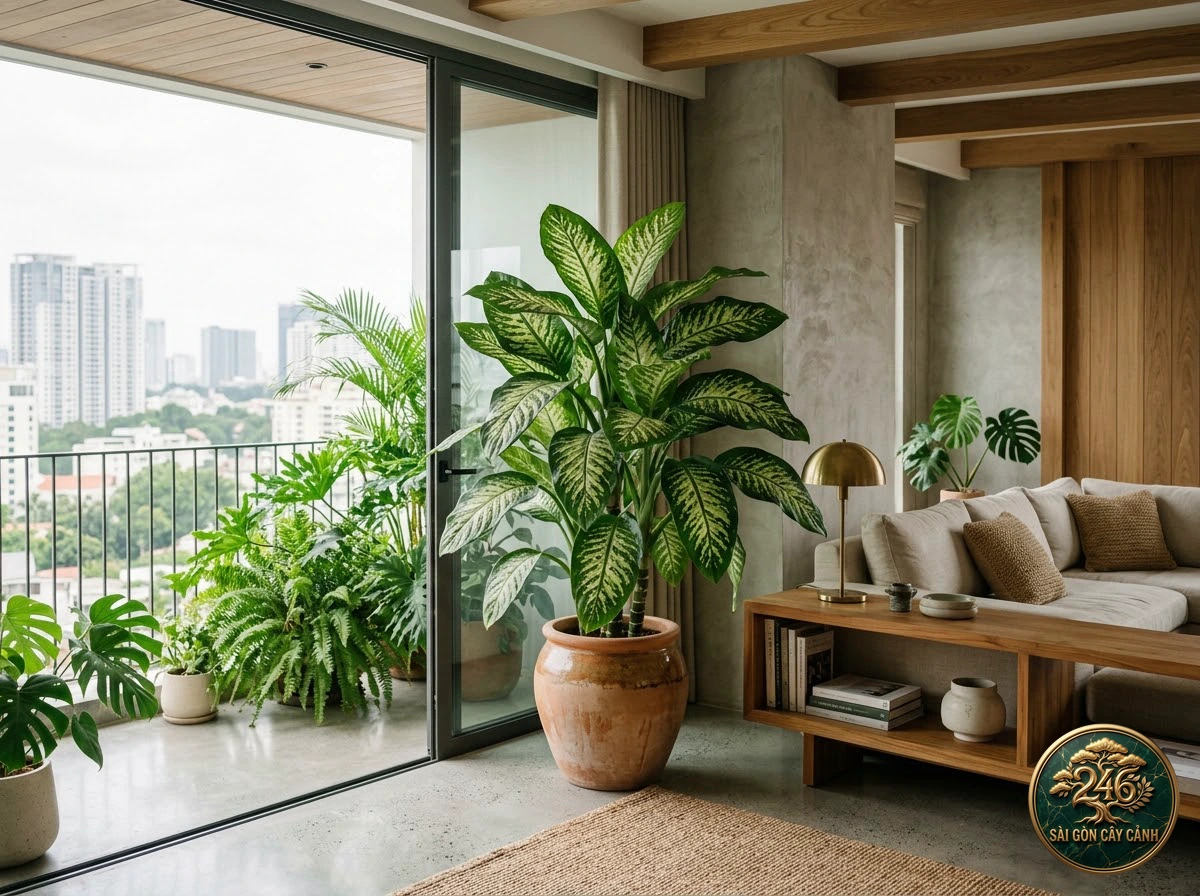
Commanding monumental scale and dramatic feathery variegated leaves, Giant dumb cane serves as a peerless botanical anchor within grand villa foyers, high-end living spaces, hotel atriums, and modern biophilic commercial environments.
It reaches maximum aesthetic splendor housed in large terrazzo urns, rustic glazed stoneware, or sleek charcoal composite planters, infusing interior architecture with regal botanical prestige and vibrant vitality.
Canopies arching like grand architectural fans elevate indoor quarters with unmatched botanical luxury. In premier interior design, a mature specimen functions as a powerful visual link connecting contemporary structural design with the untamed majesty of primeval rainforests.
12. Master Cultivation Axioms
Distilled from professional nursery operations at Saigon Cay Canh, observe these three essential cultivation rules for this magnificent titan:
- Hydration Precision: Water only after the upper third of the potting mix dries down; verify internal moisture depth before irrigating.
- Solar Management: Provide ample filtered daylight between 1,200 and 2,800 lux; shield foliage completely from direct midday solar rays.
- Foliar Care: Wear protective gloves during pruning and wipe foliage monthly with a damp cloth to maintain safety and foliar respiration.
13. Frequently Asked Botanical Questions (FAQs)
What maximum indoor height can Giant dumb cane achieve?
Under generous container volumes and high ceilings, mature specimens comfortably reach 1.8 to 2.2 meters in height with a foliar spread exceeding 1.5 meters.
Why do the feathery white stripes fade into dull green?
Insufficient photosynthetic daylight represents the primary culprit. Relocate the plant into brighter filtered daylight to stimulate vibrant creamy variegation.
When should one repot into a larger container?
Every 18 to 24 months, once root tips densely crowd bottom drainage apertures, upgrade into a vessel 5 to 7 cm wider with fresh airy medium.
How should one handle a tall cane that begins to lean?
Secure the trunk to an unobtrusive bamboo stake, or execute an apical heading cut to root the top into a fresh pot while rejuvenating basal offshoots.
Does contact with plant sap cause skin irritation?
Sap containing calcium oxalate crystals triggers itching and mild dermal redness on sensitive skin. Wash immediately with soap and water if accidental contact occurs.
How does one maximize monumental foliar dimensions?
Furnish an expansive potting vessel with porous airy substrate, position under bright indirect light between 2,000 and 2,800 lux, and feed routinely with organic nutrients.