Living plant profile
Spanish moss
Tillandsia usneoides
Comprehensive botanical dossier for Spanish moss (Tillandsia usneoides). Morphological taxonomy, lighting calibration, porous substrate formulation, and cultivation guide by Saigon Cay Canh.
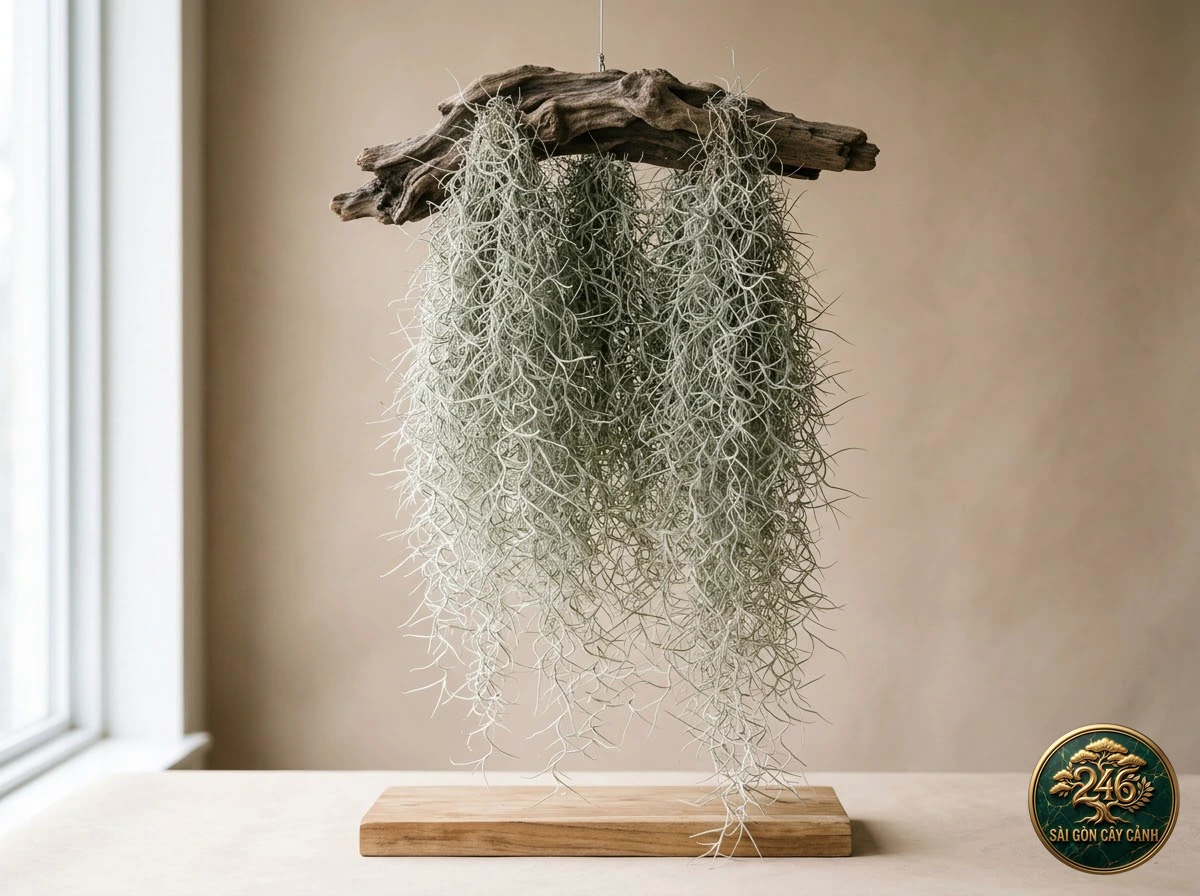
Spanish moss
Nursery Cultivation Compass — Saigon Cay Canh Standards
| Optimal Light | Bright diffused light with perpetual air movement (2,500 – 5,000 lux); suspend in well-ventilated breezeways, airy shaded balconies, or sunlit verandas. |
|---|---|
| Hydration Dynamic | Mist generously once daily in early morning or late afternoon until thoroughly wet; submerge entirely in rainwater bucket for 10 minutes weekly in dry spells. |
| Substrate Formulation | Zero substrate; suspend directly on metal wire hooks, tree branches, or orchid lattice trellises. |
| Thermal Range | 18°C – 32°C (64°F – 90°F; remarkably adaptable across tropical conditions with ample breeze). |
| Relative Humidity | 60% – 85% (appreciates buoyant humidity; internal strands within thick bundles require ample airflow). |
| Maintenance Level | Easy (requires dependable breezy air circulation and consistent daily foliar hydration). |
| Pet Safety & ASPCA | Completely pet-safe (Non-toxic; position out of reach of curious cats to prevent playful untangling). |
1. Taxonomy & Botanical Classification
Within formal phylogenetic taxonomy, Spanish moss is classified under the binomial nomenclature Tillandsia usneoides, belonging to the distinguished botanical family Bromeliad family (Bromeliaceae). The species is rigorously documented, cataloged, and taxonomically authenticated across primary global botanical databases, including Plants of the World Online (POWO) maintained by the Royal Botanic Gardens, Kew, and the Bromeliad Society International (BSI) binomial registry.
Indigenous to tropical and subtropical rainforest ecosystems, xeric canyon scrublands, and coastal fog deserts across Central and South America, this extraordinary plant has evolved highly specialized morphological adaptations to thrive in epiphytic, lithophytic, and atmospheric niches, completely divorcing itself from conventional terrestrial soil reliance. It anchors naturally onto tree bark, rocky cliffs, and exposed limbs high above the dark forest floor.
Within contemporary urban biophilic interior design, particularly across rapidly developing metropolitan environments such as Ho Chi Minh City, Spanish moss is celebrated as a quintessential living sculpture that seamlessly combines striking geometric balance with outstanding environmental adaptability. Understanding its natural evolutionary history is critical to establishing appropriate artificial indoor care regimes.
2. Morphological Characteristics & Identification
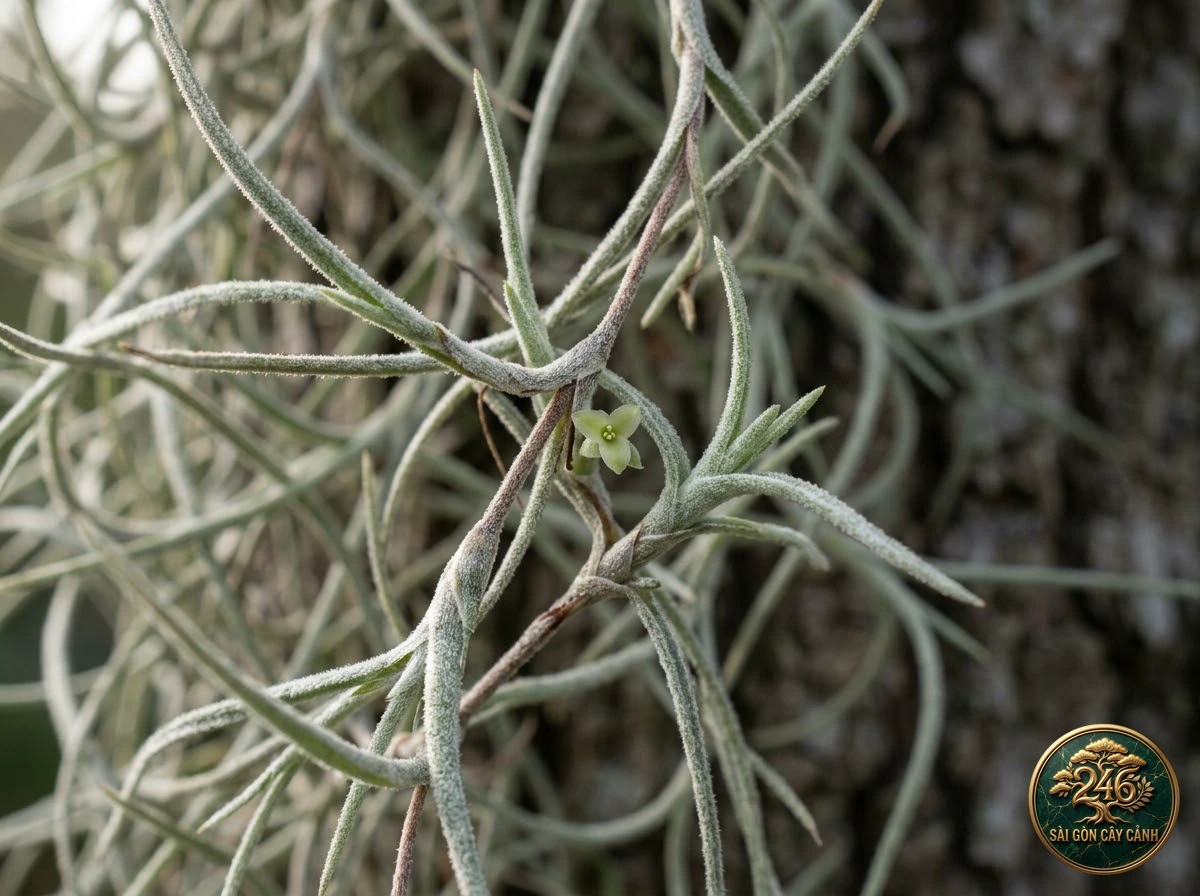
Rootless hanging atmospheric epiphyte producing cascading curtains of slender filamentous stems extending 1 to 3 meters, densely clothed in silvery-gray trichomes, adorned with diminutive nocturnal fragrant chartreuse flowers.
The defining evolutionary hallmark of Tillandsia usneoides centers upon its dense peltate foliar trichomes. These microscopic saucer-shaped epidermal structures perform as autonomous non-return hydraulic valves: absorbing rain, fog, and ambient vapor directly from the air when damp, and collapsing to reflect excessive solar radiation when dry, imparting an iconic silvery-frosted sheen to the foliage.
Root systems serve almost exclusively as tenacious mechanical holdfasts to anchor onto host branches, cliffs, or rough surfaces, possessing virtually zero subterranean nutritional absorption pathways. The vascular architecture within the leaf blades features tightly packed parenchyma cells tailored for prolonged water storage, enabling the plant to endure extended droughts without cellular collapse.
Key Botanical Identification Traits:
- Foliar Morphology: Rootless hanging atmospheric epiphyte producing cascading curtains of slender filamentous stems extending 1 to 3 meters, densely clothed in silvery-gray trichomes, adorned with diminutive nocturnal fragrant chartreuse flowers.
- Trichome Coverage: Intact velvety peltate trichome layer free from mechanical abrasion or chemical scorch marks. Under oblique lighting, the leaf surface sparkles with fine silvery iridescence.
- Basal Rosette Integrity: Clean, firm, resilient leaf bases exhibiting crisp healthy vegetative tissue with complete absence of soft hypoxic rot or fermented odors.
- Tensile Foliar Resilience: Leaves demonstrate firm structural elasticity, springing back immediately when gently depressed.
3. Lighting Calibration & Spectrum
Bright diffused light with perpetual air movement (2,500 – 5,000 lux); suspend in well-ventilated breezeways, airy shaded balconies, or sunlit verandas.
Photosynthetically active radiation (PAR) governs metabolic vigor and foliar coloration in Tillandsia usneoides, operating under specialized Crassulacean Acid Metabolism (CAM) pathways. The ideal illuminance spans 2,500 to 5,500 lux of bright diffused or gently filtered solar radiation. Blue wavelengths (450 nm) promote compact rosette node spacing, while red wavelengths (660 nm) sustain efficient nocturnal malic acid accumulation.
In sub-1,000 lux deep shade, vegetative development stalls, trichome density diminishes, and leaves lose their sculptural turgor. Conversely, unshielded scorching midday sun exceeding 10,000 lux inflicts catastrophic foliar bleaching and irreversible leaf burn. An optimal position is within 1 to 1.5 meters of an unobstructed east or south-facing window with sheer filtration.
4. Hydration Dynamics & Watering Protocols
Mist generously once daily in early morning or late afternoon until thoroughly wet; submerge entirely in rainwater bucket for 10 minutes weekly in dry spells.
The golden axiom governing irrigation for Spanish moss dictates: “Thorough saturation followed by rapid, complete drying”. The plant tolerates dry conditions for weeks but succumbs swiftly to anaerobic rotting if moisture stagnates within leaf axils for longer than 48 hours. Epiphytic cells require alternating cycles of hydration and gaseous transpiration to respire normally.
Professional Nursery Protocol: Employ fine-mist pressure sprayers in early morning hours (06:00 – 08:00). When executing periodic submersions, thoroughly shake off excess moisture and invert specimens upside down upon clean towels in breezy shade for 2 hours to drain interstitial reserves before re-mounting. Never mist plants in stagnant evening darkness.
5. Mounting Architecture & Living Medium
Zero substrate; suspend directly on metal wire hooks, tree branches, or orchid lattice trellises.
Never plant atmospheric bromeliads into dense terrestrial potting soil. Soil suffocation causes rapid fungal collapse and basal petiole detachment. Instead, anchor plants onto aerated structural supports:
| Mounting Medium | Specification | Horticultural Advantage |
|---|---|---|
| Natural Driftwood / Cork Bark | Weathered porous hardwood | Provides rustic beauty with zero moisture entrapment |
| Anodized Aluminum Wire | Non-copper binding wire | Securely fastens root base without cutting into delicate tissues |
| Porous Lava Stone / Ceramic | Breathable unglazed pottery | Complements modern interior minimalism with maximum air circulation |
| Coarse Fir Bark / Pumice (Potted Bromeliads) | 70% coarse aggregate blend | Guarantees 3-second drainage while retaining humid root boundary layers |
6. Thermal Range & Atmospheric Circulation
18°C – 32°C (64°F – 90°F; remarkably adaptable across tropical conditions with ample breeze).
Relative humidity requirements: 60% – 85% (appreciates buoyant humidity; internal strands within thick bundles require ample airflow).. In air-conditioned residential spaces, ambient air currents take priority over stagnant humidity. Gentle buoyant ventilation facilitates rapid drying and nocturnal carbon dioxide uptake through CAM stomata.
Shield plants from direct thermal velocity blasts, including air conditioning louvers, dehumidifiers, and thermal space heaters. During humid rainy seasons, ensure open airflow around mounted clusters to prevent cryptogamic spore development.
7. Foliar Nutrition & Micronutrients
Administer foliar fertilizer following the “weakly, weekly” principle. During active tropical growth phases, mist with a specialized bromeliad or orchid NPK solution (20-20-20 with chelated trace elements) diluted to one-quarter strength once every 2 to 3 weeks.
Strictly avoid copper-based (Cu), zinc (Zn), or heavy metal fertilizers, which act as lethal toxins to sensitive bromeliad trichomes. Pure rainwater or reverse-osmosis water provides the ideal mineral-neutral carrier.
8. Bloom Cycle, Pruning & Propagation
Tillandsia usneoides is monocarpic, producing a magnificent floral display once in its lifetime lasting from several weeks to several months. As the central inflorescence fades, the mother rosette focuses its metabolic resources into generating 2 to 5 vigorous basal offsets (pups).
Harvesting offsets: Allow pups to attain one-third to one-half the mother plant size before gently detaching them with a sterilized blade. Allow wounds to callous in dry shade for 24 hours prior to independent mounting. Maintain newly separated pups in shaded, well-ventilated settings with light morning mists.
9. Pest Management & Diagnostic Disorders
Owing to thick leathery epidermis, pests are rare. Occasional mealybugs in hidden crevices can be eliminated with targeted 70% isopropyl alcohol swabs or mild insecticidal soap.
Diagnostic Disorder Resolution Matrix:
- Soft Darkened Basal Tissues: Hypoxic moisture rot from inadequate post-watering drainage. Invert plant immediately in breezy location and withhold water.
- Excessively Incurved / Tightly Curled Leaves: Plant is experiencing moisture deficit. Submerge fully in clean rainwater for 20-30 minutes.
- Crispy Brown Foliar Apices: Atmospheric desiccation or excessive tap water chloramines. Transition to filtered or reverse-osmosis misting.
- Loss of Trichome Sheen: A consequence of excessive physical friction or abrasive handling by growers.
10. Pet Safety & ASPCA Toxicology Verification
Toxicology Status: Completely pet-safe (Non-toxic; position out of reach of curious cats to prevent playful untangling).
Certified non-toxic according to veterinary poison control registries including the ASPCA. Plant tissues contain zero harmful alkaloids, saponins, or insoluble calcium oxalates, rendering it 100% pet-friendly for homes with inquisitive cats and dogs.
Display specimens on elevated stands or wall mounts to preserve sculptural foliar architecture from accidental physical damage or curious feline play.
11. Biophilic Interior Architecture & Feng Shui
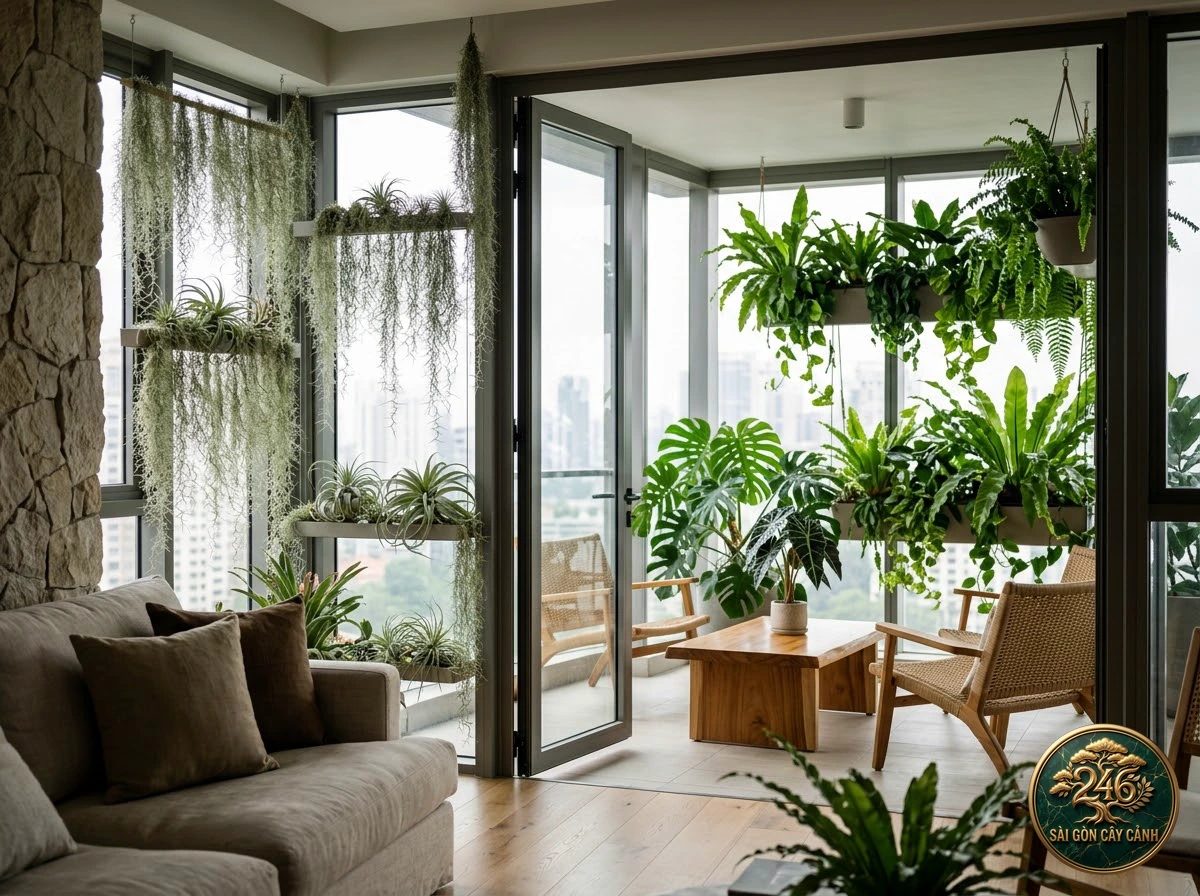
Within contemporary interior styling, Spanish moss functions as a versatile organic centerpiece. It is effortlessly incorporated into floating geometric brass frames, preserved moss walls, or mounted driftwood consoles.
In traditional Feng Shui, the uplifting upward-reaching foliar geometry stimulates positive chi flow, representing resilient growth, adaptive intelligence, and enduring prosperity in residential and professional spaces. Positioning near study desks or creative studios enhances focus and visual serenity.
12. Common Cultivation Pitfalls
- Potting in Terrestrial Soil: Suffocates holdfast roots and rots basal leaf sheaths rapidly.
- Neglecting Post-Soak Inversion: Standing moisture within center rosette induces fatal crown rot within 48 hours.
- Cultivation in Stagnant, Closed Rooms: Lacks vital air circulation necessary for CAM stomatal respiration.
- Using Hard Alkaline Tap Water: Mineral crusts clog delicate peltate trichome plates over time.
- Applying Heavy Granular Fertilizers: Triggers acute chemical burning of delicate foliar tissue.
13. Botanical FAQs
Can this species thrive under artificial office illumination?
Yes, provided dedicated full-spectrum LED fixtures deliver at least 2,500 lux for 8 to 10 hours daily in well-ventilated settings.
How do I determine when the plant is thirsty?
Leaves will curl noticeably tighter, foliage will appear dull gray, and the specimen will feel feather-light in hand.
How long do basal pups take to reach blooming maturity?
Pups generally mature within 12 to 18 months under optimal light and regular foliar feeding cycles.
What is the best water source for indoor bromeliads?
Rainwater or reverse osmosis water is superior, followed by tap water aerated for 24 hours to dissipate chlorine.