Living plant profile
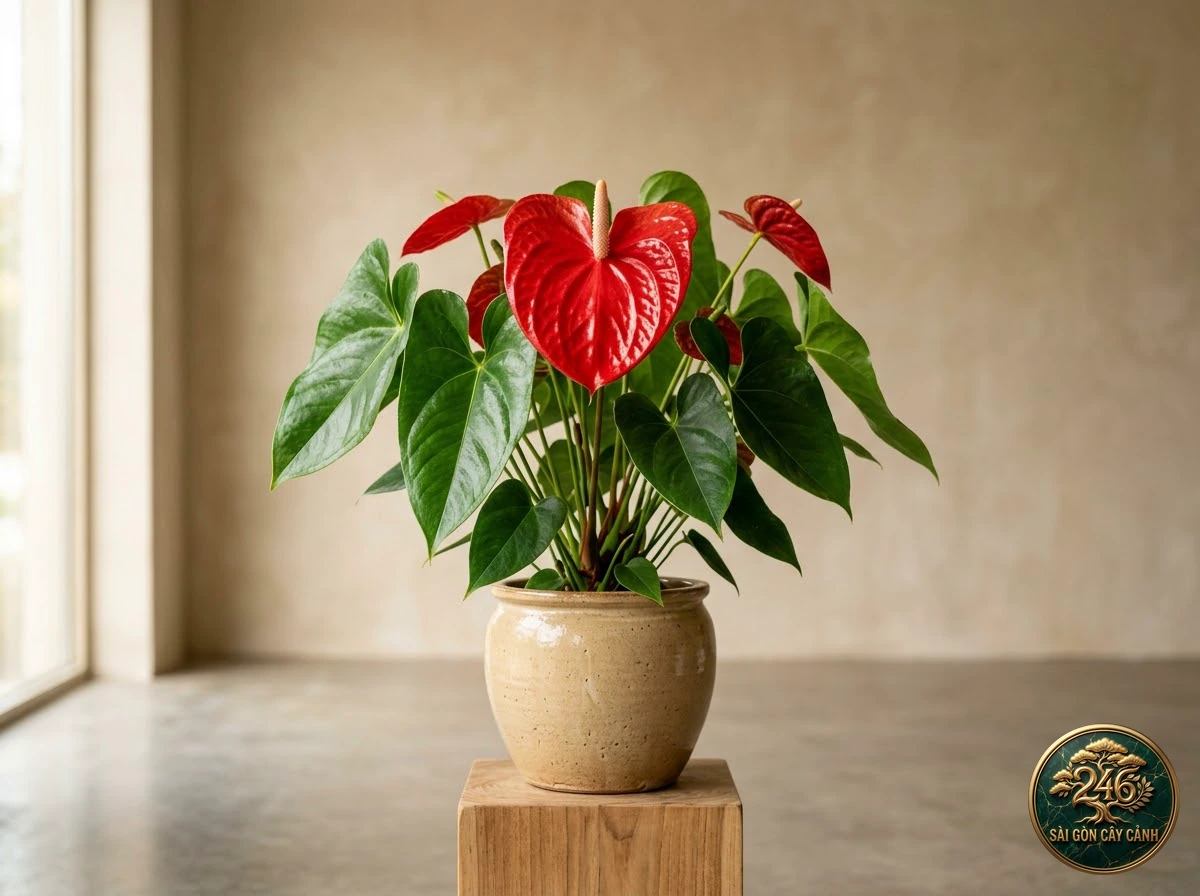
Flamingo flower
Anthurium andraeanum
Comprehensive botanical dossier for Flamingo flower (Anthurium andraeanum). Morphological taxonomy, lighting calibration, porous substrate formulation, and cultivation guide by Saigon Cay Canh.
Flamingo flower
Care Compass Quick Reference — Saigon Cay Canh Nursery Standards
| Optimal Light | Bright filtered indirect light (2,000 – 4,500 lux); strong diffused illumination is indispensable for continuous year-round crimson spathe production. |
|---|---|
| Water Regime | Irrigate when top 2-3 cm of potting medium dries; maintain consistent root moisture without waterlogging; avoid wetting waxy flower spathes directly. |
| Substrate & Medium | Professional open aroid mix: 35% orchid bark, 25% chunky coir, 20% perlite, 10% peat moss, 10% worm castings. |
| Thermal Range | 20°C – 30°C (68°F – 86°F; thrives in warm tropical interiors, intolerant of chills below 15°C). |
| Ambient Humidity | 60% – 80% (high humidity sustains high-gloss spathes and lush leaf margins). |
| Cultivation Grade | Easy to Moderate (spathes endure for 6 to 8 weeks each, perpetual blooming cycle). |
| Pet Toxicity Index | Toxic to dogs and cats (Contains insoluble calcium oxalate crystals; causes oral irritation if chewed; keep away from pets). |
1. Taxonomy & Botanical Heritage
In classical botanical taxonomy, Flamingo flower is scientifically categorized as Anthurium andraeanum, belonging to the distinguished Arum / Aroid family (Araceae). Officially validated and referenced within the World Checklist of Vascular Plants by the Royal Botanic Gardens, Kew, this species stands as a prime example of evolutionary perfection within tropical flora.
Native to warm, humid tropical rainforests and distinct ecological niches across its indigenous habitat, the species has developed remarkable physiological adaptations. Its evolutionary journey reflects an intricate mastery of moisture conservation, specialized nutrient uptake, and foliar architecture designed to optimize photosynthetic efficiency within dense forest understories or exposed canopies.
Cultivated under modern urban conditions, particularly within contemporary architectural residences and curated office sanctuaries in Ho Chi Minh City, Flamingo flower has emerged as an enduring favorite among interior landscape designers. Its sculptural silhouette, striking foliage, and air-purifying qualities bring a sophisticated biophilic harmony into contemporary indoor environments.
2. Morphological Profile & Field Diagnostics
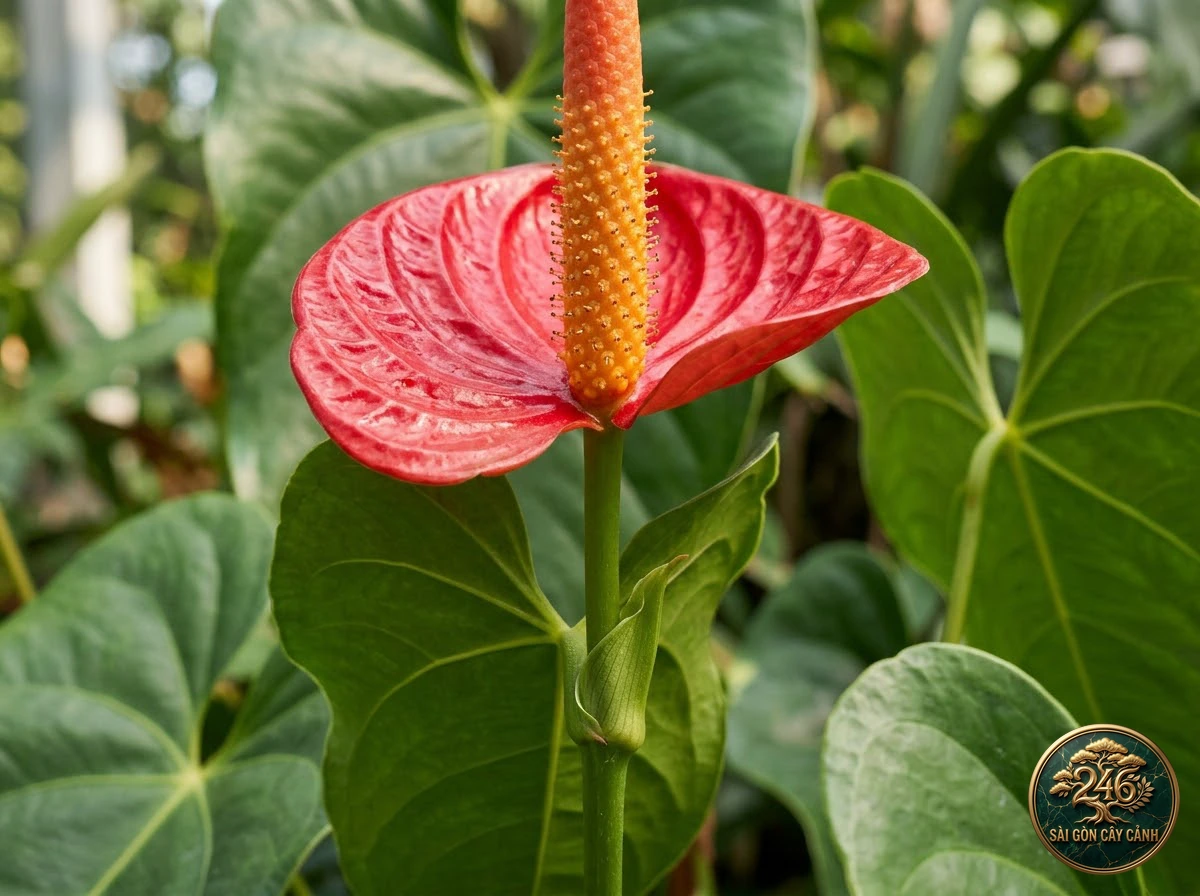
Quintessential tropical aroid presenting lush mounds of heart-shaped glossy emerald leaves, famously distinguished by waxy, lacquered heart-shaped spathes of incandescent ruby-red, each centering an erect creamy-yellow to white tail-like spadix, blooming perpetually.
A closer botanical inspection reveals a sophisticated cellular architecture. The foliage exhibits robust structural resilience, supported by an advanced epidermal cuticle and specialized vascular bundles that guarantee cellular turgidity even across transient environmental shifts. The root architecture is equally tailored to its natural habit, facilitating rapid drainage and constant aerobic respiration.
As the plant attains vegetative maturity, its aesthetic proportions achieve an exquisite equilibrium. The graceful balance between emerging young growth and mature foliage provides visual depth, making this specimen an exceptional living art piece in any curated botanical collection.
Nursery Verification Checklist at Saigon Cay Canh:
- Foliar Morphology: Quintessential tropical aroid presenting lush mounds of heart-shaped glossy emerald leaves, famously distinguished by waxy, lacquered heart-shaped spathes of incandescent ruby-red, each centering an erect creamy-yellow to white tail-like spadix, blooming perpetually.
- Cuticle & Surface Texture: Pristine, blemish-free epidermal surfaces displaying authentic natural coloration and sheen, completely free from necrotic lesions or fungal blotches.
- Basal & Root Health: Firm, turgid basal structure accompanied by clean, vigorous root growth possessing a wholesome earthy aroma with zero signs of basal rot.
- Mechanical Turgor: High elasticity throughout petioles and leaves, instantly resuming natural posture without brittleness when gently handled.
3. Photometric Calibration & Lighting Requirements
Bright filtered indirect light (2,000 – 4,500 lux); strong diffused illumination is indispensable for continuous year-round crimson spathe production.
Photosynthetically Active Radiation (PAR) governs the metabolic rate and chromatic intensity of Anthurium andraeanum. The specimen flourishes when bathed in luminous indirect illumination ranging between 2,000 and 4,500 lux. Such luminous parameters empower peak photosynthetic yields while protecting tender chloroplasts from solar photo-inhibition.
Locating the specimen in deep shade beneath 800 lux will trigger etiolation, resulting in elongated weak growth and diminished foliar vibrancy. Conversely, exposing the plant to harsh, unfiltered direct midday sun exceeding 10,000 lux will inevitably cause severe epidermal scorching. Optimal placement is within 1 to 1.5 meters of an east or south-facing window softened by sheer curtains.
4. Hydration Protocol & Irrigation Science
Irrigate when top 2-3 cm of potting medium dries; maintain consistent root moisture without waterlogging; avoid wetting waxy flower spathes directly.
The golden axiom governing root hydration for this species is “Observe before watering; drench thoroughly, then allow strategic aerated drying.” The root system demands intermittent moisture-dry oscillations to preserve healthy gas exchange within the rhizosphere.
Saigon Cay Canh Nursery Protocol: Pour tepid filtered water evenly across the root zone until runoff escapes the drainage perforations beneath the container. Allow the vessel to drain fully for 15 minutes before returning it to its decorative saucer; never permit the root ball to sit in stagnant effluent water, as oxygen depletion rapidly fosters opportunistic pythium root rot.
5. Substrate Formulation & Rhizosphere Dynamics
Professional open aroid mix: 35% orchid bark, 25% chunky coir, 20% perlite, 10% peat moss, 10% worm castings.
Traditional terrestrial soil or heavy clay loams are fundamentally unsuitable for containerized tropical specimens, as they compact and suffocate feeder roots. The ideal potting medium must deliver instant drainage, open macro-porosity, and gentle micro-retention.
| Medium Constituent | Volumetric Ratio | Technical Functionality |
|---|---|---|
| Coarse Perlite / Horticultural Pumice | 30% – 35% | Creates permanent aeration channels and resists compaction |
| Aged Pine Bark / Chunky Coco Chips | 30% – 35% | Provides sturdy structural anchoring while maintaining moisture balance |
| Sphagnum Peat Moss / Clean Coco Coir | 20% – 25% | Supplies beneficial humic substances and gentle moisture buffering |
| Pure Organic Worm Castings | 10% – 15% | Delivers gentle slow-release organic bio-nutrients and microbial flora |
6. Microclimate, Temperature & Humidity
20°C – 30°C (68°F – 86°F; thrives in warm tropical interiors, intolerant of chills below 15°C).
Ambient humidity parameters: 60% – 80% (high humidity sustains high-gloss spathes and lush leaf margins).. Consistent, gentle airflow takes precedence over heavy stagnant humidity. In interior environments, continuous air movement accelerates gas exchange across stomata and prevents condensation films where fungal spores typically germinate.
Avoid positioning the plant in the path of hot mechanical exhaust vents or chilly air conditioner drafts. During dry seasonal spells, placing the container above a humidifying pebble tray with water will create a pleasant microclimate without risking root saturation.
7. Nutritional Management & Mineral Supplementation
To sustain vigorous growth and lustrous foliage, Anthurium andraeanum requires balanced, gentle mineral nutrition. Because root hairs are sensitive to salinity stress, the key rule is “Weakly, weekly” — applying diluted fertilizers consistently rather than heavy doses that risk root burn.
During active growth phases in spring and summer, administer a water-soluble balanced tropical plant formulation (NPK 20-20-20 with chelated micronutrients Fe, Mn, Zn) diluted to 1/4 to 1/3 of the package recommendation every 3 weeks. Suspend fertilization during cooler or lower-light winter months when plant metabolism naturally decelerates.
8. Architectural Pruning & Propagation Techniques
Routine maintenance keeps the plant structurally sound and hygienic. Using clean, alcohol-sterilized shears, prune away senescent lower leaves at their basal attachment to stimulate fresh juvenile shoots and eliminate potential pest hiding spots.
Propagation is most successfully achieved via basal division, separating healthy offshoots (pups) or division of root clusters during spring repotting. Ensure each divided division possesses healthy roots, treat cut surfaces with powdered cinnamon or sulfur fungicide, and pot into small, porous containers under bright filtered shade for 2 to 3 weeks until established.
9. Pest Mitigation & Physiological Troubleshooting
Cultivated in proper light and airflow, this species displays impressive natural hardiness. Potential pests include mealybugs, scale insects, and spider mites during hot, arid indoor conditions.
Botanical Diagnostics Chart:
- Yellowing lower leaves with soft stem tissue: Classic indicator of chronic overwatering and impaired root drainage. Remedy: Cease watering immediately, inspect root health, and repot into an airy, porous medium.
- Crispy brown leaf tips: Caused by sub-optimal ambient humidity or mineral salts in tap water. Remedy: Augment ambient humidity and switch to filtered or rainwater.
- Cottony white clusters in leaf axils: Infestation of mealybugs. Remedy: Manually remove pests with an alcohol-dipped swab, then apply organic cold-pressed neem oil spray weekly.
- Pale, limp leaves with elongated petioles: Symptoms of insufficient light. Remedy: Gradually acclimate plant closer to a generous source of bright, filtered natural light.
10. Toxicological Profile & Pet Safety
Pet Safety Evaluation: Toxic to dogs and cats (Contains insoluble calcium oxalate crystals; causes oral irritation if chewed; keep away from pets).
This botanical species contains naturally occurring chemical defenses such as lycorine alkaloids or insoluble calcium oxalate crystals that may induce oral discomfort, drooling, or gastric irritation if ingested by curious dogs or cats.
To ensure total peace of mind and protect the specimen from accidental mechanical damage, Saigon Cay Canh always recommends elevating decorative planters on refined plant stands, pedestals, or high credenzas away from active pets and small children.
11. Interior Design & Architectural Styling
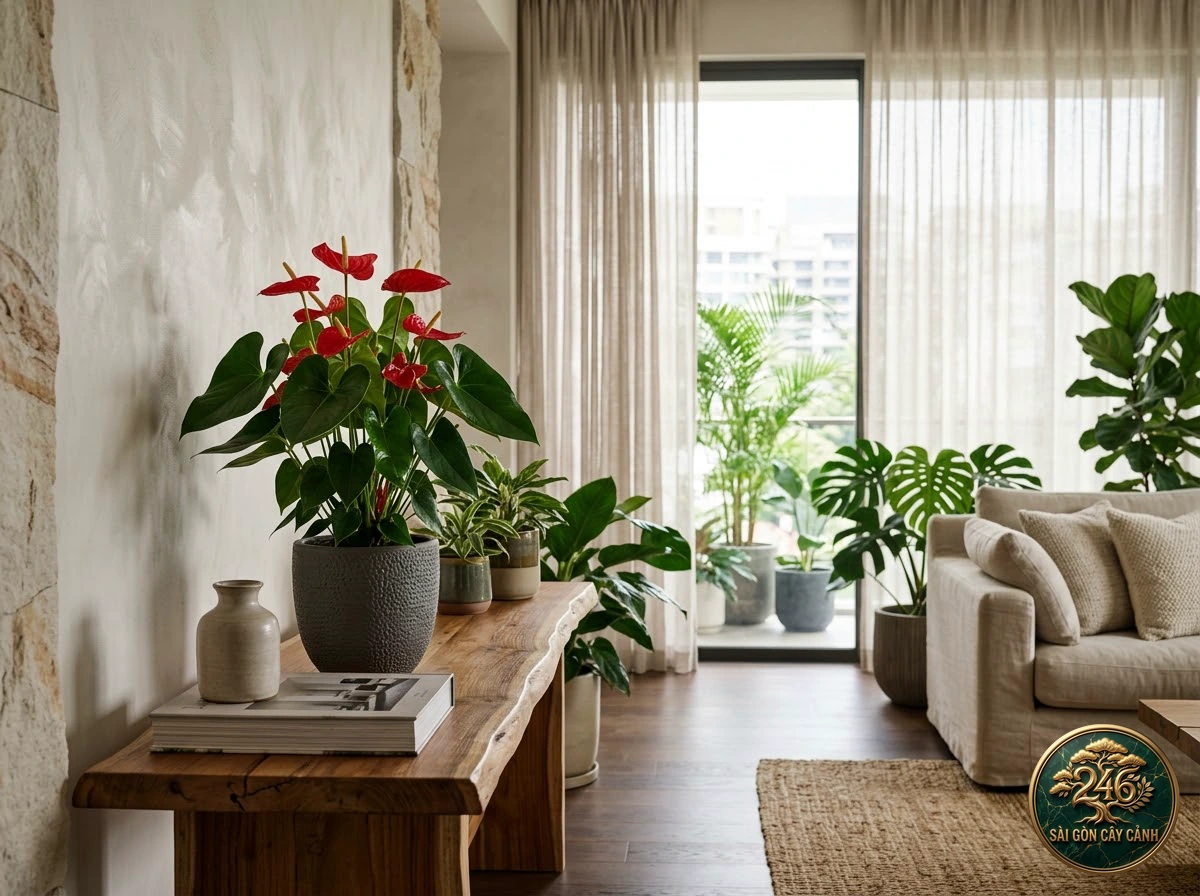
Within luxury interior spaces, Flamingo flower commands admiration as a living sculptural element. Its architectural silhouette pairs effortlessly with raw travertine, natural teak, and fluted acoustic timber paneling, anchoring living spaces with tranquil organic vitality.
From an energetic perspective, lush verdant plants harmonize living zones by absorbing technological electromagnetic ambient noise and revitalizing indoor air. Placed in living suites, executive offices, or reception atriums, it imparts a distinguished aura of sophistication, enduring prosperity, and mindful calm.
12. Common Cultivation Pitfalls
- Adhering to rigid watering calendars: Never irrigate without testing soil moisture depth first.
- Leaving drainage water stagnant in decorative trays: Stagnant water deprives root cells of oxygen and induces rot.
- Positioning near HVAC vents or intense midday direct sun: Leads to acute foliar thermal shock.
- Over-fertilizing stressed or dormant specimens: High fertilizer salts can damage sensitive root tips.
- Using pots lacking bottom drainage holes: Traps stagnant water and suffocates the plant.
13. Summary & The Saigon Cay Canh Guarantee
Every specimen of Flamingo flower from Saigon Cay Canh undergoes stringent nursery acclimation, ensuring outstanding biological vigor, optimal root development, and pest-free excellence prior to delivery. We consider every plant a living investment in well-being and refined interior elegance.
Our dedicated horticulturists remain at your service throughout your cultivation journey: providing tailored lighting advice, seasonal care adjustments, and lifetime plant care support. Welcome genuine tropical vitality into your home today with Saigon Cay Canh.