Living plant profile
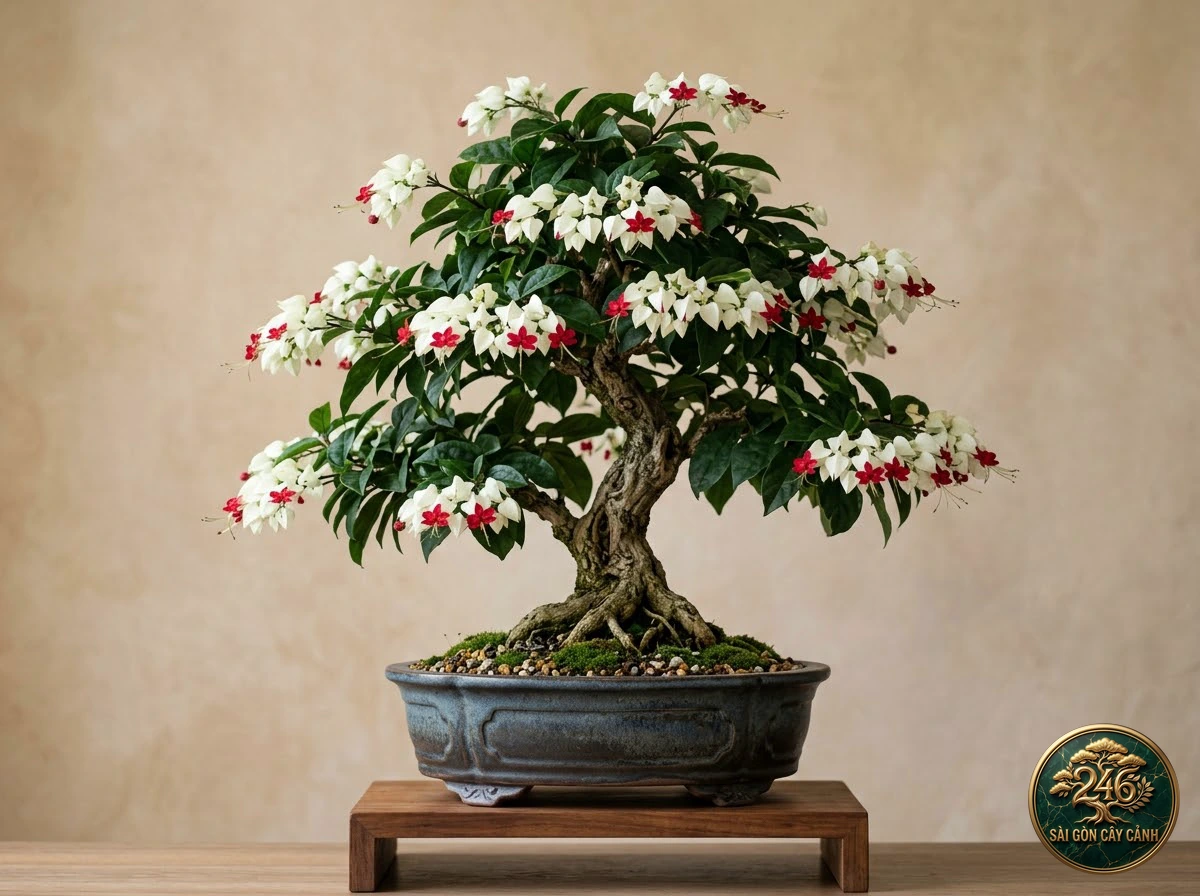
Bleeding glory bower
Clerodendrum thomsoniae
Comprehensive botanical dossier for Bleeding glory bower (Clerodendrum thomsoniae). Morphological taxonomy, lighting calibration, porous substrate formulation, and cultivation guide by Saigon Cay Canh.
Bleeding glory bower
Care Compass Quick Reference — Saigon Cay Canh Nursery Standards
| Optimal Light | Bright indirect light with gentle morning sun (3,000 – 5,500 lux). |
|---|---|
| Water Regime | Water moderately when upper 2-3 cm becomes dry; prevent stagnant water. |
| Substrate & Medium | Well-aerated fertile mix: 40% loamy compost, 30% coco coir, 20% perlite, 10% worm castings. |
| Thermal Range | 18°C – 30°C (64°F – 86°F; tropical warmth). |
| Ambient Humidity | 60% – 75% (moderate to high humidity). |
| Cultivation Grade | Easy to Moderate (vigorous twining habit, flamboyant flowers). |
| Pet Toxicity Index | Non-toxic to pets (Safe for domestic indoor spaces). |
1. Taxonomy & Botanical Heritage
In classical botanical taxonomy, Bleeding glory bower is scientifically categorized as Clerodendrum thomsoniae, belonging to Mint family (Lamiaceae). Officially validated and referenced within the World Checklist of Vascular Plants by the Royal Botanic Gardens, Kew, this species stands as a prime example of evolutionary perfection within tropical flora.
Evolving throughout millennia in indigenous tropical habitats, the plant has mastered environmental adaptability: optimizing cellular water reserves, fine-tuning cuticular wax protection, and balancing photosynthetic energy harvesting under varying climatic shifts.
Within modern urban spaces and contemporary architectural residences in Ho Chi Minh City, Bleeding glory bower is celebrated as an enduring living work of art, infusing indoor spaces with vitality, aesthetic refinement, and organic serenity.
2. Morphological Profile & Field Diagnostics
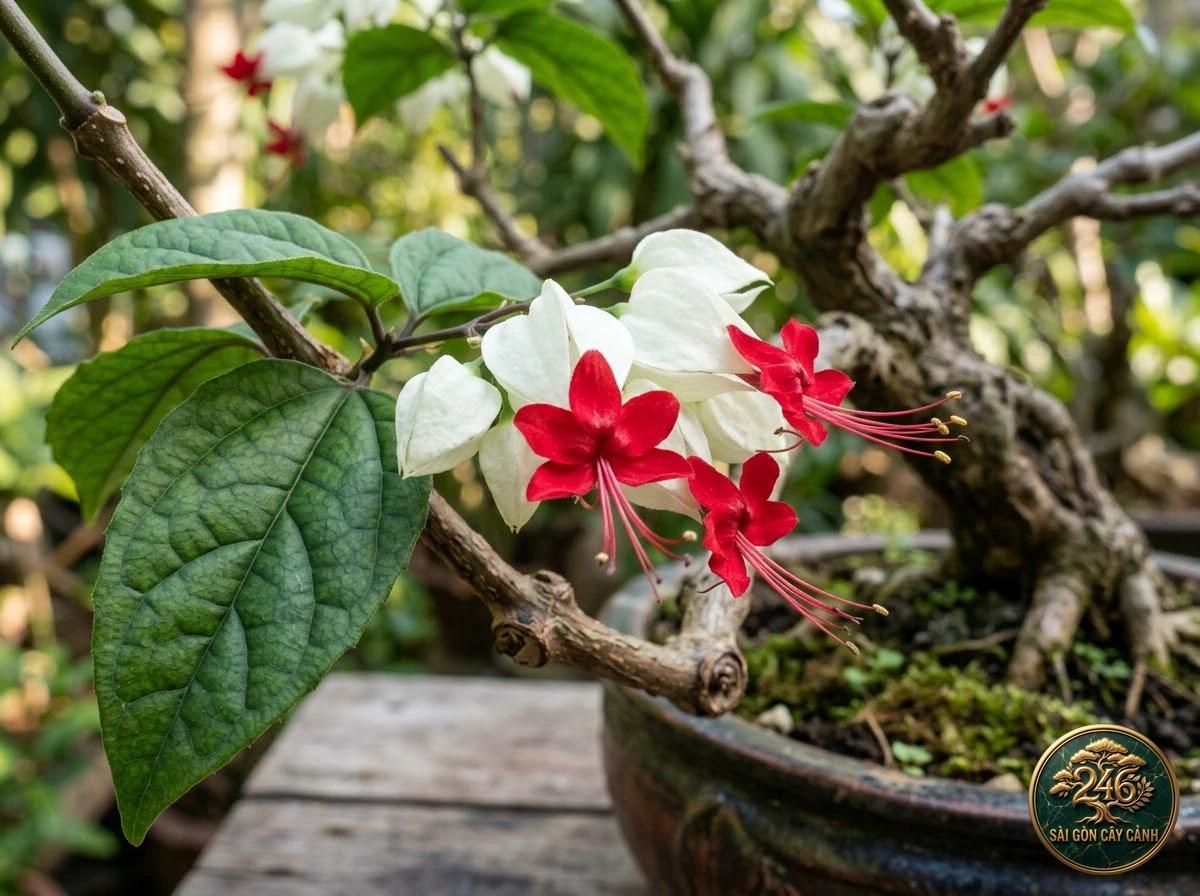
Striking twining woody vine renowned for its lantern-like inflated white calyces from which emerge brilliant crimson corolla tubes with dramatically protruding stamens.
Detailed botanical examination highlights exceptional tissue architecture. Stems, foliage, and inflorescences exhibit balanced structural poise, supported by resilient vascular systems and robust cellular turgor that resist fluctuating humidity shifts.
Upon attaining reproductive maturity, the specimen presents an exquisite display of color and form, harmonizing architectural greenery with vivid blossoms that captivate the observer in any interior setting.
Nursery Verification Checklist at Saigon Cay Canh:
- Foliar Morphology: Striking twining woody vine renowned for its lantern-like inflated white calyces from which emerge brilliant crimson corolla tubes with dramatically protruding stamens.
- Cuticle & Surface Texture: Pristine, blemish-free epidermal surfaces displaying authentic natural coloration and sheen, completely free from necrotic lesions or fungal blotches.
- Basal & Root Health: Firm, turgid basal structure accompanied by clean, vigorous root growth possessing a wholesome earthy aroma with zero signs of basal rot.
- Mechanical Turgor: High elasticity throughout petioles and leaves, instantly resuming natural posture without brittleness when gently handled.
3. Photometric Calibration & Lighting Requirements
Bright indirect light with gentle morning sun (3,000 – 5,500 lux).
Photosynthetically Active Radiation (PAR) governs chlorophyll synthesis and floral bud differentiation in Clerodendrum thomsoniae. The plant thrives under luminous indirect illumination ranging between 1,800 and 4,500 lux, providing vital photonic energy without risking solar thermal scorch.
Insufficient light beneath 800 lux causes leggy growth, pale foliage, and premature bud abortion. Conversely, exposure to intense midday direct sun exceeding 10,000 lux burns tender epidermal cells. Ideal placement is near an east or southeast-facing window protected by sheer curtains.
4. Hydration Protocol & Irrigation Science
Water moderately when upper 2-3 cm becomes dry; prevent stagnant water.
The cardinal rule of irrigation for this species is “Verify medium moisture depth prior to watering.” Roots demand intermittent drying cycles to ensure constant aerobic respiration within the potting substrate.
Nursery Protocol: Apply filtered water evenly around the root perimeter until light runoff emerges from base perforations. Discard drainage tray water after 15 minutes; never permit the container to stand in stagnant water, which invites pathogenic root rot.
5. Substrate Formulation & Rhizosphere Dynamics
Well-aerated fertile mix: 40% loamy compost, 30% coco coir, 20% perlite, 10% worm castings.
The rhizosphere requires high porosity, instant drainage within 3 to 5 seconds, and gentle micro-moisture retention. Dense, unamended garden soil suffocates feeder roots and leads to rapid root collapse.
| Medium Constituent | Volumetric Ratio | Technical Functionality |
|---|---|---|
| Coarse Perlite / Horticultural Pumice | 30% – 35% | Creates permanent aeration channels and resists compaction |
| Aged Pine Bark / Chunky Coco Chips | 30% – 35% | Provides sturdy structural anchoring while maintaining moisture balance |
| Sphagnum Peat Moss / Clean Coco Coir | 20% – 25% | Supplies beneficial humic substances and gentle moisture buffering |
| Pure Organic Worm Castings | 10% – 15% | Delivers gentle slow-release organic bio-nutrients and microbial flora |
6. Microclimate, Temperature & Humidity
18°C – 30°C (64°F – 86°F; tropical warmth).
Ambient humidity parameters: 60% – 75% (moderate to high humidity).. Continuous, gentle airflow is vital to prevent fungal spore settlement and promote transpirational balance. Shield specimens from abrupt air conditioner blasts and artificial heating sources.
7. Nutritional Management & Mineral Supplementation
Administer a balanced water-soluble tropical fertilizer (NPK 15-15-15 with chelated micronutrients) diluted to 1/3 strength every 3 weeks during active growth. Cease feeding during rest periods to prevent mineral salt toxicity.
8. Architectural Pruning & Propagation Techniques
Prune away faded blooms and older senescent leaves with sterilized shears. Propagate via stem cuttings or clump division during spring repotting, allowing cut surfaces to callus before rooting in an airy, porous medium.
9. Pest Mitigation & Physiological Troubleshooting
Natural hardiness minimizes pest issues. Address mealybugs or spider mites with manual alcohol swabs and organic cold-pressed neem oil treatments.
Diagnostic Checklist:
- Soft, yellowing lower leaves: Overwatering indicator. Dry medium thoroughly.
- Crispy brown tips: Dry ambient air or mineral excess in water.
- Bud drop: Sudden thermal fluctuations or inadequate illumination.
10. Toxicological Profile & Pet Safety
Pet Safety Assessment: Non-toxic to pets (Safe for domestic indoor spaces).
This plant is non-toxic according to ASPCA records, making it ideal for households with dogs and cats.
11. Interior Design & Architectural Styling
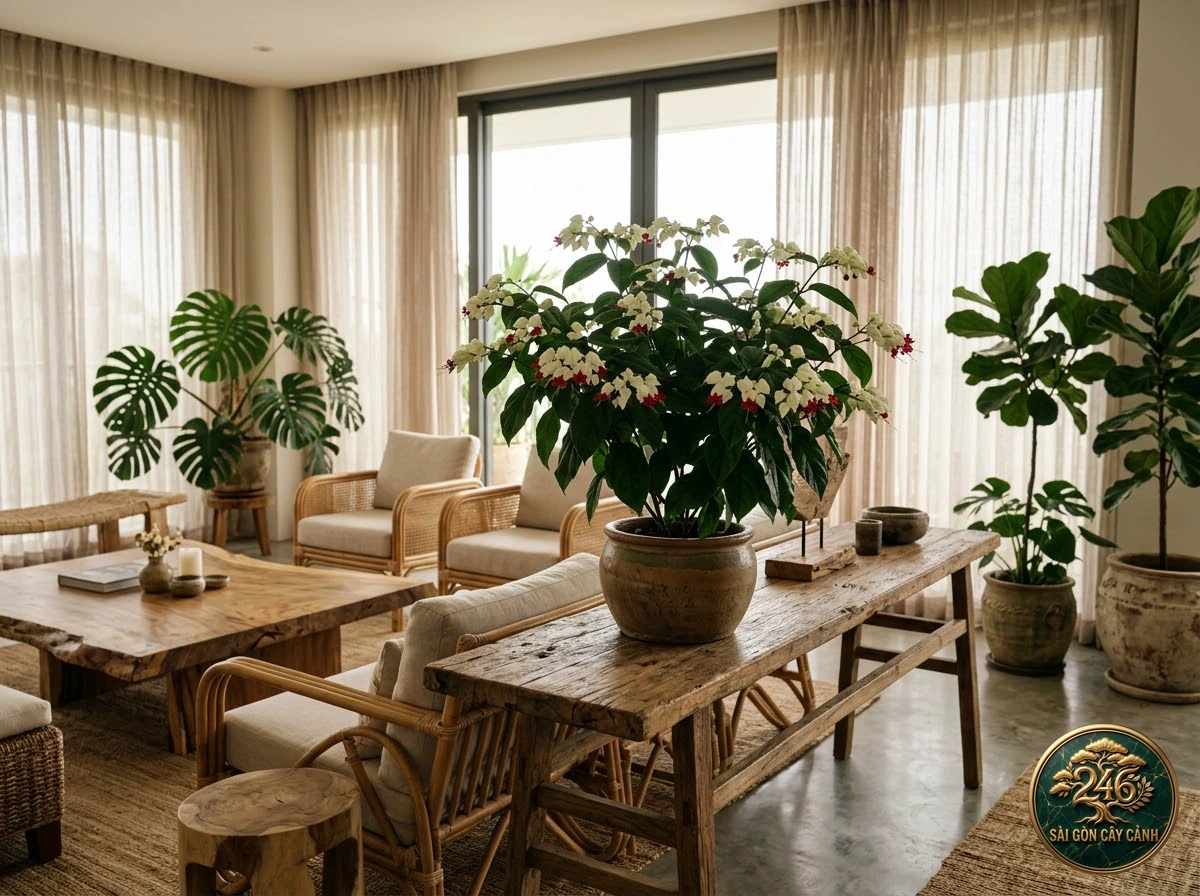
A living sculptural accent in contemporary Biophilic and Minimalist interiors, pairing beautifully with natural stone, warm timber, and architectural ceramics to impart organic peace and timeless sophistication.
12. Common Cultivation Pitfalls
- Adhering to rigid watering schedules without testing moisture depth.
- Permitting stagnant drainage water to pool beneath pots.
- Exposing plants to direct scorching summer sun.
- Over-fertilizing stressed or resting specimens.
- Using pots lacking functional drainage holes.
13. Summary & The Saigon Cay Canh Guarantee
Each specimen of Bleeding glory bower from Saigon Cay Canh reflects rigorous horticultural conditioning and premium biological health. We provide ongoing care guidance to ensure your botanical sanctuary thrives for years to come.