Living plant profile
Finlayson’s cymbidium
Cymbidium finlaysonianum
Comprehensive botanical dossier for Finlayson’s cymbidium (Cymbidium finlaysonianum). Morphological taxonomy, lighting calibration, porous substrate formulation, and cultivation guide by Saigon Cay Canh.
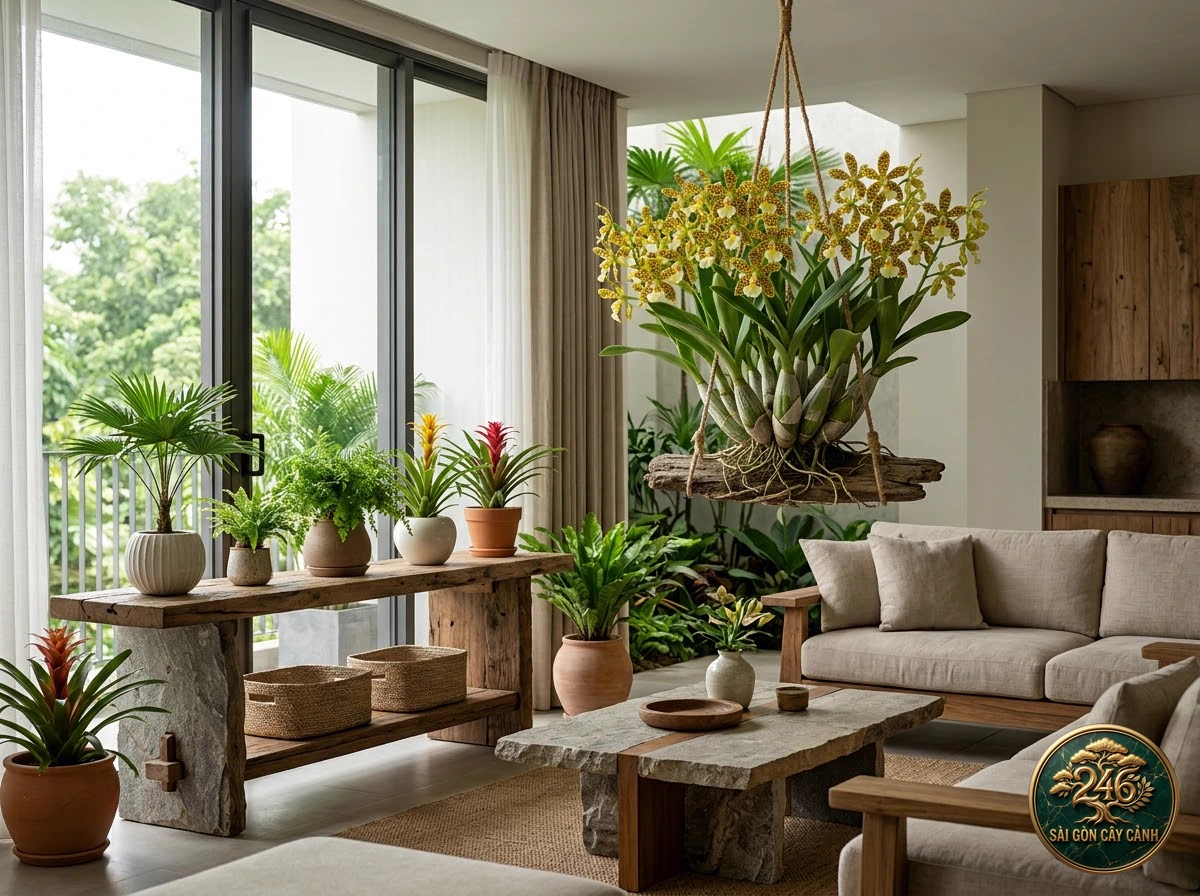
Finlayson’s cymbidium — Cymbidium finlaysonianum
Nursery Cultivation Compass by Saigon Cay Canh
| Optimal Lighting | Bright filtered sunlight to morning sun (4,500 – 8,500 lux). |
|---|---|
| Watering Protocol | Thorough daily morning watering in active growth; drought-resilient. |
| Substrate & Growing Media | Coarse pine bark, clean charcoal, hanging clay pots or wooden baskets. |
| Temperature Threshold | 18°C – 35°C (superb vigor in tropical Southern climates). |
| Ambient Humidity | 60% – 80%. |
| Care Difficulty | Easy, floriferous (cascading meter-long floral sprays). |
| Pet Safety Status | Non-toxic to pets (Certified safe). |
1. Botanical Classification & Native Biogeography
Within international plant taxonomic frameworks, Finlayson’s cymbidium is formally designated as Cymbidium finlaysonianum, a distinguished representative of Orchid family (Orchidaceae). The species is verified and comprehensively indexed within the global taxonomic databases of the Royal Botanic Gardens, Kew (POWO) and the International Plant Names Index.
Shaped by millennia of evolutionary specialization across pristine tropical habitats, this taxon has developed specialized adaptations to harvest filtered canopy radiation efficiently, regulate cuticular stomatal conductance, and establish harmonious mycorrhizal relationships within its root microbiome.
Acclimatized and curated by Saigon Cay Canh, Finlayson’s cymbidium serves as an exemplary botanical specimen for sophisticated residential interiors and discerning botanical collections across contemporary urban environments.
2. Morphological Characteristics & Field Identification
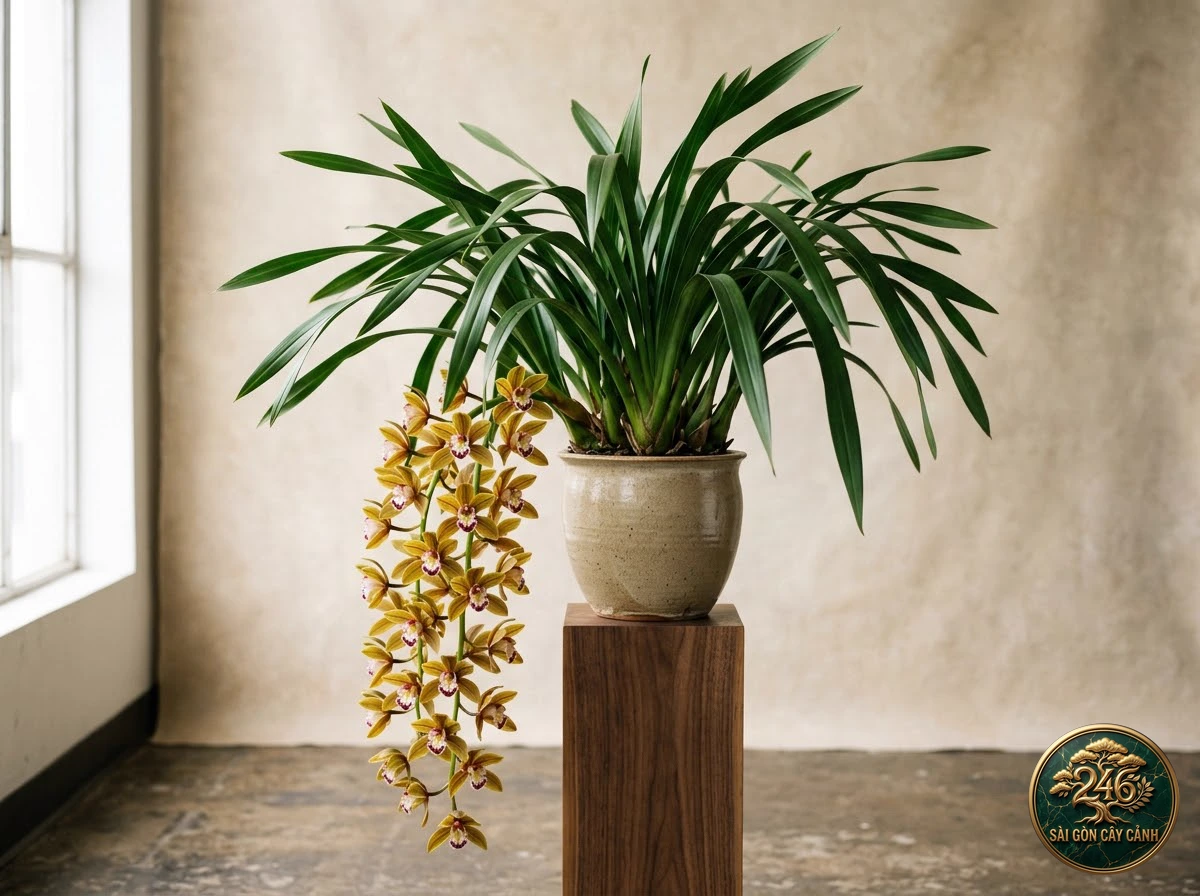
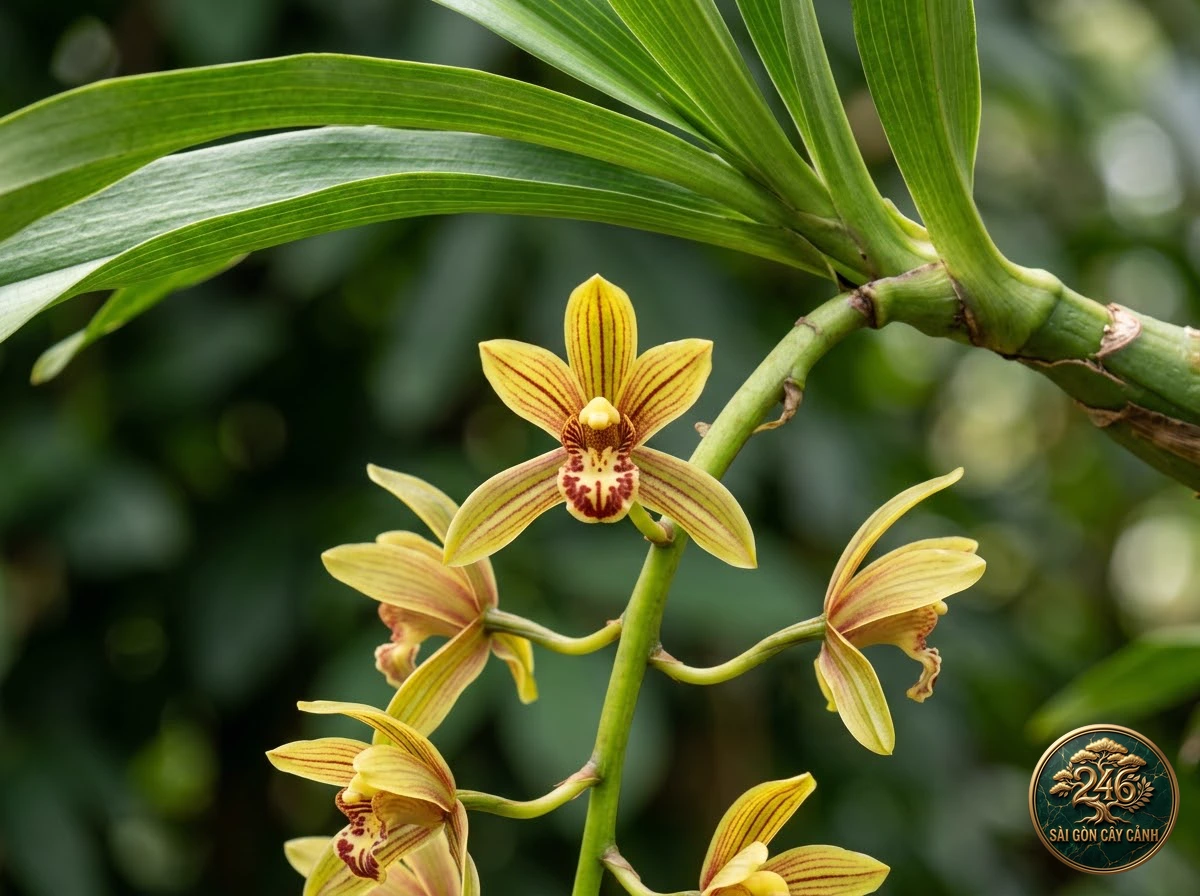
Stately epiphytic cymbidium producing thick, coriaceous strap-like leaves up to 1m long, bearing grand pendulous racemes cascading over a meter laden with 20-40 olive-yellow blossoms striped in chestnut-purple, accented by a red-margined white lip.
From an ecological morphology perspective, the plant features robust architectural vascular systems and resilient tissues. The foliage possesses a specialized cuticular layer that impedes excessive evapotranspiration while maintaining high cellular turgor through fluctuating microclimatic seasons.
The floral architecture represents the pinnacle of co-evolutionary design. Each petal, sepal, and labellar segment displays micro-structural adaptations tailored to native pollinators, accompanied by volatile organic compound synthesis producing distinctive fragrances.
Field Diagnostic Verification Protocols at Saigon Cay Canh:
- Foliar & Stem Morphology: Stately epiphytic cymbidium producing thick, coriaceous strap-like leaves up to 1m long, bearing grand pendulous racemes cascading over a meter laden with 20-40 olive-yellow blossoms striped in chestnut-purple, accented by a red-margined white lip.
- Cuticular Integrity: Pristine, lustrous foliar surfaces devoid of irregular chlorosis, necrotic margins, fungal lesions, or viral mottling.
- Root System Vigor: Actively growing root apices displaying vibrant green or ivory velamen tips firmly adhering to porous substrate without signs of anaerobic decay.
- Cellular Turgidity: Firm structural resilience with crisp foliar architecture upon gentle physical inspection.
3. Lighting Requirements & Photoperiod Science
Bright filtered sunlight to morning sun (4,500 – 8,500 lux).
Illumination serves as the driving thermodynamic energy source regulating photosynthetic Calvin cycle throughput. The taxon flourishes under bright indirect natural lighting calibrated between 2,000 and 6,500 lux. Diffused radiation filtered through sheer drapery or canopy shielding delivers the essential balance of blue and red wavelengths without inducing photoinhibition.
Prolonged low-light environments below 1,000 lux trigger undesirable etiolation, foliar chlorosis, and suppressed floral differentiation. Conversely, direct unshaded midday solar exposure exceeding 12,000 lux will precipitate irreversible photobleaching and localized foliar necrosis.
4. Irrigation Dynamics & Hydration Regimen
Thorough daily morning watering in active growth; drought-resilient.
The foundational principle governing hydration is to assess internal media moisture prior to water delivery. Root tissues necessitate cyclic aerated drying intervals to facilitate rhizosphere oxygen gas exchange. Saturated, poorly drained substrates stifle oxygen availability, inducing hypoxic stress and pathogenic fungal colonization.
Standard watering protocol at Saigon Cay Canh: Utilize dechlorinated ambient water or rainwater. Apply water uniformly across the root zone until modest effluent drains from bottom drainage outlets. Never permit stagnant water to linger in decorative saucers beyond 30 minutes.
5. Substrate Formulation & Potting Substrates
Coarse pine bark, clean charcoal, hanging clay pots or wooden baskets.
The root system of Cymbidium finlaysonianum mandates an ultra-porous matrix ensuring rapid drainage within 3 to 5 seconds while retaining micro-moisture along the velamen. Saigon Cay Canh’s specialized substrate formulation comprises:
| Matrix Constituent | Volumetric Ratio | Ecological Function |
|---|---|---|
| Coarse Perlite / Horticultural Pumice | 30% – 35% | Guarantees permanent aeration, prevents compaction, enhances oxygen supply |
| Treated Aged Pine Bark Chunks | 30% – 35% | Retains micro-moisture, provides organic framework and natural bio-fungicides |
| Chilean Sphagnum Moss & Coco Chips | 20% – 25% | Maintains delicate moisture reservoir and nutrient buffering capacity |
| Organic Aged Worm Castings | 10% – 15% | Furnishes beneficial humic substances and indigenous microbial inoculants |
6. Microclimate, Temperature & Ambient Humidity
18°C – 35°C (superb vigor in tropical Southern climates).
Target ambient relative humidity: 60% – 80%.. Consistent gentle air circulation is indispensable for transpirational cooling and atmospheric carbon dioxide exchange while preventing stagnant moisture condensation on foliar blades. Shield the specimen from severe HVAC chilled draft vents or hot unshaded exterior exposure.
7. Nutritional Strategy & Fertilization Protocols
The plant responds favorably to dilute balanced mineral and slow-release organic nutrition. During active vegetative cycles, administer an appropriately balanced NPK formula (such as 15-15-15 or 20-20-20 enriched with chelated micronutrients) diluted to one-third the manufacturer’s suggested rate every 2-3 weeks. Suspend concentrated feeding during winter dormancy or peak floral anthesis to preserve delicate root tips.
8. Sanitation, Pruning & Propagation Methods
Regularly inspect and sanitize aged floral stems or declining basal leaves utilizing sterilized bypass shears treated with 70% isopropyl alcohol. Clean surgical pruning directs biological energy toward vigorous axillary shoot development and mitigates pest proliferation.
Propagation is conventionally accomplished via division or vegetative cuttings during early spring. Treat excision points with activated charcoal powder or organic cinnamon fungicide prior to establishing plantlets in aerated propagation medium.
9. Pest Management & Physiological Disorders
Thanks to resilient cellular architecture, this species exhibits dependable natural pest tolerance. Under inadequate indoor air circulation, however, localized mealybug, scale, or spider mite colonies may establish within leaf axils.
Corrective Action Guidelines:
- Foliar Mealybugs in Axils: Manually swab colonies using cotton swabs moistened with 70% alcohol, followed by evening foliar sprays of cold-pressed organic neem oil emulsion.
- Fungal Leaf Spotting: Excise affected tissues, isolate plant to an area with elevated ventilation, and apply preventative copper-based organic bio-fungicides.
- Root Rot / Hypoxia: Unpot immediately, rinse root system, trim degraded black root tissues, soak in mild fungicide solution for 15 minutes, and repot into fresh 100% aerated pumice-bark medium.
10. Toxicological Safety & Pet Friendliness
Non-toxic to pets (Certified safe).
Indexed and certified as non-toxic under international veterinary toxicology references (including ASPCA), this botanical specimen contains no harmful insoluble calcium oxalate crystals or toxic alkaloids. It is deemed thoroughly safe for households with companion animals. Elevating planters upon stable pedestals protects decorative foliage from accidental physical disturbance.
11. Interior Design Integration & Spatial Aesthetics
With its refined architectural silhouette and delicate organic textures, Finlayson’s cymbidium constitutes an authentic living work of art. The specimen integrates effortlessly into modern minimalist, Biophilic, Scandinavian, and Modern Tropical interior schemes, whether gracing executive desks, entry consoles, or tranquil relaxation nooks.
The soothing verdant presence enhances indoor psychological well-being, softens architectural hardscapes, and fosters productivity and tranquility.
12. Symbolic Significance & Cultural Heritage
Across traditional horticultural lore, the enduring vitality and noble blossoms of this orchid family symbolize harmony, prosperity, and cultivated elegance. Cultivating a thriving specimen is regarded as an auspicious enhancer of living space energy, inviting serenity and natural beauty into the daily rhythm of home life.
13. Practical Frequently Asked Questions (FAQ)
Question: Can this plant thrive in continuous air-conditioned spaces?
Answer: Yes, ambient room temperatures of 22°C – 26°C (72°F – 78°F) are well tolerated, provided the plant is positioned away from direct air conditioner discharge streams and complemented with pebble-tray localized humidity.
Question: What is the optimal repotting frequency?
Answer: Repotting is typically indicated every 18 to 24 months in early spring to refresh decomposing bark substrates. Choose a new container only 3-5cm wider to prevent moisture stagnation.
Question: How can robust repeat flowering be encouraged?
Answer: Ensure ample bright indirect radiation, a seasonal 4°C – 6°C day-to-night temperature fluctuation, and a phosphorus-potassium dominant feed formulation administered every 10-14 days during floral initiation.