Living plant profile
Asian sword fern
Nephrolepis brownii
Saigon Cay Canh Living Herbarium Dossier Asian sword fern — Nephrolepis brownii Scientific name: Nephrolepis brownii Botanical family: Sword fern family (Nephrolepidaceae) English name: Asian sword fern Record accession: SGCC-PLANT-00376 SGCC Care Compass Botanical Care Specifications — Saigon Cay Canh Nursery Standards Optimal Light Bright indirect to dappled light (2,500 – 5,500 lux). Watering Protocol […]
Asian sword fern — Nephrolepis brownii
Botanical Care Specifications — Saigon Cay Canh Nursery Standards
| Optimal Light | Bright indirect to dappled light (2,500 – 5,500 lux). |
|---|---|
| Watering Protocol | Steady hydration; naturally adapted to seasonal monsoon variations. |
| Substrate & Mounting | Aerated tropical potting mix, fir bark, coir, perlite, biochar. |
| Temperature Range | 18°C – 35°C. |
| Relative Humidity | 60% – 85%. |
| Care Difficulty | Easy (rugged adaptability, highly suited to tropical climates). |
| Toxicity & Pet Safety | Non-toxic to pets (Certified safe). |
1. Botanical Classification & Native Biogeography
Within international plant taxonomic frameworks, Asian sword fern is formally designated as Nephrolepis brownii, a distinguished representative of Sword fern family (Nephrolepidaceae). The species is verified and comprehensively indexed within the global taxonomic databases of the Royal Botanic Gardens, Kew (POWO) and the International Plant Names Index.
Shaped by millennia of evolutionary specialization across pristine tropical habitats, this taxon has developed specialized adaptations to harvest filtered canopy radiation efficiently, regulate cuticular stomatal conductance, and establish harmonious relationships within its microbiome.
Acclimatized and curated by Saigon Cay Canh, Asian sword fern serves as an exemplary botanical specimen for sophisticated residential interiors and discerning botanical collections across contemporary urban environments.
2. Morphological Characteristics & Field Identification
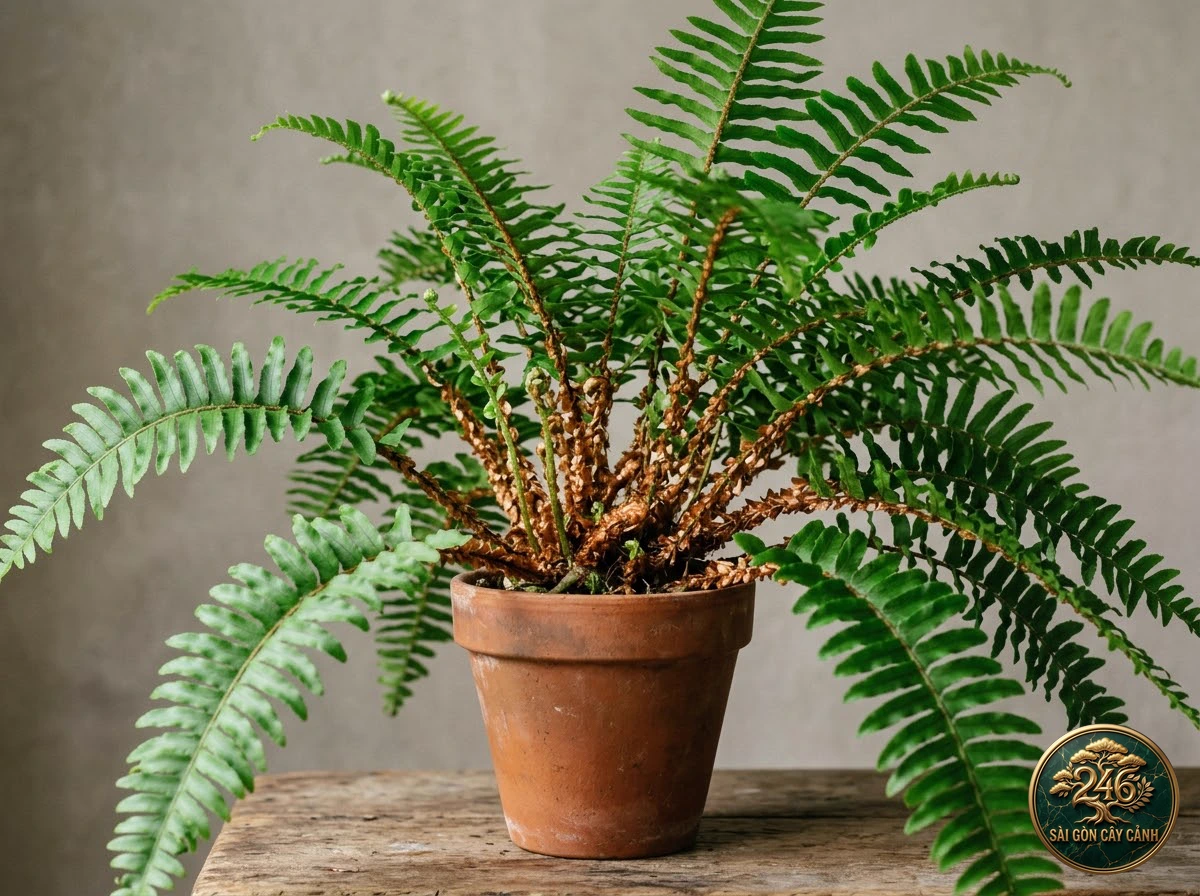
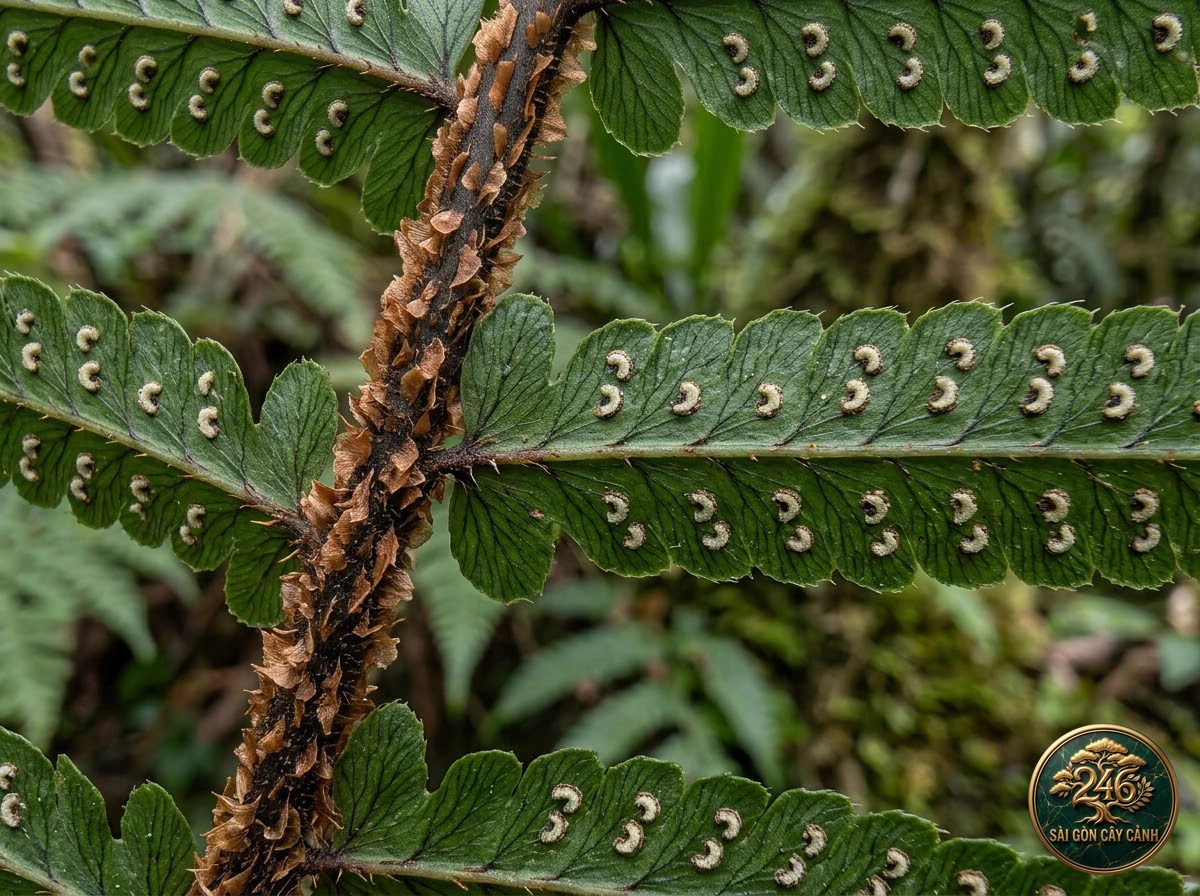
Asian sword fern native to tropical Asian forests, distinguished by rhizomes and stipes densely clothed in lustrous coppery-brown scales, supporting luxuriant arching fronds with prominent sori.
From an ecological morphology perspective, the plant features robust architectural vascular systems and resilient tissues. The foliage possesses a specialized cuticular layer that impedes excessive evapotranspiration while maintaining high cellular turgor through fluctuating microclimatic seasons.
The foliar architecture represents the pinnacle of co-evolutionary design. Each frond or leaf segment displays micro-structural adaptations tailored to native conditions.
Field Diagnostic Verification Protocols at Saigon Cay Canh:
- Foliar & Stem Morphology: Asian sword fern native to tropical Asian forests, distinguished by rhizomes and stipes densely clothed in lustrous coppery-brown scales, supporting luxuriant arching fronds with prominent sori.
- Cuticular Integrity: Pristine foliar surfaces devoid of irregular chlorosis, necrotic margins, fungal lesions, or viral mottling.
- Root System Vigor: Actively growing root apices firmly adhering to porous substrate without signs of anaerobic decay.
- Cellular Turgidity: Firm structural resilience with crisp foliar architecture upon gentle physical inspection.
3. Lighting Requirements & Photoperiod Science
Bright indirect to dappled light (2,500 – 5,500 lux).
Illumination serves as the driving thermodynamic energy source regulating photosynthetic Calvin cycle throughput. The taxon flourishes under bright indirect natural lighting calibrated between 2,000 and 6,500 lux. Diffused radiation filtered through sheer drapery or canopy shielding delivers the essential balance of blue and red wavelengths without inducing photoinhibition.
Prolonged low-light environments below 1,000 lux trigger undesirable etiolation and suppressed foliar differentiation. Conversely, direct unshaded midday solar exposure exceeding 12,000 lux will precipitate irreversible photobleaching and localized foliar necrosis.
4. Hydration Protocols & Substrate Moisture Dynamics
Steady hydration; naturally adapted to seasonal monsoon variations.
Irrigation must follow the fundamental rule: assess substrate moisture depth before applying water. Root systems require aerated pore intervals to facilitate vital rhizosphere gas exchange. Waterlogged conditions deplete dissolved oxygen, predisposing root tissues to anaerobic stress and opportunistic pathogens.
Standard irrigation protocol at Saigon Cay Canh: utilize dechlorinated water or natural rainwater at ambient temperature. Apply water evenly until moderate drainage occurs from bottom outlets. Ensure drip saucers are drained thoroughly within 30 minutes.
5. Substrate Formulation & Structural Media Engineering
Aerated tropical potting mix, fir bark, coir, perlite, biochar.
Root biology in Nephrolepis brownii demands exceptional drainage clearance within 3-5 seconds coupled with adequate micro-porosity for capillary moisture retention. The standard Saigon Cay Canh substrate formulation features:
| Substrate Component | Volume Fraction | Biological & Mechanical Function |
|---|---|---|
| Coarse Horticultural Pumice / Perlite | 30% – 35% | Permanent macropore aeration; prevents compaction and root hypoxia |
| Aged New Zealand Fir Bark | 30% – 35% | Durable organic structure; micro-moisture buffering and natural antimicrobial tannins |
| Chilean Sphagnum Moss & Washed Coir | 20% – 25% | Gentle moisture retention; balances nutrient buffering capacity |
| Organic Worm Castings (Vermicompost) | 10% – 15% | Delivers bio-available humic/fulvic acids and beneficial microbiome inoculants |
6. Microclimatic Envelope: Temperature & Atmospheric Moisture
18°C – 35°C.
Target relative atmospheric humidity: 60% – 85%.. Consistent gentle air movement is critical to support transpiration and gas exchange while preventing airborne fungal spore colonization. Protect specimens from direct refrigerated draft vents and hot perimeter exposures.
7. Balanced Nutritional Regimes & Fertilization Science
Provide balanced organic slow-release nutrients or highly diluted liquid fertilizers during active growth periods. Feed every 2-3 weeks with balanced NPK formulations diluted to one-third manufacturer strength. Reduce feeding intervals during cooler seasonal resting periods.
8. Architectural Pruning, Grooming & Propagation Methodology
Routinely inspect and remove senescent foliar fragments using sterile horticultural shears. Proper grooming redirects metabolic energy toward healthy emerging shoots and prevents opportunistic pest harborage.
Propagation is reliably achieved via division, offsets, or tissue culture in early spring during active growth initiation.
9. Integrated Pest Management & Disorder Diagnostics
Thanks to resilient structural tissues, this taxon exhibits robust pest tolerance. In enclosed spaces with diminished air movement, occasional mealybugs or scale insects may occur along leaf axils.
Therapeutic Diagnostic Protocol for Common Cultivation Issues:
- Foliar Mealybugs: Remove pests manually using cotton swabs dipped in 70% isopropyl alcohol, followed by evening applications of diluted organic cold-pressed neem oil.
- Fungal Leaf Spotting: Excise damaged tissue with sterilized shears, optimize air circulation, and apply copper-based organic bio-fungicides.
- Root Rot & Basal Senescence: Dismount over-saturated media, prune necrotic roots, drench with organic antifungal rooting solutions, and repot in fresh aerated substrate.
10. Toxicological Safety & Pet Friendliness
Non-toxic to pets (Certified safe).
Indexed and certified as non-toxic under international veterinary toxicology references, this botanical specimen contains no harmful insoluble calcium oxalate crystals or toxic alkaloids. It is deemed thoroughly safe for households with companion animals. Elevating planters upon stable pedestals protects decorative foliage from accidental physical disturbance.
11. Interior Design Integration & Spatial Aesthetics
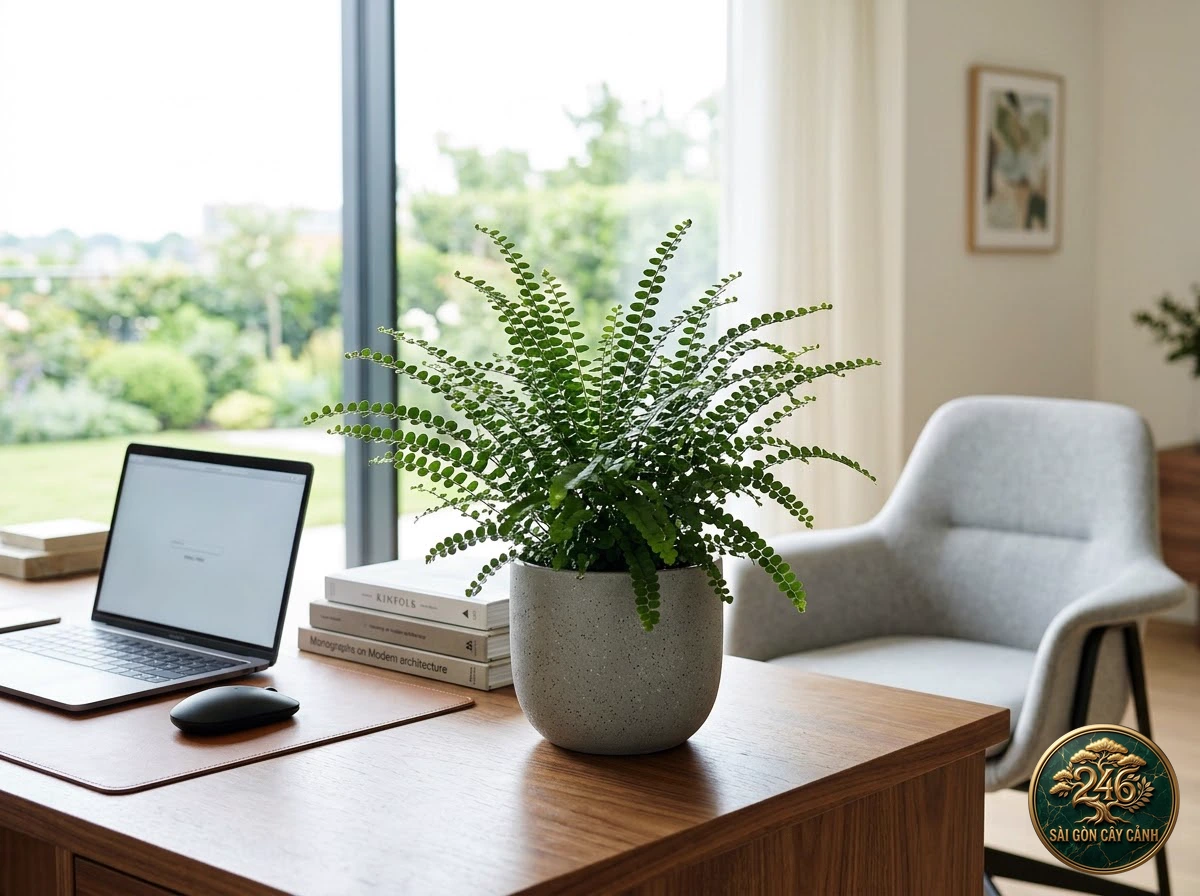
With its refined architectural silhouette and delicate organic textures, Asian sword fern constitutes an authentic living work of art. The specimen integrates effortlessly into modern minimalist, Biophilic, Scandinavian, and Modern Tropical interior schemes, whether gracing executive desks, entry consoles, or tranquil relaxation nooks.
The soothing verdant presence enhances indoor psychological well-being, softens architectural hardscapes, and fosters productivity and tranquility.
12. Symbolic Significance & Cultural Heritage
Across traditional horticultural lore, the enduring vitality and noble presence of this botanical family symbolize harmony, prosperity, and cultivated elegance. Cultivating a thriving specimen is regarded as an auspicious enhancer of living space energy, inviting serenity and natural beauty into the daily rhythm of home life.
13. Practical Horticultural FAQ with Saigon Cay Canh Specialists
Question: Can this plant thrive in an air-conditioned interior indefinitely?
Answer: Yes, provided ambient temperatures stay between 22°C and 26°C and the specimen is placed away from direct cold airstreams with local humidity maintained.
Question: What is the optimal watering frequency?
Answer: Typically every 2 to 4 days depending on ambient warmth and ventilation. Always ensure top substrate is moderately dry before the next watering session.
Question: What are the primary signs of cultural distress?
Answer: Soft limp leaves indicate inadequate light; yellowing basal foliage suggests persistent over-saturation and inadequate airflow. Promptly move the specimen to a brighter, well-ventilated location.