
Living plant profile
Spider plant
Chlorophytum comosum
Spider plant (Chlorophytum comosum) is a celebrated clumping grass-like perennial producing elongated arching stolons with pendant plantlets, famed for its remarkable ease of culture and graceful cascading foliage. A cherished household classic across the globe, it adapts effortlessly to modern living spaces, high-rise balconies, and home offices. The definitive factor for success in apartment cultivation […]
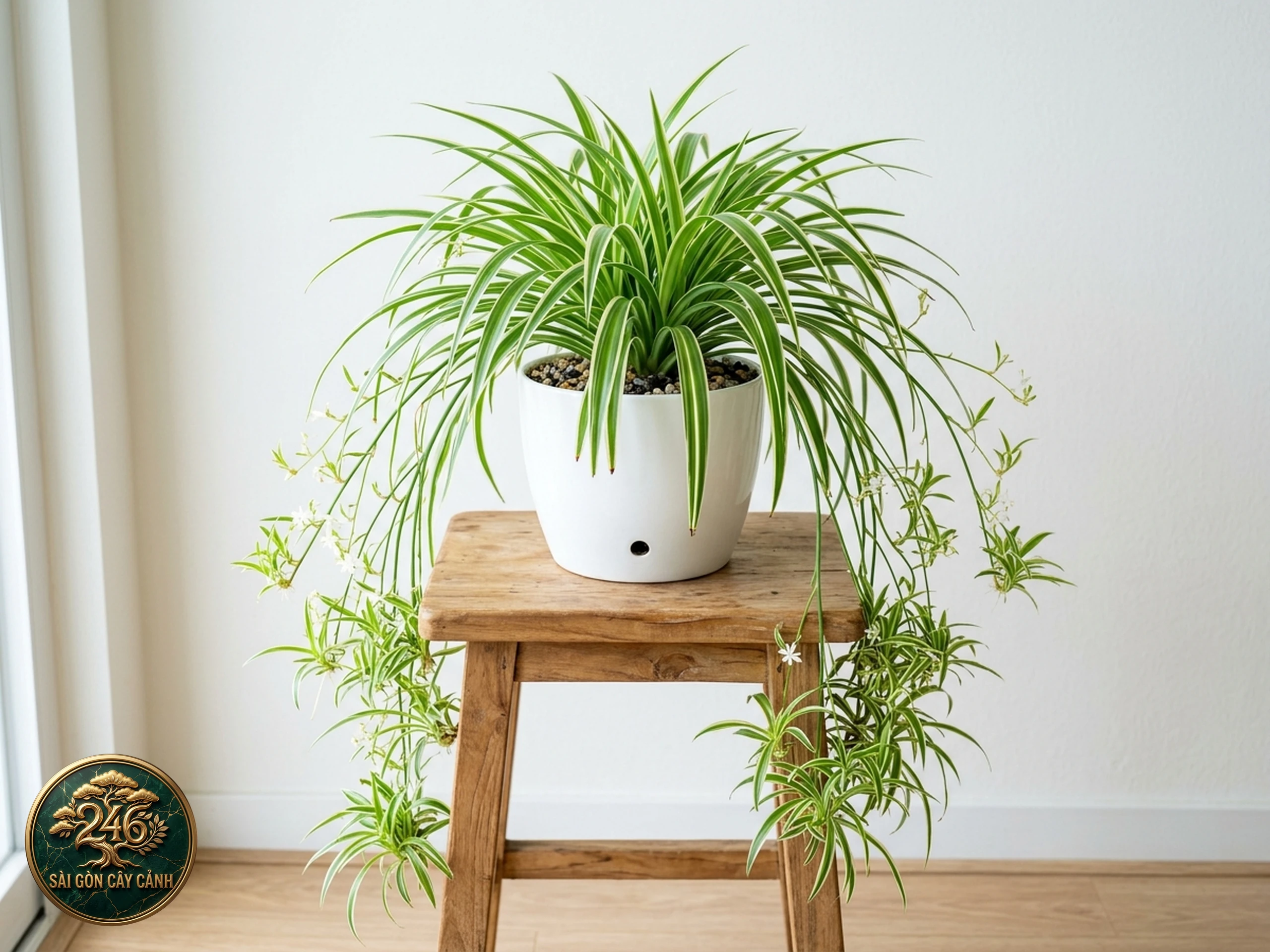
Spider plant (Chlorophytum comosum) is a celebrated clumping grass-like perennial producing elongated arching stolons with pendant plantlets, famed for its remarkable ease of culture and graceful cascading foliage. A cherished household classic across the globe, it adapts effortlessly to modern living spaces, high-rise balconies, and home offices. The definitive factor for success in apartment cultivation lies in establishing a responsive watering routine guided by direct substrate assessment rather than a rigid calendar schedule.
1. Botanical Specification of Variegated Chlorophytum Comosum
| Scientific Name | Chlorophytum comosum |
|---|---|
| Botanical Family | Asparagaceae (Asparagus family) |
| Growth Habit | Clumping grass-like perennial producing elongated arching stolons with pendant plantlets |
| Light Exposure | Bright filtered indirect light (1,200 – 3,000 lux); tolerates partial shade |
| Watering Requirement | Water thoroughly when upper third of potting mix dries; tuberous roots store substantial water |
| Recommended Substrate | All-purpose porous potting loam: 40% peat moss, 30% perlite, 20% organic compost, 10% coarse sand |
| Optimal Temperature | 16°C – 28°C (60°F – 82°F); widely tolerant of standard residential temperatures |
| Relative Humidity | 45% – 70% RH; resilient under moderate room humidity |
| Care Difficulty | Extremely easy / Beginner friendly |
| Pet Safety Status | Non-toxic to pets: Certified safe by ASPCA; felines may show curious attraction due to mild safe endorphin effect |
Indigenous to the tropical and southern regions of Africa, Chlorophytum comosum inhabits forest riverbanks, shaded woodland margins, and rocky coastal escarpments. In its native biome, the plant forms dense clumping groundcovers that expand horizontally via vegetative stolons. These specialized runners arch outward and produce adventitious plantlets that root upon contacting moist soil, creating resilient interconnected colonial colonies.
2. Foliar Stripe Patterns & Vegetative Stolon Reproduction Biology
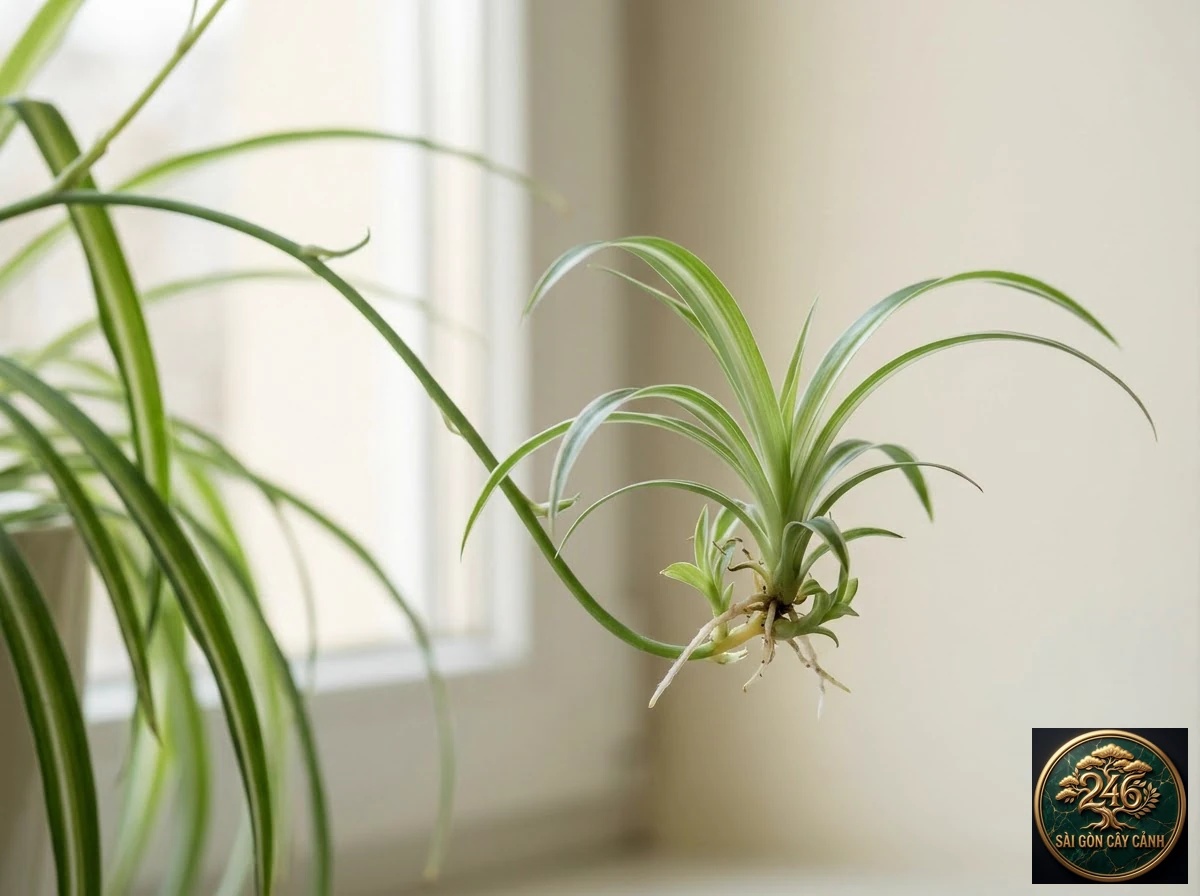
Accurate identification of Chlorophytum comosum requires close inspection of foliar structure, petiole anatomy, and developmental habit. In commercial horticulture, ambiguous common names frequently cause misidentification, leading to improper care regimens.
The foliage consists of long, linear, arching ribbon-like leaves that originate from a central crown rosette. In cultivated variegated forms like ‘Vittatum’ and ‘Variegatum’, a luminous white or creamy-yellow central band or outer margin contrasts against rich emerald borders. The plant is noted for accumulating fluoride and boron minerals from tap water at the leaf tips, which can cause brown tip necrosis; using filtered or settled water keeps foliage pristine.
Key Diagnostics: Readily distinguished from variegated Mondo grass (Ophiopogon japonicus ‘Variegatus’, which features thin fibrous roots without swollen tubers) and Carex morrowii (which has stiff, sharp triangular foliage edges). Fleshy white tuberous roots and pendulous plantlet runners confirm botanical identity.
3. Hanging Basket Placement for Morning Light and Formaldehyde Cleansing
Within urban residences, position the plant in accordance with natural lighting dynamics: Suspended hanging planters near east-facing or south-facing windows with sheer filtration, or positioned on elevated bookshelves. Avoid placing foliage directly in cold convective drafts from air conditioning units, as rapid evaporative loss compromises leaf margins while soil remains wet.
4. Managing Fleshy Root Tubers: Preventing Tip Necrosis and Saturated Soil
Do not adhere to a predetermined watering schedule. Transpiration rates fluctuate with seasonal warmth, airflow, and pot volume.
Three-Step Moisture Check:
- Insert a wooden dowel or finger 3-5 cm into the potting medium.
- If damp substrate particles adhere to the probe: Delay watering for 48-72 hours.
- When the probe emerges clean and dry: Saturate the root zone thoroughly until water flows freely from drainage holes, then discard standing saucer water after 15 minutes.
5. Fast-Growth Potting Soil Formulations to Support Expansive Tubers
The root system of Chlorophytum comosum demands substantial gas exchange. Dense potting soils compact over repeated waterings, generating hypoxic conditions that foster anaerobic root pathogens.
Beneath the soil, Chlorophytum comosum develops an impressive system of thick, white, fleshy tuberous roots. These succulent tubers act as hydraulic reservoirs, holding significant quantities of moisture and nutrients that buffer the plant against severe domestic underwatering. Due to their rapid expansion, spider plants benefit from annual or biennial repotting into containers offering ample root depth.
Recommended Soil Mix: Loamy, freely draining substrate accommodating vigorous fleshy storage root expansion, blended with peat moss, perlite, and organic compost. Unglazed terracotta or specialized aerated nursery pots provide superior root zone oxygenation compared to non-porous containers.
6. Organic Fertilizer Micro-Dosing to Stimulate Prolific Spiderettes
Modest, consistent fertilization sustains healthy foliage without mineral burn. During active vegetative flush (spring and summer), supply balanced liquid organic fertilizer diluted to half strength monthly. Discontinue feeding during dormant or low-light winter intervals.
Nourishing Chlorophytum comosum requires moderation to maintain vibrant variegated foliage. Excessive chemical nitrogen stimulates rampant leaf elongation at the expense of root health and can cause variegated white margins to turn muddy green. Applying a balanced water-soluble houseplant fertilizer at half strength once a month during spring and summer provides all necessary macro- and micronutrients. Be careful to avoid fertilizers containing superphosphate additives, as spider plants are highly sensitive to fluoride impurities that induce necrotic leaf tip burn.
7. Diagnostic Guide for Leaf Blackening, Stripe Bleaching, and Root Rot
| Observed Symptom | Primary Root Cause | Verification Method | Corrective Action |
|---|---|---|---|
| Lower leaf chlorosis (yellowing) | Overwatering / hypoxic root environment | Inspect lower substrate moisture | Extend dry intervals, verify drainage holes |
| Crispy brown margins | Sub-optimal ambient humidity / AC airflow | Measure room humidity, check draft paths | Relocate away from vents, elevate humidity |
| Etiolation (pale, stretched stems) | Insufficient photosynthetic photon flux | Assess light intensity at foliage level | Shift closer to bright indirect source |
| Soft basal stem / wilting | Fungal root compromise (pythium/phytophthora) | Unpot root ball and inspect root firmness | Excise decayed roots, treat with fungicide, repot |
8. Preventing Mealybug Clusters Deep Within Dense Foliar Rosettes
Mealybugs and two-spotted spider mites present the most frequent pest challenges. Regular foliar cleansing with a damp microfiber cloth serves as primary defense. For localized infestations, isolate the specimen and treat with 70% isopropyl alcohol via cotton swab or apply cold-pressed horticultural neem oil during evening hours.
Thanks to its vigorous growth and durable foliage, the spider plant rarely succumbs to severe pest outbreaks. However, mealybugs or fungus gnats can occasionally colonize specimens kept in perpetually soggy soil under poor ventilation. Maintaining a proper watering rhythm and allowing the upper soil to dry prevents gnat larvae from developing, while gentle foliar rinsing removes transient dust and spider mites.
9. Foolproof Spiderette Plantlet Rooting in Soil and Water
Propagate during the active growth season via vegetative stem cuttings or division. Select vigorous nodes possessing aerial root initials. Sever cleanly with sanitized shears, allow callous formation for two hours, then root in clean aerated water or damp sphagnum moss under warm, diffused light.
10. ASPCA Certified Non-Toxic Status: Safe When Cats Chew Blades
11. Routine Pruning and Mineral Flushes for City Balconies
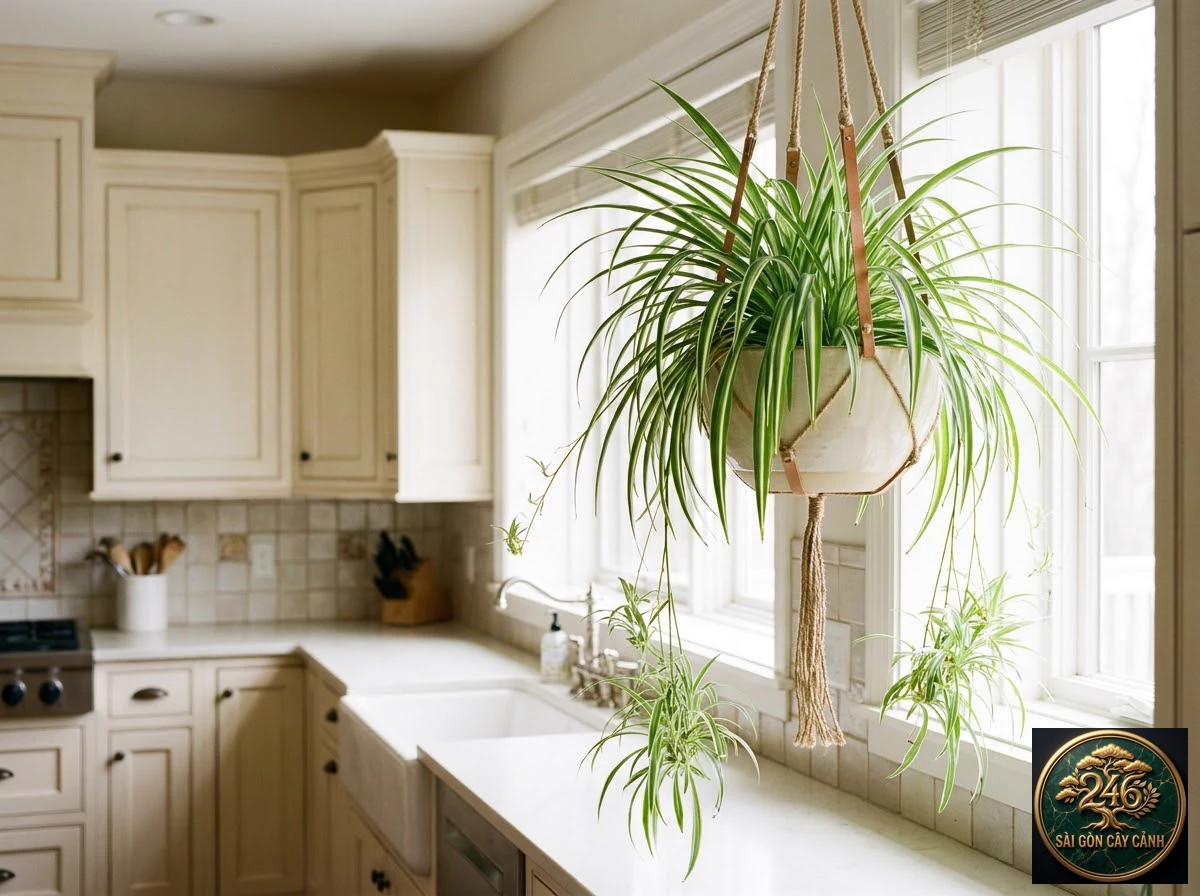
The sculptural foliage of Chlorophytum comosum harmonizes gracefully with biophilic, Scandinavian, and contemporary architectural settings. Pair alongside trailing pothos or structural snake plants to create dynamic multi-tiered botanical arrangements.
In biophilic interior design, the weeping, fountain-like architecture of Chlorophytum comosum makes it an ideal plant for hanging baskets, high floating shelves, and multi-tier plant stands. The playful dangling stolons bearing miniature spiderettes add visual lightness and depth to modern rooms, softening rigid vertical shelving and bringing vibrant greenery into living areas.
12. Answers to Essential Spider Plant Growing Questions
“Plants can thrive indefinitely in windowless interior spaces” — All vegetative growth requires photosynthetic photons. In rooms devoid of natural light, full-spectrum horticultural LED fixtures must be provided for 8-10 hours daily to maintain metabolic equilibrium.
“Direct intense sunlight is necessary to keep variegated spider plant stripes bright and defined” — While bright filtered indirect light maintains high contrast between green and cream leaf bands, subjecting the plant to harsh, unfiltered midday sunlight will rapidly scorch the tender thin-walled leaf cells. Sunburn appears as bleached, papery beige patches that permanently ruin foliar aesthetics. Position spider plants where they receive soft morning light or bright diffused illumination through sheer curtains.
13. Frequently Asked Questions (FAQ)
When should this plant be repotted?
Repot every 18-24 months or when roots spiral densely and emerge through bottom drainage ports. Select a replacement container 3-5 cm wider in diameter.
Should foliar shine products or oils be applied?
Never apply culinary oils or commercial leaf gloss. They occlude stomata, hindering gas exchange and attracting particulate debris. Clean foliage solely with pure water.
Is daily misting beneficial in air-conditioned apartments?
Misting provides only transient humidity spikes and may cause fungal leaf spot if foliage remains wet without air movement. Use a pebble tray or ultrasonic humidifier for sustained ambient moisture.
How can I distinguish underwatering from overwatering?
Underwatered foliage exhibits uniform dry limpness in a desiccated root ball. Overwatered plants display yellowing lower leaves accompanied by mushy, dark petioles and sodden soil.
Can tap water be used directly?
Municipal water often contains dissolved chlorine and fluorides that cause tip burn in sensitive foliage. Allow water to sit uncovered for 24 hours prior to irrigation.