Living plant profile
Miniature pine tree (Crassula tetragona)
Crassula tetragona
Comprehensive botanical monograph on the Miniature pine tree (Crassula tetragona): succulent subulate needle anatomy, CAM physiology, porous mineral substrate, and bonsai cultivation.
Miniature Pine Tree (Crassula tetragona)
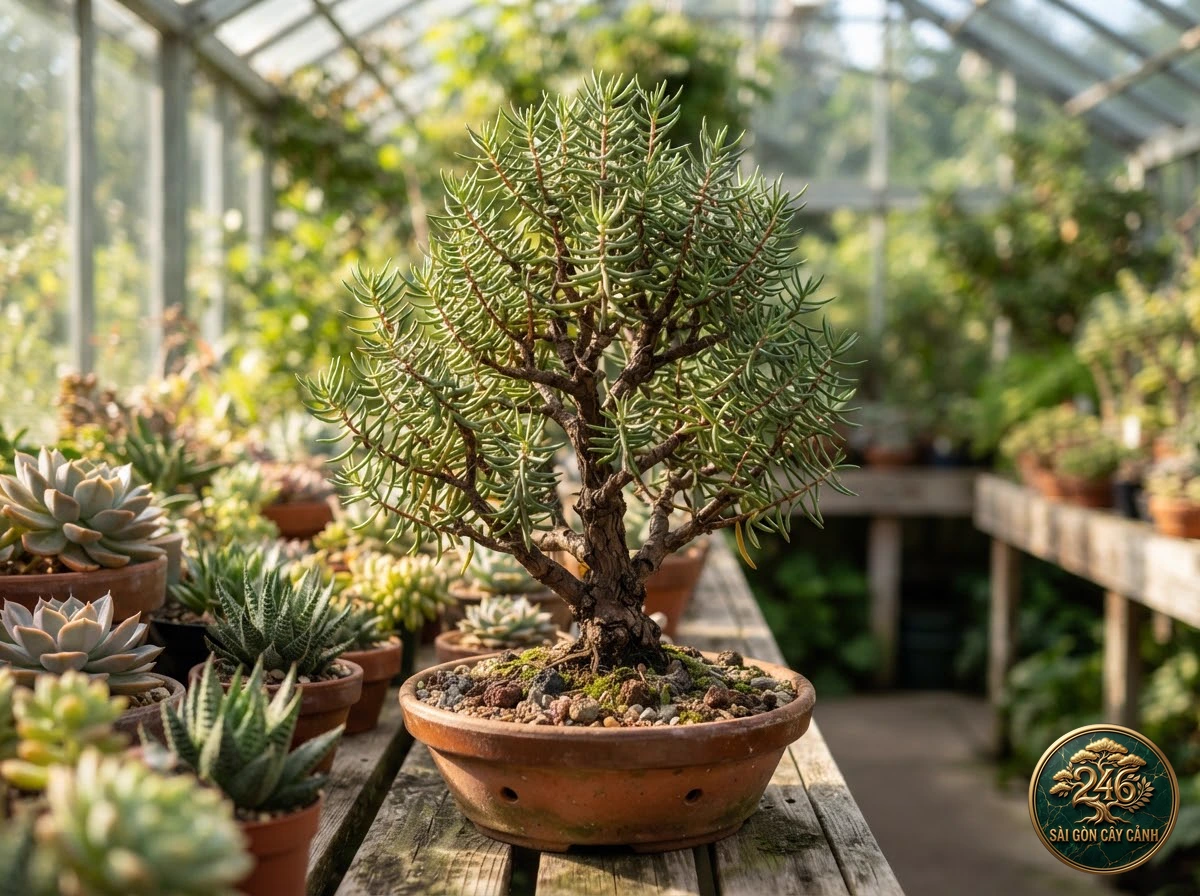
The Miniature pine tree (taxonomic binomial: Crassula tetragona L.) stands as one of the most structurally striking succulent shrubs within the stonecrop family (Crassulaceae). Famously revered in ornamental horticulture for its uncanny morphological resemblance to an ancient dwarf conifer or alpine pine, this architectural perennial diverges dramatically from the conventional concentric rosettes typical of the genus. Developing erect, suffruticose woody stems clothed in decussately arranged subulate needle-like foliage, the species embodies an extraordinary evolutionary convergence between the resilient desert flora of Southern Africa and the majestic silhouette of boreal evergreen forests.
Indigenous to the arid hillsides and gravelly scrublands of South Africa’s Eastern and Western Cape provinces, this xerophytic marvel was first formally documented by the father of modern botanical taxonomy, Carl Linnaeus, in his landmark 1753 publication Species Plantarum. Endowed with a specialized internal water-storage hydrenchyma and operating on Crassulacean Acid Metabolism (CAM), the plant effortlessly withstands intense diurnal heat and extended drought cycles. In contemporary interior architecture and biophilic styling, it serves as an exceptional living sculpture and a peerless candidate for succulent bonsai cultivation.
Sài Gòn Cây Cảnh Care Compass
1. Comprehensive Botanical Taxonomy & Key Specifications
To establish a rigorous scientific foundation for botanical collectors and urban horticulturists, Saigon Cay Canh provides the definitive taxonomic and cultural metrics for this taxon below:
| Botanical Descriptor / Cultural Parameter | Empirical Specification & Taxonomic Value |
|---|---|
| Valid Botanical Binomial | Crassula tetragona L. (Species Plantarum 1: 283, 1753) |
| Standard International Common Names | Miniature pine tree, Miniature pine crassula, Conifer crassula |
| Family & Subfamily Classification | Crassulaceae (Stonecrop family) / Subfamily Crassuloideae |
| Native Geographic Range | Succulent Karoo and dry rocky slopes of Eastern and Western Cape, South Africa |
| Growth Habit & Morphology | Suffruticose erect succulent subshrub with woody basal branching, 30-80 cm tall |
| Foliar Structure & Arrangement | Subulate (awl-shaped) to terete, decussately arranged in four vertical ranks |
| Photosynthetic Flux Density Requirement | Bright indirect light to direct early morning sunshine (4,500 – 8,500 lux) |
| Gas Exchange & Carbon Pathway | Crassulacean Acid Metabolism (CAM) with nocturnal stomatal conductance |
| Companion Animal Toxicity Status | Certified non-toxic to domestic dogs, cats, and companion birds (ASPCA certified) |
| Engineered Substrate Composition | 65% porous mineral aggregate (pumice, perlite, lava rock) + 35% washed organic fiber |
Across its native South African range, the species exhibits noticeable clinal variation, giving rise to six distinct botanical subspecies recognized by modern taxonomists. The nominate form, Crassula tetragona subsp. tetragona, remains the most celebrated in greenhouse collections worldwide due to its strict vertical architecture, dense internodal foliage, and rapid bark development on mature canes.
2. Morphological Diagnostic Keys & Foliar Anatomy
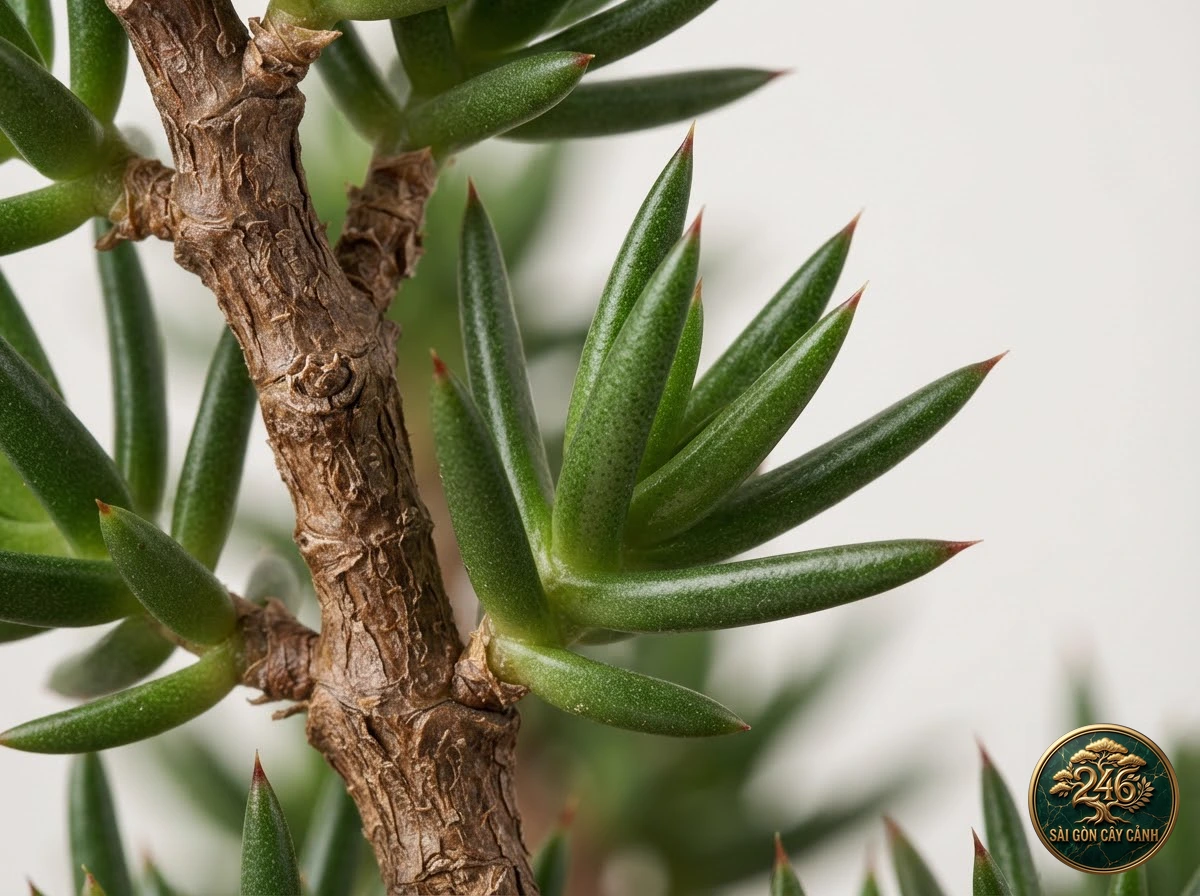
A rigorous examination of the structural anatomy of this succulent reveals an array of specialized xeromorphic adaptations that distinguish it from all other members of the stonecrop alliance:
Foliar Architecture: The leaves are fleshy, subulate to cylindrical (terete), measuring 1.5 cm to 4 cm in length and 3 mm to 5 mm in transverse diameter. They gently curve upward toward acute yet non-spiny tips. The most identifying anatomical marker is their decussate phyllotaxy: opposite pairs are rotated at exact 90-degree angles to preceding pairs, forming four distinct vertical geometric columns along the stem axis. When viewed from above, the stem presents an immaculate four-angled cross section, inspiring the specific epithet tetragona (Greek for four-angled).
Epidermal Wax & Hydrenchyma Tissue: The outer epidermis is sheathed in a smooth, lustrous cuticular wax layer varying from deep emerald green to vibrant apple green. This epicuticular layer reflects destructive ultraviolet solar radiation while virtually eliminating non-stomatal cuticular transpiration. Beneath the protective dermal tissue lies an expansive hydrenchyma composed of colossal parenchyma cells filled with mucilaginous polysaccharide sap, conferring immense turgor pressure and long-term water storage capacity.
Cane Development & Pseudo-Bark: Juvenile stems emerge tender, smooth, and herbaceous green. However, as the plant matures through its second season of growth, the outer cortex undergoes secondary suberization, developing an authentic, fissured grayish-tan corky bark that closely mimics the rugged trunk of an old-growth coniferous tree. Mature basal trunks reach diameters of 1.5 cm to 2.5 cm, providing sturdy mechanical support for the expansive canopy.
Inflorescence & Floral Morphology: Terminal thyrses arise from apex stems during warm summer months, presenting dense, rounded corymbose clusters of minute, star-shaped blossoms. Each individual flower possesses five delicate recurved petals in shades of ivory-white to soft cream, complemented by five pale yellow pollen-bearing anthers. The flowers exhale a delicate, honey-sweet scent that attracts local dipteran and hymenopteran pollinators.
3. Botanical Taxonomy & Nomenclatural History
The botanical cataloging of this plant represents a prominent milestone in early Cape floral discoveries. Described by Carl Linnaeus in 1753 in his seminal work Species Plantarum, the taxon was classified under the genus Crassula, derived from the Latin adjective crassus meaning thick or fleshy, in direct reference to the succulent character of its leaves. The specific descriptor tetragona explicitly designates the geometric four-angled foliar presentation along the vertical stems.
In accordance with the Angiosperm Phylogeny Group IV (APG IV) framework, the genus Crassula is assigned to the family Crassulaceae within the core eudicot order Saxifragales. Within this lineage, the subfamily Crassuloideae is recognized as an early-diverging clade characterized by free carpels equal in number to the petals, retaining fundamental floral symmetries that have proven remarkably stable over evolutionary epochs.
Extensive monographic research conducted by South African botanist H.R. Toelken in 1977 established six formally recognized infraspecific taxa: subspecies tetragona, acutifolia, chivula, connivens, robusta, and rudis. These variations differ subtly in leaf apex geometry, degree of decumbence, and presence of micro-papillate hair structures on the inflorescence peduncles, demonstrating the species’ evolutionary radiation across diverse microclimates.
4. Native Ecology & Crassulacean Acid Metabolism (CAM)
The ancestral homeland of this succulent lies within the Succulent Karoo and adjacent sub-arid river valleys of the Eastern and Western Cape in South Africa. This arid biome is characterized by severe seasonal water deficits, where annual precipitation frequently drops below 300 mm, accompanied by blistering midday temperatures and rapid nocturnal radiational cooling.
To flourish in this hostile environment, the plant operates on an optimized Crassulacean Acid Metabolism (CAM) photosynthetic pathway. During hot daylight hours, foliar stomata remain tightly closed, reducing transpiration water loss to near-zero levels while maintaining intracellular hydration. When darkness descends and atmospheric temperatures drop, the stomata open to harvest ambient carbon dioxide.
The enzyme phosphoenolpyruvate carboxylase (PEPC) captures atmospheric CO2 and converts it into malic acid, which is safely stored inside massive central cellular vacuoles overnight. With the return of morning sunlight, stomata seal shut once more, and the stored malic acid is enzymatically decarboxylated within chloroplasts, releasing internal CO2 directly to RuBisCO for carbohydrate synthesis via the Calvin cycle. This nocturnal carbon fixation mechanism yields water-use efficiency five to seven times greater than conventional C3 vegetation.
5. Photosynthetic Irradiance & Photoperiod Management
Solar irradiance is the single most critical factor dictating the structural compactness and foliar density of the miniature pine crassula. To maintain the coveted appearance of a clipped conifer bonsai with tightly packed leaf pairs, the plant requires abundant luminous flux ranging from 4,500 to 8,500 lux.
In urban apartments and residences, optimal positioning is found along eastern, southeastern, or southern exposures where the plant receives 4 to 6 hours of gentle direct early morning sunlight. Morning sun supplies full-spectrum photons necessary for robust photosynthesis without generating the searing infrared heat loads that can cause epidermal cellular rupture.
When relegated to dim interior locations receiving under 2,500 lux, the plant inevitably suffers from etiolation: stems stretch rapidly toward ambient light sources, internodes elongate into weak spindly canes, and needle-like leaves lose their glossy luster, turning pale yellow-green. Conversely, unacclimated exposure to intense afternoon sun through unshaded western windows can cause irreversible thermal burns, resulting in rough, corky brown scars. In rooms devoid of direct natural light, cultivating this species requires supplemental full-spectrum horticultural LED grow lights (4000K to 5000K color temperature) operating for 8 to 10 hours daily.
6. Hydraulic Dynamics & The Soak-and-Dry Protocol
Root system asphyxiation from chronic over-irrigation represents the primary mortality vector for succulent plants in domestic cultivation. Given its dense hydrenchyma tissues and specialized CAM physiology, the miniature pine tree possesses immense physiological resilience against water scarcity but zero defense against waterlogged, anaerobic soil conditions.
Horticulturists must strictly adhere to the soak-and-dry irrigation methodology. Irrigation should only occur after verified complete dehydration throughout the entire root zone profile. A practical diagnostic method involves inserting an unvarnished wooden skewer to the bottom of the container for five minutes: if the wood emerges completely dry without adhering dark moist peat particles, watering is warranted.
Bottom-watering is the superior technique: submerge the lower third of the container into a vessel of room-temperature water for 10 to 15 minutes, allowing capillary action to pull moisture upward through bottom drainage holes. This uniformly saturates the lower fibrous root system while keeping the dense foliar axils completely dry, successfully mitigating risks of crown rot and foliar bacterial blight. Always allow gravity to completely discharge excess standing water before returning the pot to its decorative saucer.
7. Granular Mineral Substrate Formulation & Aerobic Porosity
Wild populations thrive in fragmented sandstone clefts and decomposed granite deposits where storm runoff percolates instantly through macroscopic mineral voids. Reproducing this micro-environment within the confines of a nursery container requires a high-porosity, mineral-dominant growing medium.
The standardized potting formulation perfected by Saigon Cay Canh consists of 65% coarse inorganic minerals (35% horticultural pumice sized 3-6 mm, 15% expanded perlite, and 15% crushed red volcanic scoria) harmonized with 35% buffered organic amendments (20% triple-washed, desalinated coco coir fiber and 15% clean vermicompost castings).
This granular texture ensures an abundance of macroscopic air pockets that facilitate immediate gravitational drainage and continuous rhizosphere oxygenation. High oxygen tension prevents the establishment of destructive anaerobic oomycetes such as Pythium and Phytophthora, which proliferate in dense, compacted soils. Substrate pH should remain stable between 6.2 and 6.8, providing a slightly acidic to neutral root zone that maximizes the bio-availability of essential phosphorus, potassium, and trace minerals.
8. Thermal Tolerances, Ambient Humidity & Airflow Dynamics
Reflecting its South African provenance, this succulent displays broad thermal tolerance, actively vegetating between 18°C and 30°C. It easily tolerates the sustained warmth of tropical urban microclimates, provided container roots are insulated from thermal scorching caused by direct sun hitting dark plastic pots.
However, the species possesses limited cold tolerance, with a critical lower survival boundary of 5°C. When sub-zero temperatures coincide with wet substrate conditions, intracellular water within the large parenchyma vacuoles crystallizes, destroying cellular membranes and causing catastrophic stem collapse.
Relative humidity is best maintained between 40% and 65%. High atmospheric humidity exceeding 80% combined with static, stagnant air in closed air-conditioned apartments predisposes the dense needle foliage to powdery mildew and fungal stem lesions. Continuous buoyant airflow is paramount: gentle air movement rapidly evaporates micro-droplets of moisture from leaf surfaces, mitigates foliar heat build-up during warm afternoons, and continuously replenishes boundary-layer CO2 for nocturnal CAM carbon capture.
9. Clinical Diagnostics & Plant Pathology Matrix
To assist collectors in rapidly diagnosing and rectifying physiological disorders, our botanical specialists have compiled this rigorous clinical diagnostic matrix:
| Observable Clinical Symptom | Underlying Pathology & Etiology | Corrective Horticultural Protocol |
|---|---|---|
| Basal leaves turn soft, translucent yellow, and drop freely at the slightest physical touch | Substrate hyper-saturation causing root hypoxia and secondary soft rot fungal infection | Halt irrigation immediately; remove root ball, excise all black necrotic roots with a sterile scalpel, dust with dry sulfur, air-dry for several days, and repot in fresh dry pumice mix |
| Stems elongate abnormally with wide internodes; leaves turn thin, sparse, and pale green | Severe light deprivation disrupting normal CAM carbon fixation and causing etiolation | Gradually acclimate the specimen to direct morning sun over a one-week period, ensuring 4-6 hours of daily sunlight, or install a 4000K full-spectrum horticultural LED fixture |
| Needle foliage exhibits generalized shriveling and surface wrinkles without yellowing | Prolonged moisture deficit depleting internal water reserves within foliar hydrenchyma | Administer a thorough bottom-soak for 15 minutes; foliar turgidity and glossy epidermal plumpness will restore within one or two days as vascular xylem channels rehydrate |
| Dry, scabby corky brown patches appear abruptly on upper leaf surfaces facing window glass | Acute solar thermal scorching caused by abrupt unacclimated exposure through magnifying glass | Relocate container 1 meter back from intense western glass or introduce sheer shading fabric; while scarred foliage will not heal, new growth will emerge pristine |
Routinely checking the firmness of the newest leaf pairs at terminal stem tips provides an accurate barometer of overall plant vitality. In a thriving specimen, apical foliage remains firm, lustrous, and remarkably resilient to gentle lateral pressure.
10. Biological Pest Management & Sanitation
Protected by its thick waxy cuticle, the miniature pine tree displays natural resistance against most common garden chewing insects. Nevertheless, under sheltered indoor cultivation characterized by low ventilation and dry warmth, populations of citrus mealybugs (Planococcus citri) and two-spotted spider mites (Tetranychidae) can emerge.
Mealybugs represent the primary threat: they colonize the sheltered axils where decussate leaf bases meet the stem canes, piercing tender epidermal tissues to siphon nutrient-rich phloem sap while excreting sticky honeydew that fosters black sooty mold. At the first sign of cottony white deposits, manual eradication using a cotton swab dipped in 70% isopropyl alcohol delivers immediate control. The alcohol dissolves the protective waxy exoskeleton on contact without penetrating the plant’s cuticular barrier.
For preventative maintenance, applying an emulsified cold-pressed organic neem oil spray during evening hours every few weeks provides broad-spectrum prophylactic protection. Ensure the plant remains in ventilated shade overnight after oil applications to prevent phytotoxic solar burn when morning rays touch the foliage.
11. Specialized Asexual Propagation Protocols
Propagating the miniature pine tree via vegetative stem tip cuttings offers an exceptionally high success rate, making it a rewarding pursuit for enthusiast cultivators. The species exhibits vigorous adventitious root formation along dormant stem nodes when handled with proper sanitary care.
Optimal Seasonal Timing: Early spring or the onset of the warm, dry tropical season represents the peak window, coinciding with elevated meristematic cellular division and active sap circulation.
Step-by-Step Execution Protocol:
- Using a surgical scalpel or bypass shears disinfected with 70% isopropyl alcohol, make a clean, horizontal cut across a semi-mature, healthy stem tip measuring 6 cm to 10 cm in length, possessing at least 3 to 5 pairs of decussate leaves.
- Gently strip the lowest leaf pairs from the basal end of the cutting to expose approximately 1.5 cm of bare stem containing active nodal meristems.
- Place the prepared cuttings in a warm, dry, shaded environment with generous ambient airflow for 3 to 5 days. This callusing phase allows protective suberized scar tissue to seal the severed vascular conduits, completely blocking opportunistic bacterial and fungal pathogenetic entry.
- Once callused, insert the cutting 2 cm deep into pure dry horticultural pumice or coarse mineral grit. Refrain from watering for the initial days; subsequently, apply light surface mists around the container perimeter to encourage gravitropic root extension. Robust root systems develop reliably within a month.
12. Companion Animal Safety & ASPCA Certification
The botanical tissues of this species contain no dangerous cardiac glycosides, neurotoxins, or caustic sap chemicals. Handling the plant during repotting and pruning poses zero dermatological risk to humans, making it an exceptionally safe horticultural choice for family residences.
Nonetheless, pet owners should exercise practical judgment regarding structural placement. Domestic carnivores possess digestive tracts ill-equipped to break down dense cellulose structural fibers and mucilaginous succulent sap. Ingesting large quantities of foliage out of boredom can induce mild mechanical gastrointestinal irritation accompanied by self-limiting regurgitation. Elevating prized specimens upon stable plant stands or high shelves preserves specimen symmetry while maintaining a harmonious environment for four-legged companions.
13. Biophilic Design & Architectural Bonsai Integration
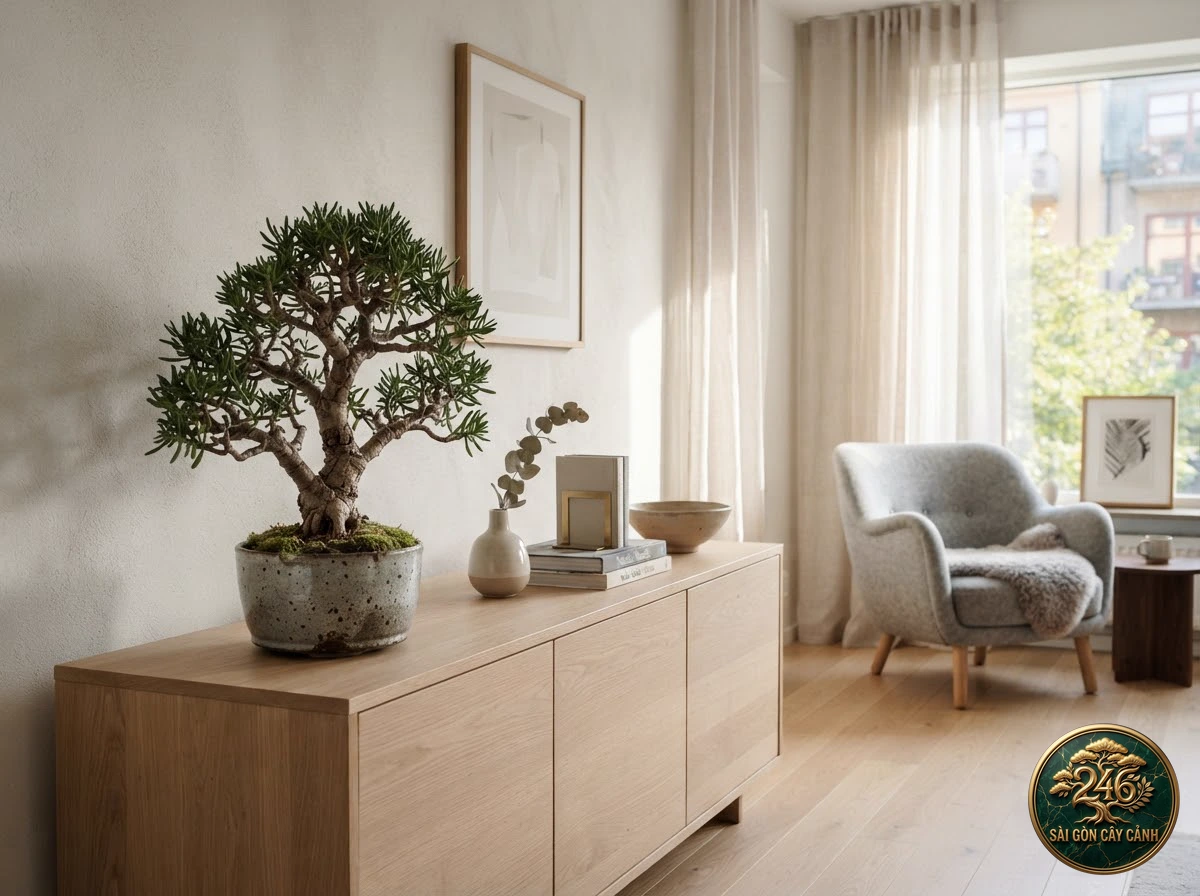
Evoking the serene, disciplined presence of a miniature pine grove within a classical East Asian ink-wash landscape, the miniature pine tree is an extraordinary asset in modern biophilic interior design. Its architectural verticality introduces calm contemplative energy, organic rhythm, and rustic elegance to contemporary residential and corporate environments.
Succulent Bonsai Styling: Owing to its natural propensity for trunk suberization and rapid ramification following pruning, the species responds magnificently to traditional bonsai shaping techniques. Cultivators can readily develop formal upright (Chokkan), slanting (Shakan), or multi-trunk clump forms. Deliberate removal of lower juvenile branchlets highlights the rugged, corky bark of the primary trunk, evoking the dignity of a centenarian alpine conifer.
Artisanal Planter Pairing: The rustic desert silhouette of the plant harmonizes effortlessly with porous unglazed terracotta, rough stoneware, or hand-thrown ceramic containers finished in earthy shades of charcoal slate, terracotta ochre, or matte sand. A top-dressing of crushed black lava basalt or rounded river pebbles stabilizes container ballast while creating striking chromatic contrast against the emerald needles above.
14. Brand Ambassador & Saigon Cay Canh Cultivation Philosophy
At Saigon Cay Canh, every specimen nurtured within our conservatory is treated not merely as a commercial decorative item, but as a living ambassador of global botanical biodiversity. Our team of passionate horticultural specialists dedicates countless hours to selecting superior genetic clones, acclimating them to equatorial tropical dynamics, and ensuring their long-term vitality in modern homes.

The portrait of our nursery specialist gently refining the foliage of a miniature pine tree with hands dusted in mineral pumice reflects our authentic dedication to living horticultural excellence. We believe that cultivating living greenery within urban dwellings is the ultimate restorative practice for the human spirit.
15. Frequently Asked Questions (FAQs)
What is the maximum achievable height for this succulent when grown in container pots?
Under domestic container cultivation in warm climates, specimens typically attain heights between 25 cm and 45 cm over several years. When mature, growers can selectively pinch apical tips to control vertical stature and promote lateral canopy branching, crafting a dense conifer-style silhouette.
Why do the lowest needle leaves turn yellow, dry out, and drop from the base?
Gradual drying and shedding of lowermost foliage is a completely normal physiological process associated with natural secondary stem suberization. As the green stem matures into a woody, cork-covered trunk, older leaves naturally senesce. As long as apical growth remains firm and bright green, the plant is in excellent health.
Can the miniature pine tree be combined with other succulents in mixed dish gardens?
Yes, provided all companion species share identical requirements for fast-draining mineral substrates and prolonged dry intervals between waterings. Its upright columnar silhouette creates splendid vertical contrast when paired with prostrate ground-hugging succulents such as Haworthia, Echeveria, or creeping Sedum cultivars.
How can I accelerate the woody bark transformation on young green stems?
To encourage robust suberization and cork development, ensure the plant receives 4 to 6 hours of direct morning sunlight daily and strictly allow the substrate to dry out between deep waterings. Natural environmental light flux and controlled moisture stress stimulate the phellogen (cork cambium) to produce mature bark textures.