
Living plant profile
Watch chain plant (Crassula muscosa)
Crassula muscosa
Comprehensive botanical monograph on the Watch chain plant (Crassula muscosa): geometric scale-leaf morphology, CAM physiology, mineral substrate, and asexual cutting propagation.
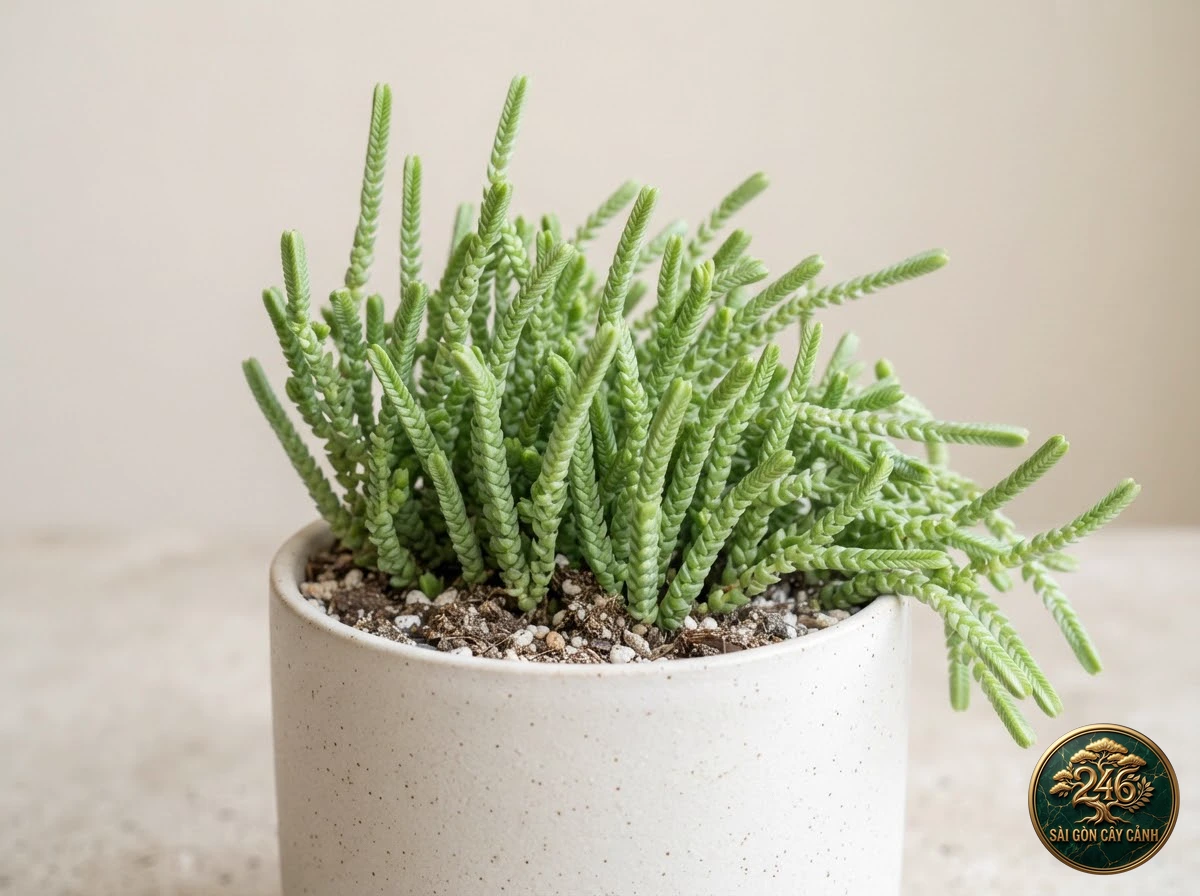
Watch Chain Plant (Crassula muscosa)
The Watch chain plant (botanical binomial: Crassula muscosa L., historical taxonomic synonym: Crassula lycopodioides Lam.) represents one of the most mesmerizing geometric anomalies in the succulent kingdom. Famously recognized across global horticulture as the watch chain crassula, zipper plant, or lizard’s tail, this extraordinary member of the stonecrop family (Crassulaceae) captivates collectors with its intricate, braided stems. Thousands of microscopic, triangular scale-like leaves clasp tightly around slender quadrangular branches in four vertical ranks, evoking the uncanny appearance of an artisanal jeweler’s braided cord or an ancient marine coral tapestry.
Native to the rocky quartz flats and arid scrublands of the Karoo desert spanning South Africa and southern Namibia, the species has evolved a masterclass in xerophytic survival. By compressing its leaves into minute scales and eliminating broad foliar lamina, the plant radically minimizes transpirational surface area while shielding its tender vascular core from searing desert winds. Forming dense, multi-branched spreading tufts 15 to 30 cm in height, this sculptural perennial provides a rustic, minimalist aesthetic that bridges wild desert ecology and contemporary biophilic interior architecture.
Sài Gòn Cây Cảnh Care Compass
1. Comprehensive Botanical Taxonomy & Key Specifications
To establish an authoritative baseline for botanists and professional interior landscapers, Saigon Cay Canh provides the verified morphological and ecological metrics below:
| Taxonomic Descriptor / Biological Parameter | Empirical Botanical Metric & Cultural Value |
|---|---|
| Accepted Botanical Binomial | Crassula muscosa L. (Mantissa Plantarum 1: 60, 1767) |
| Historical Basionym / Taxonomic Synonyms | Crassula lycopodioides Lam., Crassula pseudolycopodioides Dinter |
| Standard International Common Names | Watch chain plant, Lizard’s tail, Zipper plant, Rattail crassula |
| Taxonomic Rank (Family / Subfamily) | Crassulaceae (Stonecrop family) / Subfamily Crassuloideae |
| Native Geographical Provenance | South Africa (Western, Eastern, and Northern Cape provinces) and Namibia |
| Growth Habit & Stature | Multi-branched succulent shrublet, spreading decumbent to erect, 15-30 cm |
| Foliar Phyllotaxy & Morphology | Minute triangular scale leaves (1-2 mm) tightly imbricate in 4 square ranks |
| Photosynthetic Flux Density Need | Bright filtered daylight or gentle early morning direct sun (3,500 – 6,500 lux) |
| Veterinary Companion Animal Safety | Certified non-toxic to domestic canines, felines, and birds (ASPCA certified) |
| Engineered Substrate Texture | 70% fine mineral pumice and volcanic grit + 30% sterile washed organic loam |
The taxon demonstrates notable plastic response to lighting and hydration regimens. In sunny outdoor rockeries, foliar ranks pack into dense, rigid emerald columns. Under shaded conservatory conditions, the internodes loosen slightly, presenting a softer, weeping habit ideal for cascading container accents.
2. Morphological Diagnostic Keys & Foliar Anatomy
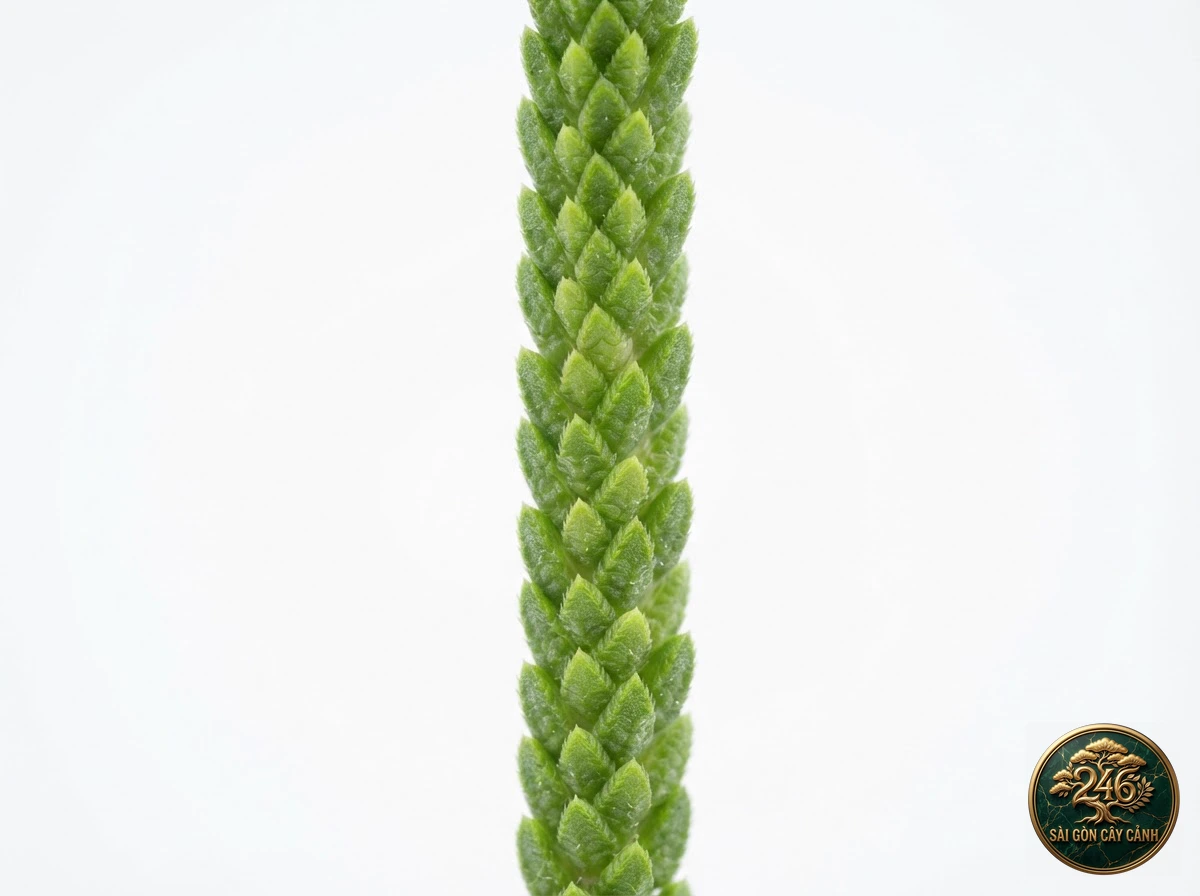
An anatomical dissection of this miniature stonecrop highlights an array of specialized morphological adaptations engineered to survive intense solar desiccation:
Scale Leaf Morphology: Departing entirely from the broad fleshy paddles seen in related genera, the leaves are reduced to minute, sessile, triangular scales measuring merely 1 mm to 2 mm in length and under 1 mm in width. These scale-like structures are arranged in strict decussate pairs that imbricate closely like terracotta roof shingles. This compact tiling generates four distinct vertical ridges running the entire length of the stem, bestowing upon each branch a perfectly tetragonal, four-sided square cross section.
Canopy Branching & Stem Architecture: The plant branches freely from its fibrous basal rootstock, creating dense tufted thickets resembling an intricate underwater coral grove. Each individual cane measures only 2 mm to 4 mm in overall thickness, encased within the tightly interlocking leaf armor. While juvenile stems creep decumbently across rocky crevices to root adventitiously, mature branches ascend vertically, supported by resilient internal vascular bundles capable of flexing in heavy desert gales without snapping.
Epidermal Wax & Cryptic Stomata: The foliar scales are coated with a subtle, protective epicuticular wax layer that scatters harsh ultraviolet wavelengths while preventing non-stomatal transpiration. Because the external surface area of each leaf is minute, total transpirational loss across the canopy is reduced to negligible amounts. Stomatal apertures are cryptically positioned along the shielded inner surfaces of the overlapping scales, completely insulated from dry desiccating air currents.
Solitary Axillary Inflorescence: During late spring and early summer, the plant flowers in a delightfully understated manner. Rather than elevating bold floral stalks, it produces solitary, sessile blossoms nestled directly within the axils of the scale leaves along the upper branch sections. Each flower is minuscule, measuring barely 1 mm to 2 mm across, composed of five yellowish-green petals. Despite their modest visual display, the flowers emit a distinctive, musky-sweet herbal fragrance that attracts desert flies and small beetles for cross-pollination.
3. Botanical Taxonomy & Nomenclatural History
The taxonomic history of this species reflects centuries of botanical fascination and nomenclatural revision. First published by Carl Linnaeus in 1767 within Mantissa Plantarum under the name Crassula muscosa, the specific epithet muscosa was chosen from the Latin adjective for “moss-like”, recording Linnaeus’s initial visual impression of these dense, creeping green tufts resembling luxuriant terrestrial mosses.
In 1786, French naturalist Jean-Baptiste Lamarck independently proposed the name Crassula lycopodioides, highlighting the startling morphological convergence between this succulent and primitive vascular clubmosses of the genus Lycopodium. Lamarck’s epithet gained vast popularity throughout 19th and 20th-century commercial nursery catalogs. However, under the strict rule of priority governed by the International Code of Nomenclature for algae, fungi, and plants (ICN), Linnaeus’s earlier designation Crassula muscosa stands as the accepted botanical name, with Lamarck’s name retained as a historical homotypic synonym.
Molecular phylogenetic analysis firmly anchors the taxon within Subfamily Crassuloideae. Evolutionary biologists consider the scale-leaf morphology of this species an advanced evolutionary reduction, allowing ancestral fleshy stonecrops to expand into wind-scoured, ultra-arid habitats where broad foliar blades would prove biologically unsustainable.
4. Native Ecology & Crassulacean Acid Metabolism (CAM)
The primary wild provenance of the watch chain plant encompasses the Succulent Karoo and Nama Karoo biomes, stretching across South Africa’s arid interior into the rocky badlands of southern Namibia. This biome is celebrated for its rich succulent biodiversity amidst extreme moisture scarcity, where annual precipitation ranges between 100 mm and 250 mm, delivered primarily as sporadic winter drizzle or sudden summer convective squalls.
Thriving in coarse quartz gravel flats, granite outcrops, and arid sandy river terraces, the plant endures baking daytime ground temperatures exceeding 40°C paired with crisp, cool nights. To conserve internal hydration, the species relies upon full Crassulacean Acid Metabolism (CAM). During arid daylight hours, the hidden stomata remain completely sealed, isolating internal vascular water from the scorching atmospheric vapor pressure deficit.
Under the cover of darkness, lower ambient temperatures trigger stomatal opening, allowing nighttime carbon dioxide uptake. The enzyme PEPC catalyzes the fixation of atmospheric CO2 into oxaloacetate, which is converted to malic acid and safely stored in the large vacuoles of the internal parenchyma cells. With the dawn of sunlight, stomata close, and stored malic acid is enzymatically decarboxylated to supply RuBisCO with internal carbon for sugar synthesis via the Calvin cycle. This nocturnal pathway optimizes water-use efficiency, allowing the plant to thrive indefinitely through prolonged droughts.
5. Photosynthetic Irradiance & Photoperiod Management
Luminous irradiance is the critical cultural driver governing the geometric precision of the foliar chains. The species thrives under bright filtered daylight or gentle early morning direct sunshine, with optimal photosynthetically active flux densities spanning 3,500 to 6,500 lux.
In urban residences, eastern or southeastern window exposures provide ideal conditions. These aspects deliver 3 to 5 hours of cool, invigorating morning rays that stimulate active photosynthetic chemistry without inducing solar thermal stress on the tender scale tissues.
Beware of unacclimated exposure to blistering midday sun or intense unshaded western glass. Excessive infrared radiation burns the slender stems, bleaching the emerald scales to a brittle straw-yellow and triggering widespread foliar dropping. Conversely, deep shade in dim rooms (below 2,000 lux) induces etiolation: stems stretch erratically, internodes widen, and the distinctive square zipper architecture dissolves into weak, floppy threads. In dark interiors, provide 8 to 10 hours of daily illumination via full-spectrum horticultural LED fixtures.
6. Hydraulic Dynamics & The Soak-and-Dry Protocol
Due to its fine, fibrous root system and slender aerial stems, this species requires a mindful hydraulic regimen. The overarching golden rule in cultivating this miniature stonecrop is: The substrate must be completely desiccated before the next application of water.
During active growth in warm seasons, irrigation is typically required every 7 to 10 days, depending on container porosity and ambient airflow. Before applying water, perform a manual moisture check: lift the container to assess lightweight dryness, or insert an unpainted wooden skewer to the bottom of the pot. If the skewer emerges completely clean and bone-dry, watering is appropriate.
The bottom-watering technique is exceptionally beneficial for the dense, clustering habit of this plant. Overhead watering frequently traps water droplets between the thousands of tightly packed scale leaves. In stagnant indoor air, this trapped moisture rapidly triggers fungal rot and stem blackening. By submerging the bottom third of the pot in a basin of tepid water for 10 to 15 minutes, moisture ascends via capillary suction to hydrate the roots thoroughly while keeping the aerial foliage entirely dry. Allow surplus water to drain fully before returning the pot to its saucer.
7. Granular Mineral Substrate Formulation & Aerobic Porosity
Wild plants root exclusively within fragmented quartz detritus and decomposed granitic grit, where surface rainwater rapidly percolates through open voids, leaving the root zone highly aerated. Replicating these rapid drainage kinetics is vital to prevent catastrophic root asphyxiation in container culture.
The specialized potting mix formulated by Saigon Cay Canh comprises 70% inorganic mineral aggregates (40% fine volcanic pumice sized 2-4 mm, 15% expanded perlite, and 15% crushed red scoria) blended with 30% sterile organic matter (20% triple-rinsed coco coir fiber and 10% sieved organic vermicompost).
The fine 2-4 mm mineral grade is ideally scaled for the delicate root hairs of this species, allowing roots to weave through the substrate without mechanical impediment. Furthermore, this granular texture provides continuous oxygen diffusion throughout the rhizosphere, entirely preventing the stagnant anaerobic conditions favored by pathogenic root-rot water molds. The optimal substrate pH ranges from 6.3 to 6.8, providing a mildly acidic to neutral environment that facilitates trace mineral assimilation.
8. Thermal Tolerances, Ambient Humidity & Airflow Dynamics
The watch chain plant prospers within a temperate thermal window between 16°C and 30°C, showing vigorous vegetative flushes during spring and autumn. During severe summer heat waves surpassing 35°C, the plant instinctively enters a protective semi-dormant state to conserve metabolic resources.
Regarding cold tolerance, the species is relatively frost-sensitive. Prolonged exposure to temperatures below 6°C risks freezing the aqueous cellular contents of the scale foliage, resulting in rapid necrotic collapse. Specimens must be sheltered in bright, warm interiors during cold winter episodes.
Ambient relative humidity is best maintained within a dry to moderate bracket of 35% to 60%. Excessively muggy, stagnant atmospheres encourage fungal leaf drop and powdery mildew. Continuous air circulation is essential: buoyant natural air movement dries residual moisture from stem axils, prevents localized foliar overheating, and delivers a fresh supply of ambient carbon dioxide for nocturnal CAM uptake.
9. Clinical Diagnostics & Plant Pathology Matrix
To assist collectors in quickly identifying and remediating physiological stress factors, our botanical team provides this clinical diagnostic guide:
| Observable Clinical Symptom | Underlying Pathology & Etiology | Curative Horticultural Protocol |
|---|---|---|
| Basal stems turn blackened, soft, and wet; upper branches collapse and shed leaves | Prolonged substrate saturation causing root rot and systemic fungal vascular infection | Take tip cuttings from healthy green branch tops to salvage the clone; discard rotten roots and repot in fresh dry volcanic pumice medium |
| Branches grow abnormally long and spindly; scale leaves are widely spaced and irregular | Chronic light starvation causing etiolation and disruption of normal CAM carbon fixation | Prune back elongated canes to stimulate compact basal branching; gradually relocate pot to receive 3-4 hours of direct morning sun daily |
| Canes appear wrinkled, shriveled, and limp but show no black discoloration at the base | Severe root zone dehydration depleting internal water reserves stored within stem tissues | Administer a 15-minute bottom soak in room-temperature water; foliage will regain firm turgor and glossy emerald color within 24 to 48 hours |
| Fine, dusty spider webs appear across leaf axils; scale leaves become stippled and bleached | Spider mite (Tetranychidae) infestation proliferating in hot, dry, poorly ventilated air | Rinse stems gently with water spray; apply an emulsified cold-pressed organic neem oil spray during evening hours every two weeks |
Observing the density and firmness of the square foliar columns provides an infallible barometer of plant health. In a prime specimen, each branch stands firm and upright with vivid green coloration from base to apex.
10. Biological Pest Management & Sanitation
Thanks to its armor of overlapping scale leaves, the watch chain plant is remarkably resilient against larger chewing pests. Nevertheless, under dry, sheltered indoor settings with sluggish airflow, microscopic sap-sucking pests like citrus mealybugs (Pseudococcidae) can establish colonies.
Mealybugs conceal themselves deep within the dense branch clusters, piercing tender nodal junctions to extract phloem sap while secreting sticky honeydew that encourages black sooty mold. Because dense branches shield the pests from broad sprays, manual eradication using a cotton swab dipped in 70% isopropyl alcohol is the most effective intervention. The alcohol instantly dissolves the pest’s protective wax on contact without harming the succulent tissue.
For long-term biological defense, maintain vigorous ambient air circulation and practice clean sanitation by promptly clearing fallen dried twigs from the pot surface. A monthly evening misting with emulsified organic neem oil provides dependable prophylactic protection against both mites and scale insects.
11. Specialized Asexual Propagation Protocols

The watch chain plant is widely celebrated as one of the easiest succulents to propagate asexually. Possessing high meristematic cellular activity along its countless stem nodes, the species produces adventitious roots with remarkable speed via stem cuttings or clump division.
Seasonal Timing: Propagate during mild spring or autumn seasons when ambient temperatures support steady cellular division and low transpirational stress.
Stem Cutting Procedure:
- Using clean bypass shears sanitized with 70% isopropyl alcohol, snip vigorous semi-hardwood stem tips measuring 5 cm to 8 cm in length.
- Lay the cuttings on clean paper towels in a shaded, ventilated room for 2 to 3 days to allow the cut surfaces to form a protective corky callus.
- Insert the callused base 1.5 cm to 2 cm deep into a pot filled with fine pumice or coarse mineral sand.
- Position the propagation container in warm, filtered daylight. Avoid deep watering; instead, apply light surface mists around the base every two days. Adventitious roots emerge readily within a few weeks.
Clump Division: Mature overgrown clumps can be gently unpotted, allowing you to divide the root mass by hand into smaller independent clusters with pre-existing roots. Pot each division directly into standard mineral mix, keep in diffuse shade for a week, and resume normal care.
12. Companion Animal Safety & ASPCA Certification
The botanical tissues contain no hazardous cardiac glycosides, neurotoxins, or caustic sap compounds. It is completely safe for casual contact and causes no dermatological irritation during routine grooming and repotting.
However, curious pets may be tempted by the swaying coral-like stems and take playful nibbles. Consuming substantial amounts of fibrous plant matter can cause minor mechanical stomach upset or brief regurgitation in domestic carnivores. Positioning containers on high shelves, desktop ledges, or wall brackets safeguards specimen symmetry while ensuring a pet-friendly home environment.
13. Biophilic Design & Modern Interior Landscaping
With its slender, square-braided stems evoking ancient sea coral or artisanal cordage, the watch chain plant introduces an intriguing textural dimension to biophilic interior design and modern botanical styling.
Artisanal Ceramic Pairing: The fine, braided texture of the plant pairs exquisitely with minimalist matte white ceramic planters, raw concrete pots, or unglazed stoneware in warm charcoal and sand tones. The rich emerald green of the canes stands out sharply against neutral, textured backdrops on executive desks, open shelving, and architectural niches.
Mixed Succulent Bowls & Hanging Accents: Displaying both an erect and trailing habit as branches lengthen, the species serves as a wonderful textural transition in mixed succulent bowl arrangements. It provides upright height alongside rosette-forming Echeveria, while mature trailing specimens look utterly charming when suspended in petite hanging planters.
14. Brand Ambassador & Saigon Cay Canh Cultivation Philosophy
At Saigon Cay Canh, plant cultivation is an art form rooted in profound respect for botanical science. Our specialists nurture every watch chain specimen with meticulous care, acclimating them to Southern Vietnam’s equatorial climate so that each living plant delivers long-lasting beauty and vitality to your living space.

The image of our nursery artisan gently grooming the braided canes with soil-dusted hands reflects our genuine commitment to botanical craftsmanship. We believe that bringing resilient, living green sculptures into urban homes nourishes the spirit and restores our connection to the natural world.
15. Frequently Asked Questions (FAQs)
Why are my watch chain stems flopping over instead of standing upright?
Flopping stems most frequently indicate insufficient natural light, causing the stems to stretch and weaken. Alternatively, prolonged underwatering can cause stems to lose turgor pressure. Inspect soil moisture and relocate the pot to receive 3 to 4 hours of gentle morning sun to restore upright stem vigor.
Should I regularly prune the stem tips of my watch chain plant?
Yes, regular tip pruning is highly encouraged. Pinching back overly long stems stimulates dormant buds along the branches, prompting vigorous lateral branching from the base that produces a denser, bushier canopy. The trimmed stem tips can be easily rooted into new pots.
Do the tiny flowers of this succulent have a noticeable scent?
The flowers emit a mild, herbal, musky-sweet aroma that attracts desert pollinators. The scent is subtle and only perceptible when smelling the flowers at close range, posing no annoyance in indoor living spaces.
How often should I fertilize the watch chain plant?
This species has very modest nutrient needs. Apply a diluted organic liquid fertilizer at one-quarter strength once monthly during spring and autumn. Avoid heavy chemical fertilizers, as salt build-up can easily scorch its delicate fibrous roots.