Living plant profile
Pies from heaven (Kalanchoe rhombopilosa)
Kalanchoe rhombopilosa
Comprehensive botanical monograph on Pies from heaven (Kalanchoe rhombopilosa): structural morphology, physiological adaptations, porous mineral substrate, and specialized cultivation guidelines.
Pies from heaven (Kalanchoe rhombopilosa)
Sài Gòn Cây Cảnh Care Compass
1. Botanical Introduction & Taxonomic Identity
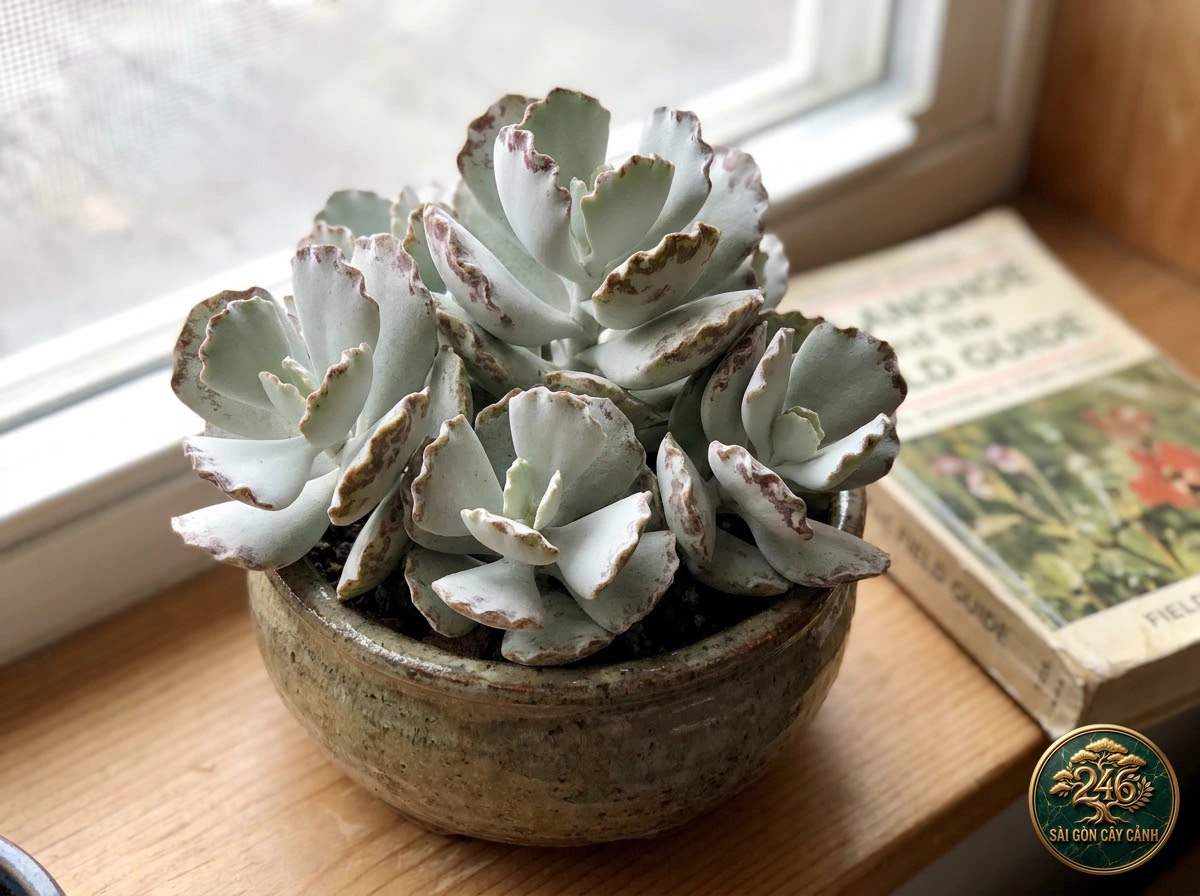
Kalanchoe rhombopilosa, poetically known among international botanical collectors as pies from heaven or the rhomboid kalanchoe, ranks among the rarest and most diminutive succulent treasures on Earth. Originating from the dry semi-arid scrub of Madagascar, this miniature marvel captivates observers with its modest stature and jewel-like perfection. Each small leaf displays a distinctive rhombic or fan-shaped contour with a gently undulating, lobed apical margin. The entire foliar surface glows with a silvery pearl-gray sheen, intricately speckled with irregular freckles of copper-brown, rust, or chocolate, creating a masterclass in evolutionary camouflage against desert gravel.
Kalanchoe rhombopilosa was formally described and published in 1947 by French botanists Mannoni and Boiteau within Notulae Systematicae (Paris), following botanical explorations across the parched limestone valleys of southernmost Madagascar. The specific epithet rhombopilosa combines two morphological descriptors: rhombo (rhomboid) and pilosa (clothed in fine hairs), capturing its miniature fan-like blades cloaked in silvery velvety pubescence. Universally nicknamed pies from heaven among succulent connoisseurs, this miniature treasure is passionately sought after for artisanal mame bonsai and desktop botanical collections.
2. Native Habitat & Geographical Distribution
The natural geographical distribution of Kalanchoe rhombopilosa is remarkably restricted, confined to arid limestone valleys and sandy dunes surrounding the coastal region of Itampolo in southwestern Madagascar. Belonging to the extreme spiny thicket biome, this habitat endures an unforgiving semi-desert climate with annual rainfall under 350 mm, parched quartz-limestone soils, and continuous desiccating coastal winds. Specimens thrive sheltered beneath the dappled canopy of spiny Alluaudia and Didierea scrub. To survive, the plant developed brittle semi-woody stems and an ingenious deciduous survival strategy: during severe drought or disturbance, its leaves detach at the slightest touch, with each shed leaf functioning as an autonomous propagule.
3. Detailed Morphological Characteristics
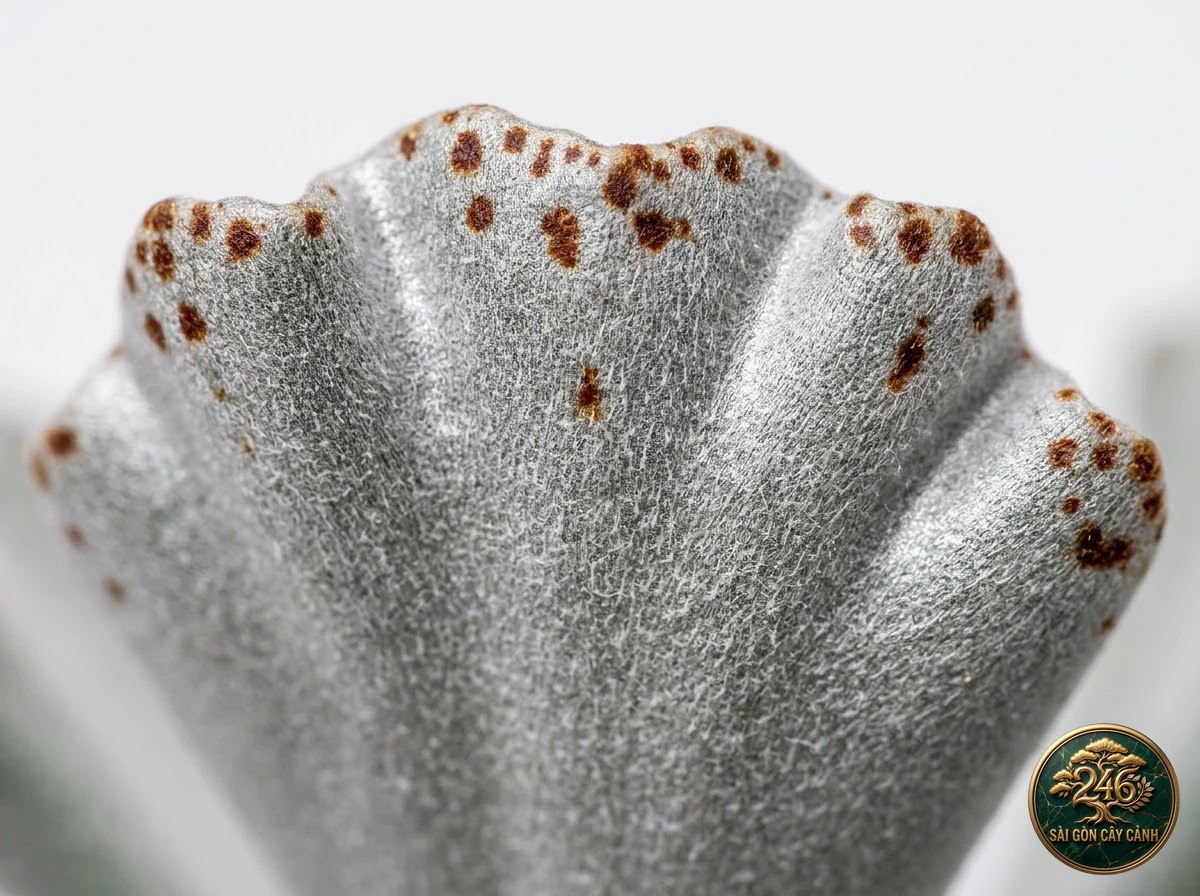
Detailed morphological inspection reveals Kalanchoe rhombopilosa as a true dwarf subshrub attaining a mature height of only 15 to 25 cm. The woody stems are intricately branched, slender yet rigid, covered in rough gray-brown bark. The miniature succulent foliage clusters densely toward branch tips, measuring a delicate 2 to 3.5 cm in length and 1.5 to 2.5 cm in width. The leaves are crisp, plump, and enveloped in a microscopic velvety tomentum that creates a soft tactile sheen. A brittle abscission zone at the petiole base makes leaves detach readily. Inflorescences consist of slender scapes 10 to 15 cm tall bearing tiny, four-petaled yellowish-green or salmon-blushed florets of subtle charm.
Microscopic examination of Kalanchoe rhombopilosa foliage reveals the exquisite precision of natural selection: the entire leaf epidermis is carpeted in microscopic peltate branched hairs that scatter high-energy solar radiation and trap a humid boundary micro-layer against the leaf. Crucially, the petiole base features a specialized cellular abscission zone composed of thin-walled cells designed to fracture cleanly upon physical contact; shed leaves remain completely intact without injuring the parent stem, equipped with pre-formed embryonic tissue ready to initiate rootlets on contact with moist substrate.
4. Core Botanical Matrix
Core taxonomic and cultivation parameters:
| Botanical Parameter | Observed Trait | Saigon Cay Canh Horticultural Recommendation |
|---|---|---|
| Scientific Name | Kalanchoe rhombopilosa Mannoni & Boiteau | Maintain certified taxonomic labeling across nursery stock |
| Plant Family | Stonecrop family (Crassulaceae) | Observe specialized succulent physiological requirements |
| Native Distribution | Hyper-arid spiny thicket valleys surrounding Itampolo, southwestern Madagascar | Replicate native climatic parameters in indoor cultivation |
| Illumination Intensity | 20,000 – 45,000 lux | Intense filtered sunlight or gentle early morning irradiation; shelter from scorching midday sun to preserve thin brittle leaves |
| Thermal Window | 18°C – 34°C | Protect against frost below 8°C and provide ventilation during heat |
| Relative Humidity | 30% – 50% | Sustain gentle atmospheric air movement to disperse stagnant moisture |
| Substrate pH | 6.2 – 7.2 | Utilize porous neutral mineral components for rapid drainage |
| Substrate Formulation | 50% fine pumice 1-3mm, 20% washed quartz grit, 15% micro perlite, 10% desalted coco coir, 5% refined vermicompost powder | Maintain coarse granular structure; avoid dense suffocating soils |
| Irrigation Strategy | Administer water cautiously via precision nozzle along pot perimeter; fragile leaves detach readily upon physical impact or prolonged wetness | Enforce thorough substrate dry-down between watering sessions |
| Propagation Pathways | Exceptionally prolific propagation via naturally shed leaves rested atop moist pumice, or careful detachment of branch offshoots | Perform during warm spring or early wet season for peak vigor |
| Veterinary Toxicology | TOXIC TO COMPANION ANIMALS (ASPCA Toxic) | Bufadienolide toxins throughout foliar cells represent an acute danger to feline and canine cardiovascular and digestional health. |
5. Toxicity Profile & Domestic Safety
Like all members of the Kalanchoe genus, Kalanchoe rhombopilosa accumulates toxic bufadienolide cardiac glycosides within its cellular sap. Despite the diminutive size of the foliage, the concentration of these cardiac toxins remains potent enough to induce acute poisoning in small household pets such as cats and dogs. Ingestion triggers severe oral discomfort, drooling, persistent vomiting, diarrhea, lethargy, and cardiovascular dysrhythmias. Because its fragile leaves detach effortlessly upon incidental contact, Saigon Cay Canh strongly advises plant custodians to keep containers upon high decorative display shelves or protected cabinet alcoves well beyond pet reach.
6. Lighting Dynamics & Photosynthetic Adaptations
This miniature silver-spotted succulent thrives under intense indirect light or gentle morning sun, flourishing under illumination levels between 20,000 and 45,000 lux. Ample light sharpens the contrast between the silvery metallic epidermis and the intricate chocolate-bronze speckles. However, because its leaves are thinner and more delicate than large paddle succulents, specimens should be sheltered from blazing midday tropical sunlight; extreme unshaded heat can scorch the epidermal tissue and trigger severe leaf drop. Positioning behind a 30% shade cloth or near an east-facing window provides perfect conditions.
7. Moisture Equilibrium & Irrigation Regimes
Irrigating Kalanchoe rhombopilosa demands refined care and precision. With delicate fibrous roots and moisture concentrated inside semi-woody stems, it is intolerant of prolonged substrate saturation. Water only when the potting mix has desiccated completely down to the bottom, roughly every 8 to 12 days during warm dry weather. Utilize a narrow-spout watering can to direct moisture gently around the pot perimeter; never apply high-pressure sprays as the physical force easily knocks fragile leaves off the stems. During humid monsoon spells, extend the interval to 15 to 22 days and verify drainage apertures remain clear.
8. Substrate Architecture & Nutrition Strategy
The specialized growing mix formulated for Kalanchoe rhombopilosa requires ultra-fine mineral porosity: 50% fine-grade volcanic pumice (1-3mm), 20% washed quartz sand grit, 15% micro-perlite, 10% desalinated coco coir, and 5% refined vermicompost powder. An inorganic mineral fraction approaching 85% ensures rapid moisture evacuation while providing continuous aerated pathways for delicate root hairs. Substrate pH should remain between 6.2 and 7.2. Given its slow growth rate, the plant requires negligible feeding; applying a few drops of heavily diluted organic liquid fertilizer once in early spring supplies ample nutrition.
Given the miniature stature and exceptionally slow vegetative pace of this semi-desert lithophyte, Kalanchoe rhombopilosa requires minimal nutrient inputs. Applying excessive chemical fertilizers or cultivating in overly fertile organic soils scorches its delicate root hairs and stimulates unnatural, leggy stem growth that dismantles its compact bonsai character. Custodians should supply nourishment solely via heavily diluted organic fish fertilizer or vermicompost tea at one-quarter standard strength applied twice annually during spring and autumn, ensuring healthy, balanced longevity.
9. Temperature Dynamics & Aeration Strategy
Optimal temperatures for Kalanchoe rhombopilosa range from 18°C to 34°C. The species possesses exceptional thermal tolerance but is highly sensitive to damp, stagnant conditions. An ambient relative humidity of 30% to 50% is best suited to its desert nature. In domestic urban settings, maintaining continuous air circulation via natural drafts or ventilation fans is crucial to avert heat stress and prevent fungal pathogen development. The plant cannot endure cold conditions below 10°C; keeping the potting medium bone-dry during cooler winter episodes prevents cold shock injury.
10. Specialized Propagation Protocols
Propagation of Kalanchoe rhombopilosa is remarkably facile and rewarding through vegetative leaf drop. Due to the natural abscission layer at the leaf base, any detached mature leaf simply laid flat atop barely moist pumice grit triggers adventitious growth; within 10 to 14 days, pink rootlets and tiny miniature plantlets emerge from the petiole scar without burying. Furthermore, pruning branch shoot tip cuttings, allowing cut surfaces to suberize for 3 days, and inserting into mineral sand achieves virtually 100% rooting success, allowing rapid expansion of this rare miniature collection.
11. Diagnostic Matrix & Preventative Health
Spontaneous foliar drop from waterlogged roots and subterranean root mealybugs represent the primary horticultural concerns for Kalanchoe rhombopilosa. If foliage detaches upon slight contact while the soil remains wet, overwatering has induced root suffocation; suspend irrigation immediately and place the container in a warm, breezy location receiving gentle morning sun. Upon sighting white cottony mealybug patches on branch junctures, delicately dab them with a toothpick moistened in 70% medicinal alcohol. Clear away shed leaves around the base to preserve airflow.
Clinical diagnostics and remedial actions:
| Observed Symptom | Primary Root Cause | Saigon Cay Canh Remedial Action |
|---|---|---|
| Lower leaves turn soft, thin, and wrinkled | Prolonged moisture deficit in the root medium | Provide a deep perimeter soak for Kalanchoe rhombopilosa; tissues recover within 48 hours |
| Black soft decay at the stem base with leaf drop | Anaerobic fungal root rot due to waterlogged substrate | Unpot immediately, excise necrotic pulp, treat with sulfur powder, and repot into bone-dry pumice |
| Elongated, weak internodes with pale drooping foliage | Chronic insufficiency of direct solar radiation | Relocate Kalanchoe rhombopilosa to receive unshaded morning sunlight for 4 to 6 hours daily |
| White cottony clusters nested in foliar axils | Foliar mealybug infestation (Pseudococcidae) | Apply 70% medicinal alcohol directly with a cotton bud to dissolve waxy insect cuticles without foliar damage |
12. Living Architecture & Interior Styling
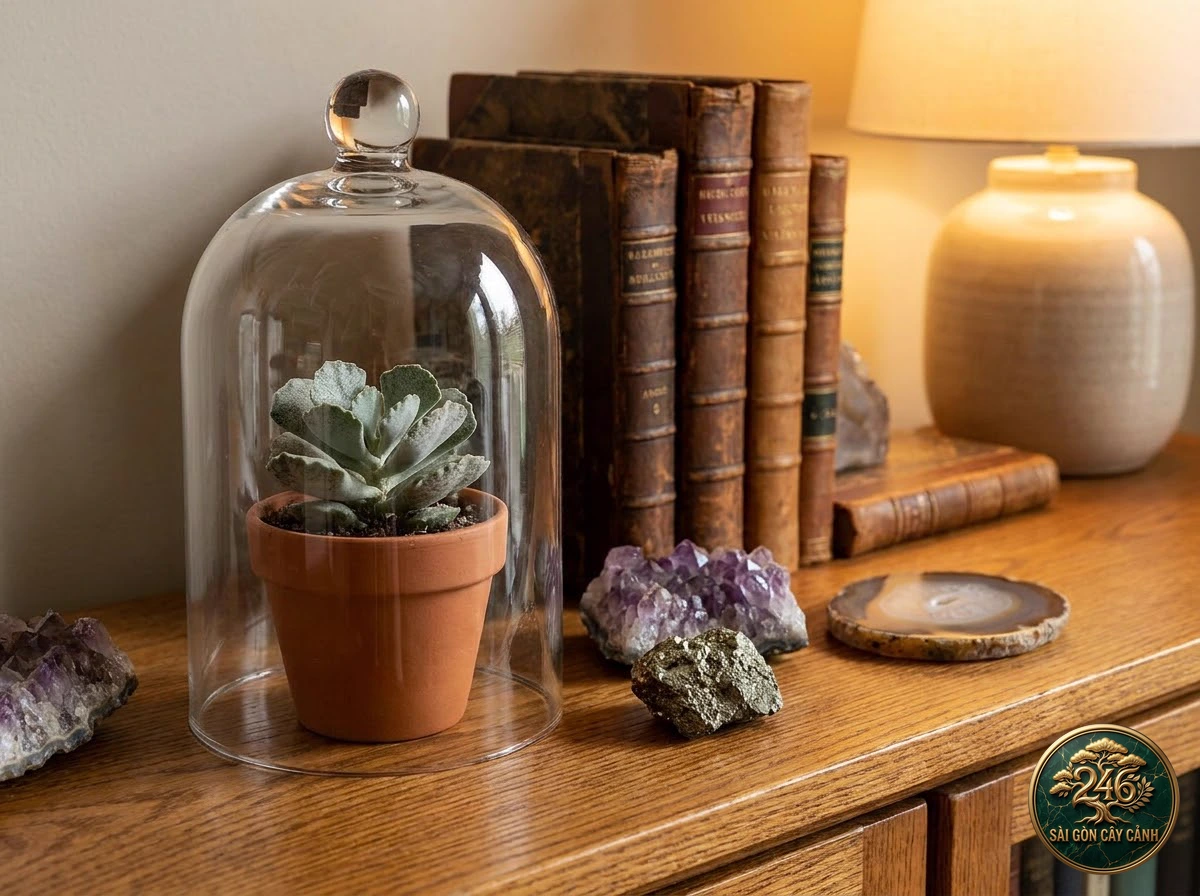
With its miniature proportions and intricately speckled rhomboid leaves, Kalanchoe rhombopilosa is uniquely suited for artisanal mame bonsai pots, miniature ceramic dishes, or open desert terrariums. It exudes understated elegance and tranquility when staged in handcrafted ash-glazed stoneware, hollowed river pebbles, or classic unglazed clay containers. Placed on a tea ceremony table, computer desk, or artistic bookshelf, this diminutive succulent infuses the environment with a peaceful, meditative atmosphere and enduring natural wonder.
Possessing delicate jewel-like perfection with its silver-copper speckled foliage, Kalanchoe rhombopilosa is uniquely suited for artisanal mame bonsai pottery, tea ceremony display trays, or open desert terrariums. It exudes understated poise and meditative calm when showcased in handcrafted ash-glazed stoneware, unglazed Yixing clay pots, or hollowed river stones. Positioned on an executive writing desk or artistic library shelf, this miniature succulent inspires a quiet, contemplative atmosphere and lasting appreciation for nature’s microscopic artistry.
Brand Ambassador & Living Herbarium Botanical Philosophy
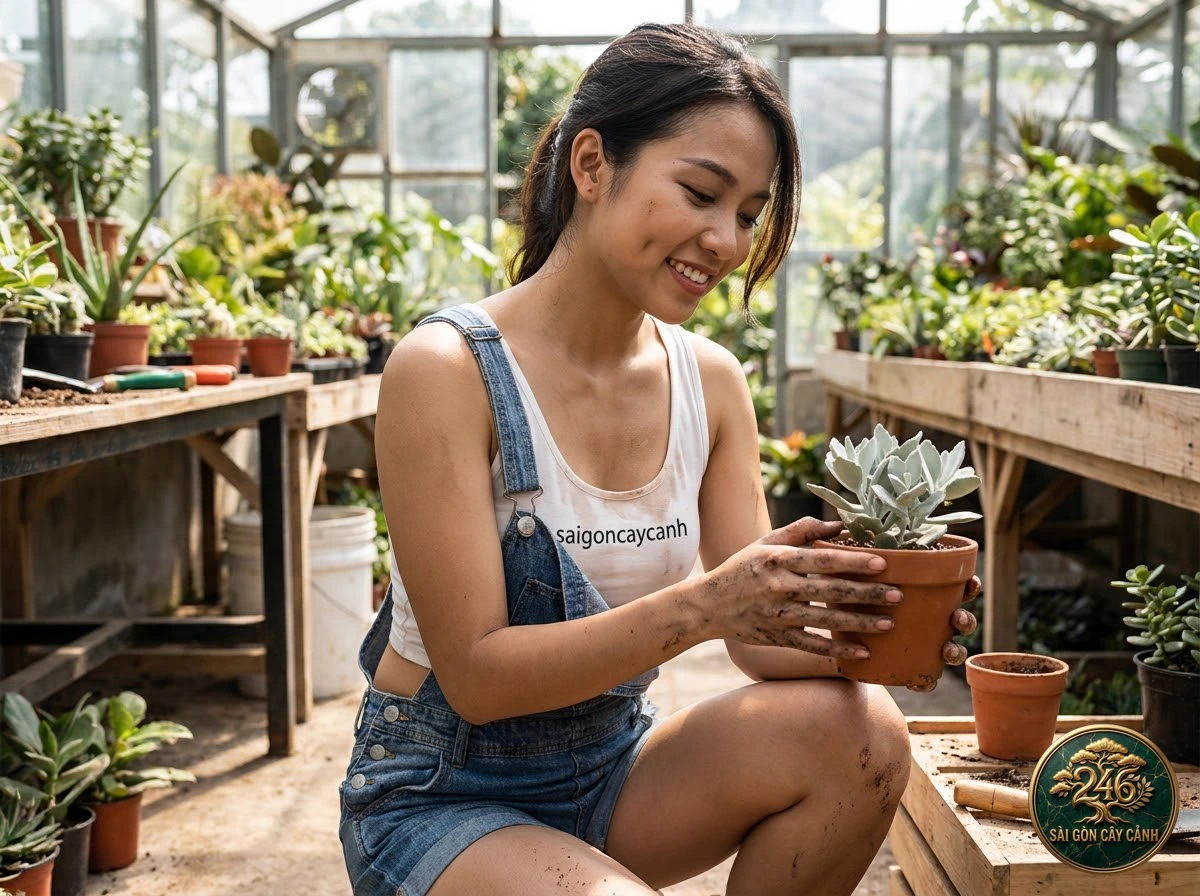
At Saigon Cay Canh botanical nursery, each specimen is curated and tended under the guidance of our brand ambassador, ensuring vibrant vitality and true-to-type morphology.
13. Horticultural Excellence & Living Heritage
Saigon Cay Canh cherishes every miniature shoot of Kalanchoe rhombopilosa and takes pride in providing botanical connoisseurs with perfectly hardened specimens displaying rigid branching and sharp copper mottling. We believe nature’s greatest wonders frequently dwell within the smallest and most humble forms. Saigon Cay Canh remains passionately committed to sharing meticulous botanical insights, empowering you to preserve and celebrate these precious living jewels within your personal sanctuary.