Living plant profile
Zebra haworthia (Haworthia fasciata)
Haworthia fasciata
Comprehensive botanical monograph on Zebra haworthia (Haworthia fasciata): structural morphology, physiological adaptations, porous mineral substrate, and specialized cultivation guidelines.
Zebra haworthia (Haworthia fasciata)
Sài Gòn Cây Cảnh Care Compass
1. Botanical Introduction & Taxonomic Identity
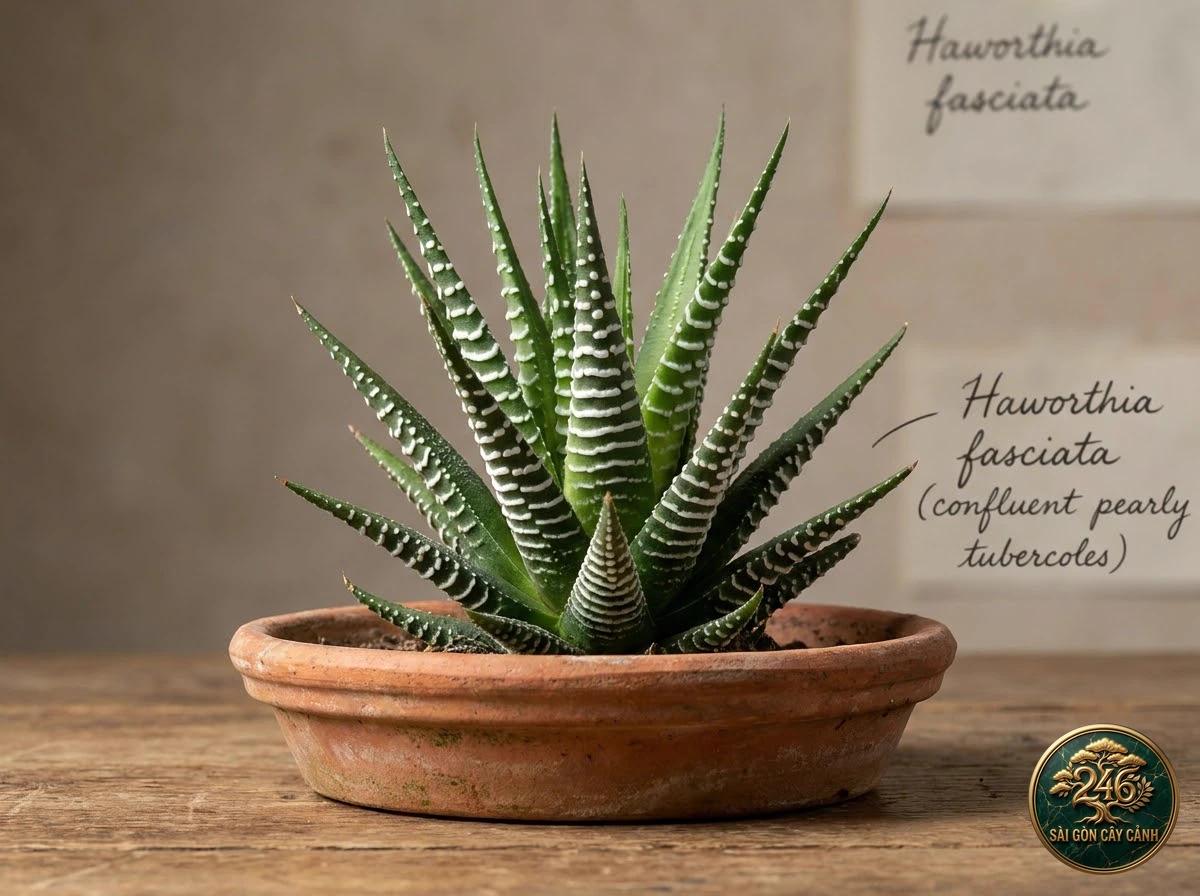
In contemporary interior botanical styling and desktop ornamentation, Haworthia fasciata, celebrated worldwide as the zebra haworthia or true zebra plant, stands as one of the most recognizable and beloved succulents on Earth. Belonging to the family Asphodelaceae, the plant arrests attention with rigid, triangular-lanceolate leaves that curve gracefully inward like the poised talons of a mythical dragon. The decisive botanical diagnostic marker distinguishing Haworthia fasciata resides in its surface anatomy: the inner (adaxial) leaf face is completely smooth, sleek, and devoid of tubercles, whereas the outer (abaxial) surface features prominent, raised white pearly tubercles connected in continuous, uninterrupted horizontal bands that evoke the dramatic striping of an African zebra.
Haworthia fasciata was originally documented in 1811 by German botanist Carl Ludwig Willdenow as Apicra fasciata, before being formally transferred to the newly erected genus Haworthia in 1812 by English botanist and entomologist Adrian Hardy Haworth in Synopsis Plantarum Succulentarum. The specific epithet fasciata is derived from Latin, meaning banded or striped, commemorating the raised pearly white horizontal bands running across the abaxial leaf surface. For over two centuries, Haworthia fasciata has reigned as an iconic collector’s succulent, celebrated for its disciplined geometry and the definitive contrast between its smooth adaxial face and sharply banded exterior.
2. Native Habitat & Geographical Distribution
The natural geographical range of Haworthia fasciata is surprisingly restricted, centered within the subtropical arid thicket biome extending from the Gamtoos valley around Hankey to Humansdorp in South Africa’s Eastern Cape Province, occurring at elevations between 50 and 600 meters. The species colonizes nutrient-poor quartz sands mixed with sedimentary gravel, typically thriving beneath the protective canopy of thorny thickets like Portulacaria afra and indigenous acacias. The dappled shade provided by surrounding nurse shrubs shelters this zebra haworthia from scorching summer solar rays, while its thick, fibrous root system penetrates deeply into rocky fissures in search of cool subterranean humidity.
3. Detailed Morphological Characteristics
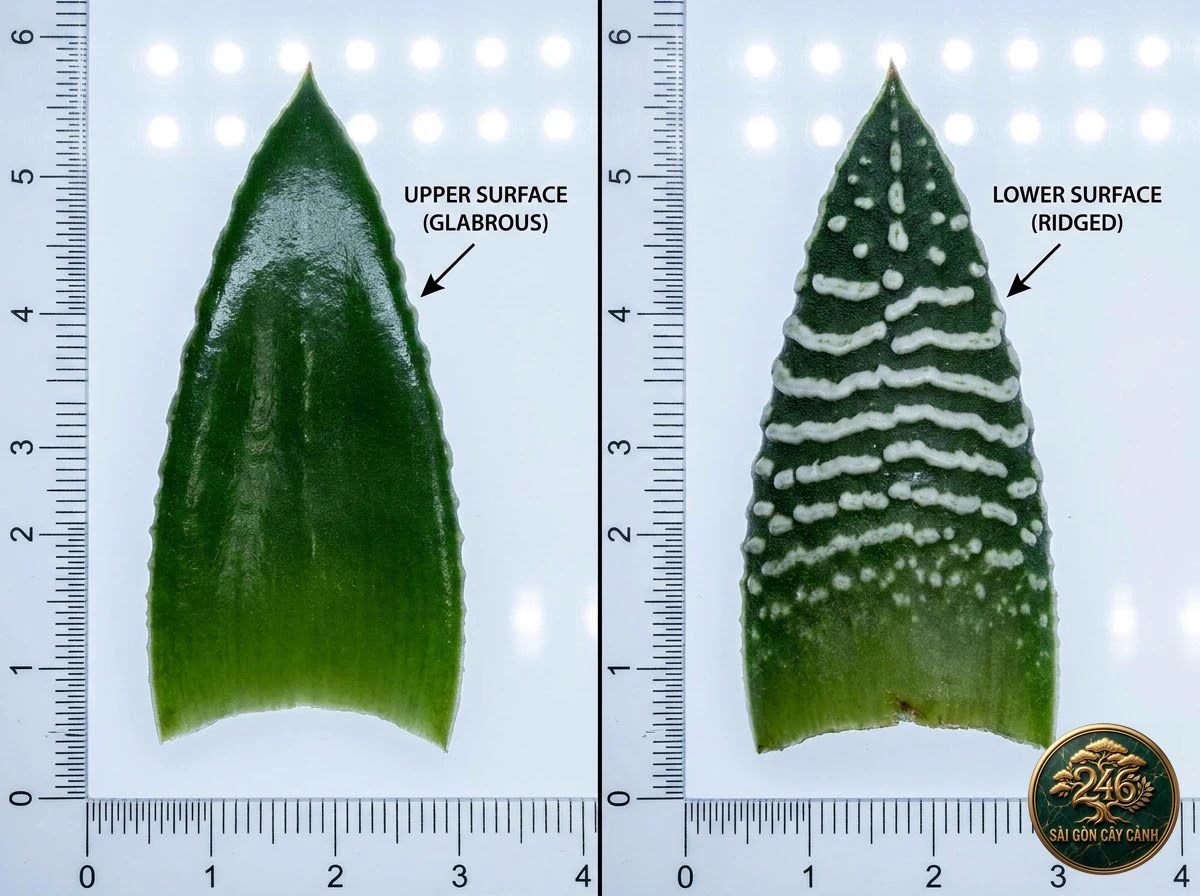
Anatomically, Haworthia fasciata produces an acaulescent, erect rosette measuring 8 to 15 cm in diameter that proliferates freely from the base to form dense clustering mounds. The rigid, triangular-lanceolate foliage spans 5 to 8 cm in length and 1 to 1.5 cm across the base, tapering to a sharp apical point. Leaf coloration is a deep forest green, blushing with rich bronze-purple undertones under bright sunlight. The prominent white horizontal bands on the exterior surface consist of suberized epidermal tubercles packed with mineral crystalloids that deter grazing insects. The root network features thick, tough fibrous strands adapted for rock crevice anchorage. An unbranched floral scape reaches 25 to 40 cm, bearing modest tubular cream-white florets with subtle green stripes in spring and summer.
Microscopic analysis of the epidermal cells in Haworthia fasciata illuminates the specialized cellular morphology of its white bands: each raised tubercle represents a cluster of hypertrophied, suberized epidermal cells packed with hardened silicate and calcium mineral crystalloids. This structural sclerification creates the prominent zebra striping while functioning as an impenetrable physical deterrent against sap-sucking pests. Furthermore, it aids in boundary layer heat dissipation and provides tactile abrasion resistance against surrounding rocky substrates in its native thickets.
4. Core Botanical Matrix
Core taxonomic and cultivation parameters:
| Botanical Parameter | Observed Trait | Saigon Cay Canh Horticultural Recommendation |
|---|---|---|
| Scientific Name | Haworthia fasciata (Willd.) Haw. | Maintain certified taxonomic labeling across nursery stock |
| Plant Family | Asphodel family (Asphodelaceae) | Observe specialized succulent physiological requirements |
| Native Distribution | Subtropical arid thickets ranging from Hankey to Humansdorp, Eastern Cape Province, South Africa | Replicate native climatic parameters in indoor cultivation |
| Illumination Intensity | 18,000 – 35,000 lux | Bright filtered sunlight or gentle morning illumination; avoid harsh midday sun which scorches foliar tips |
| Thermal Window | 16°C – 30°C | Protect against frost below 8°C and provide ventilation during heat |
| Relative Humidity | 40% – 60% | Sustain gentle atmospheric air movement to disperse stagnant moisture |
| Substrate pH | 6.0 – 6.8 | Utilize porous neutral mineral components for rapid drainage |
| Substrate Formulation | 40% coarse pumice, 20% red volcanic scoria, 15% perlite, 15% desalinated coco peat, 10% aged vermicompost | Maintain coarse granular structure; avoid dense suffocating soils |
| Irrigation Strategy | Irrigate thoroughly once the substrate dries out completely; highly drought-resilient but vulnerable to prolonged root wetness | Enforce thorough substrate dry-down between watering sessions |
| Propagation Pathways | Separation of prolific basal offsets, or rooting lateral divisions retaining a portion of root tissue | Perform during warm spring or early wet season for peak vigor |
| Veterinary Toxicology | NON-TOXIC TO PETS (ASPCA Non-Toxic) | COMPLETELY NON-TOXIC TO HOUSEHOLD PETS (ASPCA Non-Toxic); entirely safe around indoor cats and dogs. |
5. Toxicity Profile & Domestic Safety
Regarding pet safety, Haworthia fasciata is a premier, worry-free plant for animal-loving households. Formally verified by the ASPCA Animal Poison Control Center, this species is officially certified as completely NON-TOXIC to companion animals including dogs, cats, and horses. It is devoid of hazardous cardiac bufadienolides found in Kalanchoe species and possesses no chemical irritants that could cause oral mucosal burns. If an inquisitive cat or playful puppy bites into its rigid leaves, no poisoning or gastrointestinal distress will ensue, providing complete security and peace of mind to custodians sharing their homes with furry companions.
6. Lighting Dynamics & Photosynthetic Adaptations
The light requirements for Haworthia fasciata are moderately high yet refined, flourishing under bright indirect illumination or gentle morning sun with light levels ranging between 18,000 and 35,000 lux. Ample filtered light sustains deep emerald foliar tones and accentuates the striking contrast of its raised white bands. If subjected to unfiltered midday tropical sun, the tips scorch to a dull reddish-bronze while margins curl inward from localized thermal stress. Conversely, deep indoor shadows cause loose, leggy growth and pale leaves. Placing the container near an eastern or southern window softened by sheer curtains creates an optimal photic environment.
7. Moisture Equilibrium & Irrigation Regimes
Irrigation protocols for the zebra haworthia must strictly observe a complete dry-down regime between waterings. Thanks to rigid, cutinized foliage designed for supreme moisture retention, specimens comfortably endure weeks of drought without physiological decline. During warm dry seasons, apply a deep soak around the perimeter once every 8 to 12 days only after verifying that the potting medium has dried out completely. During prolonged monsoon rains or high atmospheric humidity above 80%, extend intervals to 15 to 20 days. Never pour water directly into the center of the rosette; trapped water in the tight leaf cluster quickly invites crown decay. Always hydrate in early morning.
8. Substrate Architecture & Nutrition Strategy
The potting medium for Haworthia fasciata requires high mineral porosity to allow deep fibrous root penetration: 40% coarse volcanic pumice (3-6mm), 20% crushed red scoria rich in trace elements, 15% expanded perlite, 15% thoroughly washed coco coir peat, and 10% biological worm castings. This structural substrate allows gravitational irrigation water to drain rapidly through open macropores, safeguarding roots against anaerobic rot. Substrate pH should remain between 6.0 and 6.8. An annual conservative application of balanced, low-nitrogen slow-release fertilizer pellets placed around the pot rim in early spring supplies steady nourishment to sustain rigid foliar architecture.
Nutritional management for Haworthia fasciata demands strict discipline and conservative feeding. Its thick fibrous root architecture penetrates deeply into coarse mineral grit but remains sensitive to fertilizer salinity. Excessive nitrogen application causes the rigid leaves to turn soft, lose their elegant inward curvature, and dulls the crisp white zebra bands. Cultivators should supply nutrients exclusively via modest top-dressings of biological aged vermicompost or a conservative sprinkle of low-nitrogen slow-release pellets applied in early spring, keeping the foliar structure rock-solid and rich dark green year-round.
9. Temperature Dynamics & Aeration Strategy
The optimal temperature envelope for Haworthia fasciata is 16°C to 30°C. The species adapts effortlessly to southern tropical environments and easily tolerates summer highs up to 35°C when positioned in shaded areas supported by continuous natural breezes. Cold temperatures below 8°C coupled with damp substrate represent its greatest hazard, provoking cellular rupture and fungal rot. Ambient relative humidity between 40% and 60% supports vigorous metabolic health. Continuous air movement around the container remains critical to prevent thermal stress and deter mealybugs from nesting in tight leaf crevices.
10. Specialized Propagation Protocols
Propagating Haworthia fasciata is exceptionally straightforward with near-perfect success rates via basal offset separation. When juvenile pups achieve a height of 3 to 5 cm and have developed their own independent root strands, gently unpot the clump during repotting, cleanly sever the offsets with sterilized shears, allow cut surfaces to callus in dry shade for 2 to 3 days, and plant into fresh, barely moist pumice potting mix. Within two to three weeks, the young divisions anchor securely and begin unfurling sturdy new leaf whorls.
11. Diagnostic Matrix & Preventative Health
Subterranean root mealybugs and anaerobic root rot caused by overwatering represent the primary cultural challenges for Haworthia fasciata. If the rosette feels loose in the pot or lower leaves turn soft and dark, unpot and inspect the root architecture immediately. Upon detecting white powdery mealybug colonies, wash the root system clean under water, spray with a diluted 70% medicinal alcohol solution to eradicate remaining pests, air-dry, and replant into fresh sterile substrate. Prune off any decayed or dead root fibers before repotting, and keep the plant completely dry for the first week to allow healing.
Clinical diagnostics and remedial actions:
| Observed Symptom | Primary Root Cause | Saigon Cay Canh Remedial Action |
|---|---|---|
| Lower leaves turn soft, thin, and wrinkled | Prolonged moisture deficit in the root medium | Provide a deep perimeter soak for Haworthia fasciata; tissues recover within 48 hours |
| Black soft decay at the stem base with leaf drop | Anaerobic fungal root rot due to waterlogged substrate | Unpot immediately, excise necrotic pulp, treat with sulfur powder, and repot into bone-dry pumice |
| Elongated, weak internodes with pale drooping foliage | Chronic insufficiency of direct solar radiation | Relocate Haworthia fasciata to receive unshaded morning sunlight for 4 to 6 hours daily |
| White cottony clusters nested in foliar axils | Foliar mealybug infestation (Pseudococcidae) | Apply 70% medicinal alcohol directly with a cotton bud to dissolve waxy insect cuticles without foliar damage |
12. Living Architecture & Interior Styling

Featuring an upright talon-like silhouette and impeccably disciplined white zebra striping, Haworthia fasciata serves as an ideal architectural green statement for executive desks, contemporary media consoles, study rooms, or minimalist reception counters. It projects an aura of resilience, stability, and understated elegance when framed by raw cement pots, natural river-stone planters, or matte black composite dishes. In traditional symbolism, the zebra haworthia embodies steadfast protection, warding off negative energies and welcoming positive, harmonious vitality into the home.
Featuring an upright talon-like silhouette and impeccably disciplined white zebra striping, Haworthia fasciata serves as an ideal architectural living statement for executive desks, contemporary media consoles, study rooms, or minimalist reception counters. It projects an aura of resilience, stability, and understated elegance when framed by raw cement pots, natural river-stone planters, or matte black composite dishes. In traditional cultural symbolism, the zebra haworthia embodies steadfast protection, warding off negative energies and welcoming positive, harmonious vitality into the home.
Brand Ambassador & Living Herbarium Botanical Philosophy
At Saigon Cay Canh botanical nursery, each specimen is curated and tended under the guidance of our brand ambassador, ensuring vibrant vitality and true-to-type morphology.

13. Horticultural Excellence & Living Heritage
At Saigon Cay Canh, we take pride in offering genetically authentic specimens of Haworthia fasciata displaying sharply defined white horizontal bands and vigorous, resilient root frameworks. Through meticulous artisanal care and specialized botanical hardening, we deliver flawless living creations that are completely pet-safe and built to endure. Saigon Cay Canh remains your trusted companion on the journey to cultivate refined, harmonious living spaces infused with enduring botanical vitality.