Living plant profile
Horse’s teeth haworthia (Haworthia truncata)
Haworthia truncata
Comprehensive botanical monograph on Horse’s teeth haworthia (Haworthia truncata): structural morphology, physiological adaptations, porous mineral substrate, and specialized cultivation guidelines.
Horse’s teeth haworthia (Haworthia truncata)
Sài Gòn Cây Cảnh Care Compass
1. Botanical Introduction & Taxonomic Identity
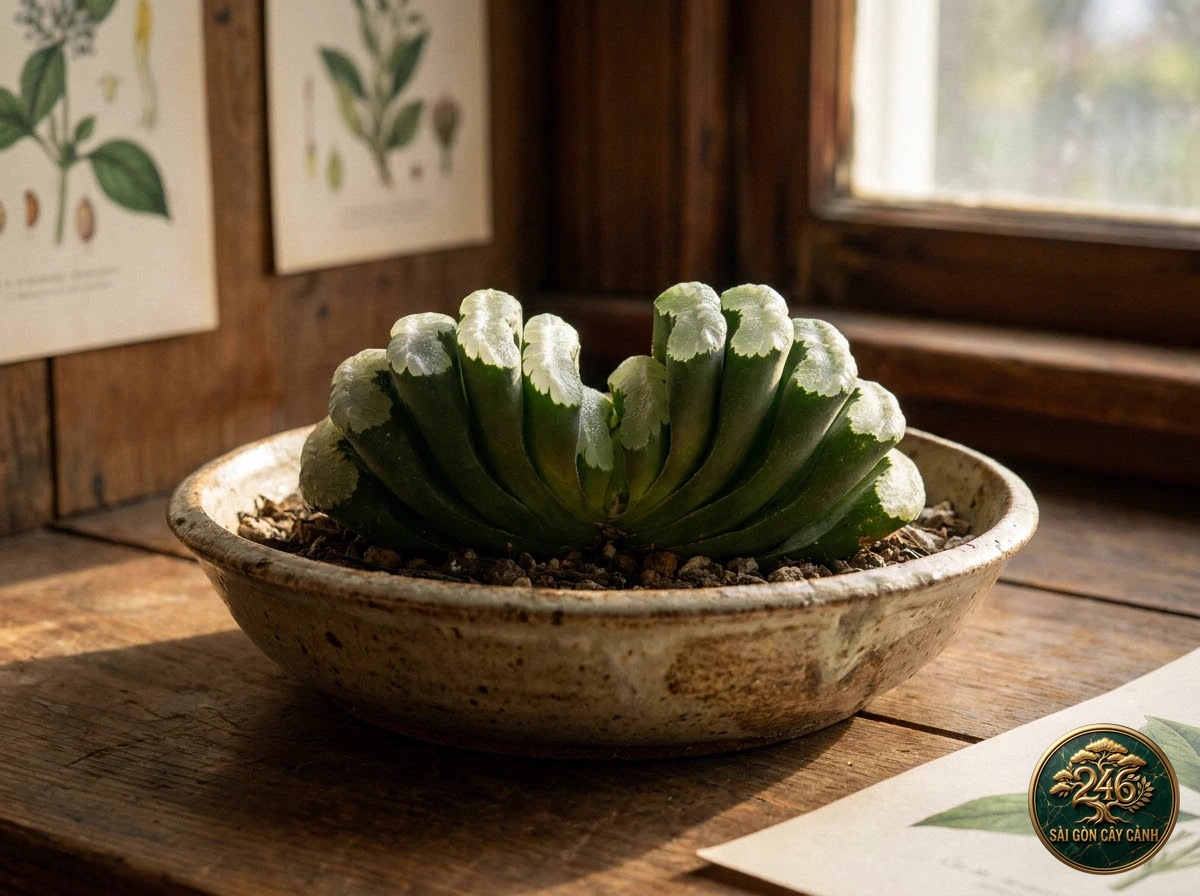
Haworthia truncata is widely revered as one of the most surreal and captivating evolutionary marvels within the succulent plant realm. The specific name truncata translates directly from botanical Latin as abruptly truncated or cut off, characterizing its unmistakable architectural habit: the thick, laterally compressed leaves do not terminate in points, but instead appear squarely sheared off at their apices as if sliced cleanly with an obsidian blade. Furthermore, instead of forming a conventional radial rosette, the foliage is strictly arranged in two opposing vertical ranks (a distichous phyllotaxy), remarkably resembling an alternating row of horse’s molars. The sheared cross-section at the leaf apex functions as a natural translucent skylight, funneling ambient sky irradiance down into subterranean photosynthetic parenchyma.
Haworthia truncata was discovered in the arid Little Karoo at the turn of the twentieth century and officially published in 1910 by the German-born South African botanist Selmar Schonland in the Transactions of the Royal Society of South Africa. The unveiling of a plant possessing strictly distichous leaves arranged like equine molars with sheared flat apices astonished the international botanical community, sparking enduring scientific debate regarding camouflage evolution and bio-optics in xerophytic organisms. For more than a century, Haworthia truncata has reigned as one of the most coveted botanical marvels within private and institutional collections worldwide.
2. Native Habitat & Geographical Distribution
In nature, Haworthia truncata is micro-endemic to the hyper-arid flats of the Little Karoo valley, concentrated around Oudtshoorn and De Rust in the Western Cape of South Africa. This harsh ecological zone features limestone-derived clay soils strewn with white quartz pebbles, enduring scorching summers exceeding 40°C and scant annual rainfall rarely exceeding 200 mm. Under these brutal conditions, truncata adopted an underground geophytic lifestyle: the entire plant body remains fully buried beneath the cool quartz pavement, with only the flat truncated window panes exposed flush with the terrain. Ambient quartz scree diffuses solar glare safely into the apical windows, facilitating subterranean photosynthesis while preventing hyperthermic tissue damage.
3. Detailed Morphological Characteristics
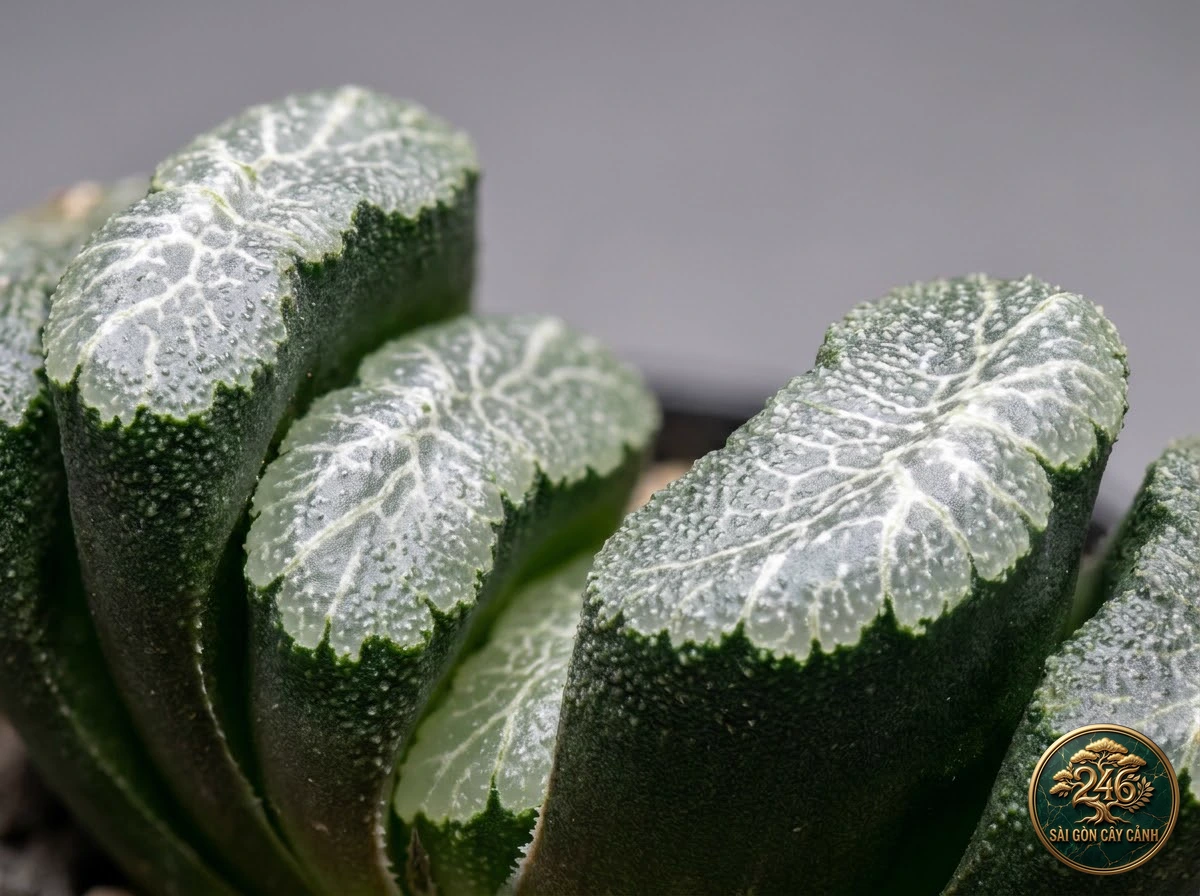
Structurally, Haworthia truncata forms a compact fan-like cluster of distichous leaves measuring 5 to 10 cm across, rising barely 1 to 2 cm above the ground line. Individual leaves are oblong and laterally compressed, 6 to 10 mm thick and 1.5 to 2.5 cm broad, possessing an opaque, dark charcoal or grey-green epidermis often flushed with purplish-brown hues. The terminal truncated facet is semi-circular or oblong, displaying a frosted, micro-papillate window through which ambient light enters. The root system consists of massive, swollen contractile taproots exerting intense physical pull during dry spells to maintain subterranean depth. Slender scapes 20 to 30 cm high bear delicate, tubular white flowers etched with muted brown mid-stripes, blooming in late spring to summer.
Anatomically, Haworthia truncata represents a masterclass in extreme environmental specialization: the leaf lamina has discarded conventional tapering geometry in favor of a subterranean storage cylinder crowned by a flat terminal cross-section. The apical window is composed of frosted, micro-papillate epidermal cells that act as a light-diffusing lens, dispersing overhead solar rays 360 degrees into the interior column and preventing photothermal chlorophyll degradation. Photosynthetic chlorenchyma lines the subterranean inner wall of the leaf, capturing light channeled downward from the sky. Massive contractile taproots act as hydraulic anchors, automatically pulling the crown below ground level when summer air temperatures exceed 40°C.
4. Core Botanical Matrix
Core taxonomic and cultivation parameters:
| Botanical Parameter | Observed Trait | Saigon Cay Canh Horticultural Recommendation |
|---|---|---|
| Scientific Name | Haworthia truncata Schonland | Maintain certified taxonomic labeling across nursery stock |
| Plant Family | Asphodel family (Asphodelaceae) | Observe specialized succulent physiology within Asphodelaceae |
| Native Distribution | Semi-arid quartz gravel flats and sandstone outcrops around Oudtshoorn in the Little Karoo, Western Cape, South Africa | Replicate native climatic parameters in indoor cultivation |
| Illumination Intensity | 18,000 – 30,000 lux | Bright filtered light or morning sun with light diffusion; sensitive to sudden transitions in irradiance |
| Thermal Window | 10°C – 28°C | Protect against cold below 8°C and provide active ventilation during heat |
| Relative Humidity | 35% – 55% | Sustain gentle atmospheric air movement to disperse stagnant moisture |
| Substrate pH | 6.2 – 7.0 | Utilize porous neutral mineral components for rapid drainage |
| Substrate Formulation | 60% fine-to-medium pumice, 20% hard Japanese akadama, 10% zeolite, 5% perlite, 5% clean organic matter | Maintain coarse granular structure; avoid dense suffocating soils |
| Irrigation Strategy | Strictly conservative watering; irrigate only when substrate is ninety-five percent dry; never allow moisture pooling | Enforce thorough substrate dry-down between watering sessions |
| Propagation Pathways | Division of slowly formed lateral root offsets or propagation from hand-pollinated certified seed strains | Perform during warm spring or early wet season for peak vigor |
| Veterinary Toxicology | NON-TOXIC TO COMPANION ANIMALS (ASPCA Non-Toxic) | ASPCA NON-TOXIC CONFIRMED; fully safe and inert in environments shared with dogs and cats. |
5. Toxicity Profile & Domestic Safety
Regarding pet safety, Haworthia truncata is verified as 100% NON-TOXIC by the ASPCA for households with dogs and cats. The foliage contains no biochemical poisons, no dangerous prickles, and no irritating sap. This complete safety profile combined with its unique sculpted profile makes it an exquisite living art piece for collectors, desktops, and refined residential interiors.
6. Lighting Dynamics & Photosynthetic Adaptations
Illumination for horse’s teeth haworthia demands calibrated moderation, performing best between 18,000 and 30,000 lux. Diffused brightness filtered through light curtains or sheer blinds is optimal. Direct unshaded tropical midday sun can scorch the epidermal window planes, causing the glass-like cells to turn opaque and dull brownish-black. An east or southeast-facing windowsill providing 3 to 5 hours of gentle morning light delivers ideal conditions for maintaining crisp foliar architecture.
7. Moisture Equilibrium & Irrigation Regimes
Watering protocols for Haworthia truncata require strict discipline: the plant is acutely vulnerable to prolonged dampness around the root neck. Only water when ninety to ninety-five percent of the medium is completely desiccated. During active spring and autumn cycles, provide a thorough soak every 7 to 10 days. During sweltering tropical summers when specimens enter dormant rest, curtail moisture to modest perimeter applications every 14 to 18 days at sunset, keeping the root tips alive without risking fungal taproot rot.
8. Substrate Architecture & Nutrition Strategy
The specialized growing medium for Haworthia truncata demands an ultra-high mineral ratio: 60% small-to-medium pumice (2-5mm), 20% hard Japanese akadama, 10% zeolite grit, 5% perlite, and a nominal 5% sterile organic matter. This structure ensures maximum porosity, allowing water to drain away instantly without lingering around the subterranean crown while offering solid mechanical purchase for thick contractile taproots.
9. Temperature Dynamics & Aeration Strategy
The ideal temperature range for Haworthia truncata spans 10°C to 28°C, sustaining deliberate and steady growth during temperate months. Ambient relative humidity between 35% and 55% preserves the dry integrity of the apical facets, preventing opportunistic fungal blight. Ensuring active air movement within indoor cultivation spaces serves as the single most effective cultural safeguard against pathogens.
10. Specialized Propagation Protocols
Propagating Haworthia truncata is an art form demanding patience from discerning horticulturists. The primary method involves dividing natural root offsets emerging from the base of long-established specimens; carefully excise offsets ensuring an independent root thread remains attached, dust with sulfur, and dry for 5 days before potting into sterile mineral grit. Propagation from hand-pollinated certified seed strains (such as broad-leaved ‘Giant’ or heavily windowed ‘Crassa’ lines) yields exceptional variations, though germination is deliberate and seedlings require 3 to 5 years to express their iconic distichous molar form.
11. Diagnostic Matrix & Preventative Health
Owing to its subterranean habit and slow metabolism, Haworthia truncata is acutely vulnerable to oomycete water molds including Pythium and Phytophthora when potting soil remains damp during high heat. Early symptoms manifest as loss of window turgidity, accompanied by sunken, dull greyish foliar discoloration. If detected, unpot the specimen immediately, excise damaged tissues down to clean white parenchyma, immerse in systemic fungicide, and dry unpotted in airy shade for two full weeks before replanting into dry pumice. Never saturate the container during summer dormancy.
Clinical diagnostics and remedial actions:
| Observed Symptom | Primary Root Cause | Saigon Cay Canh Remedial Action |
|---|---|---|
| Truncated horse-tooth facets retract deeply beneath the substrate and wrinkle | Contractile taproots pulling the crown down to escape ambient heat amidst water deficits | Place container in a shallow water dish for ten minutes at twilight to encourage capillary uptake |
| Subterranean crown turns soft and foul-smelling, causing distichous leaves to detach | Pythium water mold thriving in dense moisture-retentive soil under hot stagnant conditions | Excise necrotic tissue, immerse in systemic fungicide for ten minutes, dry unpotted for ten days, then reroot |
| Translucent sheared window facets turn cloudy, opaque, and sun-scalded brown | Unfiltered direct summer sun overheating the delicate apical optical window cells | Shift plant behind a sheer curtain to diffuse solar irradiance and shield the light-harvesting lenses |
| Microscopic spider mites spinning fine webs and producing stippled yellow specks on leaf planes | Tetranychid mites proliferating in excessively hot, dry, poorly circulating indoor air | Mist foliage gently with pure water at sunrise and wipe the flat surfaces clean with moist tissue |
12. Living Architecture & Interior Styling
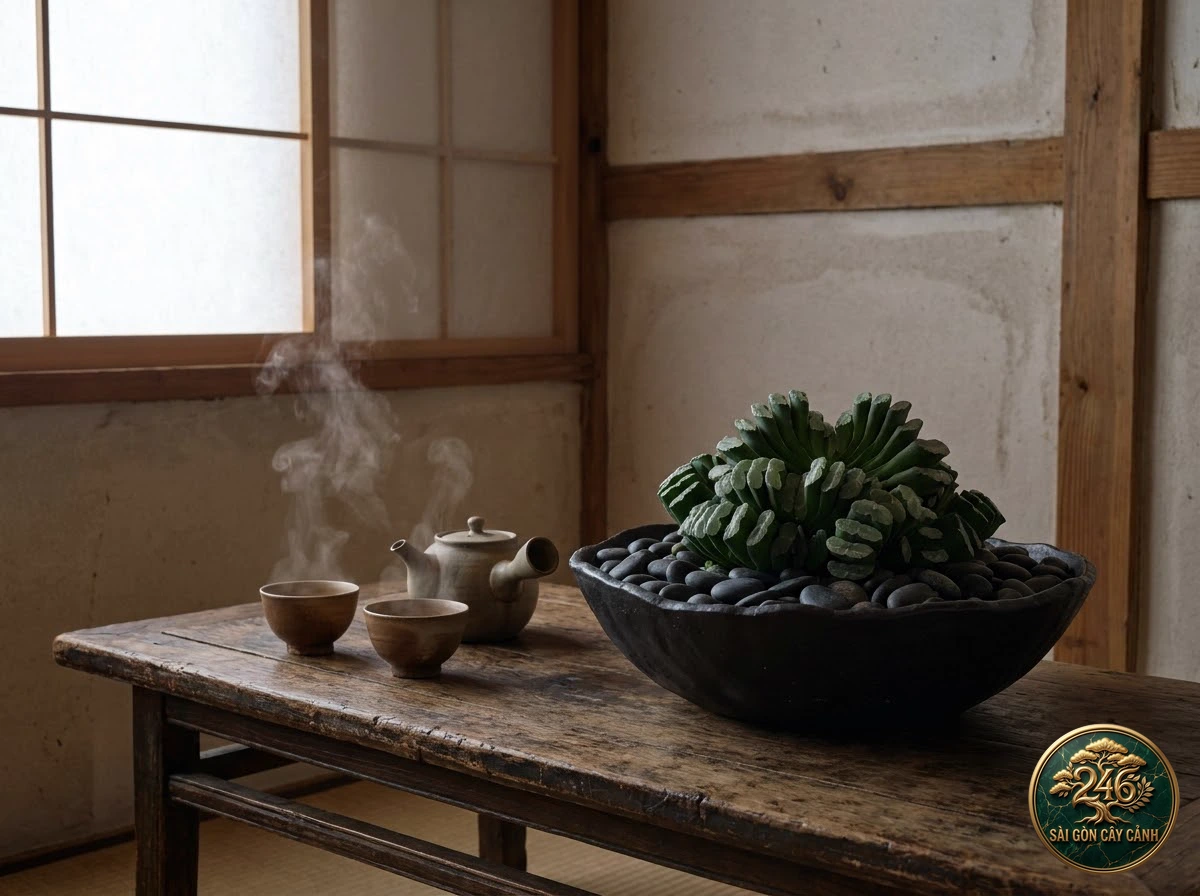
In elite botanical collections, Haworthia truncata holds court alongside prestigious peers including Haworthia maughanii, Haworthia bayeri, and choice Lithops cultivars. The juxtaposition between the linear distichous ranks of truncata and the stout cylindrical pillars of maughanii generates a mesmerizing geometric dialogue. Dressing the planter with natural white quartz pebbles faithfully mirrors its native Little Karoo habitat while magnifying its structural charisma.
Haworthia truncata stands as a supreme masterpiece of living abstract sculpture. Its surreal architecture makes it an irresistible conversation piece within high-end architectural spaces. It achieves ultimate elevation when potted as a solitary focal treasure in Japanese artisan ceramics (such as unglazed Bizen, Tokoname, or Shigaraki ware), matte black terracotta, or hollowed natural basalt stones. It embodies profound stillness, disciplined endurance, and discerning aesthetic taste.
Nursery Care Journal & Living Greenery Moments
At Saigon Cay Canh greenhouse, each photograph captures genuine everyday care moments between plant lovers and living greenery, spreading a passion for nature and green-living inspiration.

13. Frequently Asked Questions & Botanical Summary
Frequently Asked Question: Why are the truncated leaf tips of my horse’s teeth haworthia retracting deeply below the soil and shriveling?
Expert Diagnosis from Saigon Cay Canh: Foliar retraction below the substrate line paired with window wrinkling represents the natural mechanical response of its contractile taproots during heatwaves or water deficits. The plant intentionally pulls itself deeper into the earth to escape thermal solar radiation. As temperate autumn weather arrives, providing calibrated perimeter waterings will prompt root cells to rehydrate, lifting the plumped molar tips back flush with the gravel surface.
Horse’s teeth haworthia Haworthia truncata represents a surreal pinnacle of subterranean evolution, immortalized as a living abstract sculpture within the botanical monographs of Saigon Cay Canh.