Living plant profile
Emely’s haworthia (Haworthia emelyae)
Haworthia emelyae
Comprehensive botanical monograph on Emely’s haworthia (Haworthia emelyae): structural morphology, physiological adaptations, porous mineral substrate, and specialized cultivation guidelines.
Emely’s haworthia (Haworthia emelyae)
Sài Gòn Cây Cảnh Care Compass
1. Botanical Introduction & Taxonomic Identity
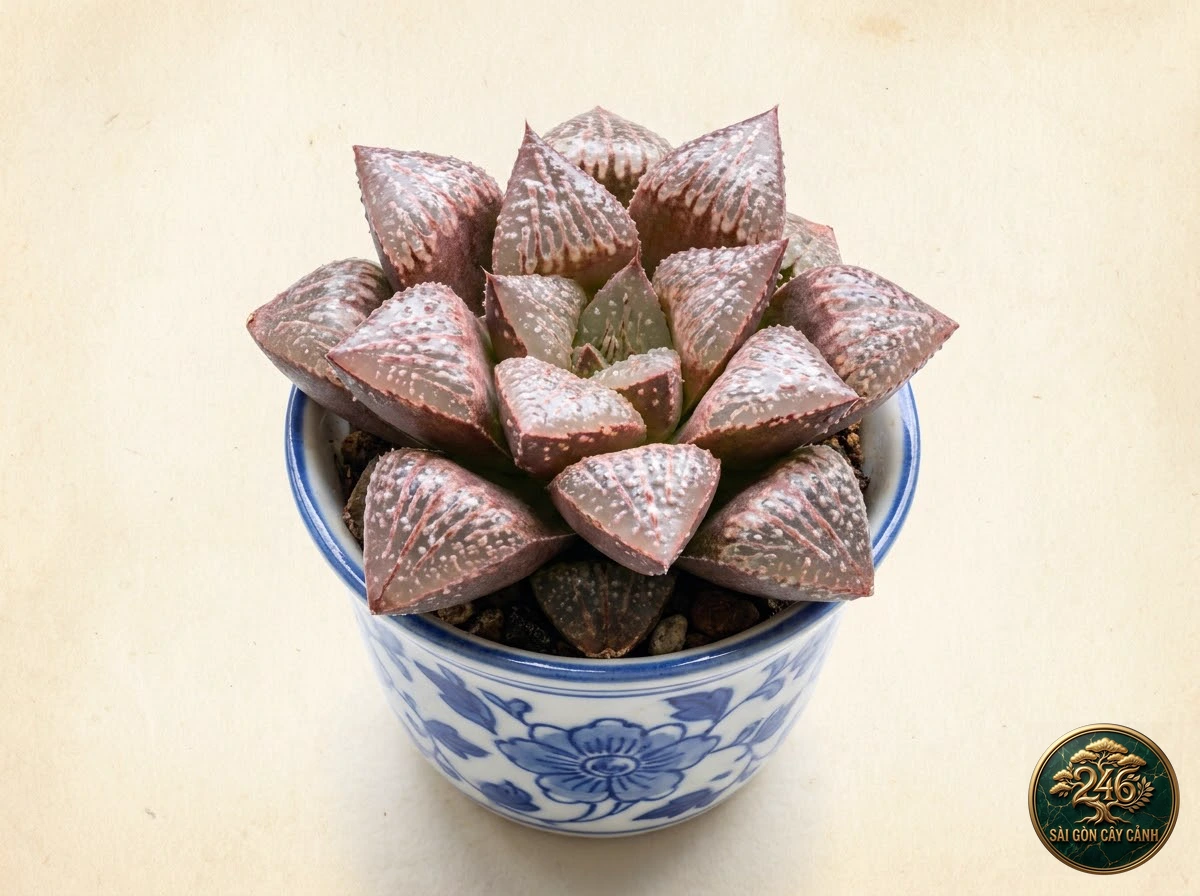
Among the retuse windowed haworthias, Haworthia emelyae is universally celebrated as the queen of marbled succulents due to its exquisite pastel pigmentation and refined aristocratic beauty. The specific epithet honors Mrs. Emily Ferguson, an enthusiastic South African botanical explorer who gathered plant specimens during the early twentieth century. Distinct from the straightforward green of retusa or the deep inky charcoal of bayeri, Haworthia emelyae boasts flattened triangular leaf facets adorned with microscopic crystalline tubercles, intertwined with delicate streaks of blush-pink, coral, and purplish-bronze over a celadon jade base. When cultivated under optimal light, the entire rosette glistens like an intricate miniature sculpture carved from antique marble.
Haworthia emelyae was formally described and published in 1937 by German botanist Karl von Poellnitz in Feddes Repertorium Specierum Novarum Regni Vegetabilis, honoring Mrs. Emily Ferguson who collected original botanical type specimens around Riversdale, South Africa. In the course of modern taxonomic revisions, the species underwent exhaustive field evaluations by Martin Bruce Bayer, clarifying renowned varieties such as var. comptoniana (celebrated for sprawling reticulate marble patterns) and var. major (distinguished by dense white crystalline spines). Its singular marbled beauty has positioned emelyae as a prized progenitor in Japanese and European cultivar breeding programs. Field expeditions throughout the Gourits River basin documented that Haworthia emelyae populations endure natural savannah fires by retracting subterranean crowns beneath quartz scree, regenerating vibrant foliage immediately following the onset of seasonal rainfall.
2. Native Habitat & Geographical Distribution
The natural distribution of Haworthia emelyae encompasses low limestone ridges, weathered quartzite gravel terraces, and shale bluffs around Riversdale, Albertinia, and the lower Gourits River basin in the southern Western Cape, South Africa. This microregion experiences a semi-arid coastal climate tempered by maritime mists rolling inland from the Indian Ocean. In habitat, specimens nestle into rock crevices or shelter beneath low spiny shrubs to escape harsh midday irradiation. Its dappled rose and jade patterning blends seamlessly into the surrounding quartz gravel, providing masterclass botanical camouflage against grazing herbivores and sharp-eyed desert birds.
3. Detailed Morphological Characteristics
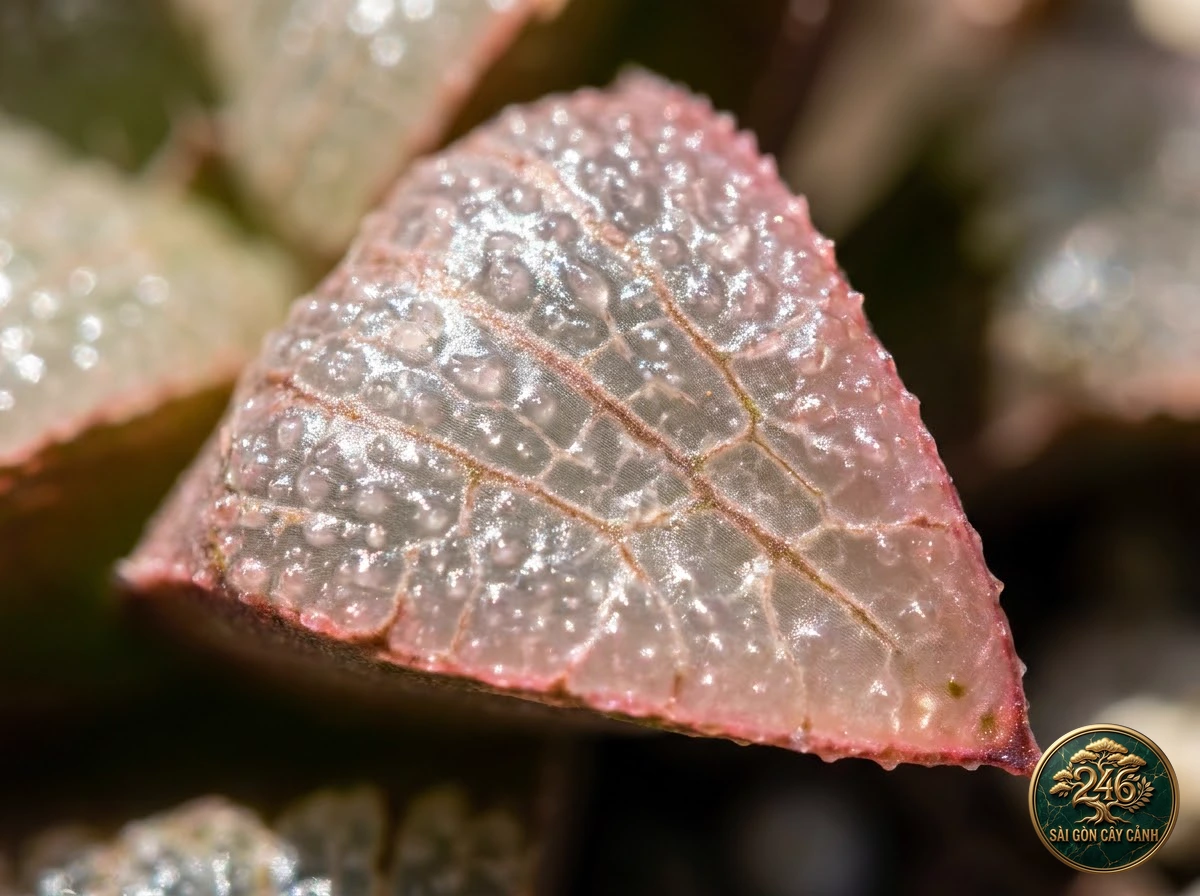
Anatomically, Haworthia emelyae forms a flattened, ground-hugging rosette measuring 6 to 10 cm in diameter, consisting of 15 to 25 succulent leaves arranged in a tight spiral. Individual leaves span 3 to 5 cm in length, terminating in slightly recurved triangular facets 1.5 to 2.5 cm across. The windowed plane is studded with myriad tiny, translucent tubercles providing a finely frosted texture. Subcutaneous longitudinal veins of coral-pink and chocolate traverse the window, yielding mesmerizing three-dimensional optical depth. The subterranean anatomy features thick contractile taproots for seasonal anchorage and moisture storage. Erect floral scapes 20 to 30 cm tall display dainty white florets adorned with pale brown keels.
Microscopic foliar analysis reveals an intricate anthocyanin pigment network within Haworthia emelyae: its apical facets are studded with thousands of translucent micropapillae that break harsh direct sunlight into gentle diffused rays. Beneath this textured window glass, vacuoles accumulate rich rosy-purple anthocyanin pigments interwoven with emerald chlorenchyma veins. When stimulated by optimal illumination and healthy diurnal temperature fluctuations (8°C to 10°C differentials), anthocyanin synthesis intensifies, adorning the triangular facets with breathtaking marbled pink patterns while shielding cells against photo-oxidative stress. The crystalline tubercles across Haworthia emelyae leaf facets are elevated pyramidal epidermal cells functioning as microscopic light-trapping lenses that harvest diffused ambient illumination from rock crevices. The interplay between marbled blush-pink anthocyanins and deep emerald veins not only creates stunning visual elegance, but also acts as an optical thermoregulatory filter, reflecting excess infrared wavelengths and keeping internal parenchyma significantly cooler than ambient desert rock faces.
4. Core Botanical Matrix
Core taxonomic and cultivation parameters:
| Botanical Parameter | Observed Trait | Saigon Cay Canh Horticultural Recommendation |
|---|---|---|
| Scientific Name | Haworthia emelyae Poelln. | Maintain certified taxonomic labeling across nursery stock |
| Plant Family | Asphodel family (Asphodelaceae) | Observe specialized succulent physiology within Asphodelaceae |
| Native Distribution | Quartzite hillslopes and shale ledges around Riversdale, Albertinia, and the Gourits River valley, Western Cape, South Africa | Replicate native climatic parameters in indoor cultivation |
| Illumination Intensity | 16,000 – 30,000 lux | Bright diffused illumination or filtered morning sun; proper light induces rich marbled rose pigmentation |
| Thermal Window | 12°C – 28°C | Protect against cold below 8°C and provide active ventilation during heat |
| Relative Humidity | 45% – 65% | Sustain gentle atmospheric air movement to disperse stagnant moisture |
| Substrate pH | 6.2 – 7.0 | Utilize porous neutral mineral components for rapid drainage |
| Substrate Formulation | 50% fine pumice (2-4mm), 20% hard akadama, 15% zeolite grit, 10% perlite, 5% mature worm humus | Maintain coarse granular structure; avoid dense suffocating soils |
| Irrigation Strategy | Soak when medium dries eighty-five percent; reduce moisture during midsummer heat to preserve compact rosette habit | Enforce thorough substrate dry-down between watering sessions |
| Propagation Pathways | Division of lateral basal offsets or patient rooting of firm, intact foliar cuttings in clean mineral grit | Perform during warm spring or early wet season for peak vigor |
| Veterinary Toxicology | NON-TOXIC TO COMPANION ANIMALS (ASPCA Non-Toxic) | FULLY NON-TOXIC TO HOUSEHOLD PETS (ASPCA); contains zero harmful compounds for cats and dogs. |
5. Toxicity Profile & Domestic Safety
Regarding residential safety, Haworthia emelyae is officially recognized as NON-TOXIC to dogs and cats by the ASPCA. Containing zero hazardous phytochemicals or irritants, it guarantees total peace of mind for collectors curating pet-friendly indoor botanical sanctuaries.
6. Lighting Dynamics & Photosynthetic Adaptations
Photometric conditions for Haworthia emelyae govern its famed marbled coloration: an ambient range of 16,000 to 30,000 lux proves ideal. Generous diffused light enriched by 2 to 3 hours of soft morning sun stimulates the synthesis of rosy anthocyanin pigments. Insufficient illumination reverts the foliage to plain monochromatic green, erasing its marbled highlights; conversely, excessive summer sun scalds the windows into an unappealing scorched brown.
7. Moisture Equilibrium & Irrigation Regimes
Watering protocols for Emely’s haworthia require disciplined moderation: provide thorough irrigation only after eighty-five percent of the substrate has dried out. In active spring and autumn seasons, water every 5 to 7 days. During sweltering summer periods above 33°C, plants enter semi-dormancy; administer light moisture around the pot rim every 10 to 14 days at dusk to keep fine root hairs viable without rotting the succulent taproot.
8. Substrate Architecture & Nutrition Strategy
The substrate for Haworthia emelyae emphasizes exceptional drainage and pristine mineral buffering: 50% fine pumice (2-4mm), 20% hard Japanese akadama, 15% zeolite grit, 10% perlite, and 5% mature worm humus. This formula ensures optimal oxygenation to contractile taproots, maintains pH between 6.2 and 7.0, and completely eliminates water stagnation.
9. Temperature Dynamics & Aeration Strategy
The optimal thermal comfort zone for Haworthia emelyae spans 12°C to 28°C. Specimens thrive in airy, temperate microclimates with ambient relative humidity between 45% and 65%. Continuous gentle ventilation represents the cornerstone cultural factor protecting these delicate marbled rosettes from fungal pathogens and mealybugs.
10. Specialized Propagation Protocols
Propagating Haworthia emelyae is achievable via basal offset separation or whole-leaf cuttings. When mature specimens produce lateral offsets exceeding 2.5 cm in width, carefully sever them with a sterilized scalpel, preserving existing root fibrils. Dust wounds with activated charcoal or sulfur and air-dry in shaded ventilation for 4 to 5 days until callused. Position plantlets atop substrate containing sixty percent pumice and forty percent fine akadama, maintaining gentle bottom moisture; vigorous roots develop within two weeks. Single leaf cuttings detached with intact basal tissue achieve an eighty-five percent rooting success rate.
11. Diagnostic Matrix & Preventative Health
Haworthia emelyae enjoys robust health but can suffer from sooty mold (Capnodium) proliferating upon honeydew excreted by foliar mealybugs. If mealybugs appear wedged into foliar crevices, swab them immediately using a soft brush dipped in mild biological alcohol, followed by a preventative application of organic neem oil at sunset. Ensuring open substrate drainage and preventing water from lingering on leaf facets overnight completely repels rot-inducing fungal spores.
Clinical diagnostics and remedial actions:
| Observed Symptom | Primary Root Cause | Saigon Cay Canh Remedial Action |
|---|---|---|
| Marbled blush-pink pigmentation fades into plain, uninspired monochromatic green | Overly warm nighttime temperatures or inadequate luminous flux of filtered daylight | Provide diurnal temperature drops of 8 to 10 degrees Celsius and provide bright morning sun through sheer blinds |
| Basal triangular leaves rot with epidermal crystalline tubercles sloughing off | Water droplets lingering on window facets overnight under humid, poorly ventilated conditions | Blot excess moisture with soft tissue, excise diseased foliage, and maintain continuous fan circulation |
| Rosette develops asymmetrical distortion with one side twisting toward the light | Unidirectional lighting without regular repositioning causing phototropic imbalance | Rotate the container ninety degrees each week to encourage symmetrical, balanced foliar development |
| Thrips feeding upon epidermal windows, producing silvery micro-scarring across the marble facets | Thrip pests proliferating during dry seasonal spells when atmospheric humidity drops low | Apply biological garlic extract or diluted cold-pressed neem oil at dusk to deter thrips safely |
12. Living Architecture & Interior Styling
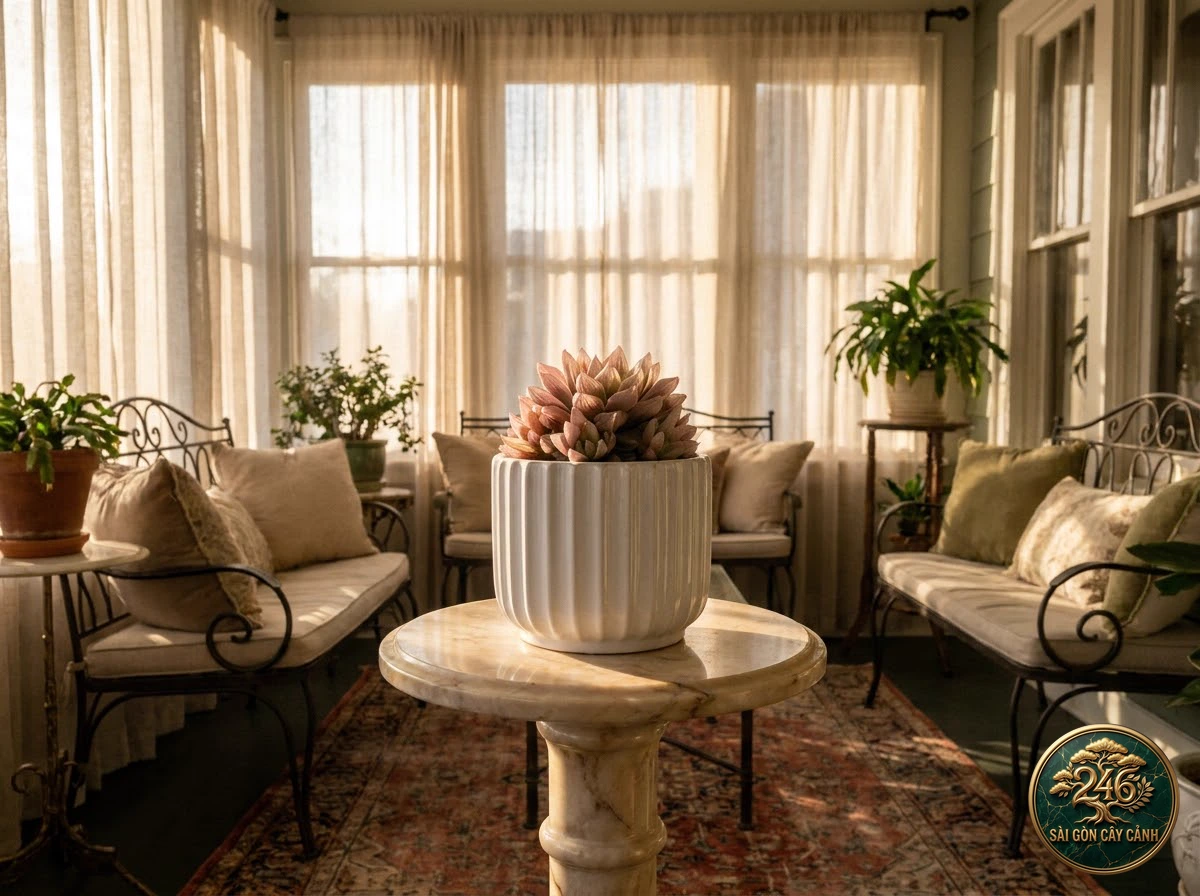
Haworthia emelyae commands premier exhibition value when composed alongside Haworthia bayeri, Haworthia retusa, and variegated Haworthiopsis cultivars within bespoke succulent planters. The sophisticated interplay between the marbled rose-pink of emelyae, the obsidian inky depth of bayeri, and the bright emerald of retusa produces a regal palette celebrating the diverse splendor of South African flora.
Possessing aristocratic marbled pink hues and a refined, flattened rosette habit, Haworthia emelyae serves as an uplifting botanical accent bringing serenity and sophisticated charm to modern interiors. It shines brightest when paired with crackle-glazed ceramic pots, pure white porcelain dishes, or honed cultured-marble planters. Gracing vanity consoles, living room showcases, or private study desks, it introduces soothing aesthetic delight and emotional tranquility.
Nursery Care Journal & Living Greenery Moments
At Saigon Cay Canh greenhouse, each photograph captures genuine everyday care moments between plant lovers and living greenery, spreading a passion for nature and green-living inspiration.

13. Frequently Asked Questions & Botanical Summary
Frequently Asked Question: How can I encourage my Haworthia emelyae to express its vivid marbled rose-pink coloration like wild specimens?
Expert Diagnosis from Saigon Cay Canh: The prized rose-pink marbled flush of Haworthia emelyae is an anthocyanin pigmentation response triggered by two environmental conditions: high luminous intensity of filtered light (20,000 to 28,000 lux, equivalent to 3-4 hours of gentle morning sun) combined with pronounced diurnal temperature drops (warm days around 26°C-28°C, cool nights near 16°C-18°C). If kept in dim interiors or constant warm temperatures, foliage reverts to plain green; moving the specimen to a breezy, brightly lit balcony quickly rekindles its vivid marbled pink blush.
Emely’s haworthia Haworthia emelyae reigns as an aristocratic gem from Riversdale, introducing pastel marbled elegance and mindful serenity to contemporary living spaces through Saigon Cay Canh.