
Living plant profile
Keeled gasteria (Gasteria carinata)
Gasteria carinata
Comprehensive botanical monograph on Keeled gasteria (Gasteria carinata): structural morphology, physiological adaptations, porous mineral substrate, and specialized cultivation guidelines.
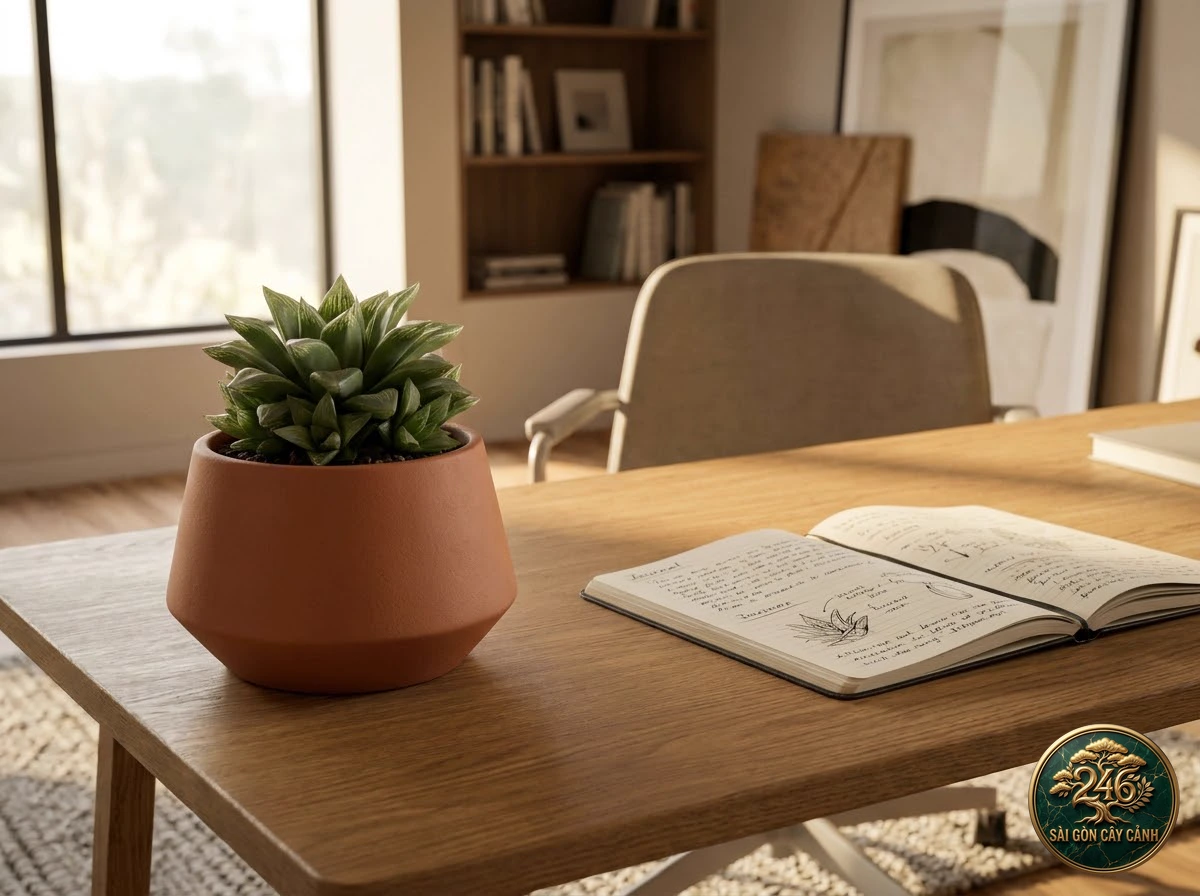
Keeled gasteria (Gasteria carinata)
Sài Gòn Cây Cảnh Care Compass
1. Botanical Introduction & Taxonomic Identity
Gasteria carinata represents one of the most historically revered and architecturally structured species within the genus Gasteria. The specific epithet carinata derives directly from Latin carina, signifying a ship’s keel, astutely describing the prominent, sharply defined ridge traversing the dorsal underside of each tongue-shaped leaf. This morphological feature creates an asymmetrical, triangular cross-section unique among common succulents. The foliar epidermis is finished in deep lustrous olive-green, liberally sprinkled with hundreds of raised white tuberculate spots that provide an appealing aesthetic balance between the bold angularity of the dorsal keel and the refined elegance of pearl-like markings.
Gasteria carinata boasts one of the most venerable and intricate taxonomic histories in the family Asphodelaceae. Originally classified by Carl Linnaeus in his monumental 1753 Species Plantarum under the name Aloe carinata, it was among the earliest Cape flora collected by Dutch explorers. In 1809, Henri Auguste Duval founded the genus Gasteria and established the combination Gasteria carinata (L.) Duval. Over two subsequent centuries of botanical revision, authority Ernst van Jaarsveld delineated its extensive polymorphic variations, encompassing varieties such as var. verrucosa (densely tuberculate) and var. glabra (smooth), reflecting morphological radiation across coastal limestone hills. In classical Cape taxonomic studies, Gasteria carinata served as a morphological benchmark delineating evolutionary divergence between Gasteria and ancestral Aloe lines based on its specialized gasteriform flowers.
2. Native Habitat & Geographical Distribution
In its natural habitat, Gasteria carinata occupies coastal limestone hills, renosterveld scrub, and weathered shale flats throughout the Overberg region, encompassing Bredasdorp, Swellendam, and the lower Breede River valley in the Western Cape of South Africa. Influenced by maritime currents, this region enjoys a winter-rainfall climate with dry, temperate summers refreshed by cool southern oceanic breezes. In habitat, carinata seeks sanctuary within limestone clefts or beneath the canopy of low shrubs. Its sharp dorsal keel serves a dual ecological function: deflecting intense lateral solar irradiance while channeling early morning fog and dew straight downward into the central root zone.
3. Detailed Morphological Characteristics
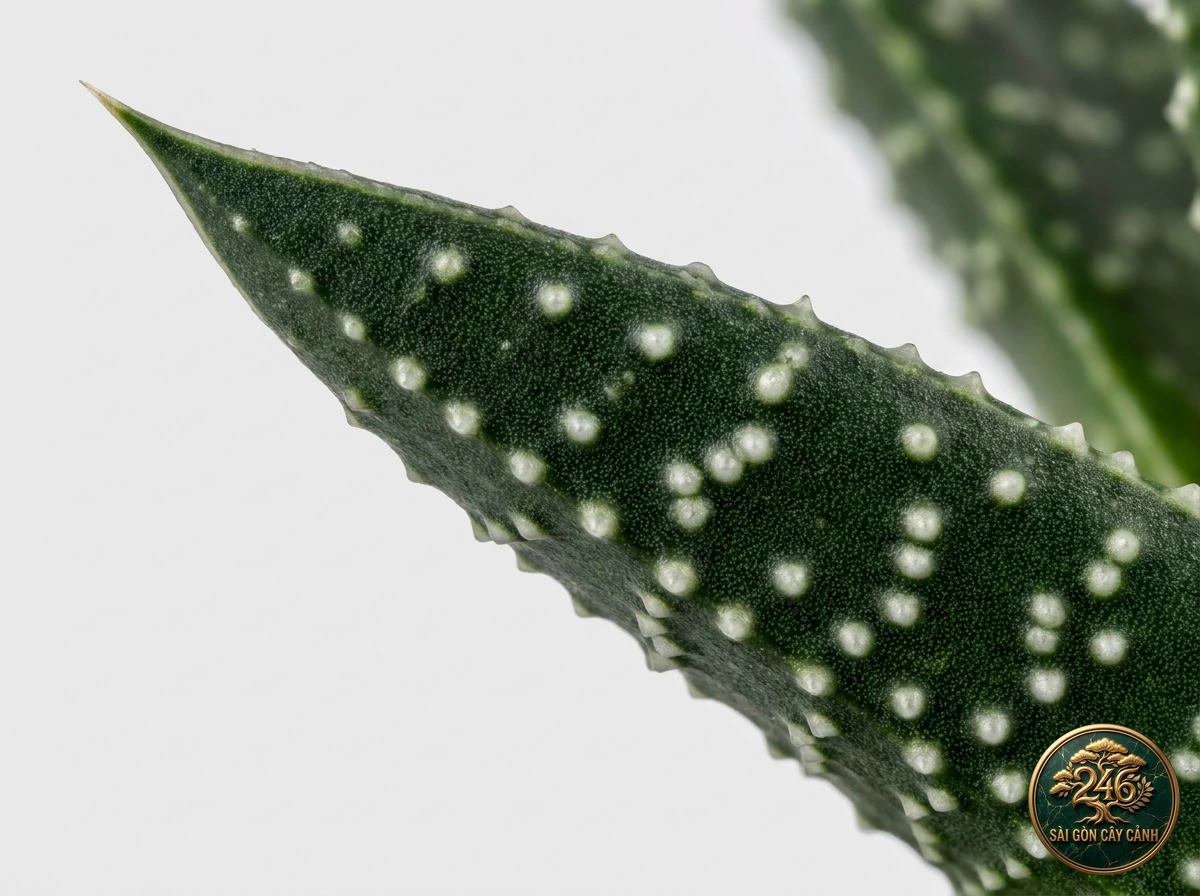
Morphologically, Gasteria carinata constructs an impressive multi-tiered rosette 15 to 25 cm in diameter, readily offsetting to build dense architectural clusters. The leaves extend 10 to 18 cm in length and 2.5 to 4 cm in width, arrayed in an ascending spiral or sub-distichous arrangement. The adaxial surface is gently concave, contrasted by the sharp, prominent dorsal keel on the abaxial side. The pearly white tubercles are composed of densely thickened wax cells that scatter excessive thermal radiation. The root architecture features thick, fleshy storage roots anchoring securely into nutrient-poor limestone crevices. Grand inflorescences reach 40 to 60 cm in height, bearing pendulous stomach-shaped blossoms of brilliant coral-red tipped with lime-yellow in late winter to early spring.
Morpho-anatomically, the hallmark of Gasteria carinata is its prominent dorsal keel: the abaxial leaf surface elevates into an acute median ridge running from base to apex. This asymmetrical triangular architecture dramatically amplifies mechanical flexural rigidity, allowing the fleshy leaves to endure violent coastal oceanic gales without snapping. The raised pearly white tubercles are composed of suberized epidermal cells embedded with microcrystalline silica, serving to reflect and scatter intense coastal ultraviolet (UV) radiation while shading internal photosynthetic parenchyma. The keeled dorsal architecture of Gasteria carinata is a biomechanical triumph: integrating a prominent structural ridge along the abaxial surface increases the cross-sectional area moment of inertia by over three hundred percent compared to flat leaves of identical volume, enabling elongated succulent leaves to support immense internal water weight without buckling. The raised white pearly tubercles contain high concentrations of natural minerals that reflect solar heat and buffer foliage against coastal maritime breezes.
4. Core Botanical Matrix
Core taxonomic and cultivation parameters:
| Botanical Parameter | Observed Trait | Saigon Cay Canh Horticultural Recommendation |
|---|---|---|
| Scientific Name | Gasteria carinata (L.) Duval | Maintain certified taxonomic labeling across nursery stock |
| Plant Family | Asphodel family (Asphodelaceae) | Observe specialized succulent physiology within Asphodelaceae |
| Native Distribution | Limestone hills, coastal fynbos rocky ledges, and renosterveld plains around Bredasdorp and the Breede River valley, Western Cape, South Africa | Replicate native climatic parameters in indoor cultivation |
| Illumination Intensity | 14,000 – 28,000 lux | Bright diffused illumination or gentle morning sun; versatile adaptability to indoor environments |
| Thermal Window | 12°C – 28°C | Protect against cold below 8°C and provide active ventilation during heat |
| Relative Humidity | 45% – 65% | Sustain gentle atmospheric air movement to disperse stagnant moisture |
| Substrate pH | 6.5 – 7.5 | Utilize porous neutral mineral components for rapid drainage |
| Substrate Formulation | 45% medium pumice (3-6mm), 25% hard akadama, 15% zeolite grit, 10% perlite, 5% organic worm castings | Maintain coarse granular structure; avoid dense suffocating soils |
| Irrigation Strategy | Irrigate thoroughly when medium is eighty percent dry; stores abundant water within thick keeled tissues | Enforce thorough substrate dry-down between watering sessions |
| Propagation Pathways | Separation of prolific basal pups or rooting whole detached keeled leaves in porous gritty substrate | Perform during warm spring or early wet season for peak vigor |
| Veterinary Toxicology | NON-TOXIC TO COMPANION ANIMALS (ASPCA Non-Toxic) | NON-TOXIC PET SAFE (ASPCA); completely harmless and safe around household dogs and cats. |
5. Toxicity Profile & Domestic Safety
Regarding companion animal safety, Gasteria carinata is certified as 100% NON-TOXIC to cats and dogs by the ASPCA. Its mucilage contains zero dangerous cardiac glycosides or toxic phytochemicals. Although structurally keeled, the foliar apex lacks hazardous piercing spines, making it a stellar pet-friendly decorative succulent for homes shared with active pets.
6. Lighting Dynamics & Photosynthetic Adaptations
Light demands for keeled gasteria are remarkably adaptable, flourishing under 14,000 to 28,000 lux. It excels under bright filtered light or 3 to 4 hours of gentle morning sun. Adequate illumination sharpens the dorsal keel and enhances the pearl-like relief of its tubercles. Prolonged deep shade may cause slight foliar lengthening; hence placement near bright windows or beneath domestic grow-lights remains optimal.
7. Moisture Equilibrium & Irrigation Regimes
Watering protocols for Gasteria carinata demand measured moderation: soak thoroughly when eighty percent of the soil medium has dried out. Backed by substantial water-storage reserves within its thick keeled lamina, specimens easily withstand prolonged dry intervals. In tropical lowland climates, water once every 5 to 7 days during dry, breezy weather and extend to 10 to 12 days during humid monsoon phases, hydrating at dusk.
8. Substrate Architecture & Nutrition Strategy
The potting medium for Gasteria carinata emphasizes mineral porosity with gentle calciphilic buffering replicating native limestone soils: 45% medium pumice (3-6mm), 25% hard akadama, 15% natural zeolite grit, 10% perlite, and 5% organic worm castings. This delivers superb rhizosphere aeration, instantaneous gravitational drainage, and a stable pH between 6.5 and 7.5.
9. Temperature Dynamics & Aeration Strategy
Optimal temperatures for Gasteria carinata span 12°C to 28°C, with peak growth occurring during temperate spring and autumn months. Ambient relative humidity between 45% and 65% proves ideal. Ensuring steady natural air circulation represents the premier cultural practice to maintain pristine foliar health and repel pests.
10. Specialized Propagation Protocols
Propagating Gasteria carinata is exceptionally reliable thanks to prolific basal clumping and the regenerative vigor of its keeled foliage. The primary method is division of basal offsets during spring; sever rooted pups cleanly with a sharp knife, treat wounds with powdered sulfur, and allow 3 to 5 days of shaded curing before planting into gritty mineral mix. Whole intact keeled leaves detached at the stem axis also root readily, producing clusters of adventitious plantlets along the callused base within 4 to 6 weeks in moist fine pumice.
11. Diagnostic Matrix & Preventative Health
Gasteria carinata exhibits sturdy constitution, yet excessive soil moisture coupled with poor aeration can induce basal root rot via Fusarium oxysporum or bacterial soft rot from Pectobacterium. Symptoms manifest as water-soaked darkening along the lower keeled spine near the soil line. If detected, unpot immediately, pare away diseased tissue with a sterile knife, disinfect with mild alcohol, and dry unpotted in breezy shade for a full week before rerooting in dry pumice. Always apply water around the pot rim and sustain airflow to prevent rot.
Clinical diagnostics and remedial actions:
| Observed Symptom | Primary Root Cause | Saigon Cay Canh Remedial Action |
|---|---|---|
| Sharp dorsal keel on the leaf underside buckles with the entire strap leaf wilting | Severe internal dehydration resulting from exhausted potting soil and prolonged dry heat | Submerge pot base in cool water for fifteen minutes to rehydrate the medium; the keel firms up promptly |
| Junction between the keeled leaf base and main crown blackens with weeping fluid | Basal stem rot caused by overhead watering that collected water in the deep keeled foliar folds | Excise rotted leaf, dust wound with garden lime, and strictly water around the perimeter at dusk |
| Foliage loses its raised pearly white tubercles, turning smooth and pale chartreuse | Specimen kept in deep shade preventing epidermal cells from synthesizing protective tubercle waxes | Expose to 2 to 3 hours of soft morning sunlight daily to stimulate pearl-like tubercle development |
| Brown scale insects colonizing along the sharp dorsal keel ridge on the leaf underside | Armored scales feeding upon the primary vascular bundle running along the keeled rib | Rub along the keel with a cotton swab soaked in botanical alcohol to detach armored scales completely |
12. Living Architecture & Interior Styling
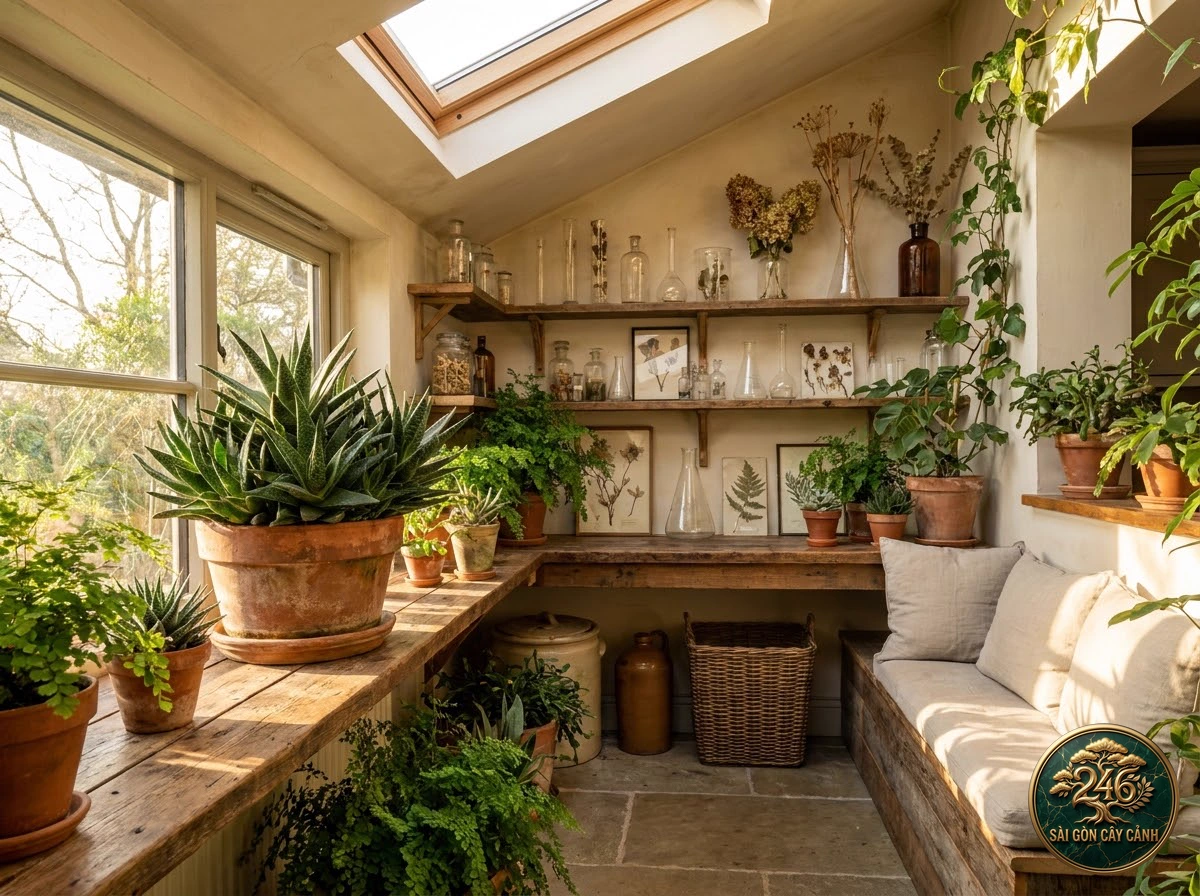
In succulent container design, Gasteria carinata provides commanding architectural presence when paired with radial rosettes such as Echeveria, soft Haworthia cymbiformis, and miniature columnar cacti. The sharp angularity of its dorsal keel injects dynamic sculptural contrast into arrangements dominated by soft circular forms, establishing an engaging and visually balanced composition.
Featuring a proud, keeled tongue-shaped habit adorned with lustrous pearly tubercles, Gasteria carinata represents an ideal botanical statement for contemporary interior environments. It achieves visual harmony when planted in moss-green glazed ceramics, unglazed earth-toned terracotta, or rustic stoneware pots. Gracing executive desks, corporate reception counters, or modern living room consoles, it projects steadfast stability, quiet confidence, and enduring sophistication.
Nursery Care Journal & Living Greenery Moments
At Saigon Cay Canh greenhouse, each photograph captures genuine everyday care moments between plant lovers and living greenery, spreading a passion for nature and green-living inspiration.

13. Frequently Asked Questions & Botanical Summary
Frequently Asked Question: What functional purpose does the sharp dorsal keel serve in the survival of Gasteria carinata?
Expert Diagnosis from Saigon Cay Canh: The prominent dorsal keel on the underside of Gasteria carinata foliage is a multifunctional evolutionary marvel: first, it provides structural reinforcement, preventing leaves from snapping under gale-force coastal winds; second, its angular planes deflect harsh lateral solar radiation, reducing internal heat buildup; and third, the keel acts as a natural dew-harvesting conduit, channeling condensed morning fog droplets directly down to the root crown during dry summer months.
Keeled gasteria Gasteria carinata showcases a striking balance between bold angular architecture and pearly spotted grace, certified to top botanical standards by Saigon Cay Canh.