
Living plant profile
Shiny Gasteria (Gasteria nitida): Cuticular Lustre, Rosette Morphology and Urban Drainage Cultivation
Gasteria nitida
Sai Gon Cay Canh • Living Herbarium V2 Shiny Gasteria (Gasteria nitida): Cuticular Lustre, Rosette Morphology and Urban Drainage Cultivation Gasteria nitida is a distinguished succulent featuring remarkably glossy, dark green distichous to rosulate foliage with embedded white punctate mottling and pendulous gasteriform pink blossoms ideal for sheltered interiors. Record ID: SGCC-PLANT-00531 Scientific Name: Gasteria […]
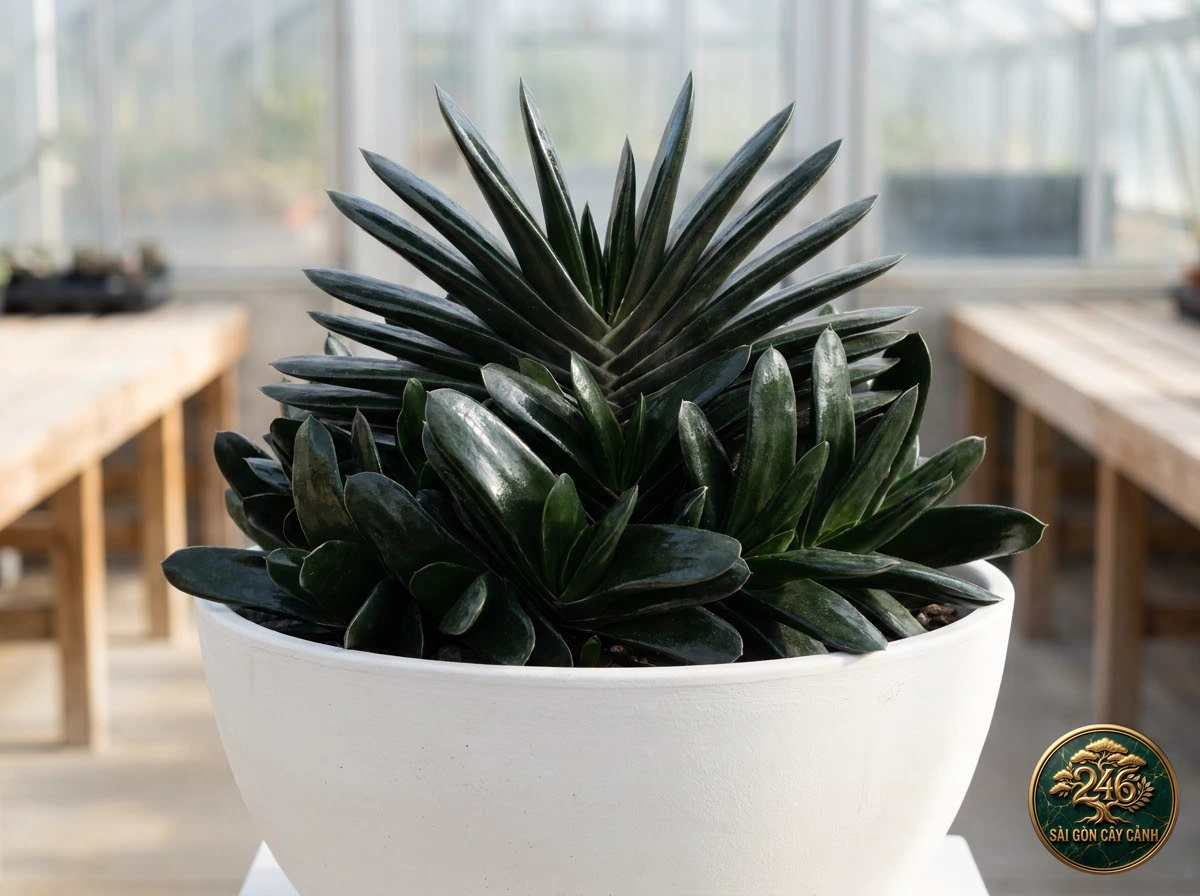
Shiny Gasteria (Gasteria nitida): Cuticular Lustre, Rosette Morphology and Urban Drainage Cultivation
1. Botanical Morphology & Ecological Adaptations
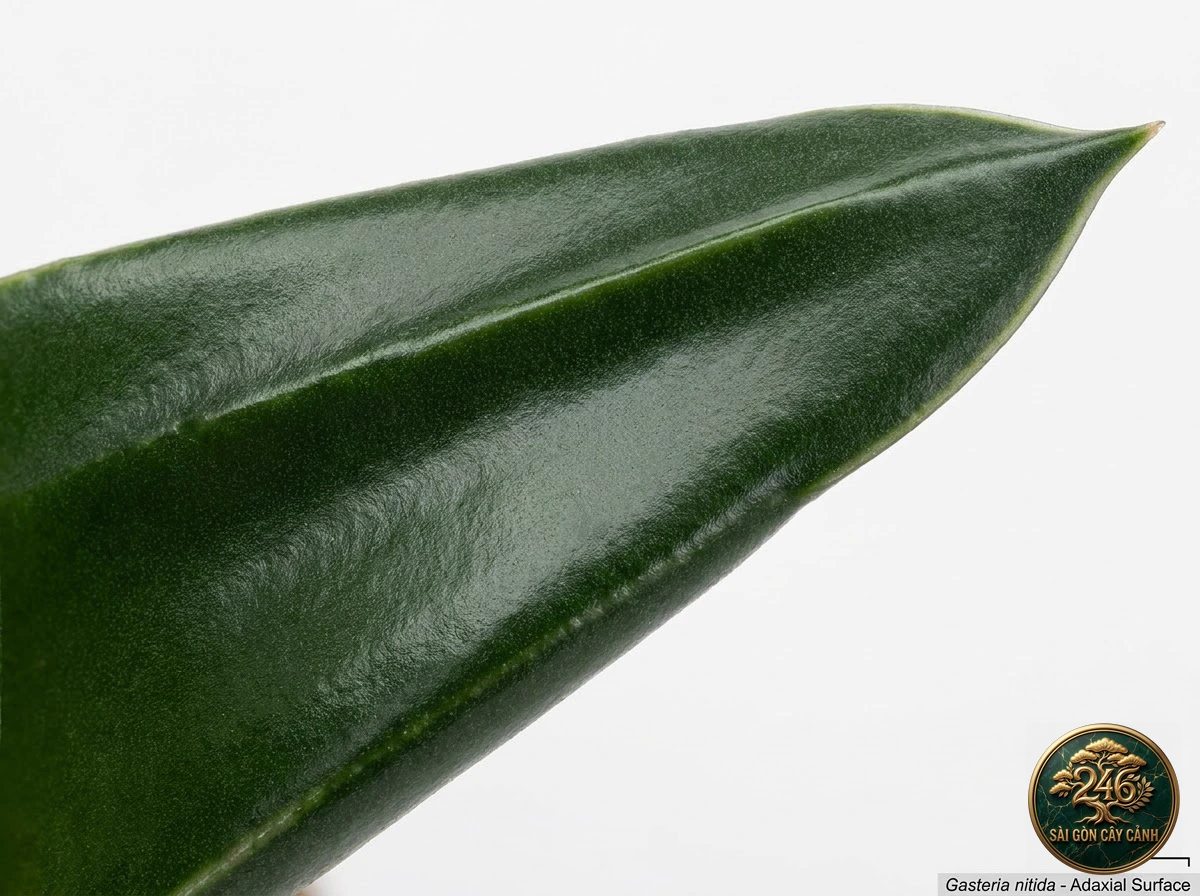
Gasteria nitida, widely recognized under the vernacular name Shiny Gasteria / Bathing Gasteria, is a highly distinguished succulent perennial belonging to the family Asphodelaceae. Native to the ecologically diverse landscapes of Eastern Cape, South Africa, this species has evolved sophisticated anatomical adaptations to endure severe seasonal droughts, rocky scree terrain, and fluctuating thermal regimes.
The foliar blades of Gasteria nitida display deep blackish-green coloration with a mirror-like cuticular finish entirely lacking rough tuberculate pustules. Juvenile leaves arrange in precise two-ranked distichous planes before gradually revolving into a spiral rosette at full maturity. Hydrated parenchyma cells store clear polysaccharide mucilage providing sustained hydraulic turgor.
The root system of Gasteria nitida comprises fleshy storage cords creeping through coastal gravels, featuring contractile dynamics that anchor the crown snugly against substrate. Delicate flowering scapes ascend 30 to 50 cm, displaying pendulous pink-tinted stomach-shaped flowers with emerald margins.
2. Taxonomic Chronicle & Botanical History
The taxonomic history of Gasteria nitida traces back to botanical expeditions along the Eastern Cape coastline during the late eighteenth century. German botanist Prince Joseph of Salm-Reifferscheid-Dyck first described it in 1834 under the name Aloe nitida. In 1992, prominent South African Gasteria specialist Ernst Jacobus van Jaarsveld formally revised the taxon and placed it into Gasteria. The specific epithet nitida derives from classical Latin signifying shining or lustrous, faithfully reflecting the mirror-like smoothness of its glossy dark green leaves. The species occupies restricted gravelly terraces near St Francis Bay, growing beneath coastal thicket shrubs.
3. Histological Specialization & CAM Photosynthetic Pathway
Anatomically, Gasteria nitida exhibits distinct epidermal specialization within its genus: the heavy cuticular layer lacks tuberculate pustules, presenting a smooth vitreous plane that reflects excess infrared radiation while repelling coastal dust. Beneath this polished surface lie hypertrophied water-storing parenchyma cells packed with clear mucilaginous polysaccharides, granting exceptional volumetric plasticity during hydration and drought cycles without histological rupture. Nocturnal Crassulacean Acid Metabolism operates efficiently: stomata open exclusively during cool nighttime hours below 24°C to sequester atmospheric CO2 as vacuolar malic acid, sustaining daylight photosynthesis with minimal transpirational water loss.
4. Comprehensive Care Compass (Care Compass 360°)
La bàn chăm sóc Sài Gòn Cây Cảnh
5. Diagnostic Pathology & Clinical Horticultural Interventions
When cultivating Gasteria nitida indoors, deviations from glossy foliar luster to matte creasing serve as prime diagnostic indicators for fine-tuning irrigation cycles.
| Observed Physical Symptom | Etiological Factor / Pathology | Horticultural Intervention Protocol |
|---|---|---|
| Foliar lustre dulls, adaxial epidermis develops longitudinal wrinkles | Prolonged substrate desiccation causing root hair contraction | Bottom-water for 15 minutes, then place in well-ventilated bright shade |
| Basal crown develops translucent dark soft lesion with foliar detachment | Basal moisture stagnation inducing anaerobic fungal root decay | Unpot immediately, excise necrotic tissue, dust with sulphur, air-dry 5 days |
| Deep purple-brown bronzing with foliar blade dehydration | Excessive direct ultraviolet radiation causing photoprotective stress | Relocate to diffused morning exposure or install 50% shade screening |
| Cottony white flocculent clusters tucked within leaf axils | Mealybug infestation (Pseudococcidae) sucking vascular fluids | Spot-treat using 70% isopropyl alcohol swabs, follow with cold-pressed neem spray |
6. Infrageneric Taxonomic Differentiation Matrix
To facilitate unambiguous identification of Gasteria nitida against corrugated congeners, the following morphological matrix provides explicit diagnostic criteria:
| Taxonomic Characteristic | Gasteria nitida (Shiny Gasteria / Bathing Gasteria) | Comparative Counterpart A | Comparative Counterpart B |
|---|---|---|---|
| Epidermal Texture | Highly polished, mirror-like glossy surface | Densely tuberculate with rough white verrucae | Marginal spinose teeth along foliar rim |
| Phyllotaxis Arrangement | Distichous in juvenile phase, spiral rosulate in maturity | Strictly distichous or loosely rosulate | Multi-tiered radiating concentric rosette |
| Inflorescence Morphology | Gasteriform perianth with swollen basal stomach pouch | Tubular pendulous stomach-shaped florets | Upright cylindrical or radially spreading flowers |
| Indoor Shade Tolerance | Exceptional stability in low-light residential settings | Moderate shade tolerance; benefits from morning sun | Requires higher illumination to prevent etiolation |
7. Vegetative Propagation & Offsetting Protocols
Propagating Gasteria nitida is exceptionally rewarding via vegetative division of basal offsets or leaf cuttings. Established plants periodically produce rooted offsets around the crown base; during temperate spring or autumn windows, sever the offset cleanly using a sterilized scalpel, dust the incision with micronized sulfur or horticultural charcoal powder, air-dry in shaded breeze for 4 to 5 days, and position upon moist pumice. For leaf propagation, select a plump mature middle leaf, excise cleanly at the basal attachment point, callus for 7 days, and insert at a 45-degree angle into washed coarse sand; miniature adventitious plantlets and vigorous roots emerge within 3 to 5 weeks.
8. Phytopathology & Integrated Pest Management
Although Gasteria nitida is inherently robust, the principal hazard in domestic containers is root and crown rot caused by Fusarium and Pythium fungi proliferating under prolonged moisture stagnation. If lower leaves become soft, discolored, and exude fluid, immediately unpot the plant, debride all necrotic root and stem tissues back to healthy white parenchyma, dip in systemic fungicide for 10 minutes, air-dry bare-root for 7 days, and pot into sterile mineral grit. Mealybugs occasionally seek refuge within dense basal leaf folds; spot-treat colonies using 70% isopropyl alcohol swabs or apply cold-pressed neem oil emulsion during late afternoon.
9. Companion Planting & Xerophytic Groupings
In refined xerophytic dish gardens, Gasteria nitida pairs harmoniously with corrugated succulents such as Haworthia limifolia, crystalline Haworthia cooperi, and rough-skinned Gasteria batesiana. The striking contrast between the lustrous mirror-like epidermis of nitida and the coarse, tuberculate textures of its companions generates captivating tactile depth. Arranging these species in shallow terracotta or handcrafted stoneware top-dressed with black volcanic scoria or pale quartz grit firmly anchors the root systems while accentuating the glassy green radiance of the foliage.
10. Spatial Placement & Interior Architectural Styling
Showcasing neat distichous fan symmetry in youth that gently transitions into an architectural spiral rosette, Gasteria nitida is an impeccable living accent for contemporary Minimalist, Scandinavian, and Japanese Wabi-Sabi interiors. It achieves supreme aesthetic elegance when framed in matte ivory ceramic containers, charcoal terrazzo vessels, or square rustic terracotta pots. Stationed upon executive desks, floating timber bookshelves, or minimalist coffee tables, it introduces grounded serenity, relieves digital eye strain, and infuses residential architecture with organic refinement.
11. Urban Apartment Microclimates & Architectural Cultivation
The tropical monsoon climate of urban Saigon offers ideal opportunities for cultivating Gasteria nitida into magnificent glossy clumps. Originating in sheltered coastal gravel terraces, this species flourishes positioned one to one-and-a-half meters back from glass panes, receiving luminous diffused illumination without midday solar scorching. Porous unglazed stoneware vessels equipped with generous drainage ports accelerate wall aeration, providing essential gas exchange for subterranean succulent roots.
12. Domestic Pet Safety & Household Placement Guidelines
NON-TOXIC TO DOGS AND CATS (ASPCA Safe) – Free of dangerous crystalline oxalates or systemic saponins.
Certified non-toxic by ASPCA standards, Gasteria nitida may be placed safely upon low coffee tables or interior desks without hazards to feline or canine companions.
13. In-Depth Botanical Q&A with Sai Gon Cay Canh
Frequently Asked Question: Why has my Gasteria nitida lost its brilliant glossy sheen and developed longitudinal wrinkles?
Expert Diagnosis from Saigon Cay Canh: Foliar dullness paired with longitudinal surface furrowing indicates that internal parenchyma water reserves are depleted, resulting either from prolonged drought or root dysfunction in compacted substrate. Inspect the root ball: if fleshy storage roots are pale and firm, deliver a thorough bottom-watering soak for 15-20 minutes in a ventilated spot; if roots are dried or necrotic, prune compromised tissue and reroot the crown in moistened horticultural pumice.
14. Nursery Botanical Journal & Green Sanctuary Notes
Nursery observation logs at Sai Gon Cay Canh highlight Gasteria nitida as among the most steadfast indoor succulents. Its onyx-like polished foliage preserves plump turgor across months in standard office illumination, introducing serene grounded balance to busy modern interiors.
15. Seasonal Mineral Nutrition & Micro-Nutrient Management
Nutritional management for Shiny Gasteria must remain conservative to preserve its neat compact foliar geometry. During active flush periods in early spring, supply cold-filtered worm casting tea at one-fifth normal concentration every five weeks. When sultry heatwaves arrive, withhold fertilizers completely, applying clear water strictly after twilight so root tissues hydrate without thermal stress.
16. In-Situ Conservation Status & Ethical Botanical Stewardship
Wild colonies of Gasteria nitida near St Francis Bay face habitat fragmentation from coastal urban expansion. Sai Gon Cay Canh certifies that every living accession originates exclusively from certified nursery vegetative divisions, supporting ex-situ germplasm preservation while fostering ecological awareness within domestic plant communities.
17. Native Habitat Ecology & Environmental Stress Physiology
The natural ecosystem of Gasteria nitida is localized within the coastal plains of the Eastern Cape of South Africa, prominently surrounding St Francis Bay and Algoa Bay. Here, vegetation contends with saline maritime breezes and irregular precipitation. The species has evolved an understory existence, sheltering beneath dense coastal thicket shrubs to escape intense midday solar radiation. Native soils consist of ancient coastal sands blended with quartz scree and lean humic leaf litter, ensuring instantaneous drainage.
Physiologically, Gasteria nitida utilizes an adaptable CAM pathway: during cool maritime fog nights, stomata open broadly to capture atmospheric condensation while assimilating CO2 into vacuolar malic acid. The vitreous, polished cuticle devoid of tuberculate bumps sheds windborne coastal sand effortlessly, preventing mechanical abrasion while reflecting destructive UV wavelengths. Fleshy contractile roots shorten during severe drought periods, pulling the crown flush against gravelly screes. Replicating this subterranean coolness through coarse volcanic pumice and continuous ambient ventilation guarantees decades of healthy longevity in urban living collections.
Nursery Care Journal & Living Greenery Moments
At Saigon Cay Canh greenhouse, each photograph captures genuine everyday care moments between plant lovers and living greenery, spreading a passion for nature and green-living inspiration.

18. Concluding Horticultural Appraisal
This comprehensive botanical monograph on Gasteria nitida is prepared by Sai Gon Cay Canh to present an authentic evaluation of an exceptional succulent gem, uniting rigorous taxonomic science with refined modern interior horticulture.