
Living plant profile
True Aloe (Aloe vera): Botanical Anatomy, Parenchyma Hydration and Sustainable Container Cultivation
Aloe vera
Sai Gon Cay Canh • Living Herbarium V2 True Aloe (Aloe vera): Botanical Anatomy, Parenchyma Hydration and Sustainable Container Cultivation Aloe vera is the quintessential succulent perennial celebrated globally for its thick, mucilaginous gel-bearing leaves, serrated margins, and legendary physiological hardiness in domestic landscapes. Record ID: SGCC-PLANT-00533 Scientific Name: Aloe vera (L.) Burm.f. Family: Asphodelaceae […]
True Aloe (Aloe vera): Botanical Anatomy, Parenchyma Hydration and Sustainable Container Cultivation
1. Botanical Morphology & Ecological Adaptations
Aloe vera, widely recognized under the vernacular name True Aloe / Medical Aloe, is a highly distinguished succulent perennial belonging to the family Asphodelaceae. Native to the ecologically diverse landscapes of Arabian Peninsula, naturalized globally, this species has evolved sophisticated anatomical adaptations to endure severe seasonal droughts, rocky scree terrain, and fluctuating thermal regimes.
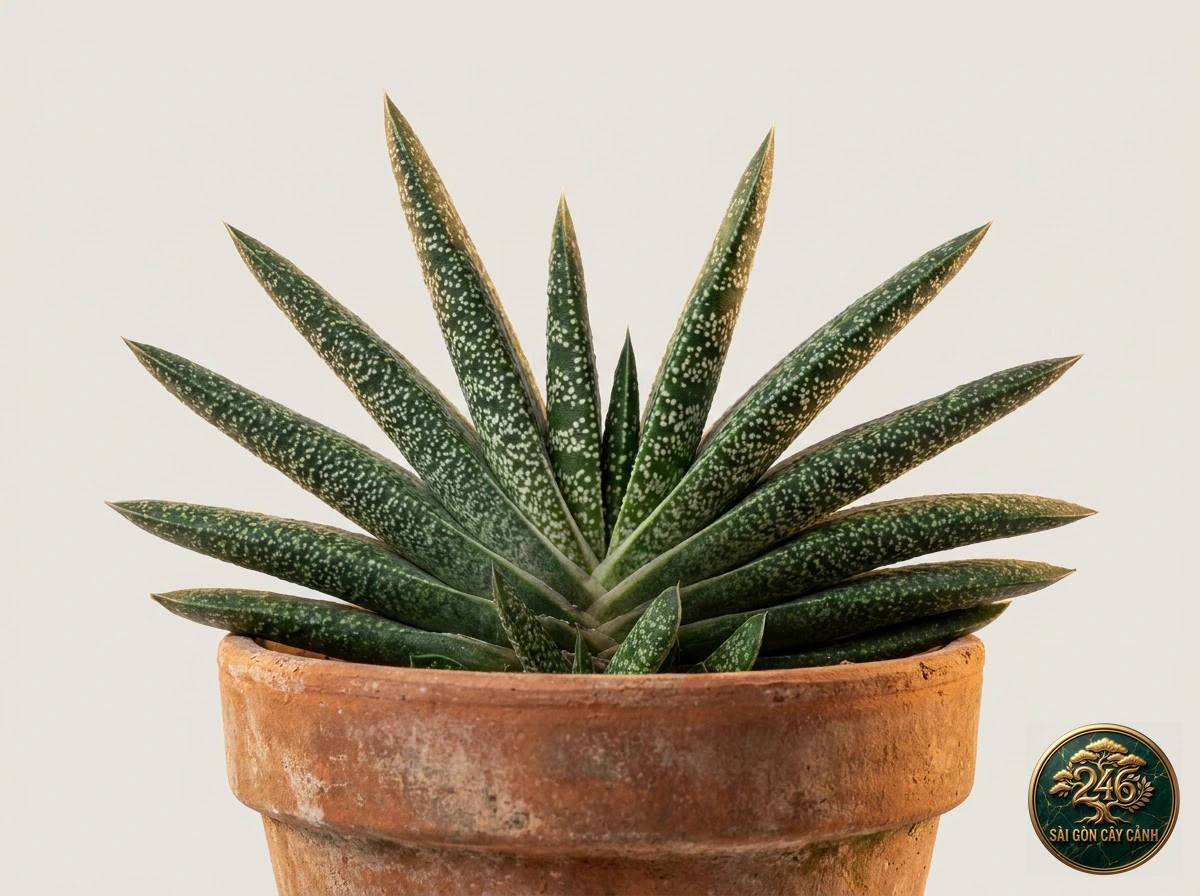
Aloe vera develops upright clumps of fleshy sword-shaped leaves of pale glaucous jade green, edged with soft white cartilaginous teeth. Its durable epidermal jacket encases crystalline acemannan polysaccharide gel celebrated for exceptional hydration and biological healing properties.
Fibrous adventitious roots of Aloe vera branch extensively in shallow topsoils to capture swift flash-rain pulses. Stout terminal racemes ascend up to 90 cm, bearing tubular lemon-yellow blossoms that open progressively during spring warmth.
2. Taxonomic Chronicle & Botanical History
Aloe vera holds the most storied ethnobotanical legacy in human history, documented in ancient medical pharmacopeias as early as the Egyptian Ebers Papyrus of 1550 BCE as the Plant of Immortality. Carl Linnaeus first cataloged it in 1753 as Aloe perfoliata var. vera in Species Plantarum, before Dutch botanist Nicolaas Laurens Burman formally elevated it to full species rank as Aloe vera in 1768. Native to the harsh Arabian Peninsula, it traveled along historic maritime trade routes to naturalize worldwide, becoming the global benchmark for medicinal dermatology, phytotherapy, and sustainable xeriscape design.
3. Histological Specialization & CAM Photosynthetic Pathway
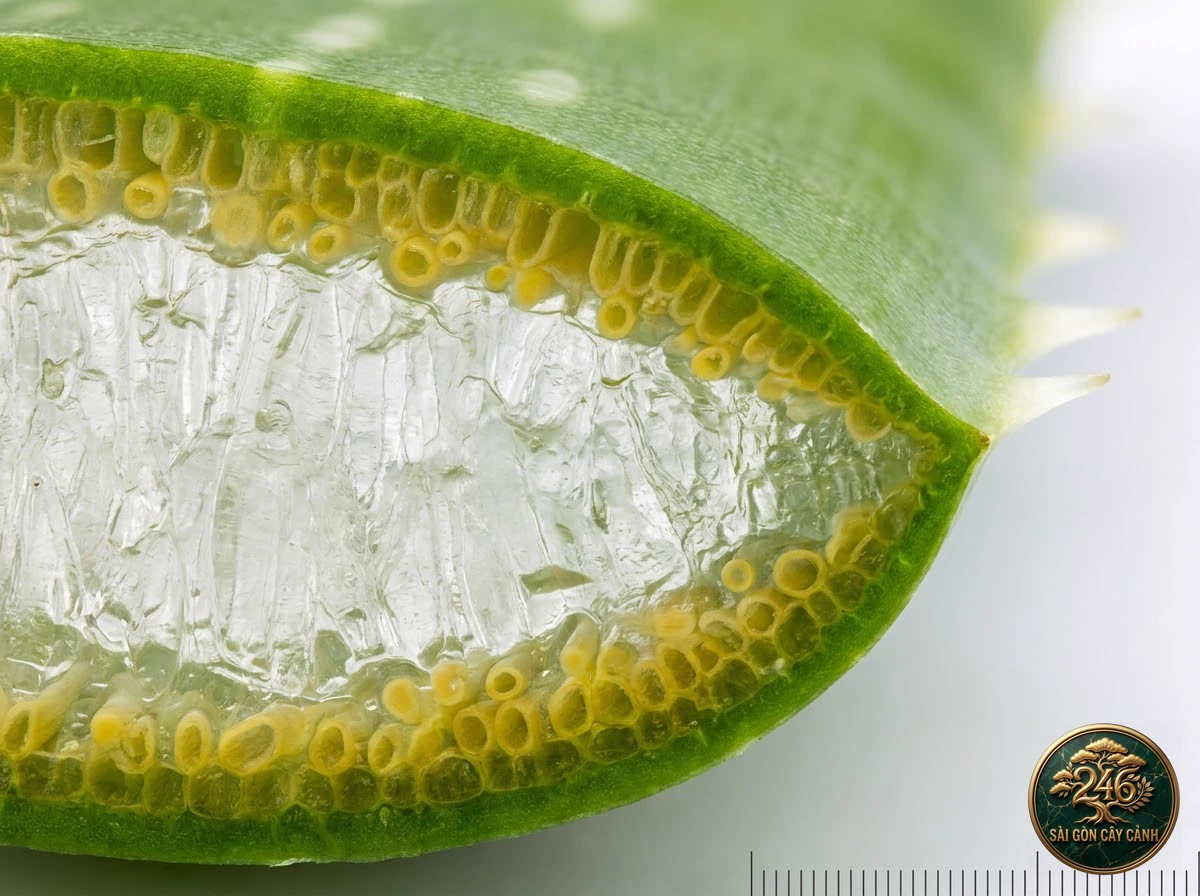
Microscopic histological analysis of the Aloe vera leaf reveals an evolutionary masterpiece of biological fluid retention: an outer leathery cuticle prevents evaporation, underlain by specialized pericyclic vascular cells containing yellow aloin-rich latex. This intensely bitter anthraquinone sap serves as an evolutionary deterrent against herbivores. The leaf interior is dominated by a massive parenchyma core representing 98% of total volume, composed of clear mucilaginous gel packed with acetylated mannans (acemannan), bio-active glycoproteins, and minerals. Shallow fibrous lateral roots spread widely near the soil surface to capture transient precipitation instantly.
4. Comprehensive Care Compass (Care Compass 360°)
La bàn chăm sóc Sài Gòn Cây Cảnh
5. Diagnostic Pathology & Clinical Horticultural Interventions
Assessing foliar blade thickness and examining yellow aloin exudation near the base of Aloe vera provides immediate clarity on watering status and light deprivation.
| Observed Physical Symptom | Etiological Factor / Pathology | Horticultural Intervention Protocol |
|---|---|---|
| Foliar blades flatten, feel hollow and flaccid upon touch | Severe hydration deficit or subterranean root decay from overwatering | Inspect drainage core: hydrate thoroughly if dry, repot if soggy and rotten |
| Foliage discolors from jade green into scorched bronze-orange | Photo-oxidation shock from sudden unfiltered solar exposure | Reposition to diffused filtered canopy for 3 days; hydrate gradually |
| Basal leaves turn to mushy, translucent pulp with sour odor | Bacterial soft rot (Erwinia) caused by standing water in leaf axils | Excise affected blades cleanly at crown stem, dust with lime or sulfur, withhold water |
| Circular sunken black lesions scattered across blade epidermis | Anthracnose foliar fungal infection favored by humid stagnation | Enhance airflow, eliminate nocturnal foliage misting, treat with copper fungicide |
6. Infrageneric Taxonomic Differentiation Matrix
To avoid conflating true Aloe vera with ornamental or wild congeners, the following botanical evaluation details diagnostic parameters across key species:
| Taxonomic Characteristic | Aloe vera (True Aloe / Medical Aloe) | Comparative Counterpart A | Comparative Counterpart B |
|---|---|---|---|
| Internal Mucilage | Abundant clear therapeutic polysaccharide gel | Thinner, intensely bitter amber sap | Moderately watery succulent parenchyma |
| Floral Pigmentation | Spike of bright tubular lemon-yellow florets | Towering candelabra spikes of brilliant scarlet-red | Pendant coral-pink to orange tubular blossoms |
| Marginal Armature | Pale deltoid cartilaginous teeth spaced evenly | Fierce reddish-brown spines on margins and faces | Soft minute teeth or smooth cartilaginous rim |
| Vegetative Offsetting | Prolific basal suckering forming dense colonial clumps | Solitary arborescent trunk, rarely suckering basally | Slow solitary or sparse offsetting from crown base |
7. Vegetative Propagation & Offsetting Protocols
Propagating Aloe vera is remarkably brisk and straightforward thanks to prolific subterranean suckers produced around the parent crown. When vegetative pups reach 10 to 15 cm in height with 4 to 5 plump leaves, gently brush back the topsoil, sever the connecting rhizome using a sterilized blade, preserving independent feeder roots. Allow the excised offset to cure in breezy shade for 2 to 3 days until a suberized callus forms, then plant into well-aerated soil consisting of washed river sand, pumice, and worm compost. Water lightly after 3 days; active root development commences within a week.
8. Phytopathology & Integrated Pest Management
Despite legendary vigor, waterlogging from heavy potting soil represents the primary vulnerability of Aloe vera, triggering bacterial soft rot (Erwinia chrysanthemi) and fungal root rot (Fusarium oxysporum). Symptoms include basal foliar collapse into foul-smelling black mush and loose anchorage. Immediate remediation requires unpotting the specimen, amputating all affected foliage cleanly back to sound tissue, dusting cuts with agricultural lime, drying unpotted for 5 days, and replanting into porous gritty medium. Black fungal leaf spot during humid rainy spells is effectively managed by pruning soil-level leaves and spraying colloidal silver.
9. Companion Planting & Xerophytic Groupings
In tropical courtyards and balcony landscapes, Aloe vera serves as an anchor specimen when grouped with sun-loving xerophytes such as arborescent Aloe arborescens, architectural Sansevieria trifasciata, and fragrant Plectranthus tomentosa. Blending the smooth succulent green swords of Aloe vera with structural variegated snake plants creates a vibrant urban oasis that cools ambient temperatures, absorbs airborne particulate matter, and releases fresh oxygen throughout nocturnal hours.
10. Spatial Placement & Interior Architectural Styling
With its graceful ascending habit, fresh emerald vitality, and therapeutic presence, Aloe vera enhances every decorative context from urban loft balconies and garden cafes to sprawling Mediterranean villas. It achieves timeless charm when housed in substantial rustic terracotta urns, classic cobalt-glazed ceramic planters, or handcrafted teak balcony boxes. Stationed in generous morning sunshine, its plump upright blades radiate wholesome vigor, symbolizing vitality, healing, and prosperity in domestic spaces.
11. Urban Apartment Microclimates & Architectural Cultivation
Aloe vera flourishes with astonishing vigor under the persistent warmth of southern Vietnam. To develop substantial specimen size with thick gel-filled swords, position containers on east-facing terraces receiving 4 to 6 hours of morning sun. An ideal substrate combines silty river loam with coarse volcanic pumice and biochar for unrestricted drainage.
To cultivate mature, medicinal-grade Aloe vera rosettes within urban apartments, select pots at least thirty centimeters deep with wide rims allowing fibrous root systems to spread freely. Line vessel bases with a three-centimeter layer of coarse volcanic pumice to prevent moisture stagnation. When maintained within air-conditioned rooms, transfer containers to sunny balconies at least three mornings weekly to fuel carbohydrate gel synthesis.
12. Domestic Pet Safety & Household Placement Guidelines
TOXIC TO PETS (ASPCA Warning) – Yellow latex beneath epidermis contains anthraquinone glycosides (aloin) triggering emesis and diarrhea in dogs and cats upon ingestion. Place out of reach of household animals.
Note that the yellow latex layer immediately below the rind of Aloe vera contains aloin anthraquinones capable of upsetting pet digestive systems; keep vessels out of reach.
13. In-Depth Botanical Q&A with Sai Gon Cay Canh
Frequently Asked Question: Why are my indoor Aloe vera leaves turning limp, thinning out, and fading to a pale washed-out green?
Expert Diagnosis from Saigon Cay Canh: This is the definitive symptom of acute light starvation. Aloe vera thrives under high solar radiation; deprived of adequate photon flux indoors, cellular elongation occurs while parenchyma gel production halts, causing the leaves to flatten and sag. Gradually transition the container to an east-facing balcony or window receiving at least 4 hours of direct morning sunshine daily; within 15 to 25 days of sun exposure, the foliar blades will regain their proud, plump upright turgidity.
14. Nursery Botanical Journal & Green Sanctuary Notes
At the Sai Gon Cay Canh nursery, mature Aloe vera clumps basking in sunrise radiation radiate wholesome vitality with upright emerald blades. The species provides a vibrant biophilic sanctuary while cleansing indoor living microclimates.
Nursery documentation confirms that a robust parent Aloe vera generates four to six healthy basal pups annually. Harvesting and gifting these clonal divisions to neighbors and plant enthusiasts fosters warm communal bonds while expanding green living practices throughout the city.
15. Seasonal Mineral Nutrition & Micro-Nutrient Management
Nutritional protocols for True Aloe favor fermented organic amendments such as banana extract or dilute worm casting tea delivered every three weeks in warm weather. Rich organic potassium and trace elements stimulate acemannan polysaccharide synthesis, yielding firm crystalline parenchyma gel.
Periodically during warm sunny seasons, top-dress the substrate with biochar or crushed basalt rock dust to deliver organic silica and potassium. These essential minerals reinforce cuticular cell walls, imparting vibrant foliar luster while bolstering innate resistance against mealybugs and thrips.
16. In-Situ Conservation Status & Ethical Botanical Stewardship
Having been domesticated worldwide across millennia, Aloe vera no longer exists in definitive wild habitats. Sai Gon Cay Canh selects authenticated heirloom clones noted for superior foliar gel, propagating them through organic nursery practices to support sustainable living.
The Living Herbarium initiative at Sai Gon Cay Canh preserves authenticated heirloom Aloe vera germplasm free of hybridization, propagated exclusively through organic horticultural standards without chemical pesticide residues to ensure pure botanical value.
17. Native Habitat Ecology & Environmental Stress Physiology
The evolutionary origin of Aloe vera is traced to the stony semi-desert margins of the Arabian Peninsula, particularly the rugged Al-Hajar mountain slopes of Oman, prior to millennia of human cultivation and naturalization across Mediterranean and Asian trade routes. In its native wilderness, the species endures extended multi-month droughts rooted in impoverished calcareous sands and alkaline limestone strata with pH values ranging from 7.0 to 8.5.
The histological architecture of Aloe vera represents an evolutionary triumph in hydrological efficiency: beneath the heavy waxy cuticle lies the chlorenchyma layer powering photosynthesis, followed by vascular bundles lined with pericyclic cells that produce bitter yellow latex rich in anthraquinone aloins. The vast central core consists of succulent parenchyma tissue storing crystal-clear gel loaded with complex acemannan polysaccharides. These high-molecular-weight polymers establish formidable hydrogen bonds with water molecules, locking cellular moisture securely even against ambient temperatures reaching 45 degrees Celsius. In sunny urban balconies, ample photon flux combined with mineral-rich drainage induces dense, medicinal parenchyma development.
Nursery Care Journal & Living Greenery Moments
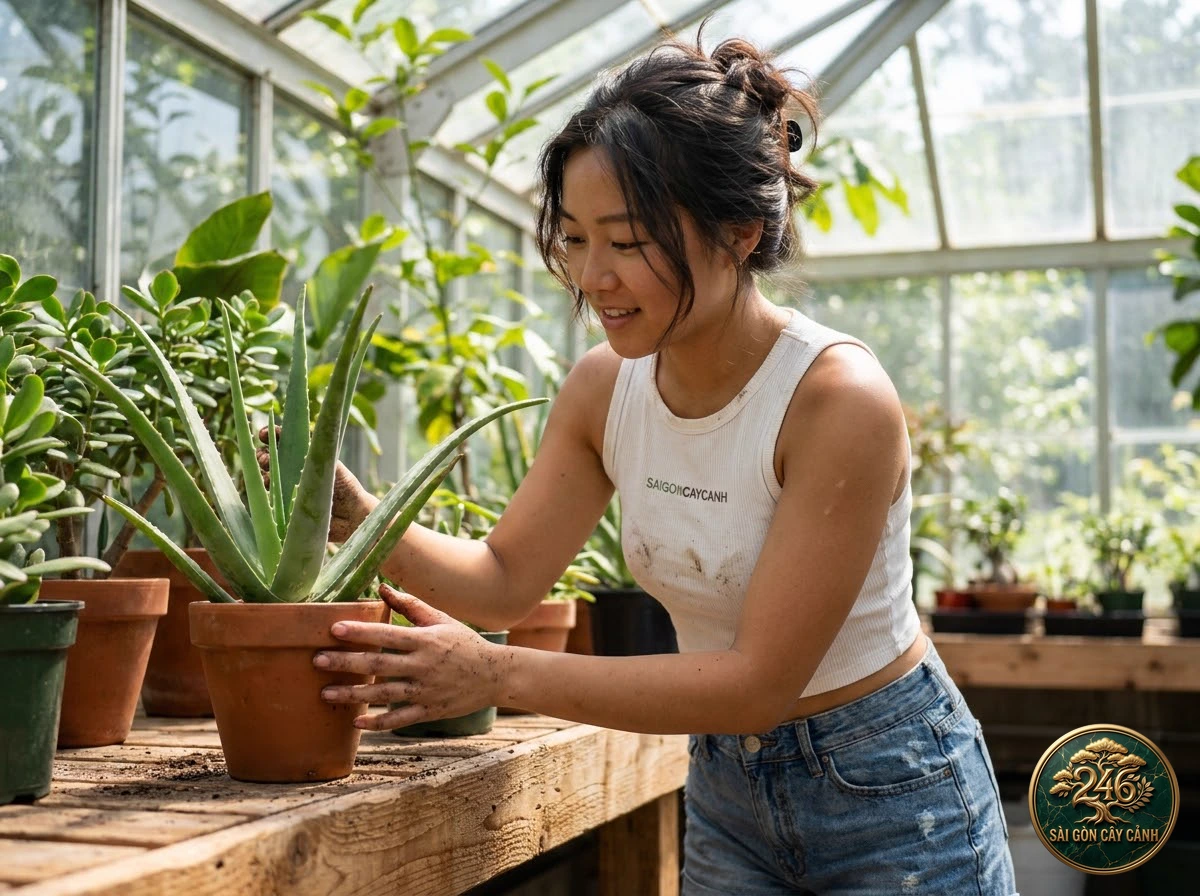
At Saigon Cay Canh greenhouse, each photograph captures genuine everyday care moments between plant lovers and living greenery, spreading a passion for nature and green-living inspiration.
18. Concluding Horticultural Appraisal
This definitive botanical monograph on Aloe vera by Sai Gon Cay Canh underscores its timeless status, bridging ancient ethnobotanical wisdom with contemporary sustainable interior lifestyle.