
Living plant profile
Krantz Aloe (Aloe arborescens): Botanical Classification, Branching Architecture and Arborescent Bonsai Styling
Aloe arborescens
Sai Gon Cay Canh • Living Herbarium V2 Krantz Aloe (Aloe arborescens): Botanical Classification, Branching Architecture and Arborescent Bonsai Styling Aloe arborescens is a magnificent multi-stemmed arborescent aloe forming massive dense thickets, celebrated for its brilliant scarlet-red torch racemes and exceptional suitability for architectural container displays. Record ID: SGCC-PLANT-00535 Scientific Name: Aloe arborescens Mill. Family: […]
Krantz Aloe (Aloe arborescens): Botanical Classification, Branching Architecture and Arborescent Bonsai Styling
1. Botanical Morphology & Ecological Adaptations
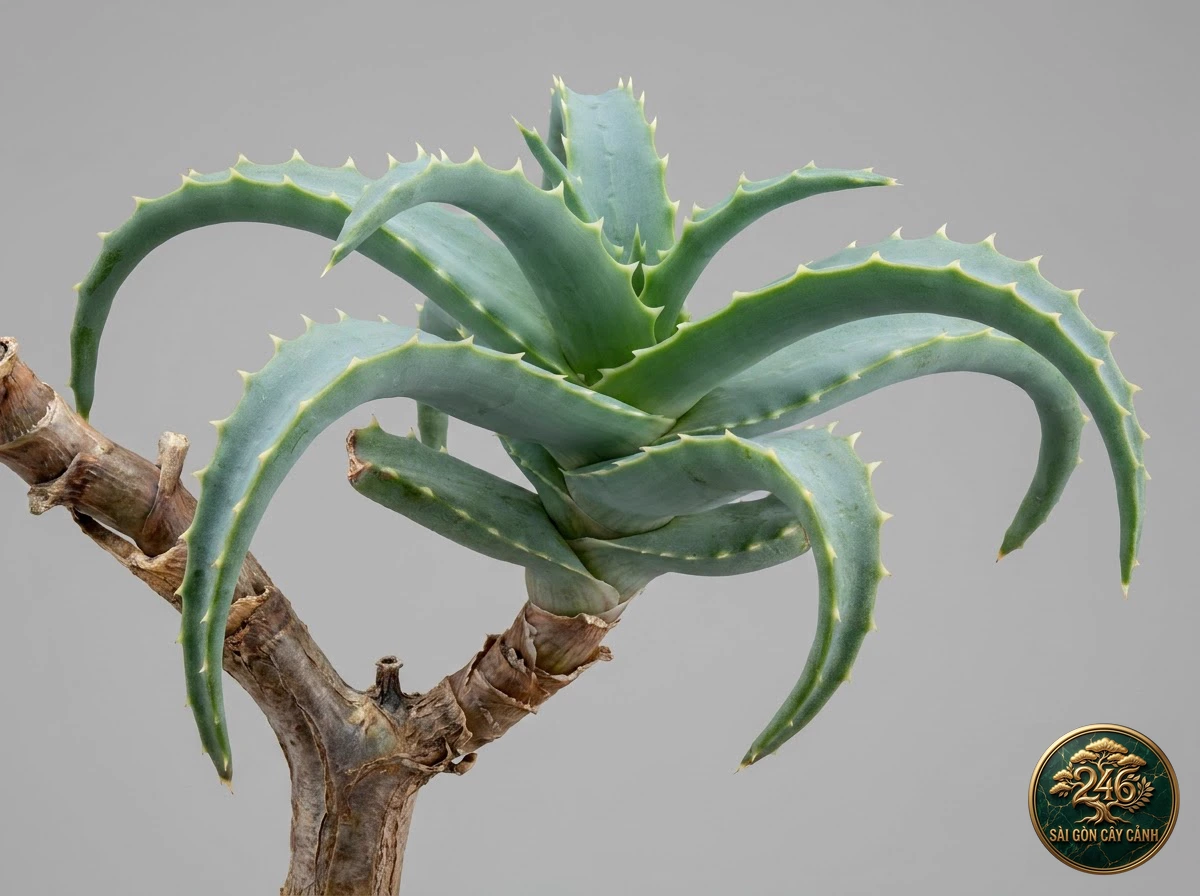
Aloe arborescens, widely recognized under the vernacular name Krantz Aloe / Candelabra Aloe, is a highly distinguished succulent perennial belonging to the family Asphodelaceae. Native to the ecologically diverse landscapes of South Africa, Mozambique, Zimbabwe, Malawi, this species has evolved sophisticated anatomical adaptations to endure severe seasonal droughts, rocky scree terrain, and fluctuating thermal regimes.
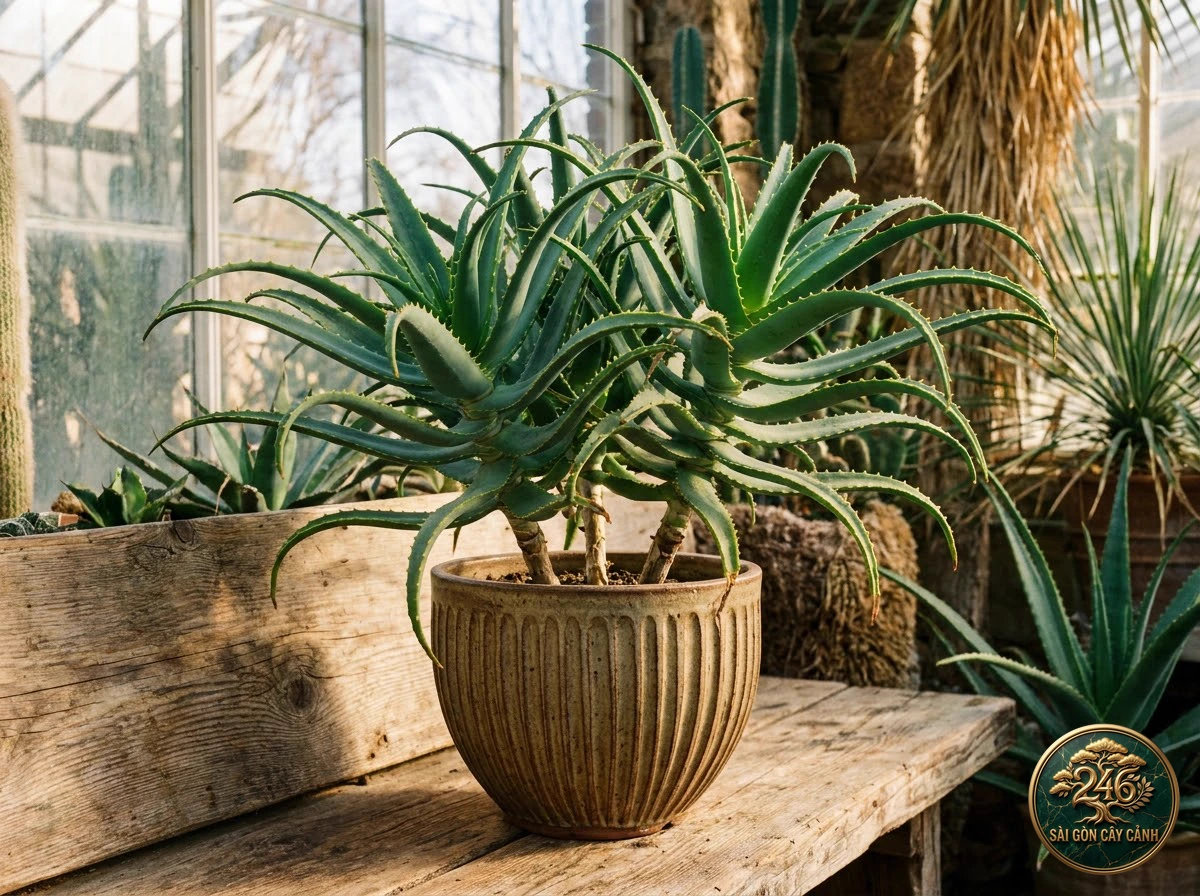
Aloe arborescens grows into expansive multi-stemmed thickets with sculptural woody branches. Its long sickle-curved leaves of sea-green hue arch gracefully outward, lined along edges with pale golden teeth that lend an architectural elegance to the shrub.
The semi-woody stems of Aloe arborescens possess remarkable adventitious rooting capability upon soil contact. Brilliant conical scarlet-orange racemes ignite the winter canopy like flaming torches, providing vital nectar resources.
2. Taxonomic Chronicle & Botanical History
Aloe arborescens (Krantz Aloe or Candelabra Aloe) is one of the most widely distributed arborescent succulents across southeastern Africa, spanning South Africa, Mozambique, Zimbabwe, and Malawi. Philip Miller published its botanical classification in 1768 within The Gardeners Dictionary. The specific epithet arborescens stems from Latin meaning tree-like, reflecting its habit of forming dense multi-stemmed woody thickets reaching 2 to 3 meters tall. Revered in traditional Zulu medicine as Inkalane, it has been utilized for generations to soothe thermal burns and planted as living barrier hedges around livestock kraals.
3. Histological Specialization & CAM Photosynthetic Pathway
Anatomically, Aloe arborescens exhibits singular branching woodiness within the subfamily Alooideae: mature stems develop anomalous secondary thickening, forming stout woody trunks capable of supporting massive canopies against gale-force coastal winds. The elongated sickle-shaped glaucous leaves recurve gracefully, armed with pale yellowish cartilaginous teeth along their margins. The central parenchyma stores therapeutic polysaccharide gel rich in aloemannan glycoproteins that accelerate cellular tissue regeneration. Towering conical racemes bear hundreds of tubular scarlet florets loaded with rich nectar, adapted for ornithophilous pollination by native sunbirds.
4. Comprehensive Care Compass (Care Compass 360°)
La bàn chăm sóc Sài Gòn Cây Cảnh
5. Diagnostic Pathology & Clinical Horticultural Interventions
Inspecting dense branch junctures on Aloe arborescens is vital for intercepting white scale insects before they colonize and chlorotize the leafy canopy.
| Observed Physical Symptom | Etiological Factor / Pathology | Horticultural Intervention Protocol |
|---|---|---|
| Branches stretch awkwardly with sparse, recurved pallid leaves | Etiolation caused by protracted insufficient photosynthetic radiation | Acclimate toward direct sunlight incrementally over 7 days to restore rosette density |
| Branch snaps clean under mechanical impact or turbulent winds | Heavy foliar canopy overloading semi-lignified branch wood | Clean cut fractured branch, air-dry callus for 3 days, root directly in moist pumice |
| Black sooty mould crust coating branch axils and leaf bases | Saprotrophic sooty mould proliferating upon mealybug honeydew exudate | Wash away crust with pressurized water spray, wipe colonies with 70% alcohol |
| Foliar tips develop brittle, scorched dark-brown margins | Intense convective dry heat striking roots already depleted of moisture | Rehydrate potting core thoroughly, shield from direct desiccating air exhaust |
6. Infrageneric Taxonomic Differentiation Matrix
The comparison matrix below clarifies morphological boundaries distinguishing shrubby Aloe arborescens from other bush-forming succulent aloes:
| Taxonomic Characteristic | Aloe arborescens (Krantz Aloe / Candelabra Aloe) | Comparative Counterpart A | Comparative Counterpart B |
|---|---|---|---|
| Branching Pattern | Extensively branching arborescent shrub with woody stems | Strictly solitary pachycaul trunk with zero lateral shoots | Acaulescent dwarf rosette forming compact low cushions |
| Foliar Curvature | Elegantly recurved, sickle-shaped drooping foliage | Stiffly upright or ascending V-shaped succulent blades | Short stout leaves packed into intricate geometric spirals |
| Flowering Phenology | Spectacular winter blooming with torch-like scarlet heads | Warm summer blooming cycle with tubular lemon-yellow spikes | Intermittent blooming upon accumulating carbohydrate reserves |
| Landscape Utility | Living xerophytic hedge, multi-trunk sculptural bonsai | Monolithic solitary focal specimen in rockeries | Miniature desktop succulent bowl and accent planter |
7. Vegetative Propagation & Offsetting Protocols
Propagating Aloe arborescens is exceptionally effortless and rapid via branch truncheons. During dry sunny periods or early spring, select a vigorous semi-woody lateral branch measuring 20 to 30 cm in length, excising cleanly at the junction with a sharp pruning saw. Dust the wound with sulfur or charcoal, allowing the truncheon to cure in dry shade for 5 to 7 days until firmly callused. Insert the cutting 8 to 10 cm deep into a pot of coarse sand and volcanic pumice; vigorous roots anchor the cutting securely within 14 to 21 days.
8. Phytopathology & Integrated Pest Management
The foremost horticultural adversary facing Aloe arborescens in humid urban settings is white Aloe scale (Duplachionaspis divergens) and secondary sooty mould. Scale insects form encrusted white colonies on abaxial leaf surfaces and protected branch axils, extracting vascular sap and inducing foliar chlorosis. Treatment requires scrubbing colonies with a soft brush dipped in 70% alcohol or horticultural mineral oil, followed by selective thinning of interior branchlets to maximize solar penetration and airflow. Avoid stagnant, shaded locations.
9. Companion Planting & Xerophytic Groupings
Aloe arborescens serves as a magnificent companion alongside rugged architectural xerophytes including Pachycereus pringlei columnar cacti, cascading Portulacaria afra spekboom, and drought-hardy groundcovers. The fiery scarlet candelabra blooms erupting during cool winter months produce breathtaking chromatic drama against lush surrounding greenery, transforming plain terraces into dynamic tropical sanctuaries.
10. Spatial Placement & Interior Architectural Styling
Owing to its natural branching architecture and gnarled semi-woody stems, Aloe arborescens is prized globally for arborescent succulent bonsai styling. Cultivated in broad shallow stoneware dishes or antique crackle-glazed ceramic planters, its sculptural twisting trunks convey ancient resilience, graceful movement, and dignified poise. Positioned upon open entrance verandas, spacious balconies, or courtyard pavilions, it elevates architectural spaces with timeless natural charisma.
11. Urban Apartment Microclimates & Architectural Cultivation
Possessing vigorous multi-stemmed branching habits, Aloe arborescens is ideally suited as an architectural mid-tier accent on spacious verandas or sunny courtyards. Planters with diameters of 40 cm or greater accommodate wide-spreading storage roots. Pruning minor basal shoots channels sap into sculptural twisting primary limbs.
When stationing Aloe arborescens upon apartment verandas or rooftop terraces, accommodate its spreading canopy measuring 60 to 100 cm wide. Position vessels in sunny, well-ventilated corners away from pedestrian traffic. Prune crowded interior branchlets at the start of the rainy season to enhance airflow, allowing sunlight to penetrate the crown and deter fungal pathogens.
12. Domestic Pet Safety & Household Placement Guidelines
TOXIC TO COMPANION PETS (ASPCA Warning) – Rind latex contains active anthraquinones capable of provoking stomach upset and vomiting in companion animals.
Aloe arborescens sap contains bitter aloin; elevating specimens onto sturdy plant plinths prevents domestic animal browsing while optimizing aesthetic line of sight.
13. In-Depth Botanical Q&A with Sai Gon Cay Canh
Frequently Asked Question: Can my potted Aloe arborescens bloom reliably in urban tropical environments?
Expert Diagnosis from Saigon Cay Canh: Absolutely! Aloe arborescens initiates flower spikes readily when its environmental triggers are satisfied. Between October and December (as the cooler dry season approaches), position the container where it receives full direct sun for at least 6 hours daily. Concurrently taper irrigation to induce a mild physiological dry spell while providing organic phosphorus- and potassium-rich nutrients (such as fermented banana brew or kelp extract). The specimen will promptly erupt into glorious candelabra torch spikes during early winter.
14. Nursery Botanical Journal & Green Sanctuary Notes
Each winter season, the display grounds of Sai Gon Cay Canh are illuminated by fiery scarlet spikes of Aloe arborescens. Towering torch flowers rising above sickle-shaped glaucous leaves offer an inspiring spectacle for urban garden enthusiasts.
The annual flowering of Aloe arborescens at our botanical nursery creates a breathtaking spectacle: dozens of towering scarlet candelabras erupt synchronously, attracting beneficial pollinators and infusing the research garden with radiant vitality.
15. Seasonal Mineral Nutrition & Micro-Nutrient Management
To prompt abundant crimson torch racemes on Aloe arborescens, supplement with dilute organic phosphorus and potassium during late rainy periods (October-November). Halve irrigation volume concurrently to induce mild moisture stress, triggering synchronized floral spike emergence.
To trigger spectacular winter floral displays, reduce irrigation by half starting in October while applying organic kelp fertilizer rich in potassium and phosphorus. This controlled moisture restriction coupled with mineral nourishment prompts the rapid emergence of glowing candelabra spikes.
16. In-Situ Conservation Status & Ethical Botanical Stewardship
Aloe arborescens populations span extensive ranges across southeastern Africa, flourishing in conservatories worldwide. Sai Gon Cay Canh maintains vigorous vegetative cutting lineages, securing enduring access to this historic candelabra aloe.
Sai Gon Cay Canh actively curates an authenticated germplasm repository of Aloe arborescens through vegetative truncheon propagation, providing certified disease-free specimens to advance sustainable urban green architecture.
17. Native Habitat Ecology & Environmental Stress Physiology
Aloe arborescens possesses the broadest geographical distribution among southern African arborescent aloes, ranging from windswept sea cliffs in the Eastern Cape across the high Drakensberg escarpment up into Zimbabwe and Malawi at elevations reaching 2,800 meters. Thriving across diverse habitats-from subtropical maritime coasts to frosty subalpine krantzes-this taxon exhibits extraordinary ecological amplitude. The multi-branched shrub forms vast thickets up to 3 meters tall that stabilize steep ravines and buffer coastal winds.
The structural limbs of Aloe arborescens undergo anomalous secondary thickening, granting flexibility against gale-force storms without mechanical breakage. Its recurved, sickle-shaped leaves contain high levels of therapeutic aloemannan glycoproteins, historically revered in Zulu ethnobotany for accelerating wound closure and thermal burn recovery. Dense conical scarlet racemes erupt like flaming torches during early winter, exuding generous nectar reserves that attract Malachite sunbirds for pollination. In urban rooftop architecture, Aloe arborescens thrives under persistent sun and wind, delivering dramatic year-round sculptural presence.
Nursery Care Journal & Living Greenery Moments
At Saigon Cay Canh greenhouse, each photograph captures genuine everyday care moments between plant lovers and living greenery, spreading a passion for nature and green-living inspiration.

18. Concluding Horticultural Appraisal
Arborescent Aloe arborescens unites bonsai woodiness with spectacular floral artistry. This Sai Gon Cay Canh monograph provides an authentic roadmap for mastering this distinguished succulent.
Aloe arborescens synthesizes the highest virtues of xerophytic flora: indomitable vitality, picturesque semi-woody branching, and flaming scarlet winter racemes that ignite the seasonal landscape. It remains a prized crown jewel within the Sai Gon Cay Canh Living Herbarium collection, inspiring meaningful biophilic connection and championing lifelong botanical stewardship across urban households.