
Living plant profile
Soap Aloe (Aloe maculata): Botanical Anatomy, Saponin Chemistry and Architectural Xeriscape Design
Aloe maculata
Sai Gon Cay Canh • Living Herbarium V2 Soap Aloe (Aloe maculata): Botanical Anatomy, Saponin Chemistry and Architectural Xeriscape Design Aloe maculata is a widely admired ornamental aloe famed for its handsome flattened green leaves marked with distinct H-shaped white speckles, soap-producing saponin-rich sap, and vibrant flat-topped coral-red floral heads. Record ID: SGCC-PLANT-00539 Scientific Name: […]
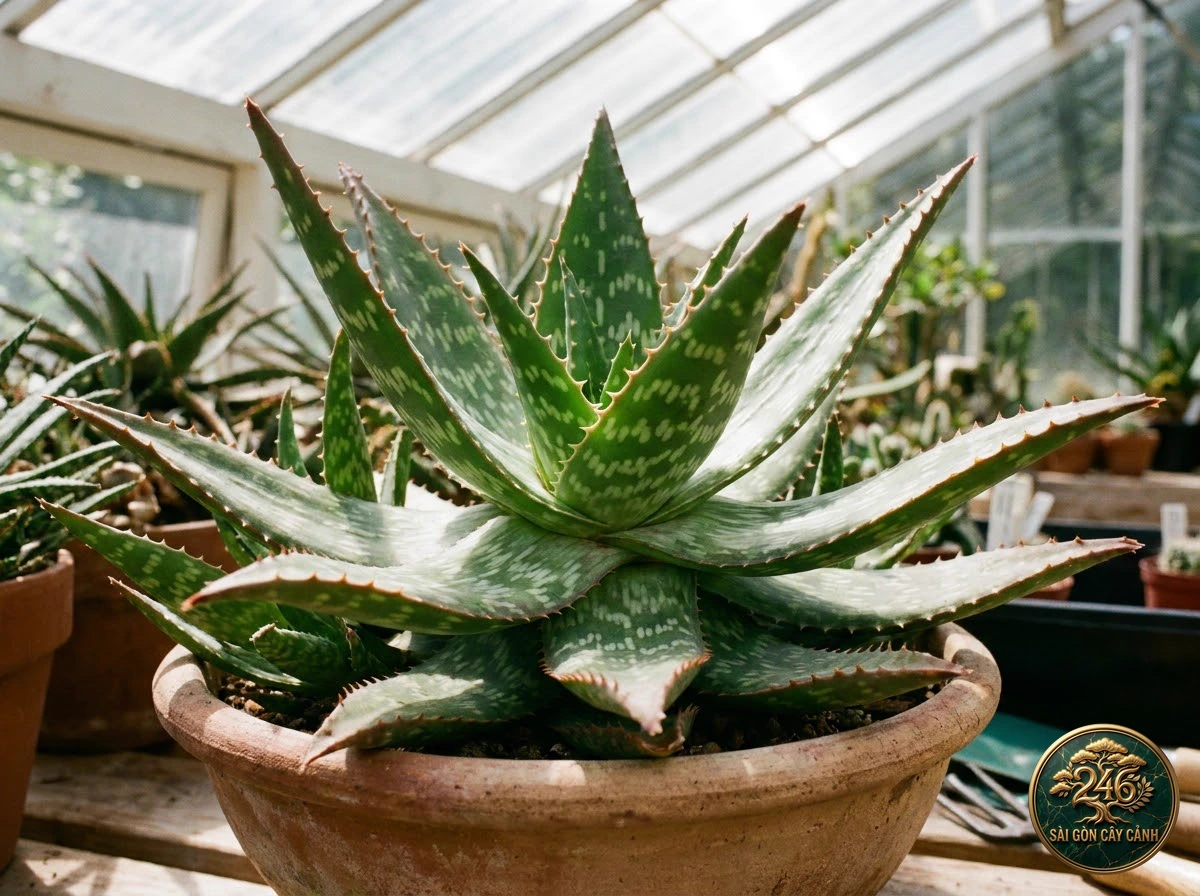
Soap Aloe (Aloe maculata): Botanical Anatomy, Saponin Chemistry and Architectural Xeriscape Design
1. Botanical Morphology & Ecological Adaptations
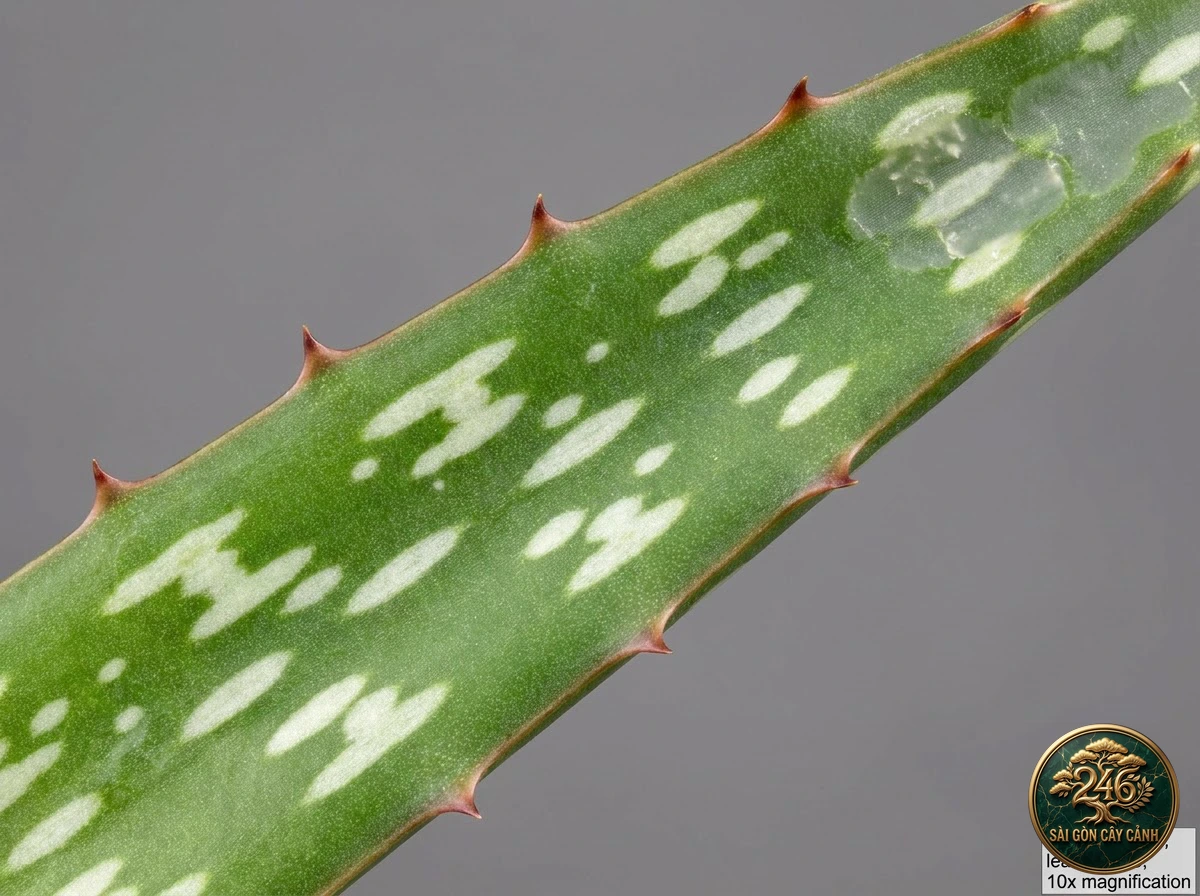
Aloe maculata, widely recognized under the vernacular name Soap Aloe / Zebra Aloe, is a highly distinguished succulent perennial belonging to the family Asphodelaceae. Native to the ecologically diverse landscapes of Southern & Eastern South Africa, this species has evolved sophisticated anatomical adaptations to endure severe seasonal droughts, rocky scree terrain, and fluctuating thermal regimes.
Aloe maculata (Soap Aloe) is readily identified by broad succulent blades patterned with myriad translucent H-shaped white blotches. Leaf margins display prominent reddish-brown teeth, while the sap froths into natural soapy lather when agitated in water.
Robust fibrous rootstocks produce vigorous subterranean runners, forming sprawling coastal colonies across southern Africa. Flat-topped umbel-like corymbose racemes display coral-red to warm apricot-yellow blossoms.
2. Taxonomic Chronicle & Botanical History
Aloe maculata (historically celebrated under the taxonomic synonym Aloe saponaria) is the iconic soap aloe of southern Africa, scientifically classified in 1773 by Italian botanist Carlo Allioni in Auctuarium ad Synopsim Methodicam Stirpium Horti Reg. Taurinensis. The specific epithet maculata is Latin for spotted, denoting the distinct H-shaped white maculations traversing the foliage. The common moniker Soap Aloe originates from indigenous ethnobotanical practices spanning centuries: local peoples crushed the succulent leaves in water to yield a rich lathering saponin foam used for laundering textiles and cleansing the skin.
3. Histological Specialization & CAM Photosynthetic Pathway
Botanical histology of Aloe maculata reveals fascinating phytochemical specialization: broad deltoid leaves assume rich bronze-green tones under high light, patterned with transverse undulating bands of H-shaped white maculations. Leaf margins are armed with sharp reddish-brown deltoid teeth. The parenchyma is laden with natural triterpenoid saponins that depress aqueous surface tension, generating durable biological lather. Its inflorescence is taxonomically diagnostic: branched panicles bear distinctive flat-topped (corymbose) floral heads crowded with coral-red to salmon-orange tubular blossoms dripping with rich nectar.
4. Comprehensive Care Compass (Care Compass 360°)
La bàn chăm sóc Sài Gòn Cây Cảnh
5. Diagnostic Pathology & Clinical Horticultural Interventions
The signature H-shaped maculate spotting on Aloe maculata reaches peak contrast under vibrant sunshine; fading markings indicate chronic light deprivation.
| Observed Physical Symptom | Etiological Factor / Pathology | Horticultural Intervention Protocol |
|---|---|---|
| Foliar maculae fade, leaves lose structural crispness and turn pale green | Insufficient solar radiation reducing anthocyanin contrast and epidermal firmness | Provide minimum 4 hours direct sun or relocate to exposed balcony railing |
| Blades droop limp over planter lip while base remains continuously moist | Hypoxic root asphyxiation resulting from unremitting irrigation | Elevate planter on feet to facilitate bottom drainage, extend dry intervals to 12 days |
| Mealybugs establish dense white colonies underneath decaying basal leaves | Humid microclimate underneath soil-contacting foliage favoring pest refuge | Prune ground-hugging lower leaves, rinse under hose, apply horticultural soap spray |
| Marginal brown teeth become brittle, fracturing upon slight mechanical contact | Substrate calcium and mineral deficiency in aged exhausted potting mix | Supplement potting mix with calcified seaweed or crushed dolomitic limestone |
6. Infrageneric Taxonomic Differentiation Matrix
The taxonomic comparison table below distinguishes Aloe maculata from related spotted aloes such as Aloe zebrina and Aloe grandidentata:
| Taxonomic Characteristic | Aloe maculata (Soap Aloe / Zebra Aloe) | Comparative Counterpart A | Comparative Counterpart B |
|---|---|---|---|
| Foliar Spotting Pattern | Distinctive H-shaped confluent white spots arranged in irregular cross-bands | Random punctate dots or completely unspotted uniform epidermis | Prominent raised pearlescent tubercles |
| Sap Characteristics | Mucilaginous sap lathers readily into soapy foam when rubbed in water | Clear non-foaming viscous polysaccharide gel | Viscous amber-yellow latex with intense bitterness |
| Raceme Silhouette | Remarkable corymbose flat-topped spherical racemes | Elongated cylindrical tapering conical flower spikes | Solitary pendulous bells arching downward |
| Moisture Resilience | Superior tolerance for periodic heavy rains and soil moisture | Vulnerable to soil saturation; prone to fungal decay | Strictly demands hyper-arid xerophytic soil drainage |
7. Vegetative Propagation & Offsetting Protocols
Propagating Aloe maculata is exceptionally brisk and prolific owing to vigorous vegetative stolon production. Established specimens shoot underground stoloniferous runners continuously, developing into substantial multi-headed colonies within a single season. During division, sever rooted offsets using clean shears, dust wounds with sulfur, and cure for 2 to 3 days. Plant offsets into sandy loam blended with forty percent pumice; roots establish with astonishing speed, initiating active foliar expansion within a week.
8. Phytopathology & Integrated Pest Management
While Aloe maculata demonstrates superior moisture and disease tolerance compared to desert aloes, it can host mealybug colonies within dense basal leaf folds resting upon damp soil. Pest honeydew encourages secondary black sooty mould. Preventative maintenance involves routinely removing aged senescent leaves, elevating the crown above bare soil with coarse gravel mulch, and rinsing colonies away with pressurized water, followed by a light application of horticultural neem emulsion.
9. Companion Planting & Xerophytic Groupings
In tropical courtyards and residential balcony borders, Aloe maculata functions as an exceptional architectural groundcover beneath drought-tolerant canopies including Plumeria frangipani, columnar cereus, and dramatic Agaves. The dynamic interplay between vivid coral-red flat-topped floral heads and spotted bronze-green foliage infuses gardens with exuberant wild tropical vitality.
10. Spatial Placement & Interior Architectural Styling
Aloe maculata is celebrated across modern tropical landscape architecture and Bohemian outdoor living spaces. It displays its cheerful character when massed in broad rustic terracotta pots, contemporary round concrete bowls, or lining sunny garden pathways. Its abundant coral floral blooms radiating through spring and summer bring uplifting warmth, festive joy, and welcoming vitality to residential environments.
11. Urban Apartment Microclimates & Architectural Cultivation
Aloe maculata is the consummate choice for gardeners seeking an attractive, undemanding succulent for urban domestic landscapes. It tolerates heavy seasonal downpours better than desert aloes, prospering in sunny balcony borders or exterior ceramic planters.
Aloe maculata exhibits tremendous versatility within urban balconies and residential courtyards due to its broad tolerance for varying lux intensities. Developing expansive rosettes measuring 40 to 60 cm across, it thrives best in wide-mouthed shallow vessels where stolons can roam freely. Providing four to five hours of direct sunlight daily produces striking contrast along its signature H-shaped foliar markings.
For enthusiasts captivated by vibrant tropical greenery, flowering colonies of Aloe maculata featuring flat-topped coral-red corymbs provide an unmissable focal point on sunlit verandas. Beyond infusing architectural spaces with warmth, this generous succulent symbolizes vitality and enduring abundance, welcoming uplifting living energy into domestic sanctuaries.
12. Domestic Pet Safety & Household Placement Guidelines
TOXIC TO COMPANION ANIMALS (ASPCA Warning) – Contains foaming saponins and bitter anthraquinones causing gastrointestinal upset and emesis in pets.
Saponin and aloin fractions within Aloe maculata foliage can induce gastrointestinal vomiting in cats and dogs; cultivate upon elevated balconies.
13. In-Depth Botanical Q&A with Sai Gon Cay Canh
Frequently Asked Question: Can the leaf sap of Aloe maculata be applied to human skin to soothe burns like Aloe vera?
Expert Diagnosis from Saigon Cay Canh: It is strongly advised not to do so! Although belonging to the same genus, Aloe maculata contains much higher concentrations of foaming saponins and bitter anthraquinones than Aloe vera. Its sap exhibits strong detergent properties that can provoke skin irritation, dermatitis, or itching in sensitive individuals. Therefore, Aloe maculata should be enjoyed as an ornamental and traditional soap plant rather than a dermatological substitute for medicinal Aloe vera.
14. Nursery Botanical Journal & Green Sanctuary Notes
Sai Gon Cay Canh display gardens burst into festive color when Aloe maculata blooms: flat-topped coral-red umbels attract honeybees through spring, infusing the botanical sanctuary with joyful natural vitality.
Dish garden groupings of Soap Aloe at our nursery during floral flushes delight every botanical observer: flat-topped corymbose heads burst into warm coral-red blossoms, creating an uplifting tropical tapestry full of joyful vitality.
15. Seasonal Mineral Nutrition & Micro-Nutrient Management
Given its robust metabolism, Soap Aloe responds generously to slow-release organic amendments. Top-dress every two months with mature worm castings, which sustains crisp H-shaped foliar maculation and promotes vibrant flat-topped floral umbels.
During vigorous spring flushes, apply a gentle surface mulch of aged vermicompost and irrigate thoroughly to leach mild humic nutrients downward. Organic worm castings enrich beneficial substrate microflora, stimulating root mineral uptake without any hazard of chemical fertilizer burn.
16. In-Situ Conservation Status & Ethical Botanical Stewardship
Wild Aloe maculata populations thrive abundantly across South Africa under sound conservation management. Sai Gon Cay Canh propagates vigorous offset clones, providing premium landscape material for urban biophilic architecture.
Sai Gon Cay Canh propagates and conserves Aloe maculata using regenerative organic practices, educating urban horticulturists on humane methods for utilizing natural foliar saponins in domestic plant care while preserving mother plants.
17. Native Habitat Ecology & Environmental Stress Physiology
Aloe maculata (historically known as Aloe saponaria or Soap Aloe) is widely distributed across the coastal and inland thickets of southern Africa, extending from the Western Cape through KwaZulu-Natal into Zimbabwe. It colonizes varied habitats from exposed coastal dunes to rocky savanna shale slopes. Thanks to rapid stoloniferous vegetative reproduction via underground runners, Aloe maculata forms expansive colonies spanning dozens of square meters that anchor topsoils against wind erosion and flash flooding.
The hallmark diagnostic feature of this species is its foliar pattern of translucent, H-shaped or oval pale maculations contrasting against deep olive and bronze foliage. The internal parenchyma stores rich concentrations of natural saponins-organic glycosides that produce abundant lather when mixed with water, historically utilized by indigenous communities as a soap alternative. Inflorescences exhibit a unique flat-topped corymbose structure rather than a tall conical spike, showcasing coral-red to salmon-orange tubular blossoms that attract abundant nectarivorous pollinators. It is remarkably undemanding in container culture, withstanding intense solar radiation and seasonal humidity with ease.
Nursery Care Journal & Living Greenery Moments
At Saigon Cay Canh greenhouse, each photograph captures genuine everyday care moments between plant lovers and living greenery, spreading a passion for nature and green-living inspiration.

18. Concluding Horticultural Appraisal
Aloe maculata unites distinctive H-patterned foliar markings with exceptional cultural hardiness. This monograph empowers plant lovers to design radiant, trouble-free xerophytic sanctuaries.
Showcasing signature H-shaped translucent maculations and natural saponin-rich lather, Aloe maculata bridges ancestral ethnobotanical wisdom with contemporary sustainable lifestyles. Beyond delivering vibrant seasonal floral drama, it inspires environmental reverence and fosters authentic biophilic appreciation for the marvelous diversity of African succulent flora.