Living plant profile
Powderpuff cactus
Mammillaria bocasana
Mammillaria Cactaceae Living Herbarium Master V2 Powderpuff Cactus (Mammillaria bocasana): Silky Trichome Insulation, Caespitose Clumping and Pincushion Care Scientific Name: Mammillaria bocasana Poselger Common Name: Powderpuff Cactus / Powder Puff Pincushion Family: Cactaceae Native Range: San Luis Potosi, Mexico Mammillaria bocasana is an endearing globose Mexican cactus cloaked in clouds of soft white silky hair-like […]
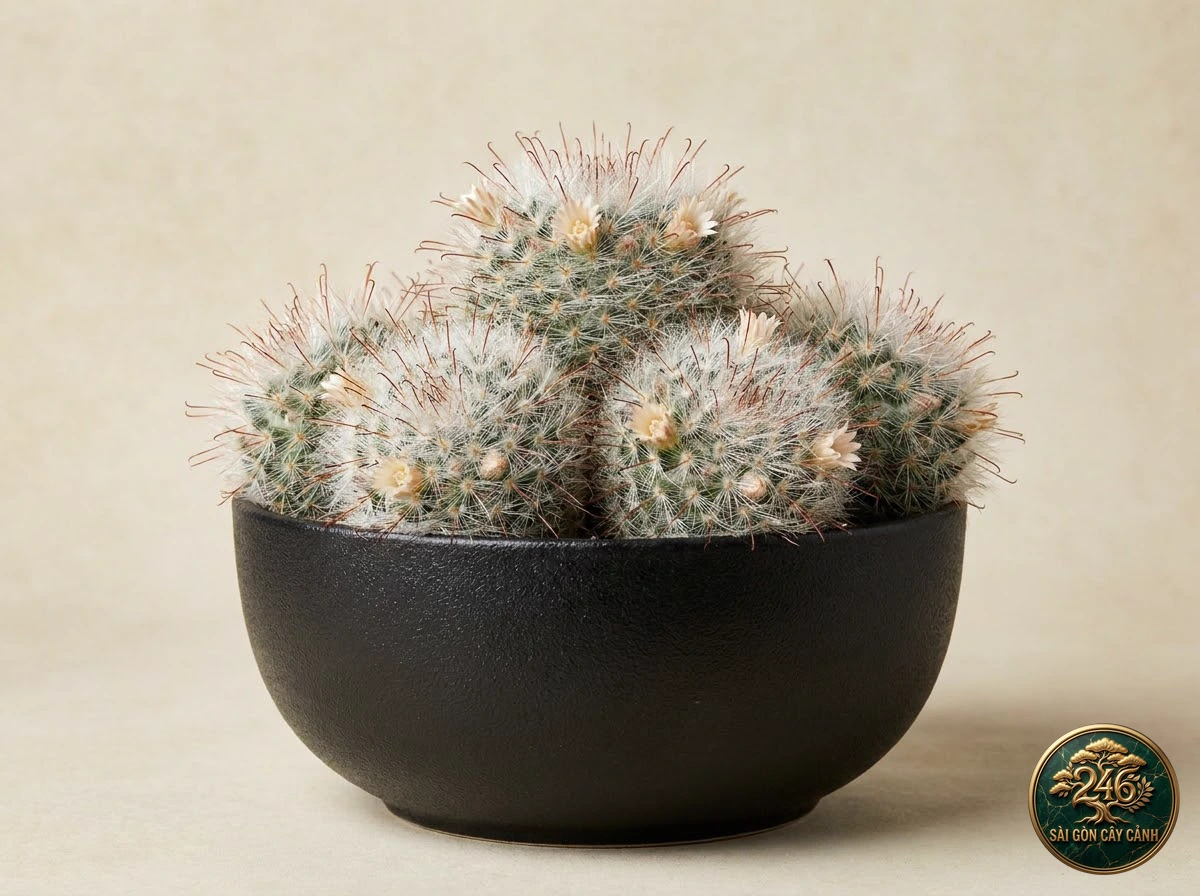
Powderpuff Cactus (Mammillaria bocasana): Silky Trichome Insulation, Caespitose Clumping and Pincushion Care
Common Name: Powderpuff Cactus / Powder Puff Pincushion
Family: Cactaceae
Native Range: San Luis Potosi, Mexico
Mammillaria bocasana is an endearing globose Mexican cactus cloaked in clouds of soft white silky hair-like spines shielding hooked central needles and cream-pink floral rings.
Sài Gòn Cây Cảnh Care Compass
1. Geographic Origin & Taxonomic Nomenclature History
Mammillaria bocasana was formally published by German botanist Heinrich Poselger in 1853. This charming globose cactus grows natively on sandstone crevices across San Luis Potosi, central Mexico.
The entire body is cloaked in clouds of white silky trichomes resembling fluffy down, sheltering sharp hooked central spines while buffering intense desert solar flux.
2. Morphological Architecture & Anatomical Specializations
Morphological architecture features spiral arrangements of soft conical tubercles, with each areole bearing thirty to fifty silky hair-like radials surrounding a hooked chestnut central spine.
This downy trichome layer creates an insulative microclimate over the cuticle, substantially reducing transpirational water escape during scorching Mexican dry seasons.
3. Photosynthetic Radiance & Urban Microclimate Dynamics
Cultivation calls for generous filtered sunlight paired with gentle morning sunshine between 3,500 and 6,500 lux to keep the silky plumage white and induce cream-pink blooms.
Locate pots on bright morning sills or sheltered airy balconies, avoiding damp stagnant corners that invite rot in delicate tuberous rootlets.
4. Mineral Substrate Engineering & Fast Percolation Dynamics
Substrate formulation employs an 80% mineral composition: 50% pumice, 20% perlite, 15% hard akadama, and 15% aged vermicompost.
High capillary drainage ensures irrigation water evacuates immediately, preventing moisture stagnation from staining or waterlogging the silky white coat.
5. Biological Irrigation Protocols & Seasonal Rhythm
Watering relies strictly upon careful bottom sub-irrigation: moisten only after confirming the substrate is 90% bone-dry after ten to fourteen days.
Never spray or pour water overhead; trapped moisture will mat down the delicate white hairs and trigger rot pathogens at apical meristems.
6. Trace Mineral Nutrition & Slow-Release Fertility Protocols
Administer minute applications of clarified organic worm casting tea at mild strength bimonthly in spring and summer to sustain blooming flushes.
Balanced mineral nutrition preserves compact spherical symmetry without prompting irregular or watery tubercle swelling.
7. Vegetative Propagation Protocols & Aseptic Methodology
Mammillaria bocasana readily offsets at the base into caespitose mounds; sever rooted pup globes in spring using a sterile scalpel.
Dust separation wounds with activated charcoal powder and rest divisions in airy dry shade for ten days until callused firmly before rooting in porous mineral grit.
8. Botanical Toxicity Profile & Contact Protocols
This cactus is entirely non-toxic and certified pet-safe under ASPCA standards, containing no harmful alkaloids or caustic saps.
Growers only need to note that hooked central spines can snag delicate knitted fabrics or curious companion animal fur.
9. Physiological Diagnostics & Integrated Pest Management
The clinical monitoring rubric below outlines recognizable physiological symptoms and responsive nursery remedies for powderpuff cacti:
| Clinical Symptom | Primary Root Cause | Standard Corrective Protocol |
|---|---|---|
| White silky hairs discolor to yellowish-brown and mat together | Overhead watering depositing mineral sediment onto delicate trichomes | Switch strictly to bottom sub-irrigation to preserve fluffy pristine hairs |
| Spherical body softens into watery mush from the base | Excessive soil dampness inducing Fusarium basal root decay | Unpot immediately, excise rot cleanly, dust with sulfur, dry 7 days, reroot in pumice |
| Fails to produce characteristic halo of flowers in spring | Insufficient illumination or absence of a cool dry winter rest period | Increase morning solar exposure and observe a drier winter cycle to initiate flower buds |
| Mealybugs forming white waxy clusters beneath silky coat | Sheltered fluffy spines providing ideal haven under sluggish airflow | Extract colonies carefully with fine forceps; mist lightly with diluted 70% alcohol |
10. Comparative Taxonomic Evaluation Across Allied Taxa
The diagnostic matrix below clarifies morphological distinctions separating Mammillaria bocasana from allied downy pincushion cacti:
| Species Taxon | Morphological Trait | Growth Architecture | Diagnostic Indicator |
|---|---|---|---|
| Spine Morphology | Soft silky white hair-like radials with hooked central needles | Stiff star-radiating golden yellow spines without hooks | Feathery plumose radial spines flattened against tubercles |
| Floral Coloration | Cream to pale pink blossoms with delicate reddish midstripes | Small pale cream or yellow tubular florets | Creamy-white petals with subtle pinkish throat marks |
| Clumping Growth Habit | Caespitose mound of fluffy globes resembling powderpuffs | Clusters of upright cylindrical finger-like stems | Dense cushion mounds blanketed in pristine white down |
| Toxicity Status | Non-toxic to pets; safe under ASPCA guidelines | Non-toxic to pets; safe under ASPCA guidelines | Non-toxic to pets; safe under ASPCA guidelines |
11. Urban Landscape Architecture & Living Display Design
The soft downy clouds of Mammillaria bocasana infuse gentle wabi-sabi tranquility when displayed on personal workstations, timber desks, or reading corners.
Its delicate halo of pastel blossoms emerging above white fleece radiates uplifting serenity, softening modern urban interiors with natural sweetness.
Nursery Care Journal & Living Greenery Moments
At Saigon Cay Canh greenhouse, each photograph captures genuine everyday care moments between plant lovers and living greenery, spreading a passion for nature and green-living inspiration.