Living plant profile
Ladyfinger cactus
Mammillaria elongata
Mammillaria Cactaceae Living Herbarium Master V2 Ladyfinger Cactus (Mammillaria elongata): Cylindrical Stems, Stellated Golden Spines and Clumping Dynamics Scientific Name: Mammillaria elongata DC. Common Name: Ladyfinger Cactus / Golden Stars Family: Cactaceae Native Range: Hidalgo, Guanajuato, and Queretaro, Mexico Mammillaria elongata is an iconic Mexican pincushion cactus forming dense clusters of slender cylindrical stems adorned […]
Ladyfinger Cactus (Mammillaria elongata): Cylindrical Stems, Stellated Golden Spines and Clumping Dynamics
Common Name: Ladyfinger Cactus / Golden Stars
Family: Cactaceae
Native Range: Hidalgo, Guanajuato, and Queretaro, Mexico
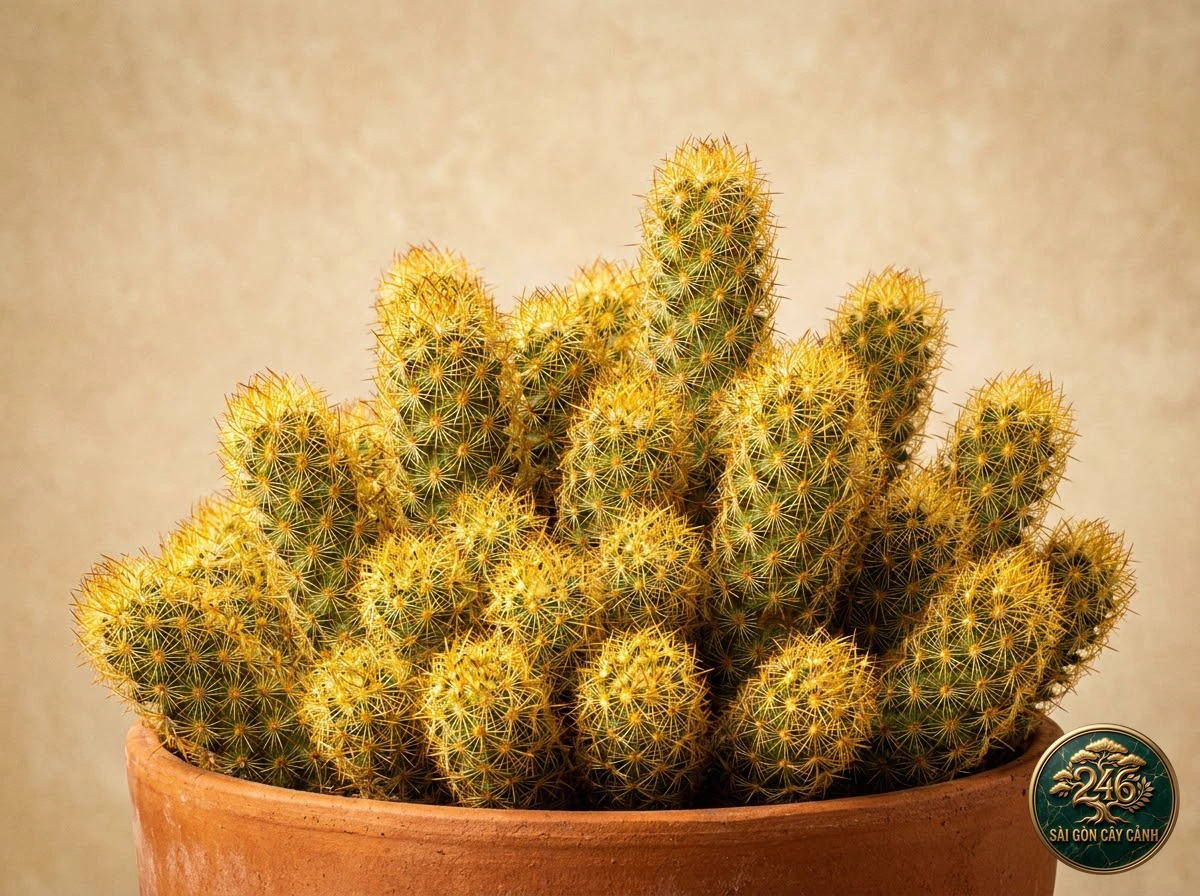
Mammillaria elongata is an iconic Mexican pincushion cactus forming dense clusters of slender cylindrical stems adorned with radiating star-like golden-yellow spines.
Sài Gòn Cây Cảnh Care Compass
1. Geographic Origin & Taxonomic Nomenclature History
Mammillaria elongata was cataloged by Swiss botanist Augustin Pyramus de Candolle in 1828. This beloved ladyfinger cactus is native to arid limestone hills across Hidalgo, Guanajuato, and Queretaro, Mexico.
Stems form dense caespitose clusters of slender cylindrical fingers, sheathed in thousands of stellate radiating spines glowing in rich golden-yellow tones.
2. Morphological Architecture & Anatomical Specializations
Each areole produces fifteen to twenty interlocking star-radiating spines that form a continuous reflective mesh buffering thermal radiation from inner tissues.
Slender cylindrical stems offset prolifically from lower tubercle axils, creating multi-columnar mounds that shade subterranean root zones from harsh ground heat.
3. Photosynthetic Radiance & Urban Microclimate Dynamics
Lighting calls for bright indirect sunlight or gentle direct rays between 4,000 and 7,500 lux; abundant light is vital to sustain luminous golden spine pigmentation.
Locate planters on east-facing balconies or airy window ledges with active circulation, ensuring interior finger stems stay dry and receive uniform daylight.
4. Mineral Substrate Engineering & Fast Percolation Dynamics
Substrate architecture features 45% pumice, 25% perlite, 15% hard akadama grit, and 15% seasoned vermicompost free of soil pathogens.
High capillary drainage enables irrigation moisture to evacuate swiftly, preventing moisture stagnation around crowded finger bases.
5. Biological Irrigation Protocols & Seasonal Rhythm
Hydration cycles observe disciplined intervals every ten to fourteen days during active growth, moistening deeply only after 85-90% soil desiccation.
During humid overcast or chilly spells, minimize water application to allow root rest and maintain firm cylindrical stem turgor.
6. Trace Mineral Nutrition & Slow-Release Fertility Protocols
Apply diluted organic liquid micronutrients bimonthly in spring and summer flushes to support active fingerlet proliferation along stem crests.
Avoid excessive synthetic nitrogen that prompts weak elongated growth, preserving tight golden spine starbursts and compact clump symmetry.
7. Vegetative Propagation Protocols & Aseptic Methodology
Mammillaria elongata propagates effortlessly by detaching semi-hardwood finger offsets in spring using a sterilized razor blade.
Rest finger cuttings in airy dry shade for five days until wound margins suberize into firm protective plugs before inserting into barely damp mineral grit.
8. Botanical Toxicity Profile & Contact Protocols
This cactus is entirely pet-safe and free of toxic saps or harmful alkaloids under ASPCA veterinary botanical guidelines.
Its star-like spines hug stem contours tightly, feeling merely rough to the touch and presenting no significant puncture hazard to curious household pets.
9. Physiological Diagnostics & Integrated Pest Management
The clinical diagnostic rubric below details recognizable stress manifestations and responsive remedies for ladyfinger cacti:
| Clinical Symptom | Primary Root Cause | Standard Corrective Protocol |
|---|---|---|
| Spines fade from glowing gold to dull brownish-grey | Low light levels or excessive stagnant ambient moisture | Relocate to 3-4 hours direct morning sun to re-energize spine pigment |
| Finger-like stems soften at the base and detach | Water stagnation causing anaerobic root decay | Excise rotting fingers, unpot mound, dry 5 days, replant in porous mineral grit |
| Stems elongate pale and thin with wide spine intervals | Etiolation triggered by prolonged indoor shade | Prune weak elongated tips and provide bright sunny exposure |
| White cottony flocs wedged between tightly clustered fingers | Mealybug infestation taking advantage of narrow crevices | Brush away with fine brush dipped in 70% alcohol; treat with horticultural oil |
10. Comparative Taxonomic Evaluation Across Allied Taxa
The comparative matrix below outlines botanical distinctions separating Mammillaria elongata from neighboring columnar pincushion cacti:
| Species Taxon | Morphological Trait | Growth Architecture | Diagnostic Indicator |
|---|---|---|---|
| Stem Shape | Slender cylindrical finger-like stems ascending in dense clumps | Single or low-clumping spherical globes | Soft globose bodies enveloped in downy hairs |
| Spine Radiance | 15-20 star-radiating spines of luminous golden yellow | Stiff radiating radials with straight sharp centrals | Fine silky hairs with hooked central prickles |
| Floral Display | Small bell-shaped cream to pale yellow florets along upper stems | Vibrant pink to magenta blossoms around crown | Delicate cream blooms forming a ring at apex |
| Clustering Rate | Prolific offsetting forming multi-stemmed golden colonies | Moderate basal offsetting over years | Slow compact clumping into powderpuff cushions |
11. Urban Landscape Architecture & Living Display Design
The radiant golden luster of Mammillaria elongata brings warm vitality and cheerful elegance when potted in neutral ceramic planters on modern desks.
Its upward-reaching cluster of golden fingers symbolizes unity and relentless growth, enriching urban interiors with timeless desert optimism.
Nursery Care Journal & Living Greenery Moments
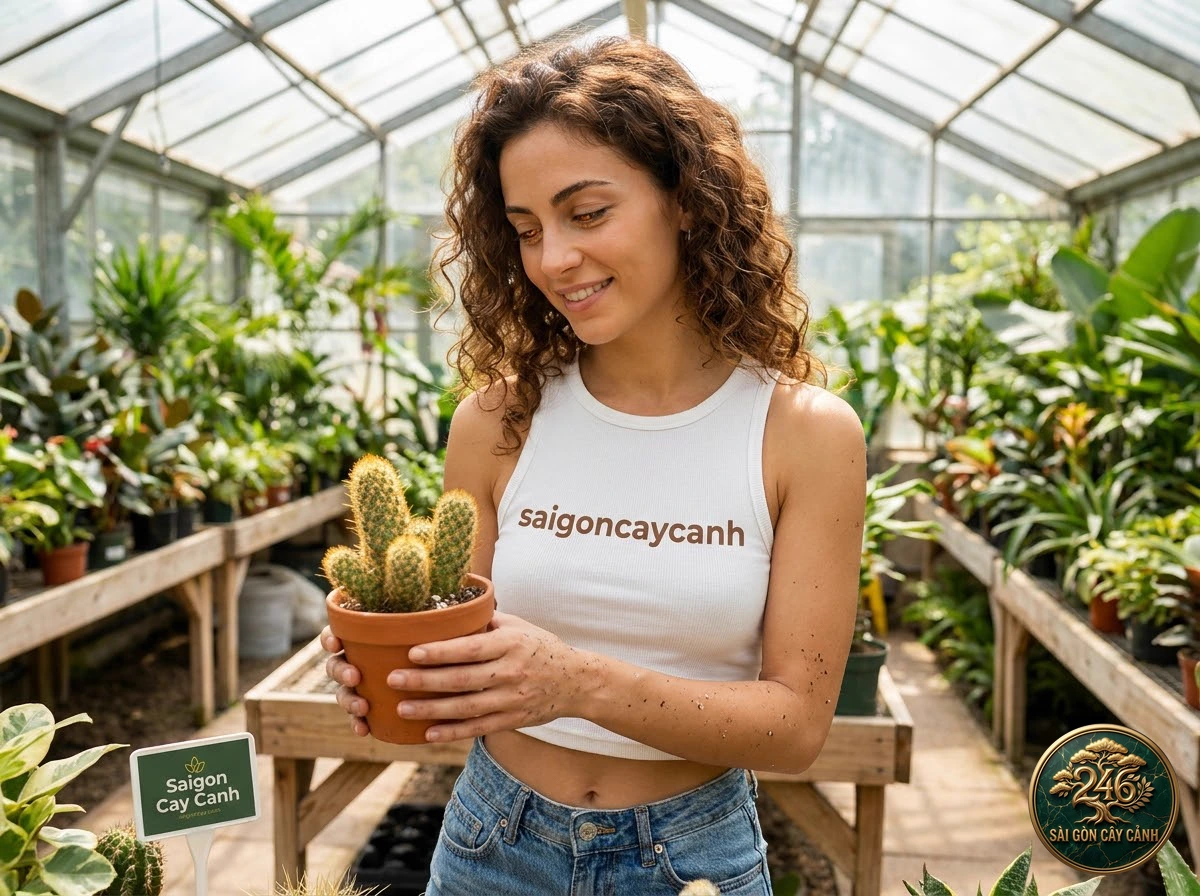
At Saigon Cay Canh greenhouse, each photograph captures genuine everyday care moments between plant lovers and living greenery, spreading a passion for nature and green-living inspiration.