
Living plant profile
Feather cactus
Mammillaria plumosa
Mammillaria Cactaceae Living Herbarium Master V2 Feather Cactus (Mammillaria plumosa): Plumose Spine Canopy, Calcareous Provenance and Xerophytic Display Scientific Name: Mammillaria plumosa F.A.C.Weber Common Name: Feather Cactus Family: Cactaceae Native Range: Coahuila and Nuevo Leon, Mexico Mammillaria plumosa is a peerless Mexican cactus celebrated for its exquisite feathery plumose spines that completely mantle the succulent […]
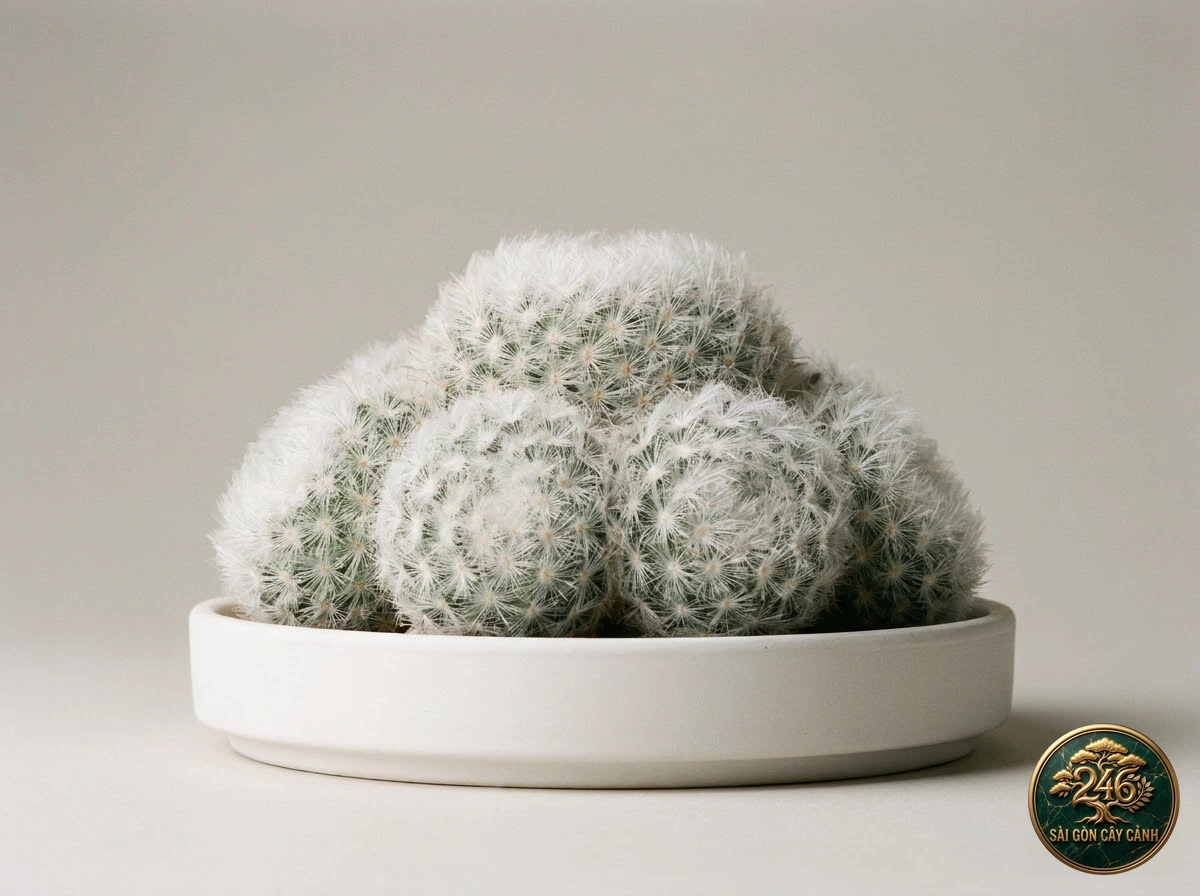
Feather Cactus (Mammillaria plumosa): Plumose Spine Canopy, Calcareous Provenance and Xerophytic Display
Common Name: Feather Cactus
Family: Cactaceae
Native Range: Coahuila and Nuevo Leon, Mexico
Mammillaria plumosa is a peerless Mexican cactus celebrated for its exquisite feathery plumose spines that completely mantle the succulent body in swan-like white down.
Sài Gòn Cây Cảnh Care Compass
1. Geographic Origin & Taxonomic Nomenclature History
Mammillaria plumosa was documented by French physician and botanist Frederic Albert Constantin Weber in 1898. This aristocratic cactus is native to steep limestone cliffs across Coahuila and Nuevo Leon, Mexico.
The entire succulent body is veiled by broad feathery plumose spines resembling pristine swan plumage, perfectly reflecting blinding solar rays across arid calcareous canyons.
2. Morphological Architecture & Anatomical Specializations
Microscopic examination reveals that radial spines are transformed into flattened feather-like plumose rays, interlocking into a downy mantle that cloaks 100% of epidermal skin.
This plumose architecture traps nocturnal moisture while reflecting infrared thermal radiation, enabling the species to thrive on barren limestone fissures devoid of organic humus.
3. Photosynthetic Radiance & Urban Microclimate Dynamics
Lighting calls for bright indirect daylight to gentle direct morning sunshine between 4,000 and 8,000 lux; essential to maintain dense overlapping feather coverage.
Locate containers on breezy balconies or airy window sills; avoid humid stagnant conditions that stain delicate white feathers or induce fungal decay.
4. Mineral Substrate Engineering & Fast Percolation Dynamics
Substrate formulation incorporates calcareous minerals: 50% pumice, 20% perlite, 15% crushed limestone or hard akadama, and 15% matured worm castings.
Naturally available calcium reinforces sturdy plumose spine structures, while high mineral porosity ensures instantaneous drainage following water applications.
5. Biological Irrigation Protocols & Seasonal Rhythm
Watering relies strictly upon careful bottom sub-irrigation: moisten only after the substrate desiccates 90% dry, every twelve to sixteen days during warm months.
Never wet the feathery spine coat; dissolved water minerals will mat the plumage and invite unsightly sooty mold pathogens onto foliar surfaces.
6. Trace Mineral Nutrition & Slow-Release Fertility Protocols
Feed with clarified vermicompost tea at mild dilution bimonthly in spring and summer to sustain compact spherical growth and floret bud initiation.
Never force expansion with concentrated chemical boosters; rapid swelling risks rupturing the tight feather blanket and marring natural aesthetic perfection.
7. Vegetative Propagation Protocols & Aseptic Methodology
Mammillaria plumosa produces basal offsets over time; harvest side pups in spring using a sterile scalpel once offsets possess independent rootlets.
Dust separation wounds with activated charcoal powder and cure divisions in airy dry shade for ten days prior to potting into fresh porous mix.
8. Botanical Toxicity Profile & Contact Protocols
This feather cactus is completely non-toxic and categorized as prime pet-safe flora under ASPCA veterinary standards.
Its soft feathery spines feel silky smooth to the touch, possessing no sharp needles and posing zero mechanical hazards to curious domestic animals.
9. Physiological Diagnostics & Integrated Pest Management
The clinical monitoring rubric below outlines recognizable symptoms and responsive corrective remedies for feather cacti:
| Clinical Symptom | Primary Root Cause | Standard Corrective Protocol |
|---|---|---|
| White feathery spines mat together and turn dingy grey | Overhead splashing depositing water minerals or dust onto plumage | Transition to sub-irrigation and use a soft pneumatic blower to remove dust particles |
| Basal tubercles turn brown and watery | Substrate moisture stagnation triggering collar rot | Unpot immediately, excise rot, dust with sulfur, air-dry 7 days, reroot in pure pumice |
| Feather density thins out revealing bare green skin beneath | Inadequate solar exposure reducing plumose spine production | Provide 3-4 hours direct morning sun to stimulate tight overlapping feather growth |
| Mealybugs concealing themselves deep beneath the feather blanket | Sheltered fluffy microclimate inviting scale or mealybug colonies | Extract pests with fine forceps; spray lightly with diluted 70% alcohol solution |
10. Comparative Taxonomic Evaluation Across Allied Taxa
The comparative analytical rubric below clarifies definitive traits distinguishing Mammillaria plumosa from allied downy pincushion taxa:
| Species Taxon | Morphological Trait | Growth Architecture | Diagnostic Indicator |
|---|---|---|---|
| Spine Architecture | Broad feathery plumose spines without sharp needles | Silky hairs accompanied by sharp hooked central spines | Stiff star-radiating golden yellow spines |
| Tactile Safety | Completely soft to the touch; cannot puncture skin | Hooked spines easily catch on fabric or pet fur | Sharp needles capable of mild mechanical pricks |
| Floral Tone | Creamy-white to pale greenish-yellow with subtle stripes | Delicate cream and coral-pink blossoms | Small cream-colored flowers |
| Geological Preference | Prefers calcareous mineral mix with crushed limestone | Standard aerated pumice mineral substrate | Standard gritty mineral blend |
11. Urban Landscape Architecture & Living Display Design
The angelic swan-white plumage of Mammillaria plumosa elevates container displays into breathtaking living sculptures on fine coffee tables and collector shelves.
Its ethereal presence radiates pure tranquility and mindful calm, softening urban living spaces with rare natural serenity.
Nursery Care Journal & Living Greenery Moments
At Saigon Cay Canh greenhouse, each photograph captures genuine everyday care moments between plant lovers and living greenery, spreading a passion for nature and green-living inspiration.