Living plant profile
Parrot’s beak heliconia (Heliconia psittacorum)
Heliconia psittacorum
Parrot’s beak heliconia (Heliconia psittacorum) Heliconia psittacorum, universally celebrated as parrot’s beak heliconia, parakeet flower, or false bird of paradise, is a flamboyant and exceptionally floriferous perennial herbaceous species belonging to the lobster-claw family (Heliconiaceae). Indigenous to swampy savannahs and forest clearings across northern South America and the Lesser Antilles, this architectural jewel captivates landscape […]
Parrot’s beak heliconia (Heliconia psittacorum)
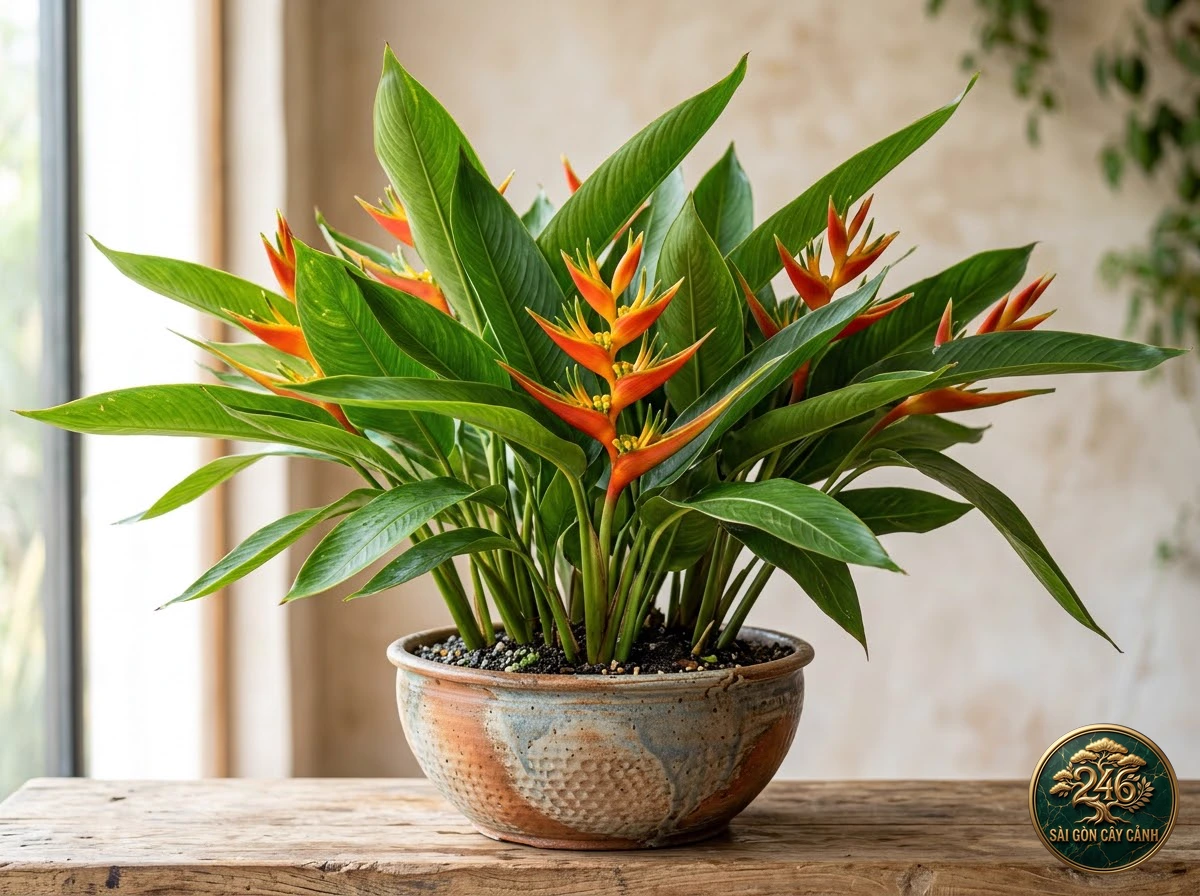
Heliconia psittacorum, universally celebrated as parrot’s beak heliconia, parakeet flower, or false bird of paradise, is a flamboyant and exceptionally floriferous perennial herbaceous species belonging to the lobster-claw family (Heliconiaceae). Indigenous to swampy savannahs and forest clearings across northern South America and the Lesser Antilles, this architectural jewel captivates landscape architects worldwide with its exquisitely sculpted inflorescence: erect, boat-shaped cincinnus bracts saturated in luminous golden-orange, flame-scarlet, or coral-pink closely mimic the sharply curved beak of a tropical parakeet. Nestled within each vibrant bract, slender tubular true blossoms emerge in greenish-yellow tipped with distinctive dark purple-black spots that efficiently beckon hummingbirds. Within Saigon Cay Canh landscape masterplans, parrot’s beak heliconia embodies exuberant vitality and perpetual prosperity, functioning as a premier flowering hedge and massing groundcover for modern tropical estates.
Sài Gòn Cây Cảnh Care Compass
1. Botanical Identity & Taxonomic Nomenclature History
Heliconia psittacorum was formally published by Swedish naturalist Carl Linnaeus the Younger in 1782 within Supplementum Plantarum. The generic name Heliconia honors Mount Helicon in classical Greek mythology, the sacred dwelling of the nine artistic Muses, paying tribute to the sculptural, muse-inspiring beauty of these neotropical blooms. The specific epithet psittacorum derives from Latin psittacus (‘of parrots’ or ‘belonging to parakeets’), referencing the sharply incurved, beaked silhouette of its showy floral bracts.
Endemic to riparian ecotones and marshy savannah margins across the Orinoco and Amazon basins, the species was historically revered by indigenous tribes as a floral sunburst heralding the dawn. Following centuries of international horticultural dissemination, it has fully naturalized across Southeast Asia, establishing itself in Vietnam as an indispensable, sun-tolerant flowering workhorse across civic parks and high-end residential gardens.
2. Morphological Architecture & Anatomical Characteristics
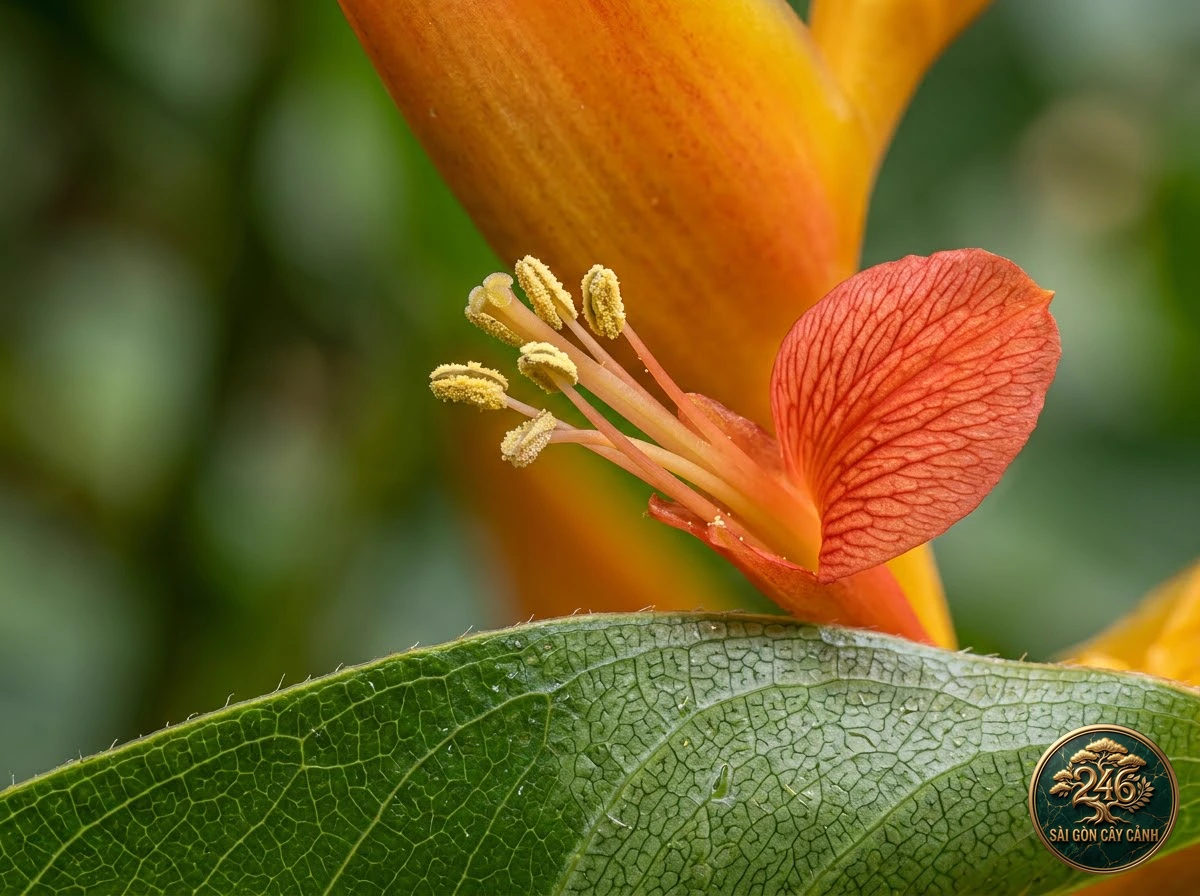
Morphologically, Heliconia psittacorum develops as an erect perennial clump-forming herb arising from robust, branching subterranean rhizomes supported by deep adventitious roots. Aerial pseudostems reach 1.0 to 1.8 meters in vertical height, formed by tightly imbricated, glabrous green foliar sheaths. Leaves are arranged distichously; petioles extend 15 to 30 cm with deep adaxial grooves; blades are oblong-lanceolate, 40 to 70 cm long and 10 to 15 cm wide, with acute apices, rounded bases, prominent midribs, and smooth, glossy green surfaces.
Inflorescences are terminal, rigidly erect cymes 20 to 40 cm long elevated on stout peduncles. The rachis is softly flexuous, bearing 4 to 8 alternate, boat-shaped (cincinnus) bracts 8 to 14 cm long, saturated in brilliant orange-yellow, flame-scarlet, or coral-red with sharply incurved, beak-like apices. Each bract cradles a fascicle of 3 to 10 tubular true blossoms 3 to 4 cm long; true perianths are greenish-yellow conspicuously tipped with blackish-purple apical spots, producing abundant nectar. The fruit is a subglobose, fleshy 3-seeded capsule 8 to 10 mm across, maturing from green to lustrous cobalt-blue.
3. Photobiology & Photosynthetic Energy Thresholds
Heliconia psittacorum is a sun-loving heliophyte reaching maximum vegetative vigor and floriferous output under 6 to 8 hours of unfiltered direct solar irradiance daily, corresponding to light intensities between 45,000 and 85,000 lux. Intense tropical sunlight drives the enzymatic synthesis of carotenoid and anthocyanin pigments within the boat-shaped bracts, maximizing fiery orange-red coloration and peduncle stiffness.
While accommodating partial shade (25,000 to 35,000 lux) beneath light tree canopies, foliage assumes a deeper emerald hue at the expense of floral density and scape rigidity. The species displays remarkable resilience against tropical midday heat exceeding 40 degrees C, buffered by thick foliar cuticles that regulate transpirational losses.
4. Mineral Substrate Mechanics & Root Aeration Dynamics
The shallow, vigorously branching rhizomatous root system of parrot’s beak heliconia thrives in fertile, moisture-retentive alluvial loam or sandy soil enriched with organic humus and engineered for brisk percolation. While remarkably adaptable across poor urban soils, stagnant anaerobic saturation persisting beyond 48 hours suffocates active feeder roots, precipitating bacterial rhizome decay.
The planting substrate prepared by Saigon Cay Canh consists of 50% fertile river loam, 20% carbonized rice hulls for macroporosity, 15% Trichoderma-composted manure, 10% washed coco peat, and 5% coarse river sand. Optimal substrate pH ranges between 6.0 and 7.2. Commercial urban planters and landscape beds must incorporate deep perimeter swales to facilitate rapid storm runoff.
5. Irrigation Dynamics & Soil Hydraulic Equilibrium
Parrot’s beak heliconia exhibits high water requirements to support its broad transpiring foliage and non-stop seasonal blooming. Irrigate generously once daily in early morning hours, saturating the root perimeter thoroughly. During intense southern tropical dry spells, a supplementary late-afternoon irrigation tempers microclimatic foliar heat stress.
Deliver water evenly around the root mass; avoid forceful hydraulic jets into tender emerging pseudostem axils. Once established into dense caespitose clumps with deep root systems, the plant demonstrates moderate drought tolerance; temporary moisture deficit prompts inward leaf curling to conserve internal water, which swiftly unfurls upon deep rehydration.
6. Mineral Nutrition Protocols & Periodic Fertilization Schedules
To maintain a lush, evergreen foliar canopy and stimulate non-stop emergence of hundreds of vivid floral scapes, disciplined organic and mineral fertilization is mandatory. Top-dress with aged vermicompost or composted manure at 1.0 to 1.5 kg per square meter of planting bed every 2 months, gently scratching it into the surface soil.
Supplement with balanced mineral fertilizers (NPK 16-16-16 or NPK 15-9-20) monthly at 30 to 40 g per clump placed 10 cm from the pseudostems, followed by deep irrigation. During peak blooming flushes, foliar applications of chelated calcium, boron, and potassium humate fortify scape rigidity, intensify orange bract saturation, and extend on-plant floral longevity for 3 to 4 weeks.
7. Acclimatized Propagation & Germplasm Preservation
Propagation of Heliconia psittacorum is exceptionally rapid, dependable, and yields near 100% field survival via vegetative rhizome division. An established clump generates dozens of spreading rhizome shoots within 6 to 12 months. Division can proceed year-round across southern Vietnam provided adequate irrigation is available, with the onset of the monsoon season being optimal.
Use a sharp spade to lift rhizome clumps, cleanly dividing horizontal subterranean stems into 10 to 15 cm segments, each bearing at least 1 to 2 sturdy pseudostems and healthy roots. Trim foliage by half to mitigate transpirational shock, plant rhizomes 8 to 10 cm deep in prepared soil, firm the bed, and irrigate thoroughly. New shoots emerge within 7 to 10 days, with blooming commencing in 3 to 4 months.
8. Biosafety Assessment & Companion Animal Toxicological Profiles (ASPCA)
Botanical safety profile and ASPCA pet safety standards: Classified within the Heliconiaceae family, Heliconia psittacorum is verified by global veterinary toxicology databases and official American Society for the Prevention of Cruelty to Animals (ASPCA) registries as 100% NON-TOXIC TO DOGS, CATS, AND HORSES.
All vegetative and floral organs, including pseudostems, foliage, colorful cincinnus bracts, and subterranean rhizomes, are entirely devoid of hazardous alkaloids or toxic resins. The cellular sap is benign, causing zero dermal irritation or chemical burns upon routine handling. Accidental browsing on leaves or floral parts by domestic animals poses zero toxicological danger. Consequently, it represents one of the most pet-friendly, carefree flowering perennials for private family villas and luxury hospitality landscapes.
9. Clinical Pathology Diagnostic Matrix & Therapeutic Interventions
Pathology diagnostic protocol for floral thrips suppression and post-anthesis pseudostem sanitation in Heliconia psittacorum:
| Clinical Symptomology | Etiological Factor | Prescribed Therapeutic Protocol |
|---|---|---|
| Inflorescence bracts show silvering streaks and necrotic margins, accompanied by stunted, aborted true flowers | Flower thrips (Thripidae) feeding inside young floral bract axils during warm, dry weather conditions | Rinse flower scapes with gentle water jets, and apply bio-rational spinetoram (Radiant) or mineral oil emulsion |
| Leaf surfaces develop circular necrotic spots with pronounced chlorotic halos, coalescing into extensive foliar blight | Cercospora heliconiae fungal leaf spot proliferating during prolonged periods of high ambient humidity and rain | Prune out severely infected lower foliage, and spray preventative copper hydroxide (Champion) or difenoconazole |
| Roots exhibit irregular gall knots and stunted fibrous development, resulting in chlorotic lower leaves and poor vigor | Root-knot nematodes (Meloidogyne spp.) infesting root systems and disrupting vascular nutrient translocation | Incorporate bio-nematicides containing Paecilomyces lilacinus or drench with Tervigo, supplemented with organic humus |
10. Comparative Morphology & Sympatric Differentiation
Taxonomic comparative matrix evaluating upright orange-green bracts and slender clumping habit of Heliconia psittacorum:
| Diagnostic Trait | Heliconia psittacorum (Parrot’s beak heliconia) | Comparative Taxon A | Comparative Taxon B |
|---|---|---|---|
| Inflorescence orientation and bract anatomy | Rigidly erect cymes 20 to 40 cm long with golden-orange or scarlet boat-shaped bracts resembling parakeet beaks | Spectacular pendulous inflorescences 50 to 100 cm long with scarlet, yellow-margined bracts resembling lobster claws | Stout erect inflorescences with bold scarlet bracts edged in dark green or narrow gold, thick and rigid |
| Plant stature and foliar dimensions | Plant height 1.0 to 1.8 m, leaves 40 to 70 cm long by 10 to 15 cm wide, forming dense massing beds | Colossal plant height 2.5 to 4.0 m, massive leaves 1.0 to 1.8 m long creating dramatic tropical canopy | Plant height 1.5 to 2.5 m, oblong-elliptic leaves in lustrous emerald green with prominent midribs |
| True floral perianth and apical markings | Tubular greenish-yellow true flowers conspicuously tipped with dark blackish-purple apical spots | Creamy yellow true flowers nestled within hanging bracts, lacking distinct black apical markings | Greenish-white true flowers emerging slightly from erect bract margins, lacking distinct dark spots |
11. Symbolic Heritage, Biophilic Design & Architectural Placement
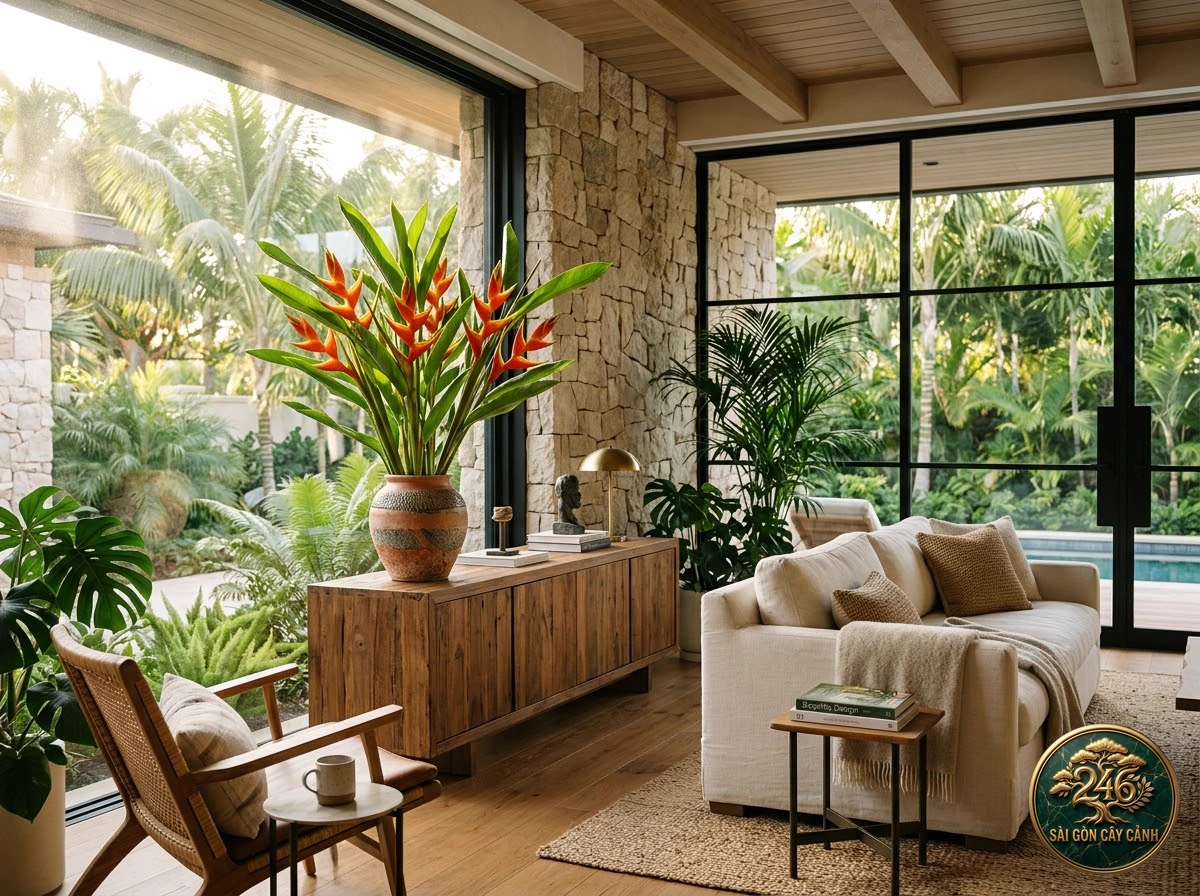
Within Eastern landscape philosophy and biophilic design principles, parrot’s beak heliconia channels vibrant Fire and prolific Wood energetic currents, symbolizing radiant joy, auspicious good fortune, and burgeoning prosperity. Its glowing golden-orange bracts ascending proudly against lush emerald foliage introduce invigorating vital chi, clearing stagnant energies and illuminating built environments with dynamic positivity.
In contemporary tropical landscape architecture, Heliconia psittacorum is an unrivaled multi-functional floral asset: creating colorful privacy screens along villa perimeters, forming brilliant ribbon borders along pedestrian pathways, massing into expansive park drifts, or commanding large artisanal planters on sunny rooftop verandas.
12. SGCC Acclimatization Benchmarks & Quality Guarantee
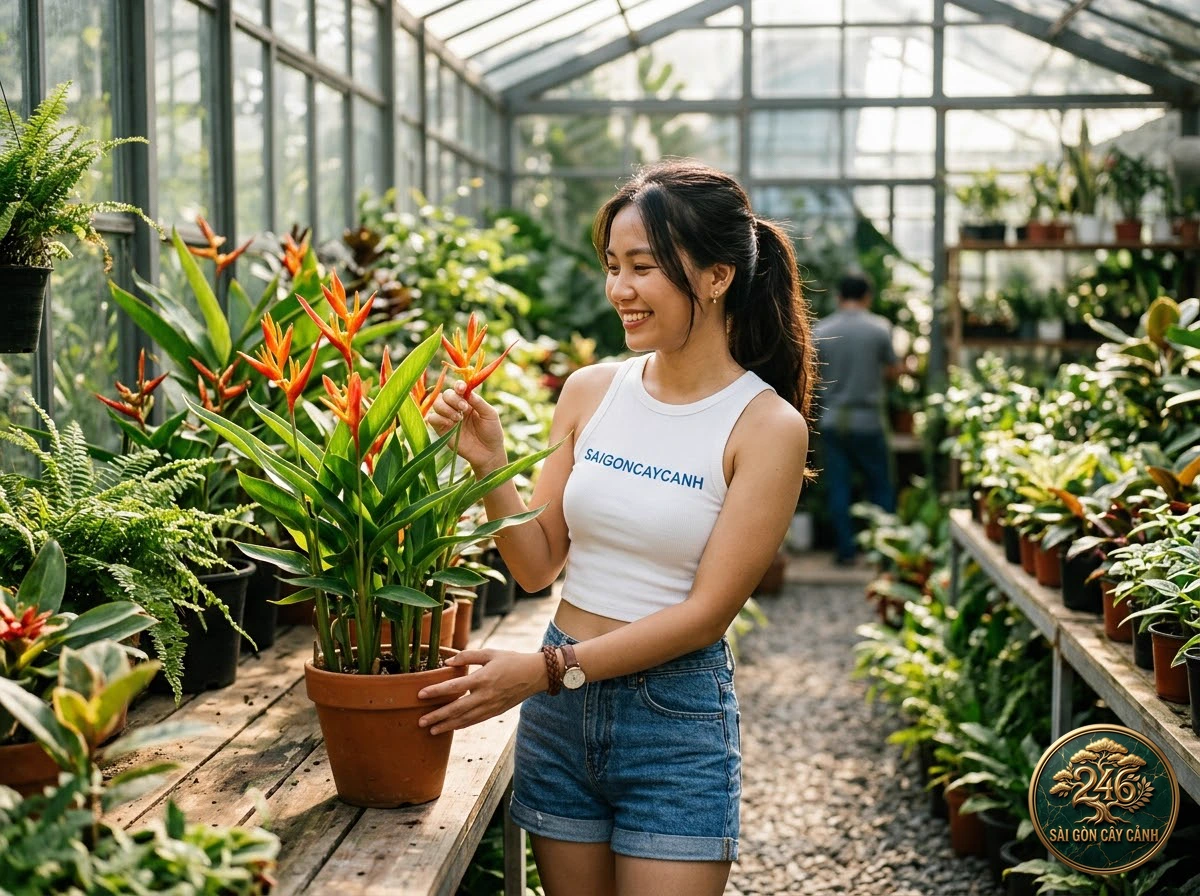
Saigon Cay Canh is a premier commercial nursery grower and wholesale distributor of certified Heliconia psittacorum stock across southern Vietnam, providing vigorous containerized starts and mature flowering clumps for municipal boulevards, urban parks, and resort estates.
We guarantee authentic varietal genetics, pest-free certification with assured 99% establishment success in mass landscape beds, dependable seasonal logistics, and dedicated technical advisory for tropical planting.
💬 Góc Tư Vấn & Hướng Dẫn Kỹ Thuật SGCC
Chuẩn E-E-A-T Kinfolk❓ Chăm sóc Parrot’s beak heliconi cần lưu ý điều gì quan trọng nhất?
💡 Dạ điều quan trọng nhất là giữ môi trường sống ổn định, tránh sốc nhiệt hay dao động thông số đột ngột, đồng thời cung cấp khẩu phần ăn sạch và tươi mới ạ.
❓ Làm thế nào để phòng ngừa bệnh tật hiệu quả cho các bé?
💡 Dạ anh chị nên giữ vệ sinh chuồng/hồ nuôi sạch sẽ, thay nước hoặc dọn dẹp định kỳ và bổ sung vitamin, men tiêu hóa đều đặn để tăng sức đề kháng ạ.
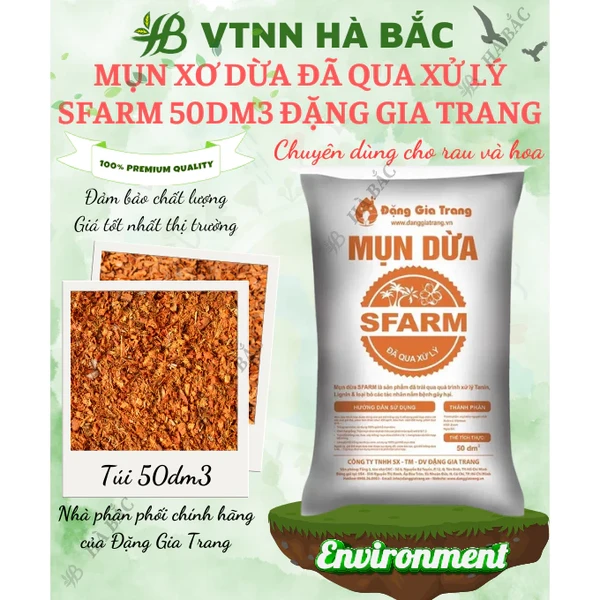
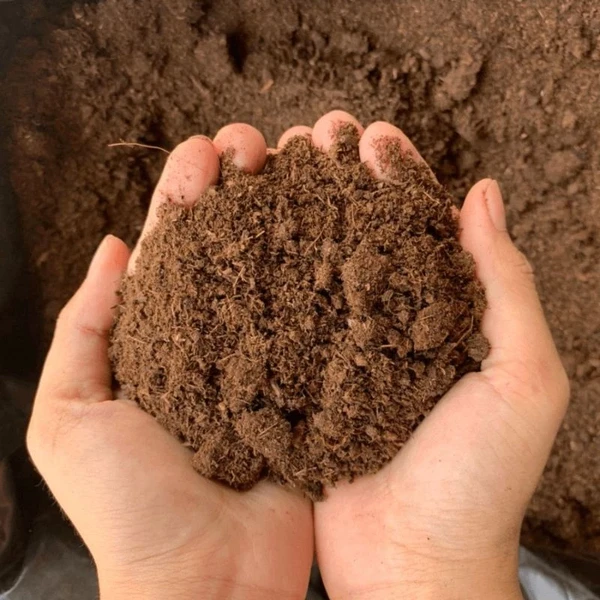
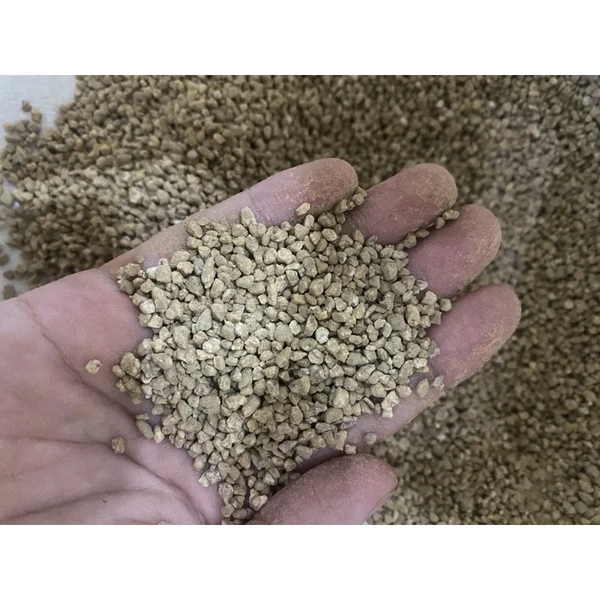
🌿 Trang Thiết Bị, Đất Trồng & Dụng Cụ Bonsai Tuyển Chọn
Dụng cụ tỉa, giá thể hữu cơ & phân bón chuyên dụng cho cây cảnh.



![Bộ dụng cụ làm vườn 3 món , Bộ Dụng Cụ Làm Vườn Mini 3 Món Siêu Tiện Dụng[Có sẵn]](https://saigoncaycanh.com/shop/images/products/11617757214.webp)