Living plant profile
Heart of Jesus
Caladium bicolor
Comprehensive botanical dossier for Heart of Jesus (Caladium bicolor). Identification, lighting calibration, porous substrate formulation, and cultivation guide by Saigon Cay Canh.
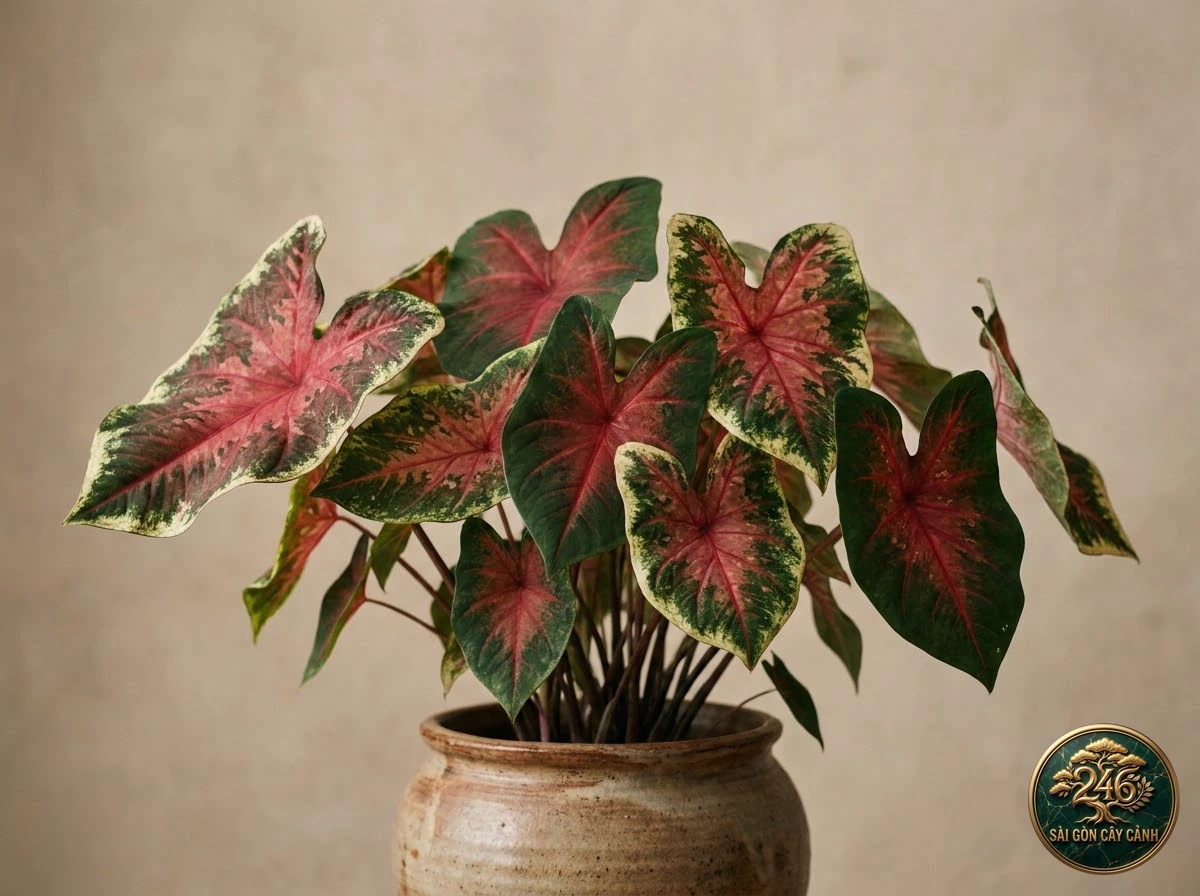
Heart of Jesus (Caladium bicolor) is the quintessential Neotropical foliage jewel of the Amazon basin, celebrated worldwide for its heart-shaped peltate leaves flushed with incandescent crimson centers. Cultivated across tropical regions for centuries, this geophytic aroid provides dynamic architectural presence and vibrant chromatic energy in modern curated spaces.
Sài Gòn Cây Cảnh Care Compass
1. Core Botanical Taxonomy & Cultural Specifications
| Scientific Name | Caladium bicolor |
|---|---|
| Botanical Family | Araceae (Aroid Family) |
| Native Distribution | Amazon basin rainforest floodplains across Brazil, Colombia, and the Guianas |
| Growth Demeanor | Herbaceous geophyte with flattened subterranean tubers, deciduous winter dormancy |
| Lighting Threshold | Bright filtered sunlight (1,800 – 3,200 lux); shields papery lamina from harsh scorch |
| Hydration Cadence | Consistently moist during active flush; cease watering when tuber enters autumn dormancy |
| Substrate Formulation | 35% medium pumice, 25% composted fine bark, 25% cured coco fiber, and 15% horticultural perlite |
| Thermal Range | 22°C – 31°C (72°F – 88°F; vegetative vigor ceases below 16°C/60°F) |
| Relative Humidity | 65% – 85% (Elevated ambient humidity maintains foliar turgor and crimson chromatic intensity) |
| Cultivation Difficulty | Moderate (Requires understanding seasonal tuber resting phase and precise moisture tapering) |
| Pet Safety Profile | Toxic (Microscopic insoluble calcium oxalate raphides cause oral burning in animals) |
Formally cataloged in the authoritative taxonomic database of the Royal Botanic Gardens Kew (POWO), Caladium bicolor exemplifies evolutionary adaptation to seasonal floodplain ecology in South America. The botanical foundation of this geophyte rests in its flattened subterranean tuber, which stores dense starch reserves allowing the specimen to withdraw aerial biomass and survive extended dry periods.
With the return of equatorial precipitation and elevated ambient saturation, dormant apical buds situated upon the tuber crown awaken, rapidly generating slender yet resilient petioles. A mature tuber supports an overlapping canopy of ten to twenty luminous leaves, establishing a compact hemispherical mound of contrasting colors.
Adventitious feeder roots emerge primarily from the upper shoulder region of the tuber rather than its base. Consequently, container cultivation demands a porous, well-aerated upper substrate layer that remains gently humid, fueling rapid nutrient absorption throughout its active six to eight month growth cycle.
2. Morphological Identification & Foliar Architecture
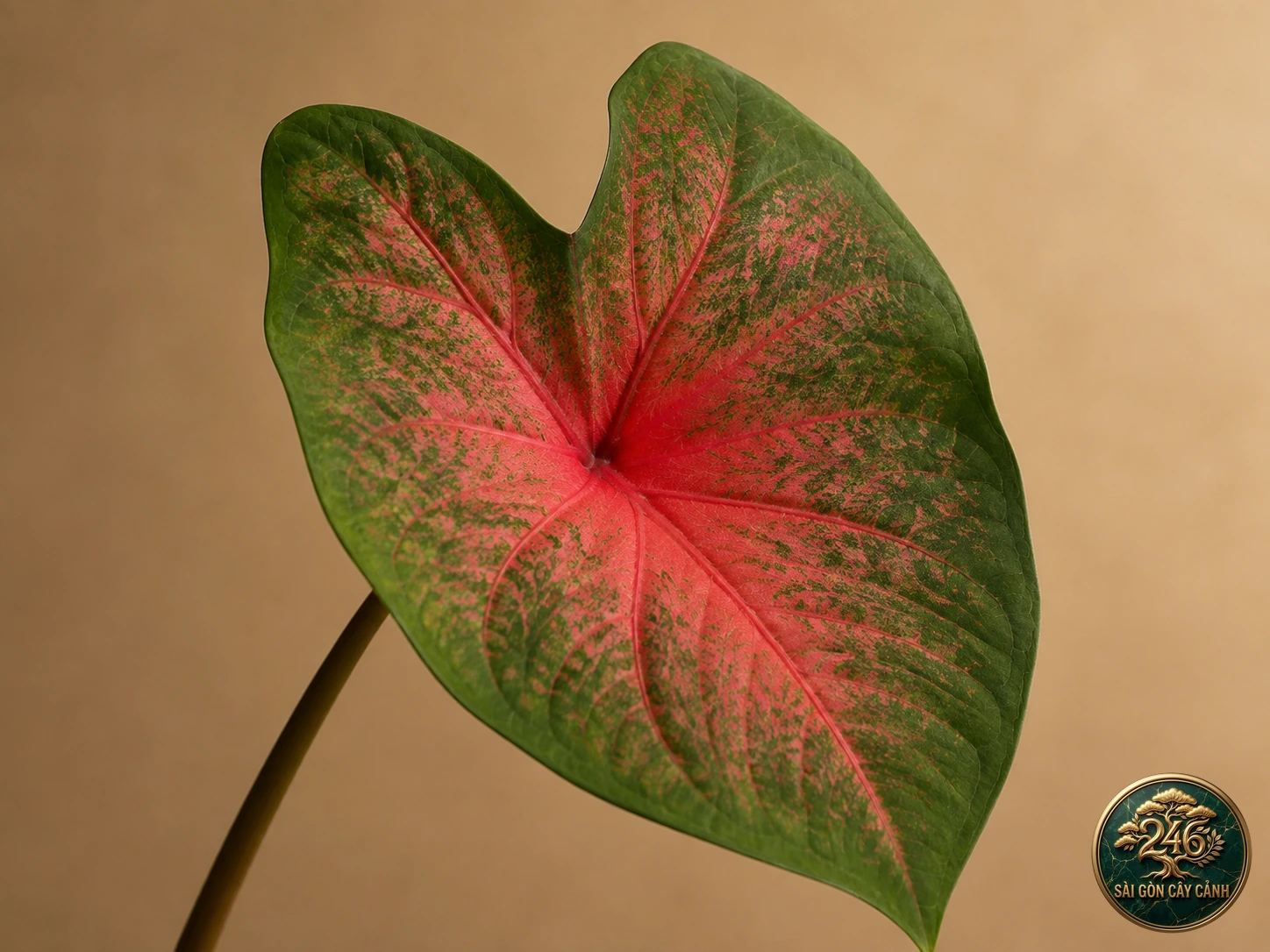
The foliar blade displays a classic peltate cordate contour, with the petiole insertion situated distinctly inward from the basal sinus. The lamina center radiates with intense carmine, scarlet, or ruby hues that migrate along primary lateral veins, terminating abruptly against deep emerald or moss-green margins.
The lamina tissue is delicately thin and membranous, supported by an intricate lattice of secondary venation that imparts structural resilience. Margins display gentle undulations, frequently accentuated by tiny translucent white or pastel pink maculations scattered throughout intercostal zones.
Microscopic examination of Caladium bicolor foliar cross-sections reveals dense anthocyanin accumulations within the upper epidermal cell layers, producing radiant carmine-red pigmentation under diffused sunlight. In contrast, the deep green marginal zones contain densely packed chloroplasts that sustain vigorous photosynthetic rates, continuously funneling carbohydrates downward into the subterranean tuber.
3. Photometric Calibration & Window Exposure Optimization
Photoperiod and illuminance directly dictate chromatic vibrancy and foliar density in Caladium bicolor. The plant thrives within an illuminance window of 1,800 to 3,200 lux, easily delivered near eastern exposures or beneath 50% shading cloth. Direct unfiltered midday sunlight scorches the delicate epidermal cells, creating unsightly papery lesions.
Protracted exposure to low illumination below 800 lux prompts etiolated, leggy petioles unable to support blade weight, while the central red pigments yield to dull green as the plant compensates with emergency chlorophyll synthesis. Supplementing with full-spectrum horticultural LED fixtures for eight to ten hours preserves compact geometry.
Spectrometric assays indicate that photosynthetic photon flux density (PPFD) between 80 and 140 umol/m2/s maximizes energy assimilation in Heart of Jesus. Horticultural LEDs balancing blue 450nm and deep red 660nm wavelengths promote intense crimson coloration without causing foliar thermal stress.
4. Geophytic Tuber Dynamics & Dormancy Phenology
Hydration strategy hinges entirely upon the biological growth rhythm of this geophyte. Throughout active vegetative flushes in warm months, the growing medium requires consistent moisture without saturation, thoroughly soaking until excess water drains freely from pot drainage apertures when the upper two centimeters dry out.
As late season approaches and outer leaves sequentially senesce to initiate dormancy, irrigation must be systematically tapered and halted entirely once foliage collapses. Watering dormant subterranean tubers in cold or stagnant soil inevitably triggers bacterial or fungal rot within days.
Warm ambient thermal ranges between 22°C and 31°C represent the optimal physiological envelope for robust foliar display in Caladium bicolor. The plant exhibits zero frost tolerance; temperatures below 18°C induce physiological stasis, and dips below 15°C trigger premature tuber dormancy.
Ambient relative humidity maintained between 65% and 85% prevents marginal foliar desiccation. In air-conditioned domestic quarters where humidity frequently plummets below 50%, grouping plants atop pebble humidity trays or operating ultrasonic humidifiers prevents brittle foliar margins.
5. Engineered High-Porosity Substrate Formulation
The optimal growing substrate for Heart of Jesus provides exceptional air-filled porosity while preserving essential capillary moisture around developing root hairs. A field-tested blend incorporates 35% medium pumice, 25% composted fine pine bark, 25% washed coconut coir fibers, and 15% horticultural perlite, buffered to pH 5.5 to 6.5.
High air porosity around the subterranean tuber suppresses anaerobic pathogen colonization while stimulating vigorous adventitious root hair expansion through porous aggregate crevices.
The strategic combination of volcanic pumice and composted pine bark creates a multidirectional capillary network, dispersing hydration evenly across the root zone without suffocating the upper tuber collar. Subterranean tuber cortex relies on porous aggregate gaps for continuous gaseous exchange, preventing anaerobic bacterial proliferation.
6. Organic Bio-Fertilization & Mineral Management
During active seasonal development, monthly applications of balanced organic liquid fertilizer formulated with elevated potassium encourage sturdy cell walls and brilliant crimson pigmentation. Excessive synthetic nitrogen must be avoided, as it encourages weak, sprawling petioles and dilutes the striking red centers into muddy green.
All nutrient supplementation must cease immediately once seasonal yellowing commences, remaining suspended until vigorous new vernal shoots reliably emerge above the substrate surface in spring.
Applying cold-water kelp extract enriched with natural cytokinins and humic substances bi-monthly accelerates apical bud division and reinforces membranous laminar cell walls. Extremely diluted chelated iron and magnesium ions sustain vivid ruby-red pigmentation without risking marginal foliar necrosis.
7. Clinical Diagnostic Matrix & Horticultural Resolutions
| Clinical Symptom | Root Pathology | Diagnostic Method | Targeted Resolution |
|---|---|---|---|
| Synchronized foliar collapse in late autumn | Natural geophytic dormancy initiation | Prune withered stems, suspend watering, store dry in cool room | Normal seasonal phenology |
| Bleached color, elongated flimsy petioles | Severe illumination deficit below 800 lux | Relocate to bright filtered window or add supplemental horticultural LEDs | Foliar aesthetic degradation |
| Soft, foul-smelling subterranean tuber | Bacterial or fungal rot from stagnant water | Excise rotting tissue, sanitize healthy sections, transfer to dry pumice | Lethal root failure |
| Crisp brown margins, curling leaf tips | Dry ambient air below 50% or direct solar burn | Filter intense sunlight, deploy humidifier to restore >70% humidity | Epidermal cell desiccation |
8. Pest Mitigation Protocols & Foliar Sanitation
Common phytosanitary concerns include two-spotted spider mites during warm dry spells and mealybugs concealed deep within basal petiole sheaths. Periodic foliar washing using mild castile soap and preventative monthly neem emulsion sprays mitigate pest pressure sustainably.
Tuber rot caused by fungal pathogens such as Fusarium or Rhizoctonia stems directly from poorly aerated substrate or premature irrigation during dormancy. Unrestricted pot bottom airflow remains the primary cultural defense.
The most effective preventative measure against spider mites during arid periods is continuous ambient air circulation paired with midday foliar undersurface rinses. If early thrips activity is detected, light applications of organic lemongrass botanical emulsions in late afternoon reliably repel opportunistic vectors.
9. Asexual Propagation Methodology
Propagation of Caladium bicolor is most reliably executed by dividing parent tubers bearing multiple viable eyes during late vernal awakening. Gently lift overwintered tubers, brush away residual media, and use a sterile scalpel to section the tuber into fragments, ensuring each division retains at least one prominent vegetative bud.
Allow cut surfaces to callous naturally in shaded, warm, well-ventilated conditions for twenty-four hours before potting into damp, airy nursery media, preventing moisture-induced fungal entry.
Sanitation maintenance requires severing withered basal petioles flush against the tuber crown using sterilized shears, preventing gray mold spores from gaining a foothold during humid monsoon spells. Wiping leaves monthly with damp microfiber cloths clears household dust, optimizing foliar stomatal gas exchange.
10. Veterinary Toxicology & Domestic Safety Safeguards
Pet guardians must display caladium planters upon elevated plant stands, wall shelving, or secured desks completely out of reach of domestic companions.
11. Biophilic Interior Design & Architectural Styling
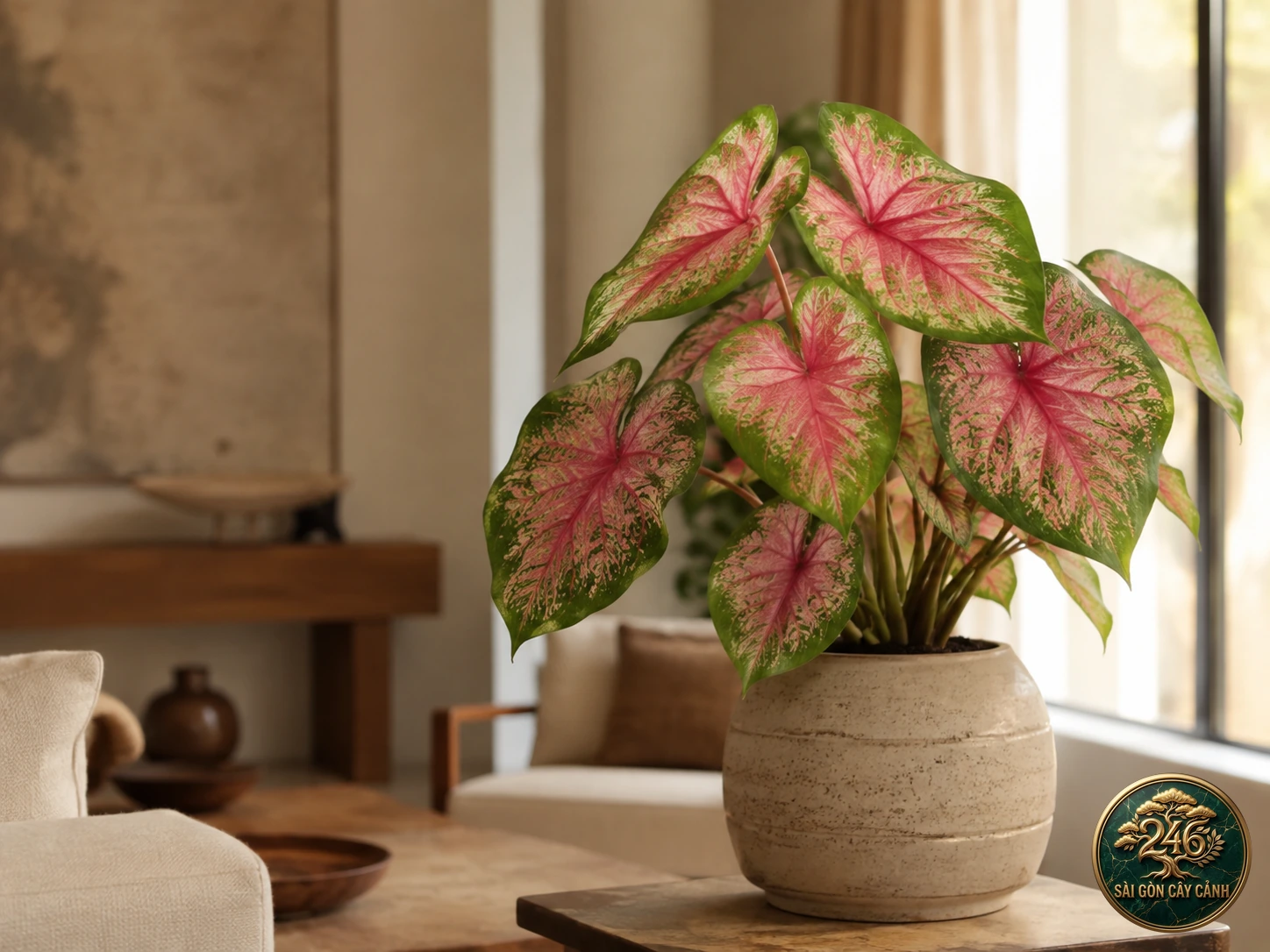
Within modern Biophilic and interior landscape architecture, Heart of Jesus functions as a dramatic chromatic focal point, breaking monochrome green swaths with radiant organic ruby accents. Its warm foliage pairs harmoniously with neutral stoneware, concrete, or terracotta planters across bright living spaces.
Staging three staggered pots creates a dynamic living centerpiece, infusing domestic environments with organic tropical vibrancy and refined horticultural aesthetics.
In interior plant styling, Heart of Jesus provides dramatic chromatic contrast when paired alongside solid-green foliage companions such as Monstera deliciosa or Philodendron birkin. Displaying this specimen upon natural oak pedestals or pale marble consoles accentuates the regal Neotropical brilliance of its canopy.
12. Master Cultivation Axioms
To cultivate thriving Heart of Jesus specimens and preserve tuber vigor over consecutive seasons, indoor horticulturists must adhere to three foundational axioms:
- Hydration axiom: Hydrate according to seasonal rhythms: sustain airy moisture during active flushes and keep bone-dry during winter dormancy.
- Illumination axiom: Deliver bright filtered daylight between 1,800 and 3,200 lux, shielding thin foliar tissues from direct midday scorch.
- Sanitation axiom: Store dormant tubers in dry, well-ventilated quarters above 18°C (64°F), resuming irrigation only after vernal sprouts emerge.
13. Frequently Asked Botanical Questions (FAQs)
How long does Caladium bicolor dormancy typically last?
Dormancy generally spans two to three months depending on ambient warmth. Once sustained temperatures exceed 22°C (72°F) alongside light moisture, eyes awaken within two to four weeks.
Is it necessary to dig up tubers during the winter resting phase?
In warm tropical climates like Southern Vietnam, tubers remain safely inside their bone-dry potting mix. In temperate regions, tubers should be lifted, cleaned, and stored in dry peat moss.
How can I maintain maximum crimson vibrancy across the foliage?
Deliver ample bright indirect daylight between 2,000 and 3,000 lux alongside potassium-rich nutrition, avoiding dim corners that degrade chromatic contrast.
Does removing the inflorescence flowers encourage larger leaves?
Yes. Caladium flowers draw substantial carbohydrate reserves from the tuber. Excising spadix buds as soon as they appear directs energy toward expanding broader foliar blades.
Will touching the leaves cause skin irritation in children or pets?
Touching undamaged foliage is completely harmless. However, crushed leaf tissue releasing sap onto sensitive skin may cause mild stinging, and ingestion causes painful oral swelling.
How can one distinguish a dormant tuber from a rotting, decayed one?
A healthy dormant tuber remains firm and solid under gentle finger pressure, displaying a dry outer epidermis devoid of unpleasant odors. In contrast, a rotting tuber feels mushy and flaccid, exuding yellowish fluid accompanied by foul anaerobic decay.
Nursery Care Journal & Living Greenery Moments
At Saigon Cay Canh greenhouse, each photograph captures genuine everyday care moments between plant lovers and living greenery, spreading a passion for nature and green-living inspiration.