Living plant profile
Humboldt’s caladium
Caladium humboldtii
Comprehensive botanical dossier for Humboldt’s caladium (Caladium humboldtii). Identification, lighting calibration, porous substrate formulation, and cultivation guide by Saigon Cay Canh.
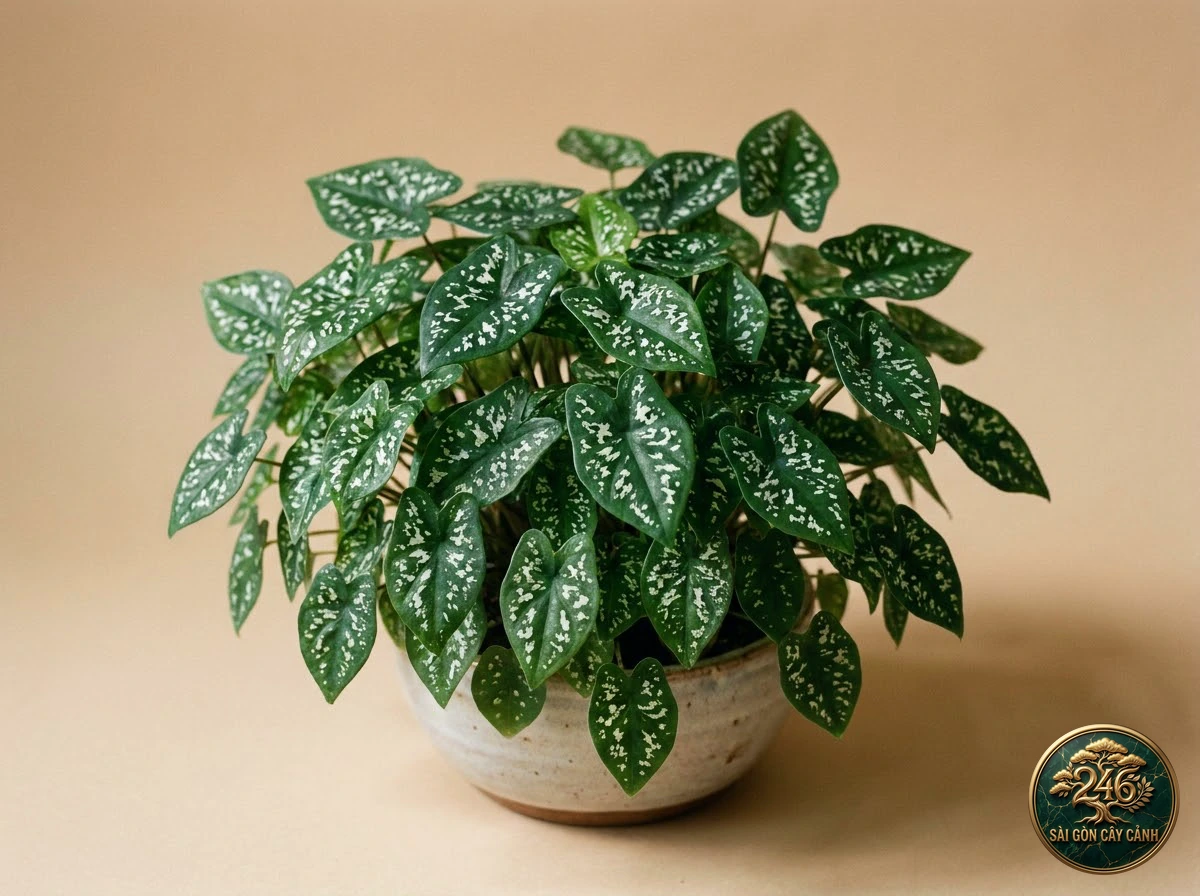
Humboldt’s caladium (Caladium humboldtii) is an exquisite miniature gem of the tropical aroid kingdom, discovered along the remote Orinoco river by the celebrated naturalist Alexander von Humboldt. Revered for its delicate stature and striking translucent white marbled blotches against soft emerald green, this dwarf geophyte serves as an aristocratic specimen for terrarium biospheres and desktop botanical displays.
Sài Gòn Cây Cảnh Care Compass
1. Core Botanical Taxonomy & Cultural Specifications
| Scientific Name | Caladium humboldtii |
|---|---|
| Botanical Family | Araceae (Aroid Family) |
| Native Distribution | Upper Orinoco river basin and montane rainforest margins of Venezuela and northern Brazil |
| Growth Demeanor | Miniature terrestrial geophyte forming dense dwarf clusters 10 – 20 cm in height |
| Lighting Threshold | Gentle diffused daylight (1,200 – 2,500 lux); papery miniature blades scorch under direct sun |
| Hydration Cadence | Consistently moderate capillary moisture in active phase; reduce sharply before rest |
| Substrate Formulation | 40% fine pumice, 25% sphagnum peat moss, 20% fine perlite, and 15% washed coco coir pith |
| Thermal Range | 21°C – 30°C (70°F – 86°F; extremely sensitive to cold drafts below 18°C/64°F) |
| Relative Humidity | 75% – 90% (High ambient saturation is vital to prevent miniature foliar desiccation) |
| Cultivation Difficulty | Moderate to High (Demands strict microclimate stability and steady atmospheric humidity) |
| Pet Safety Profile | Toxic (Microscopic calcium oxalate raphides cause acute oral irritation in pets) |
According to taxonomic records cataloged by Kew Gardens (POWO), Caladium humboldtii ranks among the most diminutive wild species in the entire genus Caladium. Inhabiting shaded rainforest understories along the Venezuelan Orinoco drainage, it evolved within a perpetual microclimate of high ambient humidity and porous, detritus-rich soil.
The plant arises from small pea-sized subterranean tubers that produce abundant stoloniferous offsets, creating compact mounds of foliage with slender petioles rarely exceeding fifteen centimeters in height. This dwarf habit represents an evolutionary niche strategy to carpet protected micro-sites along forest floors.
Its root architecture comprises delicate fibrous feeder roots spreading shallowly across the uppermost substrate layer, exquisitely sensitive to soil compaction or waterlogging. It maintains vigorous growth through warm seasons, retreating into dormant tubers when prolonged dry conditions manifest.
2. Morphological Identification & Foliar Architecture
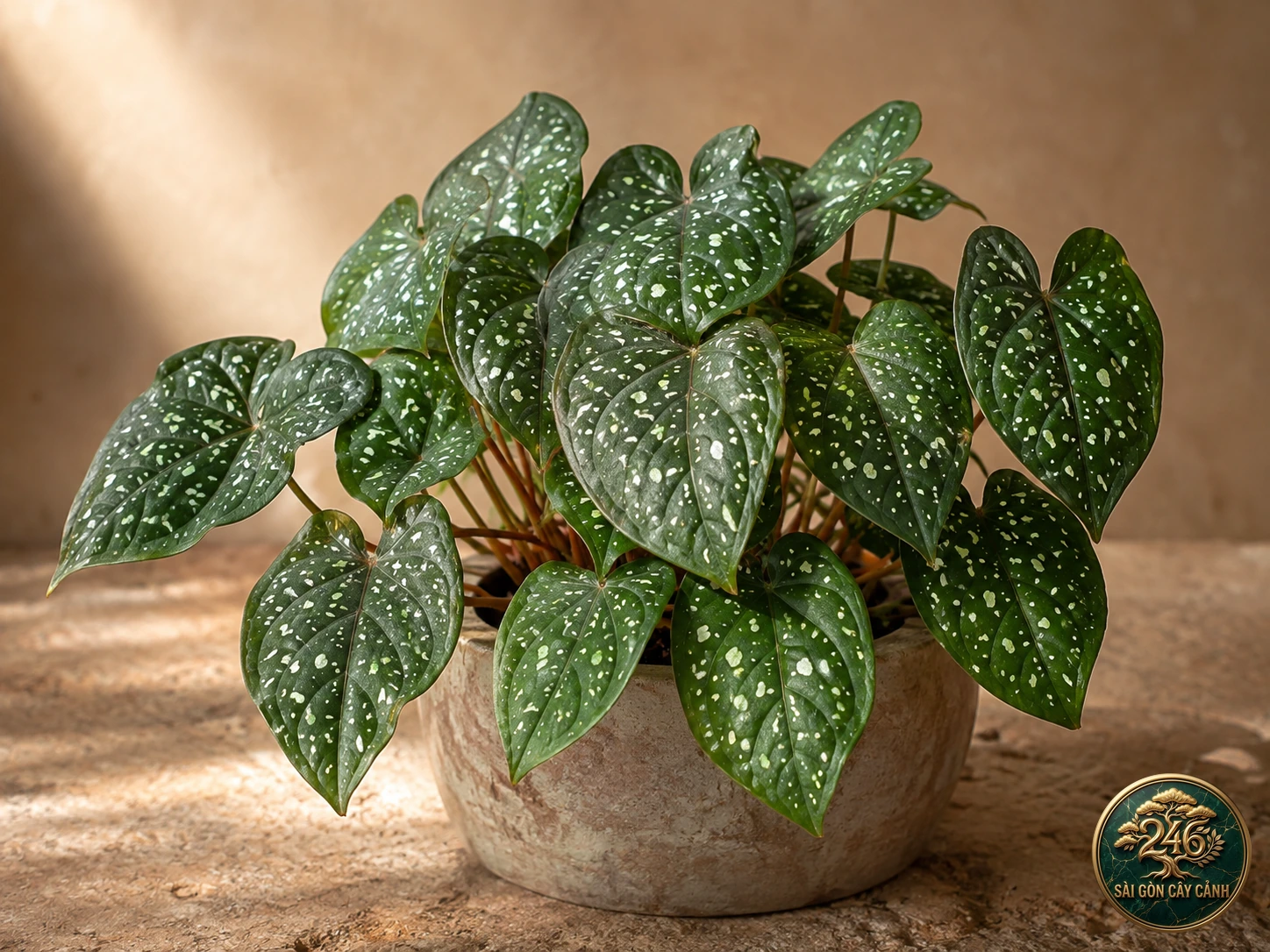
The miniature foliar blade exhibits an ovate-cordate contour measuring five to nine centimeters in length, culminating in an acute tip. Its captivating visual signature stems from snowy white, translucent patches occupying the lamina center, forming organic marbled variegation enclosed by fresh emerald borders.
The white sectors lack chlorophyll, creating semi-translucent leaf windows when viewed against backlighting. Foliar margins are smooth and gently undulating, borne atop jade-green, thread-like petioles that angle outward in a finely balanced starburst silhouette.
Electron microscopy of Caladium humboldtii blades reveals that the pristine white patches result from natural palisade tissue variegation where cells lack chloroplasts and contain intercellular air spaces that scatter incident light. This optical phenomenon generates a luminous pearlescent sheen that contrasts sharply with the chlorophyll-rich emerald margins.
3. Photometric Calibration & Window Exposure Optimization
Because chlorophyll-bearing tissue is restricted to marginal bands, Humboldt’s caladium demands ample bright indirect illumination between 1,200 and 2,500 lux to generate sufficient carbohydrates. Nonetheless, the pristine white sectors possess zero protective pigments, rendering them susceptible to catastrophic scorching under direct solar rays.
The premier domestic location is inside dedicated glass terrariums illuminated by daylight-balanced horticultural LEDs (6500K), or on a north/northeast-facing windowsill shielded by sheer curtains.
Photometric testing within flourishing terrarium biospheres demonstrates that this miniature aroid requires a photon flux between 40 and 75 umol/m2/s. Daylight-balanced 6500K LEDs operated for ten hours daily preserve the crisp boundary of snowy variegation without inducing photodamage.
4. Geophytic Tuber Dynamics & Dormancy Phenology
Watering this miniature specimen requires gentle precision. Moisten the substrate only when the upper layer begins to feel slightly dry, applying water around the rim using a narrow-spout can to prevent displacing the shallow tubers. Avoid splashing water onto delicate blades to suppress overnight bacterial spot infection.
Irrigation should rely on rainwater, distilled water, or reverse osmosis water at room temperature. Municipal tap water with high chloramines or mineral salts leads to marginal foliar browning and yellowing of the pristine white centers.
The ambient temperature sweet spot spans 21°C to 30°C. The miniature foliage is exceptionally vulnerable to cold drafts from air conditioners or ceiling fans; dry air below 19°C causes immediate petiole collapse and premature leaf shedding.
Relative atmospheric humidity must stay high at 75% to 90%. Consequently, Humboldt’s caladium attains its peak biological perfection within enclosed or semi-enclosed terrarium environments where recirculating moisture shelters the fragile foliage.
Sustained ambient temperatures between 24°C and 27°C maintain peak cellular division across emerging root apical meristems. Avoid placing containers near unshaded window panes where solar infrared radiation spikes soil temperatures, harming delicate tubers.
5. Engineered High-Porosity Substrate Formulation
Substrate for dwarf caladium requires finer aggregate sizing than larger congeners. A balanced recipe comprises 40% fine pumice (1-3mm), 25% sterilized sphagnum peat moss, 20% fine perlite, and 15% thoroughly washed coco coir pith. This porous micro-structure envelopes delicate feeder roots in airy capillary moisture.
The container base must feature multiple drainage apertures lined with coarse pumice or expanded clay pebbles, ensuring total water evacuation after saturation.
Because dwarf caladium feeder roots are exceptionally delicate, a fine-grade mineral substrate utilizing 1-3mm pumice allows fragile rootlets to explore effortlessly without encountering soil resistance. Capillary moisture supplied by sterilized peat moss delivers continuous micro-hydration without waterlogging.
6. Organic Bio-Fertilization & Mineral Management
Given its compact stature and moderate metabolic rate, fertilization must remain gentle, diluted to one-quarter strength of standard manufacturer guidance. Monthly foliar applications of sea kelp extract and plant amino acids nurture underground tubers safely without chemical shock.
Cease all nutrient inputs immediately as active leaf initiation slows in late autumn, allowing the geophyte to enter dormancy smoothly.
Owing to miniature stature and diminutive root biomass, Humboldt’s caladium tolerates only quarter-strength foliar organic bio-fertilization. Plant-derived amino acid complexes paired with trace boron preserve crisp, snow-white variegation margins across coin-sized leaf blades.
7. Clinical Diagnostic Matrix & Horticultural Resolutions
| Clinical Symptom | Root Pathology | Diagnostic Method | Targeted Resolution |
|---|---|---|---|
| Crisp holes and gray burn patches on white leaf centers | Direct solar radiation scorch | Relocate into gentle diffused daylight or install sheer window shading | Irreversible tissue necrosis |
| Entire mini cluster collapses with limp petioles | Cold room temperature below 18°C or drafts | Transfer into warm terrarium above 22°C, away from air conditioning drafts | Thermal shock stasis |
| Rapidly expanding translucent water-soaked spots | Overnight foliar water stagnation inducing bacterial rot | Excise affected foliage, cease evening misting, improve air circulation | Bacterial foliar blight |
| Leaf emergence halts, foliage slowly yellows in late autumn | Natural seasonal tuber dormancy transition | Withhold irrigation, allow substrate to dry, store tubers safely | Normal biological phenology |
8. Pest Mitigation Protocols & Foliar Sanitation
The most aggressive pest is the microscopic two-spotted spider mite, which colonizes abaxial foliar surfaces to drain sap, turning delicate white sectors into brittle gray tissue. Because papery leaves cannot tolerate harsh pesticides, gentle biological neem emulsions or diluted botanical soap sprays are strictly recommended.
Promptly remove senescing basal leaves with sterilized micro-snips to eliminate breeding grounds for Botrytis mold in humid terrarium setups.
The gossamer-thin leaf blades of this miniature geophyte react adversely to aggressive synthetic insecticides. When encountering occasional aphids or whiteflies, spot-treat pests individually using cotton swabs dipped in gentle coconut oil soap to protect fragile foliar tissues.
9. Asexual Propagation Methodology
Propagation of Caladium humboldtii is exceptionally rewarding due to prolific subterranean stoloniferous clustering. During spring repotting, gently tease apart the rootball and detach daughter tuber offsets equipped with their own rootlets, potting them into separate miniature containers.
Maintain gentle substrate moisture in warm, draft-free quarters; delicate snowy shoots emerge within ten to fifteen days.
Foliar sanitation requires supreme gentleness. Utilize an ultra-soft camel-hair brush to dust fragile miniature blades rather than abrasive cloths. Promptly snip yellowing basal petioles using micro-surgical scissors to prevent mold proliferation within humid terrarium environments.
10. Veterinary Toxicology & Domestic Safety Safeguards
Showcasing this dwarf jewel inside enclosed glass terrariums provides dual benefits: delivering ideal humidity while eliminating accidental pet access completely.
11. Biophilic Interior Design & Architectural Styling
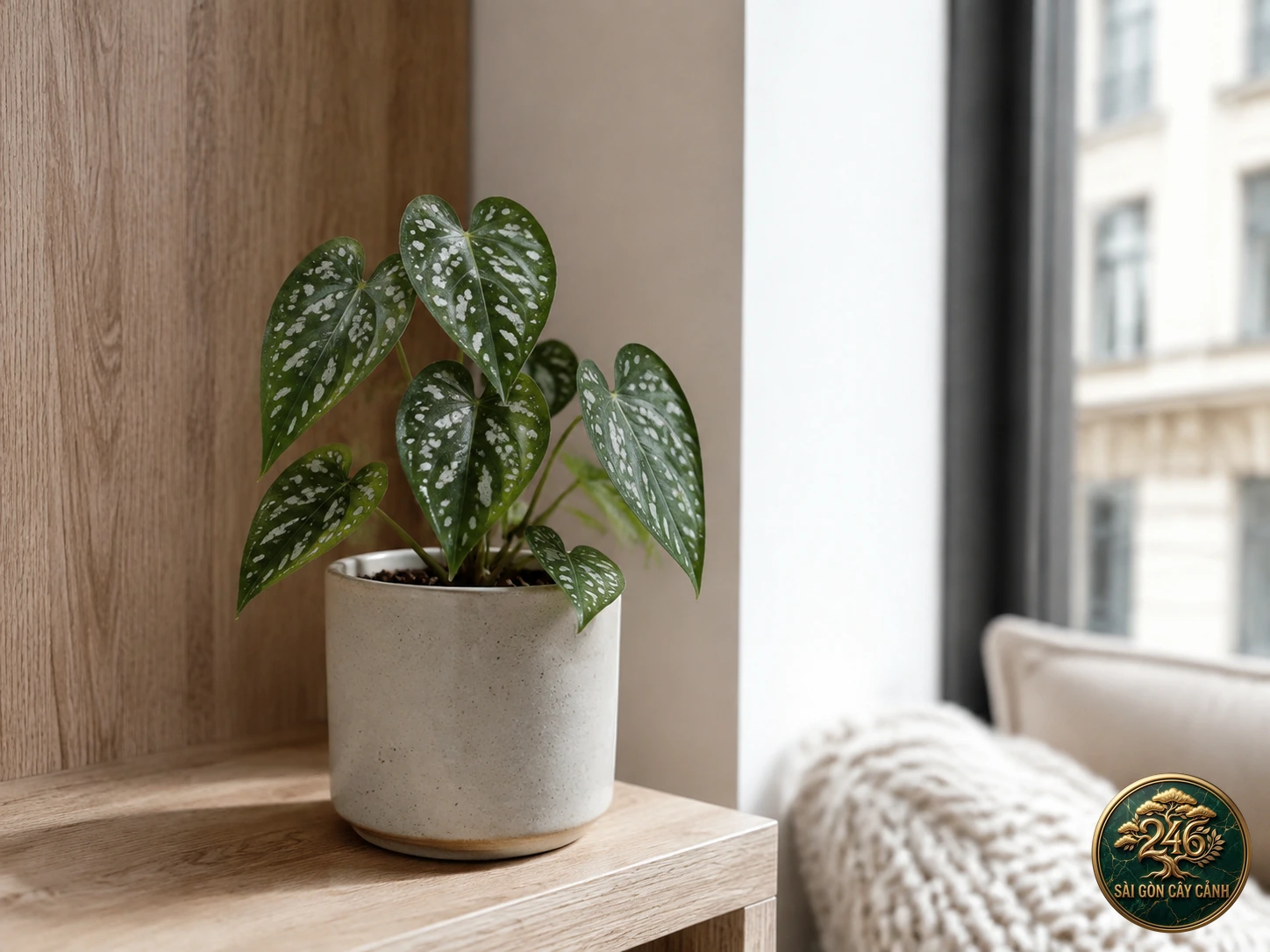
Within micro-interior design, Humboldt’s caladium functions as an elite centerpiece for artistic glass biospheres, Wabi-Sabi terrariums, and minimalist workspaces. The luminous interplay between snowy centers and delicate emerald borders radiates refined tranquility in modern living settings.
Staging a miniature glass terrarium on a console table alongside rustic driftwood or porous rock formations establishes a captivating miniature natural landscape.
Within minimalist interior spaces, a trio of glass terrariums featuring Caladium humboldtii arranged atop a teak coffee table establishes an ethereal natural focal point. Overhead warm LED downlighting illuminates the snowy marbled foliage, evoking serene contemplative harmony.
12. Master Cultivation Axioms
Three foundational horticultural rules for mastering the delicate cultivation of Humboldt’s miniature caladium:
- Hydration axiom: Maintain relative humidity above 75% while ensuring gentle air movement, never permitting standing water films on nocturnal foliage.
- Illumination axiom: Provide gentle diffused light between 1,200 and 2,500 lux, completely shielding fragile white sectors from direct solar scorch.
- Sanitation axiom: Irrigate exclusively with purified room-temperature water and apply ultra-diluted organic trace nutrients to safeguard fragile rootlets.
13. Frequently Asked Botanical Questions (FAQs)
Can Caladium humboldtii survive permanently in closed terrariums?
Yes. This dwarf aroid thrives inside enclosed terrariums due to its affinity for high relative humidity (>80%). Periodic venting for fifteen minutes weekly refreshes carbon dioxide levels.
Why are the white blotches turning predominantly green?
Under insufficient illumination, the plant compensates by generating extra green chlorophyll. Elevating bright diffused light restores the crisp snowy contrast.
Should I excise emerging flowers on Humboldt’s caladium?
Yes. The small inflorescences draw significant carbohydrate reserves from miniature tubers. Pinching flower buds preserves lush foliar growth.
How frequently should I repot miniature caladiums?
Repotting is recommended once annually in early spring to refresh porous media aeration and separate clustered daughter tubers.
Will ingesting a tiny leaf harm a domestic cat?
Even miniature leaves contain concentrated calcium oxalate crystals that cause oral burning, drooling, and vomiting. Flush the pet’s oral cavity and consult a veterinarian if swelling persists.
Is Caladium humboldtii suitable for closed glass terrarium culture?
Extremely well-suited due to its dwarf stature and preference for high ambient humidity exceeding 80%. Nonetheless, provide a deep gravel drainage layer and periodic lid venting to maintain oxygen exchange around the miniature tuber.
Nursery Care Journal & Living Greenery Moments
At Saigon Cay Canh greenhouse, each photograph captures genuine everyday care moments between plant lovers and living greenery, spreading a passion for nature and green-living inspiration.