
Living plant profile
Mini monstera
Rhaphidophora tetrasperma
Comprehensive botanical dossier for Mini monstera (Rhaphidophora tetrasperma). Identification, lighting calibration, porous substrate formulation, and cultivation guide by Saigon Cay Canh.
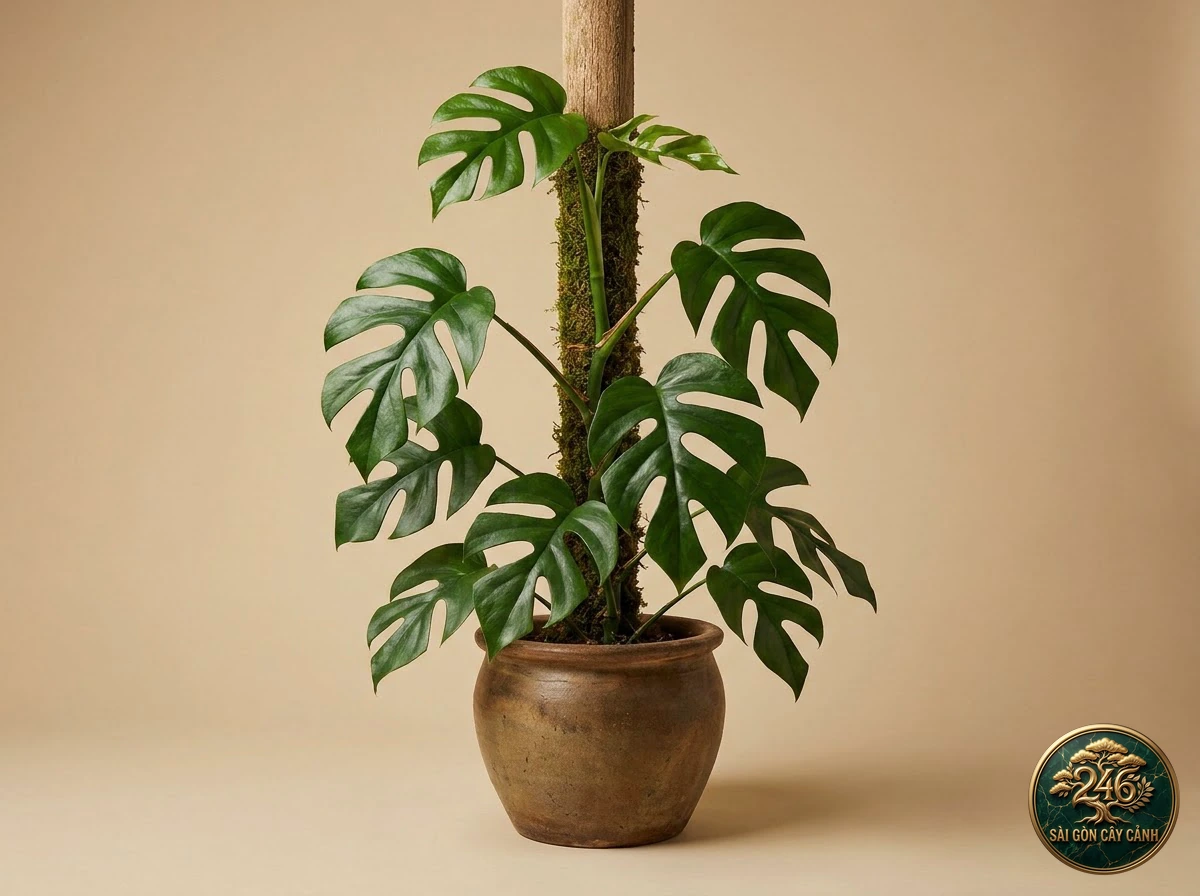
Mini monstera (Rhaphidophora tetrasperma) is an international botanical sensation affectionately termed ‘Mini Monstera’ for its deeply fenestrated foliage that mirrors Monstera deliciosa on a remarkably compact, fast-climbing scale. Native to the rainforests of Southern Thailand and Peninsular Malaysia, this vigorous hemi-epiphytic climber injects exuberant tropical vitality into modern vertical interiors.
1. Core Botanical Taxonomy & Cultural Specifications
| Scientific Name | Rhaphidophora tetrasperma |
|---|---|
| Botanical Family | Araceae (Aroid Family) |
| Native Distribution | Tropical monsoonal rainforest understories of Southern Thailand and Peninsular Malaysia |
| Growth Demeanor | Slender hemi-epiphytic vigorous climber reaching 1.5 – 3 m on vertical supports |
| Lighting Threshold | Bright indirect diffused daylight (1,800 – 3,500 lux); avoids harsh direct midday scorch |
| Hydration Cadence | Irrigate when top 30% substrate is dry; demands well-aerated moisture without stagnation |
| Substrate Formulation | 40% horticultural pumice, 25% aged pine bark, 20% coarse perlite, and 15% washed coco coir |
| Thermal Range | 20°C – 30°C (68°F – 86°F; growth slows noticeably below 15°C/59°F) |
| Relative Humidity | 65% – 85% (Elevated humidity stimulates aerial root adhesion and mature blade fenestration) |
| Cultivation Difficulty | Easy to Moderate (Fast-growing, highly forgiving vertical climber ideal for indoor growers) |
| Pet Safety Profile | Toxic (Microscopic insoluble calcium oxalate raphides cause acute oral irritation in pets) |
Formally cataloged in the Royal Botanic Gardens Kew (POWO) taxonomic registry, Rhaphidophora tetrasperma belongs strictly to the genus Rhaphidophora, diverging phylogenetically from true Monsteras despite striking visual convergence. Its specific epithet ‘tetrasperma’ derives from a crucial diagnostic trait: bearing exactly four seeds per locule inside its ovary, a decisive botanical key distinguishing it from congeners.
In its native monsoonal rainforest habitat, seedlings germinate on forest humus or within moist limestone fissures. Slender, flexible stems rapidly produce adventitious climbing roots that clasp tightly to tree bark, driving the vine upward toward filtered canopy light.
Vegetative vigor in Rhaphidophora tetrasperma ranks among the most rapid within Araceae; under warm humid conditions, a healthy vine unfurls a new leaf every seven to ten days, extending five to ten centimeters in length weekly.
2. Morphological Identification & Foliar Architecture
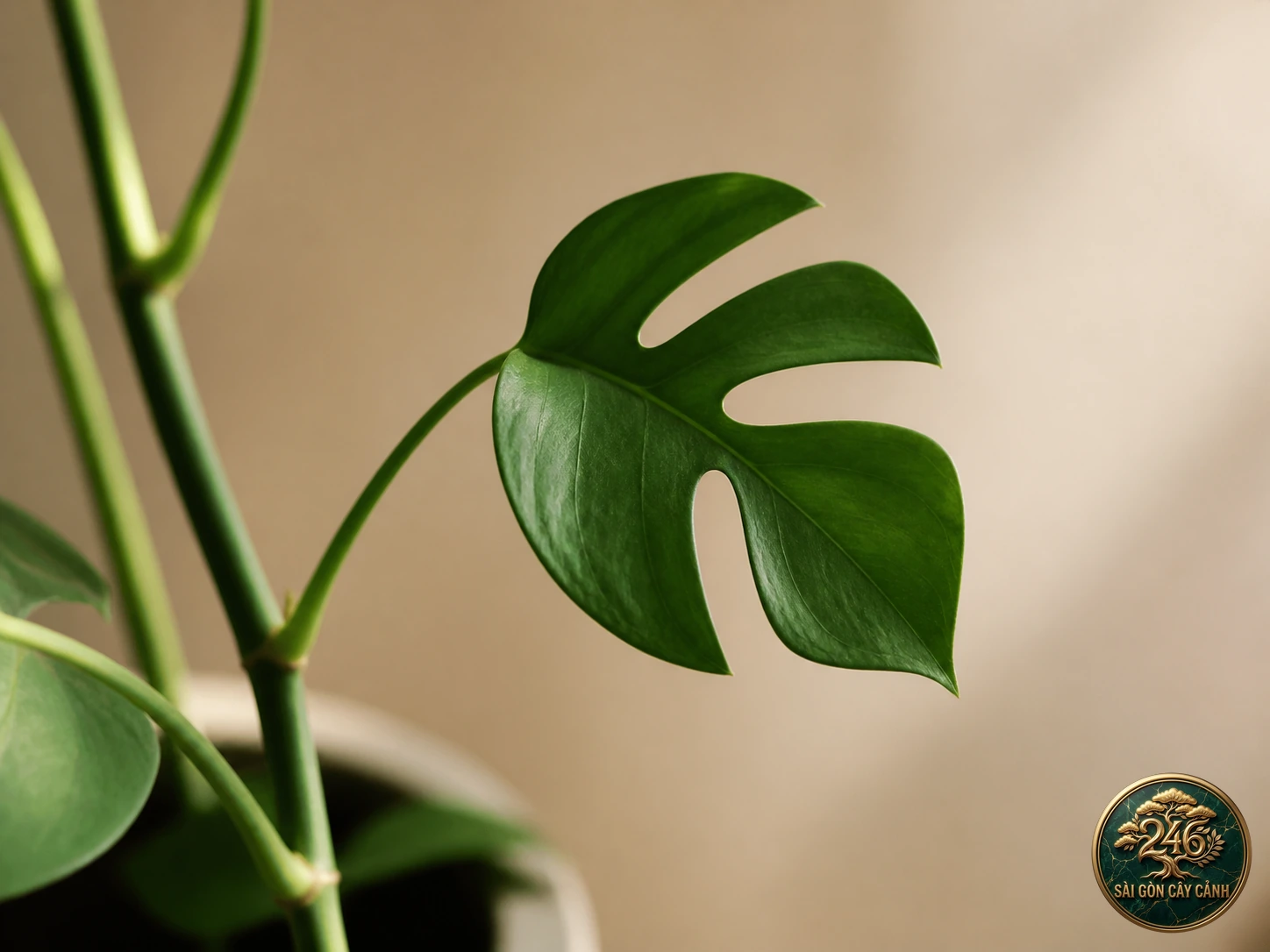
The foliar blade measures 15 to 25 cm, ovate-lanceolate in outline with deep, symmetrical pinnatifid clefts extending from the margins inward toward the central midrib. Crucially, its fenestrations consist purely of margin-to-midrib incisions, lacking the interior closed perforated fenestrations characteristic of mature Monstera deliciosa.
Foliage exhibits a glossy, bright emerald-green coriaceous texture, borne upon slender channeled petioles that sheath the climbing axis. Aerial roots emerge from nodal joints with tenacious adhesive capacity to clasp moss poles or textured vertical substrates.
The marginal cleft architecture of Rhaphidophora tetrasperma represents an evolutionary diagnostic trait distinct from true Monsteras. Clefts develop via programmed cell death (apoptosis) along lateral leaf primordia before unfolding, reducing mechanical aerodynamic drag during monsoonal gusts without sacrificing effective photosynthetic surface area.
3. Photometric Calibration & Window Exposure Optimization
The vine demands abundant diffused daylight between 1,800 and 3,500 lux to stimulate deep, balanced foliar clefts. Gentle morning sun from an eastern exposure or bright light filtered through sheer curtains fosters optimal vegetative development.
Under protracted illumination deficits below 1,000 lux, internodes stretch excessively and new leaves emerge juvenile and entire, losing their celebrated clefts. Supplementing with full-spectrum horticultural LEDs preserves compact geometry and deep fenestration.
Phototropic alignment is pronounced in this climbing liana as cleft leaves orient perpendicularly to ambient daylight. Photon flux between 100 and 180 umol/m2/s stimulates shortened internodes and triggers deep symmetrical fenestrations on successive leaves.
4. Structural Vining Architecture & Support Dynamics
Water the plant when the top 30% of substrate depth feels dry to the touch. Saturate thoroughly until water flows freely from bottom drainage apertures, simultaneously moistening the vertical moss support to nourish aerial feeder roots.
During cooler winter or rainy periods when metabolic rates diminish, extend irrigation intervals and never permit runoff water to pool in saucers, guarding against fungal root rot.
The ideal ambient thermal envelope spans 20°C to 30°C. The vine flourishes within warm tropical temperatures, experiencing noticeable growth cessation when temperatures fall below 15°C (59°F).
Atmospheric relative humidity should remain between 65% and 85%. High humidity is the primary catalyst that prompts aerial roots to anchor deeply into moss poles, doubling foliar blade size as the vine scales upward.
5. Engineered High-Porosity Substrate Formulation
A specialized airy substrate blend incorporates 40% horticultural pumice, 25% aged pine bark chips, 20% coarse perlite, and 15% washed coconut coir fibers. This formula provides over 40% air porosity, ensuring vigorous subterranean oxygenation.
A buffered pH range between 5.8 and 6.8 optimizes nutrient bioavailability across the root network.
The combination of coarse pumice and pine bark nuggets establishes over 40% air porosity, delivering an optimal subterranean environment for primary container roots while feeding aerial roots on moss totems. High aggregate drainage evacuates standing water instantly, eliminating root asphyxiation risks.
6. Organic Bio-Fertilization & Mineral Management
Apply balanced organic liquid fertilizer diluted to half strength twice monthly during active spring and summer growth, supplying nitrogen and micronutrients to fuel rapid vine elongation and fresh foliar flushes.
Reduce feeding frequency to once monthly during slower winter months, preventing fertilizer salt accumulation around roots.
When growing Mini Monstera upon moss poles, nutrient delivery must target both container substrate and climbing totem. Applying diluted fermented oilcake or hydrolyzed fish fertilizer directly onto moist totem moss every three weeks supplies aerial roots, fueling thicker vine girth and deeper leaf clefts.
7. Clinical Diagnostic Matrix & Horticultural Resolutions
| Clinical Symptom | Root Pathology | Diagnostic Method | Targeted Resolution |
|---|---|---|---|
| New leaves emerge entire without fenestrations | Insufficient illumination or lack of vertical support | Relocate to brighter spot >2,000 lux and provide moist moss pole for aerial roots | Juvenile reversion |
| Long internodal spacing, sparse foliage | Etiolation stress from low light environment | Move closer to east-facing window or install full-spectrum LED for 10 hours daily | Unbalanced growth |
| Brown spots with yellow halos expanding rapidly | Fungal foliar blight from standing water | Excise infected foliage, cease evening misting, improve room ventilation | Fungal disease |
| Aerial root tips turn black and dry up | Ambient humidity below 50% or dry moss pole | Mist moss pole daily and maintain ambient relative humidity above 70% | Aerial root desiccation |
8. Pest Mitigation Protocols & Foliar Sanitation
Vulnerable to spider mites and mealybugs if grown in excessively dry, stagnant atmospheres. Wipe foliage routinely with soft damp cloths and apply organic neem oil sprays preventively.
Foliar leaf spot from fungal or bacterial pathogens results from evening water stagnation; always water substrate in the morning, keeping foliage dry overnight.
Biological pest management is ideal for Mini Monstera. Rinse both leaf surfaces and climbing internodes with moderate water pressure during morning care, following with fermented garlic-chili herbal sprays to repel mites and scale without indoor chemical toxicity.
9. Asexual Propagation Methodology
Propagation of Rhaphidophora tetrasperma is extraordinarily facile, achieving near-perfect success rates via stem cuttings bearing viable nodes and aerial rootlets. Use sterile shears to harvest cuttings possessing one to two healthy nodes.
Root cuttings in clean water or damp sphagnum moss in a warm, bright room; robust white root systems develop within ten to fourteen days, ready for potting.
Foliar hygiene requires wiping the glossy emerald blades with damp microfiber cloths in early morning to remove domestic dust. When the climbing vine surpasses its vertical totem, prune the terminal apex with sterilized shears to awaken lower lateral buds, repurposing the cutting for propagation.
10. Veterinary Toxicology & Domestic Safety Safeguards
Its vertical climbing habit allows owners to train vines upward onto walls or high totems, keeping foliage safely beyond pet reach.
11. Biophilic Interior Design & Architectural Styling
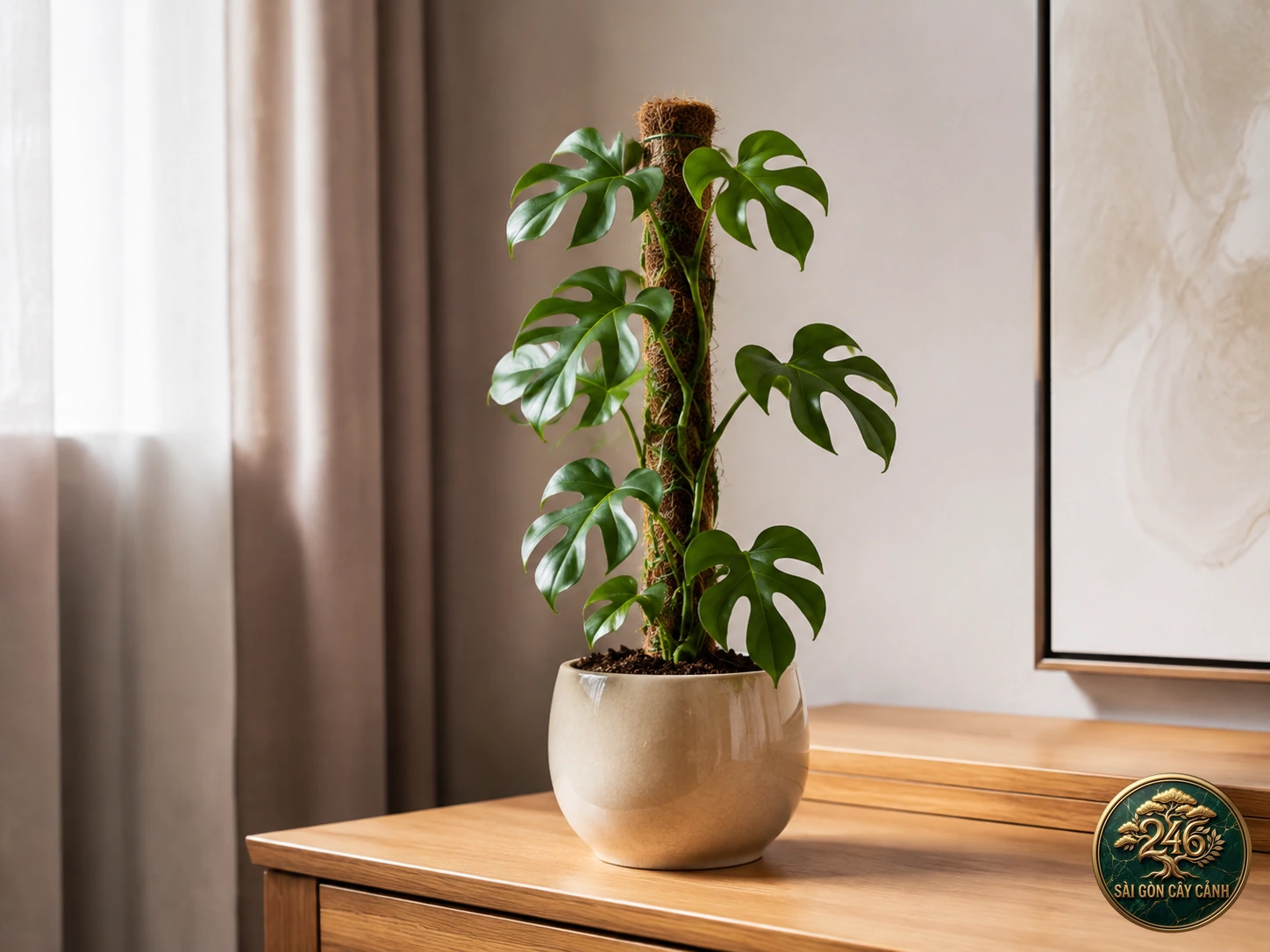
Within contemporary Biophilic interior architecture, Mini Monstera represents the premier vertical statement plant, scaling moss totems, architectural trellises, or indoor living walls across modern living rooms and executive studios.
Its rhythmic, deeply lobed foliage introduces dynamic visual texture and exuberant rainforest vitality into indoor environments.
Within contemporary Biophilic architecture, Mini Monstera represents the premier climbing statement plant for artistic moss totems, living wall partitions, and airy sunlit studios. Its rhythmic, fenestrated foliage injects exuberant tropical energy into modern residential and corporate spaces.
12. Master Cultivation Axioms
Three master horticultural rules for cultivating vigorous Mini Monstera specimens:
- Hydration axiom: Always provide a moist moss-wrapped climbing totem for aerial roots to penetrate, triggering expansive blade sizing and deep clefts.
- Illumination axiom: Deliver abundant diffused daylight between 1,800 and 3,500 lux, avoiding dim corners that cause etiolation and unslit leaves.
- Sanitation axiom: Irrigate when the top 30% substrate dries and maintain humidity above 65% to prevent aerial root desiccation.
13. Frequently Asked Botanical Questions (FAQs)
Is Rhaphidophora tetrasperma a genetically mutated dwarf Monstera?
No. Despite the popular moniker Mini Monstera, it belongs to the genus Rhaphidophora native to Southeast Asia, while true Monsteras are native to the Neotropics.
Why are mature climbing leaves not increasing in size?
For leaves to size up, aerial roots must penetrate a moist vertical moss pole. If the pole remains dry, aerial roots cannot absorb supplementary moisture and nutrients.
When should I prune the climbing vine?
When the vine surpasses its pole or ceiling height, prune the apex to stimulate lateral branching from lower nodes, using excised cuttings for easy propagation.
Can I let the vine climb directly on drywall?
Aerial roots adhere tenaciously and may peel wall paint when detached. Training vines on standalone moss totems or wooden trellises protects domestic walls.
Does this plant flower indoors, and what are the blooms like?
Flowering is exceptionally rare indoors. In nature, it produces small creamy-white spathes with ovaries containing exactly four seeds.
How can one encourage larger, deeply fenestrated leaves on Rhaphidophora tetrasperma?
Fasten climbing nodes firmly to a moist moss pole, sustain ambient humidity above 65%, and provide bright indirect light (2,500 to 3,500 lux). As aerial roots penetrate damp moss, successive leaves expand dramatically with deep lobing.