
Living plant profile
Arrowroot plant
Maranta arundinacea
Comprehensive botanical dossier for Arrowroot plant (Maranta arundinacea). Identification, lighting calibration, porous substrate formulation, and cultivation guide by Saigon Cay Canh.
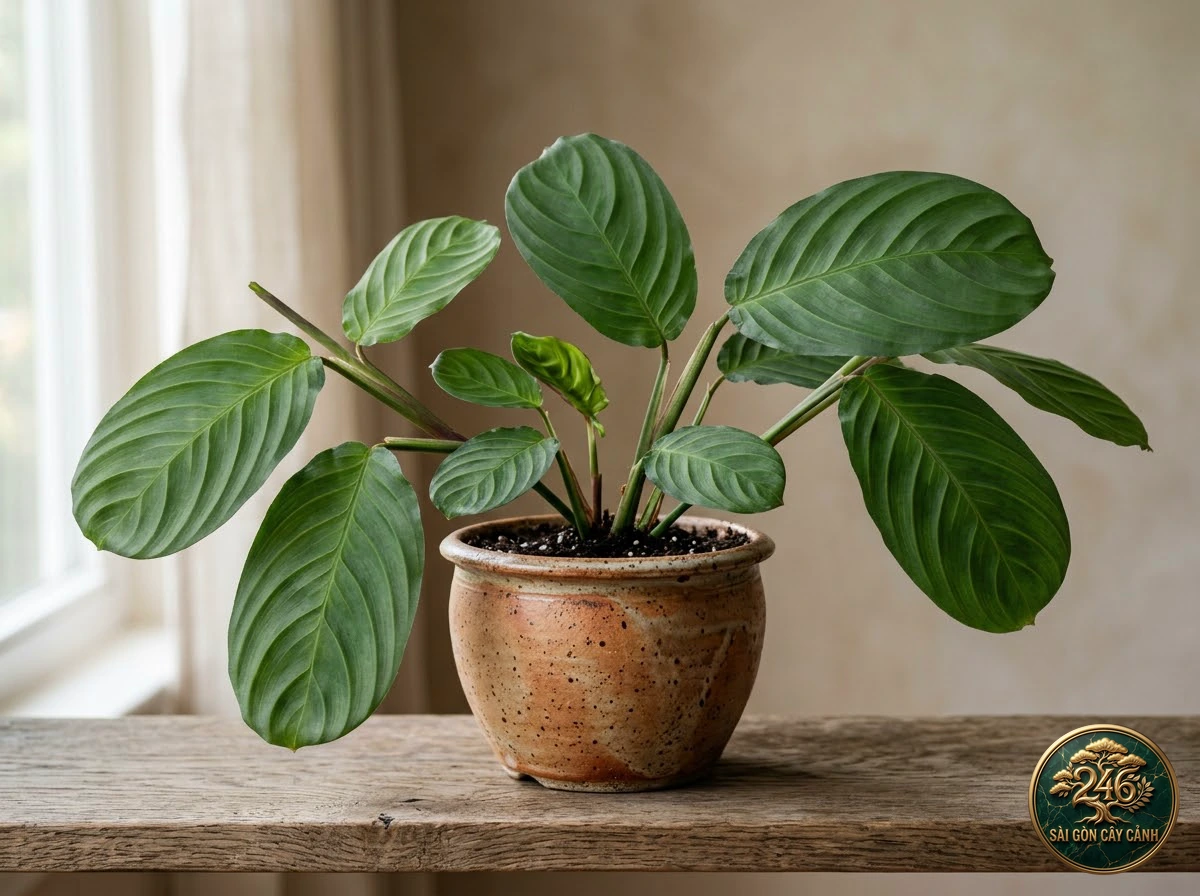
Arrowroot plant (Maranta arundinacea) is an iconic Neotropical botanical treasure celebrated both as an architectural foliage specimen with tall lanceolate emerald canopies and as a historic ethnobotanical starch crop producing world-renowned superfine arrowroot flour. It embodies wholesome rustic elegance, vigorous vitality, and the fertile abundance of the American tropics.
1. Core Botanical Taxonomy & Cultural Specifications
| Scientific Name | Maranta arundinacea |
|---|---|
| Botanical Family | Marantaceae (Prayer Plant Family) |
| Native Distribution | Lowland tropical rainforests and moist valley margins spanning Central America, the Caribbean, and Northern South America |
| Growth Demeanor | Erect clump-forming perennial herb 60 to 120 cm tall producing spindle-shaped edible starchy rhizomes |
| Lighting Threshold | Generous filtered daylight (1,800 – 3,500 lux); efficient photosynthetic assimilation fuels subterranean rhizomes |
| Hydration Cadence | Hydrate when top 30% substrate dries; prefers steady capillary dampness with unhindered base drainage |
| Substrate Formulation | 35% pumice, 30% composted fine bark, 20% desalted coco coir, and 15% horticultural perlite |
| Thermal Range | 22°C – 32°C (72°F – 90°F; thrives in warm tropical rooms, vegetative standstill occurs below 16°C/60°F) |
| Relative Humidity | 60% – 80% (Broad atmospheric moisture tolerance compared to delicate velvety prayer plant kin) |
| Cultivation Difficulty | Easy (Remarkably robust, vigorous, pest-resilient, combining ornamental elegance with ethnobotanical utility) |
| Pet Safety Profile | Non-toxic (Completely non-toxic; certified safe for companion animals and edible starch source per ASPCA) |
Formally named by Carl Linnaeus in 1753 in Species Plantarum, Maranta arundinacea serves as the historic cornerstone of the Marantaceae family, cataloged within Kew’s Plants of the World Online (POWO). The specific epithet ‘arundinacea’ means ‘reed-like’, denoting its stately upright vegetative canes.
The plant forms stout subterranean rhizomes that swell into spindle-shaped tubers 10 to 25 cm long covered in whitish scales. Aerial cane-like stems ascend up to 1.2 meters, branching into long-sheathed petioles 30 to 60 cm tall that support broad spreading blades.
Subterranean tubers store pure, easily digestible starch historically utilized by indigenous Arawak tribes to draw poison from envenomed arrow wounds (origin of ‘arrowroot’). The root system exhibits superior vitality and impressive drought buffering capacity.
2. Morphological Identification & Foliar Architecture
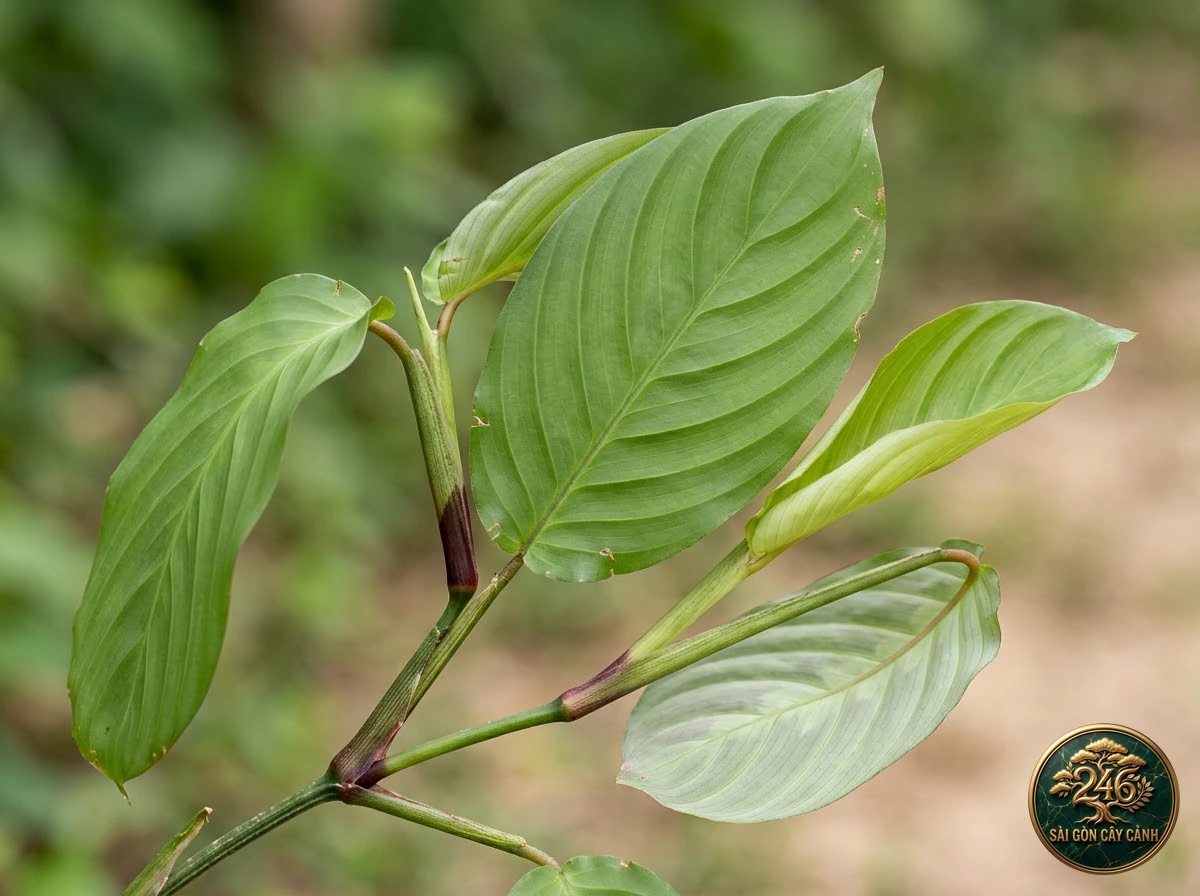
Foliar blades of the Arrowroot plant present a lanceolate to ovate-oblong contour measuring 20 to 35 cm in length and 8 to 16 cm in width. The apex tapers to an acuminate point framed by smooth margins. The glossy upper surface gleams in bright forest green with parallel lateral venation.
Inflorescences consist of branched terminal panicles bearing pairs of delicate white florets with slender petals, blossoming during summer months to attract native insect pollinators.
Biochemical and cytological analysis of Maranta arundinacea reveals that subterranean rhizome parenchyma is packed with microscopic ovate starch granules measuring only 10 to 20 micrometers, exhibiting a pure, gluten-free molecular structure. Broad lanceolate blades possess thickened cuticles with evenly spaced stomata, optimizing C3 photosynthesis to channel carbohydrates downward into tubers.
3. Photometric Calibration & Window Exposure Optimization
Maranta arundinacea prospers under generous filtered daylight between 1,800 and 3,500 lux. Plentiful photons fuel vigorous carbohydrate synthesis into subterranean tubers and maintain sturdy cane architecture.
While tolerating brief early morning sun flecks, intense midday solar beams scorch leaf margins. Confinement in deep shade below 900 lux prompts etiolated stems and stunts tuber formation.
Photometric assays define an optimal PPFD between 90 and 180 umol/m2/s for the Arrowroot plant. Exploiting generous photon influx, it develops robust cane architecture under bright filtered daylight (1,800 – 3,500 lux), fueling vegetative canes up to 1.2 meters tall.
4. Pulvinus Kinematics & Nyctinastic Diurnal Dynamics
Despite its tall reed-like stature, the species retains the signature pulvinar nyctinastic movements of Marantaceae: at twilight, broad lanceolate blades swing upward in reverent prayer posture.
This motion shields stomata and curtails nocturnal thermal loss, creating a dynamic visual transformation across interior plant collections every day.
Optimal thermal conditions span 22°C to 32°C (72°F – 90°F). The plant exhibits explosive growth in warm tropical rooms, entering dormancy below 16°C (60°F).
Relative humidity should hover between 60% and 80%. Its tolerance of domestic humidity drops surpasses delicate thin-leaved Calathea cultivars.
Ideal temperatures from 22°C to 32°C (72°F – 90°F) paired with 60% to 80% humidity promote vigorous year-round growth. Its drought resilience far exceeds thin-leaved Calathea cultivars thanks to water and starch reserves stored in subterranean tubers.
Despite its tall reed-like stature, the pulvinus at the petiole sheath apex maintains active diurnal kinematics: at twilight, broad lanceolate blades swing upward into a stately vertical prayer posture, creating an imposing architectural silhouette throughout the night.
5. Porous Aggregate Substrate Engineering & Aeration Dynamics
Potting substrate demands 35% pumice, 30% composted bark nuggets (4-8mm), 20% desalted coco coir, and 15% coarse perlite, balanced to pH 5.8 to 6.5.
This open aggregate creates generous porous cavities allowing subterranean tubers to expand unhindered without physical soil compaction.
A potting mix combining 35% pumice, 30% composted bark, 20% desalted coco coir, and 15% coarse perlite creates generous interstitial cavities, allowing subterranean spindle tubers to expand unhindered without physical soil compaction.
6. Organic Nutrition Schedules & Periodic Micronutrient Priming
Apply balanced liquid organic fertilizer enriched with natural potassium and phosphorus every 3 to 4 weeks during active growth to fuel tuber plumping and lush foliage.
Avoid excessive synthetic nitrogen near the tuber crown. Leach containers thoroughly with clean water quarterly to flush out accumulated fertilizer salts.
Apply balanced liquid organic fertilizer enriched with natural potassium and phosphorus every 3 to 4 weeks during active growth to fuel tuber plumping and lush foliage.
7. Clinical Diagnostic Matrix & Rapid Correction Protocols
| Clinical Symptom | Primary Etiology | Diagnostic Evaluation | Corrective Prescription |
|---|---|---|---|
| Crisp brown edges along leaf margins | Ambient relative humidity dropped below 50% or chlorine toxicity | Monitor room hygrometer and evaluate irrigation water purity | Raise humidity above 60% and switch to pure dechlorinated water |
| Etiolated leggy canes and pale chlorotic foliage | Photon deficit below 900 lux threshold | Measure ambient lux at foliage level with light meter | Relocate to bright filtered daylight (1,800 – 3,000 lux) |
| Sudden collapse and drooping of cane stems | Severe root zone dehydration or anaerobic tuber rot decay | Probe substrate core moisture and evaluate tuber health | Bottom-water if desiccated; prune decayed tubers and repot if soggy |
| Minute yellow punctate spots and fine webbing underneath | Tetranychid spider mites colonizing warm, arid environments | Inspect abaxial midrib surfaces with magnification loupe | Shower foliage gently with lukewarm water and treat with neem spray |
8. Cryptic Pest Prophylaxis & Foliar Surface Sanitation
The smooth glabrous epidermis of Arrowroot foliage mainly attracts pseudococcid mealybugs along tight petiole sheaths. Routinely clean with dilute botanical garlic-chili extract sprays to deter pests without affecting subterranean starch tubers.
Dust lanceolate blades with damp microfiber towels bi-weekly to ensure open stomatal pores and optimize photosynthetic efficiency.
Dust lanceolate blades with damp microfiber towels bi-weekly to ensure open stomatal pores and optimize photosynthetic efficiency, routinely checking petiole sheaths for early mealybugs or mites.
9. Asexual Propagation Methodology & Root Strike Protocols
Plant tuber segments 3 to 5 cm deep in moist airy substrate; vigorous green shoots emerge over a 25 to 35 day developmental interval under warm conditions.
Propagation is exceptionally simple via rhizome tuber division during spring container maintenance. Each division requires merely 1 to 2 viable dormant growth eyes planted 3 to 5 cm deep in moist airy substrate; shoots emerge readily over a 25 to 35 day developmental interval.
Propagation is exceptionally simple via rhizome tuber division during spring container maintenance. Each division requires merely 1 to 2 viable dormant growth eyes planted 3 to 5 cm deep in moist airy substrate; shoots emerge readily over a 25 to 35 day developmental interval.
10. Companion Animal Safety Profile & ASPCA Non-Toxic Verification
Recognized as entirely safe and non-toxic by ASPCA veterinary standards and culinary food safety agencies. Arrowroot starch derived from tubers is famously digestible and gentle, posing zero threat to companion dogs and cats.
11. Biophilic Curation & Contemporary Interior Design Styling
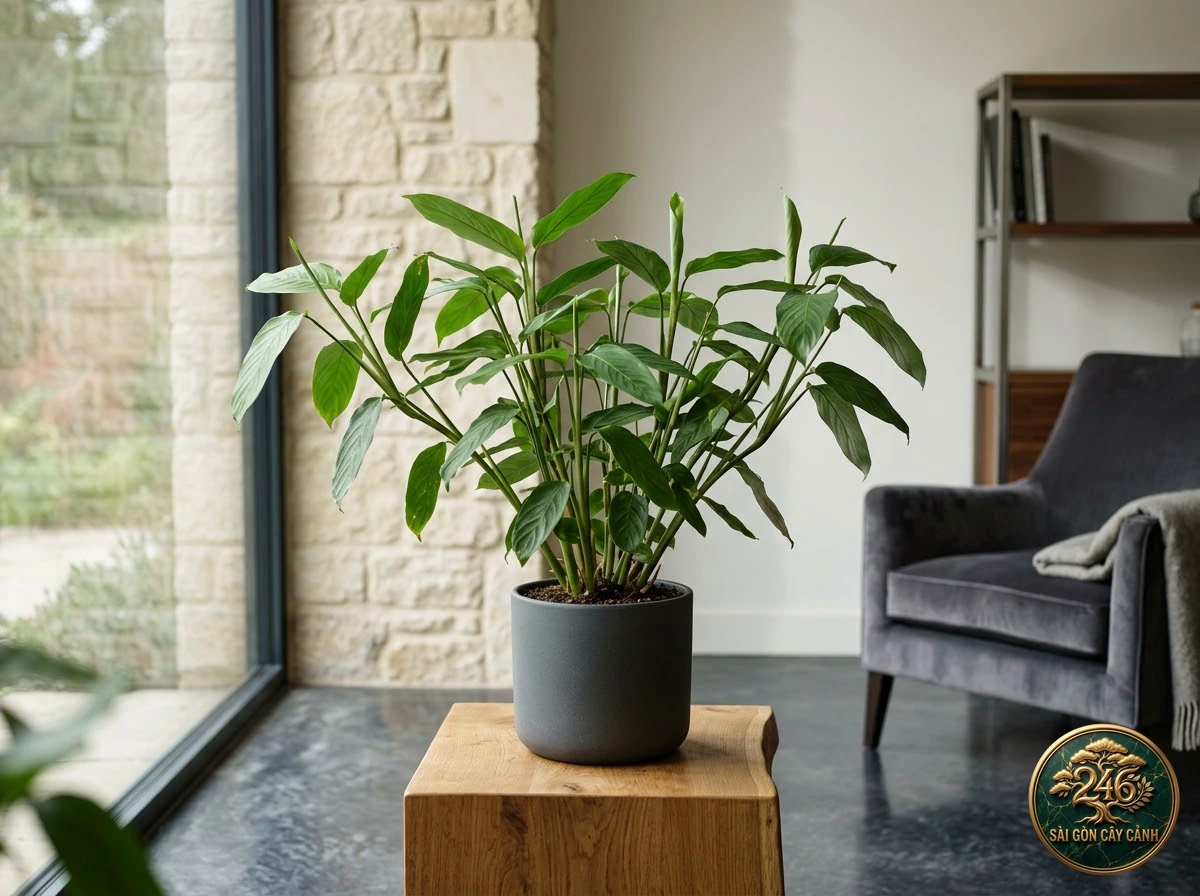
With reed-like stature, bright emerald lanceolate foliage, and delicate white blossoms, the Arrowroot plant serves as an impressive architectural accent for atriums, verandas, and sunlit lightwells.
Its enduring vitality and rich ethnobotanical legacy instill an aura of wholesome abundance, tranquility, and natural replenishment across residential interiors.
With reed-like stature, bright emerald lanceolate foliage, and delicate white blossoms, the Arrowroot plant serves as an impressive architectural accent for atriums, verandas, and sunlit lightwells.
12. Master Principles for Sustainable Indoor Acclimatization
To cultivate a robust, stately specimen of Maranta arundinacea with vigorous tubers and lush foliage indoors, growers should adhere to three golden rules:
- Hydration axiom: Provide generous hydration throughout active rainy-season tuber expansion; moderate watering when plants transition toward starch storage.
- Illumination axiom: Tolerates bright filtered light to gentle morning sunshine (1,500 to 2,500 lux), driving vigorous photosynthesis for tuberous rhizome bulking.
- Maintenance axiom: Top-dress monthly with potassium-rich composted hull mulch to encourage thick, resilient subterranean tuber growth.
13. Frequently Asked Questions Regarding Arrowroot plant (FAQs)
Is the tuber of the Arrowroot plant edible?
Yes. The subterranean rhizomes produce superfine, nutritious, and easily digestible arrowroot starch widely utilized in culinary and dietetic applications.
What water precautions should be observed?
While hardier than delicate Calatheas, providing clean dechlorinated water ensures immaculate green leaf tips without marginal scorch.
Is this plant safe around companion dogs and cats?
Completely 100% safe. It is officially certified non-toxic to domestic pets by the ASPCA.
What is the fastest way to propagate this species?
Simply section rhizome tubers possessing active growth eyes during repotting; shoots emerge readily over a 25 to 35 day developmental interval.
When should repotting occur?
Repot every 1 to 2 years when expanding tubers fill container volume.
Is the tuber of the Arrowroot plant edible?
Yes. The subterranean rhizomes produce superfine, nutritious, and easily digestible arrowroot starch widely utilized in culinary and dietetic applications.