
Living plant profile
Bamboo palm
Chamaedorea seifrizii
Bamboo palm (Chamaedorea seifrizii) Bamboo palm (botanical binomial: Chamaedorea seifrizii) is a distinguished botanical specimen belonging to the Palm family (Arecaceae). Bamboo palm Chamaedorea seifrizii of Central America, forming dense graceful clusters of slender reed-like ringed canes topped with soft arching pinnate fronds, acclaimed for exceptional indoor air purification. Saigon Cay Canh Botanical Care Compass […]
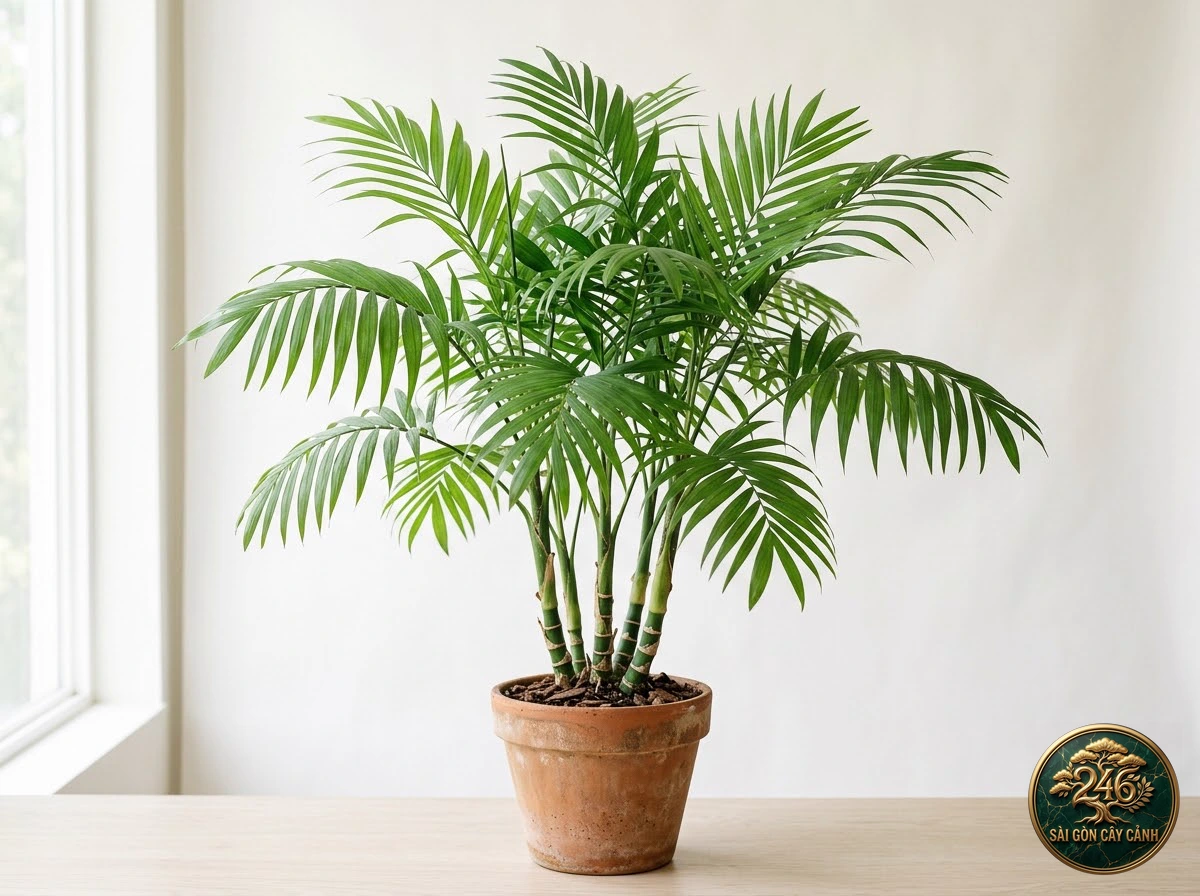
Bamboo palm (Chamaedorea seifrizii)
Bamboo palm (botanical binomial: Chamaedorea seifrizii) is a distinguished botanical specimen belonging to the Palm family (Arecaceae). Bamboo palm Chamaedorea seifrizii of Central America, forming dense graceful clusters of slender reed-like ringed canes topped with soft arching pinnate fronds, acclaimed for exceptional indoor air purification.
Saigon Cay Canh Botanical Care Compass 360°
- Light Exposure
- Medium to bright indirect light (2,500 – 6,000 lux); thrives well in interior shade.
- Watering Cadence
- Water thoroughly when top 2-3cm feels dry; avoid standing water in saucers.
- Substrate Medium
- Rich loamy potting mix, buffered coco coir, rice husks, perlite, and pumice.
- Temperature Range
- 18°C – 35°C.
- Ambient Humidity
- 50% – 80%.
- Cultivation Level
- Very easy and resilient.
- Toxicity Rating
- Completely non-toxic to pets according to ASPCA.
1. Taxonomy & Botanical Classification
Chamaedorea seifrizii is authoritatively indexed within the Royal Botanic Gardens, Kew (Plants of the World Online) under the Palm family (Arecaceae). It represents an ecological and morphological marvel in tropical flora.
In indigenous ecosystems, it forms essential vegetative layers, safeguarding soil microflora and sustaining local moisture equilibrium.
2. In-Depth Morphological Characteristics
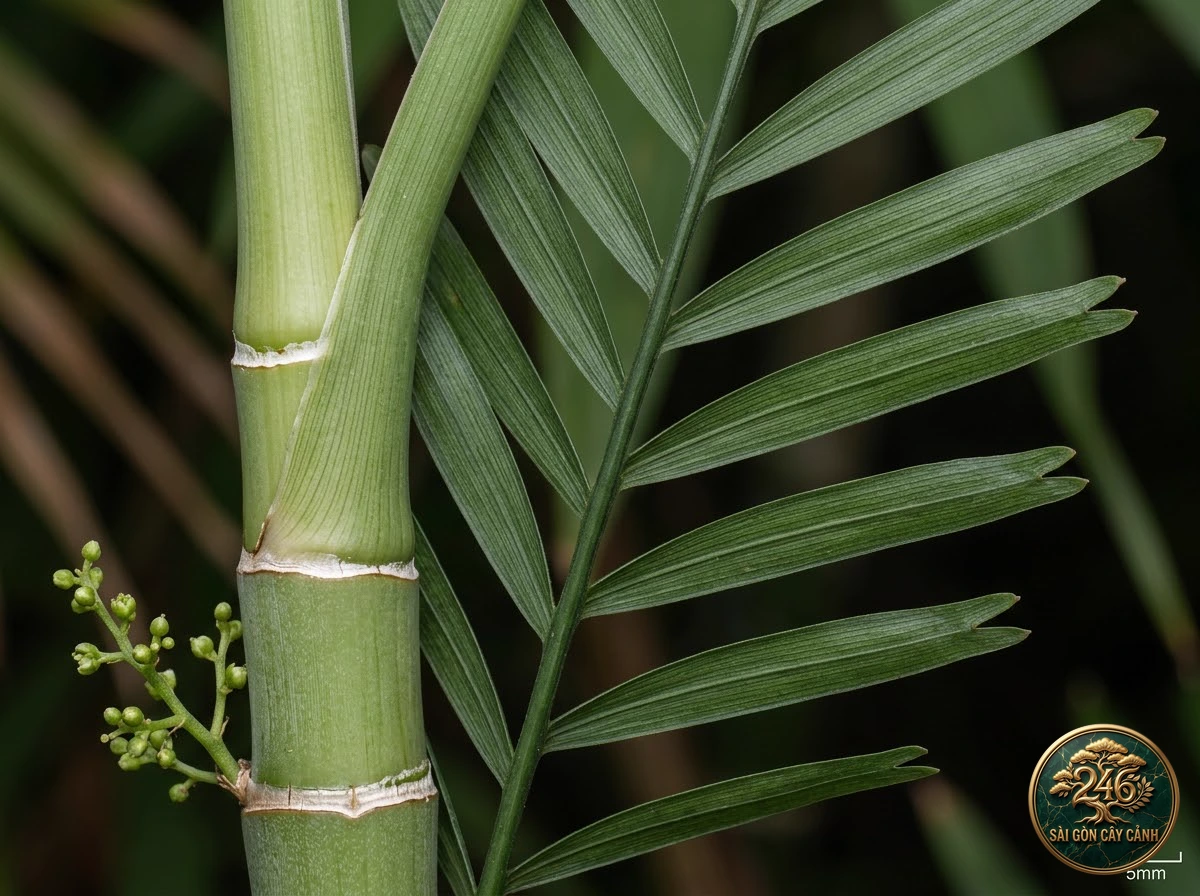
Bamboo palm Chamaedorea seifrizii of Central America, forming dense graceful clusters of slender reed-like ringed canes topped with soft arching pinnate fronds, acclaimed for exceptional indoor air purification.
Morphologically, the distinct stem architecture, foliage division, and vascular venation of Chamaedorea seifrizii maximize light capture in understory canopy conditions.
Its specialized structures ensure vitality and resistance through changing seasonal moisture levels.
3. Photobiology & Light Dynamics
Medium to bright indirect light (2,500 – 6,000 lux); thrives well in interior shade.
Photosynthetic efficiency peaks under dappled daylight. Direct harsh sun may scorch leaflet margins, whereas deep deprivation causes etiolation and washed-out coloration.
4. Irrigation Architecture & Moisture Dynamics
Water thoroughly when top 2-3cm feels dry; avoid standing water in saucers.
Moisture testing prior to watering is recommended. Use declorinated, filtered, or rainwater to avert fluoride and salinity tip necrosis.
5. Engineered Growing Media & Soil Mechanics
Rich loamy potting mix, buffered coco coir, rice husks, perlite, and pumice.
Roots require a balanced ratio between moisture capillary retention and rapid macropore aeration to permanently safeguard against anaerobic root rot pathogen invasion.
6. Microclimate Thermals & Humidity Dynamics
Optimal ambient temperature ranges between 18°C – 35°C., coupled with relative air humidity sustained at 50% – 80%..
During air-conditioned periods or drier months, pebble humidity trays or ultrasonic room humidifiers provide crucial ambient moisture buffering.
7. Nutrition Architecture & Fertilization
Feed using balanced organic biostimulants at half recommended strength on a monthly schedule throughout active growth seasons.
Abstain from heavy synthetic salts to protect tender root tips.
8. Architectural Pruning & Propagation Protocols
Trim spent, yellowing foliage using sterilized shears to channel energy toward new frond flushes and prevent pest harborage.
Propagate via cautious rhizome or offshoot division during early growing flushes or through spore/seed propagation in closed sterile humidity chambers.
9. Integrated Pest Management & Diagnostics
Scale, spider mites, and mealybugs can surface in dry stagnant atmospheres. Treat promptly with cold-pressed organic emulsified neem oil or botanical insecticidal soap.
Avoid excessive moisture stagnation in containers to prevent fungal blight.
10. Safety Profiles & ASPCA Pet Compatibility
Completely non-toxic to pets according to ASPCA.
Documented safe and benign, making it a peaceful and worry-free inclusion in homes with curious pets and young children.
11. Biophilic Architectural & Interior Curation
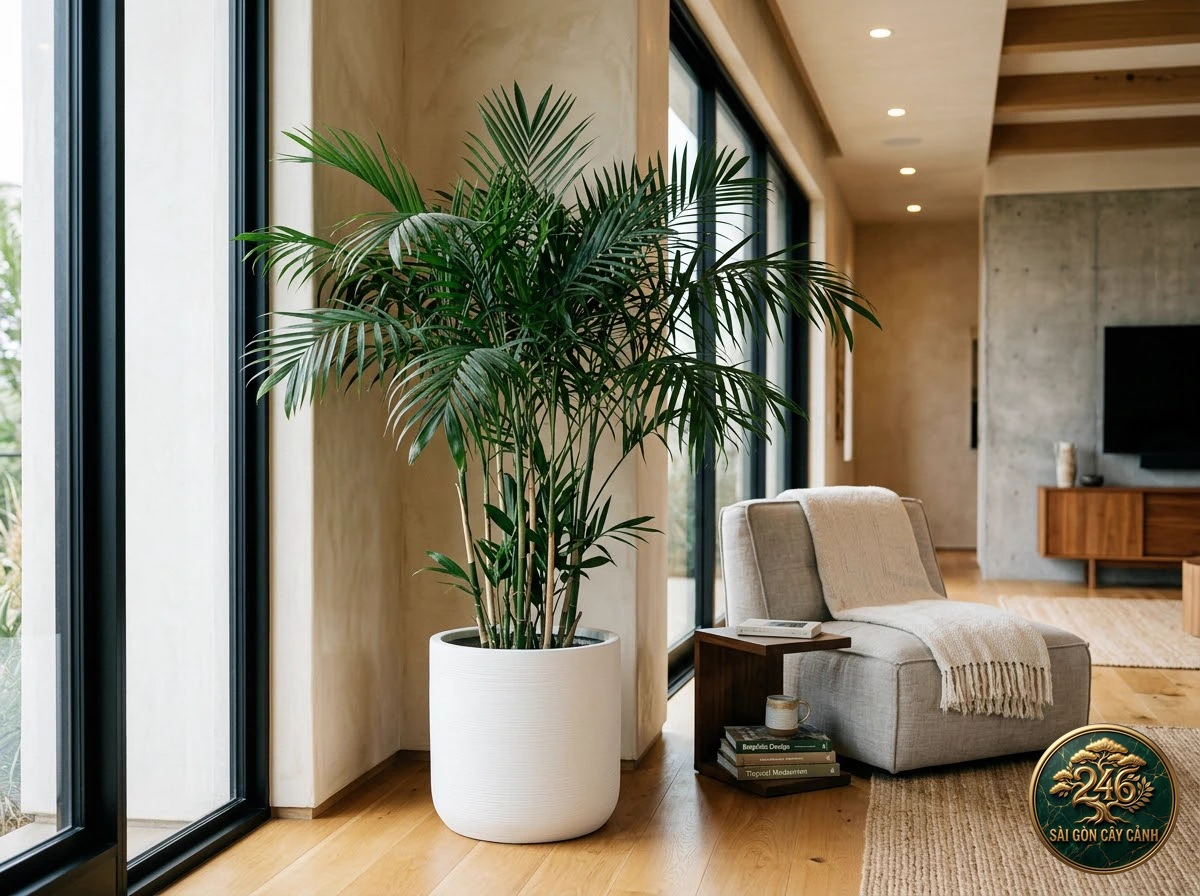
With sculptured natural geometry, Chamaedorea seifrizii is tailor-made for statement ceramic planters, contemporary living atriums, tropical shaded courtyards, and biophilic office styling.
It elevates indoor wellness, softens sharp interior lines, and brings serene botanical elegance to daily living.
12. Common Cultivation Pitfalls
- Overwatering or poor saucer drainage: Induces oxygen starvation and root necrosis.
- Harsh scorching direct sun: Bleaches and burns delicate foliage.
- Desiccating dry air: Triggers brown crispy margins and spider mites.
- Excessive chemical feeding: Damages active root surfaces.
13. Curated Botanical Inquiries (FAQs)
Can this plant thrive in air-conditioned interiors?
Yes, provided indirect light is abundant and humidity is supplemented using pebble trays or humidifiers away from direct cold drafts.
How frequently should repotting take place?
Repot every 18 to 24 months during early spring when root structures fill the container volume.
How can one keep fronds lush and vibrant green?
Maintain humidity above 60%, wipe foliar dust gently, and provide gentle filtered light.