
Living plant profile
Barberton daisy (Gerbera jamesonii)
Gerbera jamesonii
📌 CLINICAL & BIOLOGICAL ABSTRACT — Barberton daisy (Gerbera jamesonii)Barberton daisy (Gerbera jamesonii) Gerbera jamesonii, universally celebrated as Barberton daisy, Transvaal daisy, or Gerbera daisy, is an exceptionally elegant and aristocratic acaulescent perennial forb within the Asteraceae family. Indigenous to the rugged rocky valleys of Mpumalanga in South Africa, it commands global floricultural adoration for […]

Barberton daisy (Gerbera jamesonii)
Gerbera jamesonii, universally celebrated as Barberton daisy, Transvaal daisy, or Gerbera daisy, is an exceptionally elegant and aristocratic acaulescent perennial forb within the Asteraceae family. Indigenous to the rugged rocky valleys of Mpumalanga in South Africa, it commands global floricultural adoration for its impeccably symmetrical composite flower heads measuring 8 to 12 cm across, elevated proudly on leafless scapes 30 to 50 cm tall above a basal foliar rosette, displaying an intoxicating chromatic spectrum of crimson, tangerine, canary-yellow, fuchsia, and pristine ivory. Revered in Asian cultures for symbolizing prosperity and wealth, NASA studies have authenticated its outstanding capability to absorb indoor volatile toxins. Within Saigon Cay Canh landscape architecture, Barberton daisy serves as an elite floral accent representing joyful prosperity and refined elegance.
Sài Gòn Cây Cảnh Care Compass
1. Botanical Identity & Taxonomic Nomenclature History
Gerbera jamesonii was scientifically collected by South African botanist Harry Bolus and formally described by Joseph Dalton Hooker in 1889 within Curtis’s Botanical Magazine. The generic name Gerbera commemorates Traugott Gerber (1710–1743), an eminent German physician, natural historian, and botanist who served as director of the Moscow Medical Botanical Garden. The specific epithet jamesonii honors Robert Jameson (1832–1908), a Scottish naturalist and prospector who first gathered live wild specimens in the gold-mining district of Barberton within Mpumalanga, South Africa.
Indigenous to rocky ravines and mist grasslands, Barberton daisy rapidly ascended into the top five most valuable commercial cut flowers globally following hybridization work at the Royal Botanic Gardens, Kew. Acclimatized extensively across Vietnam through specialized nurseries in Da Lat and Sa Dec, it holds deep cultural affection. Saigon Cay Canh curates elite dwarf potted and cut-flower selections, offering robust continuous blooming and auspicious feng shui prosperity for sophisticated residential interiors and tropical landscapes.
2. Morphological Anatomy & Structural Architecture

Morphologically, Gerbera jamesonii develops as an acaulescent, crown-forming perennial herbaceous forb reaching an overall height of 30 to 50 cm when topped by upright floral scapes, with a basal foliar rosette spreading 30 to 45 cm wide. The underground stem is a short, stout woody rhizome anchored deeply into the substrate. Leaves arise directly from the subterranean crown in a dense rosette; blades are oblanceolate to spoon-shaped, deeply pinnatifid into 5 to 9 undulating lateral lobes, measuring 15 to 30 cm long by 5 to 10 cm wide, featuring acute to obtuse apices and attenuate winged bases. The adaxial surface is deep glossy green, while the abaxial surface is densely clothed in pale greyish-white arachnoid felt that drastically curtails transpirational water loss.
Inflorescences occur as solitary terminal capitula elevated on stout, leafless cylindrical scapes 30 to 50 cm tall, with flower heads measuring 8 to 12 cm across. The scape is erect, puberulent, and devoid of foliage. The floral architecture exhibits flawless radial symmetry, supported by a campanulate involucre of narrow green phyllaries. The periphery displays 20 to 40 velvety ligulate ray florets rendered in an intoxicating palette of scarlet, fuchsia, carrot-orange, canary-yellow, or ivory; the central disc accommodates hundreds of diminutive tubular disc florets colored either jet-black or emerald green, creating dramatic artistic contrast. The fruit is a ribbed cypsela 4 to 6 mm long crowned by a silky white pappus.
3. Solar Irradiance Thresholds & Photosynthetic Dynamics
Gerbera jamesonii is an adaptable heliophyte that performs best under bright indirect sunlight to gentle morning direct sun between 30,000 and 60,000 lux. A daily exposure of 5 to 6 hours of high luminous intensity is essential to ensure scape rigidity, promote intense petal anthocyanin pigmentation, and stimulate continuous floral bud emergence from the subterranean crown.
When positioned in dim conditions below 20,000 lux, scapes become etiolated, curved, and floppy, foliage pales, and emerging flower buds abort prematurely. Conversely, unmitigated exposure to scorching midday sun above 70,000 lux at temperatures exceeding 36 degrees C causes foliar tip scorch and premature petal bleaching. The plant flourishes in moderate temperatures between 16 and 26 degrees C, benefiting from 40% shade filtration during intense tropical summer afternoons.
4. Mineral Substrate Mechanics & Root Aeration Porosity
The root architecture of Barberton daisy incorporates deep fleshy fibrous roots radiating from a central woody rhizome, demanding an extraordinarily airy, porous, humus-rich substrate engineered for rapid gravity drainage without pooling. Stagnant anaerobic waterlogging persisting beyond 24 hours suffocates delicate rootlets, triggering Phytophthora crown rot and fatal foliar collapse.
The benchmark potting substrate crafted by Saigon Cay Canh contains 40% clean alluvial loam, 25% carbonized rice hulls for root zone aeration, 20% washed coco coir, 10% Trichoderma-fortified composted manure, and 5% horticultural perlite. Soil pH is maintained within 5.8 to 6.5. A paramount horticultural mandate: the growing crown eye must always sit precisely level with or 0.5 cm above the substrate line, never buried beneath soil.
5. Hydraulic Equilibria & Irrigation Regimens
With a low basal rosette and sensitive central growing eye, Gerbera jamesonii requires disciplined, deliberate irrigation mechanics. The baseline watering protocol mandates soaking the root zone along the outer container rim at dawn whenever the upper 2 cm of soil dries. During dry summer heat, irrigate once daily; during cool rainy months, suspend watering until surface soils drain.
Direct water strictly around the outer soil perimeter; never blast overhead water into the central growing crown or into open blossoms, as water trapped inside the crown eye incites rapid bacterial crown blight. Following severe downpours, verify that container drainage channels remain completely unobstructed.
6. Nutrient Biogeochemistry & Fertilization Protocols
To sustain lush basal foliar rosettes and fuel stout, erect floral scapes bearing vibrant composite heads continuously, Barberton daisy requires disciplined mineral nutrition. Top-dress with aged vermicompost or slow-release organic pellets (NPK 6-8-12) monthly at 0.5 to 1 kg worked into the perimeter pot rim.
Following crown establishment and during continuous floral bud initiation, dissolve a water-soluble balanced formula (NPK 15-20-25 or NPK 16-16-16) at 1.5 grams per liter every 10 to 12 days. Complement with foliar sprays rich in chelated calcium, boron, and magnesium every 20 days to fortify scape cell walls, holding heavy flower heads proudly aloft against wind and weather.
7. Clonal Propagation & Germplasm Conservation
Gerbera jamesonii propagates with exceptional efficacy via vegetative clump division of mature crowns or commercial micropropagation, achieving survival rates above 95%. The ideal division window spans warm spring or early monsoon months when parent clumps develop 3 to 5 distinct crowns. Gently unpot the mature specimen and wash away old substrate from the root ball.
Using a sterile surgical blade sanitized with 70% medical alcohol, sever daughter plantlets cleanly from the central rhizome, ensuring each division retains 3 to 4 intact leaves and a cluster of vigorous fibrous roots. Trim damaged rootlets, dip roots into 500 ppm IBA solution, and pot into fresh well-aerated media. Maintain under 60% shade with gentle misting; divisions establish robust new roots within 10 to 14 days, followed by rapid leaf flushes.
8. Phytochemical Toxicity & Pet Safety Standards (ASPCA)
Botanical safety profile and ASPCA pet safety standards: Classified within the Asteraceae family, Gerbera jamesonii is recognized as completely NON-TOXIC and safe around companion animals (dogs, cats, horses) and humans under standard ASPCA toxicological benchmarks. The entire plant—including soft basal leaves, tall scapes, and vivid composite blossoms—synthesizes zero dangerous alkaloids or injurious plant toxins.
Accidental ingestion of petals or casual chewing of foliage by domestic pets provokes zero toxicological harm or systemic distress. Furthermore, its validated prowess in absorbing volatile organic compounds (benzene, formaldehyde) makes it an unmatched indoor biophilic companion. Horticulturists should remove spent scapes cleanly at the base, sanitize shears with 70% medical alcohol, and maintain routine hygiene to keep plantings flourishing safely.
9. Clinical Pathology Diagnostics & Treatment Strategies
Pathology diagnostic protocol for western flower thrips suppression and sub-surface irrigation in Gerbera jamesonii:
| Clinical Manifestation | Etiological Cause | Standard Treatment Protocol |
|---|---|---|
| Scapes become etiolated and floppy, young flower buds abort, and basal leaves turn pale green | Severe light deprivation caused by positioning in dim rooms below 20,000 lux for extended periods | Prune failed scapes with shears sanitized with 70% alcohol, move plant to receive 5 to 6 hours of bright filtered light daily |
| Emerging buds and petal undersides show distorted scarring accompanied by fast-moving tiny thrips | Frankliniella occidentalis western flower thrips rasping developing petals and causing chromatic blemishes | Apply biological cold-pressed neem oil or horticultural insecticidal soap at dusk twice 5 days apart |
| Potting soil is waterlogged, lower leaves turn yellow and drop prematurely, and shoots wilt | Root asphyxiation and rot induced by poor drainage or clogged container drainage ports | Suspend watering immediately, clear container drainage holes, aerate surface soil, and drench with Trichoderma |
10. Comparative Morphology & Allied Taxa Diagnosis
Taxonomic comparative matrix distinguishing symmetrical elevated scapes and authenticated VOC absorption of Gerbera jamesonii:
| Diagnostic Parameter | Gerbera jamesonii (Barberton daisy) | Comparative Specimen A | Comparative Specimen B |
|---|---|---|---|
| Capitulum Architecture and Diameter | Symmetrical composite flower heads 8 to 12 cm across perched on leafless scapes above a basal rosette | Colossal composite heads 15 to 35 cm across of brilliant yellow ray florets exhibiting heliotropic movement | Compact daisy heads 3 to 5 cm across in orange, yellow, or white, naturally self-cleaning spent florets |
| Growth Habit and Structural Stature | Acaulescent perennial rosette forb 0.3 to 0.5 meters tall with upright leafless scapes | Giant erect solitary annual forb 1.0 to 3.0 meters tall, stout hispid stem heavily lignified with age | Low mounding spreading carpet annual forb 0.2 to 0.4 meters tall, wiry flexible self-branching stems |
| Companion Animal Safety and ASPCA Profile | NON-TOXIC (certified completely benign and safe for companion animals under ASPCA non-toxic benchmarks) | NON-TOXIC (certified completely benign and safe for companion animals under ASPCA non-toxic benchmarks) | NON-TOXIC (certified completely benign and safe for companion animals under ASPCA non-toxic benchmarks) |
11. Biophilic Design Harmony & Contemporary Spatial Aesthetics
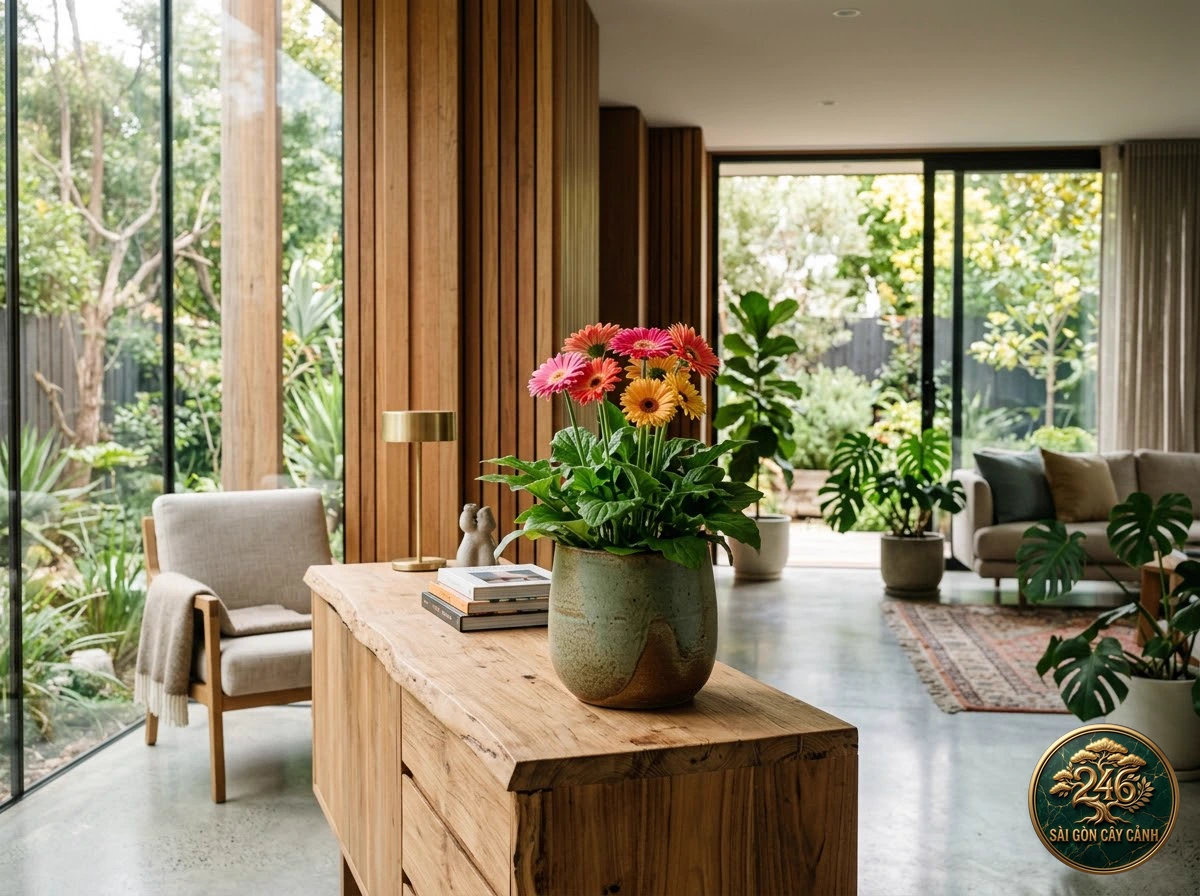
Within botanical symbolism and Eastern biophilic philosophy, Barberton daisy serves as an illustrious emblem of abundant wealth, ascending prosperity, auspicious fortune, and radiant cheerfulness. Its vibrant kaleidoscopic floral palette infuses living spaces with uplifting vital energy, attracting auspicious commercial opportunities and festive joy to residential thresholds.
Boasting impeccable architectural symmetry and authenticated indoor air-purifying prowess, Gerbera jamesonii functions as an elite biophilic accent: potted in artisanal ceramic urns adorning luxury executive desks and living rooms, gracing sunny verandas, edging shaded villa borders, or showcased in bespoke cut-flower arrangements that radiate boundless positive harmony.
12. Saigon Cay Canh Provenance & Cultivation Assurance

Saigon Cay Canh delivers premium, nursery-acclimated specimens of pure Gerbera jamesonii cultivars, featuring lush basal crowns, healthy root systems, and abundant floral buds prepared to elevate brilliant composite blooms across luxury interiors and estate garden landscapes.
We provide 100% botanical taxonomic verification, comprehensive living plant health warranties, prompt gift delivery services, and dedicated floricultural care advisory for luxury private estates and corporate hospitality venues.
💬 Góc Tư Vấn & Hướng Dẫn Kỹ Thuật SGCC
Chuẩn E-E-A-T Kinfolk❓ Chăm sóc Barberton daisy (Gerbera jam cần lưu ý điều gì quan trọng nhất?
💡 Dạ điều quan trọng nhất là giữ môi trường sống ổn định, tránh sốc nhiệt hay dao động thông số đột ngột, đồng thời cung cấp khẩu phần ăn sạch và tươi mới ạ.
❓ Làm thế nào để phòng ngừa bệnh tật hiệu quả cho các bé?
💡 Dạ anh chị nên giữ vệ sinh chuồng/hồ nuôi sạch sẽ, thay nước hoặc dọn dẹp định kỳ và bổ sung vitamin, men tiêu hóa đều đặn để tăng sức đề kháng ạ.
🌿 Trang Thiết Bị, Đất Trồng & Dụng Cụ Bonsai Tuyển Chọn
Dụng cụ tỉa, giá thể hữu cơ & phân bón chuyên dụng cho cây cảnh.

Hạt Giống Hoa Cúc Họa Mi Trắng Daisy Flower Seeds-1500 …
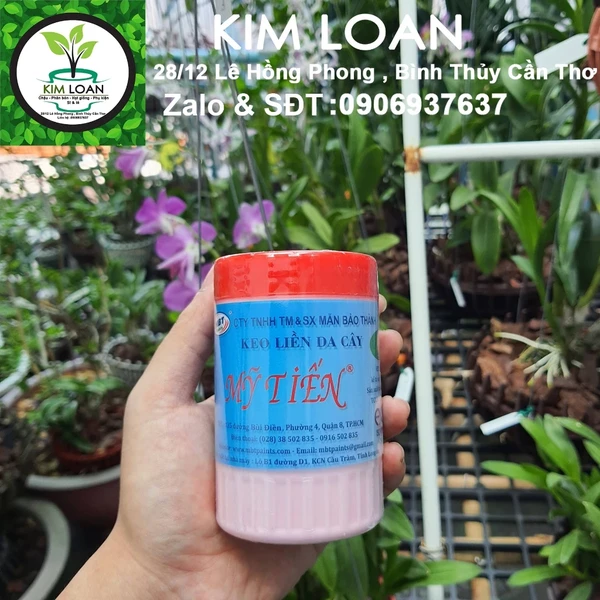
Keo liền da cây Mỹ Tiến hồng hũ 100g

Móc treo cây gang chắc chắn Móc treo tường Giá đỡ chậu …
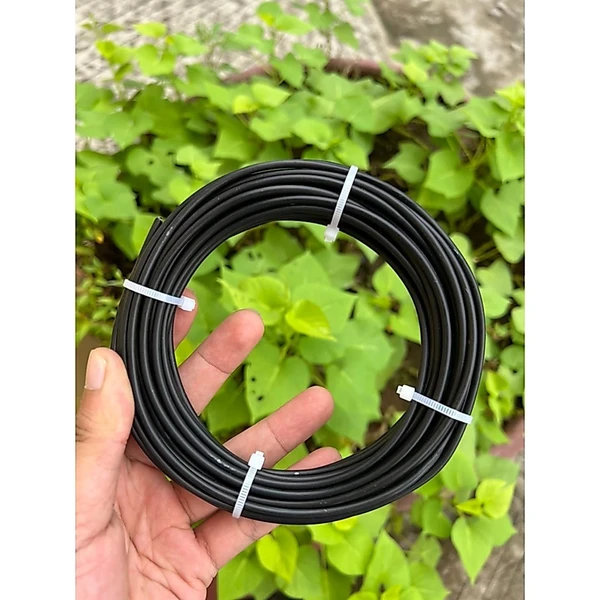
Dây Nhôm Đen Uốn Cây Cảnh, Cây Bonsai ( Loại 3mm) , Dây…

Kéo cắt cành SK5 nhật bản, Kéo cắt cành nhật bãi Tay cầ…

chậu nhựa lục giác mai giả đá 550

LUCKY Chậu Hoa Khuôn Đất Sét, Tay Chà Cán Nồi Gốm Mềm P…

Đôn Vuông Trang Trí Kê Cây Cảnh, Chậu Hoa, Bình Gốm Gỗ …

Cưa Gỗ Cầm Tay Mini Có Thể Gấp Gọn Lưỡi Cưa Siêu Sắc Dà…

Phân bón lá NPK 20-20-20 + TE hủ 500 gram Growmore. TO …

Bay xúc đất làm vườn lưỡi bằng inox cán gỗ
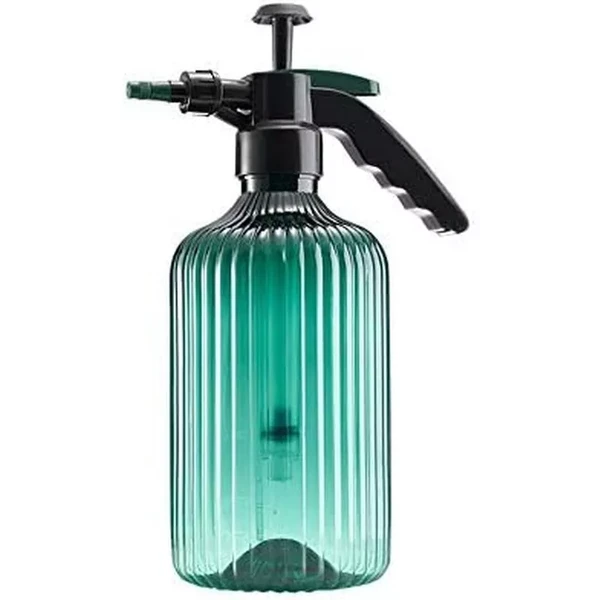
Bình tưới vườn, Plant Mister, Máy phun bơm, Máy phun áp…
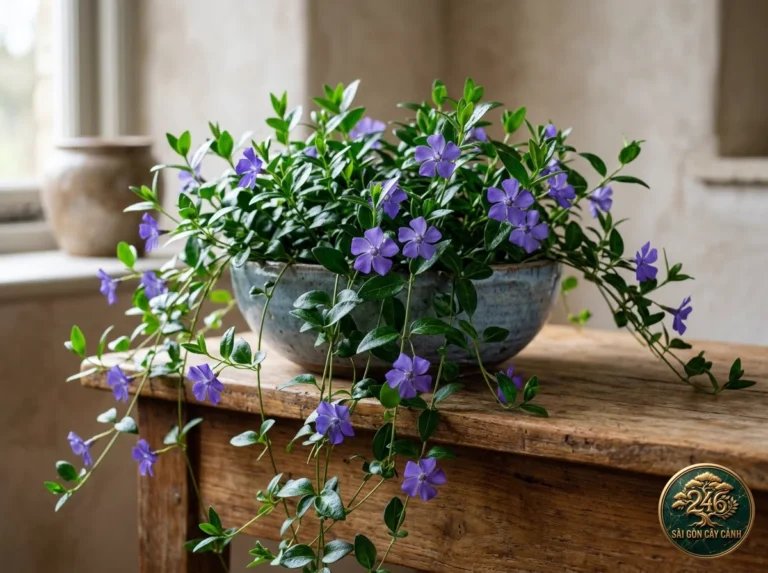
Lesser periwinkle
Vinca minor, universally recognized as lesser periwinkle, dwarf periwinkle, or creeping myrtle, is an aristocratic, evergreen perennial subshrub...
Read Monograph →
Summer snapdragon (Angelonia angustifolia)
Summer snapdragon (Angelonia angustifolia) Angelonia angustifolia, celebrated worldwide as summer snapdragon or angelmist, is an exceptionally durable and...
Read Monograph →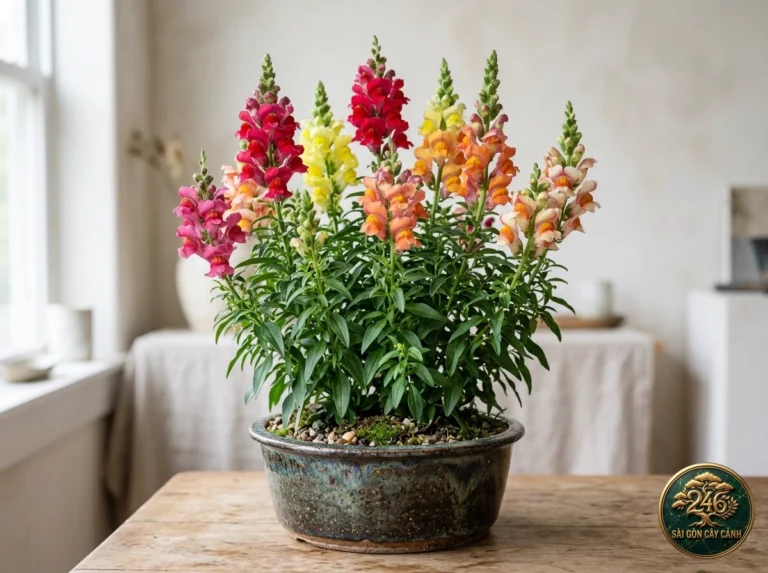
Snapdragon (Antirrhinum majus)
Snapdragon (Antirrhinum majus) Antirrhinum majus, universally celebrated as snapdragon or dragon flower, is an aristocratic and dramatically sculpted...
Read Monograph →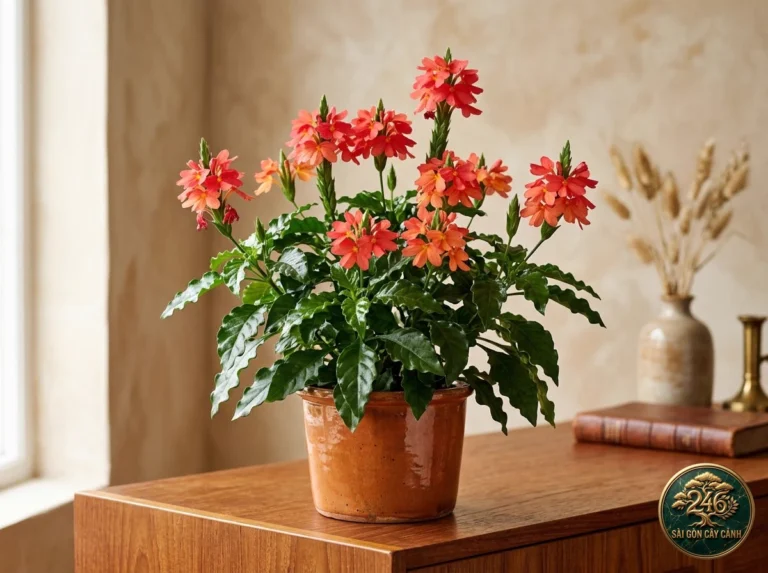
Nile crossandra
Crossandra nilotica, celebrated internationally as the Nile crossandra or East African firecracker flower, is an aristocratic, evergreen tropical...
Read Monograph →Expert Q&A, Recommended Supplies & Article Feedback
Tap once to connect instantly via Google, Facebook or TikTok — no long forms required!
No questions yet for this article. Tap Google / Facebook / TikTok above to ask the first question!