Living plant profile
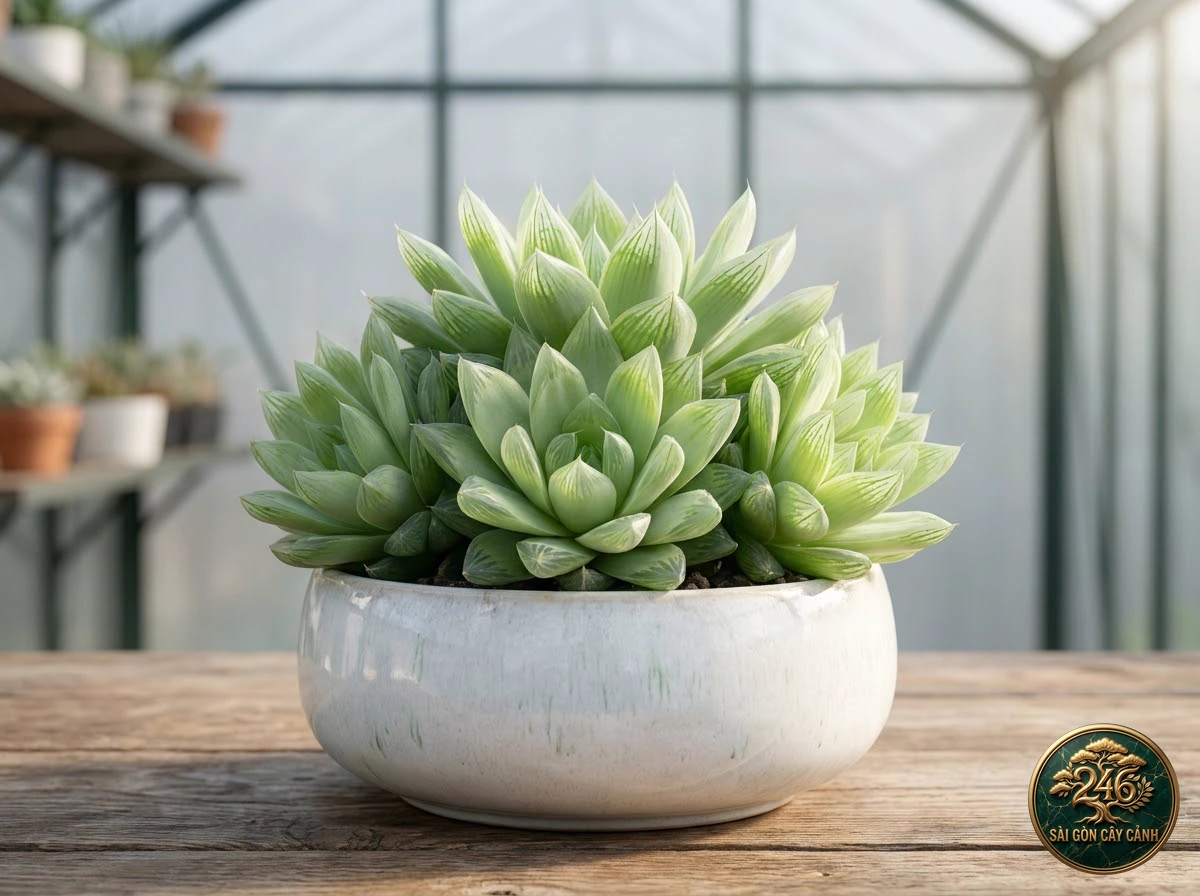
Boat-formed haworthia (Haworthia cymbiformis)
Haworthia cymbiformis
Comprehensive botanical monograph on Boat-formed haworthia (Haworthia cymbiformis): structural morphology, physiological adaptations, porous mineral substrate, and specialized cultivation guidelines.
Boat-formed haworthia (Haworthia cymbiformis)
Sài Gòn Cây Cảnh Care Compass
1. Botanical Introduction & Taxonomic Identity
Haworthia cymbiformis stands as one of the most classic and delicate succulent jewels within the rich flora of South Africa. The specific epithet cymbiformis derives from Latin roots signifying boat-shaped, accurately defining the concave, boat-like geometry of its turgid leaves that swell plumply toward the center before gently tapering to an acute, mucronate tip. Unlike many rigid, heavily armed brethren within the genus, the boat-formed haworthia distinguishes itself by an extraordinarily smooth, soft epidermal texture resembling newly carved celadon jade. Foliar pigmentation ranges from tender chartreuse in dappled shade to pale jade-green blushed with pastel amber tints under filtered morning sunlight, imparting an aura of serene refinement to indoor botanical collections.
The taxonomic chronicle of Haworthia cymbiformis dates to the dawn of the nineteenth century, when English entomologist and botanist Adrian Hardy Haworth first documented the plant in 1804 as Aloe cymbiformis. In 1809, French botanist Henri Auguste Duval established the new genus Haworthia and formally transferred the taxon under its current accepted combination Haworthia cymbiformis (Haw.) Duval. It served historically as one of the foundational species defining the genus. Over two centuries of botanical field exploration across South Africa’s coastal river valleys have cataloged diverse regional ecotypes and varieties including var. ramosa and var. transiens, demonstrating significant genetic adaptability.
2. Native Habitat & Geographical Distribution
In its native wild habitat, Haworthia cymbiformis populates sheltered sandstone outcrops, limestone cliffs, and shady riverine bluffs flanking the Great Fish, Buffalo, and Keiskamma river drainage systems in the Eastern Cape of South Africa. Thriving beneath the protective canopy of riverine scrub and on south-facing shadowed cliff ledges, this taxon has developed a natural tolerance for dappled illumination uncommon among arid Karoo succulents. Ambient microclimates remain tempered by evaporative river mists and maritime breezes, allowing cymbiformis to maintain turgid, unretracted rosettes through most seasons without retreating completely into subterranean gravel pockets like its more extreme xerophytic relatives.
3. Detailed Morphological Characteristics
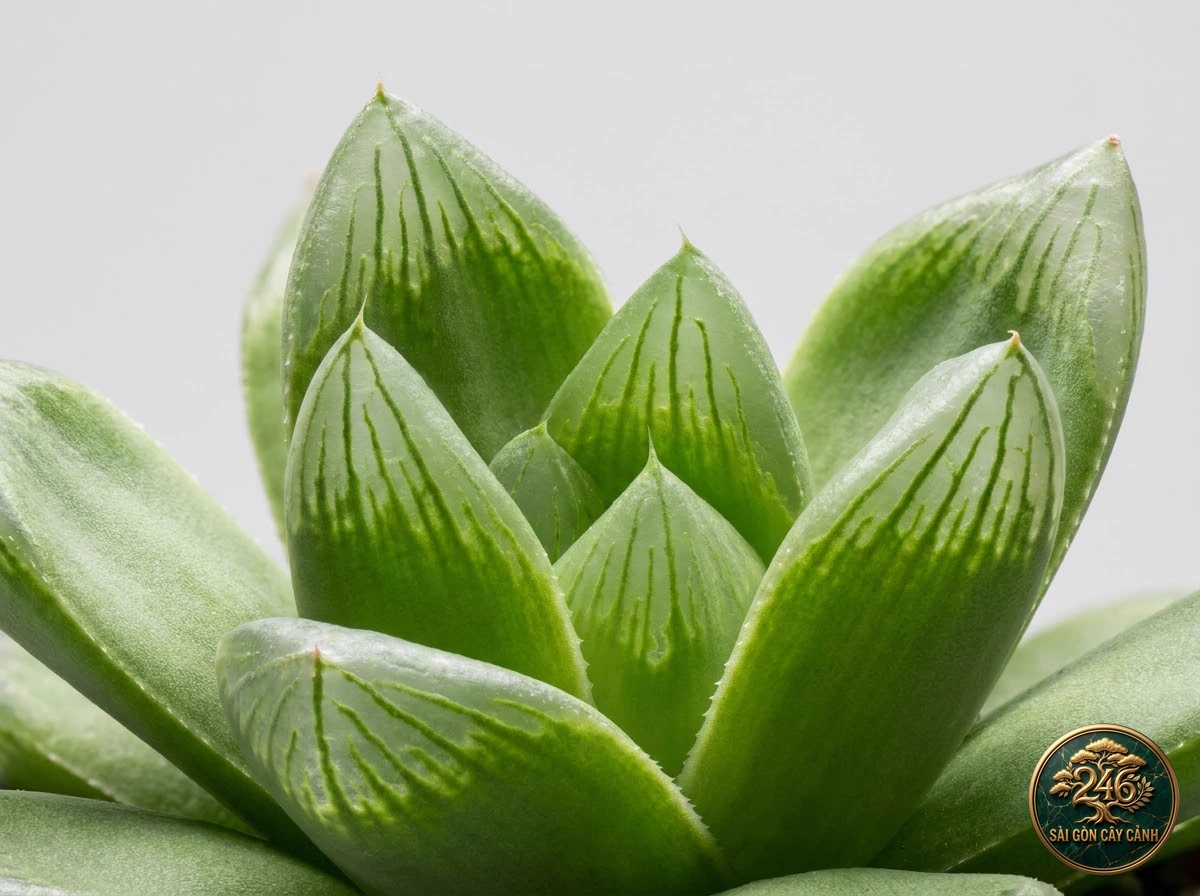
Architecturally, Haworthia cymbiformis produces stemless, low-profile rosettes measuring 6 to 10 cm across that readily form sprawling, multi-crowned colonies. Each succulent leaf extends 3 to 5 cm in length and 1.5 to 2.5 cm in width, arrayed in an imbricate spiral rosette. The apical halves of the upper leaf surfaces feature pronounced translucent window panes traversed by dark green longitudinal veins resembling delicate capillaries. These epidermal fenestrations act as optical lenses, harvesting ambient low-intensity light and diffusing it deep into interior photosynthetic chlorenchyma. The root system consists of succulent, semi-contractile fibrous strands anchoring into shallow rock pockets. Graceful racemes ascend 20 to 30 cm overhead, presenting dainty bilabiate florets of creamy white accented by subtle olive-green keystripes.
Microscopic anatomical analysis reveals sophisticated histological adaptations within the leaf lamina of Haworthia cymbiformis: the adaxial epidermal cells are extraordinarily enlarged, hexagonal, and completely devoid of chloroplasts, filled instead with clear water-soluble polysaccharide mucilage. This optical window functions as a planar converging lens, bending low-angle morning sunlight and focusing it directly onto chloroplast-dense palisade parenchyma beneath the surface. Operating on Crassulacean Acid Metabolism (CAM), the plant seals its stomatal apertures during the day and opens them nocturnally to capture atmospheric CO2, converting it into stored vacuolar malic acid and cutting transpiration by ninety-five percent.
4. Core Botanical Matrix
Core taxonomic and cultivation parameters:
| Botanical Parameter | Observed Trait | Saigon Cay Canh Horticultural Recommendation |
|---|---|---|
| Scientific Name | Haworthia cymbiformis (Haw.) Duval | Maintain certified taxonomic labeling across nursery stock |
| Plant Family | Asphodel family (Asphodelaceae) | Observe specialized succulent physiology within Asphodelaceae |
| Native Distribution | Sheltered cliff ledges and shaded limestone crevices along the Great Fish River basin, Eastern Cape Province, South Africa | Replicate native climatic parameters in indoor cultivation |
| Illumination Intensity | 12,000 – 25,000 lux | Gentle morning sun or bright diffused shade; tolerates more shade than thick-leaved coriaceous haworthias |
| Thermal Window | 14°C – 28°C | Protect against cold below 8°C and provide active ventilation during heat |
| Relative Humidity | 50% – 70% | Sustain gentle atmospheric air movement to disperse stagnant moisture |
| Substrate pH | 6.0 – 6.8 | Utilize porous neutral mineral components for rapid drainage |
| Substrate Formulation | 40% fine pumice (2-4mm), 25% hard akadama clay, 15% perlite, 10% zeolite grit, 10% desalinated coco coir with worm humus | Maintain coarse granular structure; avoid dense suffocating soils |
| Irrigation Strategy | Water deeply when eighty percent of substrate dries out; enjoys slightly more moisture consistency than desert types | Enforce thorough substrate dry-down between watering sessions |
| Propagation Pathways | Division of prolific basal plantlets during spring or propagating firm, undamaged succulent foliar cuttings | Perform during warm spring or early wet season for peak vigor |
| Veterinary Toxicology | NON-TOXIC TO COMPANION ANIMALS (ASPCA Non-Toxic) | COMPLETELY PET-SAFE (ASPCA Non-Toxic); devoid of toxic secondary metabolites and safe around cats and dogs. |
5. Toxicity Profile & Domestic Safety
Regarding residential safety and companion animal wellbeing, Haworthia cymbiformis provides unequivocal peace of mind. Rigorous assessments by the American Society for the Prevention of Cruelty to Animals (ASPCA) confirm that Haworthia species are entirely NON-TOXIC to cats, dogs, and equine companions. Its cellular mucilage contains zero bufadienolide cardiac glycosides and is completely devoid of irritant substances. Should inquisitive household animals accidentally bite into a succulent leaf, they will suffer no metabolic poisoning or gastrointestinal ulceration, making it an exemplary houseplant for responsible pet guardians.
6. Lighting Dynamics & Photosynthetic Adaptations
Photometric demands for boat-formed haworthia center upon gentle brightness, ideally between 12,000 and 25,000 lux, commonly found near east-facing windows or beneath transparent balcony shades. Direct midday solar radiation must be strictly averted, as its delicate epidermal skin rapidly blisters or discolors to a scorched brownish-crimson under thermal excess. Conversely, severe darkness triggers foliar elongation and loss of compact geometry. Providing 4 to 6 hours of soft, filtered morning sunlight daily maintains optimal foliar thickness and preserves the brilliant crystalline clarity of its windowed tips.
7. Moisture Equilibrium & Irrigation Regimes
Watering protocols for Haworthia cymbiformis rely on balanced soak-and-dry rhythms: soak the root zone thoroughly only when eighty percent of the growing substrate has shed its moisture. In warm urban settings, this equates to roughly once every 4 to 6 days during breezy, temperate weather. When ambient temperatures exceed 34°C during sweltering spells or during persistently damp monsoon periods, metabolic transpiration declines; watering should be extended to every 8 to 12 days, applying moisture around the perimeter of the container at twilight to prevent water pooling in the foliar crown.
8. Substrate Architecture & Nutrition Strategy
The optimized potting matrix for boat-formed haworthia balances fast gravitational drainage with gentle mineral moisture retention: blending 40% small-grade horticultural pumice (2-4mm), 25% hard Japanese akadama clay, 15% expanded perlite for oxygen pores, 10% natural zeolite granules for cation adsorption, and 10% thoroughly washed coconut coir enriched with pure worm humus. This recipe guarantees superior root aeration, maintains a stable pH between 6.0 and 6.8, and eliminates moisture stagnation around the fragile succulent taproots.
9. Temperature Dynamics & Aeration Strategy
Thermal parameters supporting robust vegetative vitality span 14°C to 28°C. Specimens endure nocturnal winter dips down to 8°C provided the root ball remains dry, but enter heat-induced dormancy when sustained temperatures exceed 32°C. Relative air humidity ranging from 50% to 70% ensures supple leaf texture without drying apical tips. Consistent ambient airflow represents the ultimate environmental essential; gentle air circulation accelerates substrate dry-down and virtually eradicates fungal outbreaks and mealybug colonization.
10. Specialized Propagation Protocols
The most dependable propagation protocol for boat-formed haworthia is vegetative division of prolific basal pups during temperate spring or autumn periods. Using a sterilized scalpel, sever firm offsets possessing two or three developing root fibrils, dust the wound with micronized sulfur, and allow the excised tissue to cure in breezy shade for 3 to 5 days until a protective suberized callus forms. Rest the offset atop moist mineral substrate composed of seventy percent fine pumice and thirty percent akadama; robust feeder roots emerge within 10 to 15 days. Whole undamaged leaves cleanly detached at the basal stem axis also root successfully.
11. Diagnostic Matrix & Preventative Health
While possessing high vitality, Haworthia cymbiformis is susceptible to crown rot induced by pathogenic fungi such as Fusarium oxysporum and soft rot bacteria like Pectobacterium carotovorum under poor drainage. If basal leaves soften and discolor to translucent yellow, immediately unpot the specimen, excise decayed tissues cleanly with a surgical blade, immerse the crown in mild systemic fungicide solution for 10 minutes, and allow it to dry unpotted for a week before replanting into sterile pumice. Foliar mealybugs (Pseudococcus) hiding between tightly packed leaves should be gently removed with organic alcohol swabs or treated with horticultural neem oil at twilight.
Clinical diagnostics and remedial actions:
| Observed Symptom | Primary Root Cause | Saigon Cay Canh Remedial Action |
|---|---|---|
| Boat-shaped succulent leaves deflate, wrinkle, and lose emerald luster | Critical root moisture exhaustion after prolonged neglect of irrigation intervals | Provide a gentle drench around the container perimeter at sunrise; foliage regains plump turgidity within two days |
| Basal leaf collars turn waterlogged, mushy, and dark brown | Opportunistic fungal infection thriving in stagnant moisture pooled within foliar crevices | Surgically excise rotted tissue with a sanitized blade, apply sulfur dust, and dry the potting medium completely |
| Rosette stretches with elongated, weak leaves losing their concave profile | Chronic deficit of ambient diffused light from prolonged placement in dim indoor corners | Relocate specimen to an east-facing windowsill receiving 3 to 5 hours of morning light to restore compact habit |
| White powdery mealybug clusters nesting between tender inner leaf bases | Sap-sucking insect colonies proliferating in stagnant, poorly ventilated indoor enclosures | Dab individual pests with mild botanical alcohol using a cotton bud and rinse with clean water after ten minutes |
12. Living Architecture & Interior Styling
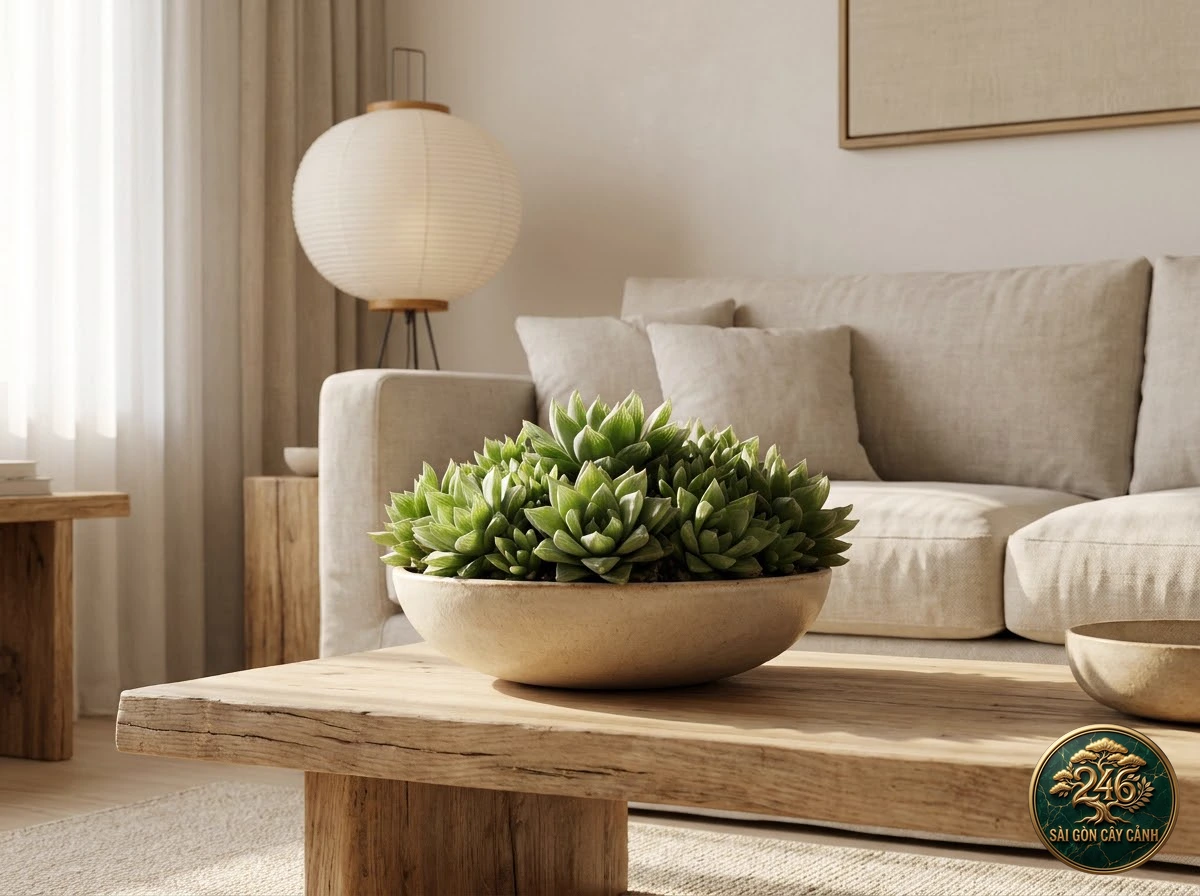
In bespoke xerophytic compositions, Haworthia cymbiformis harmonizes gracefully alongside miniature windowed species such as Haworthia cooperi, cascading Senecio rowleyanus, and dwarf succulents like Gasteria glomerata. Contrasting its tender, celadon boat-shaped leaves against coarse, tuberculate companions produces refined textural counterpoint. Assembled within shallow artisan stoneware dressed with pale quartz pebbles, the grouping creates a tranquil, museum-grade living display that highlights the crystalline translucence of the foliage.
With its clumping, rounded cushion architecture and pristine celadon coloration, boat-formed haworthia integrates flawlessly into Scandinavian minimalist interiors and Japanese Wabi-Sabi aesthetics. It achieves aesthetic perfection in unglazed stoneware, warm terracotta, or matte artisanal cast-concrete bowls. Stationed upon natural timber credenzas, bright bathroom windowsills, or executive desks, its tranquil presence relieves digital visual strain, providing a soothing touch of organic elegance to interior architecture.
Nursery Care Journal & Living Greenery Moments
At Saigon Cay Canh greenhouse, each photograph captures genuine everyday care moments between plant lovers and living greenery, spreading a passion for nature and green-living inspiration.

13. Frequently Asked Questions & Botanical Summary
Frequently Asked Question: Why are my boat haworthia leaves shriveling, turning dull brownish-red, and losing their clear translucence?
Expert Diagnosis from Saigon Cay Canh: Foliar bronzing accompanied by leaf contraction is a classic physiological defense against excessive unshaded sunlight or prolonged root dehydration. The plant synthesizes protective anthocyanins to shield chlorophyll while contracting to conserve moisture. To rectify this, shift the container into cooler diffused illumination, verify root health, and deliver a thorough drench. Within 7 to 10 days in temperate filtered light, leaf parenchyma rehydrates, restoring pristine emerald plumpness and glassy clarity.
This botanical monograph on the boat-formed haworthia Haworthia cymbiformis is curated by Saigon Cay Canh, offering an authentic examination of an emerald river-valley succulent treasure that enriches botanical spaces with serene natural charm.