Living plant profile
Cathedral bells (Kalanchoe pinnata)
Kalanchoe pinnata
Comprehensive botanical monograph on Cathedral bells (Kalanchoe pinnata): structural morphology, physiological adaptations, porous mineral substrate, and specialized cultivation guidelines.
Cathedral bells (Kalanchoe pinnata)
Sài Gòn Cây Cảnh Care Compass
1. Botanical Introduction & Taxonomic Identity
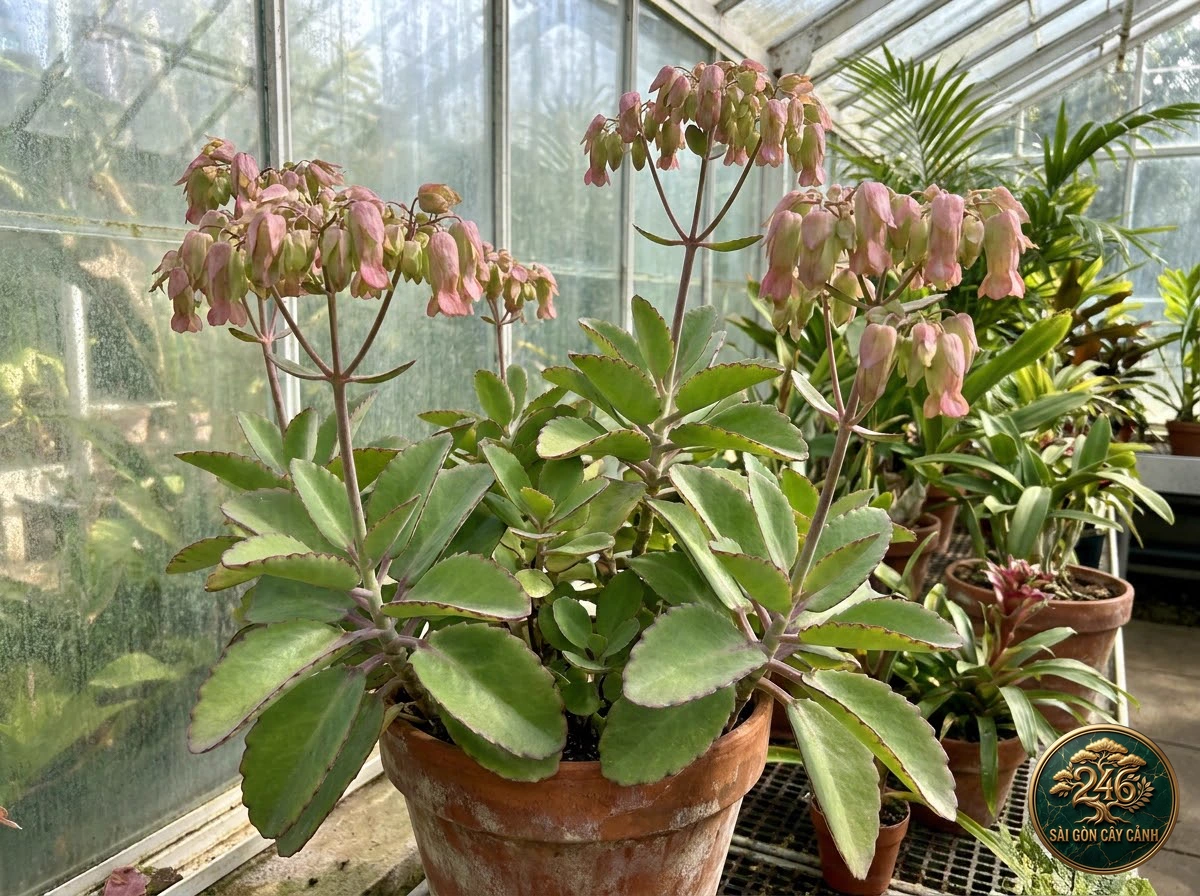
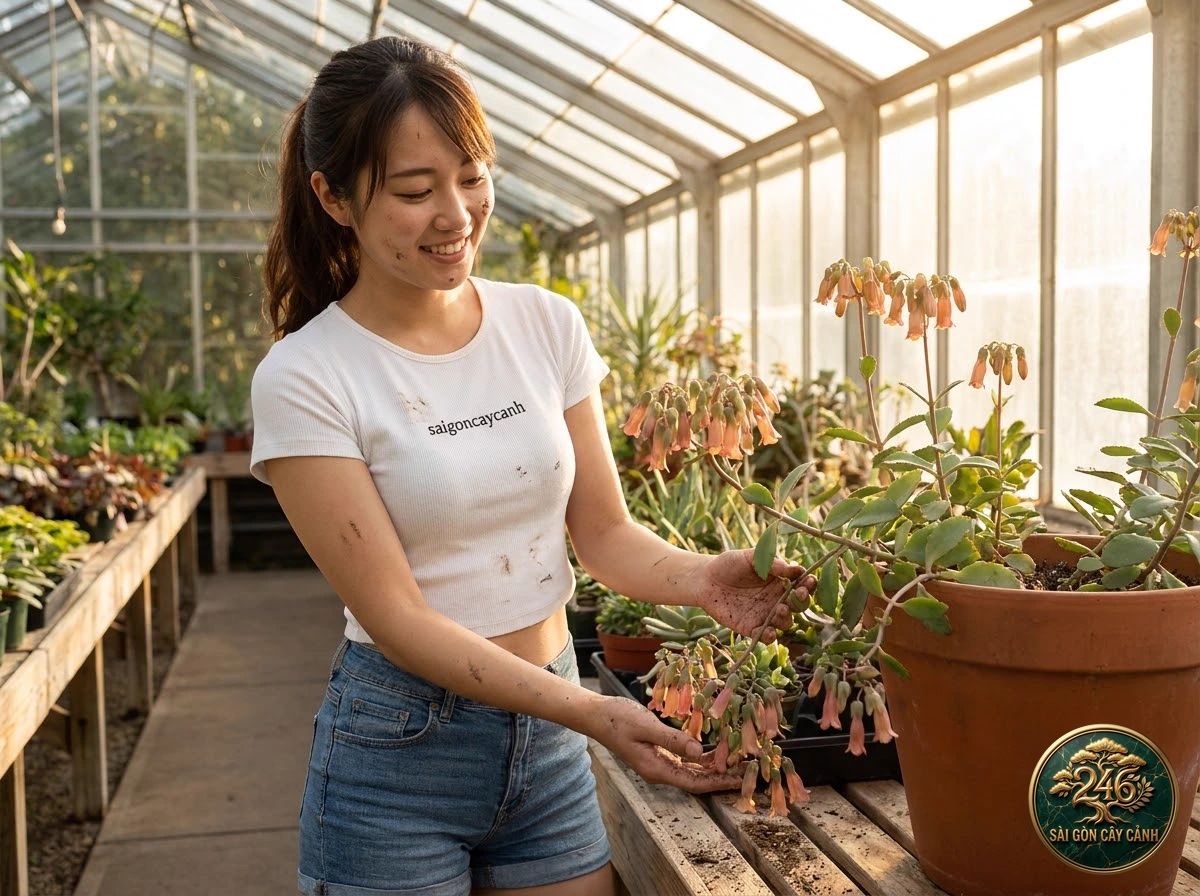
Kalanchoe pinnata, known in international botanical nomenclature as cathedral bells, life plant, or air plant, stands as one of the most widely naturalized and culturally celebrated succulent herbs on the planet. Indigenous to the island of Madagascar, this taxon has established itself across tropical and subtropical zones worldwide thanks to its astonishing regenerative vigor. The species is renowned for its fleshy imparipinnate foliage bordered by crenate notches; each marginal notch represents a latent meristematic center primed to sprout autonomous, fully formed plantlets. When blooming, the plant produces magnificent pendulous sprays of lantern-like flowers whose inflated greenish-pink calyces sheath coral-red corollas, swaying gracefully in tropical breezes.
Kalanchoe pinnata possesses an illustrious botanical and cultural history. It was initially documented by French naturalist Jean-Baptiste Lamarck in 1786 under the name Cotyledon pinnata, before being transferred into the genus Kalanchoe in 1805 by Christiaan Hendrik Persoon in Synopsis Plantarum. Renowned German polymath Johann Wolfgang von Goethe spent years investigating its extraordinary foliar vivipary, citing the plant as living empirical validation for his celebrated treatise on the Metamorphosis of Plants, elevating cathedral bells into an iconic subject within Western natural philosophy and botanical science.
2. Native Habitat & Geographical Distribution
In its native Malagasy homeland, Kalanchoe pinnata inhabits moist tropical hillsides, forest margins, and rocky stream banks extending from coastal lowlands up to 1,500 meters altitude. Unlike its desert-dwelling cousins, this species is adapted to more generous precipitation regimes and higher ambient humidity, thriving in soil enriched by decayed organic forest leaf litter. Following historic introduction across Asia and the Americas, it naturalized smoothly along garden walls, agricultural borders, and moist shaded embankments. This remarkable ecological plasticity has established cathedral bells as an enduring global emblem of unyielding vitality and continuous regeneration.
3. Detailed Morphological Characteristics
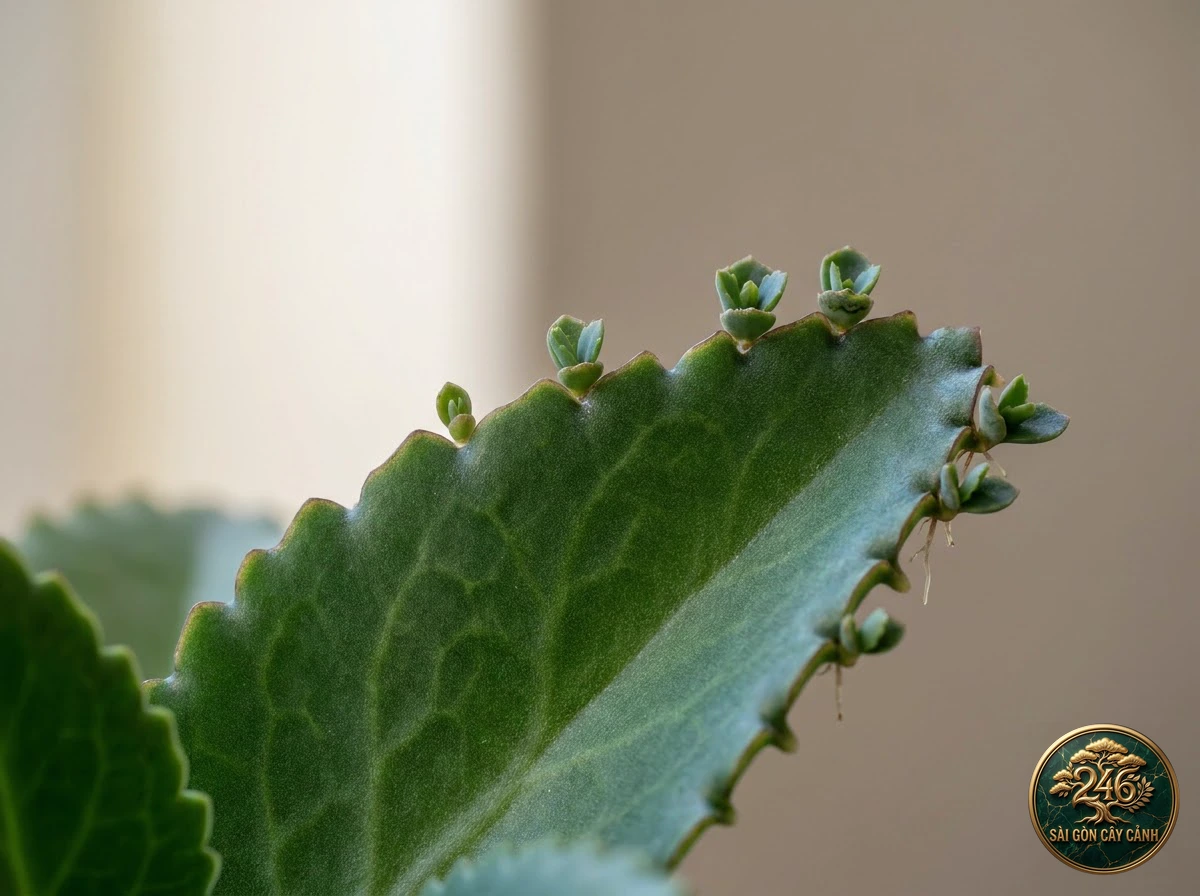
Botanical anatomy reveals Kalanchoe pinnata as an erect perennial succulent subshrub attaining heights between 60 and 120 cm, supported by hollow yet robust succulent stems that branch freely from the base. Basal leaves are typically simple, whereas upper foliage transitions into imparipinnate compound leaves featuring 3 to 5 fleshy, ovate leaflets with purple-tinged crenate margins. Foliar vivipary reaches its evolutionary zenith here: when a detached leaf rests upon moist substrate, endogenous auxin and cytokinin surges activate marginal notch meristems simultaneously, generating dozens of rooted plantlets along the perimeter. Terminal inflorescences display massive drooping panicles of inflated papery calyces 4 to 7 cm long encasing cylindrical corollas.
Microscopic examination of Kalanchoe pinnata leaf anatomy illuminates the biological mechanics of foliar vivipary: each marginal notch harbors an autonomous cluster of primary meristematic cells capable of localized auxin-cytokinin hormonal regulation. While the leaf remains attached to the parent stem, continuous apical dominance signals keep these marginal initials dormant; upon foliar abscission, the cessation of inhibitory signals immediately prompts cell division, forming miniature shoot buds and adventitious roots within days, transforming every detached leaf into a prolific natural nursery.
4. Core Botanical Matrix
Core taxonomic and cultivation parameters:
| Botanical Parameter | Observed Trait | Saigon Cay Canh Horticultural Recommendation |
|---|---|---|
| Scientific Name | Kalanchoe pinnata (Lam.) Pers. | Maintain certified taxonomic labeling across nursery stock |
| Plant Family | Stonecrop family (Crassulaceae) | Observe specialized succulent physiological requirements |
| Native Distribution | Native to Madagascar, now widely naturalized throughout tropical and subtropical regions across the globe | Replicate native climatic parameters in indoor cultivation |
| Illumination Intensity | 18,000 – 45,000 lux | Adaptable from bright partial shade to full sun; exhibits pendulous lantern-like calyces when supplied ample illumination |
| Thermal Window | 16°C – 35°C | Protect against frost below 8°C and provide ventilation during heat |
| Relative Humidity | 45% – 75% | Sustain gentle atmospheric air movement to disperse stagnant moisture |
| Substrate pH | 5.5 – 6.8 | Utilize porous neutral mineral components for rapid drainage |
| Substrate Formulation | 35% coarse pumice, 25% washed volcanic scoria, 15% horticultural perlite, 15% rich loamy humus, 10% biologically active worm compost | Maintain coarse granular structure; avoid dense suffocating soils |
| Irrigation Strategy | Displays higher moisture tolerance than dry-desert congeners but requires distinct drying intervals to avoid anaerobic root rot | Enforce thorough substrate dry-down between watering sessions |
| Propagation Pathways | Laying mature detached leaves horizontally on moist substrate to stimulate dozens of foliar plantlets, or rooting stem cuttings | Perform during warm spring or early wet season for peak vigor |
| Veterinary Toxicology | TOXIC TO COMPANION ANIMALS (ASPCA Toxic) | Houses bryophyllins A, B, and C (bufadienolide class) capable of triggering fatal cardiac arrhythmias in livestock and pets upon consumption. |
5. Toxicity Profile & Domestic Safety
Although Kalanchoe pinnata enjoys extensive ethnobotanical fame in traditional topical folk remedies for minor thermal burns, modern veterinary toxicology warns that the plant produces potent steroidal glycosides known as bryophyllins A, B, and C belonging to the bufadienolide class. When domestic quadrupeds such as dogs, cats, or grazing livestock ingest substantial quantities of foliage or flowers, these toxins induce severe cardiac intoxication by disrupting myocardial ATPase pumps. Clinical symptoms manifest as hypersalivation, intractable emesis, watery diarrhea, hypotension, cardiac arrhythmias, and potential respiratory collapse. Saigon Cay Canh strictly advises custodians to cultivate specimens in elevated planters or secured balconies isolated from companion animals.
6. Lighting Dynamics & Photosynthetic Adaptations
Cathedral bells demonstrates remarkable photic adaptability, prospering across a spectrum from bright filtered shade to full open sunshine, accommodating light intensities between 18,000 and 45,000 lux. When supplied with 4 to 5 hours of direct morning solar radiation daily, foliage thickens, purple venation becomes prominently defined, and the plant amasses sufficient photosynthetic reserves to produce splendid winter floral panicles. In heavily shaded interior alcoves, vegetative growth remains lush green but stems elongate and flowering capacity diminishes markedly. Prolonged harsh midday summer sun on parched soil should be tempered to prevent foliar edge desiccation.
7. Moisture Equilibrium & Irrigation Regimes
Moisture management for Kalanchoe pinnata exhibits greater tolerance than for arid-desert succulents; it appreciates moderate moisture but still requires the substrate to dry out partially between watering cycles to preserve healthy root oxygenation. In tropical lowlands, watering once every 5 to 7 days during dry periods sustains optimum foliar turgor. Apply a thorough soak evenly across the soil surface during cool morning hours. During prolonged monsoon rains, examine the potting medium and withhold watering until noticeable drying occurs; never allow containers to sit in waterlogged saucers, as oxygen-depleted soil rapidly induces root suffocation and crown rot.
8. Substrate Architecture & Nutrition Strategy
The recommended planting medium for Kalanchoe pinnata harmoniously blends rapid mineral drainage with nourishing organic humus: 35% coarse volcanic pumice, 25% washed volcanic scoria, 15% horticultural perlite, 15% fertile loamy humus, and 10% biological aged vermicompost. This physical architecture retains balanced moisture without risking soil compaction or anaerobic water saturation. An optimal substrate pH ranges from 5.5 to 6.8. Amending with modest top-dressings of organic compost or balanced slow-release fertilizer granules every three months during active growth fuels luxuriant foliar expansion and sturdy stem development.
In terms of mineral nutrition, Kalanchoe pinnata exhibits greater nutritional flexibility than arid desert succulents. The species thrives in soil enriched with organic humus balanced by complete macro- and micronutrients, fueling lush compound foliage and expansive lantern-like flower panicles. Cultivators can incorporate cured vermicompost into the potting mix, supplementing with diluted organic liquid fertilizer or compost tea once monthly during warm growing months to stimulate robust branching and abundant seasonal flowering.
9. Temperature Dynamics & Aeration Strategy
Cathedral bells flourishes across a broad thermal envelope of 16°C to 35°C, harmonizing effortlessly with monsoon tropical climates. The species exhibits extraordinary resilience, withstanding summer heatwaves comfortably provided root hydration is maintained. However, prolonged cold below 10°C accompanied by soggy substrate causes leaf discoloration and defoliation. A relative atmospheric humidity between 45% and 75% suits this tropical succulent ideally. Maintaining consistent air movement around plants serves as a primary preventative measure against foliar molds and insect vectors.
10. Specialized Propagation Protocols
Propagation of Kalanchoe pinnata represents one of the most miraculous phenomena in plant biology. To multiply specimens, simply lay a mature healthy leaf horizontally atop moist soil or even pin it against a surface in diffused light; within 7 to 10 days, every marginal notch erupts with tiny plantlets bearing miniature leaves and white adventitious roots. Once plantlets measure 2 to 3 cm tall, gently detach and plant them into individual containers. Furthermore, nodal stem cuttings inserted directly into moist sandy loam strike roots with virtually 100% success within a single week.
11. Diagnostic Matrix & Preventative Health
Mealybugs and anthracnose leaf spot during rainy intervals represent the primary cultural concerns for Kalanchoe pinnata. Upon observing white cottony mealybug clusters within leaf axils or floral scapes, gently wipe them with a 70% medicinal alcohol swab to eradicate the insects without synthetic chemicals. If circular brown fungal lesions with dark halos appear on foliage during humid monsoon weeks, promptly prune off infected leaves, thin dense foliage to improve internal ventilation, and place the pot in a breezy, sunlit position to keep leaves dry.
Clinical diagnostics and remedial actions:
| Observed Symptom | Primary Root Cause | Saigon Cay Canh Remedial Action |
|---|---|---|
| Lower leaves turn soft, thin, and wrinkled | Prolonged moisture deficit in the root medium | Provide a deep perimeter soak for Kalanchoe pinnata; tissues recover within 48 hours |
| Black soft decay at the stem base with leaf drop | Anaerobic fungal root rot due to waterlogged substrate | Unpot immediately, excise necrotic pulp, treat with sulfur powder, and repot into bone-dry pumice |
| Elongated, weak internodes with pale drooping foliage | Chronic insufficiency of direct solar radiation | Relocate Kalanchoe pinnata to receive unshaded morning sunlight for 4 to 6 hours daily |
| White cottony clusters nested in foliar axils | Foliar mealybug infestation (Pseudococcidae) | Apply 70% medicinal alcohol directly with a cotton bud to dissolve waxy insect cuticles without foliar damage |
12. Living Architecture & Interior Styling
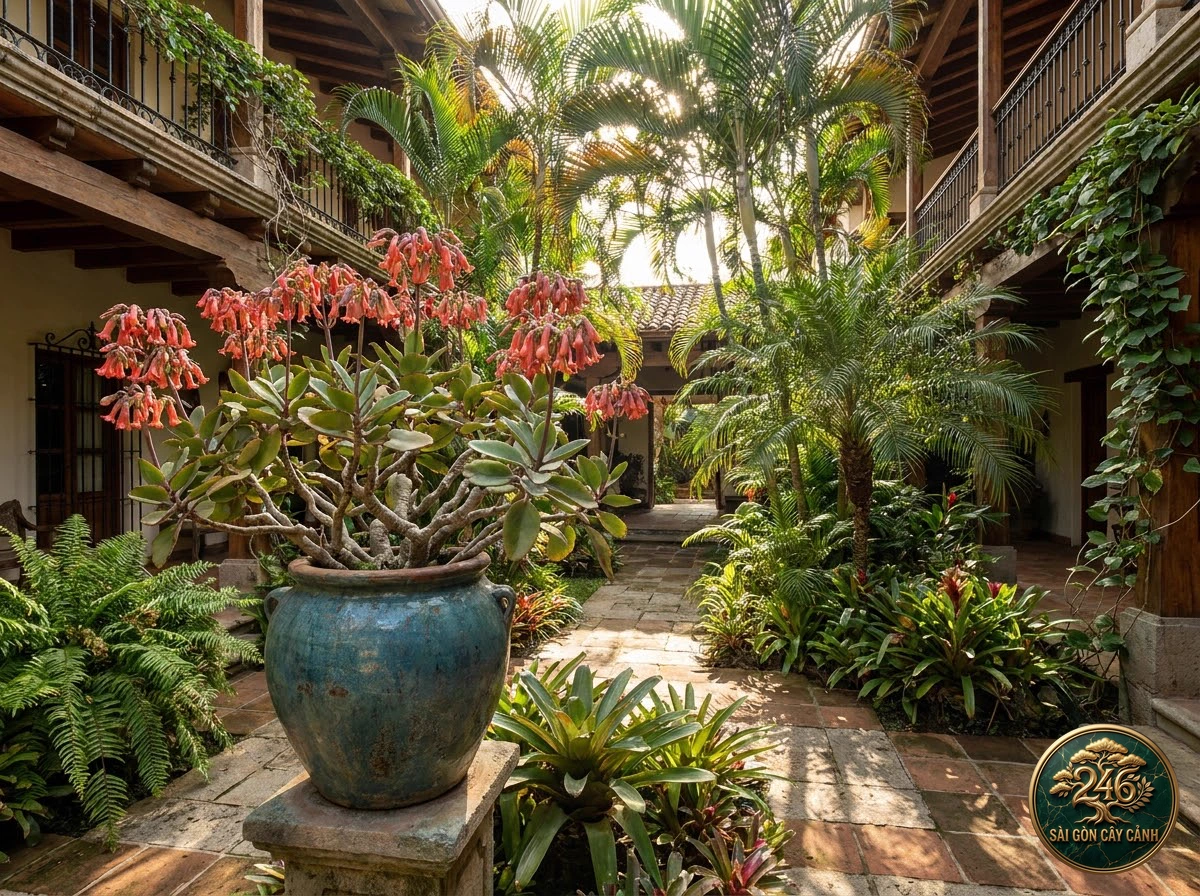
Featuring graceful architecture, verdant foliage brimming with vitality, and hanging floral lanterns, Kalanchoe pinnata makes a delightful addition to sunny verandas, tropical rockeries, or garden walkways. It displays rustic charm and timeless elegance when showcased in classic terracotta planters, glazed ceramic urns, or modern composite pots. In cultural symbolism, cathedral bells represents resilience, enduring prosperity, family harmony, and everlasting rebirth, infusing personal living spaces with auspicious natural harmony.
Featuring graceful stature, verdant imparipinnate foliage brimming with vitality, and hanging coral floral lanterns, Kalanchoe pinnata makes a magnificent living addition to sunny verandas, tropical rockeries, or garden walkways. It displays timeless rustic charm and architectural poise when framed in classic terracotta urns, traditional glazed ceramics, or modern composite planters. In cultural symbolism, cathedral bells represents resilience, enduring longevity, perpetual rebirth, and generational family harmony, infusing modern living environments with auspicious natural energy.
Brand Ambassador & Living Herbarium Botanical Philosophy
At Saigon Cay Canh botanical nursery, each specimen is curated and tended under the guidance of our brand ambassador, ensuring vibrant vitality and true-to-type morphology.
13. Horticultural Excellence & Living Heritage
At Saigon Cay Canh, we cherish Kalanchoe pinnata not merely as a resilient succulent, but as a living botanical heritage deeply connected to timeless horticultural wisdom. Every plant in our care is nurtured to achieve lush natural turgidity, structural poise, and vigorous biological vitality. We remain passionately devoted to sharing specialized cultivation advice, ensuring these enduring green treasures bring lasting peace, health, and natural beauty into your personal living domain.