
Living plant profile
Cluster gasteria (Gasteria glomerata)
Gasteria glomerata
Comprehensive botanical monograph on Cluster gasteria (Gasteria glomerata): structural morphology, physiological adaptations, porous mineral substrate, and specialized cultivation guidelines.
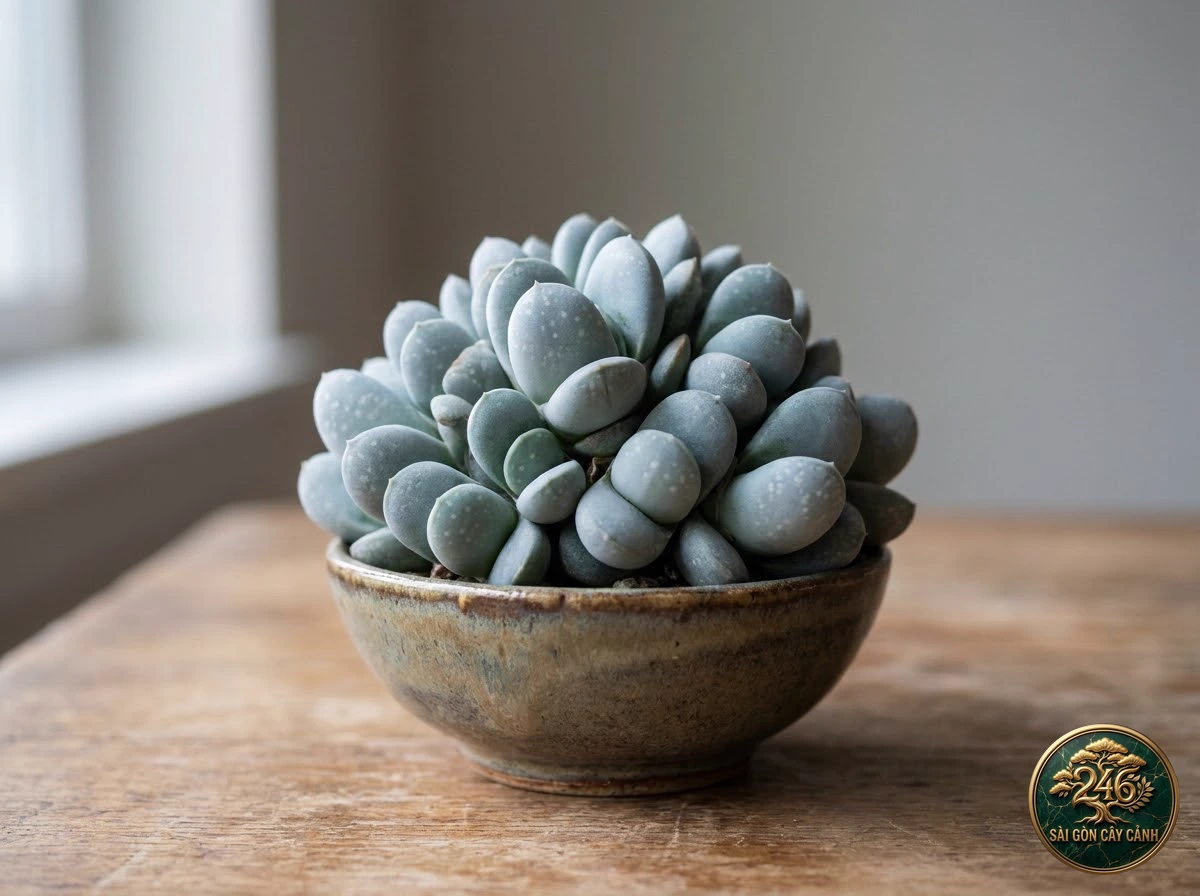
Cluster gasteria (Gasteria glomerata)
Sài Gòn Cây Cảnh Care Compass
1. Botanical Introduction & Taxonomic Identity
Among South Africa’s endemic succulent flora, Gasteria glomerata is celebrated as one of the most remarkable and charming botanical discoveries of the late twentieth century. Discovered in 1991 by renowned botanist Ernst van Jaarsveld in the remote Kouga River canyon, the specific name glomerata signifies clustered or gathered into a ball, describing its endearing habit of freely offsetting into dense, multi-headed cushions. Distinct from elongated, rough-leaved congeners, glomerata features short, plump, remarkably obese leaves arranged in compact distichous ranks like miniature dumplings. The entire foliage is blanketed in a fine epicuticular wax imparting an exquisite glaucous silver-blue coloration that looks dusted with frosty velvet, radiating an irresistible air of serene elegance.
Gasteria glomerata was discovered in 1991 by renowned succulent botanist Ernst van Jaarsveld during an inflatable raft expedition navigating the inaccessible Kouga River gorge in South Africa’s Eastern Cape. His formal scientific description was published that same year in Bradleya, the prestigious journal of the British Cactus and Succulent Society (BCSS). The revelation of this taxon created international excitement: glomerata represents the most compact dwarf species in the genus, displaying an enchanting glaucous silver-blue farina bloom unique among gasterias. Its endearing plump habit and clustering vitality rapidly established it as an elite treasure among succulent collectors worldwide. The late discovery of Gasteria glomerata in 1991 proves that South Africa’s remote sandstone canyons still harbor pristine succulent wonders awaiting scientific exploration.
2. Native Habitat & Geographical Distribution
The indigenous habitat of Gasteria glomerata is extraordinarily rugged and micro-endemic: restricted exclusively to sheer, vertical south-facing quartzitic sandstone cliffs within the secluded Kouga River gorge near the Kouga Dam, Eastern Cape, South Africa. This deep, shaded canyon offers natural sanctuary completely inaccessible to terrestrial browsing animals. Specimens anchor tenaciously into vertical cliff fissures, thrusting succulent roots deep into cool, fractured bedrock. The canyon microclimate features year-round precipitation with spring and autumn peaks, continuously enriched by ambient river mists. The powdery glaucous farina protects against fungal spores while minimizing transpiration during arid breezes.
3. Detailed Morphological Characteristics
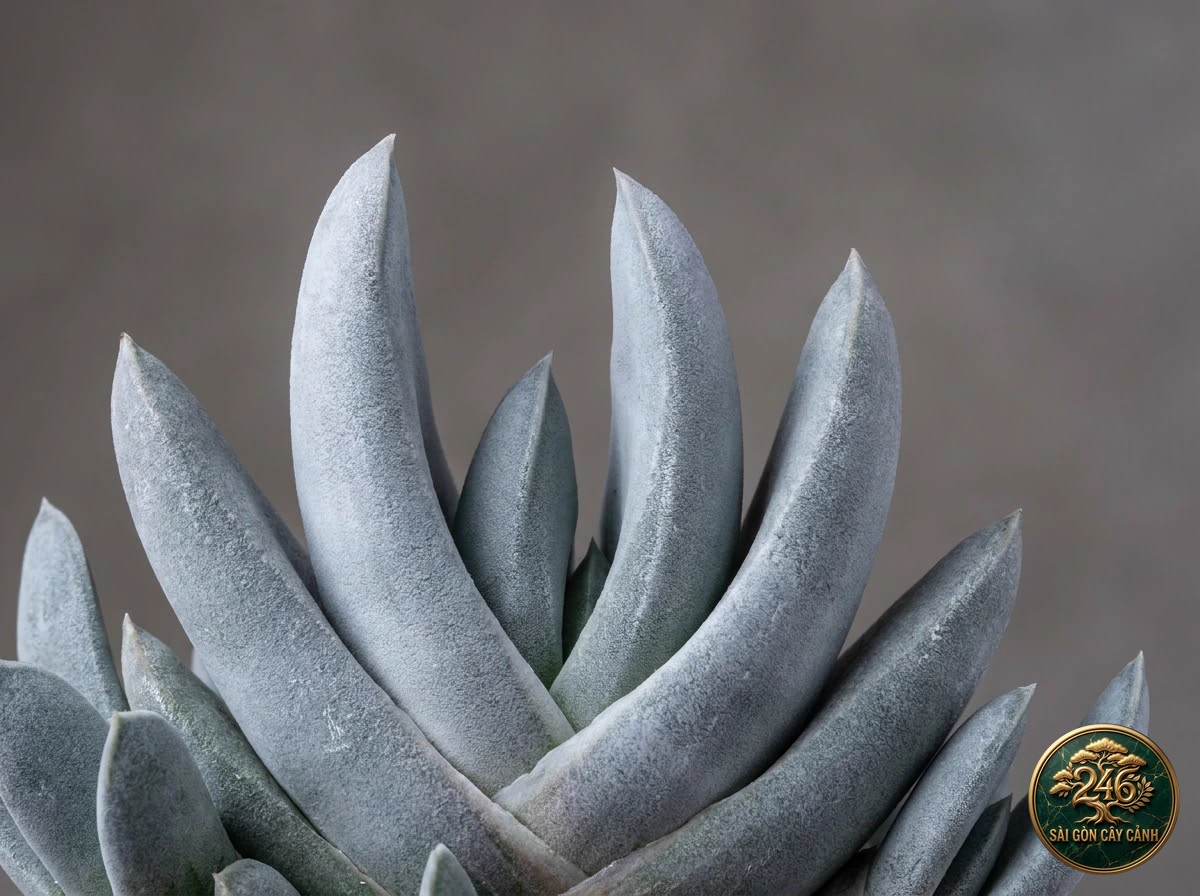
Architecturally, Gasteria glomerata is a true miniature dwarf succulent, rising barely 5 to 10 cm in individual height while prolifically offsetting into dense globose mounds 15 to 20 cm across. The foliage remains strictly distichous, with each crown composed of 4 to 8 extremely plump leaves. Individual leaf blades measure 2.5 to 5 cm in length, 1.5 to 2.5 cm in width, and up to 1.0 cm in thickness, terminating in a rounded, blunt apex. The epidermal surface is smooth beneath its powdery glaucous bloom, entirely free from spines or abrasive ridges. Fleshy fibrous roots penetrate deep into rock fissures. Graceful arching racemes 15 to 25 cm long present 10 to 20 pendulous, bulbous flowers of intense coral-red tipped with green, blooming in early spring.
Anatomical adaptations of Gasteria glomerata showcase supreme specialization for vertical cliff living (a rupicolous chasmophyte): its short, obese leaves reaching up to 1 cm in thickness are blanketed by an epicuticular crystalline wax imparting a chalky silver-blue bloom. This farina serves as a high-efficiency reflective shield, deflecting sixty percent of solar thermal irradiance off vertical rock faces while preventing water transpiration. Furthermore, its dwarf, ground-hugging growth habit lowers the physical center of gravity, anchoring the cluster tenaciously into vertical crevices without succumbing to gravitational shear along sheer cliff walls. The chalky silver-blue epicuticular wax coating of Gasteria glomerata consists of randomly oriented microcrystalline wax platelets forming a superhydrophobic effect that sheds moisture droplets and debris, preventing fungal spore adhesion. Its dwarf, distichous clustering architecture packs succulent leaves tightly against one another, forming a monolithic structural cushion exceptionally equipped to withstand canyon turbulence and vertical bedrock erosion.
4. Core Botanical Matrix
Core taxonomic and cultivation parameters:
| Botanical Parameter | Observed Trait | Saigon Cay Canh Horticultural Recommendation |
|---|---|---|
| Scientific Name | Gasteria glomerata van Jaarsv. | Maintain certified taxonomic labeling across nursery stock |
| Plant Family | Asphodel family (Asphodelaceae) | Observe specialized succulent physiology within Asphodelaceae |
| Native Distribution | Sheer vertical quartzitic sandstone cliffs of the isolated Kouga River gorge, Eastern Cape Province, South Africa | Replicate native climatic parameters in indoor cultivation |
| Illumination Intensity | 12,000 – 25,000 lux | Cool diffused illumination or gentle morning sun; soft light preserves its pristine glaucous silver farina |
| Thermal Window | 12°C – 28°C | Protect against cold below 8°C and provide active ventilation during heat |
| Relative Humidity | 45% – 65% | Sustain gentle atmospheric air movement to disperse stagnant moisture |
| Substrate pH | 6.2 – 6.8 | Utilize porous neutral mineral components for rapid drainage |
| Substrate Formulation | 50% fine pumice (2-4mm), 25% hard akadama, 10% zeolite grit, 10% perlite, 5% mature worm castings | Maintain coarse granular structure; avoid dense suffocating soils |
| Irrigation Strategy | Soak deeply when substrate is eighty-five percent dry; extremely swollen leaves store ample moisture | Enforce thorough substrate dry-down between watering sessions |
| Propagation Pathways | Separation of plump basal offsets or rooting undamaged whole glaucous leaves in clean mineral grit | Perform during warm spring or early wet season for peak vigor |
| Veterinary Toxicology | NON-TOXIC TO COMPANION ANIMALS (ASPCA Non-Toxic) | COMPLETELY NON-TOXIC (ASPCA); verified 100% pet-safe for households with companion animals. |
5. Toxicity Profile & Domestic Safety
Regarding domestic safety, Gasteria glomerata is officially verified as 100% NON-TOXIC to cats and dogs by the ASPCA. Containing zero poisonous phytochemicals and featuring smoothly rounded spineless leaves, it guarantees absolute peace of mind for animal-loving plant collectors.
6. Lighting Dynamics & Photosynthetic Adaptations
Lighting for cluster gasteria demands gentle moderation: an optimal photometric window of 12,000 to 25,000 lux. Plants thrive in cool diffused brightness or 2 to 3 hours of soft morning sun. Gentle lighting preserves the powdery silver-blue farina bloom intact. Severe tropical midday sun must be avoided, as intense heat can melt the epicuticular wax and scorch the delicate silver foliage into a stressed brownish hue.
7. Moisture Equilibrium & Irrigation Regimes
Irrigation discipline for cluster gasteria is paramount: soak only after eighty-five percent of the substrate dries completely. Backed by exceptionally swollen leaf parenchyma, glomerata demonstrates remarkable drought resilience. In tropical lowland environments, water every 6 to 8 days during dry spells and extend to 10 to 14 days during damp periods, hydrating around the container rim to preserve the pristine apical farina.
8. Substrate Architecture & Nutrition Strategy
The specialized substrate for Gasteria glomerata prioritizes premier mineral porosity: 50% fine pumice (2-4mm), 25% hard akadama, 10% natural zeolite, 10% perlite, and 5% mature worm castings. This formula delivers optimal rhizosphere aeration, rapid drainage, and a stable pH between 6.2 and 6.8.
9. Temperature Dynamics & Aeration Strategy
Optimal temperatures for Gasteria glomerata range between 12°C and 28°C. Specimens flourish in temperate, airy surroundings with ambient relative humidity between 45% and 65%. Continuous gentle ventilation provides the essential cultural foundation for robust offsetting and complete resistance against fungal blights and mealybugs.
10. Specialized Propagation Protocols
Propagating Gasteria glomerata is remarkably simple and deeply gratifying due to its vigorous, natural clustering habit. A single mature crown freely produces dozens of plump basal pups, forming a charming conglomerate cushion over time. In warm spring months, gently detach rooted offsets with sterile scissors, cure wounds in breezy shade for 3 days, and position atop substrate of seventy percent fine pumice and thirty percent akadama; vigorous new roots establish within 10 days. Detached whole glaucous leaves also achieve a virtually hundred percent rooting success rate under warm, humid shade.
11. Diagnostic Matrix & Preventative Health
Gasteria glomerata possesses robust physiological vigor, rarely succumbing to disease under proper ventilation; however, its delicate powdery silver farina is highly vulnerable to physical abrasion and chemical contact. Avoid touching leaf surfaces or spraying harsh chemical pesticides, as this strips the pristine glaucous bloom, leaving permanent unsightly blemishes. The sole pathological concern is root rot caused by chronic overwatering during sweltering summer peaks; always utilize open mineral substrates and allow eighty-five percent dryness between waterings to preserve pristine health.
Clinical diagnostics and remedial actions:
| Observed Symptom | Primary Root Cause | Saigon Cay Canh Remedial Action |
|---|---|---|
| Powdery silver farina on plump dumpling-like leaves becomes patchy and stripped | Overhead direct watering or repeated physical touching of the delicate foliar bloom | Water solely around the pot perimeter and avoid handling; emerging juvenile leaves will develop fresh farina |
| Obese succulent leaves split open with basal waterlogging lesions forming beneath | Substrate retaining moisture excessively combined with overwatering during warm summer spells | Halt watering, repot into an eighty-percent pumice mineral mix, and provide brisk air movement |
| Compact dwarf cluster stretches upward with elongated leaves losing its charming round shape | Excessively dim indoor conditions depriving the plant of essential ambient diffused photons | Move into bright diffused illumination measuring 15,000 to 25,000 lux to preserve its dwarf clumping habit |
| Cottony mealybugs hiding within the narrow fissures between tightly clustered plump offsets | High offset density creating sheltered micro-crevices where sap-sucking pests congregate | Mist crevices with diluted botanical alcohol spray and place in active ventilation to dry rapidly |
12. Living Architecture & Interior Styling
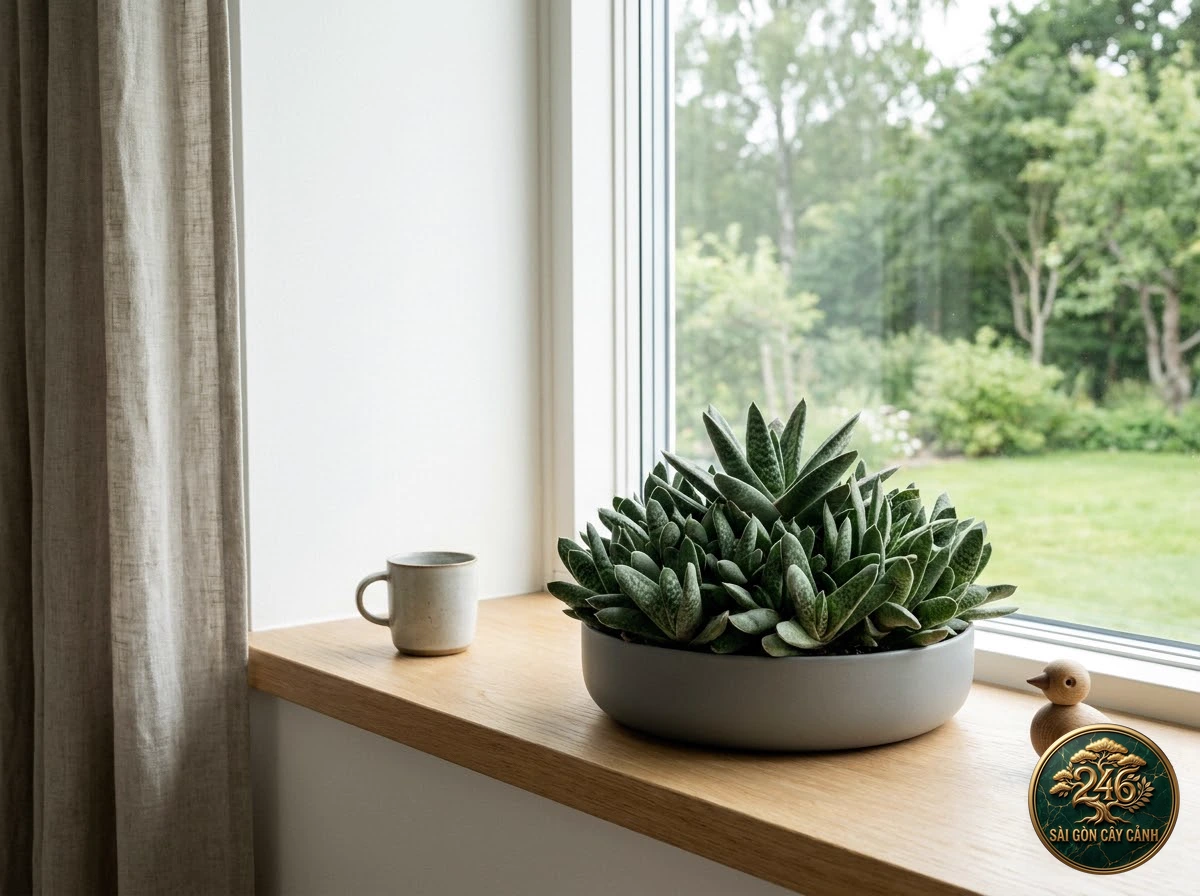
With its charming plump dwarf stature and pristine silver-blue bloom, Gasteria glomerata pairs divinely with choice succulent oddities including Haworthia truncata, Haworthia maughanii, and pastel Lithops living stones. The dynamic interplay between the frosted silver of glomerata and the deep obsidian of Haworthia bayeri creates an exquisite chromatic harmony, commanding universal admiration in refined tabletop succulent vitrines.
Gasteria glomerata is a quintessential botanical treasure for interior spaces that value purity, understated refinement, and endearing organic charm. Its plump, dumpling-like clusters cloaked in frosty silver bloom make it a captivating centerpiece upon office desks, floating display shelves, or Japanese tea tables. It shines with distinction in celadon-glazed ceramic bowls, unglazed earth-toned terracotta, or hand-pinched artisan pottery, delivering quiet joy, emotional tranquility, and pristine living vitality.
Nursery Care Journal & Living Greenery Moments
At Saigon Cay Canh greenhouse, each photograph captures genuine everyday care moments between plant lovers and living greenery, spreading a passion for nature and green-living inspiration.

13. Frequently Asked Questions & Botanical Summary
Frequently Asked Question: Why has the powdery silver bloom on my cluster gasteria disappeared, leaving the leaves a plain shiny green?
Expert Diagnosis from Saigon Cay Canh: The chalky silver-blue coating on Gasteria glomerata is an epicuticular wax bloom (farina). Loss of this bloom resulting in glossy green leaves is typically caused by physical handling, top-down overhead watering that washes away delicate wax crystals, or keeping the specimen in dim, humid enclosures. Crucially, once mechanically stripped, the plant cannot regenerate farina on existing leaves; it will only emerge on newly formed juvenile leaves. To preserve its aesthetic, always water around the container perimeter, avoid touching the foliage, and maintain bright diffused light so emerging leaves develop their signature velvet silver bloom.
Cluster gasteria Gasteria glomerata stands as a charming, frosty silver-blue wonder from the Kouga canyon, imparting peaceful vitality and joyful botanical elegance through the care guides of Saigon Cay Canh.