Living plant profile
Flapjack kalanchoe (Kalanchoe thyrsiflora)
Kalanchoe thyrsiflora
Comprehensive botanical monograph on Flapjack kalanchoe (Kalanchoe thyrsiflora): structural morphology, physiological adaptations, porous mineral substrate, and specialized cultivation guidelines.
Flapjack kalanchoe (Kalanchoe thyrsiflora)
Sài Gòn Cây Cảnh Care Compass
1. Botanical Introduction & Taxonomic Identity
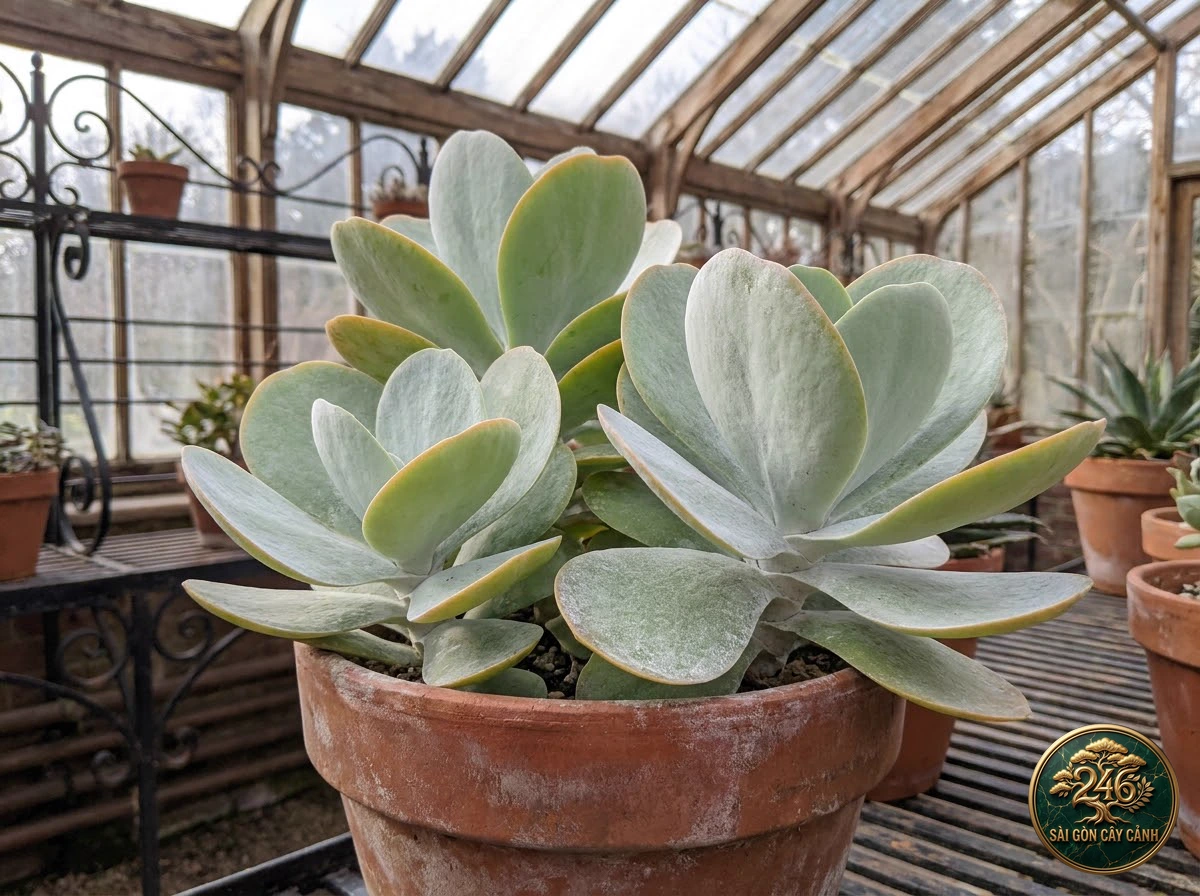
Kalanchoe thyrsiflora is an exceptional and aristocratic alpine succulent, celebrated in global botanical collections as the authentic flapjack or golden cabbage kalanchoe. In distinct contrast to Kalanchoe luciae with its elongated spatulate leaves, Kalanchoe thyrsiflora produces almost orbicular, rounded foliar blades that clasp closely to form an imposing, cabbage-like rosette resembling carved glaucous jade. The entire surface is enshrouded by a dense, flour-like waxy farina layer, imparting a serene bluish-gray patina under unshaded natural light. Even under intense solar irradiation, its leaf perimeters merely develop a delicate bronze or faint pinkish blush rather than fiery scarlet, retaining the stately, calm presence of an alpine limestone dweller.
Kalanchoe thyrsiflora was scientifically documented in 1862 by Irish botanist William Henry Harvey within volume two of the monumental Flora Capensis, based on holotypes discovered across precipitous South African limestone escarpments. The specific epithet thyrsiflora reflects its distinctive cylindrical thyrse inflorescence that rises aloft, sharply differentiated from the looser paniculate flower spikes of neighboring succulents. In the indigenous folklore of the Sotho and Xhosa peoples, the plant was regarded as an emblem of enduring vitality due to its tenacity upon parched windswept precipices.
2. Native Habitat & Geographical Distribution
Native populations of Kalanchoe thyrsiflora inhabit rugged limestone escarpments and dry montane ridges across South Africa and the mountain kingdom of Lesotho, occurring at altitudes of 800 to 1,800 meters. This alpine environment exposes the species to sweeping arid winds, potent ultraviolet radiation, and sharp diurnal temperature fluctuations. The substrate consists almost entirely of weathered limestone gravel and rocky fissures with minimal organic matter but instant drainage. In response to these harsh physical realities, Kalanchoe thyrsiflora evolved an exceptionally thick farina bloom to reflect high UV rays and developed specialized mucilaginous cellular reserves that sustain metabolic life through prolonged dry spells.
3. Detailed Morphological Characteristics
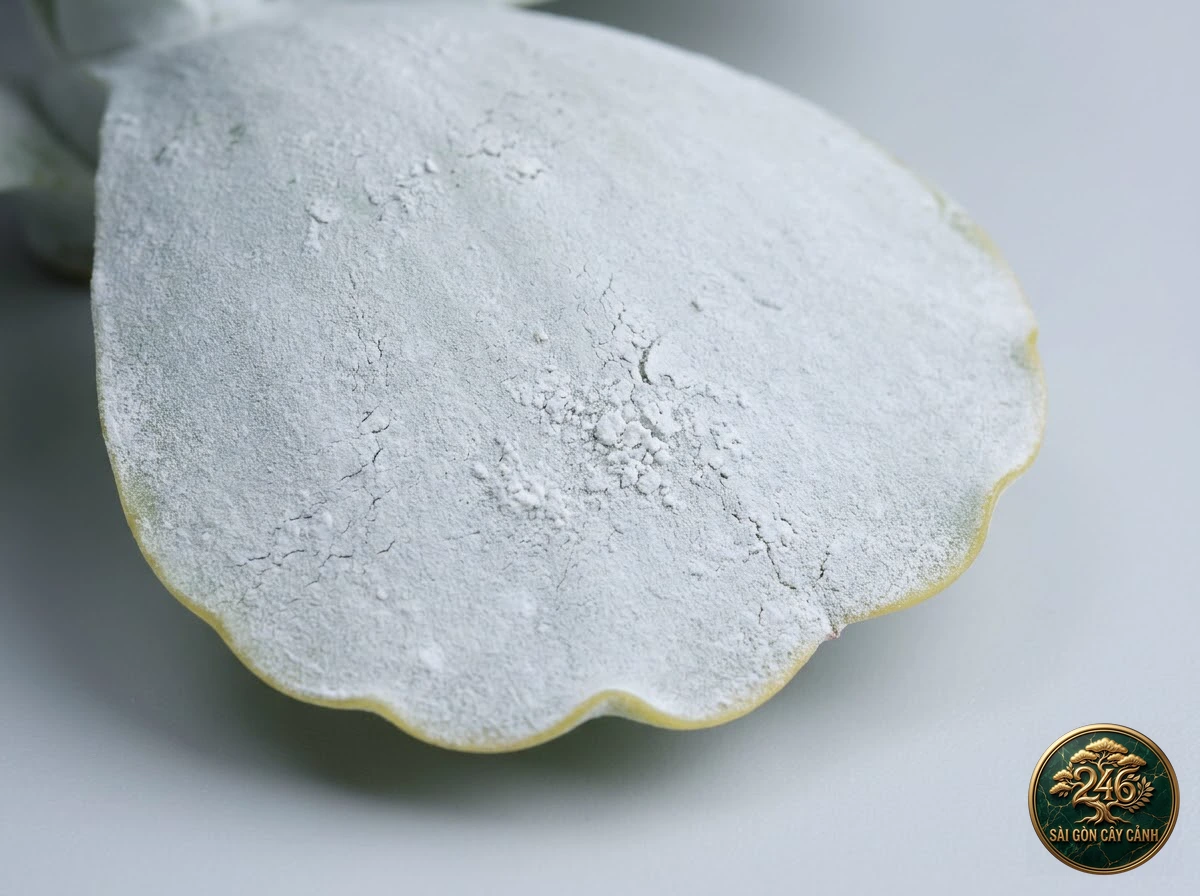
Morphologically, Kalanchoe thyrsiflora produces a robust, fleshy central axis with minimal early branching. The sessile foliage is arranged in dense decussate pairs, featuring smooth, entire margins and spanning 10 to 15 cm in diameter. The foliar lamina is remarkably thick, crisp, and packed with moisture-retentive parenchymal cells. The decisive taxonomic diagnostic trait of this species is manifested during its reproductive phase: the plant sends up an erect, narrow cylindrical thyrse standing 1.0 to 1.3 meters in height, densely packed with tubular, bright golden-yellow flowers that release an intoxicating sweet fragrance to attract alpine pollinators. Following bloom senescence, the monocarpic central rosette gives way to vigorous subterranean offsets formed at the collar.
The foliar micro-morphology of Kalanchoe thyrsiflora exhibits extraordinary evolutionary specialization against alpine ultraviolet radiation. Its flour-like epipelic farina is exceptionally dense, composed of overlapping platelet-shaped wax crystalloids that reflect up to eighty-five percent of incident solar and ultraviolet wavelengths. The foliar stomata are deeply sunken within microscopic epidermal crypts guarded by protective wax rings, drastically curtailing boundary layer transpiration induced by dry, persistent montane winds.
4. Core Botanical Matrix
Core taxonomic and cultivation parameters:
| Botanical Parameter | Observed Trait | Saigon Cay Canh Horticultural Recommendation |
|---|---|---|
| Scientific Name | Kalanchoe thyrsiflora Harv. | Maintain certified taxonomic labeling across nursery stock |
| Plant Family | Stonecrop family (Crassulaceae) | Observe specialized succulent physiological requirements |
| Native Distribution | Rocky limestone cliffs and exposed alpine escarpments of South Africa and Lesotho | Replicate native climatic parameters in indoor cultivation |
| Illumination Intensity | 30,000 – 60,000 lux | Requires full solar exposure with high luminous intensity supported by heavy protective epicuticular wax |
| Thermal Window | 15°C – 30°C | Protect against frost below 8°C and provide ventilation during heat |
| Relative Humidity | 35% – 55% | Sustain gentle atmospheric air movement to disperse stagnant moisture |
| Substrate pH | 6.2 – 7.0 | Utilize porous neutral mineral components for rapid drainage |
| Substrate Formulation | 45% coarse pumice, 20% crushed basalt scoria, 15% horticultural perlite, 12% rinsed coco peat, 8% biological vermicompost | Maintain coarse granular structure; avoid dense suffocating soils |
| Irrigation Strategy | Apply water around the base or via sub-irrigation once completely dry; never allow moisture pooling inside leaf whorls | Enforce thorough substrate dry-down between watering sessions |
| Propagation Pathways | Detaching basal offshoots post-flowering, rooting sturdy apical stem segments, or germinating harvested seeds | Perform during warm spring or early wet season for peak vigor |
| Veterinary Toxicology | TOXIC TO COMPANION ANIMALS (ASPCA Toxic) | Contains toxic bufadienolides prompting cardiac arrhythmias and acute gastrointestinal irritation in domestic pets. |
5. Toxicity Profile & Domestic Safety
The biological safety profile of Kalanchoe thyrsiflora indicates the presence of bufadienolide cardiac glycosides across all organs, with the highest concentrations accumulated within developing floral buds and corollas. The toxic mechanism closely mirrors digitalis toxicity by inhibiting cardiac sodium-potassium ATPase pumps, inducing erratic myocardial contractions in domestic animals. When canines or felines ingest foliar tissue, the toxins provoke severe gastric irritation resulting in persistent emesis, heavy salivation, acute diarrhea, generalized depression, and life-threatening cardiovascular distress. Saigon Cay Canh strongly advises positioning containers on solid high pedestals or guarded terraces completely separated from pets.
6. Lighting Dynamics & Photosynthetic Adaptations
This alpine flapjack succulent requires an intensely illuminated environment with light levels ranging between 30,000 and 60,000 lux. Its thick, floury farina acts as a high-performance reflective shield protecting epidermal cells from solar injury even during scorching tropical summers. If subjected to low-light indoor quarters, the leaf blades flatten and turn limp, dismantling the signature compact cabbage habit while the prized silver-white wax layer progressively thins. To maintain structural excellence, cultivate specimens on unshaded terraces, south-facing balconies, or beneath clear rain-deflecting canopies where the full natural solar spectrum is accessible.
7. Moisture Equilibrium & Irrigation Regimes
Irrigation for Kalanchoe thyrsiflora requires extreme discipline. It responds best to thorough watering applied around the container perimeter or through bottom capillary uptake only after the growing medium has dried out completely. In tropical lowlands, watering once every 8 to 12 days during hot dry spells, extended to 15 to 20 days during damp overcast periods, ensures healthy hydration. Caution is imperative: never discharge water directly into the center of the rosette; the cupped, tightly packed leaf bases trap stagnant water, fostering opportunistic bacterial rot that dissolves the central stem. Always hydrate early in the morning during cool hours.
8. Substrate Architecture & Nutrition Strategy
The potting medium for Kalanchoe thyrsiflora must replicate its natural montane limestone ecology with an inorganic mineral fraction approaching 80%: 45% coarse volcanic pumice, 20% crushed basalt scoria, 15% expanded horticultural perlite, 12% desalinated coco peat, and 8% biologically stable worm castings. This ultra-porous blend guarantees instantaneous drainage, completely preventing anaerobic water stagnation around roots. Substrate pH should remain slightly alkaline to neutral between 6.2 and 7.0; top-dressing with crushed limestone chips or calcified shells enhances the natural aesthetic while supplying calcium to reinforce leaf cell walls.
Nutritional regimens for Kalanchoe thyrsiflora must strictly emulate its native oligotrophic limestone gravel ecology. Overly fertile soil dismantles its natural, tightly packed cabbage rosette, prompting loose floppy leaves and diluting the prized chalky waxy bloom. Cultivators should supply nourishment strictly via heavily diluted mineral trace element solutions amended with calcium and magnesium from crushed dolomite limestone once each season, strengthening cellular pectin bonds and reinforcing natural resistance against fungal soft rot pathogens.
9. Temperature Dynamics & Aeration Strategy
The optimal thermal window for photosynthetic metabolic processes in Kalanchoe thyrsiflora is 15°C to 30°C. The species thrives under noticeable day-night temperature fluctuations, which trigger epidermal cells to produce denser farinose wax deposits. During oppressive tropical heatwaves exceeding 35°C, ensuring vigorous ambient air movement cools the root container and averts thermal stress that causes premature lower-leaf drop. Sustaining uninterrupted atmospheric circulation remains the most effective natural defense against fungal pathogens.
10. Specialized Propagation Protocols
Propagation of Kalanchoe thyrsiflora is most successfully accomplished by collecting basal offshoots activated around the parent crown. Once the central monocarpic inflorescence concludes its reproductive cycle, dormant axillary nodes at the soil line produce two to four vigorous juvenile rosettes. Allow these offshoots to reach roughly 6 cm across before severing them cleanly with a sterilized pruning tool, let cut surfaces callus in dry shade for 4 days, and insert into dry mineral pumice to induce root emergence. Apical stem beheading before flowering also yields positive results, whereas single leaf cuttings are generally less reliable due to broad, clasping attachments.
11. Diagnostic Matrix & Preventative Health
Bacterial soft rot and hidden mealybug colonies beneath tightly clasped leaf bases represent the two foremost cultural challenges for Kalanchoe thyrsiflora. Routinely inspect lower leaf tiers; upon detecting white woolly mealybug pockets, dab them with a 70% alcohol-moistened swab to dissolve the insect wax without abrading surrounding farina. Avoid rough manual handling, as displaced powder cannot be replaced by the plant. If black water-soaked lesions appear at the root collar, immediately stop irrigation, unpot the specimen, surgically excise decayed areas, treat with antiseptic powder, and allow thorough drying before repotting.
Clinical diagnostics and remedial actions:
| Observed Symptom | Primary Root Cause | Saigon Cay Canh Remedial Action |
|---|---|---|
| Lower leaves turn soft, thin, and wrinkled | Prolonged moisture deficit in the root medium | Provide a deep perimeter soak for Kalanchoe thyrsiflora; tissues recover within 48 hours |
| Black soft decay at the stem base with leaf drop | Anaerobic fungal root rot due to waterlogged substrate | Unpot immediately, excise necrotic pulp, treat with sulfur powder, and repot into bone-dry pumice |
| Elongated, weak internodes with pale drooping foliage | Chronic insufficiency of direct solar radiation | Relocate Kalanchoe thyrsiflora to receive unshaded morning sunlight for 4 to 6 hours daily |
| White cottony clusters nested in foliar axils | Foliar mealybug infestation (Pseudococcidae) | Apply 70% medicinal alcohol directly with a cotton bud to dissolve waxy insect cuticles without foliar damage |
12. Living Architecture & Interior Styling
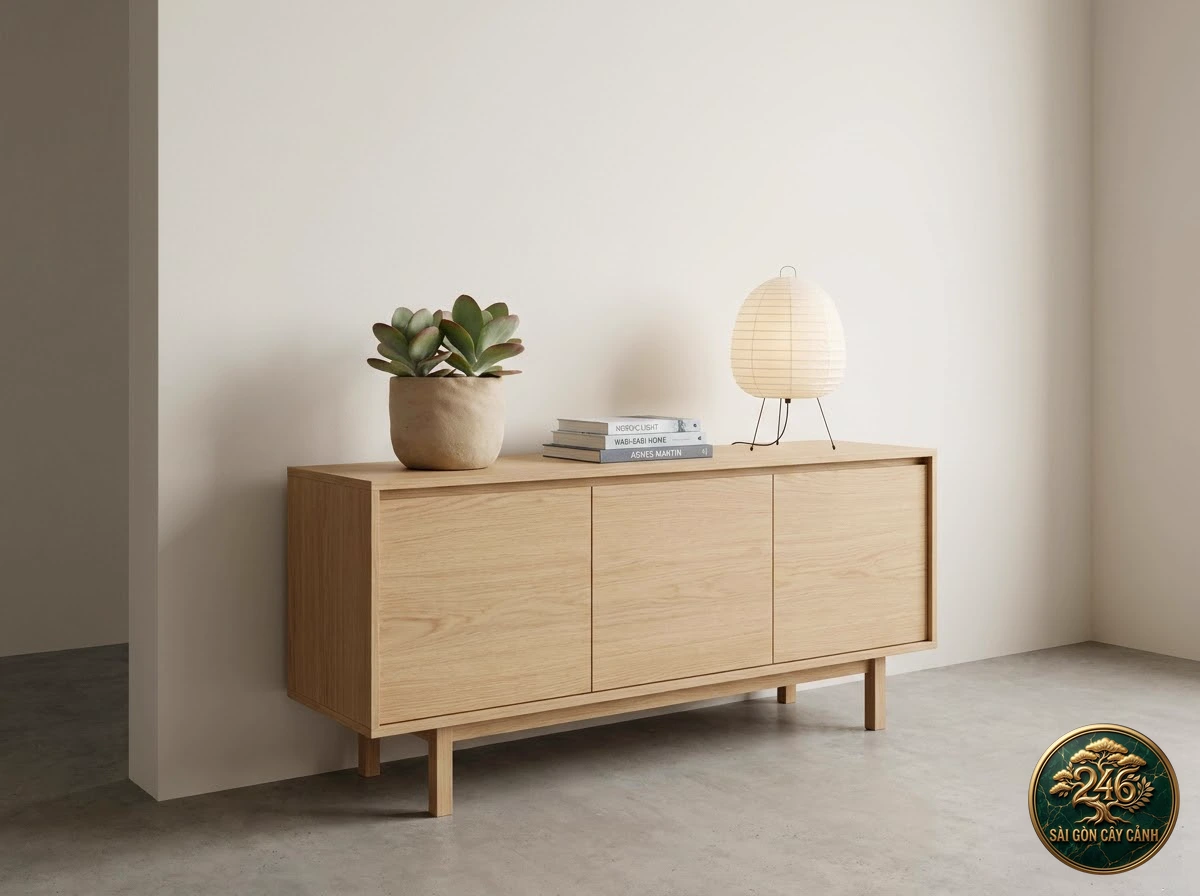
Featuring a muscular, circular cabbage silhouette and regal bluish-silver wax coating, Kalanchoe thyrsiflora serves as an exceptional statement plant in Wabi-sabi garden design, refined desert xeriscapes, and modern minimalist architecture. It commands visual authority when staged as an isolated specimen in monolithic terrazzo vessels, crackle-glazed artisanal ceramic pots, or ash-gray cement planters. In dry rockery arrangements, pairing this cabbage kalanchoe with smooth river gravel and architectural cacti crafts a serene, contemplative botanical display of timeless sophistication.
Displaying an impeccably rounded silhouette and serene pearlescent patina, Kalanchoe thyrsiflora represents an ideal statement piece for Wabi-sabi and contemporary minimalist spaces. Positioned within living salons or boutique hotel atriums, the quiet dignity of its imbricated cabbage foliage inspires contemplative calm. It harmonizes exquisitely with crackle-glazed ceramic planters, solid reclaimed teak plinths, or rough-hewn granite slabs, establishing an enduring organic statement of refined natural poise.
Brand Ambassador & Living Herbarium Botanical Philosophy
At Saigon Cay Canh botanical nursery, each specimen is curated and tended under the guidance of our brand ambassador, ensuring vibrant vitality and true-to-type morphology.

13. Horticultural Excellence & Living Heritage
The horticultural team at Saigon Cay Canh invests meticulous craftsmanship into cultivating purebred specimens of Kalanchoe thyrsiflora with pristine farina coatings and vigorous fibrous root architectures. We believe authentic botanical beauty encompasses structural resilience and uncompromised taxonomic integrity. Saigon Cay Canh remains devoted to accompanying discerning plant enthusiasts throughout their cultivation journey, bringing resilient green elegance from the African highlands to grace your personal living sanctuary.