Living plant profile
Golden pothos
Epipremnum aureum
Golden pothos (Epipremnum aureum) is a celebrated semi-epiphytic trailing vine or climbing scandent liana renowned for its extraordinary resilience and lush, variegated heart-shaped foliage. An enduring favorite in contemporary interior architecture, it thrives across a broad spectrum of domestic and commercial lighting conditions. The definitive factor for success in apartment cultivation lies in establishing a […]
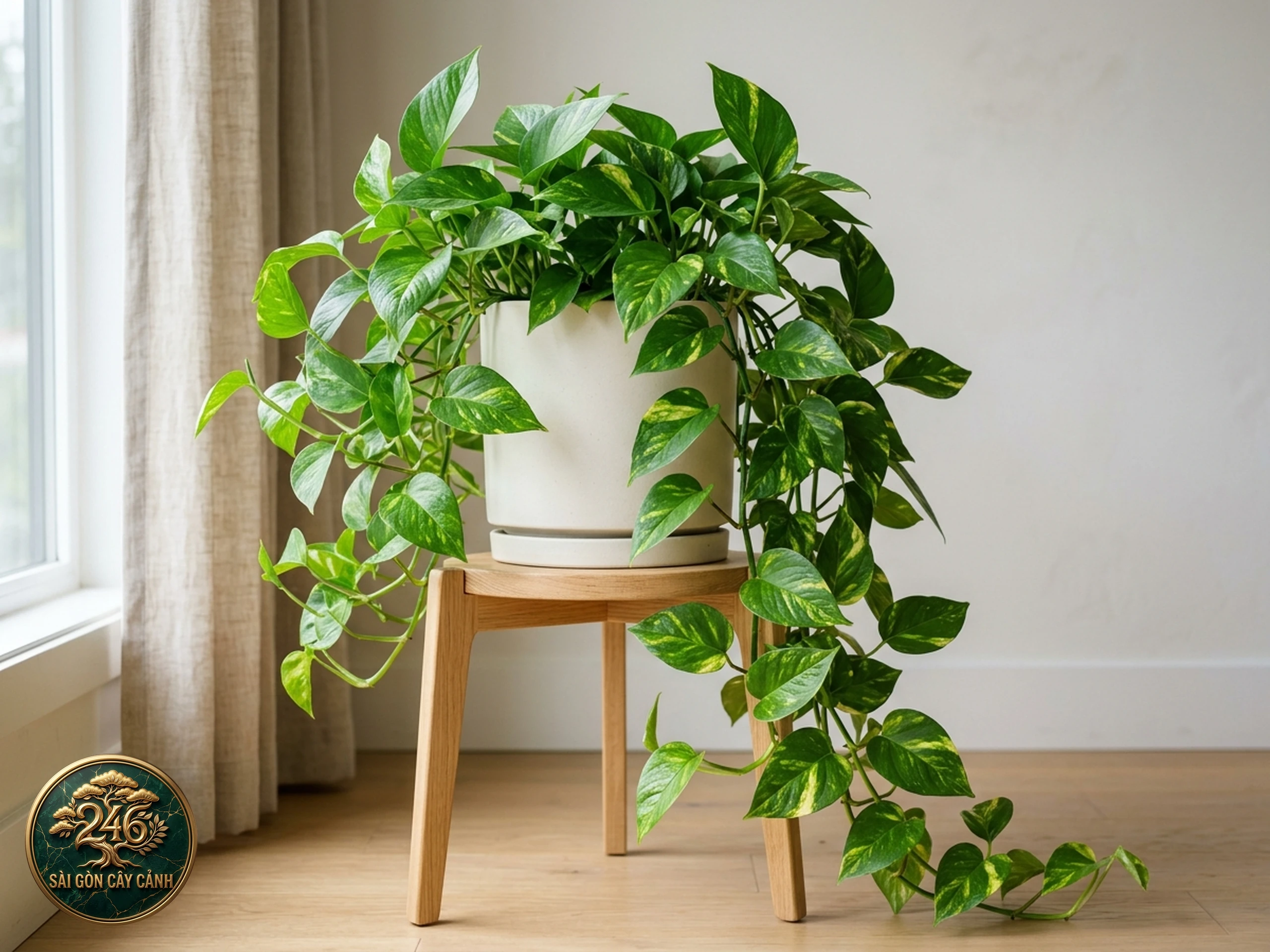
Golden pothos (Epipremnum aureum) is a celebrated semi-epiphytic trailing vine or climbing scandent liana renowned for its extraordinary resilience and lush, variegated heart-shaped foliage. An enduring favorite in contemporary interior architecture, it thrives across a broad spectrum of domestic and commercial lighting conditions. The definitive factor for success in apartment cultivation lies in establishing a responsive watering routine guided by direct substrate assessment rather than a rigid calendar schedule.
1. Botanical Taxonomy of Epipremnum Aureum Varieties
| Scientific Name | Epipremnum aureum |
|---|---|
| Botanical Family | Araceae (Arum family) |
| Growth Habit | Semi-epiphytic trailing vine or climbing scandent liana |
| Light Exposure | Low to bright indirect light (800 – 2,500 lux); tolerates office fluorescent lighting |
| Watering Requirement | Allow top 50% of soil volume to dry between deep waterings |
| Recommended Substrate | Well-draining porous houseplant mix: 45% peat, 30% perlite, 25% composted bark |
| Optimal Temperature | 16°C – 29°C (60°F – 84°F); robust within domestic ranges |
| Relative Humidity | 45% – 75% RH; resilient across standard indoor humidity |
| Care Difficulty | Very easy / Extremely resilient |
| Pet Safety Status | Toxic to Pets (Contains calcium oxalate crystals irritating to mouth and digestive tract) |
Originally endemic to the island of Mo’orea in French Polynesia, Epipremnum aureum has become naturalized across tropical ecosystems worldwide due to its extreme physiological vigor. In wild tropical conditions, this hemiepiphyte ascends towering tree trunks using adventitious clinging roots, transforming from modest juvenile trailers into massive climbing lianas whose mature leaves develop dramatic deep incisions. In indoor residential culture, it maintains its attractive juvenile foliar phase, cascading gracefully from hanging baskets or trailing along wall-mounted shelves with minimal maintenance demands.
2. Variegation Dynamics & Morphology Differentiation from Philodendrons
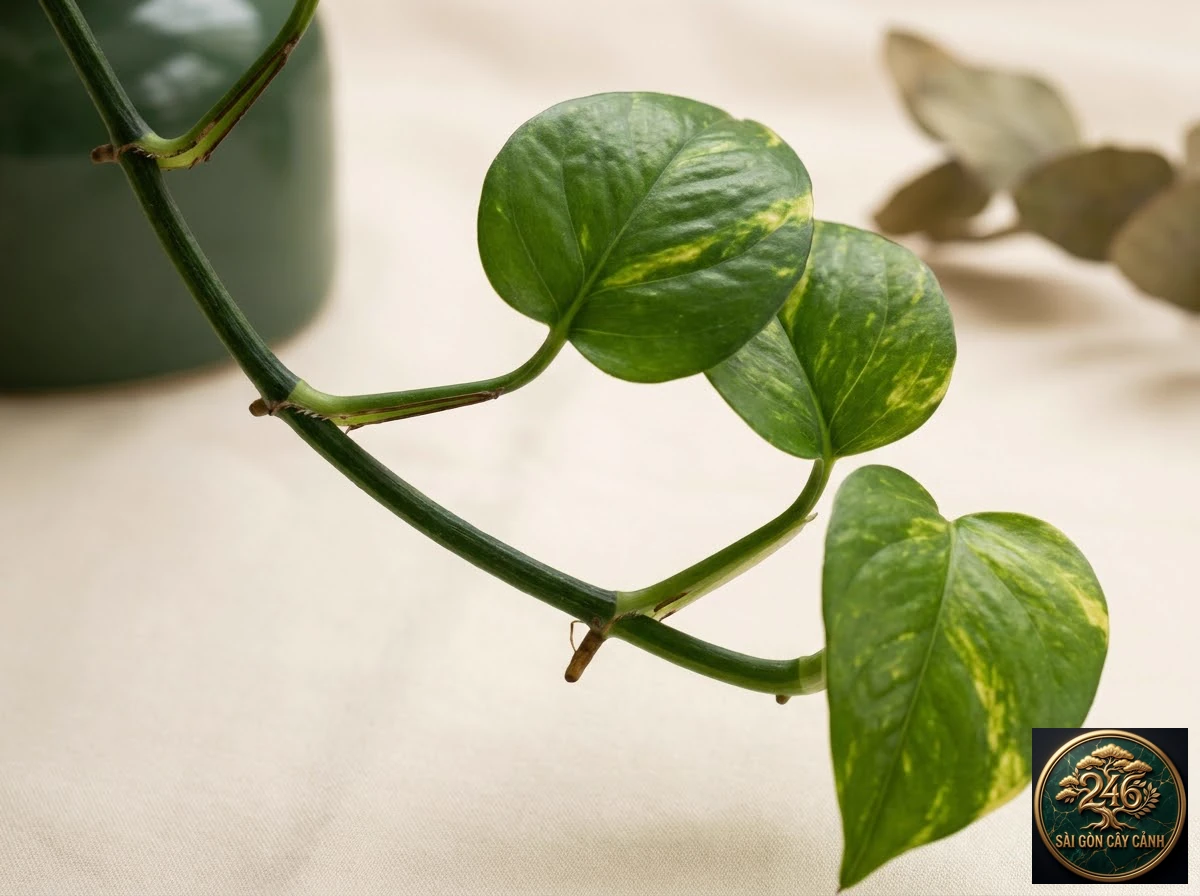
Accurate identification of Epipremnum aureum requires close inspection of foliar structure, petiole anatomy, and developmental habit. In commercial horticulture, ambiguous common names frequently cause misidentification, leading to improper care regimens.
Foliar variegation in Golden pothos features irregular marble patterns of creamy-gold, lime, and rich emerald green distributed across the waxy adaxial surface. The stability of this variegation is photosynthetically responsive: when cultivated in moderate to bright indirect luminescence, chloroplast differentiation produces vibrant golden splashes, whereas deep shade causes the foliage to revert toward solid green to maximize photosynthetic photon capture. The glossy waxy cuticle provides excellent drought defense, curbing excessive transpiration during warm tropical dry spells.
Key Diagnostics: Readily distinguished from Philodendron hederaceum (which has smooth, rounded petioles without grooved channels and distinct papery brown cataphylls) and Scindapsus pictus (which features matte silver splash markings and asymmetric blade geometry). Examining nodal intervals and leaf sheath margins confirms botanical identity.
3. Luminescence Tolerances: Flourishing Under Office Fluorescent Lights
Within urban residences, position the plant in accordance with natural lighting dynamics: Suspend gracefully in trailing hanging planters across well-lit living spaces, or guide upward along moss-wrapped totems positioned near bright, indirect windows. Avoid placing foliage directly in cold convective drafts from air conditioning units, as rapid evaporative loss compromises leaf margins while soil remains wet.
4. Water Culture Propagation: Clean Reservoir & Mineral Replacement
Do not adhere to a predetermined watering schedule. Transpiration rates fluctuate with seasonal warmth, airflow, and pot volume.
Three-Step Moisture Check:
- Insert a wooden dowel or finger 3-5 cm into the potting medium.
- If damp substrate particles adhere to the probe: Delay watering for 48-72 hours.
- When the probe emerges clean and dry: Saturate the root zone thoroughly until water flows freely from drainage holes, then discard standing saucer water after 15 minutes.
5. Fast-Draining Porous Potting Blend for Cascading Hanging Baskets
The root system of Epipremnum aureum demands substantial gas exchange. Dense potting soils compact over repeated waterings, generating hypoxic conditions that foster anaerobic root pathogens.
While Epipremnum aureum demonstrates remarkable tolerance across diverse soil types, an aerated, well-structured potting matrix prevents chronic root suffocation. Incorporating coarse perlite and composted pine bark chips ensures that moisture drains freely from the pot within moments of application. The vigorous adventitious root system readily explores available soil volume, making biannual root inspections advantageous to prevent dense root binding in commercial nursery containers.
Recommended Soil Mix: A porous indoor potting blend enhanced with perlite, fine pine bark, and peat moss to ensure rapid gravitational drainage and robust capillary aeration. Unglazed terracotta or specialized aerated nursery pots provide superior root zone oxygenation compared to non-porous containers.
6. Balanced Fertilization Strategy to Prevent Reversion to Solid Green
Modest, consistent fertilization sustains healthy foliage without mineral burn. During active vegetative flush (spring and summer), supply balanced liquid organic fertilizer diluted to half strength monthly. Discontinue feeding during dormant or low-light winter intervals.
Nutritional management for Epipremnum aureum should prioritize foliage color stability and steady internodal growth. Over-fertilization with synthetic nitrogen formulas frequently causes the plant to produce plain, solid green leaves, effectively eliminating the prized golden variegation. Supplying a gentle organic kelp emulsion or balanced liquid houseplant feed at one-quarter strength once monthly during the active spring and summer surge provides trace minerals without burning tender root tips. Always flush the potting matrix with clear water every few months to dissolve any residual fertilizer salts.
7. Diagnostic Guide for Basal Foliage Drop & Yellowing Symptoms
| Observed Symptom | Primary Root Cause | Verification Method | Corrective Action |
|---|---|---|---|
| Lower leaf chlorosis (yellowing) | Overwatering / hypoxic root environment | Inspect lower substrate moisture | Extend dry intervals, verify drainage holes |
| Crispy brown margins | Sub-optimal ambient humidity / AC airflow | Measure room humidity, check draft paths | Relocate away from vents, elevate humidity |
| Etiolation (pale, stretched stems) | Insufficient photosynthetic photon flux | Assess light intensity at foliage level | Shift closer to bright indirect source |
| Soft basal stem / wilting | Fungal root compromise (pythium/phytophthora) | Unpot root ball and inspect root firmness | Excise decayed roots, treat with fungicide, repot |
8. Eradicating Scale Insects, Aphids, and Root-Zone Mildew
Mealybugs and two-spotted spider mites present the most frequent pest challenges. Regular foliar cleansing with a damp microfiber cloth serves as primary defense. For localized infestations, isolate the specimen and treat with 70% isopropyl alcohol via cotton swab or apply cold-pressed horticultural neem oil during evening hours.
Although remarkably pest-resistant compared to softer tropical foliage, Golden pothos can occasionally host scale insects (Coccoidea) or mealybugs beneath protective leaf sheaths where petioles clasp the stem. Routine visual checks at petiole junctures and wiping leaves with a mild horticultural soap solution removes pest residues and maintains high aesthetic sheen. In hydroponic or water-reservoir displays, refreshing the water weekly prevents algae colonization and larval insect breeding.
9. Step-by-Step Single-Node Vine Cutting & Rooting Routine
Propagate during the active growth season via vegetative stem cuttings or division. Select vigorous nodes possessing aerial root initials. Sever cleanly with sanitized shears, allow callous formation for two hours, then root in clean aerated water or damp sphagnum moss under warm, diffused light.
10. Insoluble Calcium Oxalate Alert for Domestic Dogs and Cats
11. Rainy Season Moisture Management for Urban Balconies
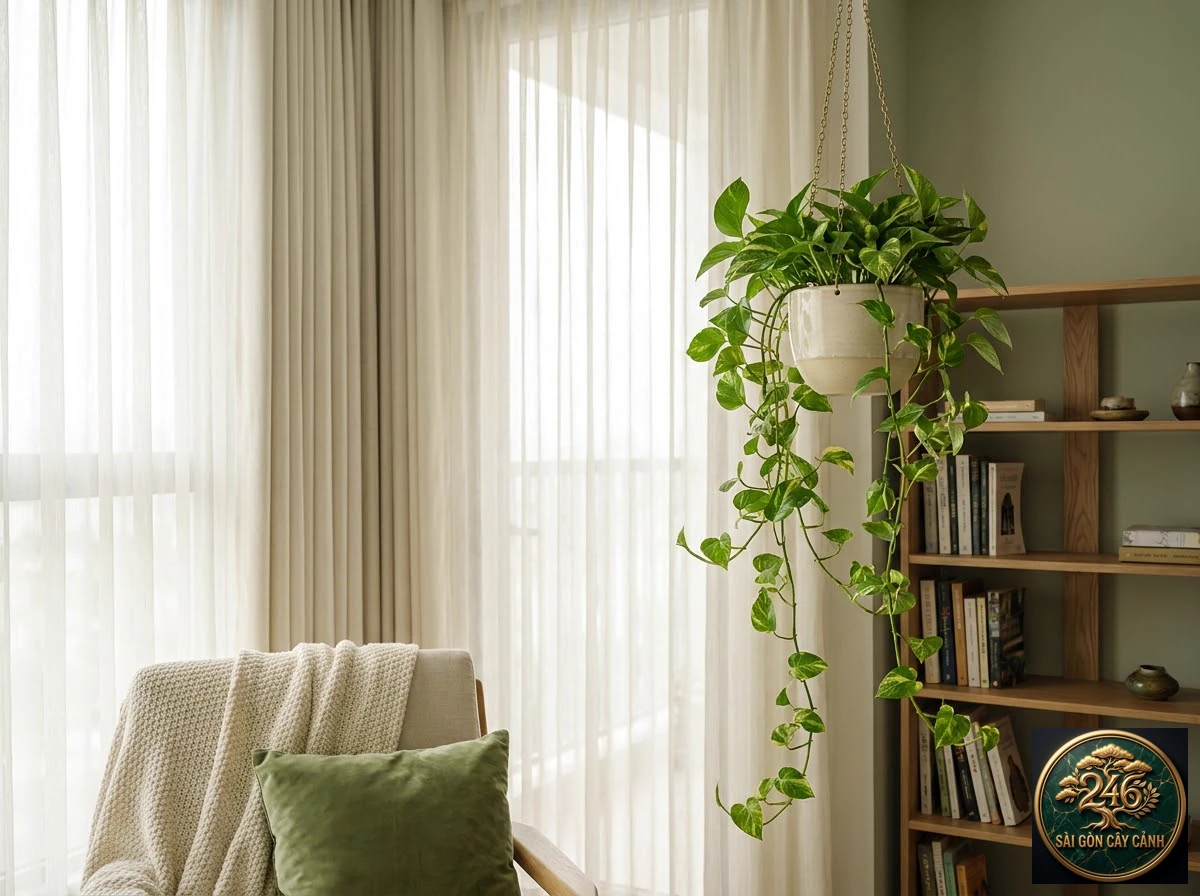
The sculptural foliage of Epipremnum aureum harmonizes gracefully with biophilic, Scandinavian, and contemporary architectural settings. Pair alongside trailing pothos or structural snake plants to create dynamic multi-tiered botanical arrangements.
Golden pothos is widely celebrated in biophilic office design and vertical green wall installations because its flexible vines create lush, living curtains across commercial partitions. Its cascading habit softens stark architectural shelving units, while grouping multiple hanging baskets generates a visually relaxing tropical atmosphere that humidifies surrounding indoor air naturally through continuous transpiration.
12. Practical Q&A for Sustaining Cascading Foliage Indoor Vines
“Plants can thrive indefinitely in windowless interior spaces” — All vegetative growth requires photosynthetic photons. In rooms devoid of natural light, full-spectrum horticultural LED fixtures must be provided for 8-10 hours daily to maintain metabolic equilibrium.
“Golden pothos can thrive indefinitely in a vase of plain tap water without nutrients” — While cuttings root vigorously and survive for months in clean water, tap water alone completely lacks essential nitrogen, phosphorus, potassium, and micronutrients. Over prolonged periods, water-bound specimens develop stunted, chlorotic miniature foliage and weak root structures. For long-term hydro-culture, growers must introduce specialized diluted hydroponic nutrient solutions or transfer established rooted cuttings into an aerated solid potting substrate.
13. Frequently Asked Questions (FAQ)
When should this plant be repotted?
Repot every 18-24 months or when roots spiral densely and emerge through bottom drainage ports. Select a replacement container 3-5 cm wider in diameter.
Should foliar shine products or oils be applied?
Never apply culinary oils or commercial leaf gloss. They occlude stomata, hindering gas exchange and attracting particulate debris. Clean foliage solely with pure water.
Is daily misting beneficial in air-conditioned apartments?
Misting provides only transient humidity spikes and may cause fungal leaf spot if foliage remains wet without air movement. Use a pebble tray or ultrasonic humidifier for sustained ambient moisture.
How can I distinguish underwatering from overwatering?
Underwatered foliage exhibits uniform dry limpness in a desiccated root ball. Overwatered plants display yellowing lower leaves accompanied by mushy, dark petioles and sodden soil.
Can tap water be used directly?
Municipal water often contains dissolved chlorine and fluorides that cause tip burn in sensitive foliage. Allow water to sit uncovered for 24 hours prior to irrigation.