
Living plant profile
Long-spathe dumb cane
Dieffenbachia longispatha
Comprehensive botanical dossier for Long-spathe dumb cane (Dieffenbachia longispatha). Identification, lighting calibration, porous substrate formulation, and cultivation guide by Saigon Cay Canh.
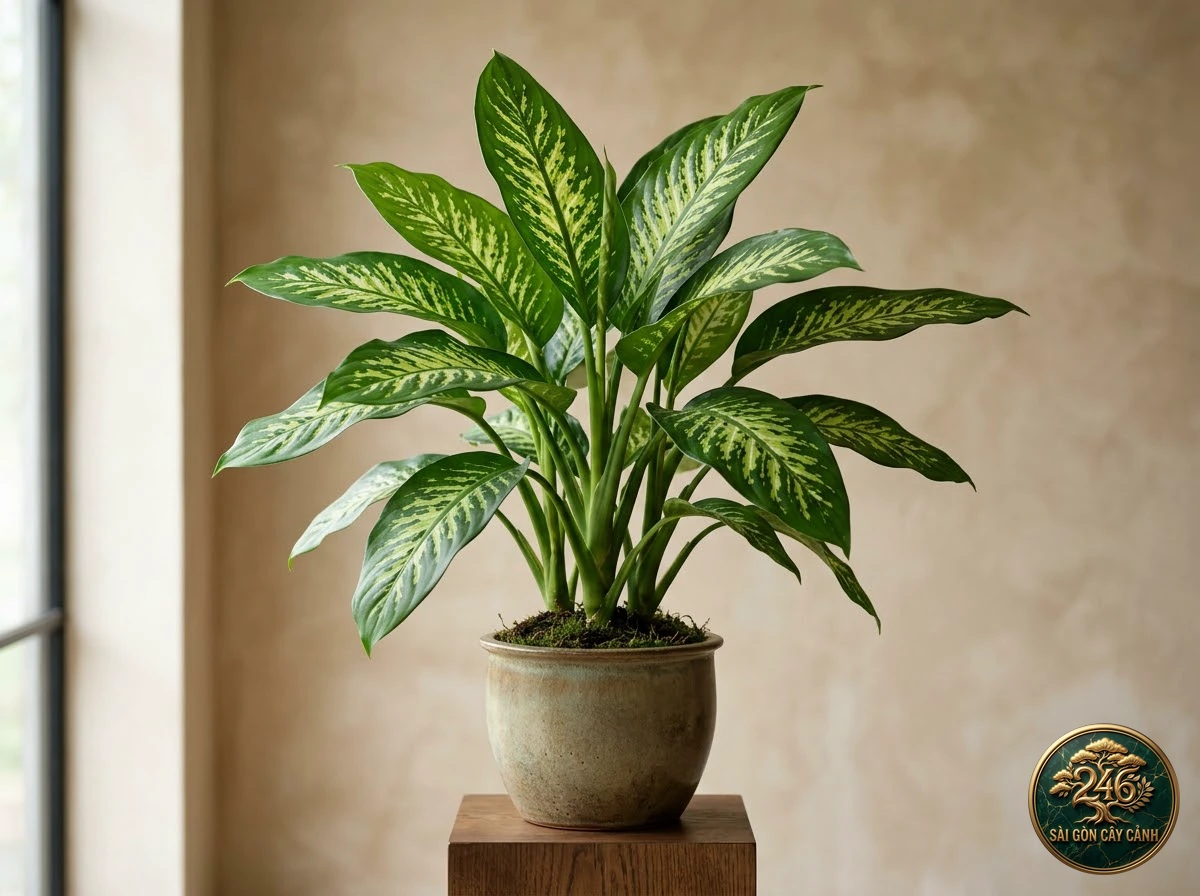
Long-spathe dumb cane (Dieffenbachia longispatha) is an elegant tropical aroid distinguished by remarkably elongated floral spathes and graceful foliage lightly mottled with chartreuse marbling. Originating in Panamanian rainforests, it brings refined botanical charm and subtle sophistication to interior botanical collections.
1. Core Botanical Taxonomy & Cultural Specifications
| Scientific Name | Dieffenbachia longispatha |
|---|---|
| Botanical Family | Araceae (Aroid Family) |
| Native Distribution | Montane tropical rainforests of Panama and northwestern river basins of Colombia |
| Growth Demeanor | Erect compact clumping perennial with cylindrical smooth canes distinguished by remarkably elongated floral spathes |
| Lighting Threshold | Soft filtered daylight (900 – 2,200 lux); shelters delicate lamina from solar scorching |
| Hydration Cadence | Irrigate once upper 30% of soil feels dry; root system demands aerated moisture without stagnation |
| Substrate Formulation | 35% volcanic pumice, 30% fine pine bark, 20% perlite, and 15% desalted coco coir chips |
| Thermal Range | 20°C – 31°C (68°F – 88°F; thrives in warm, stable Central American microclimates) |
| Relative Humidity | 70% – 85% (High ambient humidity preserves foliar hydration and elongated floral structures) |
| Cultivation Difficulty | Moderate (Requires steady humidity and shelter from cold drafts) |
| Pet Safety Profile | Toxic (Insoluble calcium oxalate crystals irritate animal oral tissues) |
Cataloged within taxonomic records of Kew Gardens (POWO), Dieffenbachia longispatha is indigenous to the humid rainforest understories of the Panamanian isthmus and northwestern Colombia. In its natural wilderness, it colonizes shaded stream banks where moist alluvial soils are continually refreshed by forest mists.
Its ecological demeanor demonstrates consummate adaptation to high atmospheric moisture and gentle filtered irradiance. Developing more slender, refined canes than heavy commercial cultivars, it maintains a tidy upright silhouette with unflagging botanical vigor.
Throughout mid-elevation Central American rainforest slopes, this species forms neat colonies sheltered by tree ferns and indigenous canopy trees. Pristine seepage water flowing through volcanic stone fractures maintains constant soil moisture, preserving delicate leaf lamina and fostering sustained seasonal flowering.
2. Morphological Identification & Foliar Architecture
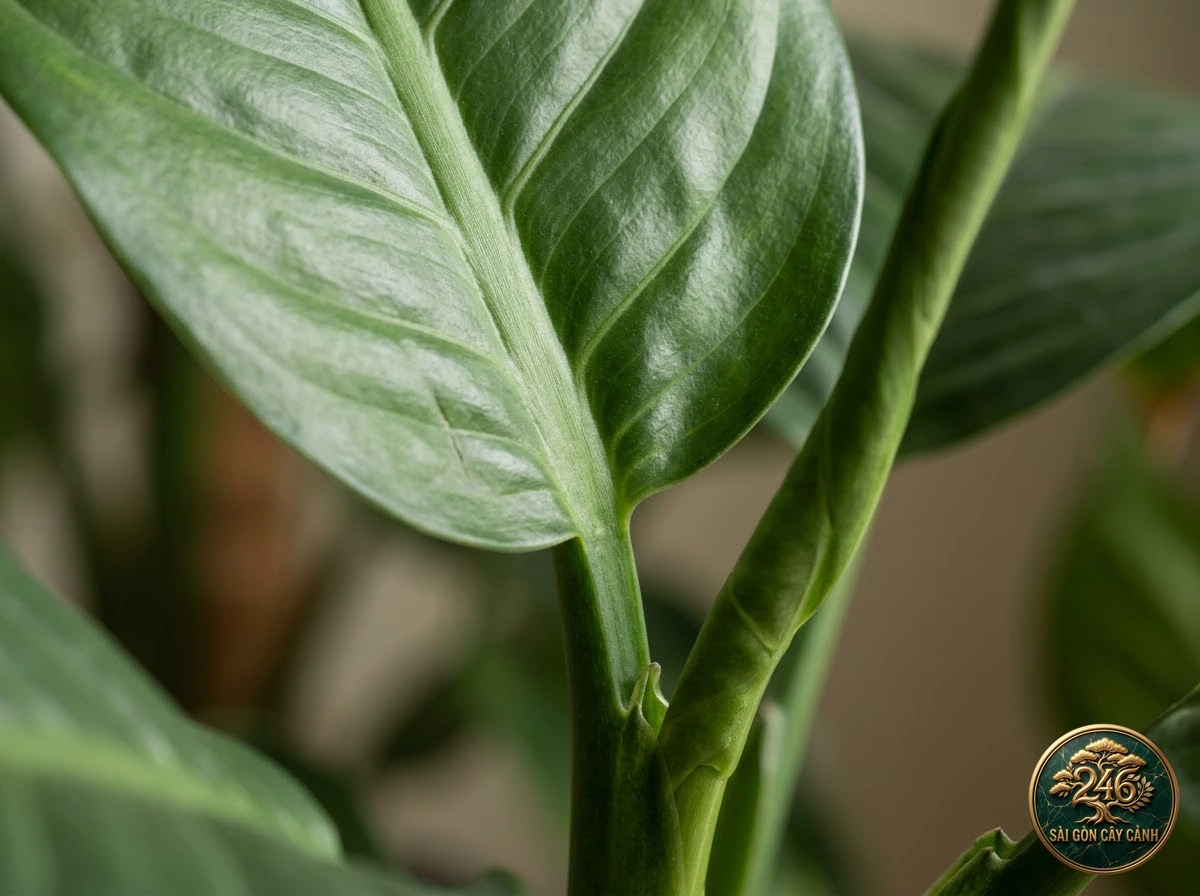
The most arresting morphological signature is its remarkably elongated inflorescence, featuring slender pale green spathes 20 to 35 cm in length sheathing an ivory spadix. Leaves are oblong-lanceolate measuring 25 to 40 cm, displaying luminous bright green lamina subtly marbled with chartreuse and ivory veining.
Slender yet sturdy petioles clasp smooth cylindrical canes via tightly wrapping sheaths. The canopy arches outward in an airy, fan-shaped architectural silhouette, offering softer visual lines than heavier broad-leaved congeners.
The elongated spathe morphology of Long-spathe dumb cane represents an evolutionary adaptation for specialized beetle pollination within Central American ecosystems. The basal spathe tube encloses receptive pistillate flowers, opening its upper limb only during staminate anthesis to facilitate precise cross-pollination dynamics. The slender arching foliage with delicate chartreuse mottling introduces flowing rhythmic elegance to the central crown.
3. Photometric Calibration & Window Exposure Optimization
The species flourishes in gentle diffused daylight between 900 and 2,200 lux. Staging near East-facing windows with sheer drapery or brightly illuminated residential desks provides ideal photon levels for active photosynthesis.
Possessing somewhat thinner leaf laminae than heavy cultivars, foliage is particularly susceptible to solar scorching. Always ensure complete protection from direct midday rays to avoid dried translucent burn lesions.
4. Structural Cane Dynamics & Form Optimization
Long-spathe dumb cane forms an upright, self-supporting clumping subshrub with slender cylindrical canes. Offshoots emerging from the base naturally densify the crown without requiring moss totems or trellis framing.
Select properly proportioned ceramic planters that accommodate root spread without excessive unused soil volume. Turn the vessel a quarter turn weekly to encourage balanced radial leaf development.
5. Engineered High-Porosity Substrate Formulation
The root network thrives within an airy, fast-draining potting matrix that sustains gentle ambient humidity. Dense clay soils suffocate tender feeder rootlets, quickly inducing anaerobic root rot after heavy watering.
An optimal bespoke blend combines 35% volcanic pumice, 30% fine pine bark, 20% perlite, and 15% desalted coco coir chips. This structural formula permits surplus irrigation to drain smoothly downward while preserving cool root aeration.
The 35% pumice proportion functions as natural mineral aeration sponges, maintaining dissolved subterranean oxygen even when atmospheric humidity saturates during monsoon periods. Fine fir bark nuggets ensure open interstitial structure, enabling feeder roots to weave freely without mechanical compression.
Capillary action within the pumice and fir bark matrix disperses irrigation horizontally throughout the container, preventing dry core channels. Consequently, feeder roots access uniform moisture levels across all potting depths, promoting extensive radial root development.
6. Organic Bio-Fertilization & Mineral Management
Nutrient requirements remain moderate. Administer dilute organic kelp or humic bio-fertilizer at one-quarter standard strength once every three to four weeks during active warm vegetative cycles.
Avoid applying concentrated synthetic fertilizer granules directly against root zones. Quarterly, flush the potting medium with copious fresh water to leach out accumulated fertilizer salts.
7. Clinical Diagnostic Matrix & Horticultural Resolutions
| Clinical Symptom | Root Pathology | Diagnostic Method | Targeted Resolution |
|---|---|---|---|
| Basal foliage turns pale yellow, substrate remains soaked | Irrigating too frequently in low-airflow quarters | Check bottom soil moisture depth with a probe | Extend watering intervals, relocate to better ventilated spot |
| Spathe tips and leaf margins turn crispy brown | Atmospheric humidity dropped below 60% | Check local hygrometer reading | Group with humidifying pebble trays, shield from air conditioner drafts |
| Foliage turns pale green, chartreuse marbling fades | Protracted deficit of photosynthetic light | Measure light intensity with a lux meter | Move closer to bright diffused daylight or add horticultural illumination |
| Minute white cottony specks nestled in leaf axils | Early mealybug activity in petiole sheaths | Examine petiole clefts closely | Dab clean using cotton swabs moistened in 70% alcohol |
| Inflorescence wilts prematurely before expanding | Transient underwatering combined with excessive heat | Probe core soil hydration while flower buds develop | Sustain cool aerated moisture, shelter in cooler quarter |
8. Pest Mitigation Protocols & Foliar Sanitation
Within dry interior environments, mealybugs and spider mites may take shelter in petiole axils. Dab active colonies lightly with cotton swabs dipped in 70% alcohol to clear pests safely without tissue damage.
Monthly foliar hygiene using a soft cloth dampened in lukewarm water removes atmospheric dust. This simple practice preserves foliar gloss and maintains open stomatal pores for efficient gas exchange.
High indoor atmospheric humidity must be balanced with adequate natural airflow to prevent Xanthomonas bacterial blight. Staging planters at least 20 cm away from interior walls facilitates convective air currents that dry leaf surfaces rapidly after diurnal transpiration cycles, ensuring resilient foliar longevity.
9. Asexual Propagation Methodology
Propagation succeeds most easily via clump division during repotting in early spring. Sever the connecting rhizome cleanly with a sterilized knife treated with 70% alcohol, seal cut wounds, and pot separately.
Cane segments containing viable nodes can also be rooted in damp airy nursery mix over 4 to 6 weeks. Maintain warm shaded conditions between 22°C and 26°C to encourage adventitious root and shoot emergence.
10. Veterinary Toxicology & Domestic Safety Safeguards
Position containers on high furniture beyond companion animal reach. If accidental mastication occurs, promptly flush oral tissues with cool water and seek veterinary attention if vomiting persists.
11. Biophilic Interior Design & Architectural Styling
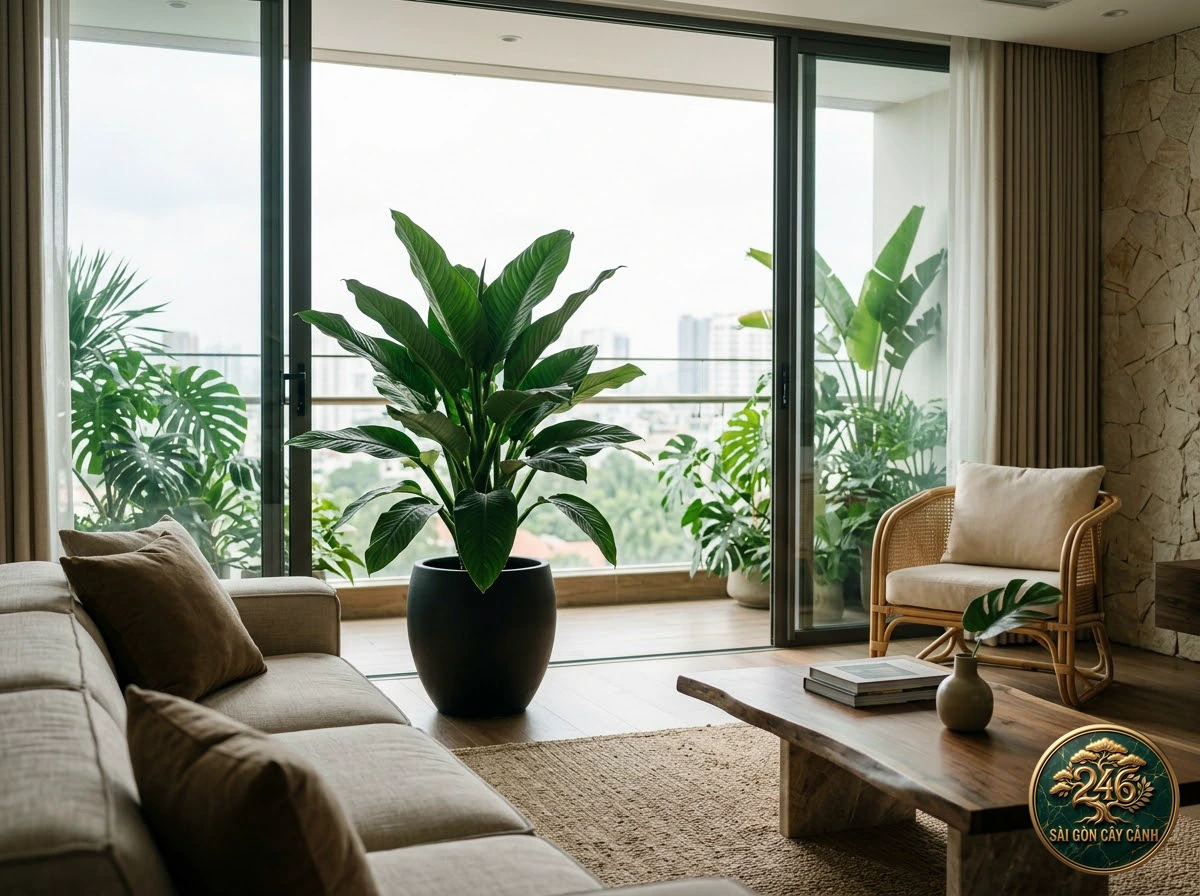
Showcasing elegant elongated floral spathes and graceful foliage, Long-spathe dumb cane introduces refined aesthetic charm to Scandinavian interiors, Zen tea rooms, and contemporary minimalist residences.
It looks magnificent housed in rustic ash-glazed pottery or clean white composite vessels, fostering tranquil organic balance and serene natural energy within living spaces.
The graceful juxtaposition of elongated spathes and delicately mottled leaf laminae injects artistic nuance into interior alcoves. It provides tranquil poetic inspiration, dissolving everyday occupational fatigue through subtle botanical grace.
12. Master Cultivation Axioms
Based on horticultural practice at Saigon Cay Canh nurseries, remember these three foundational tenets for maintaining this species:
- Hydration Precision: Irrigate only after the upper 30% of soil has dried; verify moisture depth before pouring water.
- Solar Management: Provide soft filtered daylight between 900 and 2,200 lux; protect foliage completely from harsh direct solar rays.
- Foliar Care: Wipe leaf surfaces monthly with a soft damp cloth to maintain natural gloss and promote gas exchange.
13. Frequently Asked Botanical Questions (FAQs)
How long do the elongated floral spathes remain fresh?
Inflorescences maintain pristine floral beauty for 3 to 5 weeks when domestic relative humidity remains consistently above 70%.
Does the plant bloom reliably indoors?
Given generous diffused daylight and regular organic feeding, mature specimens bloom 1 to 2 times annually during warm monsoon months.
How can one encourage vigorous basal offshoot tillering?
Cultivating in airy mineral-rich potting media and rotating the pot weekly stimulates subterranean nodes to produce vigorous offshoots.
What is the best season to repot this specimen?
Early spring or the onset of warm monsoon weather provides ideal conditions for rapid root recovery and active vegetative expansion.
Can the plant withstand nighttime domestic air conditioning?
It tolerates climate-controlled temperatures between 22°C and 26°C well, provided it is shielded from direct drafts and cushioned by a humidity tray.
Should spent floral spathes be excised once faded?
Snip spent spathes near the peduncle base once they brown to avert energy diversion toward seed production, channeling nutrients into new foliar flushes.