
Living plant profile
Madagascar periwinkle (Catharanthus roseus)
Catharanthus roseus
📌 CLINICAL & BIOLOGICAL ABSTRACT — Madagascar periwinkle (Catharanthus roseus)Madagascar periwinkle (Catharanthus roseus) Catharanthus roseus, globally celebrated as Madagascar periwinkle or rosy periwinkle, is a renowned botanical marvel combining indomitable xerophytic vitality, perpetual multi-hued floral exuberance, and profound pharmacological significance. Boasting glossy elliptic foliage and cheerful five-lobed salverform blossoms that bloom continuously across all seasons, […]

Madagascar periwinkle (Catharanthus roseus)
Catharanthus roseus, globally celebrated as Madagascar periwinkle or rosy periwinkle, is a renowned botanical marvel combining indomitable xerophytic vitality, perpetual multi-hued floral exuberance, and profound pharmacological significance. Boasting glossy elliptic foliage and cheerful five-lobed salverform blossoms that bloom continuously across all seasons, this species seamlessly bridges vibrant landscape horticulture and world-renowned biomedical breakthroughs.
Sài Gòn Cây Cảnh Care Compass
1. Botanical Identity & Taxonomic Nomenclature History
Catharanthus roseus was originally classified by Carl Linnaeus as Vinca rosea in 1759 within Systema Naturae. In 1837, Scottish botanist George Don segregated the taxon into the dedicated genus Catharanthus within his comprehensive work A General System of Gardening and Botany. The genus name Catharanthus fuses the Greek roots katharos (pure or spotless) and anthos (flower), commending its pristine floral form. The specific epithet roseus references the vibrant rosy-pink hue of the wild type blossoms.
Endemic to Madagascar, the species has naturalized globally across tropical and subtropical zones. In twentieth-century pharmacognosy, Catharanthus roseus achieved historic scientific renown when biomedical researchers isolated the potent dimeric indole alkaloids vinblastine and vincristine, fundamentally transforming modern oncology therapeutics against childhood leukemia and Hodgkin’s lymphoma.
2. Morphological Anatomy & Structural Architecture
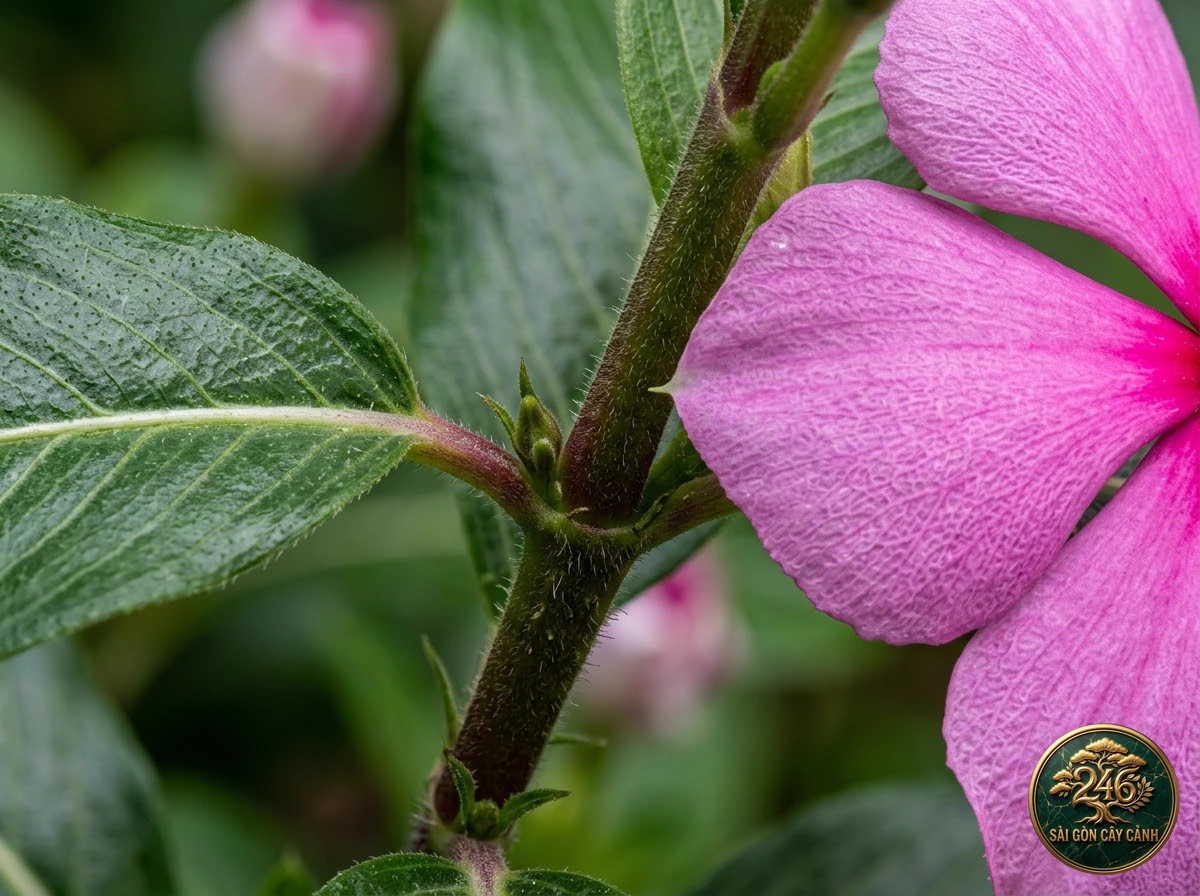
Morphologically, Catharanthus roseus develops as a subshrub or evergreen suffrutescent perennial attaining heights of 30 to 100 cm, forming a dense, self-branching mound. Stems are cylindrical, smooth or softly pubescent, green with reddish-purple flushes, secreting watery to milky sap. The leaves are arranged in decussate opposite pairs; blades are elliptic to obovate measuring 2.5 to 9 cm long by 1 to 3.5 cm wide, featuring an obtuse mucronulate apex and a luminous ivory midrib contrasting against dark emerald surfaces.
Blossoms emerge solitary or in pairs from upper leaf axils. The salverform corolla possesses a slender cylindrical tube 2.5 to 3 cm long terminating in five spreading obovate lobes spanning 3 to 5 cm in diameter. Color variations encompass rose-pink, scarlet, lavender, and pure white accented by vivid crimson or yellow centers. The fruit consists of paired narrow cylindrical follicles 2 to 4 cm long containing numerous rugose black seeds.
3. Solar Irradiance Thresholds & Photosynthetic Dynamics
Catharanthus roseus is an obligate full-sun heliophyte engineered for high-efficiency photosynthesis under intense radiant heat. It requires 5 to 7 hours of direct, unfiltered solar irradiation daily, thriving within light thresholds spanning 35,000 to 75,000 lux. Unrestricted sunlight ensures tight internodal ramification, preventing leggy sprawling growth and stimulating continuous floral production across the canopy mantle.
Shaded or poorly ventilated exposures trigger immediate etiolation, yielding weak trailing stems, chlorotic foliar yellowing, and elevated susceptibility to damping-off fungi. The plant demonstrates extraordinary thermal tolerance, easily enduring ambient temperatures exceeding 40 degrees Celsius without wilting.
4. Mineral Substrate Mechanics & Root Aeration Porosity
The root architecture of Catharanthus roseus is taprooted and deeply penetrative, naturally adapted to infertile littoral sands and arid gravel soils. Substrate waterlogging represents a fatal vulnerability; root tissues suffer hypoxic necrosis and vascular collapse within 24 to 48 hours of saturation.
The optimal potting substrate comprises 40% coarse washed sand or crushed volcanic cinder, 30% washed and desalted coco peat, 20% well-drained loam, and 10% aged earthworm castings. The substrate pH should be calibrated between 6.0 and 6.8. Generous gravel drainage courses must be placed at container bottoms to guarantee immediate drainage.
5. Hydraulic Equilibria & Irrigation Regimens
The golden hydraulic rule for Catharanthus roseus is ‘dryness over moisture’. Irrigate only after the upper 2 to 3 cm of substrate has dried thoroughly. Apply water strictly at the soil level during early morning hours, avoiding overhead sprinkling on leaves and blooms during evening hours, which fosters optimal environments for Phytophthora stem blight outbreaks.
During prolonged monsoon rainfall, reposition container specimens under airy sheltered eaves or elevate pots to guarantee instantaneous drainage, preserving aerobic conditions around the root collar.
6. Nutrient Biogeochemistry & Fertilization Protocols
Catharanthus roseus possesses modest nutrient demands; excessive fertilization, particularly inorganic nitrogen, triggers overly vegetative succulent growth that easily lodges under rainstorms. Apply a mild balanced slow-release fertilizer (NPK 14-14-14) or liquid seaweed extract every 20 to 25 days at half standard horticultural rates.
During peak flowering flushes, apply bi-weekly foliar mists of potassium-rich micronutrient blends fortified with chelated zinc and boron at 0.5 grams per liter to enhance corolla saturation, petal thickness, and blossom longevity.
7. Clonal Propagation & Germplasm Conservation
Catharanthus roseus is propagated with exceptional ease via seed germination or herbaceous tip cuttings. Seed propagation remains the gold standard for producing mass bedding plants with deep vigorous taproots. Sow fresh seeds across moist seed-starting trays of peat and fine vermiculite, covering with a 0.5 cm media layer. Under warm shaded conditions, seeds germinate uniformly within 4 to 7 days with rates exceeding 90%.
For vegetative cuttings, harvest 8 to 10 cm apical shoots, strip lower leaves and flower buds, and insert into damp perlite. Stems initiate vigorous root systems within 15 to 20 days. Pinch apical terminals when seedlings attain 10 to 12 cm in height to stimulate dense basal branching.
8. Phytochemical Toxicity & Pet Safety Standards (ASPCA)
Phytochemical toxicity evaluation and ASPCA safety standards: Catharanthus roseus harbors over 70 potent monoterpene indole alkaloids, notably vinblastine, vincristine, ajmalicine, and serpentine. While revered as invaluable pharmaceutical precursors in clinical oncology, all vegetative tissues possess severe systemic toxicity upon direct ingestion.
Under ASPCA veterinary classifications, Catharanthus roseus is strictly classified as toxic to canines, felines, and equines. Ingestion triggers systemic hypotension, central nervous system depression, seizures, and severe gastrointestinal distress. Site plants safely away from companion animals and young children; always wash hands thoroughly and sanitize pruning tools with 70% medical alcohol after garden operations.
9. Clinical Pathology Diagnostics & Treatment Strategies
Pathology diagnostic protocol for Phytophthora collar rot prevention and exuberant floral display in Catharanthus roseus:
| Clinical Manifestation | Etiological Cause | Standard Treatment Protocol |
|---|---|---|
| Basal collar turns black and foliage undergoes rapid green wilt overnight | Damping-off collar rot caused by Phytophthora parasitica or Pythium under stagnant moisture | Immediately halt watering, isolate specimen, and apply Aliette or Ridomil Gold systemic fungicides |
| Circular brown necrotic spots surrounded by chlorotic yellow halos on leaves | Leaf spot disease caused by Alternaria or Cercospora fungi from overhead night irrigation | Remove and destroy infected leaves, switch to morning root-zone watering, and spray copper fungicide |
| Apical foliage curls and distorts with stunted flower buds | Piercing-sucking thrips or aphids attacking tender apical meristem tissues | Apply organic cold-pressed neem oil combined with insecticidal potassium soap or spinosad |
10. Comparative Morphology & Allied Taxa Diagnosis
Taxonomic comparative matrix distinguishing flat salverform blooms with distinct eye and indole alkaloids of Catharanthus roseus:
| Diagnostic Parameter | Catharanthus roseus (Madagascar periwinkle) | Comparative Specimen A | Comparative Specimen B |
|---|---|---|---|
| Habit & Stature | Erect subshrub 30-100 cm, forming a dense self-branching mound | Prostrate trailing groundcover 10-20 cm, rooting at nodes | Pachycaul succulent tree 4-8 m, possessing thick sculptural limbs |
| Floral Architecture | Five-lobed salverform corolla with slender tube, vivid central eye | Funnelform corolla with five lavender-blue petals, lacking eye | Fleshy sinistrorse contorted corolla emitting potent nocturnal perfume |
| Thermal Tolerance | Exceptional tolerance to blazing sun and heat exceeding 40°C | Prefers cool shaded woodland understories, temperate climate specialist | Thrives in tropical sun, exhibiting strong seasonal deciduous dormancy |
11. Biophilic Design Harmony & Contemporary Spatial Aesthetics
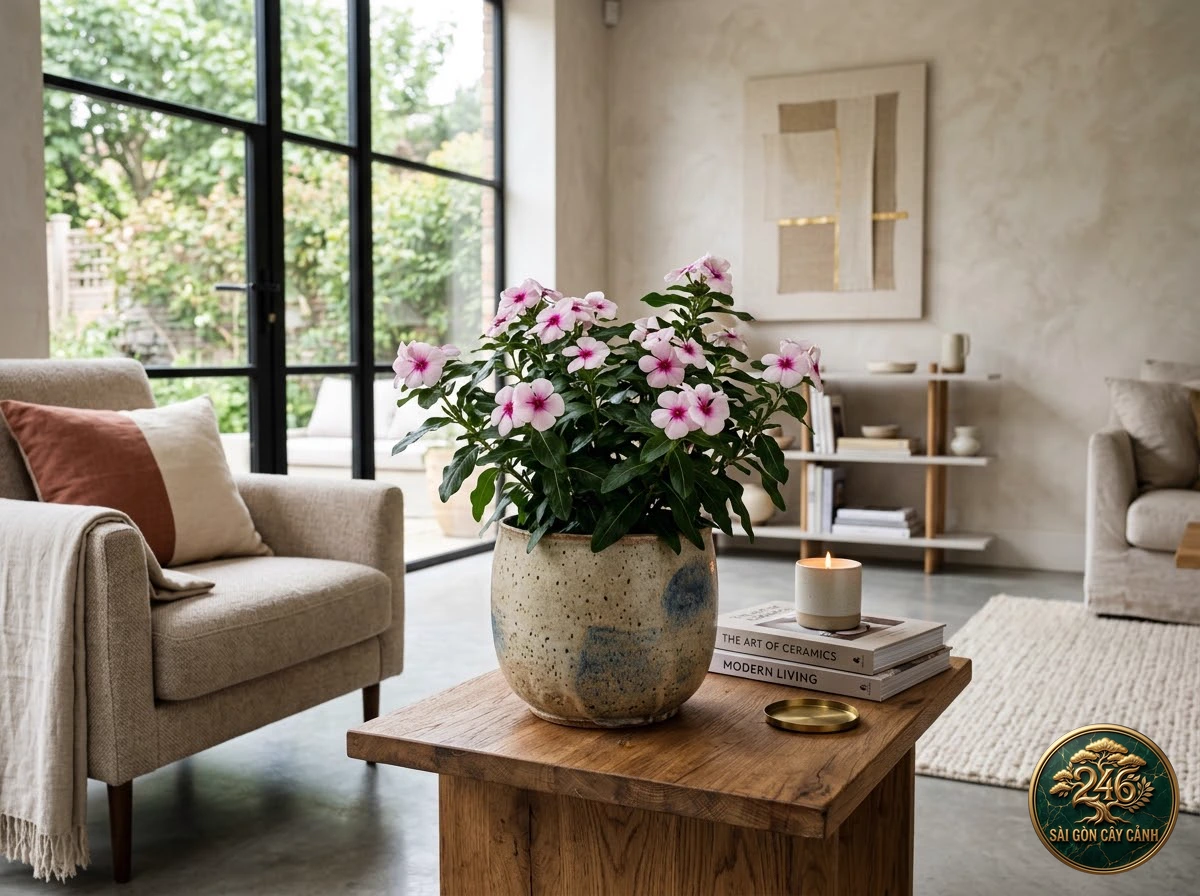
In landscape architecture and biophilic philosophy, Catharanthus roseus embodies resilience, perpetual renewal, and unyielding fortitude against adversity. Its ability to produce exuberant blossoms continuously amidst blazing sun imparts uplifting vibrancy, joy, and harmonious vitality to urban dwellings.
In modern landscape design, it serves as an unparalleled flowering groundcover, dynamic bedding accent for public plazas, charming hanging basket feature, and vibrant stone garden border that delivers relentless color and ecological beauty.
12. Saigon Cay Canh Provenance & Cultivation Assurance

Saigon Cay Canh delivers acclimated Catharanthus roseus selections boasting superior resistance against fungal stem blights, cultivated in specialized nursery plugs featuring robust taproots and dense floriferous branching structures.
We provide verified botanical taxonomy, rigorous anti-Phytophthora irrigation guidelines, and full landscape installation support for vibrant mass flowerbeds across luxury resorts, civic parks, and private eco-villas.
💬 Góc Tư Vấn & Hướng Dẫn Kỹ Thuật SGCC
Chuẩn E-E-A-T Kinfolk❓ Chăm sóc Madagascar periwinkle (Catha cần lưu ý điều gì quan trọng nhất?
💡 Dạ điều quan trọng nhất là giữ môi trường sống ổn định, tránh sốc nhiệt hay dao động thông số đột ngột, đồng thời cung cấp khẩu phần ăn sạch và tươi mới ạ.
❓ Làm thế nào để phòng ngừa bệnh tật hiệu quả cho các bé?
💡 Dạ anh chị nên giữ vệ sinh chuồng/hồ nuôi sạch sẽ, thay nước hoặc dọn dẹp định kỳ và bổ sung vitamin, men tiêu hóa đều đặn để tăng sức đề kháng ạ.
🌿 Trang Thiết Bị, Đất Trồng & Dụng Cụ Bonsai Tuyển Chọn
Dụng cụ tỉa, giá thể hữu cơ & phân bón chuyên dụng cho cây cảnh.

Keo liền seo (Keo liền da cây) Mỹ Tiến 225gr/ 100gr – l…

chậu đất nung thau mạ đồng sơn wax xuất khẩu tiêu chuẩn…
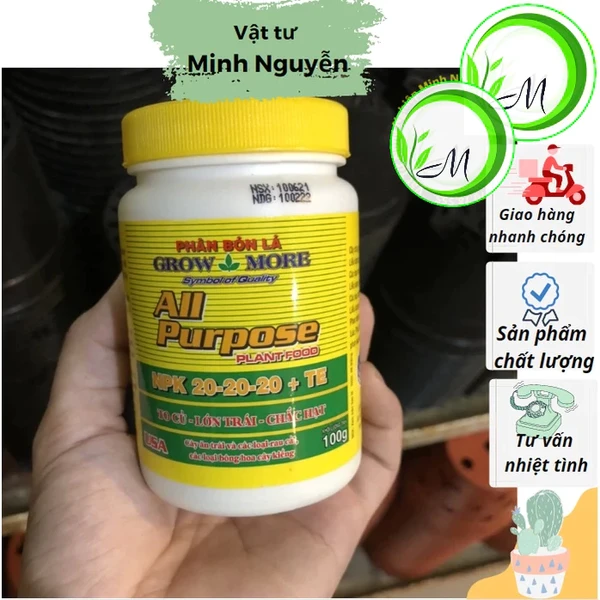
Phân bón lá 20-20-20 lọ 100g, phân bón growmore của mỹ,…

Chế Phẩm Sinh Học Trichoderma SP 100gr – Đối Kháng Nấm …

Cây trầu bà đế vương đỏ 25cm chậu sứ để bàn làm việc ph…

Đất trồng sen đá, gói 2kg, TOTT's Fertilizer, đất …
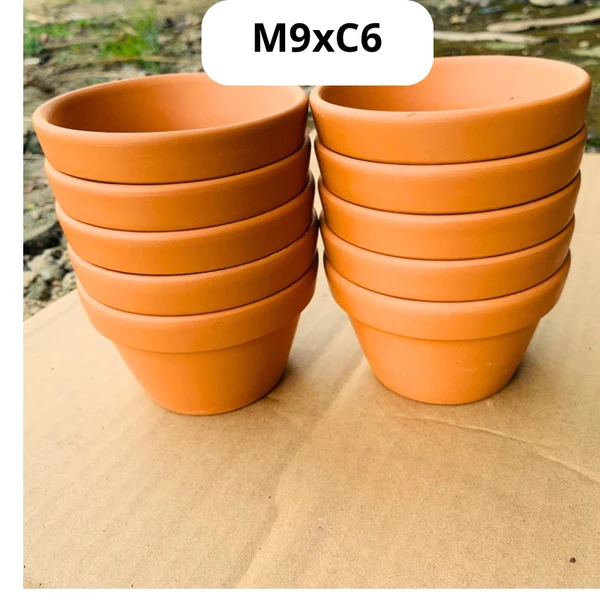
COMBO 10 Chậu đất nung trồng sen đá – Ly gờ KT từ 9* 6 …

Kimcuong (5kg) Xơ dừa nén, Mụn dừa nén, Đất trồng nén 5…
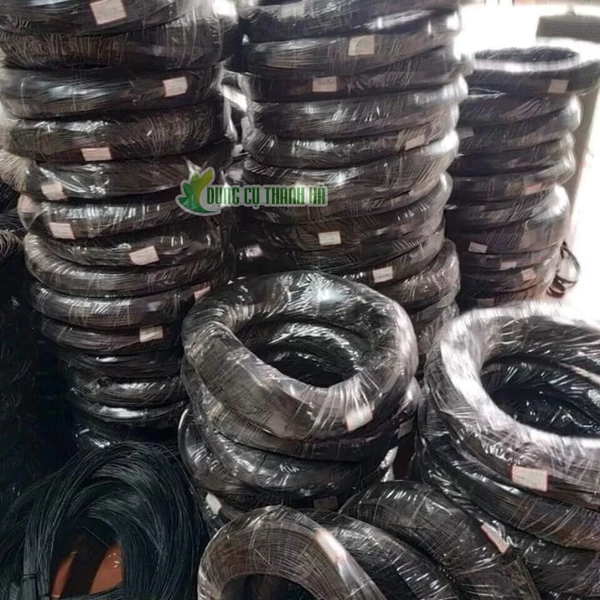
Dây nhôm uốn cây kiểng, dây nhôm uốn cây cảnh mạ sơn đe…

Chậu Sen Đá Phật Bà Mix Nhiều Loại Cây Khoẻ Bền Cây , D…

Đất trồng sen đá xương rồng trộn sẵn kèm phân bón cao c…
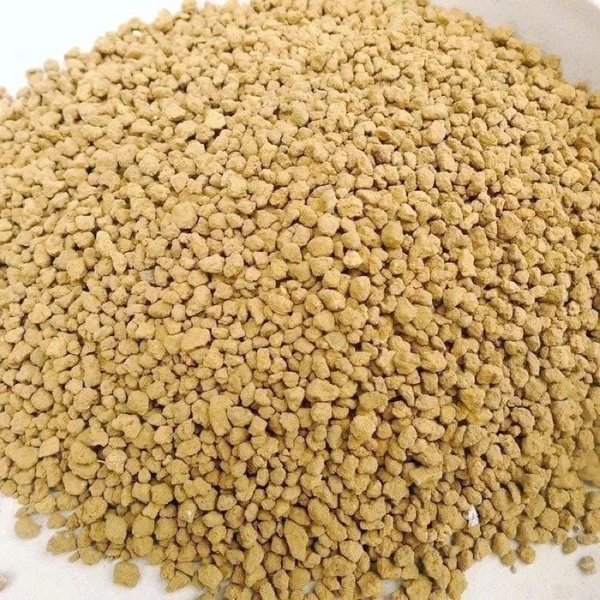
Đá MASATO (1kg) – Chuyên dùng rải mặt chậu sen đá, xươn…

French hydrangea (Hydrangea macrophylla)
French hydrangea (Hydrangea macrophylla) Hydrangea macrophylla, internationally celebrated as French hydrangea, bigleaf hydrangea, or hortensia, is a magnificent...
Read Monograph →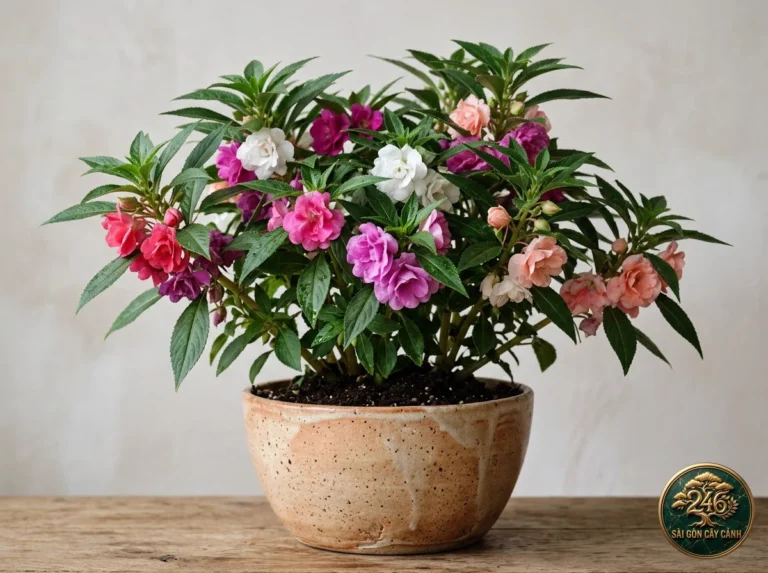
Garden balsam (Impatiens balsamina)
Garden balsam (Impatiens balsamina) Impatiens balsamina, universally treasured as garden balsam, rose balsam, or touch-me-not, is a nostalgic,...
Read Monograph →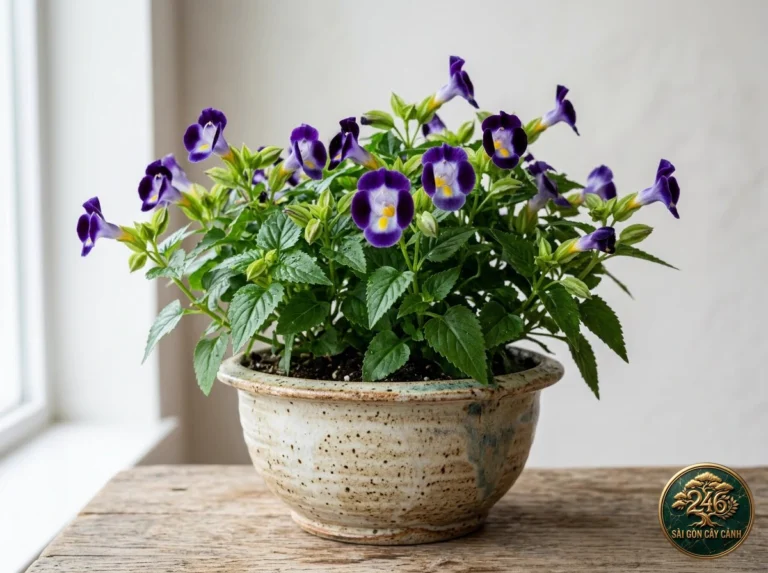
Wishbone flower (Torenia fournieri)
Wishbone flower (Torenia fournieri) Torenia fournieri, internationally celebrated as wishbone flower or bluewings, is a charismatic, profusely flowering...
Read Monograph →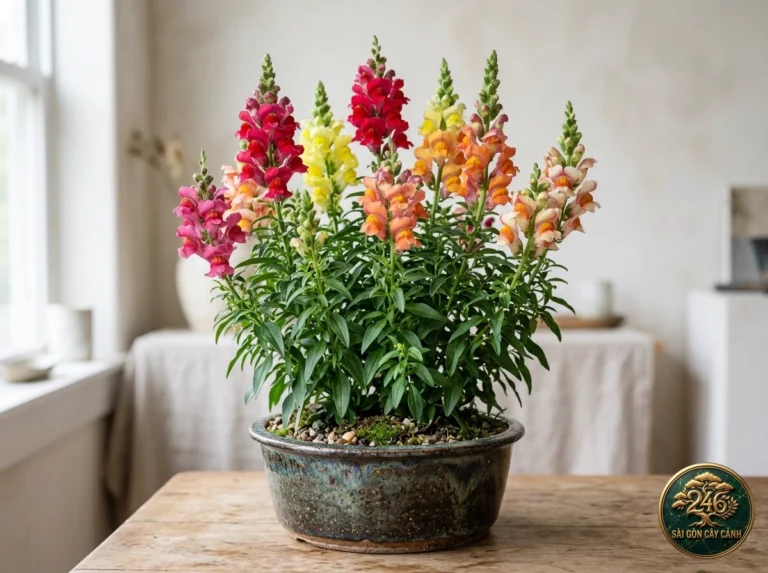
Snapdragon (Antirrhinum majus)
Snapdragon (Antirrhinum majus) Antirrhinum majus, universally celebrated as snapdragon or dragon flower, is an aristocratic and dramatically sculpted...
Read Monograph →Expert Q&A, Recommended Supplies & Article Feedback
Tap once to connect instantly via Google, Facebook or TikTok — no long forms required!
No questions yet for this article. Tap Google / Facebook / TikTok above to ask the first question!