Living plant profile
Rose-crowned cactus
Mammillaria zeilmanniana
Mammillaria Cactaceae Living Herbarium Master V2 Rose-Crowned Cactus (Mammillaria zeilmanniana): Magenta Floral Crown, Glossy Dark Tubercles and Pincushion Care Scientific Name: Mammillaria zeilmanniana Boed. Common Name: Rose-Crowned Cactus / Rose Pincushion Family: Cactaceae Native Range: Guanajuato, Mexico Mammillaria zeilmanniana (Rose Pincushion) is celebrated as one of the most free-flowering cacti, producing relentless coronets of dazzling […]
Rose-Crowned Cactus (Mammillaria zeilmanniana): Magenta Floral Crown, Glossy Dark Tubercles and Pincushion Care
Common Name: Rose-Crowned Cactus / Rose Pincushion
Family: Cactaceae
Native Range: Guanajuato, Mexico
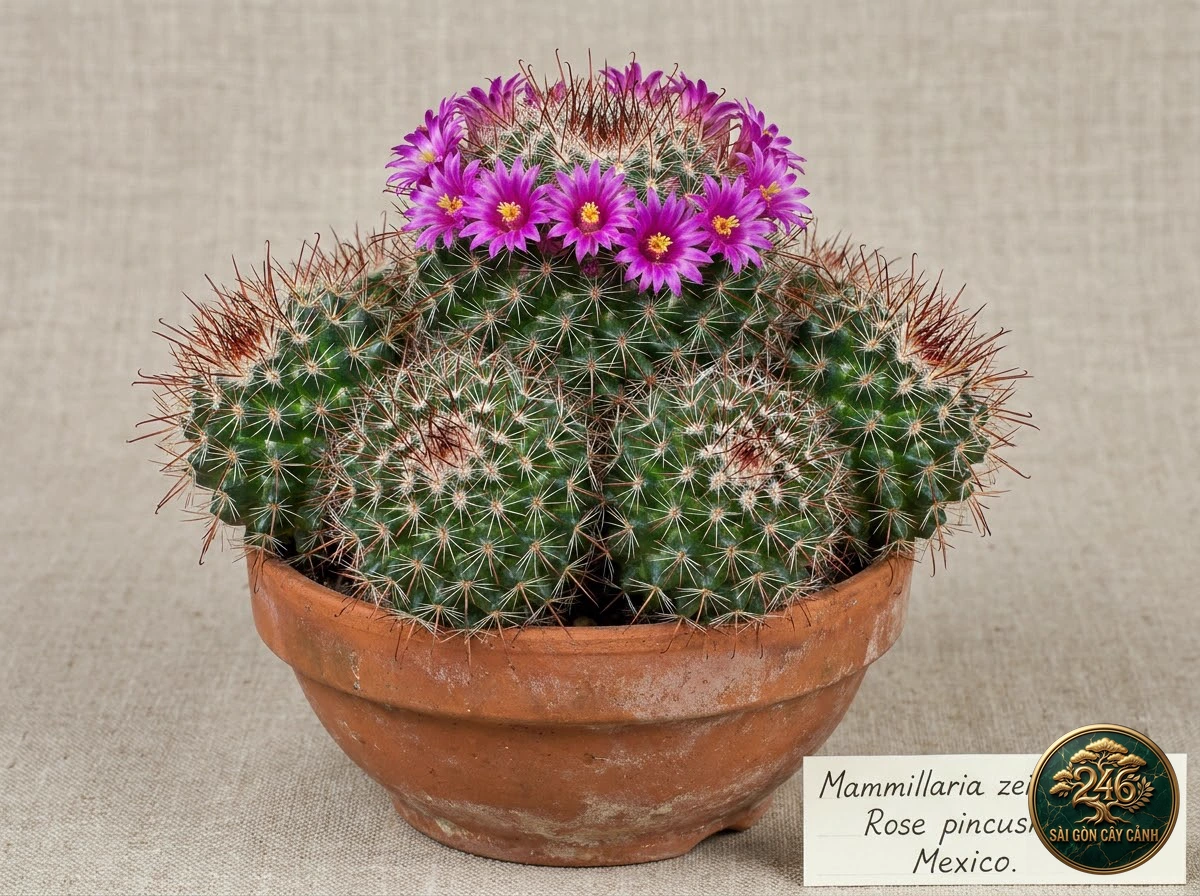
Mammillaria zeilmanniana (Rose Pincushion) is celebrated as one of the most free-flowering cacti, producing relentless coronets of dazzling magenta-violet blossoms over dark glossy tubercles.
Sài Gòn Cây Cảnh Care Compass
1. Geographic Origin & Taxonomic Nomenclature History
Mammillaria zeilmanniana was described by German botanist Friedrich Boedeker in 1931. This celebrated rose pincushion inhabits shaded volcanic rock crevices across Guanajuato, Mexico.
It is revered as one of the most free-flowering cacti in cultivation, producing relentless coronets of dazzling magenta-violet blossoms over dark glossy tubercles.
2. Morphological Architecture & Anatomical Specializations
Morphological architecture features ovate glossy dark forest-green tubercles, each areole bearing fifteen to twenty fine white radials and a prominent hooked central spine.
Rich chlorophyll concentrations within its glossy epidermis enable highly efficient photosynthesis even under dappled ambient lighting in volcanic crevices.
3. Photosynthetic Radiance & Urban Microclimate Dynamics
Optimum growth requires intense filtered light paired with two to three hours of soft early morning sunshine from 3,500 to 7,000 lux to stimulate continuous blooms.
Position pots on east-facing sills or airy balconies; avoid harsh scorching midday sun that can burn its lustrous dark green cuticle.
4. Mineral Substrate Engineering & Fast Percolation Dynamics
Substrate formulation incorporates 45% pumice, 25% perlite, 15% akadama grit, and 15% biologically stabilized vermicompost.
Granular porosity permits even moisture permeation and rapid evacuation, keeping delicate feeder roots well-oxygenated.
5. Biological Irrigation Protocols & Seasonal Rhythm
Hydration cycles observe disciplined dry-down intervals: water deeply every ten to fourteen days during blooming flushes only after 85-90% soil desiccation.
During cool winter months, reduce watering sharply to allow dormant rest, priming the cactus for explosive floral flushes the following spring.
6. Trace Mineral Nutrition & Slow-Release Fertility Protocols
Administer diluted cold-extracted organic seaweed wash bimonthly in spring and summer to nourish successive waves of vibrant magenta floral crowns.
Naturally available potassium and micronutrients enhance petal color saturation and extend the longevity of each blossom.
7. Vegetative Propagation Protocols & Aseptic Methodology
Mammillaria zeilmanniana readily offsets at the base into charming clusters; separate rooted pups in spring using a sterile blade.
Apply fine activated charcoal powder over cut surfaces to halt sap exudate, allowing branchlet divisions to dry in breezy shade for eight days before potting.
8. Botanical Toxicity Profile & Contact Protocols
This rose pincushion cactus is completely non-toxic and certified pet-safe under ASPCA veterinary botanical guidelines.
Growers only need to note that hooked central spines can snag knitted fabrics or curious pet fur during handling.
9. Physiological Diagnostics & Integrated Pest Management
The clinical diagnostic guide below details recognizable physical symptoms and nursery intervention protocols for rose pincushion cacti:
| Clinical Symptom | Primary Root Cause | Standard Corrective Protocol |
|---|---|---|
| Flower buds shrivel and drop before opening | Sudden drought stress during bud swelling or inadequate light | Provide gentle hydration and move pot to bright morning sunshine |
| Basal crown turns soft and waterlogged brownish-black | Blocked drainage holes retaining stagnant water at pot bottom | Unpot immediately, excise rot, treat with sulfur, air-dry 7 days, repot in terracotta |
| Glossy dark green body pales and elongates into a conical tip | Etiolation stemming from insufficient illumination | Acclimate gradually to brighter direct morning sun to re-establish compact growth |
| Mealybugs clustering between glossy tubercle axils | Moisture stagnation favoring cryptic pest colonization | Dab directly with 70% alcohol-moistened swab, apply preventive organic neem |
10. Comparative Taxonomic Evaluation Across Allied Taxa
The comparative matrix below delineates botanical features separating Mammillaria zeilmanniana from neighboring free-flowering pincushion taxa:
| Species Taxon | Morphological Trait | Growth Architecture | Diagnostic Indicator |
|---|---|---|---|
| Floral Chroma | Brilliant magenta-violet blossoms with radiant yellow anthers | Deep violet-pink crown florets | Subdued cream to pale yellow florets |
| Central Spine Shape | Prominent sharp hooked central needles of rich chestnut brown | Straight central spines concealed beneath long flowing wool | Straight radiating golden yellow spines |
| Epidermal Lustre | Lustrous glossy deep forest green tubercles | Green skin veiled by dense flowing white hair | Green body cloaked in soft silky down |
| Blooms Frequency | Remarkably prolific flowering flushes from spring through autumn | Single spectacular spring coronet bloom | Intermittent sporadic flushes of blooms |
11. Urban Landscape Architecture & Living Display Design
The dazzling magenta floral coronet contrasting against lustrous dark green tubercles makes Mammillaria zeilmanniana an exquisite centerpiece on office desks.
It radiates joyful vitality and creative inspiration, serving as an uplifting botanical companion celebrating continuous flowering throughout the seasons.
Nursery Care Journal & Living Greenery Moments
At Saigon Cay Canh greenhouse, each photograph captures genuine everyday care moments between plant lovers and living greenery, spreading a passion for nature and green-living inspiration.