
Living plant profile
Round-leaf calathea
Goeppertia orbifolia
Round-leaf calathea (Goeppertia orbifolia) is a celebrated rhizomatous tropical understory herb renowned for its oversized, rounded foliage adorned with elegant silver-metallic lateral striping. Revered among plant enthusiasts for its captivating nyctinastic leaf movements and refined beauty, it adds a luxurious tropical ambiance to discerning indoor collections. The definitive factor for success in apartment cultivation lies […]
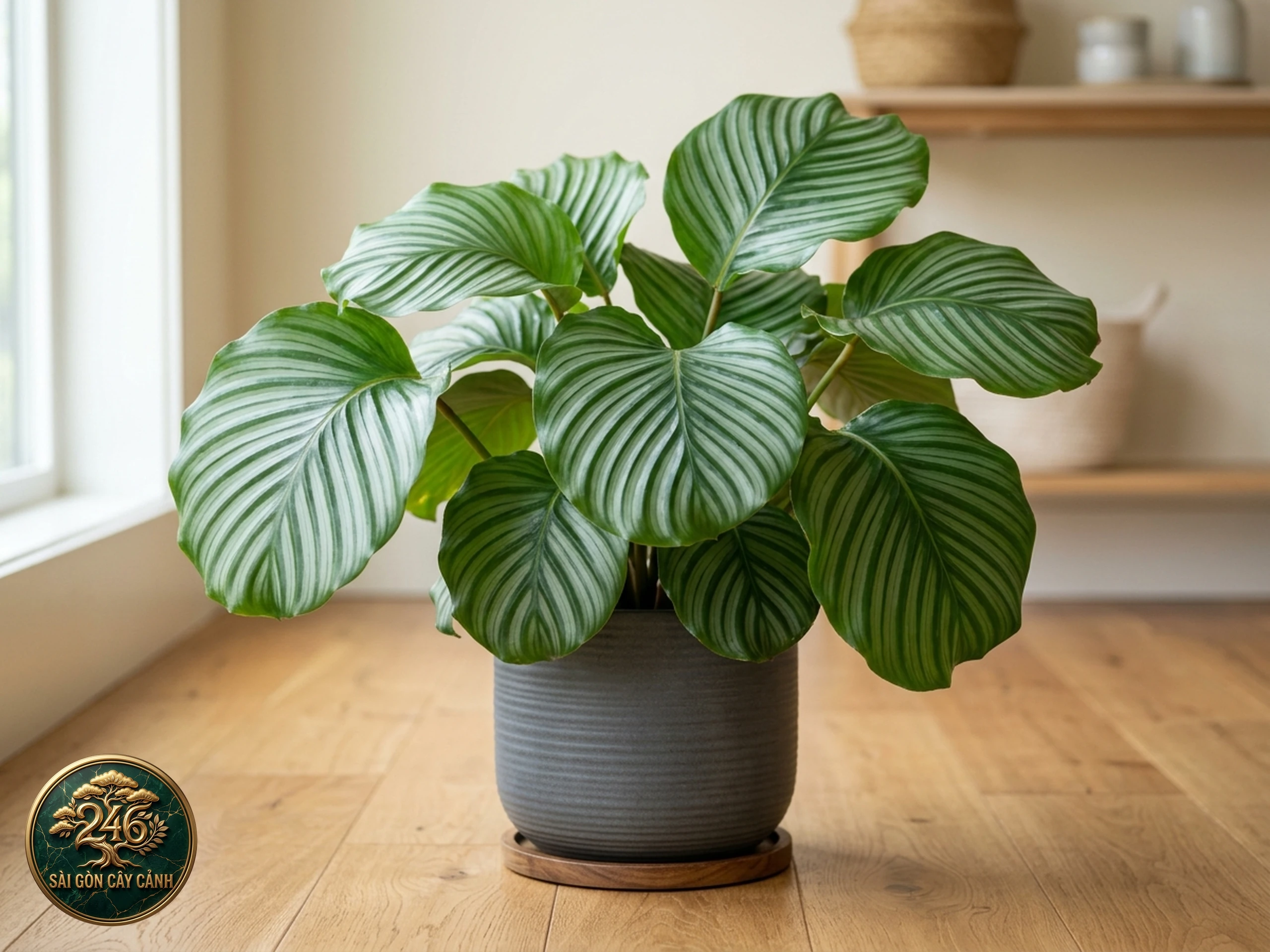
Round-leaf calathea (Goeppertia orbifolia) is a celebrated rhizomatous tropical understory herb renowned for its oversized, rounded foliage adorned with elegant silver-metallic lateral striping. Revered among plant enthusiasts for its captivating nyctinastic leaf movements and refined beauty, it adds a luxurious tropical ambiance to discerning indoor collections. The definitive factor for success in apartment cultivation lies in establishing a responsive watering routine guided by direct substrate assessment rather than a rigid calendar schedule.
1. Rainforest Ecology & Taxonomy of Goeppertia Orbifolia
| Scientific Name | Goeppertia orbifolia |
|---|---|
| Botanical Family | Marantaceae (Prayer plant family) |
| Growth Habit | Rhizomatous tropical understory herb with broad ovate leaves featuring silver-metallic bands |
| Light Exposure | Soft filtered shade to moderate indirect light (1,000 – 2,500 lux); direct sun bleaches delicate pigments |
| Watering Requirement | Consistently moist but aerated; water with purified or rainwater when top 2 cm feels dry |
| Recommended Substrate | Porous humus-rich matrix: 45% sphagnum peat, 25% fine pumice/perlite, 20% shredded orchid bark, 10% vermicompost |
| Optimal Temperature | 18°C – 27°C (64°F – 80°F); avoids sudden temperature fluctuations below 15°C |
| Relative Humidity | 65% – 85% RH; high humidity essential to prevent crisping leaf margins |
| Care Difficulty | Moderate to demanding / Requires consistent attention |
| Pet Safety Status | Non-toxic to pets: 100% pet-friendly confirmed by veterinary authorities |
Native to the dense, warm understories of the Atlantic rainforest in eastern Brazil (predominantly within the state of Bahia), Goeppertia orbifolia thrives beneath a dense, multi-canopied forest where ambient relative humidity rarely drops below 70%. In this protected habitat, direct sun never penetrates to the forest floor, allowing its expansive, thin foliage to photosynthesize efficiently in soft, filtered green light without risking cellular desiccation.
2. Nyctinastic Circadian Rhythm & Identification Among Marantaceae
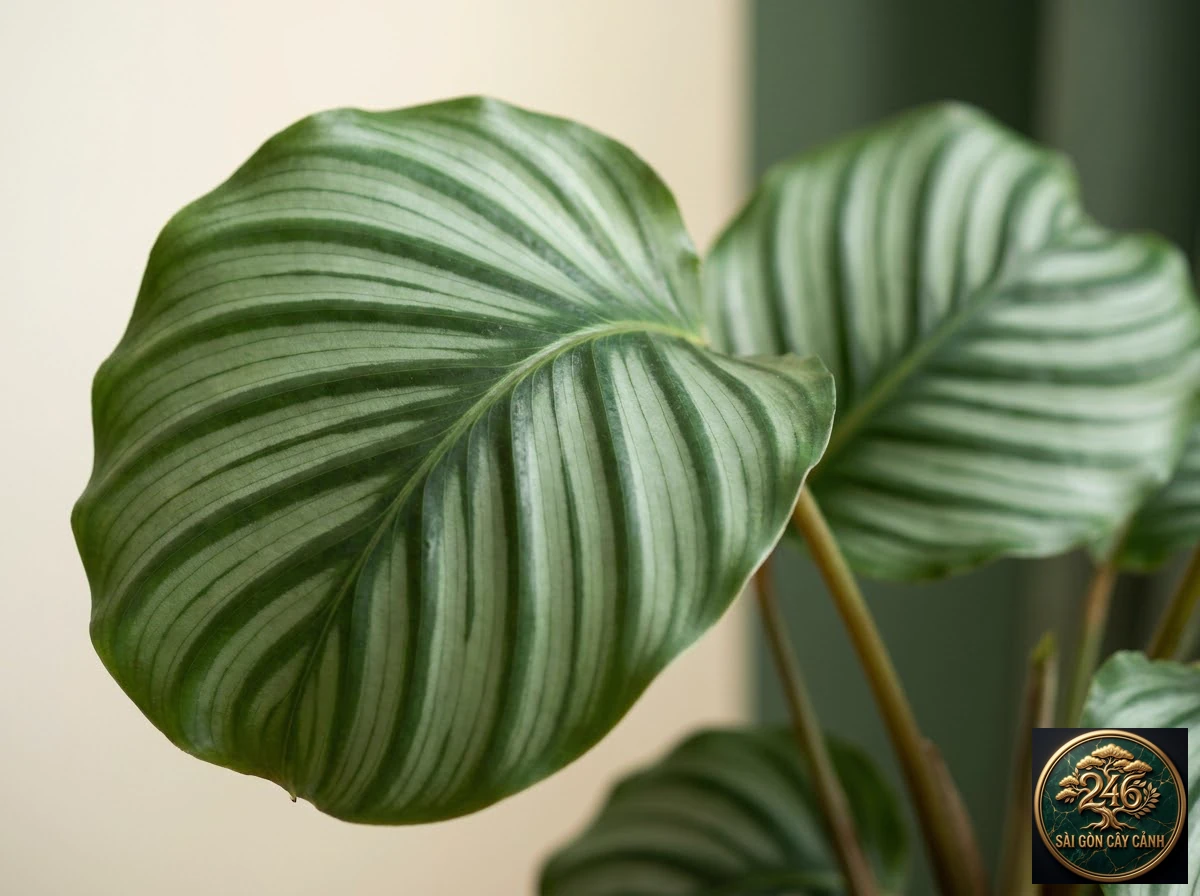
Accurate identification of Goeppertia orbifolia requires close inspection of foliar structure, petiole anatomy, and developmental habit. In commercial horticulture, ambiguous common names frequently cause misidentification, leading to improper care regimens.
A signature botanical trait of Goeppertia orbifolia is its nyctinastic foliar movement, shared across members of the Marantaceae family. At the junction where the leaf blade meets the petiole lies a specialized biological swollen organ called the pulvinus. By regulating potassium and water flux between opposing motor cells within the pulvinus, the plant alters internal turgor pressure, causing leaves to lower horizontally during the day to intercept light and fold upward vertically at night like praying hands.
Key Diagnostics: Easily distinguished from Goeppertia makoyana (peacock plant with darker oval peacock-tail patterns) and Calathea medallion (which bears bold tri-color concentric feathering with deep purple abaxial undersides). Broad round leaves with alternating pale silver and deep green bands confirm botanical identity.
3. Diffused Lighting Engineering & Guarding Against Sun Scorch
Within urban residences, position the plant in accordance with natural lighting dynamics: Humid bathrooms with frosted natural light, sheltered plant stands, or dedicated terrarium enclosures offering filtered luminescent ambiance. Avoid placing foliage directly in cold convective drafts from air conditioning units, as rapid evaporative loss compromises leaf margins while soil remains wet.
4. Pure Water Imperative: Preventing Fluoride and Salt Edge Burns
Do not adhere to a predetermined watering schedule. Transpiration rates fluctuate with seasonal warmth, airflow, and pot volume.
Three-Step Moisture Check:
- Insert a wooden dowel or finger 3-5 cm into the potting medium.
- If damp substrate particles adhere to the probe: Delay watering for 48-72 hours.
- When the probe emerges clean and dry: Saturate the root zone thoroughly until water flows freely from drainage holes, then discard standing saucer water after 15 minutes.
5. Airy Sphagnum-Peat Soil Composition for Steady Root Respiration
The root system of Goeppertia orbifolia demands substantial gas exchange. Dense potting soils compact over repeated waterings, generating hypoxic conditions that foster anaerobic root pathogens.
The subterranean architecture consists of fleshy creeping rhizomes that produce dense clusters of fine, delicate feeder roots. These roots are extremely sensitive to tap water mineral salts, chlorine, and fluorides, which accumulate in foliar tissue tips and cause unsightly necrotic margins. Cultivating in an aerated, acidic, humus-rich potting mix using distilled water or filtered rainwater maintains optimal root zone electrical conductivity.
Recommended Soil Mix: Acidic, spongy substrate designed to retain even moisture while delivering dissolved oxygen to delicate rhizomes, formulated with peat moss, perlite, and fine bark. Unglazed terracotta or specialized aerated nursery pots provide superior root zone oxygenation compared to non-porous containers.
6. Micro-Dosing Organic Nutrients to Shield Fragile Foliar Edges
Modest, consistent fertilization sustains healthy foliage without mineral burn. During active vegetative flush (spring and summer), supply balanced liquid organic fertilizer diluted to half strength monthly. Discontinue feeding during dormant or low-light winter intervals.
The delicate rhizomes of Goeppertia orbifolia have an exceptionally low tolerance for chemical mineral salts. Traditional synthetic houseplant fertilizers quickly scorch fine root hairs and manifest as crisp, dark margins along the outer silver leaf bands. To sustain vibrant foliar vigor, nourish exclusively with gentle organic solutions, such as cold-pressed seaweed extract or amino-acid based liquid fertilizer diluted to one-quarter strength monthly during the monsoon growing season. Always flush the substrate thoroughly with distilled or filtered water every four weeks.
7. Symptom Index: Inward Leaf Curling, Margin Browning, and Faded Patterns
| Observed Symptom | Primary Root Cause | Verification Method | Corrective Action |
|---|---|---|---|
| Lower leaf chlorosis (yellowing) | Overwatering / hypoxic root environment | Inspect lower substrate moisture | Extend dry intervals, verify drainage holes |
| Crispy brown margins | Sub-optimal ambient humidity / AC airflow | Measure room humidity, check draft paths | Relocate away from vents, elevate humidity |
| Etiolation (pale, stretched stems) | Insufficient photosynthetic photon flux | Assess light intensity at foliage level | Shift closer to bright indirect source |
| Soft basal stem / wilting | Fungal root compromise (pythium/phytophthora) | Unpot root ball and inspect root firmness | Excise decayed roots, treat with fungicide, repot |
8. Protecting Foliage from Thrips and High-Humidity Fungal Strains
Mealybugs and two-spotted spider mites present the most frequent pest challenges. Regular foliar cleansing with a damp microfiber cloth serves as primary defense. For localized infestations, isolate the specimen and treat with 70% isopropyl alcohol via cotton swab or apply cold-pressed horticultural neem oil during evening hours.
Two-spotted spider mites (Tetranychus urticae) represent the most frequent challenge for Calathea orbifolia in domestic indoor spaces, thriving whenever ambient humidity drops below 50%. Regularly inspecting the abaxial (underside) leaf surfaces and misting with distilled water or wiping with a soft damp microfiber cloth discourages mite colonies. If an infestation is detected, apply cold-pressed neem oil or horticultural insecticidal soap promptly.
9. Safe Clump Division Methods Without Shocking Root Systems
Propagate during the active growth season via vegetative stem cuttings or division. Select vigorous nodes possessing aerial root initials. Sever cleanly with sanitized shears, allow callous formation for two hours, then root in clean aerated water or damp sphagnum moss under warm, diffused light.
10. Animal Toxicology Assessment: Safe Houseplant Living with Pets
11. Elevating Room Humidity Above 65% in Air-Conditioned Flats
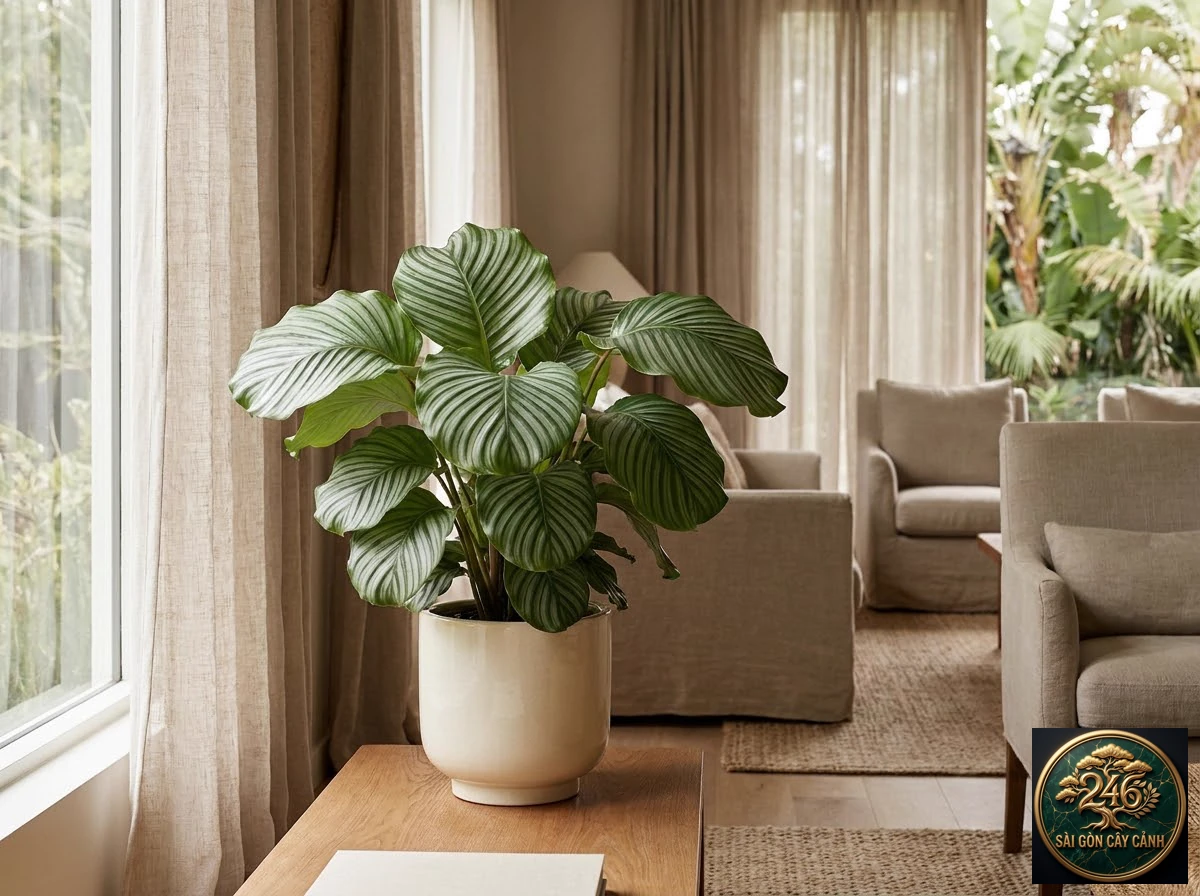
The sculptural foliage of Goeppertia orbifolia harmonizes gracefully with biophilic, Scandinavian, and contemporary architectural settings. Pair alongside trailing pothos or structural snake plants to create dynamic multi-tiered botanical arrangements.
In high-end interior styling, the dramatic silver-striped circular leaves of Goeppertia orbifolia provide an exquisite organic pattern that complements minimalist Scandinavian interiors, contemporary ceramic planters, and biophilic bathroom sanctuaries. Its soft, architectural foliage softens hard interior lines while adding dynamic movement throughout the day.
12. Essential Troubleshooting for Discerning Calathea Connoisseurs
“Plants can thrive indefinitely in windowless interior spaces” — All vegetative growth requires photosynthetic photons. In rooms devoid of natural light, full-spectrum horticultural LED fixtures must be provided for 8-10 hours daily to maintain metabolic equilibrium.
“Frequent hand-misting is sufficient to satisfy the humidity needs of Calathea orbifolia” — Misting foliage with a spray bottle provides only a fleeting spike in ambient relative humidity that dissipates within five to ten minutes. Furthermore, water droplets lingering on delicate leaf surfaces without adequate air movement create an ideal breeding environment for foliar fungal pathogens like Alternaria. For genuine long-term success, growers should rely on continuous ultrasonic room humidifiers or broad pebble trays filled with water placed beneath the pot.
13. Frequently Asked Questions (FAQ)
When should this plant be repotted?
Repot every 18-24 months or when roots spiral densely and emerge through bottom drainage ports. Select a replacement container 3-5 cm wider in diameter.
Should foliar shine products or oils be applied?
Never apply culinary oils or commercial leaf gloss. They occlude stomata, hindering gas exchange and attracting particulate debris. Clean foliage solely with pure water.
Is daily misting beneficial in air-conditioned apartments?
Misting provides only transient humidity spikes and may cause fungal leaf spot if foliage remains wet without air movement. Use a pebble tray or ultrasonic humidifier for sustained ambient moisture.
How can I distinguish underwatering from overwatering?
Underwatered foliage exhibits uniform dry limpness in a desiccated root ball. Overwatered plants display yellowing lower leaves accompanied by mushy, dark petioles and sodden soil.
Can tap water be used directly?
Municipal water often contains dissolved chlorine and fluorides that cause tip burn in sensitive foliage. Allow water to sit uncovered for 24 hours prior to irrigation.